Can I Use a 19V 3.42A AC Adapter on a Device That Needs 12V 3A?
ZacharyWilliamLast updated: May 14, 2026
If your device label says 12V 3A and the adapter label says 19V 3.42A, the short answer is simple: do not plug it in directly. The amperage looks close enough, and the wattage looks more than enough, but the voltage is wrong. A 12V device needs 12V unless the manual clearly says it accepts a wider input range.
Quick Answer
No, you should not use a 19V 3.42A adapter for a device that requires 12V 3A. The 19V adapter can supply enough power, but it supplies that power at a much higher voltage. That can overheat parts, damage the device, shorten its life, or create a safety risk.
The safe replacement is a regulated 12V DC adapter rated at 3A or higher, with the correct plug size and the same polarity as the original adapter.

Why 19V Is Not Safe for a 12V Device
A device marked 12V is designed to receive about 12 volts at its power input. A 19V laptop-style adapter is about 58% higher than the voltage the device is asking for.
Plain-English Rule
Match the voltage first. Current rating can be equal or higher. Voltage should match unless the device label or manual lists a wider input range, such as “12–24V DC” or “9–20V DC.”
Many people get confused because the 19V adapter is rated for 3.42A, which is higher than 3A. That part is not the main problem. The problem is that the adapter will try to feed the device 19 volts instead of 12 volts.
What 19V 3.42A and 12V 3A Really Mean
The numbers on an adapter label tell you output voltage and maximum current. They also let you estimate watts.
| Label | Meaning | Watt Calculation | Safe for a 12V 3A Device? |
|---|---|---|---|
| Device: 12V 3A | The device expects 12 volts and may draw up to 3 amps. | 12V × 3A = 36W | Target requirement |
| Adapter: 19V 3.42A | The adapter outputs 19 volts and can supply up to 3.42 amps. | 19V × 3.42A = about 65W | No — wattage is enough, but voltage is too high |
| Safe replacement: 12V 3A | Same voltage and enough current. | 12V × 3A = 36W | Yes, if polarity and plug size match |
| Safe replacement: 12V 5A | Same voltage, higher current capacity. | 12V × 5A = 60W | Usually yes, if polarity and plug size match |
| Weak replacement: 12V 2A | Same voltage, not enough current capacity. | 12V × 2A = 24W | Not recommended for a device that may need 3A |
Adapter selection guides from electronics suppliers commonly start with output voltage, current requirement, output power, connector type, and polarity. DigiKey’s wall adapter guide explains that the device’s operating voltage and current requirement are key electrical considerations, and that adapters can go above the required current when voltage is correct. Source: DigiKey wall adapter guide
Why Higher Amps Can Be Okay, but Higher Voltage Is Not
Think of voltage as the pressure being delivered to the device. Current rating is more like how much the adapter is able to provide when the device asks for it.
A 12V device does not automatically pull all 5A from a 12V 5A adapter. It draws what it needs, as long as the voltage is correct and the adapter can handle the load. That is why a 12V 5A adapter can often replace a 12V 3A adapter.
But a 19V adapter is different. It is not just “stronger.” It is sending the wrong voltage. Adafruit’s power supply guide describes a power supply as providing power at a specific voltage level, voltage type, and current level. Source: Adafruit power supplies guide
Best replacement wording to search: “12V 3A regulated DC adapter center positive” or “12V 5A regulated DC adapter” plus your connector size, such as 5.5mm × 2.1mm or 5.5mm × 2.5mm.
What Could Happen If You Try It?
Some devices may appear to turn on for a few seconds with the wrong adapter. That does not mean it is safe. Damage can be instant, delayed, or hidden until the device is under load.
| Possible Result | What It Means | Why It Happens | What to Do |
|---|---|---|---|
| Device will not power on | The protection circuit may block the input. | Some devices shut down when voltage is out of range. | Disconnect the adapter and use the correct one. |
| Device powers on, then fails | Internal parts may be overstressed. | Regulators, capacitors, LEDs, boards, or motors may receive too much voltage. | Turn it off immediately and check for heat or smell. |
| Adapter gets hot | The adapter or device may be overloaded or mismatched. | Wrong voltage, wrong polarity, or a short can stress the adapter. | Unplug it. Do not keep testing. |
| Burning smell or popping sound | Electrical damage may already have happened. | Components can fail when voltage exceeds their design limit. | Stop using the device until inspected or repaired. |
| It works “fine” at first | Still not proof of compatibility. | Some parts can tolerate stress briefly but fail later. | Replace with the correct 12V adapter. |
Safe Adapter Replacement Checklist
Before buying or using any replacement adapter, check these items on the old adapter label, the device label, or the manual.
- Output voltage: must match the device, such as 12V DC.
- Current rating: must be equal to or higher than the device requirement, such as 3A or higher.
- Power rating: watts should be equal to or higher than required. For 12V 3A, that means at least 36W.
- Output type: confirm DC output if your device requires DC. Most wall adapters convert AC wall power into DC, but always read the output label.
- Polarity: match center-positive or center-negative exactly.
- Plug size: match both outer diameter and inner diameter. Do not force a connector that “almost fits.”
- Regulated output: choose a regulated adapter from a reliable seller, especially for routers, monitors, cameras, audio gear, and LED equipment.
- Certification and condition: avoid damaged cords, swollen adapters, loose plugs, or unknown no-name adapters for always-on devices.
| What to Check | Good Example | Bad Example | Why It Matters |
|---|---|---|---|
| Voltage | Output: 12V DC | Output: 19V DC | Wrong voltage can damage the device. |
| Current | 3A, 4A, or 5A | 1A or 2A for a 3A device | Too little current can cause shutdowns or overheating. |
| Polarity | Same symbol as original adapter | Center-negative when original was center-positive | Reverse polarity can damage electronics immediately. |
| Connector | Same barrel plug size | Loose, tight, or forced fit | Poor fit can spark, disconnect, or short. |
| AC vs DC | Output: 12V DC | Output: 12V AC for a DC device | AC and DC outputs are not interchangeable. |
Safe Alternatives If You Only Have a 19V Adapter
If the only adapter you have is 19V 3.42A, do not plug it into the 12V device directly. Use one of these safer options instead.
| Option | When It Makes Sense | What to Look For | Reader-Friendly Advice |
|---|---|---|---|
| Buy a correct 12V adapter | Best choice for most people | 12V DC, at least 3A, correct plug, correct polarity | This is the cleanest and safest fix. |
| Use a 12V 5A adapter | Good if the plug and polarity match | Same 12V voltage with higher current capacity | Higher current capacity is okay when voltage is right. |
| Use a 19V-to-12V buck converter | Only if you are comfortable with wiring and polarity | Output 12V, at least 3A, preferably with extra headroom | Not the easiest option for everyday users. |
| Use the original adapter with a portable power station | Good for outages, camping, field work, or mobile use | Use the device’s correct wall adapter plugged into the station’s AC outlet | The power station provides backup power; the original adapter still handles the correct voltage. |
| Ask the device manufacturer | Important for expensive, medical, or safety-related devices | Confirm supported voltage range, plug size, polarity, and warranty impact | Do this before improvising with a costly device. |
If you use a converter, it should step voltage down from 19V to 12V. Electronics suppliers describe this as a buck regulator or buck converter, which steps input voltage down to a conditioned output. Source: DigiKey switching regulator guide
Portable Backup Power: Where UDPOWER Fits
A portable power station is not a substitute for matching your adapter voltage. It does not mean you should plug a 19V adapter into a 12V device. Instead, it gives you a reliable AC outlet away from the wall so you can use the device’s correct 12V adapter during an outage, road trip, camping setup, or workday away from home.
For a 12V 3A device, the load can be up to about 36W. Real runtime depends on the actual device draw, AC adapter efficiency, temperature, battery condition, and whether other devices are plugged in.

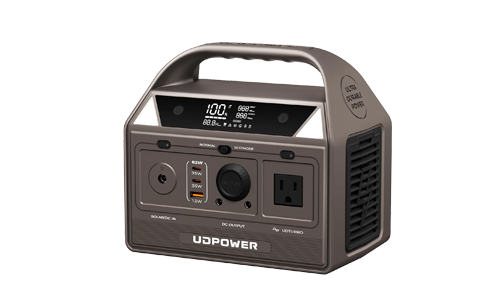
UDPOWER C400 — Light Backup for Small Electronics
Best for: small DC-adapter devices, router backup, lights, short camping trips, charging phones, and keeping essential electronics running for a few hours.
- Capacity: 256Wh
- AC output: 400W rated, 800W surge
- Battery: LiFePO4, 4,000+ cycles
- Weight: 6.88 lbs
- Ports: 9 output ports, including AC outlets, USB-C, USB-A, 12V car port, and DC5521 outputs
Estimated runtime for a 36W device through its correct AC adapter: roughly 5–6 hours after normal conversion losses. Use this as a planning estimate, not a guarantee.

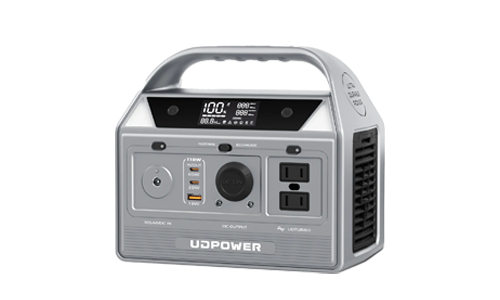
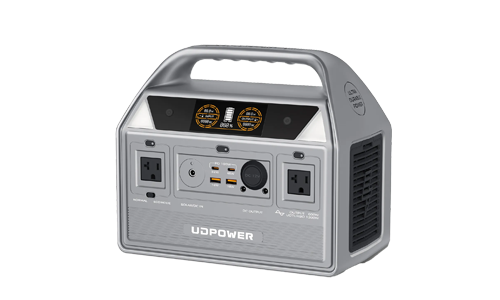
UDPOWER C600 — Longer Runtime for Everyday Essentials
Best for: longer router backup, cameras, mini-fridges, laptops, camping comfort, and running multiple small devices at the same time.
- Capacity: 596Wh
- AC output: 600W rated, 1200W peak
- Battery: LiFePO4, 4,000+ cycles
- Weight: 12.3 lbs
- Ports: 2 AC outlets, 65W PD port, 35W Type-C, USB-A ports, and 12V car outlet
Estimated runtime for a 36W device through its correct AC adapter: roughly 13–14 hours after normal conversion losses.
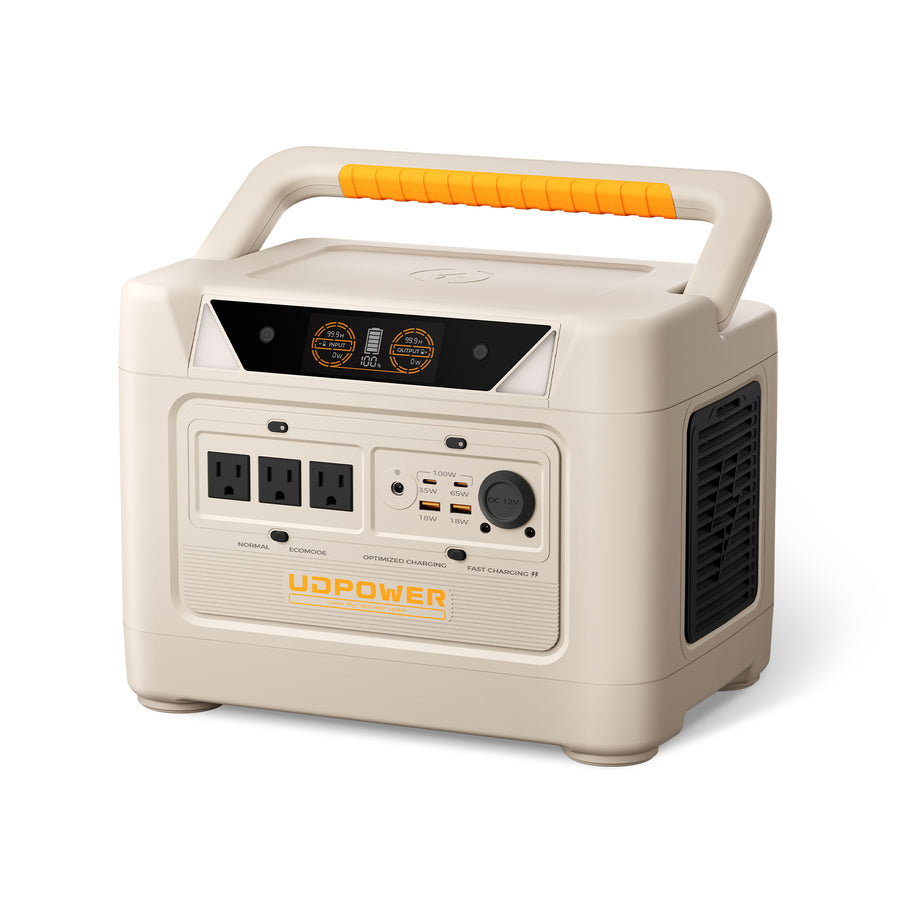
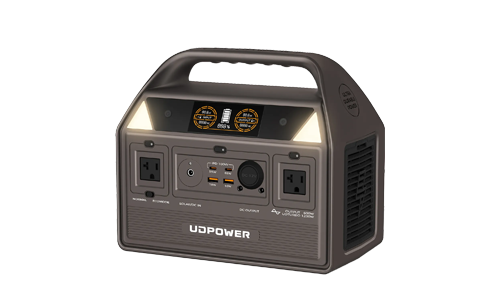
UDPOWER S1200 — Home and Outage Backup Sweet Spot
Best for: longer outages, Wi-Fi routers, laptops, TVs, CPAP machines, lights, fans, and several small appliances in one setup.
- Capacity: 1,190Wh
- AC output: 1,200W pure sine wave
- Surge support: up to 1,800W
- Battery: LiFePO4, 4,000+ cycles
- Weight: about 26.0 lbs
Estimated runtime for a 36W device through its correct AC adapter: roughly 27–28 hours after normal conversion losses.
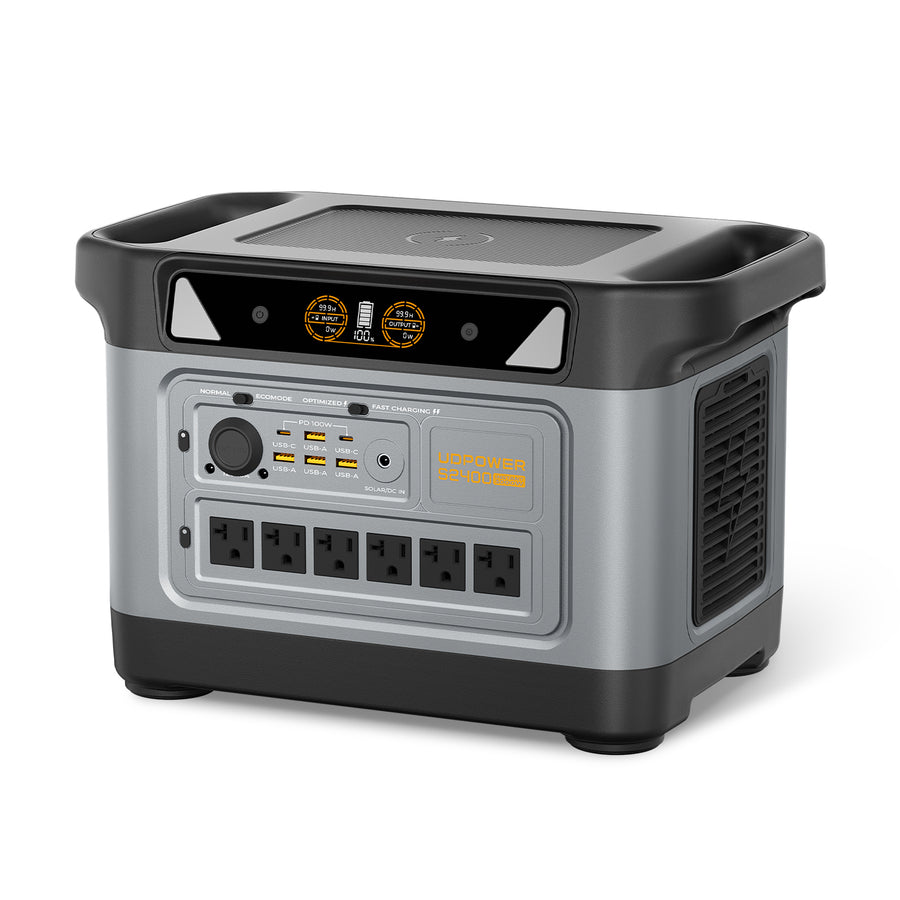
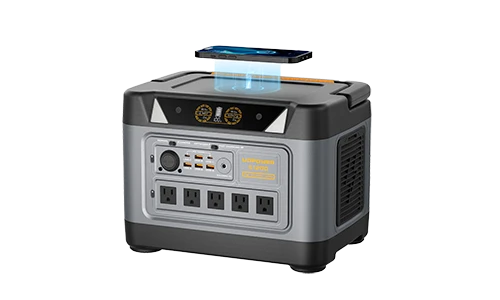
UDPOWER S2400 — Higher Capacity for Multiple Devices
Best for: larger home essentials, longer backup windows, bigger appliances, and setups where several devices need AC power at the same time.
- Capacity: 2,083Wh
- AC output: 2,400W pure sine wave
- Surge support: up to 3,000W
- Battery: LiFePO4, designed for frequent use
- Ports: 6 AC outlets plus USB-A, USB-C, DC5521, 12V car outlet, and wireless charging
Estimated runtime for a 36W device through its correct AC adapter: roughly 48–49 hours after normal conversion losses.
Important: If you are powering a medical device, safety system, or expensive electronics, confirm its power requirements with the manufacturer. Use the original adapter whenever possible.
Real-World Adapter Matching Examples
Use this table when you are comparing labels on old adapters, replacement adapters, and the device itself.
| Device Requirement | Adapter You Found | Safe? | Reason | Better Choice |
|---|---|---|---|---|
| 12V 3A | 19V 3.42A | No | Voltage is too high. | 12V 3A or 12V 5A, same polarity and plug |
| 12V 3A | 12V 5A | Usually yes | Voltage matches; current capacity is higher. | Confirm plug size and polarity. |
| 12V 3A | 12V 2A | Not recommended | Adapter may not supply enough current. | Use at least 3A. |
| 12V 3A center-positive | 12V 3A center-negative | No | Polarity is reversed. | Use same polarity as the original adapter. |
| 12V DC | 12V AC | No | AC output is not the same as DC output. | Use a 12V DC adapter. |
| 12–24V DC input | 19V DC | Maybe | Only if the manual clearly lists 19V within the accepted range. | Still confirm amps, plug size, and polarity. |
How to Read the Adapter Label Without Guessing
Look for the line that starts with OUTPUT. That is the line that matters for your device. The INPUT line usually tells you what the adapter itself accepts from the wall, such as 100–240V AC. Do not confuse input voltage with output voltage.
| Label Text | What It Means | What to Match |
|---|---|---|
| INPUT: 100–240V~ 50/60Hz | The adapter can plug into common wall outlets in many regions. | This does not tell you whether the adapter is safe for your device. |
| OUTPUT: 12V ⎓ 3A | The adapter outputs 12V DC up to 3A. | Good target for a 12V 3A device. |
| OUTPUT: 19V ⎓ 3.42A | The adapter outputs 19V DC up to 3.42A. | Not for a 12V-only device. |
| Center-positive polarity symbol | The center pin of the barrel plug is positive. | Must match the device or original adapter. |
| 5.5 × 2.1mm or 5.5 × 2.5mm | Outer and inner barrel plug dimensions. | Must match the device jack. |
Related Reading
FAQ
Can I use a 19V 3.42A adapter for a 12V 3A device?
No. The adapter has enough current capacity, but the voltage is too high. Use a 12V DC adapter rated at 3A or higher with the correct plug and polarity.
Is 19V close enough to 12V?
No. 19V is about 58% higher than 12V. That is not a small difference for a device designed for 12V input.
Can I use a 12V 5A adapter instead of a 12V 3A adapter?
Usually yes, as long as it is a regulated 12V DC adapter and the plug size and polarity match. The device will draw only the current it needs.
Can I use a 12V 2A adapter for a 12V 3A device?
It is not recommended. A 2A adapter may be underpowered for a device that can draw 3A. It may shut down, run hot, or fail under load.
What if the connector fits?
A connector that fits does not prove electrical compatibility. Voltage, current capacity, polarity, AC/DC output type, and plug fit all matter.
What if my device says 12–24V DC input?
If the device label or manual clearly says it accepts 12–24V DC, then 19V may be within range. You still need to confirm current capacity, polarity, connector size, and warranty guidance.
Can I use a 19V-to-12V converter?
Yes, a properly rated buck converter can step 19V down to 12V, but it must be rated for at least the required current and wired with the correct polarity. For most people, buying the correct 12V adapter is simpler and safer.
Does “AC adapter” mean the adapter outputs AC?
Not always. Many “AC adapters” plug into AC wall power but output DC to the device. Always read the OUTPUT line on the label.
Can I run a 12V 3A device from a portable power station?
Yes, but the safest simple method is to use the device’s correct 12V adapter plugged into the power station’s AC outlet. Do not use a wrong-voltage adapter just because a power station is available.
What adapter should I buy for a 12V 3A device?
Buy a regulated 12V DC adapter rated at 3A or higher. Match the connector size and polarity to the original adapter or the device manual.
Need Backup Power for Your Correct Adapter?
If your goal is to keep routers, cameras, laptops, lights, or small electronics running during an outage, use the correct device adapter and power it from a portable power station. Start with the device wattage, then choose the battery capacity that gives you the runtime you need.