

Aquarium Power Outage Backup: How to Keep Your Fish Tank Alive When the Power Goes Out
Latest updated: August 13, 2026
Quick Answer
The best aquarium power outage backup is not necessarily the battery that can run every fish tank device. It is the backup that keeps the right equipment running for the expected outage.
For most aquariums, prioritize aeration and water movement first, then essential filtration, then temperature control when room conditions make heating or cooling necessary. Aquarium lighting, decorative equipment, automatic feeders, UV sterilizers and other nonessential loads can usually remain off during an emergency.
A low-power aquarium air pump may consume only a few watts, while a heater can be rated at 50–300W or more. That means running the heater continuously can shorten battery life dramatically. For many home tanks, a 500–600Wh portable power station is useful for short outages, while a 1,000Wh+ battery backup provides substantially more flexibility for overnight outages, cold weather, larger aquariums or multiple tanks.
If you already know your aquarium's actual watts, estimate runtime with: Battery capacity × 0.90 ÷ average load watts = approximate runtime in hours.

A fish tank looks calm when the power goes out, which can make the first few hours misleading. The lights are off and the filter is silent, but the more important changes are happening in the water: circulation stops, oxygen is continuously consumed, biological filtration loses its normal flow of oxygenated water, and temperature begins moving toward room temperature.
The right response depends on the aquarium. A lightly stocked 20-gallon freshwater tank in a 74°F room is a completely different outage problem from a heavily stocked African cichlid tank, a 75-gallon tropical aquarium beside an exterior wall, or a reef tank dependent on continuous water movement.
That is why this guide uses an essentials-first power budget instead of telling every aquarist to plug the entire power strip into the biggest battery they can find.
What Happens to an Aquarium During a Power Outage?
Four things matter most: dissolved oxygen, water circulation and biological filtration, temperature, and waste accumulation.
1. Dissolved oxygen keeps being consumed
Fish keep breathing even though pumps have stopped. Beneficial nitrifying bacteria also depend on oxygen. New Mexico State University notes that dissolved oxygen is important to both fish and the nitrifying bacteria responsible for processing waste, and that warmer water holds less oxygen than cooler water.
Source: New Mexico State University — Important Water Quality Parameters.
This is why a cheap, low-wattage air pump can sometimes be more valuable during an outage than a much higher-wattage piece of equipment.
2. Filtration stops moving oxygenated water through the media
Mechanical debris does not suddenly become an emergency just because the filter stopped. The bigger concern is the biological side of filtration. A canister or hang-on-back filter contains beneficial bacteria, but once circulation stops, the water inside the filter is no longer continuously replenished with oxygen.
Aquarium Co-Op specifically warns that HOB and canister filter media compartments hold relatively little oxygenated water and discusses moving filter media into the aquarium during extended outages.
Source: Aquarium Co-Op — How to Care for Aquarium Fish During a Power Outage.
3. Water temperature starts moving toward room temperature
A large tank usually changes temperature more slowly than a small tank because it contains more thermal mass. The problem becomes more serious when the difference between room temperature and the aquarium's target temperature is large.
Tropical tanks during a winter outage are the obvious example. In summer, however, overheating can be the bigger problem—especially because warm water also holds less dissolved oxygen.
4. Waste continues to enter the system
Fish continue producing waste, while normal biological processing may be reduced. Feeding during an extended outage adds another source of waste and increases oxygen demand.
For that reason, one of the easiest outage decisions is also free: stop feeding until the system is stable again.
What Should You Power First in a Fish Tank?
Think in terms of survival value per watt. A 3W air pump can provide a much bigger emergency benefit per watt-hour than a 150W aquarium light.
| Priority | Equipment | Why It Matters | Typical Outage Decision |
|---|---|---|---|
| 1 — Critical | Air pump / aeration | Supports gas exchange and dissolved oxygen | Run continuously when possible, especially in heavily stocked or warm tanks |
| 1 — Critical | Circulation pump / wavemaker | Maintains water movement and surface agitation | Especially important for marine and reef systems |
| 2 — High | Essential filtration | Maintains water movement through biological media | Run if battery capacity allows; prioritize biological function over cosmetic filtration |
| 2 — Conditional | Heater | Prevents dangerous cooling in tropical tanks | Use based on actual tank temperature, room temperature and species requirements |
| 2 — Conditional | Cooling fan | Helps during unusually hot outages | Use when tank temperature is climbing beyond the safe range for livestock |
| 3 — Usually Optional | Protein skimmer | Useful for reef water quality and gas exchange | Can be secondary to basic circulation during limited-battery situations |
| 4 — Usually Off | Aquarium lights | Normal lighting is not the first survival requirement during a blackout | Switch off to conserve battery |
| 4 — Usually Off | UV sterilizer, decorative pumps, automatic feeder | Low immediate survival value | Leave off until normal power returns |
Aquarium Power Outage Timeline: What to Do and When
There is no universal hour at which every aquarium becomes unsafe. Stocking density, temperature, species, surface area, filtration design and tank volume all matter. Use the timeline below as a decision framework rather than a countdown clock.
| Outage Time | What to Do | What to Watch | Battery Strategy |
|---|---|---|---|
| 0–2 hours | Confirm the outage, stop feeding, check tank temperature and prepare backup equipment. | Fish behavior, room temperature, whether pumps restarted accidentally during flickering power. | If automatic backup is already installed, keep low-watt aeration or circulation operating. |
| 2–8 hours | Prioritize aeration and circulation. Begin conserving energy by shutting down lighting and nonessential equipment. | Fish congregating near the surface, rapid gill movement, temperature drift. | Move from “normal aquarium” mode to “survival load” mode. |
| 8–24 hours | Continue aeration, monitor temperature and consider essential filtration. Avoid feeding. | Ammonia, abnormal fish behavior, large temperature changes. | Use battery for continuous low-power loads; cycle heater only as necessary. |
| 24–72 hours | Test water, preserve biological media, manage temperature carefully and establish a recharge plan. | Ammonia/nitrite, oxygen stress, declining battery state of charge. | Solar, vehicle charging or another safe recharge method becomes important. |
| Multi-day | Shift from temporary backup to an energy-management routine. | Daily energy use versus daily energy you can replace. | Reduce loads aggressively and plan recharge windows rather than simply buying more output watts. |
Aquarium Co-Op's outage guidance notes that lightly stocked aquariums may not require immediate intervention in the first hour or two, but heavily stocked tanks or fish showing signs of oxygen stress need aeration sooner. See their power outage guide for additional fishkeeping-specific emergency advice.
How Many Watts Does a Fish Tank Actually Need During an Outage?
Do not size an aquarium battery backup using tank gallons alone. Gallons influence heater size, pump size and filtration, but the battery powers electrical devices—not gallons of water.
The correct approach is to make a list of the devices you actually intend to keep running.
| Equipment | Planning Range / Example | Important Detail | Source |
|---|---|---|---|
| Air pump | About 1–4W for many small-to-medium pumps | One of the cheapest loads to keep powered continuously | Fluval A Series / Aquarium Co-Op |
| HOB filter | Some efficient models are around 5W | Actual wattage varies considerably by model and flow rate | Fluval C Series |
| Heater | Commonly 50–300W+ | Rated wattage is not the same as 24-hour average because thermostatic heaters cycle | Aqueon Heater Guide |
| Circulation / wavemaker | Check nameplate | May be a higher priority than filtration in marine and reef systems | Use the manufacturer's rated or measured wattage |
| Protein skimmer | Check nameplate | Usually secondary to basic water movement when battery capacity is tight | Use the manufacturer's rated or measured wattage |
| Aquarium lighting | Highly variable | Usually an easy load to eliminate during a short-term emergency | Check the light's power supply label |
A heater can completely change your backup requirement
Aqueon recommends heater sizing based on tank volume and the temperature increase required. Its freshwater setup chart, for example, lists a 100W heater for many 20- to 30-gallon situations, about 150–200W for a 55-gallon tank depending on the temperature difference, and 200–300W for a 75-gallon tank.
That does not mean the heater consumes its full rated wattage every minute. Once the desired temperature is reached, a thermostatic heater cycles on and off. But during a cold-house blackout it may run much more frequently than it does under normal conditions.
How to Calculate the Right Aquarium Battery Backup Size
Start with watt-hours, not inverter watts.
The 90% factor provides a practical allowance for conversion losses. Real results can still vary because of inverter overhead, battery temperature, load behavior, battery age and the on/off cycling of heaters and other equipment.
Example 1: emergency aeration only
Suppose a tank uses a 3W air pump:
That illustrates why aeration gives excellent survival value per watt-hour. In real use, especially when powering a tiny AC load through an inverter, system overhead can make actual runtime shorter than simple watt-hour math suggests.
Example 2: air pump + filter
If the air pump uses 3W and the filter uses 7W, the emergency load is approximately 10W:
Again, treat that as a planning calculation rather than a guaranteed runtime.
Example 3: heater changes everything
Add a 150W heater and the theoretical worst-case load becomes roughly 160W while the heater is actively heating. The battery will drain much faster.
This is why an aquarium outage plan should have two power budgets:
- Survival load: air pump, essential circulation and essential filtration.
- Temperature-control load: heater or cooling equipment added only when conditions justify it.
Fish Tank Battery Backup Runtime Table
The following estimates use 90% conversion efficiency and are intended for comparison. Actual runtime may be lower, particularly at very low AC loads where inverter overhead represents a larger share of total consumption.
| Average Backup Load | Example Use | UDPOWER C600 596Wh |
UDPOWER S1200 1,190Wh |
UDPOWER S2400 2,083Wh |
|---|---|---|---|---|
| 5W | Very low-power aeration / circulation | ≈ 107.3 hr | ≈ 214.2 hr | ≈ 374.9 hr |
| 15W | Air pump + efficient filter / small pump | ≈ 35.8 hr | ≈ 71.4 hr | ≈ 125.0 hr |
| 40W | Multiple pumps or a more complex essential load | ≈ 13.4 hr | ≈ 26.8 hr | ≈ 46.9 hr |
| 100W | Heater cycling averaged with pumps, or larger system | ≈ 5.4 hr | ≈ 10.7 hr | ≈ 18.7 hr |
| 200W | Cold-weather heated aquarium or larger multi-device setup | ≈ 2.7 hr | ≈ 5.4 hr | ≈ 9.4 hr |
The lesson is more useful than the individual numbers: reducing a 200W emergency load to 40W increases potential runtime by roughly five times.
For a broader explanation of watt-hours and real-world battery planning, see Portable Power Station Runtime Planning for Outages.
Fish Tank Heater Power Outage: Should You Keep the Heater Running?
Sometimes yes. Sometimes running it continuously is the fastest way to waste your backup battery.
First, look at temperature—not the clock
If a tropical tank normally stays at 78°F and the room remains at 74°F, an outage may not create an immediate heating emergency. If the same aquarium is in a house falling toward 55°F during a winter storm, heater power becomes much more important.
Aqueon's heater guidance uses roughly 5 watts per gallon for many aquariums of 55 gallons or less and about 3 watts per gallon for larger tanks as a general heater-sizing rule, with higher requirements possible in especially cold rooms.
Source: Aqueon — Fish Tank Heater Tips for Cold Weather.
How long will a battery run a 150W fish tank heater?
If a 150W heater somehow remained on continuously, approximate theoretical runtime would be:
| Battery Backup | Usable Energy at 90% | 150W Continuous Heater Runtime |
|---|---|---|
| UDPOWER C600 | ≈ 536Wh | ≈ 3.6 hours |
| UDPOWER S1200 | ≈ 1,071Wh | ≈ 7.1 hours |
| UDPOWER S2400 | ≈ 1,875Wh | ≈ 12.5 hours |
Actual thermostat-controlled runtime can be longer because the heater normally switches off after reaching the target temperature. But during a severe winter outage, the duty cycle may rise substantially.
Use insulation to buy battery time
Before asking the heater to fight a cold room continuously, reduce heat loss:
- Keep the aquarium lid closed.
- Wrap the sides and back of the tank with blankets, towels or other insulation.
- Do not block equipment ventilation.
- Keep a battery-powered thermometer or non-powered thermometer available.
- Avoid sudden temperature corrections.
Freshwater vs. Saltwater and Reef Tank Backup
A simple freshwater aquarium and a reef tank should not automatically receive the same backup plan.
| Setup | First Backup Priority | Temperature Concern | Recommended Strategy |
|---|---|---|---|
| Lightly stocked freshwater tank | Aeration | Species and room dependent | Low-watt air pump can provide long emergency runtime |
| Heavily stocked freshwater tank | Aeration + circulation | Monitor closely | Continuous backup is preferable to waiting for visible oxygen stress |
| Tropical freshwater tank in winter | Aeration, then heat as required | Potentially high | Insulate tank first, then use heater strategically |
| Cold-water aquarium | Aeration / circulation | Overheating may be more concerning than cooling | Do not automatically assume a heater is needed |
| Saltwater fish-only tank | Water movement + oxygenation | Species dependent | Prioritize circulation pumps before nonessential accessories |
| Reef tank | Continuous circulation / gas exchange | Often narrow acceptable range | Plan more backup capacity and redundancy than a basic freshwater tank |
For reef tanks, do not size backup power by looking only at the return pump. Account for the circulation equipment you actually need to prevent stagnant zones and maintain gas exchange.
Aquarium Air Pump Backup vs. UPS vs. Portable Power Station
| Backup Type | Best For | Main Advantage | Main Limitation |
|---|---|---|---|
| Battery-backup air pump | Basic emergency oxygenation | Low cost, low power consumption, some switch automatically | Does not run heater, main filter or other AC equipment |
| Small USB power bank | USB air pump | Compact and efficient for tiny loads | Limited equipment compatibility |
| Traditional UPS | Brief interruptions | Automatic switchover | Many computer-style units are designed for minutes rather than long-duration aquarium backup |
| Portable power station | Multi-hour or overnight outages | Much larger battery capacity and multiple output options | Must still be sized around actual aquarium load |
| Gas generator | Long-duration outages with large energy demand | Can operate for extended periods with fuel | Must be operated outdoors because of carbon monoxide risk; requires fuel and maintenance |
If you are deciding between battery and fuel-powered emergency backup, see Portable Power Station vs. Generator for Power Outages.
Recommended UDPOWER Aquarium Power Outage Backup Options
Aquarium loads are usually modest compared with kitchen appliances or power tools. That means battery capacity and runtime often matter more than chasing extremely high inverter output.
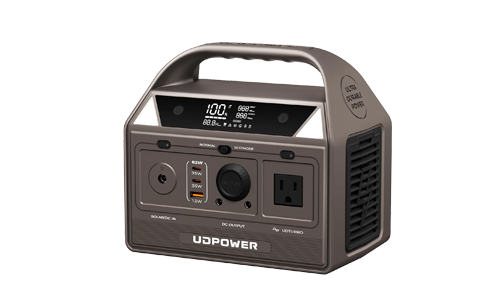
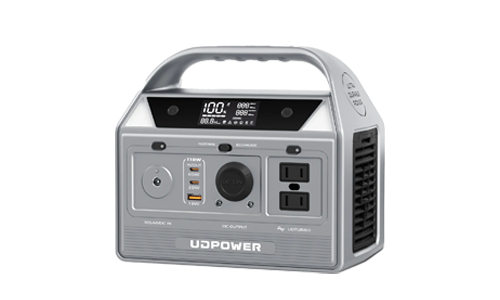
UDPOWER C600 — Best for Small Tanks and Shorter Outages

- Battery capacity: 596Wh
- Rated output: 600W
- Battery chemistry: LiFePO4
- Cycle life: 4,000+ cycles
- AC outlets: 2
- Best aquarium use: air pumps, filters, circulation pumps and modest short-duration emergency loads
The C600 makes the most sense when your emergency plan focuses on a low-wattage air pump and essential circulation rather than trying to power a large heater continuously.
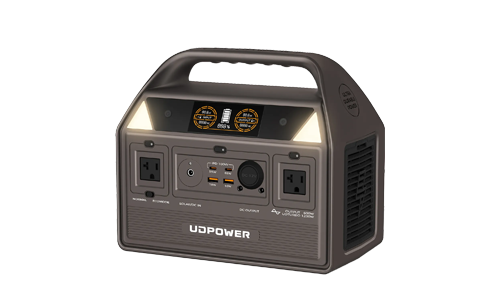
UDPOWER S1200 — Best Overall Choice for Most Home Aquarium Backup Plans
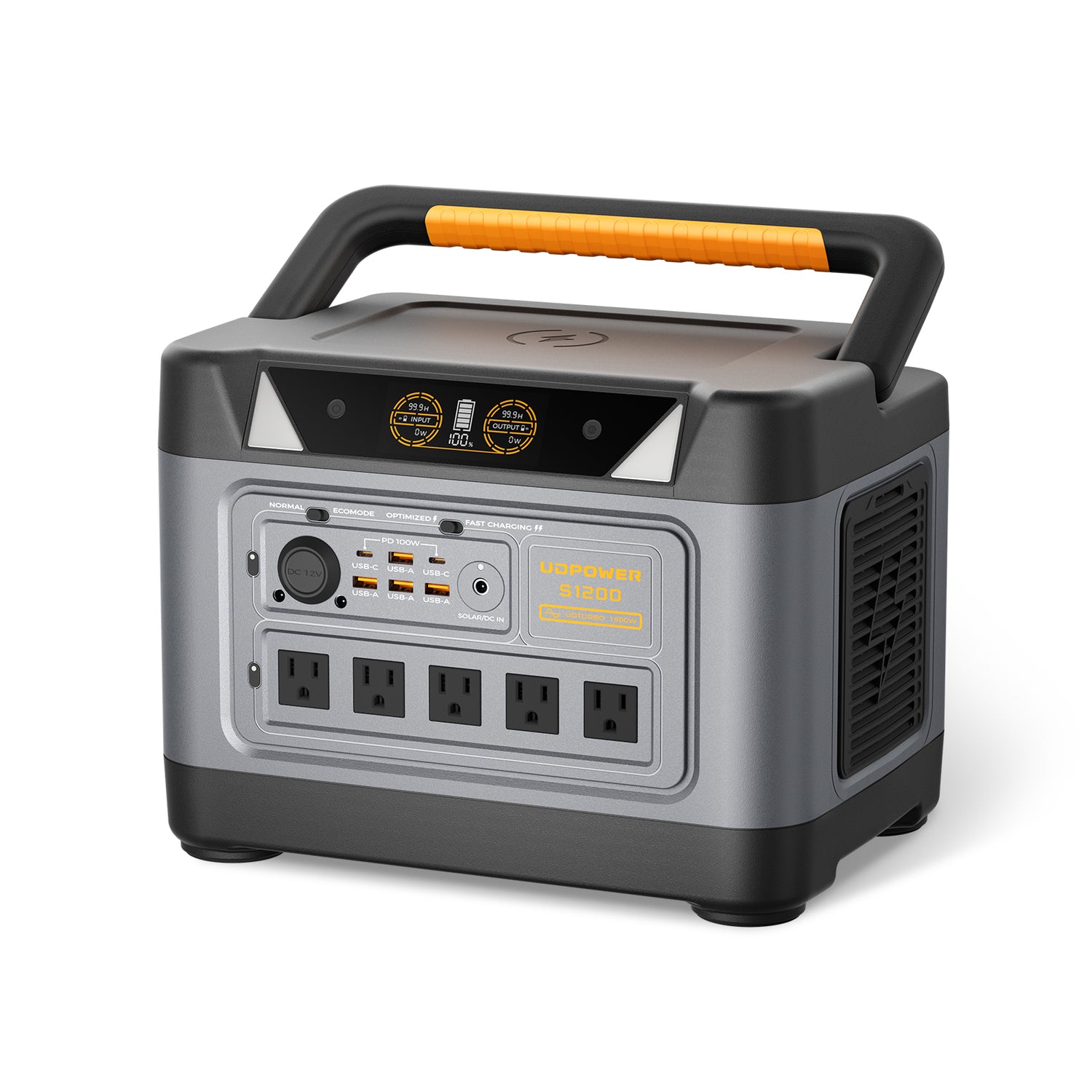
- Battery capacity: 1,190Wh
- Rated AC output: 1,200W
- UDTURBO higher-load support: up to 1,800W for compatible loads
- Battery chemistry: LiFePO4
- Cycle life: 4,000+ cycles
- Output ports: up to 14 on the current 5-AC model
- UPSPRIME switchover: <10 ms
- Maximum solar input: up to 400W
- Weight: 26 lbs
For a typical home aquarist who wants enough capacity for pumps, filtration and some heater operation during a winter outage, the S1200 is the most balanced option. Its 1,190Wh battery gives far more runtime headroom than a small UPS without moving into a much larger 2kWh-class system.
The S1200 also makes sense when the aquarium is not the only emergency load. You can reserve most of the battery for the tank while still having enough output capability for phones, a router or other small essentials.
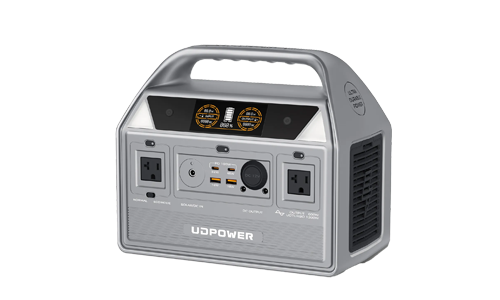
UDPOWER S2400 — Best for Large Aquariums, Multiple Tanks and Longer Outages
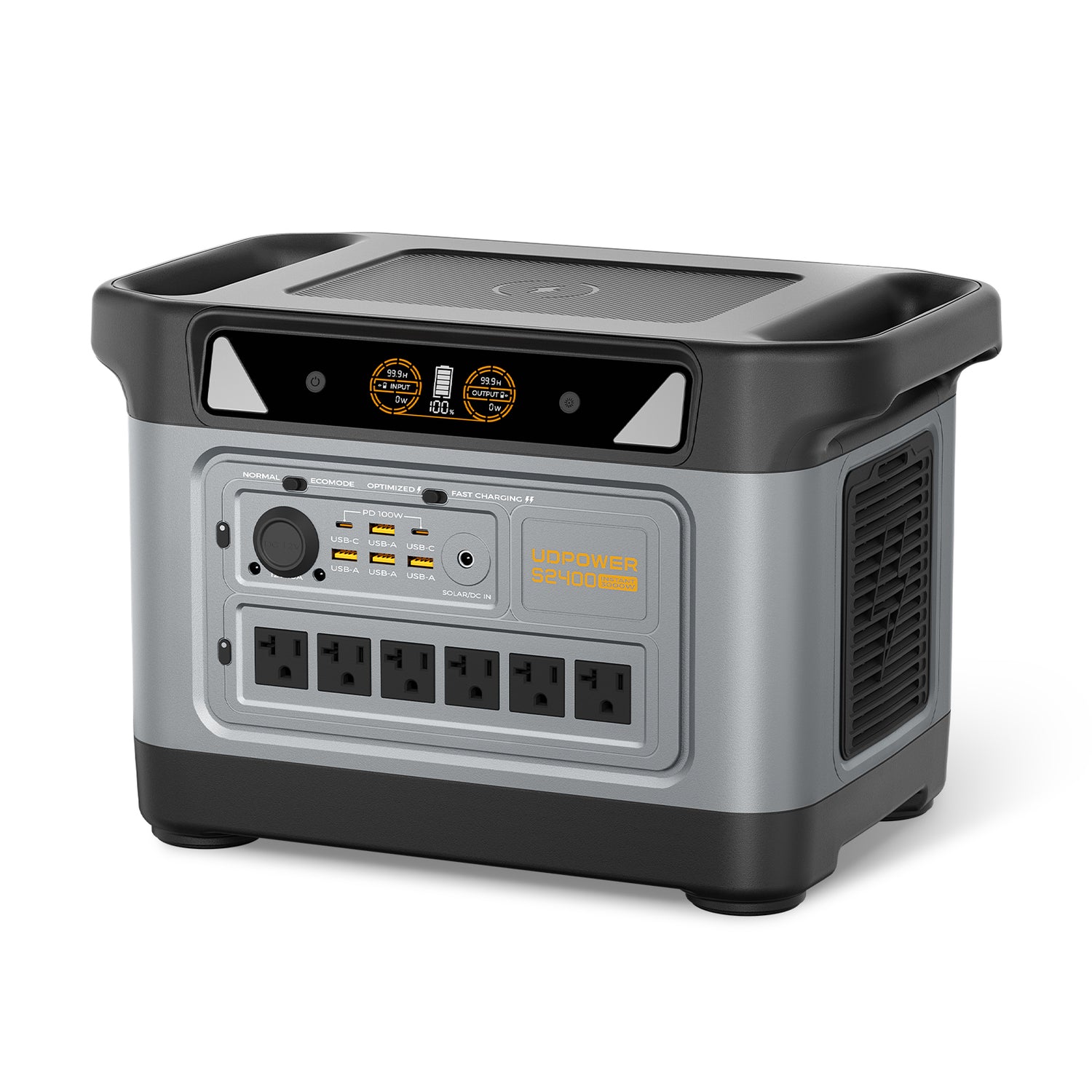
- Battery capacity: 2,083Wh
- Rated AC output: 2,400W
- UDTURBO higher-load support: up to 3,000W
- Battery chemistry: LiFePO4
- Cycle life: 4,000+ cycles
- AC outlets: 6
- Total current output ports: 15
- UPSPRIME switchover: <10 ms
- Solar charging: supported for extended outage planning
A single small aquarium rarely needs 2,400W of output. The reason to consider the S2400 is its 2,083Wh battery capacity. That extra stored energy matters for large heated tanks, reef systems, fish rooms, multiple aquariums or households preparing for overnight and multi-day outages.
| UDPOWER Model | Capacity | Rated Output | Best Aquarium Scenario |
|---|---|---|---|
| C600 | 596Wh | 600W | Small/medium aquarium, aeration and pumps, shorter outages |
| S1200 | 1,190Wh | 1,200W | Best all-around home aquarium backup, heater flexibility, overnight outages |
| S2400 | 2,083Wh | 2,400W | Large tanks, reef systems, multiple tanks and longer outages |
You can also compare the full lineup on the UDPOWER Portable Power Station collection.
How to Build an Aquarium Power Outage Backup Plan
Step 1: Label every aquarium plug
Do this before the storm. Label the heater, filter, air pump, circulation pump, light, skimmer and any other device so you are not tracing cables in the dark.
Step 2: Make a survival circuit
Put the equipment you actually need during an outage on a dedicated power strip or clearly identify those plugs.
A simple freshwater survival circuit might be:
- Air pump
- One essential filter or circulation pump
- Heater only when temperature requires it
A reef survival circuit may instead prioritize:
- Primary circulation / wavemaker
- Return pump if required for system operation
- Aeration or additional surface movement
- Temperature control as needed
Step 3: Record watts, not just equipment names
Check the device label, manufacturer specification or—better—measure the entire emergency circuit with a plug-in energy meter.
Step 4: Test two load modes
Run a real-world test before storm season:
- Mode A: survival mode — pumps and aeration only.
- Mode B: cold-weather mode — survival equipment plus heater.
Record battery percentage after 2, 4 and 8 hours. Your own test is more useful than an internet runtime estimate.
Step 5: Set a battery reserve
Avoid using emergency power on aquarium lighting, phone entertainment or kitchen appliances if doing so could leave the fish tank without aeration later in the outage.
Step 6: Plan for 24, 48 and 72 hours
If local outages regularly last longer than one day, stored battery capacity is only half the plan. You also need a way to replace the energy you consume.
For longer events, read Solar Charging During an Outage and the broader 24/48/72-Hour Power Outage Checklist.
Step 7: Keep backup equipment away from water
A portable power station should remain dry and positioned where splashes, leaks, sump overflow or a broken aquarium hose cannot reach it. Keep cords arranged with appropriate drip loops and follow the electrical equipment manufacturer's safety instructions.
What to Do When the Electricity Comes Back
Power restoration is not the moment to immediately feed heavily and walk away.
- Confirm the power is stable. Repeated on/off cycles can occur during grid restoration.
- Check every pump and filter. Do not assume everything restarted correctly.
- Inspect canister and HOB filters if they were stagnant for a long outage.
- Check aquarium temperature. Let the heater restore temperature gradually.
- Test ammonia and nitrite after a significant outage, especially if biological filtration was disrupted.
- Keep feeding light or delay feeding. Give the biological system time to stabilize.
- Recharge your battery backup immediately so the system is ready if utility power fails again.
Aquarium Co-Op recommends avoiding feeding for 24 hours after power restoration following a significant outage so biological filtration has time to catch up. See their aquarium outage guidance.
Common Aquarium Power Outage Mistakes
Trying to power everything
Running lights, decorative equipment and nonessential accessories can consume the battery you later need for oxygen or heat.
Choosing a battery by inverter watts alone
A 2,000W inverter tells you how large a load the unit can support. It does not tell you whether your aquarium will run for 4 hours or 40 hours. Runtime is primarily an energy-capacity question.
Assuming heater wattage equals average wattage
A 150W heater draws around its rated power when actively heating, but normally cycles. Measure 24-hour energy consumption if you want a useful battery estimate.
Waiting until fish gasp before thinking about oxygen
If you already own a backup system, there is little reason to ration a 2–4W air pump aggressively while spending hundreds of watt-hours elsewhere.
Continuing normal feeding
Feeding increases waste at exactly the time filtration and oxygenation may be compromised.
Making sudden temperature corrections
Rapid changes can be more stressful than a gradual temperature drift. Insulate first and correct temperature carefully.
Never testing the backup system
A battery displaying 100% is not proof that your exact filter, pump, heater and automatic switchover arrangement will behave as expected. Test it before you need it.
A Simple Aquarium Emergency Kit
- Battery-powered or USB aquarium air pump
- Airline tubing
- Air stone
- Check valve
- Portable power station
- Aquarium thermometer that does not depend on household AC power
- Ammonia and nitrite test kit
- Dechlorinated water or water conditioner for emergency water changes
- Blankets or insulation for winter outages
- Flashlight or headlamp
- Written list of essential aquarium plugs and watts
- Recharge plan for outages lasting more than one day
Frequently Asked Questions About Aquarium Power Outage Backup
What is the best battery backup for an aquarium?
The best battery backup depends on the aquarium's essential wattage and required runtime. A battery-backed air pump may be enough for basic oxygenation, while a 500–600Wh portable power station is more useful for running pumps and filters for many hours. A 1,000Wh+ power station is usually better for overnight outages, heaters, larger aquariums or multiple tanks.
How long can a fish tank survive without power?
There is no universal safe time. Stocking density, species, water temperature, tank volume, surface area and filtration all affect how quickly conditions deteriorate. Heavily stocked and warm aquariums generally require more attention to oxygen than lightly stocked tanks.
What should I run first during a fish tank power outage?
Prioritize aeration and water movement. After that, consider essential filtration and temperature control. Lights, decorative devices and other nonessential equipment can normally remain off while battery capacity is limited.
Do fish need an air pump during a power outage?
An air pump is one of the most useful emergency devices because it promotes surface agitation and gas exchange while consuming very little electricity. It is particularly valuable in heavily stocked aquariums or when normal filtration and circulation have stopped.
Can I use a UPS for my aquarium?
Yes, especially for short outages and low-power pumps. However, many computer-style UPS units have relatively small batteries and may provide disappointing runtime when heaters or multiple aquarium devices are connected. Compare the UPS battery capacity with the actual aquarium load rather than looking only at VA or maximum watts.
Can a portable power station run a fish tank?
Yes. Most aquarium pumps, filters and heaters fall well within the output capability of modern portable power stations. The more important question is how long the battery will last, which depends on watt-hour capacity and the aquarium's average emergency load.
How big of a battery backup do I need for a 55-gallon fish tank?
Tank size alone is not enough to calculate battery capacity. A 55-gallon aquarium with a 3W air pump and 7W filter needs dramatically less backup energy than the same tank with a 150–200W heater operating frequently. Add the watts of the devices you intend to run, decide how many hours of backup you need, and size the battery from that total.
How long will a battery run a fish tank heater?
Divide usable battery watt-hours by the heater's average wattage. Using 90% conversion efficiency, a 1,190Wh battery provides about 1,071Wh of usable planning energy. At a continuous 150W load, that is approximately 7.1 hours. A thermostatic heater may run longer because it cycles on and off, while extremely cold conditions can increase its duty cycle.
Should I turn off aquarium lights during a power outage?
Usually yes. Lighting is normally a much lower emergency priority than oxygenation, circulation and temperature control. Turning lights off preserves battery energy for equipment that directly supports livestock survival.
Should I feed fish during a power outage?
It is generally better to pause feeding during a significant outage. Feeding increases fish metabolism and waste while filtration and oxygenation may already be reduced.
How can I keep a fish tank warm without wasting battery power?
Reduce heat loss first. Keep the lid closed, insulate the sides and back of the aquarium, monitor temperature and use the heater when necessary instead of assuming it must run continuously. Never block ventilation around powered equipment or the battery station.
What is better for an aquarium: a battery air pump or portable power station?
A battery air pump is inexpensive and excellent for basic oxygenation. A portable power station is better when you also need to run filters, circulation pumps, heaters or several aquariums. Many prepared aquarists use both so a dedicated air pump provides redundancy even if the main battery is being used elsewhere.
Can I use solar panels to keep my aquarium running during a long outage?
Yes, if the portable power station supports solar charging and the panel voltage, current and connector configuration meet the station's input requirements. For multi-day outages, compare your expected daily aquarium energy use with the energy you can realistically recharge during daylight.
Sources and Further Reading
- New Mexico State University — Important Water Quality Parameters in Aquaponics Systems
- Aquarium Co-Op — How to Care for Your Aquarium Fish During a Power Outage
- Aqueon — Fish Tank Heater Tips for Cold Weather
- Aqueon — Setting Up a Freshwater Aquarium
- Fluval — A Series Aquarium Air Pump Specifications
- Fluval — C Series Aquarium Filter Specifications
Related UDPOWER Guides
Final Take: Protect the Aquarium by Protecting the Essential Loads
The smartest aquarium power outage backup is rarely the setup that keeps the tank looking completely normal. It is the setup that spends stored energy where it matters most.
Start with oxygen and water movement. Preserve biological filtration. Watch the thermometer instead of automatically running the heater at full demand. Stop feeding. Turn off lights and nonessential equipment. Then size your battery around the number of hours you realistically need to cover.
A small aquarium running only a few watts of emergency aeration can last an extraordinarily long time on a portable power station. A large heated aquarium can consume the same battery in a fraction of that time. That difference is why measuring your actual emergency load is more useful than choosing a battery based on tank gallons alone.
If outages in your area can last longer than a day, go one step further: build a recharge plan. A properly sized battery combined with disciplined load management and a safe solar or other recharge method is far more resilient than simply buying the highest-watt inverter.
Build Your Aquarium Backup Plan Before the Next Outage
Compare battery capacity, calculate your essential aquarium load, and choose enough runtime for the outages you actually experience.
View Portable Power Stations View S1200 View S2400 Get the Runtime GuideRelated Articles


