What Is the 33% Rule in Solar Panels?
ZacharyWilliamLast updated: May 18, 2026
The “33% rule” comes up when homeowners are trying to understand why an installer cannot simply cover every open part of a roof with solar panels. The rule is not really about solar performance. It is mainly about roof access, fire safety, and how much clear space firefighters may need around a rooftop PV system.
Quick answer
The 33% rule in solar panels usually means that if a rooftop solar array covers more than 33% of the roof’s plan-view area, stricter fire-code layout rules may apply. In many U.S. jurisdictions, the ridge setback can increase from about 18 inches to about 36 inches when panels cover more than 33% of the roof area. That does not always mean you are banned from installing more panels. It usually means the design must leave wider access paths and clearer ventilation space.
For a regular homeowner, the practical question is simple: How much of my roof can I use before the layout needs extra setbacks? The answer depends on your local Authority Having Jurisdiction, roof shape, sprinkler status, roof obstructions, and the current code version adopted in your city or county.

1. What the 33% rule actually means
In normal homeowner language, the 33% rule is a roof-layout trigger. It is commonly tied to the plan-view roof area, which means the roof area as seen from directly above, not the larger sloped surface area measured along the roof pitch.
The reason this matters is safety. During a fire, firefighters may need a clear path from the roof edge to the ridge, space near the ridge for ventilation, and safe access around skylights, vents, dormers, and rescue openings. Solar panels are durable equipment, but they also occupy roof space. Fire-code layout rules try to balance clean energy with emergency access.
| Term homeowners see | Plain-English meaning | Why it affects your solar layout | Source |
|---|---|---|---|
| 33% rule | A common threshold based on how much of the roof is covered by PV panels. | Going above the threshold may require larger ridge setbacks or different access paths. | NFPA residential solar panel requirements |
| Plan-view roof area | The roof footprint seen from above, like a satellite view. | The 33% calculation is often based on this area, not the sloped shingle surface. | Residential solar systems technical sheet |
| Ridge setback | Clear space left on both sides of a horizontal roof ridge. | Many layouts use a smaller setback at or below 33% coverage and a larger setback above it. | NFPA |
| Access pathway | A clear walking path for firefighters from roof edge to working areas. | Pathways can remove otherwise usable panel space, especially on small or complex roofs. | Los Angeles Fire Department |
| AHJ | Authority Having Jurisdiction, usually the local building or fire department. | The AHJ decides what code version and local interpretation apply to your permit. | NFPA |
2. How to calculate the 33% roof threshold
You do not need engineering software for a first-pass estimate. You only need three numbers: the plan-view roof area, the total area covered by panels, and the percentage of coverage.
Simple formula
Solar array coverage percentage = total panel area ÷ total plan-view roof area × 100
Example: If your roof’s plan-view area is 1,800 sq ft and the proposed panels cover 560 sq ft, the calculation is 560 ÷ 1,800 × 100 = 31.1%. That design is below 33% by area, but the final layout still needs local code review.
| Plan-view roof area | 33% threshold | Example panel area below threshold | Example panel area above threshold | What it means |
|---|---|---|---|---|
| 1,000 sq ft | 330 sq ft | 300 sq ft | 380 sq ft | Above 330 sq ft may trigger stricter setback review. |
| 1,400 sq ft | 462 sq ft | 420 sq ft | 510 sq ft | Small roof obstructions can quickly push the design into a layout constraint. |
| 1,800 sq ft | 594 sq ft | 560 sq ft | 650 sq ft | There may still be good room for solar, but ridge and access paths matter. |
| 2,200 sq ft | 726 sq ft | 690 sq ft | 800 sq ft | Larger roofs often have more design flexibility, but dormers, vents, and hips still count. |
| 2,800 sq ft | 924 sq ft | 880 sq ft | 1,000 sq ft | The array may fit by area, but the roof plane layout still controls the final design. |
A common mistake is using the total sloped roof surface instead of the plan-view roof area. On a pitched roof, the sloped surface is larger than the footprint. If you use the larger number, your percentage may look safer than it really is.
3. Real examples for common home solar layouts
The 33% rule is easiest to understand when you look at common project scenarios. A simple rectangle roof can often fit more panels with fewer design headaches. A small roof with several vents, skylights, dormers, and short roof planes can become difficult even before it reaches the theoretical 33% area.
| Homeowner situation | Likely issue | Design move to discuss | Good question to ask |
|---|---|---|---|
| Simple gable roof, few vents | Mostly ridge setback and eave-to-ridge access. | Keep panels grouped cleanly on the best sun-facing plane. | “Can you show me the layout below and above 33% coverage?” |
| Hip roof with small roof planes | Access pathways can consume more usable space. | Use higher-wattage panels to reduce the number of modules. | “Which roof plane is losing the most space to pathways?” |
| Roof has many vents or skylights | Panel rows break up, creating dead space and wiring complexity. | Consider vent relocation only if allowed and cost-effective. | “Is the lost solar production worth the roof work?” |
| Small roof but high electric use | The roof may not support the energy goal by itself. | Prioritize critical loads and add portable backup for outages. | “What portion of my bill can the roof realistically offset?” |
| Homeowner mainly wants outage backup | A full rooftop array may be more project than needed. | Use a solar-ready portable power station for essentials. | “Do I need whole-home solar, or just quiet backup for essentials?” |
4. What changes when you go above 33%
When your proposed PV array crosses the 33% line, the most common change is not the electrical design. It is the fire-access layout. In many code frameworks, a roof array that covers 33% or less of the plan-view roof area may use a smaller clear setback at the horizontal ridge. Above 33%, the required ridge setback may increase.
| Coverage level | Common ridge setback concept | What homeowners usually notice | Important caution | Source |
|---|---|---|---|---|
| 33% or less | Often about 18 inches on both sides of the horizontal ridge. | The design may keep more usable roof area for panels. | Other access pathway rules can still apply. | NFPA |
| More than 33% | Often about 36 inches on both sides of the horizontal ridge. | Some panels may need to be removed or moved to another roof plane. | Local amendments can be stricter or more flexible. | Residential solar systems technical sheet |
| Sprinkler-protected homes | Some jurisdictions allow alternative setback paths when qualifying sprinklers are present. | A sprinklered home may have more layout flexibility. | Your installer must confirm this with the AHJ before relying on it. | Residential solar systems technical sheet |
| Local fire department rules | May require specific eave-to-ridge access paths and limits on dead ends. | A code-compliant layout may look less “full” than a sales rendering. | The fire department or building department has the final say. | LAFD solar placement requirements |
The best way to avoid surprise is to ask for a permit-ready layout, not just a production estimate. A production estimate tells you how many kWh the system may make. A permit-ready layout shows whether the roof can actually hold the array under local rules.
5. How roof shape changes the answer
Two homes can have the same roof area and very different solar capacity. The difference is usually roof shape. A clean south-facing gable roof may accept panels in tidy rows. A chopped-up roof with hips, valleys, vents, skylights, and shade may lose usable space quickly.
| Roof type | Solar layout difficulty | Why the 33% rule feels different | Best practical move |
|---|---|---|---|
| Simple gable roof | Usually easier | Fewer roof planes and fewer access interruptions. | Compare one clean array against split arrays on multiple planes. |
| Hip roof | Moderate to difficult | Pathways and short triangular areas reduce panel-friendly space. | Ask whether higher-output panels reduce module count. |
| Dormer-heavy roof | Difficult | Dormers break up rows and may create shade or setback conflicts. | Use the least shaded, least obstructed plane first. |
| Flat or low-slope roof | Depends on local rules | Pathways, parapets, tilt racks, and equipment access may matter more than ridge setback. | Ask for a fire-access plan, not only a panel count. |
| Small roof with high energy needs | Difficult | Even a legal layout may not provide enough annual kWh. | Pair realistic rooftop solar with backup storage for critical loads. |
6. Questions to ask your installer before signing
A good installer should be able to explain the 33% calculation without making it feel mysterious. You do not need to challenge them on code sections. You only need clear answers in homeowner language.
| Ask this question | Why it matters | A strong answer should include |
|---|---|---|
| “What plan-view roof area did you use for the 33% calculation?” | It confirms they are using the right area basis. | A roof diagram or measurement method, not just a guess. |
| “What percentage of my roof does this layout cover?” | It tells you whether the layout is near a code threshold. | A clear percentage and the total panel area. |
| “What setbacks and pathways are shown on the permit plan?” | Sales mockups may ignore final fire-access details. | Visible ridge setbacks, eave-to-ridge paths, and rescue-opening clearances. |
| “Which AHJ rule are you designing to?” | Local rules control the final permit. | The city or county standard, code year, or fire department guidance. |
| “Can you show a lower-panel-count layout with similar output?” | Higher-wattage panels may preserve output with fewer modules. | A side-by-side layout, production estimate, and cost difference. |
| “What is my backup plan if the roof cannot support the panel count I want?” | Solar production and outage backup are related but not identical goals. | A clear plan for critical loads, storage, or portable solar backup. |
7. What to do when roof space is limited
If the 33% threshold or access pathways reduce your solar layout, do not jump straight to “solar is not worth it.” First separate your goals into two buckets: lowering your electric bill and keeping essential devices running during outages. A rooftop system is usually best for bill offset. A solar-ready battery system is often simpler for essential backup.
| Problem | Best first fix | When it helps | When it may not be enough |
|---|---|---|---|
| Array is just over 33% | Remove or move a few panels, or switch to higher-wattage modules. | You only need a small area reduction to meet the layout threshold. | Your target energy offset is already tight. |
| Roof has many vents | Ask whether vent consolidation or relocation is allowed. | Several small obstructions break up an otherwise good roof plane. | Roof work costs more than the extra solar production is worth. |
| Heavy shade | Use the unshaded roof plane first; consider tree trimming where appropriate. | Shade affects only part of the roof for part of the day. | The roof is shaded most of the productive solar window. |
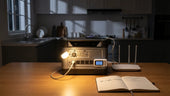
| Small roof, high outage concern | Add a portable power station for critical loads. | You mainly want phones, Wi-Fi, lights, CPAP, fans, or a refrigerator during outages. | You want whole-home backup for central AC, electric heat, or large 240V loads. |
| HOA or permitting delays | Use a temporary portable solar setup while the rooftop system is reviewed. | You need backup power before a permanent installation is approved. | You need a grid-tied bill-offset system immediately. |
8. When portable solar plus storage makes more sense
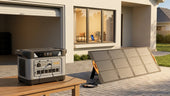
A rooftop PV system and a portable solar generator solve different problems. Rooftop solar is fixed, permit-driven, and designed for long-term energy production. A portable power station paired with solar panels is movable, easier to deploy, and focused on powering essentials when you need them.
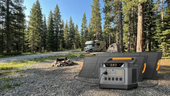
Portable solar can be the better first step when you rent, have a roof with limited usable space, need backup before a full solar project is permitted, or only care about critical-load backup instead of whole-home offset. It is also useful for camping, RV use, job sites, emergency kits, and sheds where rooftop permitting does not make sense.
| Option | Best for | Permitting and roof impact | Backup value | Practical limitation |
|---|---|---|---|---|
| Rooftop solar PV | Long-term bill reduction and daily solar production. | Requires permit review and roof-layout compliance. | Needs battery or inverter setup designed for backup use. | Roof area, shade, setbacks, and local code can limit panel count. |
| Portable solar panel plus power station | Outage essentials, camping, RV, and temporary off-grid use. | No rooftop panel layout and no permanent roof mounting. | Excellent for phones, Wi-Fi, lights, fans, CPAP, small appliances, and fridge support depending on model. | Solar charging depends on sun, panel angle, weather, and battery capacity. |
| Both together | Homeowners who want solar production plus flexible emergency backup. | Rooftop system still follows permit rules; portable gear stays flexible. | Useful for separating critical loads from the whole-house system. | Requires a clear plan for what each system is supposed to power. |
For more detail on portable solar charging, see UDPOWER’s guide: Can You Charge a Portable Power Station with a Solar Panel?
9. Recommended UDPOWER solar-ready backup options
If your roof layout is limited by setbacks, shade, or permitting, a solar-ready portable power station can cover the essentials while your permanent solar plan is being designed. The right model depends on what you want to run, not just the battery size.
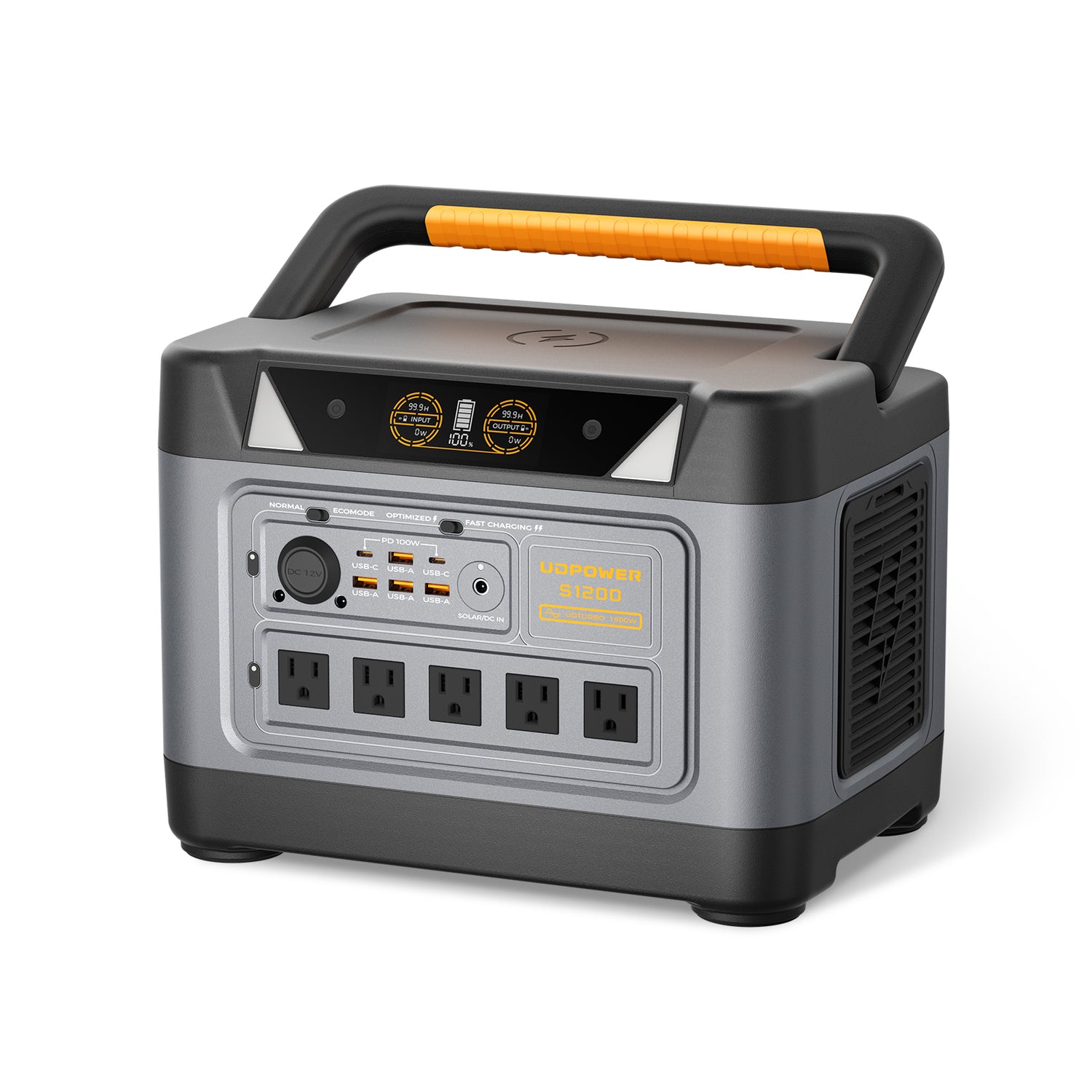
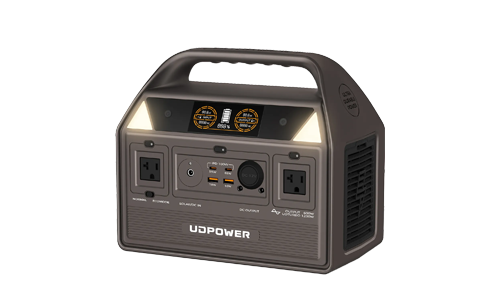
Best balanced home-backup pick: UDPOWER S1200
Why it fits this topic: When rooftop solar space is limited but you still want a real backup plan for outages, the S1200 sits in a practical middle ground. It is large enough for home essentials but still portable enough for RV, camping, and emergency use.
- Capacity: 1,190Wh listed product capacity.
- Output: 1,200W pure sine wave AC output with up to 1,800W surge support.
- Battery: LiFePO4 chemistry with long-cycle design.
- Solar input: 12V–75V, 12A, up to 400W max solar input.
- Best use: Refrigerator support, Wi-Fi, lights, phones, laptops, CPAP, fan, camping, and outage essentials.
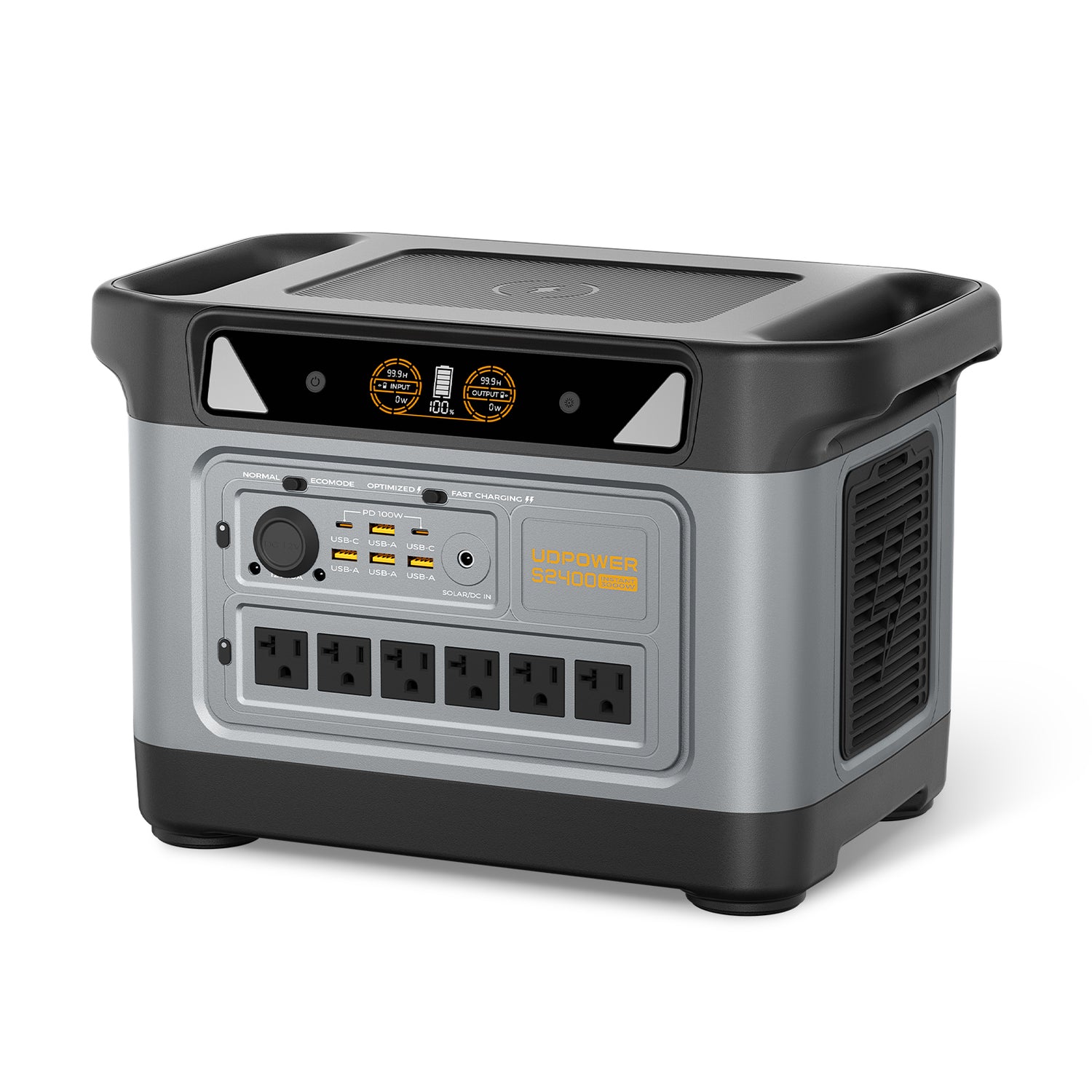
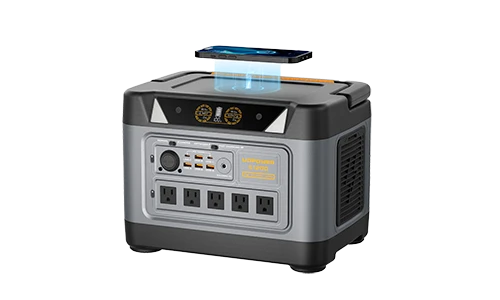
Best larger-capacity backup pick: UDPOWER S2400
Why it fits this topic: If your home has limited roof space but your outage needs are bigger, the S2400 offers more battery capacity and higher output for larger appliances. It is better suited for longer backup windows and higher-wattage devices.
- Capacity: 2,083Wh listed product capacity.
- Output: 2,400W pure sine wave AC output with UDTURBO surge support up to 3,000W.
- Battery: LiFePO4 battery designed for frequent use.
- Solar input: 12V–50V, 10A max, up to 400W solar charging via DC7909 input.
- Best use: Larger outage kits, refrigerator plus electronics, microwave-class loads within limits, RV use, and extended backup.

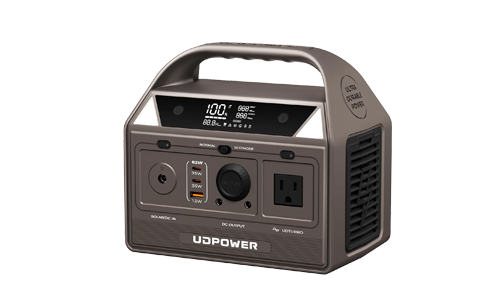
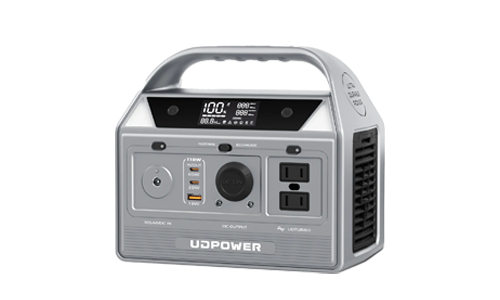
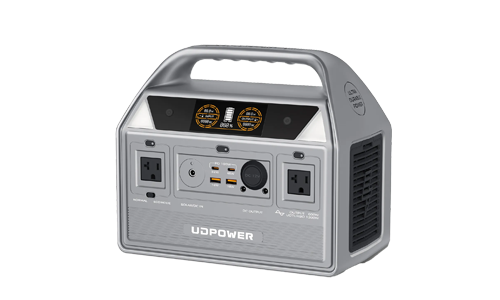
Best compact backup pick: UDPOWER C600
Why it fits this topic: The C600 makes sense when you do not need a large home-backup battery but still want quiet portable power for everyday essentials, short outages, camping, or road trips.
- Capacity: 596Wh listed product capacity.
- Output: 600W pure sine wave AC output with 1,200W max surge listing.
- Battery: LiFePO4 battery with long-cycle design.
- Solar input: Up to 240W max solar charging input.
- Best use: Phones, tablets, Wi-Fi, LED lights, laptops, fans, camera gear, mini-fridges, and light camping loads.
| Model | Capacity | AC output | Solar input | Best fit | Official product page |
|---|---|---|---|---|---|
| UDPOWER C600 | 596Wh | 600W pure sine wave, 1,200W max listed surge | 240W max | Compact backup, camping, laptops, Wi-Fi, lights, fan, small devices | C600 product page |
| UDPOWER S1200 | 1,190Wh | 1,200W pure sine wave, up to 1,800W surge | 12V–75V, 12A, 400W max | Balanced home backup, refrigerator support, CPAP, RV, emergency kits | S1200 product page |
| UDPOWER S2400 | 2,083Wh | 2,400W pure sine wave, up to 3,000W surge | 12V–50V, 10A max, up to 400W | Larger backup needs, RV, refrigerator plus electronics, higher-wattage appliances within limits | S2400 product page |
| Setup | Solar panel pairing | Official best-condition solar estimate | Practical note | Shop |
|---|---|---|---|---|
| S1200 + 420W solar | Two 210W panels | About 2.8 hours from 0–100% under listed test conditions. | Good match for users who want faster solar recovery without a fixed roof array. | S1200 bundles |
| S2400 + 420W solar | Two 210W panels | About 5 hours under best-condition chart guidance. | Better when outage loads are larger or runtime matters more than compact size. | S2400 bundles |
| C600 + 240W solar | Two 120W panels | As little as about 2.5 hours under best-condition product guidance. | Compact choice for light backup, camping, and road trips. | C600 bundles |
Explore more options in the UDPOWER portable power station collection, solar generator kits, and portable solar panels.
10. Common mistakes to avoid
- Mistake 1: Thinking 33% is always a hard maximum. It is often a trigger for stricter layout rules, not a universal ban.
- Mistake 2: Measuring the sloped roof surface instead of plan-view area. The wrong area can make your array percentage look artificially low.
- Mistake 3: Judging the project only by panel count. Panel wattage, orientation, shading, inverter design, and local rules all matter.
- Mistake 4: Forgetting about vents, skylights, and rescue openings. These features can reduce usable space even when total roof area looks large.
- Mistake 5: Assuming rooftop solar automatically gives backup power. Many grid-tied systems shut down during outages unless designed with battery backup or backup-capable equipment.
- Mistake 6: Oversizing the solar plan without defining critical loads. For outages, you may only need to power a refrigerator, router, lights, phone, medical device, fan, or laptop.
FAQ
What is the 33% rule in solar panels?
It usually refers to a rooftop solar layout threshold based on how much of the roof’s plan-view area is covered by panels. In many jurisdictions, crossing 33% can trigger larger fire-access setbacks, especially near the roof ridge.
Does the 33% rule mean I cannot cover more than one-third of my roof?
Not always. It often means your layout must meet stricter access and setback requirements when panel coverage goes above 33%. Your local building or fire department has the final say.
Is the 33% rule based on roof footprint or sloped roof surface?
It is commonly based on plan-view roof area, which is the roof footprint seen from above. Do not assume the sloped shingle area is the correct number for the calculation.
What happens if my solar array is over 33%?
Your installer may need to adjust panel placement, leave larger ridge setbacks, create clearer pathways, or reduce panel count. In some cases, a different roof plane or higher-output panels can preserve much of the system output.
Who decides whether my layout is allowed?
The Authority Having Jurisdiction, usually your city or county building department or fire department, decides based on local code adoption and local amendments.
Can a sprinkler system change the setback requirement?
In some code frameworks, qualifying residential sprinklers may allow alternative setback rules. You should not rely on this unless your installer confirms it with the AHJ for your specific address.
Can portable solar panels avoid the 33% rooftop rule?
Portable solar panels are not permanently mounted rooftop PV arrays, so they are typically not treated the same way as a roof-mounted installation. They still need safe setup, correct wiring, and compatible charging limits.
Which UDPOWER model is best if my roof cannot support enough solar panels?
For balanced home backup, the UDPOWER S1200 is a strong starting point. For larger backup loads and longer runtime, the S2400 is the better fit. For compact backup and camping, the C600 is easier to carry and store.
Will a portable power station power my entire house?
Usually no. Portable power stations are best for selected essentials such as phones, Wi-Fi, lights, CPAP, fans, laptops, small appliances, and sometimes refrigerator support depending on the model and load. Whole-home backup requires a different system design.
How should I plan backup power if I am also installing rooftop solar?
Start with a critical-load list. Decide what must run during an outage, estimate watts and runtime, then choose a rooftop solar, battery, or portable power station setup that matches those loads instead of trying to power everything.
Build a backup plan that matches your roof and your real loads
The 33% rule is not a reason to give up on solar. It is a reason to plan smarter. Ask your installer for the roof-area calculation, confirm local setback rules, and decide whether your main goal is bill offset, outage backup, or both.
Need quiet backup power without waiting for a rooftop permit? Start with a solar-ready UDPOWER portable power station and add compatible portable solar panels when you want off-grid recharge.