Propane Heater vs Battery-Powered Heater: Which Is Better?
Propane heaters provide stronger, longer-lasting room heat, while battery-powered heating setups are better for heated blankets, short heating periods, and essential electronics. This guide compares heat output, runtime, safety, operating cost, cold-weather performance, and real-world outage scenarios to help readers choose the right option.
Last updated: July 27, 2026
A propane heater and a battery-powered heating setup solve two very different winter problems. Propane stores enough energy to produce meaningful room heat for many hours, while a portable power station is quieter, easier to operate indoors, and much better at running low-watt personal heating devices and essential electronics.
Choose a properly approved propane heater when you need substantial room heat during a long outage and can follow every ventilation, clearance, fuel-storage, and carbon-monoxide requirement in the heater manual.
Choose a battery power station when you need indoor power without combustion exhaust, especially for a heated blanket, heating pad, furnace controls, lights, Wi-Fi, phones, CPAP equipment, or a space heater used only for a short warming period.
For many households, the most practical outage plan is not propane or battery. It is propane or a properly connected home heating system for room heat, plus a power station for low-watt warmth and essential devices.
- Best for long-duration room heat: Propane.
- Best for personal warmth: Power station plus a heated blanket or heating pad.
- Best for a 1,500W space heater: A high-output power station can run it, but usually for only about one hour per 2kWh of battery capacity.
- Best for overnight use: Reduce heat loss, warm the person rather than the entire room, and do not leave a portable space heater running unattended.
- Best overall outage strategy: Separate the heating plan from the essential-electricity plan.

What Does “Battery-Powered Heater” Really Mean?
Most products described as battery-powered heaters fall into one of three categories. Understanding the difference prevents one of the most common winter-backup purchasing mistakes.
1. A regular electric space heater connected to a power station
This is the setup most people have in mind. A 750W, 1,000W, or 1,500W electric heater is plugged into the AC outlet of a portable power station.
It can work, but electric resistance heating consumes battery energy extremely quickly. A 1,500W heater uses 1,500 watt-hours every hour when it runs continuously. That is more energy than many portable power stations store in total.
2. A low-watt personal heating device
Heated blankets, heated throws, heating pads, heated clothing, and mattress pads normally consume much less electricity than room heaters. Instead of warming all the air in a room, they place heat close to the person who needs it.
This is where battery power becomes far more practical. A 60W heated throw can run roughly 25 times longer than a 1,500W space heater from the same amount of stored energy.
3. A small cordless or tool-battery heater
Small cordless heaters may warm hands, a workbench, or the area immediately in front of the heater. They should not be confused with a true room-heating system. Their battery packs simply do not contain enough energy to heat a bedroom, living room, garage, or RV for an entire night.
The key distinction: A device can become hot without being capable of heating a room. Check both its wattage and expected runtime before treating it as emergency heat.
Propane Heater vs. Battery-Powered Heater: Quick Decision Table
| Heating need | Better starting choice | Why | Main limitation | Recommended backup approach |
|---|---|---|---|---|
| Heat one room for several hours | Propane or an operating home furnace | Higher sustained heat output and much longer stored-energy runtime | Combustion safety, ventilation, fuel handling, and moisture | Keep a power station available for alarms, lights, communications, and medical devices |
| Stay warm in bed or on a couch | Power station plus heated blanket | Direct personal heat uses far less energy than heating room air | Does not prevent the rest of the home from becoming cold | Combine with layers, insulated bedding, and a closed warm room |
| Run a 1,500W space heater briefly | High-output power station | No combustion exhaust during operation | Very short battery runtime | Use 15- to 30-minute heating windows rather than continuous operation |
| Multi-day winter outage | Hybrid plan | No single portable option handles every load efficiently | Requires advance fuel, battery, and recharge planning | Use fuel or the main furnace for heat and batteries for essential electricity |
| Apartment or building with fuel restrictions | Battery-powered personal warmth | Avoids storing or burning propane where it may be prohibited | Limited ability to heat an entire room | Prepare heated bedding and identify a warming location before severe weather |
| Tent, car, or very small enclosed shelter | Insulation and personal warmth first | Combustion products can accumulate quickly in a small enclosure | Small spaces can become dangerous rapidly | Never assume a heater is suitable; follow the exact manufacturer instructions for that enclosure |
| Garage or workshop spot heating | Propane or properly supplied electric heater | Drafty spaces need substantial heat output | Combustibles, fuel vapors, cords, and poor ventilation increase risk | Use listed equipment, maintain clearance, and remove ignition hazards |
On mobile, swipe the table left or right to view every column.
Heat Output: BTU Compared With Watts
Propane heaters are normally rated in British thermal units per hour, or BTU/hr. Electric heaters are rated in watts. The U.S. Energy Information Administration lists one kilowatt-hour of electricity as 3,412 BTU, which means one watt of continuous electric heating is approximately 3.412 BTU/hr.
| Heating device or setting | Rated input or output | Approximate equivalent | What it usually feels like | Source |
|---|---|---|---|---|
| Heated blanket | 60W | About 205 BTU/hr | Useful direct warmth for one person | UDPOWER heated blanket wattage guide |
| Low-watt personal heater | 400W | About 1,365 BTU/hr | Localized heat in a small area | EIA BTU conversion data |
| Electric heater low setting | 750W | About 2,559 BTU/hr | Can take the chill off a small closed room | EIA BTU conversion data |
| Standard electric space heater | 1,500W | About 5,118 BTU/hr | Common maximum for a 120V portable room heater | EIA BTU conversion data |
| Portable propane heater | 4,000 BTU/hr | About 1,172W of heat | Low-output radiant or personal heating | EIA BTU conversion data |
| Portable propane heater | 9,000 BTU/hr | About 2,638W of heat | Noticeably stronger than a standard 1,500W electric heater | EIA BTU conversion data |
| Larger portable propane heater | 18,000 BTU/hr | About 5,275W of heat | Substantial spot or room heat where the model is approved for use | EIA BTU conversion data |

These conversions explain why a small propane cylinder can provide more noticeable room heat than a large portable battery. The difference is not that electric heat is ineffective. The difference is how much energy the battery can carry.
How Long Can a Power Station Run an Electric Heater?
Heater runtime depends on four numbers:
- The power station battery capacity in watt-hours.
- The heater’s actual wattage setting.
- The power station’s continuous AC output limit.
- Conversion losses between the battery and AC outlet.
The estimates below use the UDPOWER planning standard of 90% conversion efficiency.
A power station must pass two separate tests. Its continuous output must be high enough to start and run the heater, and its battery must contain enough energy for the desired runtime. A large battery with an undersized inverter still cannot run the heater.
| Power station | Heater or warming load | Estimated continuous runtime | Output compatibility | Practical interpretation | Official source |
|---|---|---|---|---|---|
| UDPOWER C600 596Wh / 600W |
60W heated throw | About 8 hr 56 min | Supported | Practical personal-warmth setup for much of a night | C600 specifications |
| UDPOWER C600 596Wh / 600W |
100W heated blanket | About 5 hr 22 min | Supported | Useful when the blanket cycles or is not used at maximum continuously | C600 specifications |
| UDPOWER C600 596Wh / 600W |
400W personal heater | About 1 hr 20 min | Supported if actual load remains at or below 600W | Short spot-heating period, not an overnight room-heating plan | C600 specifications |
| UDPOWER S1200 1,190Wh / 1,200W |
60W heated throw | About 17 hr 51 min | Supported | Allows personal warmth while preserving energy for lights and communications | S1200 specifications |
| UDPOWER S1200 1,190Wh / 1,200W |
100W heated blanket | About 10 hr 43 min | Supported | A much more realistic overnight use than a room heater | S1200 specifications |
| UDPOWER S1200 1,190Wh / 1,200W |
750W heater | About 1 hr 26 min | Supported | Suitable for a brief warming window | S1200 specifications |
| UDPOWER S1200 1,190Wh / 1,200W |
1,500W heater | Not recommended | Exceeds the 1,200W continuous rating | Do not rely on temporary surge capability for continuous resistance heating | S1200 specifications |
| UDPOWER S2400 2,083Wh / 2,400W |
60W heated throw | About 31 hr 15 min | Supported | Leaves substantial capacity for other outage essentials | S2400 specifications |
| UDPOWER S2400 2,083Wh / 2,400W |
100W heated blanket | About 18 hr 45 min | Supported | Strong personal-warmth and essential-power combination | S2400 specifications |
| UDPOWER S2400 2,083Wh / 2,400W |
750W heater | About 2 hr 30 min | Supported | Can warm a closed room for a limited period | S2400 specifications |
| UDPOWER S2400 2,083Wh / 2,400W |
1,500W heater | About 1 hr 15 min | Supported within the continuous output rating | Short emergency heat only; reserve energy for essential loads | S2400 specifications |
Actual results can be shorter because of cold temperatures, inverter overhead, fan operation, battery age, other connected devices, and the heater drawing more than its label suggests. A thermostat that cycles the heater off can extend the total clock time, but it does not change the energy used while the heating element is on.
For a customized estimate, use the UDPOWER portable power station runtime calculator or review the battery runtime planning guide.
How Long Can a Propane Tank Run a Heater?
The EIA lists approximately 91,452 BTU in one gallon of propane. A pound of propane contains roughly 21,600 BTU. That gives propane a major runtime advantage for continuous heat.
| Propane supply | 4,000 BTU/hr setting | 9,000 BTU/hr setting | 18,000 BTU/hr setting | Important conditions | Energy source |
|---|---|---|---|---|---|
| 1 lb disposable cylinder | About 5.4 hours | About 2.4 hours | About 1.2 hours | Actual output can fall in very cold weather or as the cylinder empties | EIA propane heat content |
| Two 1 lb cylinders | About 10.8 hours | About 4.8 hours | About 2.4 hours | Only use a connection arrangement specifically permitted by the heater manufacturer | EIA propane heat content |
| 20 lb refillable cylinder | About 108 hours | About 48 hours | About 24 hours | Tank location, hose, regulator, ventilation, and heater approval must follow the manual and local rules | EIA propane heat content |
These are energy-based estimates, not guaranteed manufacturer runtimes. Heater cycling, regulator performance, cylinder temperature, propane fill level, altitude, and operating setting all affect real results.
Why propane wins the runtime comparison: A 20 lb propane cylinder stores roughly 432,000 BTU of fuel energy. A 2,083Wh power station stores the electrical equivalent of about 7,107 BTU before conversion losses. The battery remains valuable because it can operate indoors without engine exhaust, but it does not carry the same amount of heating energy.
How Much Battery Is Needed for an Entire Night?
A useful way to compare heating strategies is to calculate the energy required for eight hours. This exposes why “warming the person” is usually more realistic than “heating the room” during an outage.
| Eight-hour heating plan | Energy used by device | Minimum battery capacity at 90% efficiency | Practicality | Better way to use it |
|---|---|---|---|---|
| 1,500W heater running continuously | 12,000Wh | About 13,333Wh | Far beyond most portable power stations | Use short warming periods rather than continuous operation |
| 750W heater running continuously | 6,000Wh | About 6,667Wh | Still impractical for most portable systems | Heat one closed room for a limited period |
| 400W heater running continuously | 3,200Wh | About 3,556Wh | Possible only with a large battery system | Use a thermostat and improve insulation first |
| 100W heated blanket | 800Wh | About 889Wh | Realistic with a 1kWh-class power station | Combine with layered bedding and a sleeping bag |
| 60W heated throw | 480Wh | About 533Wh | Realistic with a compact power station | Use direct personal heat instead of warming unused space |
| 400W heater for 2 hours plus 100W blanket for 6 hours | 1,400Wh | About 1,556Wh | Practical with a larger portable power station | Warm the room before bed, then switch to personal heat |
The last row is often the most useful battery-only strategy. Run a small heater long enough to reduce the initial chill, turn it off, and then maintain comfort with a heated blanket, warm clothing, and insulated bedding.

Propane vs. Battery Heater Safety
Neither option is automatically safe. They present different hazards and require different controls.
Never use an outdoor-only propane heater indoors. Do not use camping heaters, grills, stoves, generators, or other fuel-burning equipment inside a home, garage, vehicle, tent, basement, or other enclosed space unless the specific appliance is expressly designed for that environment and its instructions permit that exact use.
| Risk | Propane heater | Electric heater plus power station | Practical safety action | Safety source |
|---|---|---|---|---|
| Carbon monoxide | Possible whenever fuel burns | No combustion CO from the power station or heater | Use working CO alarms and only operate propane equipment exactly as approved | CPSC portable heater guidance |
| Oxygen and ventilation | Combustion consumes oxygen and may require specific ventilation | Does not consume oxygen through combustion | Follow the propane heater’s required opening and ventilation instructions exactly | CPSC CO fact sheet |
| Fire and hot surfaces | Open flame or very hot radiant surface may be present | Heating element and outlet connections can overheat | Keep at least 3 feet from bedding, curtains, clothing, furniture, and other combustibles | U.S. Fire Administration |
| Electrical overload | Usually limited to fans, ignition, or controls on applicable models | High continuous current is a primary concern | Plug the heater directly into the power station outlet and stay within its continuous rating | NFPA heater safety |
| Extension cords and power strips | May affect powered fans or controls | Can overheat under a high-watt heater load | Do not use a power strip; avoid extension cords unless specifically approved for the full load | USFA heating safety handout |
| Sleeping or unattended use | Combustion and fire risks can develop without warning | Portable heaters can tip, overheat, or contact bedding | Turn portable space heaters off when leaving the room or going to bed | U.S. Fire Administration |
| Fuel or battery placement | Cylinder, hose, and regulator must follow the manual and local rules | Power station needs a dry area with unobstructed ventilation | Do not place the power station directly in the heater’s hot-air path or cover its vents | Heater and power station manufacturer instructions |

Electric heater and power station checklist
- Confirm that the heater’s actual wattage is below the power station’s continuous AC rating.
- Connect the heater directly to the power station’s AC outlet.
- Do not connect the heater through a multi-outlet power strip.
- Keep the heater and power station on stable, dry, unobstructed surfaces.
- Maintain at least 3 feet of clearance around the heater.
- Keep the power station away from direct heat and do not block its cooling vents.
- Stop using the setup if the plug, cable, outlet, or connector becomes unusually hot.
- Turn off portable space heaters before sleeping or leaving the room.
Propane heater checklist
- Verify that the exact heater model is approved for the intended location.
- Read the heater manual before the outage, not after the home becomes cold.
- Follow all ventilation and minimum-clearance requirements.
- Install and test carbon-monoxide alarms before using fuel-burning heat.
- Inspect the cylinder, hose, regulator, and connection for damage.
- Do not improvise adapters, hose routing, cylinder locations, or ventilation openings.
- Keep the heater away from bedding, curtains, children, pets, and foot traffic.
- Turn it off before sleeping, leaving the area, refueling, or moving the heater.
Propane Also Adds Moisture Indoors
Carbon monoxide receives the most attention, but unvented combustion also produces water vapor. Burning one pound of propane can create approximately 1.6 pounds of water vapor, equal to roughly three cups of liquid water after condensation.
That moisture can show up as wet windows, damp bedding, condensation on cold walls, or a clammy feeling. In a tight room, trailer, or small cabin, moisture may accumulate faster than expected.
| Indoor effect | Unvented propane heater | Electric resistance heater | What the reader should do |
|---|---|---|---|
| Carbon monoxide potential | Yes | No combustion source | Use approved equipment, required ventilation, and working CO alarms |
| Added water vapor | Yes | No moisture created by combustion | Watch for condensation and follow ventilation instructions |
| Indoor oxygen use | Yes | No combustion oxygen use | Never reduce required ventilation to preserve heat |
| Dust movement | Depends on radiant or fan design | Fan heaters may circulate dust | Keep equipment clean and avoid blocking airflow |
| Smell | A persistent fuel odor may indicate a leak or operating problem | A persistent burning smell may indicate dust, overheating, or damage | Turn the device off and investigate rather than ignoring the odor |
Combustion appliances can produce carbon monoxide, carbon dioxide, nitrogen dioxide, and water vapor. See the CDC discussion of unvented residential heating appliances for additional background.
Which Is Cheaper to Run?
There is no universal winner because the answer depends on local electricity rates, propane prices, heater output, cylinder size, and whether the battery is recharged from the grid, a vehicle, or solar.
A small disposable propane cylinder can cost much more per unit of heat than propane purchased as a refill. Similarly, battery power charged from the grid may be inexpensive per cycle, but the battery has limited stored energy and an upfront purchase cost.
Use these formulas with local prices
| Example heating load | Illustrative energy price | Estimated hourly energy cost | Heat output | Important limitation | Formula source |
|---|---|---|---|---|---|
| 750W electric heater | $0.18 per kWh | About $0.14 per hour | About 2,559 BTU/hr | Does not include the purchase or replacement cost of the battery system | EIA energy conversions |
| 1,500W electric heater | $0.18 per kWh | About $0.27 per hour | About 5,118 BTU/hr | A portable battery may only support this load for about one hour | EIA energy conversions |
| 9,000 BTU/hr propane heater | $3.00 per gallon | About $0.30 per hour | 9,000 BTU/hr | Bulk or refill pricing differs greatly from disposable-cylinder pricing | EIA propane heat content |
| 18,000 BTU/hr propane heater | $3.00 per gallon | About $0.59 per hour | 18,000 BTU/hr | Higher output means faster fuel consumption | EIA propane heat content |
The prices above are calculation examples, not current national averages. Enter your own utility rate and local propane price before comparing operating costs.
During an outage, availability may matter more than price. A cheap heating method is not useful if the propane cylinder is empty, the battery cannot be recharged, or the equipment is not approved for the location.
Which Heating Option Works Best in Real-Life Situations?
Winter power outage at home
For an outage lasting a few hours, a power station can run a low-watt blanket, lights, router, phone chargers, and other essentials without combustion exhaust. A large model can also run a space heater briefly.
For a multi-day outage, repeatedly running a 1,500W heater is rarely a realistic battery strategy. Use an approved heat source for the room and preserve battery capacity for communication, medical equipment, refrigeration, lighting, and personal warmth.
Home with a propane or natural-gas furnace
A gas or propane furnace still needs electricity for the thermostat, ignition system, control board, inducer motor, safety components, and blower. In some homes, operating the existing vented furnace can be more effective than adding a portable heater.
A hardwired furnace must be connected through an approved method such as an electrician-installed furnace transfer switch, generator inlet, transfer switch, or compatible system specified for the equipment. Never backfeed a household outlet or create an improvised furnace cord.
Read the complete backup power guide for gas and propane furnaces before selecting a power source.
Apartment or condominium
Building rules, leases, and local fire codes may restrict propane cylinders and fuel-burning heaters. A battery power station, heated blanket, warm clothing, and an insulated room are usually easier to manage, but they cannot guarantee safe indoor temperatures during a long severe-weather outage.
Households with infants, older adults, temperature-sensitive medical conditions, or limited mobility should identify a heated backup location before the storm arrives.
RV or camper
Many RVs already have a vented propane furnace. In that case, the most efficient combination may be propane for heat and a battery for the furnace blower, controls, lights, water pump, phones, and other DC loads.
A 1,500W electric heater can rapidly drain an RV battery bank or portable power station. It may still be useful when connected to campground power or for a short battery-powered warming period.
Tent or vehicle
Tents and vehicles have very little air volume. Carbon monoxide and oxygen depletion can become dangerous quickly. Do not assume that the words “portable,” “camping,” or “indoor safe” automatically mean a heater can be operated in every tent or vehicle.
Use sleeping bags rated for the expected temperature, insulated sleeping pads, dry clothing, ventilation, and personal heating devices that are specifically suitable for the environment. Follow the heater manufacturer’s exact enclosure instructions.
Garage or workshop
Garages lose heat quickly and may contain gasoline, solvents, sawdust, paint, propane cylinders, or other combustible materials. A high-output heater may feel effective, but the space must be evaluated for ventilation, clearances, ignition hazards, and approved heater type.
Do not operate a portable electric heater through a light-duty extension cord or power strip. Do not use an open-flame heater near fuel vapors or flammable materials.
CPAP or medical-device household
Heating should not consume the battery capacity needed for essential medical equipment. Calculate the overnight CPAP, oxygen concentrator, communication, and lighting load first. Use the remaining capacity for a heated blanket or short heating period only after essential runtime is protected.
The power-outage priority guide can help organize medical, refrigeration, Wi-Fi, lighting, and comfort loads.
Cold-Weather Battery Limitations Most Comparisons Miss
A power station may discharge in below-freezing weather but refuse to recharge when its battery is too cold. This matters when the plan depends on winter solar charging or charging from a vehicle the next morning.
| UDPOWER model | Discharging range | Charging range | Maximum solar input | Winter planning implication | Official source |
|---|---|---|---|---|---|
| C600 | -4°F to 113°F -20°C to 45°C |
32°F to 104°F 0°C to 40°C |
240W | The unit may need to return to an approved charging temperature before accepting a charge | C600 specifications |
| S1200 | -4°F to 113°F -20°C to 45°C |
23°F to 104°F -5°C to 40°C |
400W | Offers a lower listed minimum charging temperature than the other two models | S1200 specifications |
| S2400 | -4°F to 113°F -20°C to 45°C |
32°F to 104°F 0°C to 40°C |
400W | Keep the unit within its approved charging range before relying on winter solar recovery | S2400 specifications |
Do not place a cold power station directly beside a propane heater, space heater, fireplace, or other high-temperature source to warm it quickly. Move it to a dry location within the operating range specified in its manual and allow its temperature to stabilize naturally.
Solar panels also produce less energy during cloudy winter weather, short days, shading, and poor panel angles. A panel with a 400W nameplate should not be treated as a guaranteed 400W all-day energy source.
For off-grid charging options, review the UDPOWER solar generator kits.
Recommended UDPOWER Power Stations for Winter Warmth
A portable power station should be selected around the complete outage plan, not only the heater. Reserve capacity for medical equipment, refrigeration, communication, lighting, and other priority loads before assigning energy to room heat.
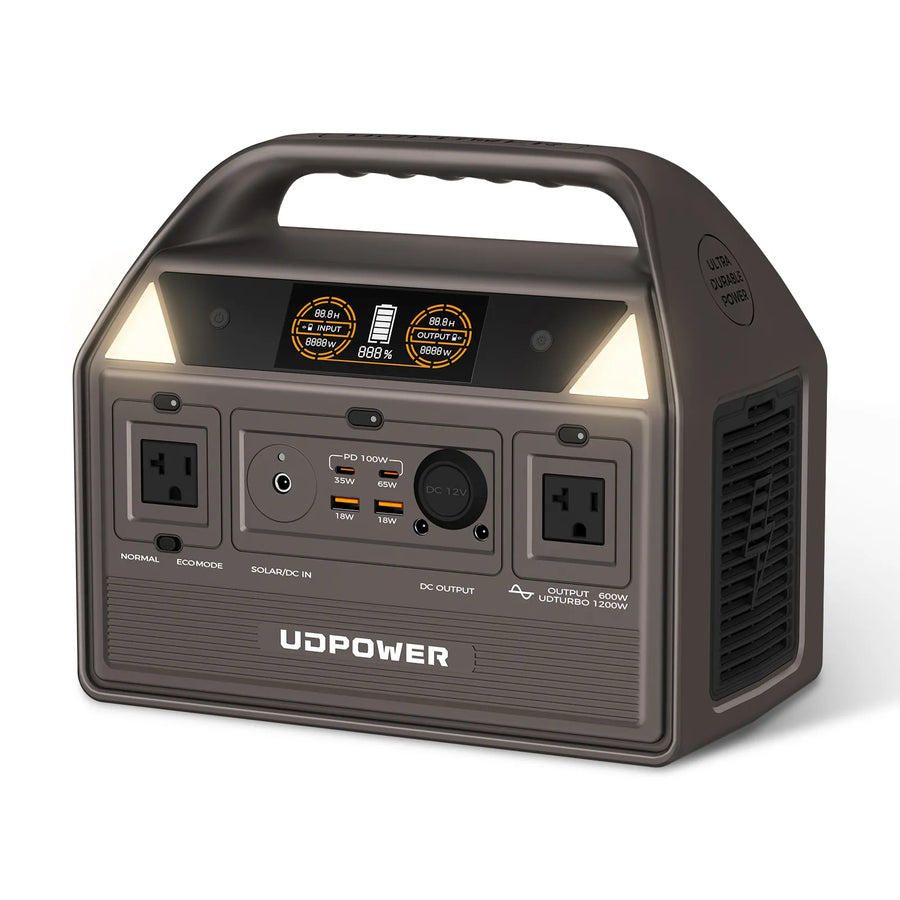
UDPOWER C600 Portable Power Station
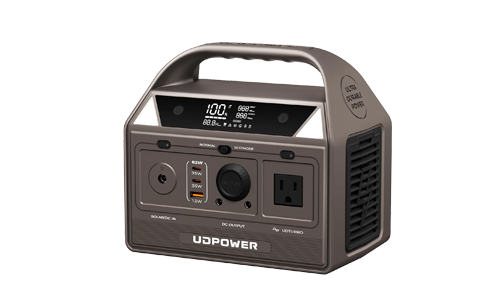
The C600 is the most practical choice when the objective is to warm one person rather than heat an entire room. Its 596Wh battery and 600W continuous AC output are suitable for heated blankets, heated throws, heating pads, lights, phones, laptops, routers, and other low-watt essentials.
- Battery capacity: 596Wh
- Continuous AC output: 600W
- Weight: 12.3 lb
- Estimated 60W heated-throw runtime: About 8 hours 56 minutes
- Estimated 100W blanket runtime: About 5 hours 22 minutes
- Maximum solar input: 240W
- Best fit: Personal warmth, camping essentials, CPAP backup, communications, and lighting
The C600 is not the correct choice for a standard 750W or 1,500W room heater because those loads exceed its 600W continuous AC rating.
View UDPOWER C600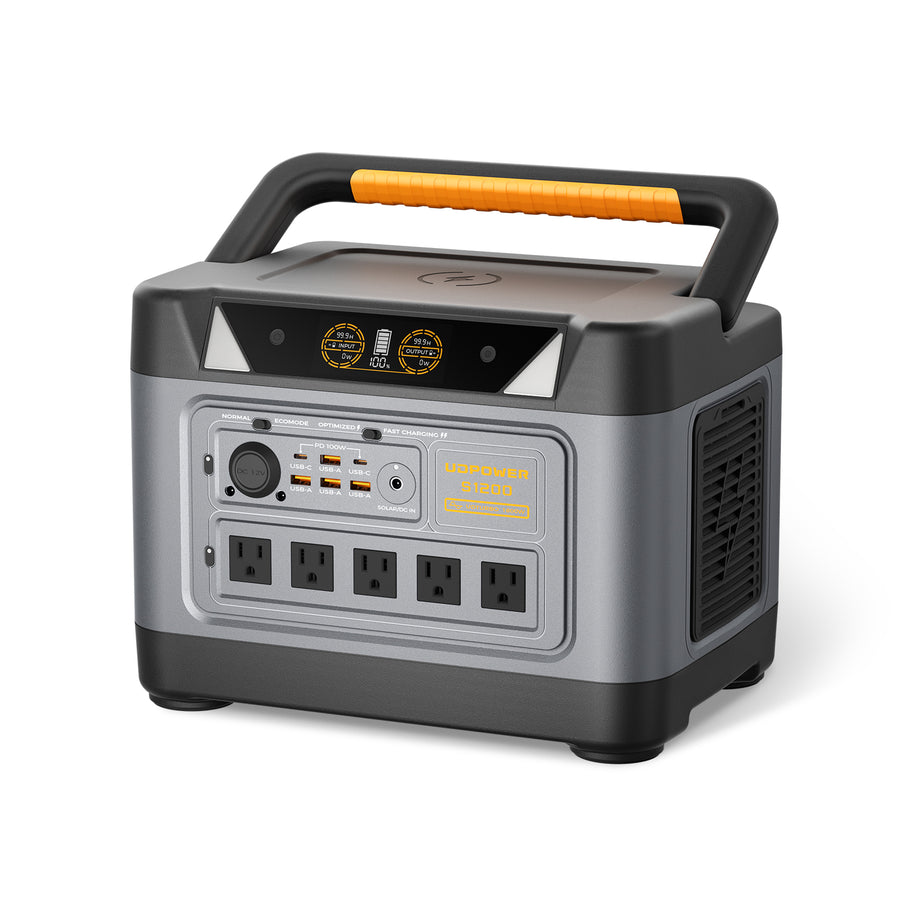
UDPOWER S1200 Portable Power Station
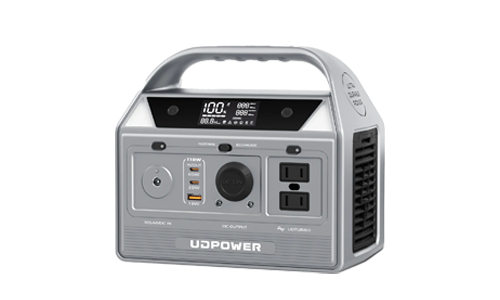
The S1200 is a balanced winter-backup option for a heated blanket, communications, lighting, electronics, and a lower-watt heater used for a limited period. Its 1,200W continuous output supports many 750W heater settings but not a standard 1,500W heater on high.
- Battery capacity: 1,190Wh
- Continuous AC output: 1,200W
- Documented surge support: Up to 1,800W for startup demand
- Weight: Approximately 26 lb
- Estimated 750W heater runtime: About 1 hour 26 minutes
- Estimated 100W blanket runtime: About 10 hours 43 minutes
- Maximum solar input: 400W
- Best fit: Overnight personal warmth plus common outage essentials
Temporary surge or UDTURBO capability should not be treated as permission to run a 1,500W resistance heater continuously above the 1,200W rated output.
View UDPOWER S1200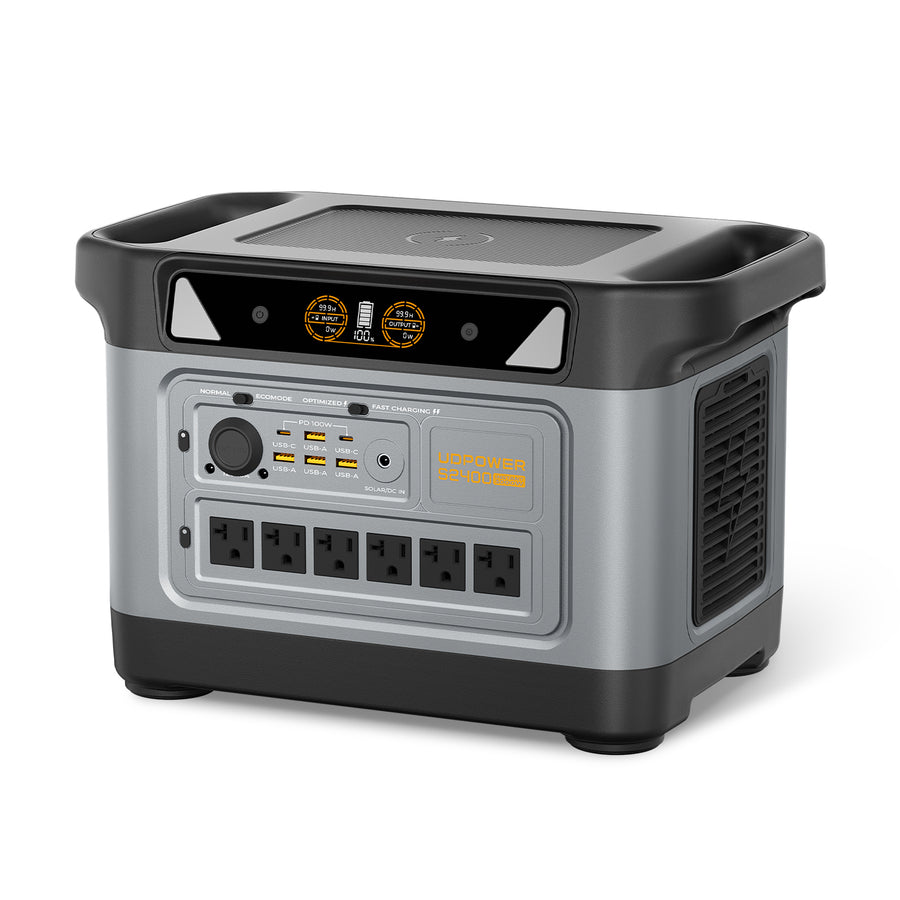
UDPOWER S2400 Portable Power Station
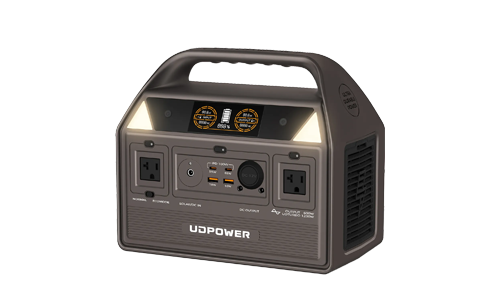
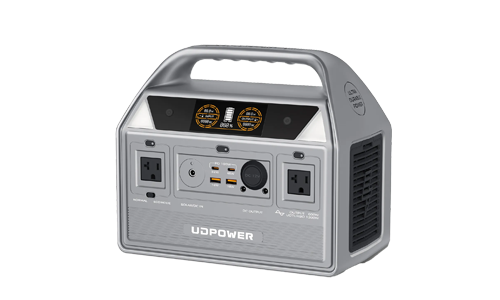
The S2400 is the appropriate UDPOWER choice when a standard 1,500W electric heater must be operated for a short period. Its 2,400W continuous output can support the heater, but the 2,083Wh battery still limits continuous high-heat runtime to approximately 1 hour 15 minutes at 90% conversion efficiency.
- Battery capacity: 2,083Wh
- Continuous AC output: 2,400W
- Documented surge support: Up to 3,000W for startup demand
- AC outlets: 6
- Weight: Approximately 40.8 lb
- Estimated 1,500W heater runtime: About 1 hour 15 minutes
- Estimated 750W heater runtime: About 2 hours 30 minutes
- Estimated 100W blanket runtime: About 18 hours 45 minutes
- Maximum solar input: 400W
- Best fit: Short room-heating windows plus larger essential-load plans
The S2400 can run a 1,500W heater, but doing so consumes energy that might otherwise support a refrigerator, furnace blower, CPAP, router, lighting, or communication equipment.
View UDPOWER S2400Selection recommendation: Choose the C600 for a heated blanket and light essentials, the S1200 for longer personal warmth plus a short 750W heating period, and the S2400 when a 1,500W space heater or higher combined essential load must be supported.
Compare additional sizes in the UDPOWER portable power station collection.
A Practical Winter Outage Heating Plan
Step 1: Decide what must stay powered
List medical equipment, refrigeration, furnace controls, sump pumps, phones, lighting, routers, and radios before assigning battery energy to comfort heating.
Step 2: Create one warm room
Choose a small room with limited exterior walls and windows. Close unused rooms, block drafts without covering required ventilation, close curtains at night, and keep everyone in the same occupied area when practical.
Step 3: Reduce heat loss before adding heat
- Wear dry base layers, socks, a hat, and insulated outer layers.
- Use sleeping bags, blankets, and insulated pads.
- Place rolled towels or draft stoppers at leaky doors.
- Close fireplace dampers when the fireplace is not operating.
- Keep exterior doors closed as much as possible.
Step 4: Use a heating ladder
- Warm clothing and insulated bedding.
- Heated blanket, throw, clothing, or heating pad.
- Short operation of a 400W to 750W electric heater.
- Short operation of a 1,500W heater from a sufficiently rated power station.
- Approved propane heat or the home furnace when substantial room heat is required.
Step 5: Set a battery reserve
Do not run the battery to empty for comfort heat if it is also responsible for medical devices, communication, alarms, or lighting. A useful approach is to establish a minimum state-of-charge reserve that will not be used for heating.
Step 6: Plan the next recharge before using the energy
Confirm whether the battery will be recharged from the grid, a vehicle, solar panels, or another approved source. Consider winter charging temperature, sunlight, travel conditions, and the energy needed to reach the next safe location.
Step 7: Know when to leave
Portable heating equipment is not a substitute for a safe building temperature during a prolonged extreme-cold emergency. Relocate early when indoor conditions are becoming unsafe, especially when children, older adults, pets, or people with medical needs are present.
Use the 24-, 48-, and 72-hour power outage checklist to prepare food, water, communication, lighting, heat, medical supplies, and recharge options.
Frequently Asked Questions
Is a propane heater better than a battery-powered heater?
A propane heater is generally better for producing substantial room heat over many hours. A battery-powered setup is better for personal heating, short room-heating periods, quiet indoor operation, and keeping essential electronics powered. The best choice depends on the space, outage length, ventilation, and safety requirements.
Can a battery-powered heater heat an entire room?
A standard electric heater connected to a sufficiently rated power station can heat a small room, but runtime is usually short. Small cordless heaters and USB heaters normally provide localized warmth rather than meaningful whole-room heating.
Can a portable power station run a 1,500W space heater?
Yes, when the power station has a continuous AC output rating of at least 1,500W and the total connected load remains within its limit. Battery capacity determines runtime. The 2,083Wh UDPOWER S2400 can run a continuous 1,500W load for approximately 1 hour 15 minutes using a 90% efficiency estimate.
Can the UDPOWER S1200 run a 1,500W heater?
A 1,500W heater exceeds the S1200’s 1,200W continuous AC output rating. Temporary surge support should not be used as the basis for operating a continuous resistance-heating load above the rated output. Use the heater’s lower setting when it remains within the 1,200W limit.
How long will a 2,000Wh power station run a space heater?
At 90% efficiency, a 2,000Wh battery provides approximately 1,800Wh of usable AC energy. That equals about 1.2 hours at 1,500W, 2.4 hours at 750W, or 4.5 hours at 400W. Thermostat cycling can extend clock time if the heater does not run continuously.
Is propane heat safe indoors?
Only use a propane heater indoors when the exact model is specifically approved for that use and every manufacturer requirement is followed. Fuel-burning heaters can produce carbon monoxide, consume oxygen, add moisture, and create fire hazards. Use working CO alarms and never use outdoor-only equipment indoors.
Can I leave a propane heater running while sleeping?
A portable fuel-burning heater should not be treated as an unattended overnight heat source. Follow the heater manual, and turn portable heaters off before sleeping unless the manufacturer explicitly provides a different approved operating procedure for that exact model and installation.
Can I leave an electric space heater running while sleeping?
The U.S. Fire Administration advises turning space heaters off when leaving the room or going to bed. Heated bedding designed for overnight use may be a more energy-efficient option, but it must also be used according to its manufacturer instructions.
Does propane create moisture indoors?
Yes. Water vapor is a combustion byproduct. Burning one pound of propane can produce approximately 1.6 pounds of water vapor, which may contribute to condensation and damp indoor conditions when an unvented heater is used.
Is a heated blanket better than a space heater during an outage?
For keeping one person warm, usually yes. A heated blanket may use approximately 60W to 100W, while a standard space heater may use 750W to 1,500W. The blanket can therefore run many times longer from the same battery.
Can solar panels keep an electric heater running continuously?
Usually not with a portable setup. A 1,500W heater consumes far more power than a typical 120W to 400W portable solar array produces, and winter sunlight is not continuous. Solar is better used to recharge a battery for essential loads and low-watt personal heating.
What is the best heater for a multi-day power outage?
There is no single best device for every home. A properly vented home heating system or approved fuel heater is generally more practical for sustained room heat, while a portable power station is better for furnace controls, heated bedding, communication, lighting, refrigeration, and medical equipment.
What should I power first during a winter outage?
Prioritize medical equipment, furnace controls, communication, lighting, refrigeration, and safety devices. Use remaining capacity for heated bedding or short room-heating periods only after essential runtime has been protected.
Information Sources
- U.S. Energy Information Administration: British Thermal Units and Energy Conversion Factors
- U.S. Consumer Product Safety Commission: Portable Heaters and Camping Equipment
- U.S. Consumer Product Safety Commission: Carbon Monoxide Fact Sheet
- U.S. Fire Administration: Heating Fire Safety
- National Fire Protection Association: Electric Portable Space Heater Safety
- UDPOWER C600 Official Specifications
- UDPOWER S1200 Official Specifications
- UDPOWER S2400 Official Specifications
Build a More Realistic Winter Backup Plan
Start with the length of the expected outage, the people and devices that must be protected, and the amount of room heat actually required. Then choose a power station with enough continuous output and usable battery energy for those measured loads.
View Portable Power Stations Calculate Your Runtime Compare Solar Generator KitsRelated Articles