

RV Living in Arizona: A Practical 2026 Guide to Legal Stays, Seasons, Costs, and Off-Grid Power
Arizona RV Living Guide
Last updated: June 16, 2026
Is Arizona a Good State for RV Living?
Yes—especially when you treat Arizona as a seasonal state rather than choosing one campsite for the entire year. The most comfortable plan is usually to spend October through April in lower-elevation areas such as Quartzsite, Yuma, Tucson, or the Phoenix outskirts, then move toward Prescott, Payson, Flagstaff, Williams, Show Low, or Pinetop during the hottest months.
Arizona offers inexpensive long-term winter camping, large areas of public land, established snowbird communities, and services designed for RV travelers. However, you cannot legally park anywhere indefinitely. Public-land stay limits vary, local zoning controls whether an RV can be occupied on private property, and low-desert summer heat can make continuous off-grid living unsafe without reliable air conditioning.
The best Arizona RV lifestyle combines seasonal migration, legal overnight locations, backup power, weather awareness, and a planned supply route for water, dumping, fuel, food, and medical needs.

Arizona RV Living at a Glance
| Question | Practical answer |
|---|---|
| Best time for low-desert RV living | Generally October through April, with the mildest conditions often occurring from November through March. |
| Best summer strategy | Move to higher elevations or reserve a site with dependable electrical hookups. |
| Cheapest established long-term option | BLM Long-Term Visitor Areas near Quartzsite and the Yuma region can be substantially less expensive than commercial RV resorts. |
| Can you stay permanently on public land? | No. Most public land is for temporary recreational camping, not establishing a permanent residence. |
| Can you live in an RV on your own Arizona land? | Sometimes, but county zoning, sanitation, building, floodplain, access, and occupancy rules must be checked for the specific parcel. |
| Biggest year-round challenge | Managing summer heat without overloading the RV electrical system or relying on a small battery to run roof air conditioning all day. |
| Best off-grid habit | Know your next legal campsite, water source, dump station, weather escape route, and backup power option before arriving. |
Arizona works best for RVers who can move with the elevation. A few hours of driving can change your campsite from low desert to pine forest, but the temperature, road conditions, fire rules, campground availability, and overnight restrictions may change just as quickly.
The Arizona “Vertical Migration” Strategy
Instead of thinking only about driving north or south, follow elevation. Winter below roughly 3,000 feet can be comfortable, while summer locations above roughly 5,000 to 7,000 feet may offer much cooler nights. Exact conditions vary, so always check the forecast rather than choosing a destination based on elevation alone.
Where Can You Legally Live in an RV in Arizona?
“RV living” can describe several very different arrangements. Staying in a commercial RV park, camping temporarily on federal land, resting at a highway stop, and occupying an RV on private property are governed by different rules.
| Type of location | Suitable for | Important limit or condition | Official source |
|---|---|---|---|
| Commercial RV park or resort | Monthly stays, full hookups, mail service, laundry, pools, and predictable utilities | Rates, age restrictions, RV age rules, pet rules, and electricity billing vary by property. | Verify directly with the selected park before paying a deposit. |
| BLM dispersed camping | Short-term boondocking outside developed campgrounds | Generally limited to 14 days within a 28-day period unless a local rule says otherwise. It is recreational camping, not permanent residence. | BLM camping guidance |
| BLM Long-Term Visitor Area | Extended winter stays with basic shared services | A seasonal or short-visit permit is required. Rules differ inside and outside the long-term season. | La Posa LTVA |
| National Forest dispersed camping | Temporary camping near higher-elevation recreation areas | Stay limits, designated-site requirements, fire restrictions, and road access vary by forest and district. | Coconino National Forest order |
| Arizona State Parks | Developed camping with reservations and park facilities | Arizona State Parks generally limits a household to 14 nights in a 30-day period at one park, subject to park management. | Arizona State Parks policies |
| Arizona State Trust Land | Limited recreational access where permitted | A recreation permit is required. Overnight camping is limited to 14 cumulative days per calendar year under the permit terms. | State Trust Land permit terms |
| Highway rest area | Driver rest during travel | Camping, campfires, and dumping sewage or trash are prohibited. Do not deploy awnings, chairs, grills, or establish a campsite. | ADOT rest-area rules |
| Private land | Potential long-term base when local rules allow it | Owning the property does not automatically permit full-time RV occupancy. Check county zoning, sanitation, septic, water, access, and floodplain requirements. | Contact the county planning and development department for the parcel. |
Long-Term Visitor Areas Near Quartzsite and Yuma
The La Posa Long-Term Visitor Area near Quartzsite is one of the best-known choices for inexpensive winter RV living. The long-term permit published by the BLM is $180 and covers the period from September 15 through April 15. A $40 short-visit permit covers 14 consecutive days and may be renewed.
La Posa provides basic shared services rather than individual hookups. Published facilities include water faucets, vault toilets, trash collection, and dump facilities. RVers should still arrive prepared to manage solar charging, water transport, tank capacity, dust, wind, and trips into town.
The Yuma-area Imperial Dam Long-Term Visitor Area follows a similar permit structure and offers shared services that may include water, waste disposal, restrooms, and outdoor showers. Always review the current BLM page before traveling because service availability and local restrictions can change.
Living in an RV on Private Property
Private land is where many costly misunderstandings occur. A vacant desert parcel may be inexpensive, but it may not have legal access, potable water, an approved septic system, power, a permitted address, or authorization for continuous RV occupancy.
Before buying or occupying a parcel, ask the county these questions in writing:
- Is residential RV occupancy allowed in this zoning district?
- Can an RV be occupied before a house is built?
- Is a temporary-use or building permit required?
- What septic or wastewater system is required?
- May wastewater be stored temporarily in holding tanks?
- Is hauled water permitted, and is proof of a water source required?
- Is the parcel in a floodplain, wash, or wildfire hazard area?
- Is the access road publicly maintained and legally recorded?
- Are there HOA or deed restrictions beyond county rules?
- How many days per year may the RV be occupied?
Local rules can be strict. For example, Mohave County regulations contain limitations on using a parked RV for living, sleeping, or housekeeping unless the applicable requirements are met. That does not mean every Arizona county uses the same rule; it demonstrates why parcel-specific verification matters.
Arizona Does Not Have Just One “14-Day Camping Rule”
Many RVers hear “you can stay 14 days” and assume the same clock applies everywhere. It does not. The location, land agency, district, permit, and local forest order determine when the clock starts, how long you must leave, and whether moving a few miles is enough.
| Land or area | Published stay rule | What it means in practice | Verify here |
|---|---|---|---|
| General BLM dispersed camping | Generally 14 days in a 28-day period | After reaching the limit, you must comply with the local relocation requirement rather than repeatedly moving between nearby pullouts. | BLM |
| La Posa LTVA during long-term season | September 15 through April 15 with the $180 long-term permit | The LTVA permit creates a legal extended-stay option that is different from ordinary dispersed camping. | La Posa LTVA |
| Arizona State Parks | Generally 14 nights in a 30-day period per park and household | A park manager may apply additional conditions based on demand and operational needs. | Reservation policies |
| Arizona State Trust Land | 14 cumulative overnight camping days per calendar year | This is an annual cumulative allowance under a permit, not 14 days at every State Trust Land location. | Permit terms |
| Coconino National Forest | Current order limits camping to 14 days in a consecutive 30-day period | The current forest order should be checked before arrival because orders have effective and expiration dates. | Coconino order |
| Apache-Sitgreaves National Forests | 14 days in a 30-day period, followed by time off the forest | Dispersed sites are generally self-service and may have no water, trash collection, toilets, or cell coverage. | Camping guidelines |
| Coronado National Forest | Generally 14 days in a 60-day period under current guidance | Additional setbacks and area-specific restrictions can apply, including limits near water sources and developed facilities. | Coronado dispersed camping |
| Prescott Basin designated dispersed sites | Seven days in a 30-day period in the basin | Camping is restricted to designated sites in the basin. Other parts of the forest may use different limits. | Prescott Basin guidance |
A Legal Overnight Stop Is Not Automatically a Legal Residence
A rest area may allow enough time to recover from fatigue, public land may permit temporary recreation, and an RV park may accept monthly guests. None of those arrangements automatically establishes a permanent legal residence or authorizes long-term occupancy beyond the applicable rules.
Best Seasons and Elevations for RV Living in Arizona
Arizona's biggest advantage is the ability to change climate without leaving the state. Its biggest trap is assuming that “Arizona weather” is the same from Yuma to Flagstaff.
| Time of year | Typical RV strategy | Areas to consider | Main planning issue |
|---|---|---|---|
| December–February | Stay in low-desert winter destinations | Quartzsite, Yuma, Tucson, Phoenix outskirts, Lake Havasu region | Popular parks and events can fill early. Desert nights may still be cold. |
| March–April | Begin moving toward mid-elevation locations | Cottonwood, Camp Verde, Prescott Valley, Payson | Wind, changing temperatures, and early heat at lower elevations. |
| May–June | Move to higher country before sustained low-desert heat | Flagstaff, Williams, Show Low, Pinetop-Lakeside, higher forest areas | Wildfire restrictions, dry conditions, crowded holiday weekends, and cold nights at elevation. |
| July–September | Remain at elevation or use dependable hookups | Flagstaff area, White Mountains, Mogollon Rim, Williams | Monsoon storms, lightning, hail, muddy forest roads, flash flooding, and falling branches. |
| October–November | Return gradually to the low desert | Prescott or Verde Valley first, then Quartzsite, Yuma, Tucson, or Phoenix | Early high-country freezes and strong temperature swings. |
Why Low-Desert Summer Living Is Hard
Phoenix's normal high around early July is approximately 107°F, with a normal low around 83°F based on 1991–2020 climate normals. That nighttime temperature matters because an RV exposed to the sun may not cool enough for people, pets, batteries, medication, electronics, or a refrigerator to recover safely.
A shaded site, reflective window covers, vent fans, insulation, and awnings can reduce heat gain, but they do not replace reliable air conditioning during extreme heat. A portable power station is useful for refrigerators, fans, CPAP equipment, electronics, communications, and short appliance use. It should not be treated as an all-day substitute for an electrical hookup when continuous roof-air-conditioner operation is necessary.
See the National Weather Service Phoenix climate normals when comparing seasonal conditions.
Use a Heat-Refuge Trigger
Decide in advance what will make you leave a location. Possible triggers include several nights without meaningful cooling, an inability to keep the RV interior safe, a failed air conditioner, unsafe battery temperatures, an excessive heat warning, or a pet showing heat stress.
Relocating to elevation or paying for a hookup is not a failure of boondocking. It is part of responsible Arizona trip planning.
Best Places for RV Living in Arizona
Quartzsite: Best for Low-Cost Winter Boondocking
Quartzsite is built around seasonal RV traffic. It offers access to the La Posa LTVA, commercial RV parks, water vendors, propane, dump services, repair businesses, markets, and a large winter community.
Best for: Budget-conscious winter RVers, boondockers, rallies, and travelers who want services without resort-level pricing.
Watch for: Dust, wind, event-season congestion, generator noise, limited shade, and extreme summer heat.
Yuma: Best for Warm Winters and Agricultural Desert Living
Yuma is popular with winter visitors because of its warm climate, RV infrastructure, shopping, medical services, and proximity to public-land camping. It also provides access to the Imperial Dam LTVA region.
Best for: Warm winter weather, established RV communities, access to supplies, and longer seasonal stays.
Watch for: Summer heat, wind, dust, and longer drives when exploring northern Arizona.
Tucson: Best Balance of City Services and Desert Access
Tucson provides major-city healthcare, groceries, repairs, restaurants, cultural attractions, and access to surrounding desert and mountain recreation. Nearby elevation changes make it easier to plan day trips or seasonal moves.
Best for: RVers who want urban services without staying in the Phoenix metro area.
Watch for: Summer heat, park availability during winter, and area-specific dispersed-camping limits.
Phoenix, Mesa, and Apache Junction: Best for Services and Winter Resorts
The Phoenix region has extensive medical care, shopping, RV service centers, airports, and large seasonal RV communities. Mesa and Apache Junction are especially popular among winter visitors.
Best for: People who prioritize amenities, social activities, healthcare, and convenient transportation.
Watch for: Higher seasonal rates, traffic, urban heat, age-restricted parks, and strict park rules.
Cottonwood and Camp Verde: Best Shoulder-Season Base
The Verde Valley can serve as a transition zone between low-desert winter areas and northern high country. It provides access to Sedona, Jerome, and surrounding public lands while offering a more moderate elevation.
Best for: Spring and fall stays, sightseeing, and access to services without living directly in Sedona.
Watch for: High demand, limited low-cost sites, and designated-camping restrictions west of Sedona.
Review current designated dispersed camping information for the Sedona area.
Prescott and Prescott Valley: Best for Moderate Elevation
Prescott offers cooler summer conditions than Phoenix while retaining healthcare, shopping, and community services. The Prescott Basin uses designated dispersed campsites and has a shorter stay limit than many RVers expect.
Best for: Spring, summer, and fall stays near a full-service town.
Watch for: Cold winter nights, limited designated sites, wildfire conditions, and the seven-day Prescott Basin camping limit.
Payson and the Mogollon Rim: Best for Forest Access
Payson can be a practical summer base for access to the Mogollon Rim and higher forest areas. It is closer to Phoenix than Flagstaff, but weekend traffic and campground demand can be substantial.
Best for: Summer cooling, forest recreation, and shorter travel from central Arizona.
Watch for: Monsoon storms, wildfire restrictions, limited cell service, steep roads, and busy weekends.
Flagstaff and Williams: Best for Escaping Extreme Summer Heat
Flagstaff and Williams offer much cooler summers than the low desert, along with access to forests and northern Arizona attractions. Flagstaff has more services, while Williams may offer a smaller-town base.
Best for: Summer RV living, remote work with city access, and northern Arizona exploration.
Watch for: High peak-season RV park rates, freezing weather outside summer, snow, forest-road conditions, and limited dispersed-camping availability near popular areas.
Show Low and Pinetop-Lakeside: Best for the White Mountains
The White Mountains provide another summer alternative with forests, lakes, and established communities. The area can feel less urban than Flagstaff while still providing essential supplies and services.
Best for: Summer stays, fishing, forest recreation, and travelers who prefer smaller communities.
Watch for: Winter weather, seasonal campground closures, mountain road conditions, thunderstorms, and wildfire restrictions.
How Much Does RV Living in Arizona Cost?
Arizona can support both very low-cost winter boondocking and resort-style monthly living. The headline campsite price does not tell the whole story. Add electricity, water trips, dump fees, propane, fuel, laundry, internet, maintenance, insurance, and seasonal relocation costs.
| Example | Published price snapshot | Usually included | Possible extra costs | Source |
|---|---|---|---|---|
| La Posa LTVA, Quartzsite | $180 for the September 15–April 15 long-term season; $40 for a 14-day short visit | Access to shared basic facilities listed by the BLM | Fuel, propane, laundry, water transport, mobile internet, equipment, and repairs | BLM La Posa |
| Quartzsite commercial monthly park example | Published examples around $300 off-season to $425 during peak winter months, plus electricity | Varies by park and site | Metered electricity, deposits, taxes, and optional services | Hassler's RV Park |
| Dead Horse Ranch State Park | Published example of $25 for non-electric camping and $50 for electric camping per night | Developed state-park campsite according to reservation type | Reservation fees, transportation, and supplies | Dead Horse Ranch |
| Phoenix-area monthly resort examples | Approximately $700–$805 during summer and roughly $910–$1,020 during winter on a published 2025–2026 schedule | Varies by resort | Electricity, taxes, deposits, resort policies, and seasonal surcharges | Phoenix RV Resorts rates |
| Flagstaff monthly park example | Published monthly examples of $1,150 for a standard site and $1,250 for a premium site | Check the current rate page for site details | Electricity and other charges may be separate | Flagstaff RV Park |
| Premium Flagstaff monthly community example | Published 2026 monthly rates from approximately $1,800 to $2,250 depending on the month | Community amenities vary | Utilities, deposits, taxes, and site-specific charges | Village Camp Flagstaff |
These are named price examples checked in June 2026, not statewide averages. Campground rates and inclusions can change without notice. Confirm the total price, electricity policy, cancellation terms, RV restrictions, and taxes directly with the property.
Three Realistic Arizona RV Budget Styles
| Style | Site strategy | Where costs usually increase |
|---|---|---|
| Low-cost winter boondocking | LTVA or legal short-term public-land camping | Fuel, water hauling, dump trips, propane, solar equipment, battery storage, internet, and vehicle wear |
| Mixed camping | Alternate between public land and occasional full-hookup stays | Weekly campground nights, laundry, maintenance, generator fuel, and relocation |
| Monthly park living | Reserve commercial parks in each seasonal destination | Winter premiums, metered electricity, deposits, resort fees, and high-country summer demand |
The Cheapest Winter Is Not Always the Cheapest Year
A $180 seasonal LTVA permit can make winter site costs extremely low, but a complete annual budget must include summer relocation, high-country campground rates, fuel, repairs, tires, mobile internet, medical travel, and periods when extreme weather requires a paid hookup.
Water, Dump Stations, Internet, Mail, and Daily Supplies
Build a Two-Site Plan
Before entering a boondocking area, identify both your intended campsite and your next legal alternative. Your backup may be needed because of a full area, poor road conditions, wildfire restrictions, flooding, unsafe neighbors, weak cell service, mechanical problems, or a sudden weather warning.
For each location, record:
- The land agency and current stay limit
- The exact road used to enter and leave
- A second exit route when available
- The nearest legal dump station
- A potable-water source
- The nearest propane supplier
- A fuel station that accommodates your RV length
- The nearest grocery store and pharmacy
- The nearest urgent-care clinic or hospital
- Your next legal campsite
Carry a 48-Hour Resource Buffer
Do not plan to use your final gallon of water, final percentage of battery capacity, or final gallon of fuel before resupplying. Arizona road closures, wind, dust storms, flash flooding, extreme heat, or a failed water kiosk can delay a routine supply trip.
A practical buffer includes drinking water, food that does not require cooking, essential medication, pet water, basic sanitation supplies, enough fuel to reach the backup location, and reserve electrical capacity for communications and medical equipment.
Internet for Remote Work
Cell coverage can be strong near towns and highways but inconsistent in forested, mountainous, or remote desert areas. Test the actual campsite before committing to a long stay. A map showing carrier coverage does not confirm usable upload speed inside a metal RV.
A reliable work setup may include:
- Service from more than one cellular network
- An external antenna or compatible cellular router
- A satellite internet option where the sky view is open
- A battery-backed router and laptop charging plan
- A library, coworking space, or campground Wi-Fi option for backup
Mail and Residency
Some full-time RVers use a commercial mail-forwarding service, a trusted relative, or a long-term RV park address. Mailing arrangements do not automatically determine legal domicile, tax residency, vehicle registration, voting eligibility, or insurance territory.
Arizona considers several actions when determining whether someone is a resident. These may include working in the state, registering to vote, operating a business, placing children in school, or remaining in Arizona for seven months or more during a calendar year.
New residents may need to update their driver's license and vehicle registration, and vehicles in parts of the Phoenix or Tucson metro areas may be subject to emissions requirements. Review the current Arizona MVD guidance for new residents and Arizona Department of Revenue residency guidance.
Arizona RV Weather and Safety Risks
Extreme Heat
Heat is not only a comfort issue. It affects people, pets, refrigerators, tires, sealants, batteries, medication, electronics, and the RV's roof and exterior materials.
- Park with the refrigerator side shaded when practical.
- Use exterior shade before relying only on interior curtains.
- Keep batteries within their specified operating and charging ranges.
- Do not store a power station in a sealed vehicle compartment exposed to direct sun.
- Maintain ventilation around inverters, chargers, refrigerators, and batteries.
- Keep a working indoor thermometer where people and pets sleep.
- Know the nearest air-conditioned public place or paid hookup.
- Never rely on an unattended air conditioner as the only pet-safety system.
Monsoon Wind, Dust, and Lightning
Arizona thunderstorms can arrive with strong wind, lightning, blowing dust, heavy rain, and sudden runoff. RV awnings, screen rooms, portable solar panels, chairs, and lightweight shelters can become damaged or dangerous before rainfall reaches the campsite.
- Retract the awning before leaving the campsite.
- Lower or secure portable panels before strong wind arrives.
- Do not camp beneath visibly damaged trees or large dead branches.
- Avoid exposed ridges during lightning.
- Do not remain in a dry wash, drainage channel, or low crossing.
- Check weather alerts even when the storm appears far away.
When driving in a dust storm, follow current National Weather Service instructions. Do not stop in an active travel lane. Move completely off the roadway when it is safe, reduce the chance of another driver following your lights, and remain alert for traffic.
Review the National Weather Service monsoon safety guidance.
Flash Flooding
A campsite can be dry when you arrive and still be in a runoff path. Rain miles away or at higher elevation may produce water at your location. Look for debris caught in shrubs, eroded banks, mud lines, water-shaped channels, and road crossings marked for flooding.
Site access matters as much as the campsite itself. A safe pad is not useful if the only exit crosses a wash that becomes impassable.
Wildfire and Fire Restrictions
High-country summer camping may coincide with fire restrictions or forest closures. Restrictions can affect campfires, charcoal grills, smoking, generators, target shooting, and access roads.
Check the relevant forest or BLM office before every stay. Do not rely on an old campground review or a social media post. Conditions can change after the review was published.
Snow, Freezing Temperatures, and Mountain Roads
Flagstaff, Williams, the White Mountains, and other higher-elevation areas can receive snow and sustained freezing temperatures. Shoulder-season travelers should protect water systems, check propane capacity, confirm furnace power needs, and avoid entering forest roads that may become muddy, snow-covered, or impassable.
Use Arizona 511 for current road conditions, closures, and traffic information, and review National Weather Service winter-storm guidance.
How Much Portable Power Do You Need for Arizona RV Living?
Size backup power around the equipment that must continue working when shore power is unavailable: refrigeration, ventilation, CPAP equipment, phones, internet, laptops, lighting, water pumps, and limited cooking appliances.
Do not begin by asking how large a battery is needed to run the roof air conditioner all day. Continuous RV air conditioning usually requires a hookup, a properly designed fixed battery and solar system, a suitable generator, or a combination of those systems.
Arizona Power Priority
First protect the non-air-conditioning safety layer: cold food, drinking water, ventilation, medical devices, communications, and the ability to leave. Air conditioning should have a separate, realistic energy plan.
Planning Formula
A practical first estimate is:
Estimated runtime = battery capacity in watt-hours × 0.90 ÷ appliance watts
The 90% factor is a planning allowance for power conversion. Real runtime changes with temperature, battery condition, inverter losses, startup surges, appliance cycling, and simultaneous loads.
| Approximate continuous load | Typical example | UDPOWER S1200 estimated runtime | UDPOWER S2400 estimated runtime |
|---|---|---|---|
| 20W | LED lights and light device charging | About 53.6 hours | About 93.7 hours |
| 40W | Lower-power CPAP setup without a heated humidifier | About 26.8 hours | About 46.9 hours |
| 60W | Efficient refrigerator averaged across compressor cycling | About 17.9 hours | About 31.2 hours |
| 90W | Laptop, router, and device charging | About 11.9 hours | About 20.8 hours |
| 150W | Combined refrigerator, vent fan, router, and light work setup | About 7.1 hours | About 12.5 hours |
| 1,000W | Short microwave or cooking-appliance use | About 1.1 hours of continuous theoretical use | About 1.9 hours of continuous theoretical use |
Estimates are calculated from 1,190Wh for the S1200 and 2,083Wh for the S2400 using a 90% planning factor. Appliances rarely operate at one constant wattage, so measure actual consumption whenever possible.
What About an RV Air Conditioner?
A roof air conditioner may draw approximately 1,200 to 1,800 watts while running and substantially more during compressor startup, depending on its size, age, temperature, voltage, and whether a soft-start device is installed.
- The S1200's 1,200W rated output is not an appropriate match for a typical 1,500W continuous air-conditioning load.
- The S2400 has enough rated output for some RV air conditioners when startup and running wattage remain within its limits.
- Even at a steady 1,500W load, a 2,083Wh battery would provide only about 1.25 hours under a simple 90% planning calculation.
- Extreme heat can make the compressor run almost continuously, reducing the benefit of normal thermostat cycling.
Test the exact air conditioner and measure its startup and running draw before depending on any battery system.
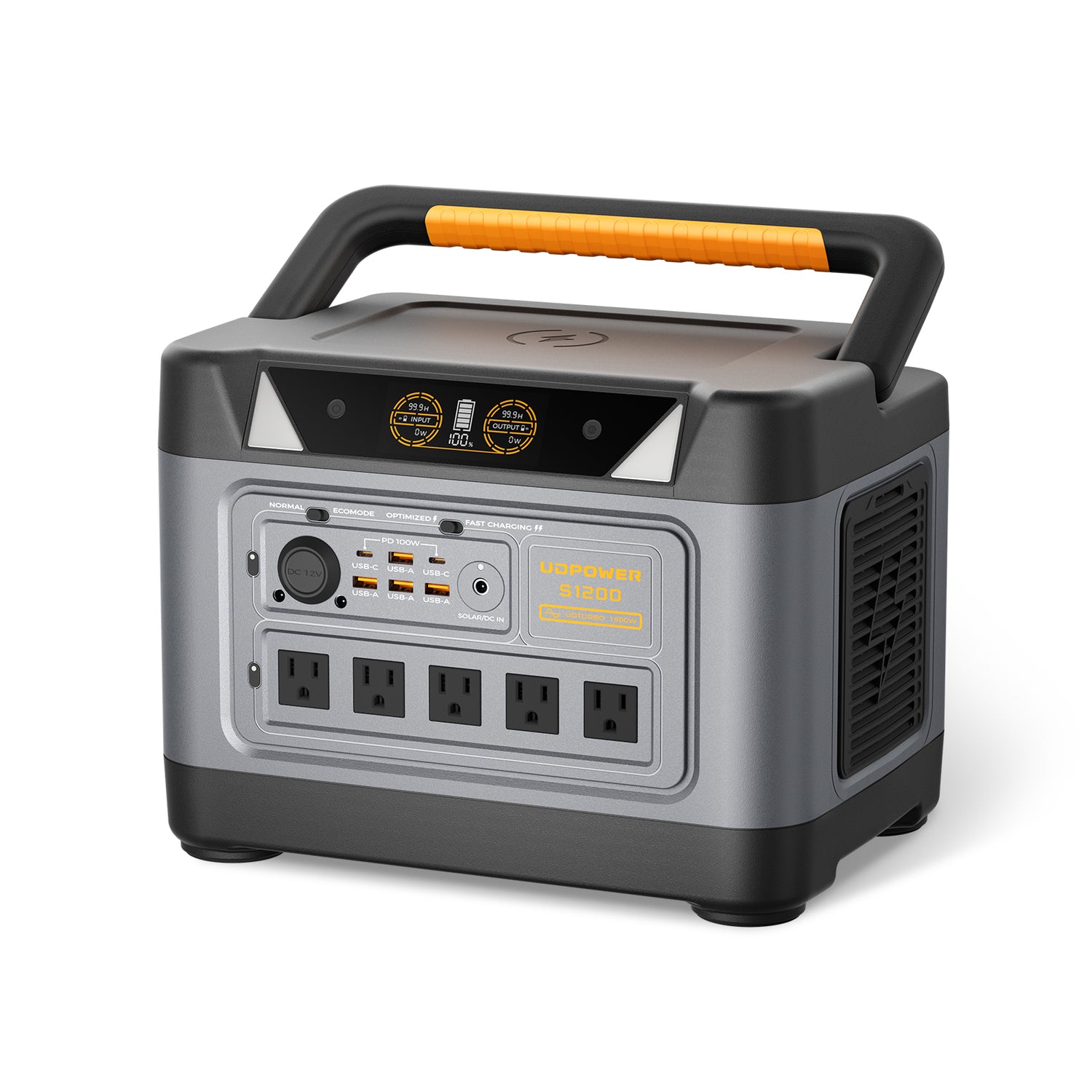
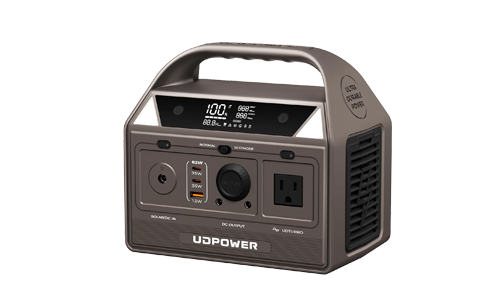
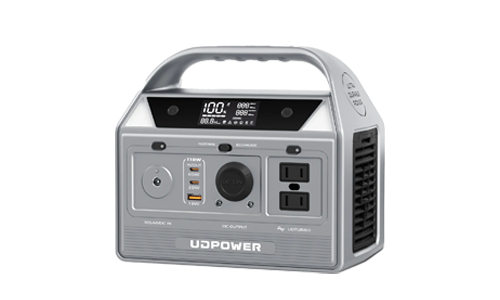
UDPOWER S1200: Best for Essential RV Loads and Shorter Boondocking Stays
The S1200 is a practical choice for RVers who need a portable system for refrigeration, CPAP equipment, computers, internet, lights, vent fans, phone charging, and short use of compatible kitchen appliances.
- Battery capacity: 1,190Wh
- Rated AC output: 1,200W
- Surge output: Up to 1,800W
- Battery chemistry: LiFePO4
- Cycle life: 4,000+ cycles as listed by UDPOWER
- Weight: Approximately 26 lb
- Outputs: Five AC outlets plus multiple DC and USB outputs
- UPS transfer: Less than 10 milliseconds under specified conditions
- Warranty: Five years
Best fit: Weekend-to-moderate boondocking, emergency refrigeration, medical-device backup, mobile work, and travelers who value lower weight.
Not intended for: Running a typical RV roof air conditioner continuously through an Arizona summer day.
View the UDPOWER S1200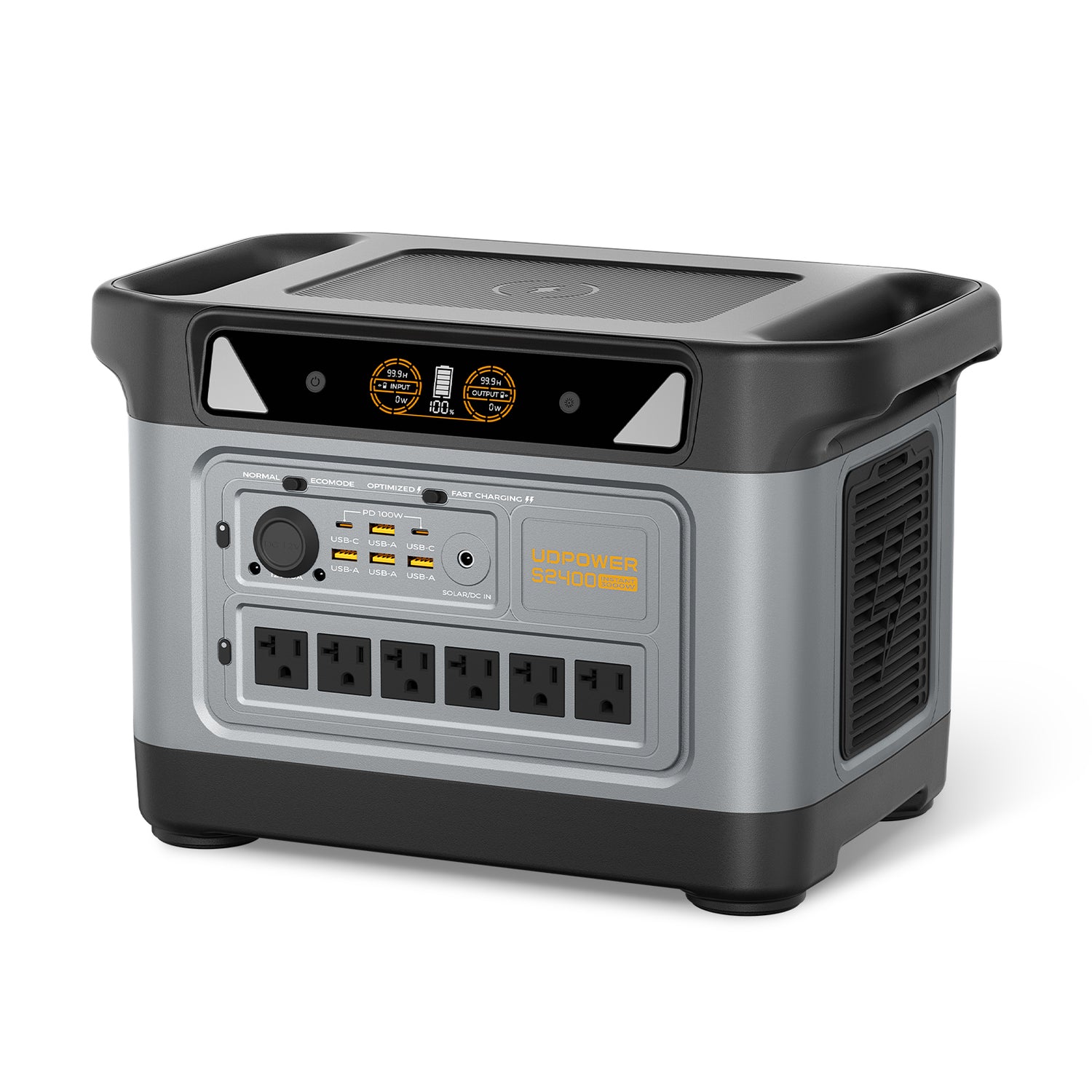
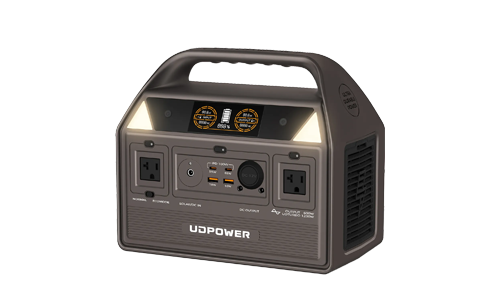
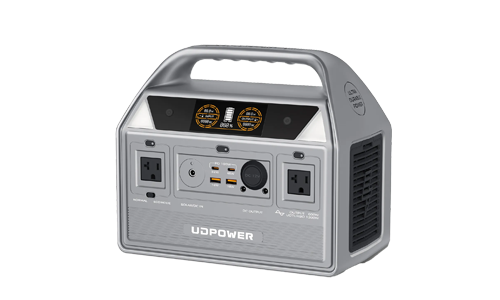
UDPOWER S2400: Best for Larger RV Loads and Longer Backup Time
The S2400 provides more capacity and output for RVers who regularly power several essential devices, use higher-wattage appliances, or want a larger reserve during off-grid stays.
- Battery capacity: 2,083Wh
- Rated AC output: 2,400W
- Surge output: Up to 3,000W
- Battery chemistry: LiFePO4
- Cycle life: 3,000+ cycles to at least 80% capacity as listed on the current product page
- Weight: Approximately 40.8 lb
- Outputs: Six AC outlets plus multiple DC and USB outputs
- Solar input: Up to 400W under compatible input conditions
- UPS transfer: 10 milliseconds or less under specified conditions
- Warranty: Five years
Best fit: Longer boondocking stays, larger refrigeration loads, mobile workstations, microwave or coffee-maker use, multiple devices, and emergency backup.
Important limitation: Although the S2400 may operate some RV air conditioners, its battery capacity does not make it an all-day desert cooling system.
View the UDPOWER S2400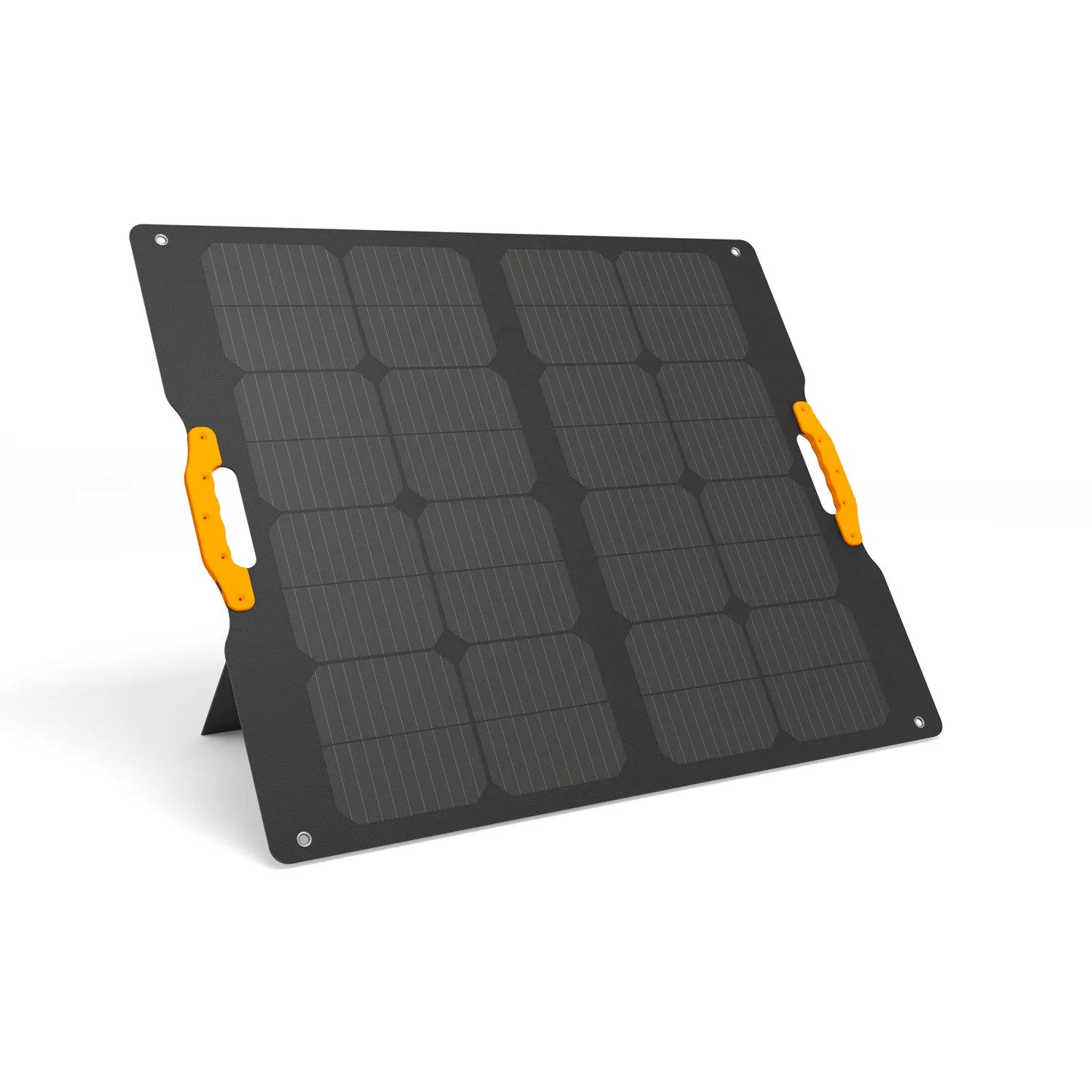
UDPOWER 120W Portable Solar Panel: Best for Lightweight Daily Charging
A portable panel can reduce generator use and recharge power used by phones, laptops, lights, fans, routers, and other moderate loads. The 120W panel is easier to move and position than a large fixed array.
- Rated output: 120W
- Solar-cell efficiency: At least 22% as listed by UDPOWER
- Weather resistance: IP65 rating
- Open-circuit voltage: 21.5V
- Design: Foldable with an adjustable support angle
One 120W panel is useful for lighter energy budgets, but it will not rapidly refill a large battery after heavy appliance use. For longer boondocking stays, choose compatible panel capacity that remains within the power station's voltage, current, connector, and maximum-input limits.
Place the entire panel in direct sun, avoid partial shade, and adjust its angle while watching the power station's live input. Do not leave a portable panel unsecured when monsoon wind is possible.
View the UDPOWER 120W Solar PanelSolar Charging in Arizona: Sunlight Is Not the Only Variable
Strong sun can support good solar production, but panel temperature, dust, wiring loss, charging limits, partial shade, sun angle, clouds, and battery state all affect real input. Clean the panel with an appropriate method, protect connectors from dirt and moisture, and compare actual input with expected conditions instead of assuming the panel will always produce its nameplate rating.
A 30-Day Arizona RV Setup Plan
Days 1–3: Choose the Right Climate Zone
- Check the 10-day forecast for both daytime highs and overnight lows.
- Compare at least one low-desert, mid-elevation, and high-country destination.
- Confirm that the selected campground or public land is open.
- Check current road, fire, flood, wind, and snow conditions.
Days 4–7: Confirm the Legal Stay
- Identify the land-management agency.
- Save a copy or screenshot of the current stay rule.
- Obtain any required permit.
- Confirm whether camping is limited to designated sites.
- Record the final day on which you may legally remain.
Days 8–10: Measure Your Electrical Loads
- Measure the refrigerator's actual daily energy use.
- Check CPAP settings and whether the heated humidifier is used.
- Record laptop, router, fan, water-pump, television, and cooking-appliance wattage.
- Test appliance startup surges.
- Calculate a minimum 24-hour reserve for essential loads.
Days 11–14: Build the Supply Route
- Locate potable water and determine whether your container system is manageable.
- Locate a legal dump station and confirm operating hours.
- Find propane, diesel, gasoline, groceries, a pharmacy, and an RV repair facility.
- Confirm the route accommodates your RV's height, length, and weight.
Days 15–18: Test Communications
- Run a speed test from inside the RV.
- Test calls, video meetings, uploads, and emergency alerts.
- Verify the router and satellite system can run from backup power.
- Identify a public backup workspace.
Days 19–21: Prepare for Weather
- Inspect the roof, awning, tires, seals, vents, and air conditioner.
- Secure outdoor equipment.
- Check weather-alert settings.
- Identify the quickest route to a safe paved area or electrical hookup.
Days 22–25: Practice a No-Hookup Day
- Disconnect shore power for 24 hours under safe conditions.
- Track battery use and solar recovery.
- Measure water and holding-tank consumption.
- Identify which appliances create unexpected energy demand.
Days 26–30: Establish a Rotation
- Choose your next two legal destinations.
- Schedule dump, water, laundry, maintenance, and grocery days.
- Reserve a hookup night when batteries, tanks, weather, or health require it.
- Update your seasonal route before heat, snow, or campground demand becomes urgent.
Arizona Arrival Checklist
- Current land-use rule verified
- Permit purchased when required
- Departure date recorded
- Backup campsite selected
- Road and weather conditions checked
- Potable water source confirmed
- Dump station confirmed
- Propane and fuel locations saved
- Medical and veterinary locations saved
- Internet tested at the campsite
- Battery and solar input tested
- Awning and exterior gear secured
- Emergency departure route identified
Common Arizona RV Living Mistakes
1. Treating Every Public-Land Area as a 14-Day Campsite
Some areas use 14 days in 28, some 14 in 30, some 14 in 60, and parts of the Prescott Basin use seven days in 30. State Trust Land applies an annual cumulative limit. Always check the rule for the exact location.
2. Staying in the Low Desert Too Late
Waiting until the RV is already dangerously hot can make relocation more difficult. Move before the hottest period, especially when traveling with pets, children, older adults, or temperature-sensitive medication.
3. Buying Cheap Land Before Checking Occupancy Rules
A low parcel price does not guarantee legal RV residence, road access, water, septic approval, or freedom from flood risk and deed restrictions.
4. Depending on a Portable Battery for All-Day Air Conditioning
A battery may operate a compatible air conditioner for a limited period, but continuous cooling requires far more daily energy than most portable systems can store and recover.
5. Parking in a Wash Because the Ground Looks Flat
Flat desert ground may be part of a drainage system. Look for erosion, deposited debris, mud lines, and channels before leveling the RV.
6. Leaving the Awning or Solar Panels Unsecured
Strong wind can precede visible rain. Retract awnings and secure portable equipment whenever leaving the campsite or when storms are possible.
7. Arriving With Empty Batteries and Nearly Empty Water Tanks
Public-land services may be farther away, closed, crowded, or temporarily unavailable. Arrive with a practical reserve rather than expecting to solve every supply need after parking.
8. Trusting Old Campground Reviews as Current Rules
A location that allowed dispersed camping several years ago may now require designated sites, permits, shorter stays, or seasonal closures.
9. Ignoring Nighttime Temperatures
Desert winter nights can freeze, while Phoenix-area summer nights may remain too warm for an RV to cool naturally. Daily highs alone are not enough for planning.
10. Having No Exit Plan
Every remote campsite should have a known departure route, a backup legal location, enough fuel to reach it, and enough battery capacity to maintain communications.
Frequently Asked Questions About RV Living in Arizona
Can you legally live full-time in an RV in Arizona?
Yes, provided the RV is kept in a location where extended occupancy is allowed. A commercial RV park may accept monthly or seasonal residents, and certain BLM Long-Term Visitor Areas permit extended winter stays. Public dispersed camping is temporary, and private-property occupancy depends on county zoning, sanitation, access, and permit rules.
Can I park an RV on my own land and live in it?
Possibly, but property ownership alone does not guarantee that full-time RV occupancy is legal. Contact the county planning department before purchasing or occupying the parcel. Ask about zoning, septic, hauled water, temporary-use permits, floodplain restrictions, road access, and whether an RV can be occupied without a permitted primary residence.
What is the best time of year for RV living in Arizona?
November through March is usually the most comfortable period for low-desert locations such as Quartzsite, Yuma, Tucson, and the Phoenix region. During summer, many RVers move to higher-elevation locations such as Flagstaff, Williams, Show Low, Pinetop-Lakeside, or the Mogollon Rim.
How long can you camp on BLM land in Arizona?
General BLM dispersed camping is usually limited to 14 days within a 28-day period, but local rules may differ. Long-Term Visitor Areas use separate permits and seasonal rules. Check the page for the exact BLM area before arrival.
Can you sleep overnight at an Arizona rest area?
Arizona rest areas are intended for traveler rest, but camping is prohibited. Do not deploy chairs, awnings, grills, leveling equipment, or other campsite features, and do not dump wastewater or trash. Follow posted time limits and instructions at the specific location.
Is Quartzsite the cheapest place for RV living in Arizona?
Quartzsite can be one of the least expensive winter bases because the La Posa LTVA long-term permit covers the September 15–April 15 season for $180. Total living costs still include water, fuel, propane, dumping, laundry, internet, maintenance, and summer relocation.
Can solar panels run an RV air conditioner in Arizona?
A properly designed high-capacity solar, inverter, and battery system may operate an RV air conditioner, but a small portable panel and battery generally cannot support continuous summer cooling. The system must cover running wattage, startup surge, daily runtime, charging losses, reduced output during heat, and overnight use.
What size portable power station is best for an RV?
Around 1,000–1,200Wh can support essential loads such as refrigeration, CPAP equipment, laptops, lights, fans, and phones for moderate periods. Around 2,000Wh provides more reserve and supports higher-wattage appliances. Calculate the wattage and daily operating time of your own equipment before selecting a model.
Is Arizona safe for RV boondocking?
Many Arizona boondocking areas are commonly used by RV travelers, but safety depends on location, road conditions, weather, communications, vehicle condition, and personal preparedness. Avoid washes, verify land status, tell someone your location, maintain enough fuel to leave, secure valuables, and keep a backup campsite.
Do I need an Arizona State Trust Land permit?
A recreation permit is required for recreational access to State Trust Land where that use is permitted. An individual annual recreation permit is currently listed at $15, and overnight camping is limited under the permit terms. State Trust Land is not the same as BLM or National Forest land.
Where is the best place to spend summer in an Arizona RV?
Popular summer options include Flagstaff, Williams, the White Mountains, Show Low, Pinetop-Lakeside, Payson, and higher areas along the Mogollon Rim. Availability, wildfire restrictions, road access, monsoon conditions, and campground prices should be checked before traveling.
How do I protect a portable power station from Arizona heat?
Keep it shaded, dry, ventilated, and within the manufacturer's operating and charging temperature limits. Do not leave it in direct sun, a sealed storage bay, or a closed vehicle. Avoid blocking cooling vents and allow the unit to return to a safe temperature before charging when necessary.
Official Resources to Check Before Moving
| Planning need | Official resource |
|---|---|
| BLM camping rules | Bureau of Land Management camping guidance |
| La Posa long-term camping | La Posa Long-Term Visitor Area |
| Imperial Dam long-term camping | Imperial Dam Long-Term Visitor Area |
| State park stay limits | Arizona State Parks reservation policies |
| State Trust Land permits | Arizona State Land Department permits |
| National Forest restrictions | USDA Forest Service Southwestern Region |
| Highway and road conditions | Arizona 511 |
| Monsoon and dust safety | National Weather Service monsoon safety |
| Residency and vehicle registration | Arizona MVD new-resident guidance |
| Arizona tax residency | Arizona Department of Revenue |
Build an Arizona RV Power Plan Before You Leave
Start with the appliances that must remain powered, calculate a 24-hour energy budget, and choose enough capacity for weather delays, travel days, and unexpected outages.
View RV Power Options Shop Portable Power Stations Read the Camping Power GuideLand-use rules, permit fees, campground prices, road conditions, fire restrictions, and local occupancy regulations may change. Confirm current information with the responsible land agency, county office, campground, or service provider before traveling, purchasing property, or establishing a long-term stay.
Related Articles


