

Can You Pitch a Tent Anywhere in California?
Last updated: August 4, 2026

California has millions of acres of public land, but “public” does not mean “open for overnight camping.” A legal campsite depends on who manages the land, whether camping is allowed in that exact zone, how you reached it, whether a permit is required, and whether a temporary closure or fire restriction is in effect.
The safest approach is to identify the land manager before leaving home. A campsite pin, an old fire ring, a flattened tent spot, or a review in a camping app is useful trip-planning information, but none of those things proves that overnight use is currently legal.
The Basic Rule: You Need Permission From the Land Manager
Every potential campsite in California falls under a land-management system. It may be private property, a California state park, a national park, a national forest, Bureau of Land Management land, tribal land, county land, city property, a utility corridor, or another specially managed area.
Before pitching a tent, answer three questions:
- Who manages this exact piece of land?
- Does that manager allow overnight camping at this exact location?
- Are there current permits, closures, stay limits, vehicle restrictions, or fire orders?
Where Can You Legally Pitch a Tent in California?
| Land or location type | Can you pitch a tent? | What you normally need | Common mistake | Official starting point |
|---|---|---|---|---|
| Developed public campground | Yes, in an assigned or available campsite | Reservation, registration, or campsite fee depending on the campground | Pitching outside the numbered campsite because the campground is full | Recreation.gov or ReserveCalifornia |
| California state park or state beach | Usually only in designated campgrounds or authorized backcountry sites | Reservation, fee, registration, or park-specific backcountry authorization | Assuming any scenic open space inside the park is available for camping | California State Parks finder |
| National park | Only where the individual park allows it | Developed campsite reservation or park-specific wilderness permit | Confusing nearby national forest land with land inside the national park boundary | National Park Service California parks |
| National forest | Often, but not everywhere | Confirmation that the zone is open, compliance with stay limits, road rules, fire orders, and local restrictions | Assuming every dirt road or pullout is an approved dispersed campsite | USFS Pacific Southwest dispersed camping |
| BLM-managed public land | Often, unless closed or specially regulated | Boundary confirmation, legal access, local field-office rules, stay-limit compliance, and sometimes a permit | Crossing private property to reach a public parcel without a legal access route | BLM California recreation rules |
| Private property | Only with the owner’s permission | Clear permission from the owner or a legitimate campsite booking | Treating an unfenced or unsigned parcel as public land | Owner, campground operator, or verified private campsite listing |
| City or county park | Only if overnight camping is expressly offered | Local reservation, permit, or campground registration | Assuming park opening hours include overnight use | Official city or county parks department |
| Highway rest area or roadside pullout | No tent camping unless an official sign specifically establishes a campground | Use only as permitted for temporary travel rest | Confusing a short vehicle-rest allowance with permission to establish a campsite | Caltrans rest-area information |
| Ordinary beach or coastal access point | Usually no, unless it is part of an authorized campground | Designated beach campsite, reservation, or specific permit | Assuming public beach access includes the right to remain overnight | Official beach, park, county, or city webpage |
Can You Pitch a Tent Anywhere in a California State Park?
No. In California state parks and state beaches, camping is generally tied to a designated campsite, trail camp, primitive campground, hike-and-bike site, boat-in site, or other specifically authorized overnight facility.
A state park may be open for hiking and day use while allowing overnight stays only in a separate campground. Other parks prohibit dispersed or off-trail camping but provide reservable backcountry trail camps. Some coastal campgrounds accept tents, while certain oceanfront camping areas are designed only for self-contained recreational vehicles.
Use the California State Parks search tool to confirm whether a park offers tent camping, remote camping, hike-and-bike sites, drinking water, showers, or RV-only facilities. Reservations for many sites are handled through ReserveCalifornia.
What happens when a state-park campground is full?
A full campground does not create permission to pitch a tent beside the parking lot, on a nearby beach, beyond a trailhead, or in an unused picnic area. Ask park staff whether there are cancellations, first-come sites, hike-and-bike spaces, nearby campgrounds, or legal alternatives outside the park boundary.
Can You Pitch a Tent Anywhere in a California National Park?
No. National parks operate under park-specific camping and wilderness rules. A developed campground reservation does not allow you to camp elsewhere in the park, and a wilderness permit normally applies only to the itinerary, dates, trailheads, zones, or campsites shown on that permit.
Some parks use designated backcountry campsites. Others allow camping within particular wilderness zones after you travel a required distance from roads and developed areas. Food-storage rules, group limits, water conditions, seasonal trail access, and campsite-surface rules may also apply.
For example, Redwood National and State Parks requires permits for its backcountry camping areas and limits overnight use to authorized sites. Check the official Redwood backcountry camping page rather than assuming that an empty section of forest is open for a tent.
Watch for boundaries around famous destinations
A national park may border national forest, BLM, state, county, tribal, and private land. Rules can change within a few yards even when the landscape looks identical. “Near Yosemite” is not the same as “inside Yosemite National Park,” and “near Joshua Tree” does not establish whether you are in the national park, on BLM land, or on a private desert parcel.
Can You Dispersed Camp in California National Forests?
Dispersed camping is permitted in many parts of California’s national forests, but it is not an unrestricted right to camp beside any forest road.
The U.S. Forest Service’s Pacific Southwest Region advises campers to check the individual forest’s alerts, closures, maps, and district rules. Regional guidance says dispersed campers must be self-contained, pack out their waste, camp away from water sources, and follow local stay limits. A 14-day limit is common, but an individual forest or district may impose a shorter period or prohibit camping in a particular corridor.
Dispersed camping is commonly restricted around developed campgrounds, picnic areas, trailheads, heavily used recreation sites, protected habitat, water sources, private property, and closed roads.
Vehicle access and tent placement are separate questions
A location may be open to foot travel but closed to motor vehicles. Check the forest’s Motor Vehicle Use Map before driving onto an unmarked route. Parking beside a legal road does not automatically make the surrounding ground an approved tent site.
Use the Forest Service visitor maps and guides and the Motor Vehicle Use Map finder.
Can You Pitch a Tent on BLM Land in California?
Dispersed camping is allowed on much of California’s BLM-managed public land unless the area is posted closed or is governed by a special recreation, conservation, wildlife, access, or permit rule.
The general BLM California rule allows camping for no more than 14 days within a 28-consecutive-day period. After reaching the limit, the camper normally must move outside a 25-mile radius until the applicable 28-day period ends. Local field offices can impose stricter limits.
BLM also states that dispersed camping is for short-term recreation, not permanent residence. Long-term winter camping is available only in designated Long-Term Visitor Areas under separate permit systems.
Public ownership does not guarantee public access
Some BLM parcels are surrounded by private land. You cannot trespass across a ranch, driveway, locked gate, or private road merely because the parcel beyond it is federally managed. Confirm the legal access route before leaving pavement.
Start with the BLM California map resources. Download an offline map when traveling beyond reliable cell coverage.
Beaches, Roadsides, Rest Areas, Parking Lots, and City Parks
Can you pitch a tent on a California beach?
Only when the beach’s managing agency provides an authorized tent campground or issues a permit for that use. Public access for walking, swimming, fishing, or surfing does not automatically include overnight camping.
Many California beaches close at sunset or prohibit sleeping, fires, overnight parking, or tents outside designated campsites. Even at state beaches that offer camping, the campground may be on a bluff, behind the beach, or limited to specific types of camping equipment.
Can you camp beside a California highway?
A shoulder, vista point, turnout, trailhead, or dirt pullout should not be treated as a campsite. Apart from legal restrictions, roadside tents are exposed to traffic, unstable shoulders, exhaust, falling debris, flash flooding, and limited visibility after dark.
Can you pitch a tent at a Caltrans rest area?
No. California safety roadside rest areas are intended for temporary travel rest, not the establishment of a campsite. State regulations generally limit a person or vehicle to eight hours within a 24-hour period and prohibit using the rest area as a base for camping or other off-site recreational activity.
Can you camp in an urban park or parking lot?
Only when the city, county, business, or property owner expressly permits overnight camping. Opening hours, overnight parking rules, vehicle-sleeping rules, tent restrictions, and enforcement practices vary by location. A quiet-looking corner of a public park is not an implied campsite.
How to Verify a California Tent Site in Five Steps
The five-minute legal campsite check
- Find the exact coordinates. Drop a pin where you intend to park and where you intend to place the tent.
- Identify the land manager. Use an official BLM, Forest Service, National Park Service, California State Parks, county, or city map.
- Open the manager’s official camping page. Look for the words “dispersed camping,” “primitive camping,” “backcountry camping,” “designated camping,” or “no camping.”
- Check alerts and orders. Review closures, fire restrictions, road conditions, permit requirements, wildlife rules, and seasonal limits.
- Call the local office when the answer is unclear. Give staff the road name, coordinates, vehicle type, dates, group size, and whether you plan to use a stove or fire.
Save proof before losing cell service
Take screenshots or download the official map, permit, reservation confirmation, fire order, and local office number. Do not depend on reopening a webpage after entering a canyon, mountain pass, redwood forest, or remote desert area.
Prepare a Plan B and Plan C
Legal dispersed sites can be occupied, inaccessible, muddy, snowed in, closed, surrounded by private parcels, or unsafe for a low-clearance vehicle. Save at least two alternative areas and one developed campground before departure.
Reservation, Permit, Pass, or Posted Order: What Is the Difference?
| Requirement | What it normally controls | What it does not guarantee | Practical example |
|---|---|---|---|
| Campsite reservation | A particular site, campground, arrival date, and number of nights | Permission to camp outside your assigned site | A numbered state-park campsite booked through ReserveCalifornia |
| Backcountry or wilderness permit | Overnight access to a route, zone, trailhead, or designated site | Permission to ignore itinerary, quota, group, food-storage, or fire rules | A national-park wilderness itinerary |
| Campfire permit | Basic authorization for eligible fires or flame-producing devices where allowed | Permission to use fire during a ban or closure | California Campfire Permit for a dispersed site |
| Parking or recreation pass | Required recreation fees or vehicle parking at specified sites | An overnight campsite | Adventure Pass at listed Southern California forest sites |
| Posted closure or fire order | A temporary or seasonal restriction with enforceable boundaries and dates | Exceptions based on an older map, campsite review, or previously issued permit | Emergency wildfire closure or seasonal road closure |
Do You Need a Campfire Permit in California?
At many dispersed campsites on federal land in California, a California Campfire Permit is required for campfires and flame-producing equipment such as gas stoves, charcoal grills, or lanterns. The permit is free and can be obtained through the official California campfire permit page.
A permit does not mean a fire is currently allowed. National forests, BLM field offices, counties, parks, and fire agencies may prohibit wood fires, charcoal, certain stoves, target shooting, or access to entire areas during dangerous conditions.
| Cooking or lighting method | May require a permit? | Can a fire restriction prohibit it? | Safer planning approach |
|---|---|---|---|
| Wood campfire | Yes | Yes | Plan meals that do not depend on a wood fire |
| Charcoal grill | Yes in many dispersed areas | Yes | Do not assume charcoal is treated the same as a controllable gas stove |
| Gas stove with shutoff valve | Yes in many dispersed areas | Yes, depending on the order | Carry the permit and verify the exact restriction level |
| Electric cooking appliance | No campfire permit for the electrical device itself | Site electrical, generator, quiet-hour, and appliance rules can still apply | Confirm appliance wattage and use it on a stable, dry, ventilated surface |
| Battery lantern | No flame permit | Generally unaffected by flame bans | Useful for no-fire camping and high-risk fire seasons |
For additional preparation, read UDPOWER’s camping fire safety guide.
California Areas Where the General Rule Is Not Enough
These examples show why a broad statement such as “BLM land allows 14 days” or “national forests allow dispersed camping” is not enough to approve a specific tent site.
| Area | Current rule to notice | Why it matters | Official source |
|---|---|---|---|
| Alabama Hills | Camping is limited to designated sites, and a free camping permit is required | A previous open-dispersed-camping reputation may no longer describe the current system | BLM Alabama Hills |
| Bishop Field Office area | Dispersed camping is limited to 14 days per year within the field-office boundaries | This is stricter than the general 14-days-in-28 BLM rule | BLM Bishop Field Office |
| Redwood National and State Parks backcountry | A permit is required, and camping is limited to authorized backcountry areas | Remote forest does not mean unrestricted tent placement | NPS Redwood backcountry camping |
| Santa Cruz Mountains trail camps | Reservations are required, with no dispersed or off-trail camping | Backcountry camping can still be a designated-site system | California State Parks trail camps |
| Mount San Jacinto State Wilderness | Camping requires a wilderness permit and use of designated wilderness campgrounds | A wilderness designation does not automatically authorize dispersed camping | Mount San Jacinto camping information |
| South Yuba BLM dispersed areas | Dispersed camping is limited to eligible areas outside high-use zones, and campfires are prohibited year-round | Camping permission and fire permission are separate decisions | BLM South Yuba Recreation Area |
How to Plan by California Camping Style
| Your goal | Best legal starting point | What to verify | Backup plan |
|---|---|---|---|
| Easy first tent trip | Reservable state, county, national-forest, or national-park campground | Tent eligibility, water, toilets, check-in time, food storage, and fire rules | Second developed campground within driving distance |
| Free desert camping | BLM land confirmed open for dispersed camping | Boundary, legal road access, permit zone, stay limit, heat, wind, and fire order | Low-cost BLM campground or private campground |
| Remote forest camping | National-forest district with published dispersed-camping guidance | Road status, MVUM, distance from water, closures, snow, fire rules, and bear storage | Developed forest campground at a lower elevation |
| Beach camping | Officially listed coastal campground that accepts tents | Whether tents are allowed, campground location, tides, wind, pets, fires, and overnight parking | Inland campground near the coast |
| Backpacking | Park or wilderness permit page | Quota, trailhead, itinerary, campsite zones, water, food storage, and seasonal hazards | Shorter permitted route or front-country campground |
For destination ideas, see 12 Best Camping Places in California for Every Season.
Quiet Power for Legal California Tent Camping
A portable power station does not change where camping is legal, but it can make an authorized campsite easier to manage without fuel, engine exhaust, or generator noise. It is especially useful during no-fire trips for lighting, phone charging, camera batteries, fans, laptops, a compatible CPAP machine, or a small camping refrigerator.
Choose the power station by the devices you actually plan to use. Keep the unit dry, shaded, ventilated, and protected from rain, condensation, sand, and direct afternoon sun. Do not place charging cables across walkways or operate cooking equipment inside a tent.
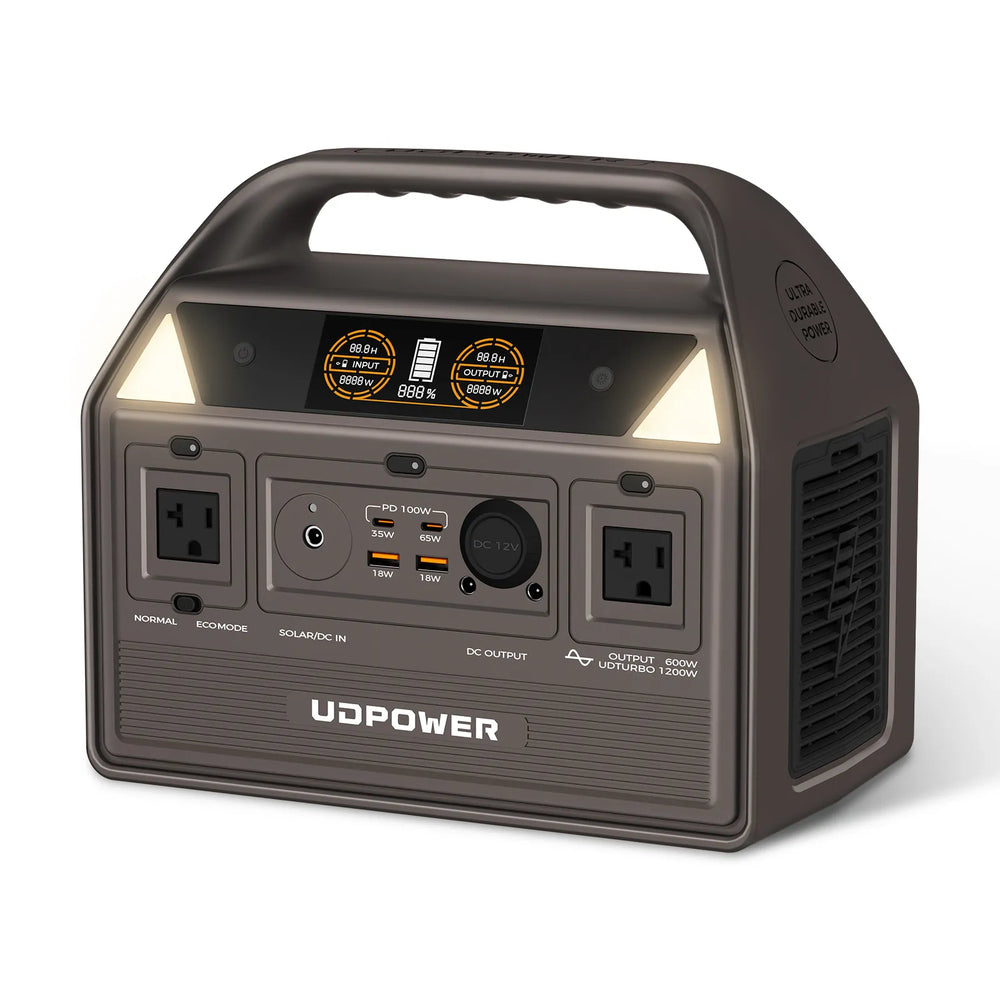
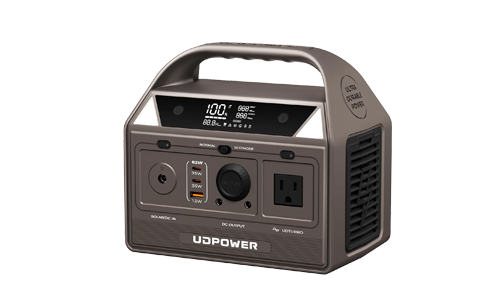
UDPOWER C600: Best for Weekend Car Camping
The C600 is a practical choice when you want more than a small phone power bank but do not want a large basecamp battery. At 12.3 pounds, it is manageable between the vehicle, picnic table, and a protected campsite power area.
- Battery capacity: 596Wh
- Rated AC output: 600W
- Peak output: Up to 1,200W
- Battery: LiFePO4 with 4,000+ listed cycles
- Weight: 12.3 lb
- Outputs: Two AC outlets, USB-C, USB-A, DC outputs, and a 12V car outlet
Good fit for: lights, phones, cameras, a laptop, rechargeable fans, small campsite electronics, and compatible low-power refrigeration setups.
View UDPOWER C600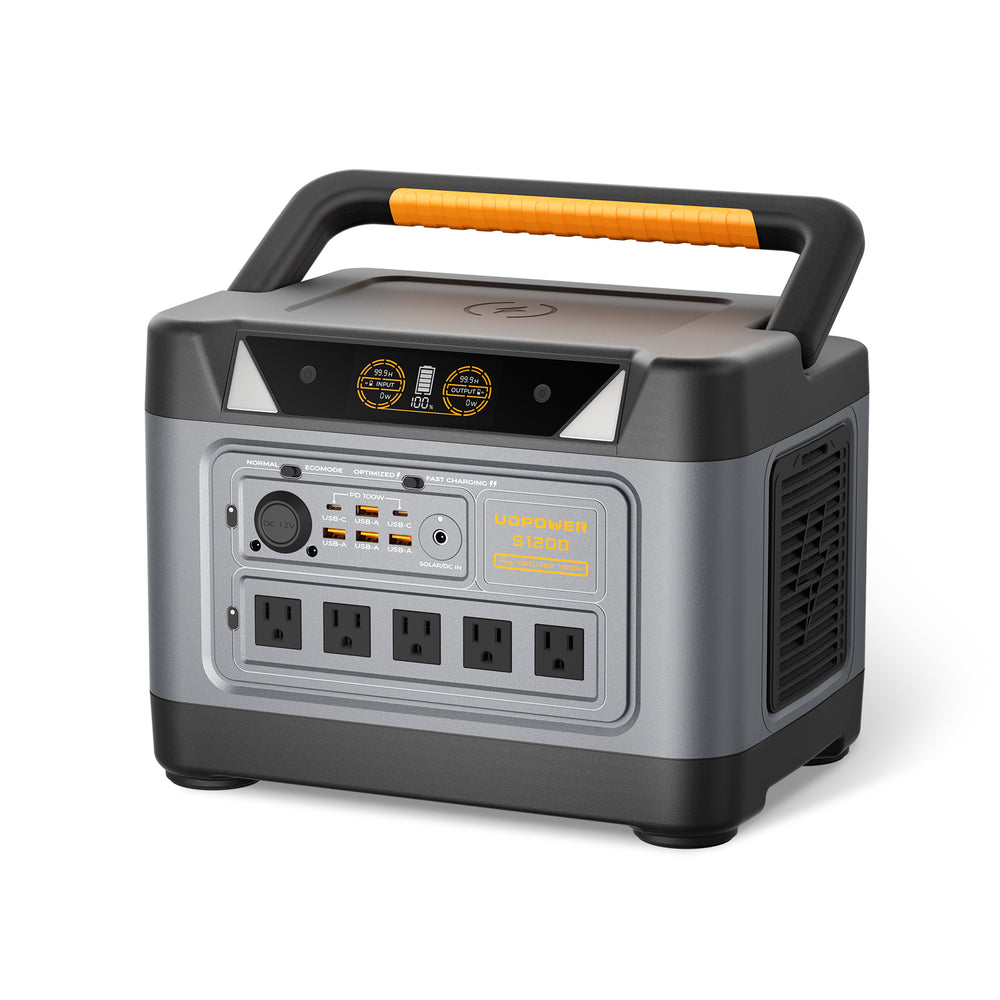
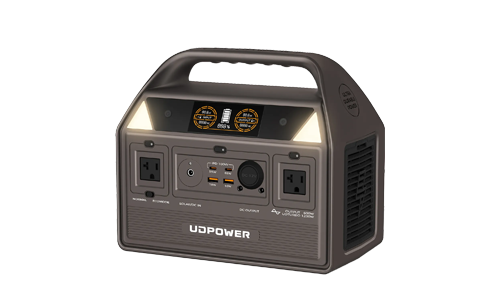
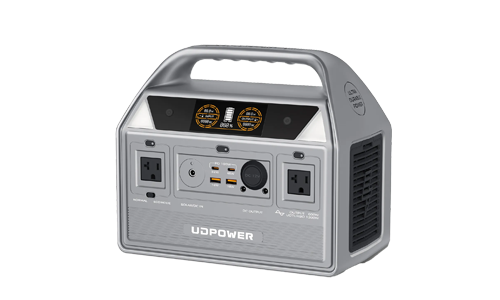
UDPOWER S1200: Best for Family Camping, CPAP, and Fridge Support
The S1200 offers more capacity for campers who need overnight reliability, several charging ports, or enough output for a more comfortable car-camping setup.
- Battery capacity: 1,190Wh
- Rated AC output: 1,200W pure sine wave
- UDTURBO output support: Up to 1,800W
- Battery: LiFePO4 with 4,000+ listed cycles
- Weight: 26.0 lb
- AC outlets: Five on the current gray version
- Maximum solar input: Up to 400W
- Listed AC recharge time: Approximately 1.5 hours
Good fit for: family tent camping, longer weekends, compatible CPAP setups, camping refrigerators, laptops, cameras, lights, fans, and multiple people sharing one charging station.
View UDPOWER S1200Which model fits your trip?
| Camping setup | Likely power needs | Suggested UDPOWER model | Why |
|---|---|---|---|
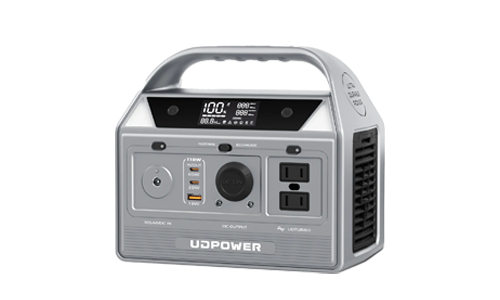
| One-night minimal tent trip | Phones, headlamps, camera, small lantern | C400 | Compact 256Wh option for lighter electrical needs |
| Two- or three-night car camping | Phones, lights, fans, camera batteries, laptop | C600 | 596Wh capacity without the weight of a large basecamp unit |
| Family camping or overnight medical-device support | CPAP, fridge, lights, fan, phones, laptop | S1200 | More overnight capacity and higher output for shared campsite loads |
| Multi-day powered basecamp | Fridge, electronics, several users, and higher-draw appliances within limits | S2400 | 2,083Wh capacity and 2,400W rated output for larger setups |
How to Pitch a Tent Without Damaging the Site
Legal permission is only the first step. A campsite can still be poorly chosen, unsafe, or damaging even when camping is allowed in the broader area.
Use an existing durable surface
Choose a previously used, vegetation-free surface when local rules permit. Avoid crushing wildflowers, desert soil crust, wet meadows, young plants, dunes, streambanks, restoration areas, and wildlife watering sites.
Stay away from drainage channels
Flat ground is not always safe ground. Desert washes, dry creek beds, canyon bottoms, and low areas can flood from storms miles away. Look for debris lines, eroded banks, water staining, and forecasted thunderstorms.
Separate sleeping, cooking, food, and power zones
| Zone | What belongs there | Main rule |
|---|---|---|
| Sleeping zone | Tent, sleeping pad, sleeping bag, dry clothing | Keep it free of food, fuel, cooking equipment, and loose charging cables |
| Cooking zone | Approved stove, cookware, water, and fire-safety equipment | Use a stable surface away from tent fabric and follow current fire orders |
| Food-storage zone | Food, trash, toiletries, cooler, and scented items | Follow the area’s bear-canister, locker, hard-sided vehicle, or storage rules |
| Power zone | Portable power station, charging hub, camera batteries, and device cables | Keep equipment dry, shaded, ventilated, and outside walking paths |
Have a real waste plan
Use provided toilets whenever available. In undeveloped areas, follow the land manager’s exact human-waste rules. Some areas permit properly placed catholes, some require portable toilets, and others require all solid human waste to be packed out.
Food scraps, fruit peels, toilet paper, wipes, hygiene products, bottle caps, cable ties, and pieces of foil are trash. Pack them out even when they appear biodegradable.
Leave before conditions damage the road
A legal dirt route can become impassable after rain or snow. Driving through deep mud can damage roads, widen tracks, destroy vegetation, and leave a vehicle stranded beyond emergency-service coverage.
Related California Camping Guides
Frequently Asked Questions
Can I pitch a tent on any public land in California?
No. Public land may be closed to camping, limited to designated sites, subject to a permit, inaccessible without crossing private property, or covered by seasonal fire and resource-protection orders. Identify the managing agency and verify the exact location before setting up.
Is dispersed camping legal in California?
Yes, dispersed camping is legal in many parts of BLM land and national forests, but it is not legal everywhere. Individual field offices, forests, districts, wilderness areas, and recreation zones can impose special limits or prohibit camping.
Can I camp for free in a California national forest?
Many national-forest areas allow free dispersed camping outside developed campgrounds. You still need to check closures, stay limits, water setbacks, vehicle-route restrictions, food-storage rules, and fire orders for the individual forest.
How long can I dispersed camp on BLM land in California?
The general BLM California limit is 14 days within a period of 28 consecutive days, followed by a required move outside the applicable radius. Special areas may have stricter limits. The Bishop Field Office, for example, currently limits dispersed camping to 14 days per year within its boundaries.
Do I need a permit to camp on BLM land?
Many ordinary BLM dispersed sites do not require a separate camping permit, but special management areas may require one. Alabama Hills now requires a free permit and limits camping to designated sites. Always check the relevant BLM field-office page.
Can I pitch a tent on a California beach?
Only at a beach campground or area that expressly allows tent camping. Beach access does not automatically include overnight camping, sleeping, fires, or overnight parking. Check the official state, county, or city beach page.
Can I pitch a tent beside the road in California?
Generally, no. Highway shoulders, roadside turnouts, trailheads, vista points, and ordinary pullouts are not campsites unless the managing agency has formally designated them for camping.
Can I camp overnight at a California rest area?
You may use a Caltrans safety rest area for temporary travel rest within posted limits, but you cannot establish a tent campsite. California regulations generally limit rest-area stays to eight hours in a 24-hour period and prohibit using the facility as a camping base.
Can I camp in a California state park without a reservation?
Some parks offer first-come sites, same-day availability, hike-and-bike sites, or cancellations. You must still occupy an authorized campsite. A lack of reservations does not allow camping elsewhere in the park.
Can I pitch a tent anywhere in a national park backcountry?
Not necessarily. Each national park sets its own wilderness zones, designated campsites, permits, quotas, food-storage rules, and distance requirements. Follow the permit and itinerary issued by that park.
Do I need a California Campfire Permit for a gas stove?
A California Campfire Permit is required for gas stoves and other flame-producing equipment at many dispersed sites on federal land. The permit is free, but current fire restrictions can still prohibit use. Check the local order before every trip.
Does an old fire ring mean a dispersed campsite is legal?
No. A fire ring may be outdated, illegally built, inside a closed zone, too close to water or vegetation, or prohibited under a current fire order. Verify the site independently.
Can I camp on private property if there is no fence or sign?
Not without permission. The absence of a fence or no-trespassing sign does not turn private land into a public campsite. Confirm ownership and obtain the owner’s consent.
What is the fastest way to confirm whether a California campsite is legal?
Save the exact coordinates, identify the land manager on an official map, read that agency’s camping page and current alerts, and call the local ranger district, park office, or BLM field office when the status remains unclear.
Are portable power stations allowed at California tent campsites?
Portable battery power stations are generally compatible with tent camping because they do not burn fuel or create engine exhaust. Site rules still apply. Keep the unit dry, ventilated, shaded, within its rated limits, and away from rain, tent condensation, cooking areas, and foot traffic.
Final Answer
You cannot pitch a tent anywhere in California. Legal tent camping requires an approved campground, a valid backcountry authorization, private-owner permission, or public land that the managing agency has confirmed is open to dispersed camping.
The most reliable rule is simple: identify the land manager first, verify the exact site second, and check current closures and fire orders immediately before departure. Never use a camping-app pin, an empty pullout, an existing fire ring, or the words “public land” as your only proof.
Plan a Better California Camping Setup
Choose quiet portable power for lights, phones, cameras, fans, compatible CPAP equipment, camping refrigerators, and no-fire campsite nights.
View Portable Power Stations Get the Tent Camping Guide Compare UDPOWER ModelsRelated Articles


