Great Smoky Mountains National Park Camping Guide: Campgrounds, Reservations, Bears, RVs & Campsite Power
Last updated: August 27, 2026
Quick answer: Great Smoky Mountains National Park has 10 developed frontcountry campgrounds. Cades Cove and Smokemont are open year-round; the other eight operate seasonally. Advance reservations are required for every frontcountry campground, standard campsites currently cost $30 per night, and Look Rock electric sites cost $36 per night.
Do not expect a typical RV resort. Showers are not available inside the park, and only 10 sites at Look Rock provide electric and water hookups. Most campsites are intentionally simple: a picnic table, fire grate, drinking water nearby, and restrooms with flush toilets.
For a first trip, choose your campground by the part of the park you actually want to explore. Elkmont works well for the Gatlinburg/Sugarlands side, Cades Cove puts you close to the park's famous valley, and Smokemont is the most convenient year-round base for Cherokee and the North Carolina side. If electric and water hookups matter, Look Rock is the one in-park campground to examine first.
There is one easy-to-miss rule: you do not need a parking tag while your vehicle is parked at your designated frontcountry campsite, but you normally need one if you leave the campground and park elsewhere in the national park for more than 15 minutes.

Image source: nps.gov
Which Great Smoky Mountains Campground Should You Choose?
The biggest campground-selection mistake in the Smokies is choosing solely by campsite availability. The park is large, mountainous, and slow to cross. A campsite that looks close on a map can turn a simple morning hike into a long drive on winding roads.
A better approach is to decide what part of the park will occupy most of your trip, then choose a campground on that side.
Best for Cades Cove: Cades Cove Campground
Choose Cades Cove if the historic valley, wildlife viewing, biking the loop, or Abrams Falls area is the center of your trip. It is also one of only two frontcountry campgrounds open year-round.
Best for Gatlinburg and Sugarlands: Elkmont Campground
Elkmont is the closest large family campground to Sugarlands Visitor Center and makes a practical base for Little River Road, Gatlinburg-side hikes, and trips toward Newfound Gap without moving camp every night.
Best for Cherokee and the North Carolina side: Smokemont Campground
Smokemont is near Oconaluftee Visitor Center and is the other year-round campground. It is a logical choice for campers entering through Cherokee or planning to spend more time along Newfound Gap Road.
Best for a quieter Tennessee-side base: Cosby Campground
Cosby sits away from the busiest Gatlinburg and Cades Cove corridors. It works particularly well when your priority is camping under a wooded canopy rather than being next to the park's most heavily visited sightseeing areas.
Best for Bryson City and creek-focused camping: Deep Creek Campground
Deep Creek is convenient for the Bryson City side and puts campers near one of the park's better-known creek and waterfall areas. It is especially attractive for tent campers, with many tent-only and walk-to sites.
Best for Cataloochee Valley and elk country: Cataloochee Campground
Cataloochee offers a much more isolated base in a historic valley associated with elk viewing. The tradeoff is access: this is not the campground to choose if your itinerary is mostly Gatlinburg, Cades Cove, or central Newfound Gap Road.
Best for cooler summer nights: Balsam Mountain Campground
At about 5,310 feet, Balsam Mountain is dramatically higher than most developed Smokies campgrounds. NPS notes that summer daytime temperatures there rarely exceed 70°F and nighttime lows may reach around 50°F. Pack for a different climate than the one you experienced before driving into the mountains.
Best for a small tent-only campground: Big Creek Campground
Big Creek has just 12 campsites and is tent-only. It is a strong fit for campers who want a smaller, more secluded campground, but current Hurricane Helene-related trail damage affects access beyond Mouse Creek Falls, so check conditions before building a hiking itinerary around it.
Best for a small, remote west-side campground: Abrams Creek Campground
Abrams Creek has only 16 sites. It favors campers who deliberately want a quieter location rather than easy access to every major park attraction.
Best for limited electric and water hookups: Look Rock Campground
Look Rock has 68 sites, including 10 sites with electric and water hookups. That makes it unusual inside the Smokies and an important option for RV travelers who would otherwise need to look outside the park for hookups.
Great Smoky Mountains Campgrounds Compared

Image source: nps.gov
All 10 developed frontcountry campgrounds are listed below. Seasonal closure windows are based on current NPS campground pages and should always be checked again before booking because operational dates can change.
| Campground | Total Sites | 2026 Operation | Hookups | Best For | Official Source |
|---|---|---|---|---|---|
| Cades Cove | 161 | Year-round | None | Cades Cove, wildlife, historic valley, first-time west-side trips | NPS |
| Smokemont | 142 | Year-round | None | Cherokee, Oconaluftee, North Carolina side | NPS |
| Elkmont | 211 | Seasonal; NPS lists closure Nov. 29-Apr. 3 | None | Sugarlands, Little River, Gatlinburg-side base | NPS |
| Cosby | 157 | Seasonal; closure Oct. 25-May 15 | None | Quieter Tennessee-side camping | NPS |
| Deep Creek | 92 | Seasonal; closure Oct. 25-May 1 | None | Bryson City, creek access, tent camping | NPS |
| Cataloochee | 27 | Seasonal; closure Oct. 25-May 1 | None | Remote valley, elk viewing, historic landscape | NPS |
| Balsam Mountain | 43 | Seasonal; closure Oct. 12-May 15 | None | High elevation and cooler summer camping | NPS |
| Big Creek | 12 | Seasonal; closure Oct. 25-May 15 | None | Tent-only, small remote campground | NPS |
| Abrams Creek | 16 | Seasonal; closure Oct. 25-May 8 | None | Small, secluded west-side camping | NPS |
| Look Rock | 68 | Seasonal; closure Oct. 25-May 8 | 10 electric + water sites | RV campers needing limited hookups | NPS |
Useful decision rule: do not choose a campground just because it has the largest number of sites. A two-night trip becomes frustrating very quickly if you spend a large part of each day driving from one side of the park to the other.
Reservations, Camping Fees and Parking Tags in 2026
Every frontcountry campsite requires a reservation
Advance reservations are required year-round at all Great Smoky Mountains National Park campgrounds. The park no longer keeps ordinary campsites available on a first-come, first-served basis.
Reservations are handled through Recreation.gov. If you are planning a busy fall-color weekend, holiday period, or peak summer trip, treat the campground reservation as one of the first pieces of the trip to lock down.
2026 camping costs
| Camping Type | Current Fee | What to Know | Source |
|---|---|---|---|
| Standard frontcountry campsite | $30 per site/night | Applies to the standard sites at the park's 10 developed campgrounds | NPS fee rates |
| Look Rock electric site | $36 per site/night | Limited inventory; Look Rock has 10 electric/water sites | NPS fee rates |
| Backcountry permit | $8 per person/night | Separate backcountry rules and reservation system apply | NPS fee rates |
| Backcountry reservation fee | $6 per permit | Non-refundable fee added after the April 30, 2026 move to Recreation.gov | NPS 2026 update |
The parking-tag rule is different from the campsite fee
Vehicles parked for more than 15 minutes inside Great Smoky Mountains National Park generally require a physical parking tag. Current rates are $5 daily, $15 weekly and $40 annually.
Frontcountry campers get an important exception: a vehicle parked at its designated campsite does not need a parking tag. Once you drive to a trailhead, visitor center, overlook, picnic area or another park parking area, normal parking-tag requirements apply.
| Situation | Parking Tag? |
|---|---|
| Vehicle parked at your designated frontcountry campsite | No |
| Drive from campground to a trailhead and park for a hike | Yes |
| Park at an overlook or attraction for more than 15 minutes | Yes |
| Drive through the park without parking more than 15 minutes | No parking tag required for simply passing through |
Daily and weekly tags purchased online must be printed and displayed; a digital image on your phone is not accepted. Check the current rules at the NPS parking-tag page.
What Do Smokies Campgrounds Actually Provide?
Think national park campground, not commercial campground. Every developed campground has cold running water and flush toilets, and individual campsites include a picnic table and fire grate. The simplicity is part of the experience, but it changes what you need to pack.
| Amenity | What to Expect | Planning Impact | Source |
|---|---|---|---|
| Flush toilets | Available at developed frontcountry campgrounds during operation | You do not need a primitive toilet setup at ordinary frontcountry sites | NPS |
| Cold running water | Available | Bring bottles/containers but you do not need to haul all campsite water from home | NPS |
| Showers | Not available inside park campgrounds | Plan around facilities in surrounding communities or an appropriate contained camp-shower system | NPS |
| Electric hookups | Only some Look Rock sites | Do not assume an RV campsite includes shore power | NPS |
| Medical-equipment outlets | 5-amp outlets at Cades Cove, Elkmont and Smokemont for medical equipment only | These are not general-purpose campsite electric hookups | NPS |
| RV dump stations | Cades Cove, Cosby, Deep Creek, Look Rock, Smokemont and near Sugarlands | Plan your tanks before entering a campground without a dump station | NPS |
| Cell service | Often poor or unavailable at campgrounds | Save maps, reservation details and campsite information offline | NPS campground listings |
Before leaving home: save a screenshot or offline copy of your campground name, loop and site number. That small step matters more here than at a campground with reliable cellular service.
RV Camping in Great Smoky Mountains National Park
RVs are welcome at several Smokies campgrounds, but planning should begin with the exact campsite rather than a campground-wide maximum. Parking pads, curves, trees and site geometry vary, so confirm the length limits shown for the individual site on Recreation.gov before paying.
Also remember that almost all in-park RV camping is without hookups. Look Rock is the exception, and even there only 10 sites currently provide electric and water hookups.
Do not assume every scenic road is RV-friendly
Several secondary roads prohibit motorhomes, buses and vans longer than 25 feet, as well as passenger vehicles towing trailers. For 2026, those restrictions apply to roads including Heintooga Round Bottom Road, Heintooga Ridge Road, Little Greenbrier Road, Parson Branch Road, Rich Mountain Road, Roaring Fork Motor Nature Trail and Wear Cove Road.
Check the NPS seasonal road schedule before taking an RV or trailer onto a sightseeing route.
RV planning rule: campsite fit and road fit are two separate questions. A campground may accept your rig while a scenic road you planned to drive the next morning does not.
Camping in Black Bear Country: The Rules Matter
Black bears are not a side note in the Smokies. NPS warns that bear activity is especially high from May through August and prohibits intentionally approaching within 50 yards, or getting close enough to disturb or displace a bear.
The most important campsite habit is simple: if you are not actively using food or scented gear, put it away.
What must be stored
- Food and snacks
- Coolers
- Cooking equipment, including stoves and pots
- Garbage and food scraps
- Soap, candles and other scented items
- Water containers
NPS requires these items to be sealed inside a vehicle, preferably the trunk, or inside a camping unit made from solid, non-pliable material whenever they are not in use.
A limited number of food-storage lockers are available at Abrams Creek, Big Creek, Cades Cove, Cataloochee, Cosby, Deep Creek, Elkmont and Smokemont, but availability is limited. Do not build your entire food-storage plan around finding an empty locker.
See the current NPS campground regulations and black bear safety guidance.
If you see a bear
Do not move closer for a photograph. If a bear changes its behavior because of your presence, NPS says you are too close. Back away slowly while facing the animal and never run.
Lock your vehicle as well. NPS specifically warns that bears can open car doors.
Smokies Weather: Your Campground and Your Hike Can Have Different Seasons
One of the easiest ways to under-pack for the Smokies is to look at the weather forecast for Gatlinburg and assume it represents the mountain tops. Elevation changes the picture quickly.
NPS climate averages show just how large the difference can be between low-elevation Gatlinburg and high-elevation Kuwohi.
| Month | Gatlinburg Avg. High / Low | Kuwohi Avg. High / Low | What Campers Should Expect | Source |
|---|---|---|---|---|
| January | 51°F / 28°F | 35°F / 19°F | Low valleys can be mild while higher terrain is wintry | NPS weather |
| April | 71°F / 42°F | 49°F / 34°F | Spring weather changes fast; rain and high-elevation cold remain possible | NPS weather |
| July | 88°F / 59°F | 65°F / 53°F | Hot, humid lowlands but much cooler high-elevation hiking | NPS weather |
| October | 73°F / 43°F | 53°F / 38°F | Excellent camping weather, but high terrain can become cold quickly | NPS weather |
Summer thunderstorms are common, spring conditions can change from sun to snow at higher elevations, and high-elevation snow is possible again by November. Pack a waterproof layer even when the forecast looks favorable.
Firewood rules
If you bring firewood into the park, it must be bundled and certified as heat-treated by the USDA or a state department of agriculture. Campers may also collect wood inside the park only when it is already dead and down on the ground. Fires must remain in established fire rings.
See the official campground rules before bringing firewood from home.
2026 Closures That Can Change Which Campground Makes Sense
A camping reservation may still be valid while the hike that caused you to choose that campground is closed. That is why the final conditions check should happen shortly before departure, not only when the campsite is booked.
Conditions checked August 27, 2026: several closures currently have a direct effect on popular camping itineraries.
Abrams Falls Trail
The Abrams Falls Trail is temporarily closed Monday through Thursday through September 30 while trail work is underway. NPS currently lists it as open Friday through Sunday and on Labor Day during the construction period. This matters especially if you booked Cades Cove specifically to hike Abrams Falls.
Laurel Falls Trail
Laurel Falls Trail remains closed for rehabilitation. NPS currently anticipates reopening it sometime in 2027. Do not book an Elkmont or Gatlinburg-side trip based on an outdated itinerary that still treats Laurel Falls as open.
Big Creek Trail
The Big Creek Trail is currently open for only the first two miles to Mouse Creek Falls. The trail is closed beyond that point because of significant damage, and parking is currently near the ranger station with an approximately three-quarter-mile walk to the trailhead.
Cataloochee-area trail damage
Caldwell Fork Trail is closed to all users because of significant storm damage. Other trails in the area have washouts, missing footlogs or equestrian restrictions. Campers choosing Cataloochee for hiking should review current trail conditions rather than relying on an older trail guide.
Cades Cove vehicle-free Wednesdays
Cades Cove Loop Road is typically closed to motor vehicles on Wednesdays from May through September. That can be a benefit if you want to bike or walk the loop, but a surprise if your Wednesday plan depended on driving it.
Check the live NPS cautions and closures page and seasonal road schedule immediately before departure.
Camping Power in the Smokies: Plan for a Mostly Unplugged Campsite
Most developed campsites in Great Smoky Mountains National Park do not have electricity. Generator use is also prohibited between 8 p.m. and 8 a.m., and some campground loops or sites are generator-free at all times.
According to the park's Superintendent's Compendium, generator-free areas include Big Creek Campground and designated portions of Cades Cove, Cosby, Elkmont, Smokemont and Deep Creek. Engine idling to recharge batteries is also prohibited in designated generator-free areas.
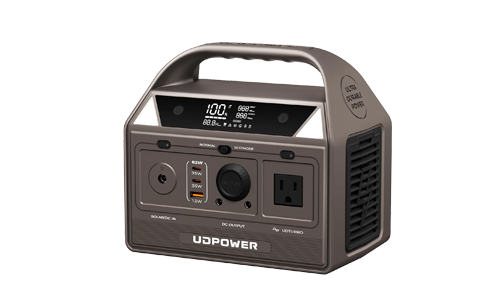
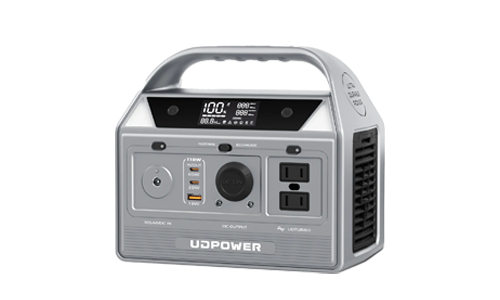
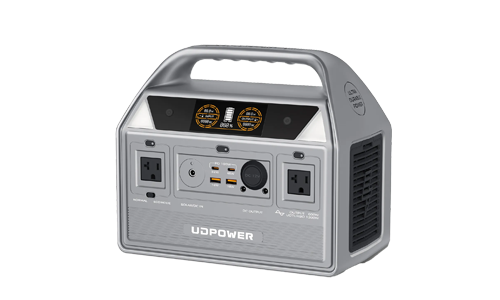
That makes a portable power station particularly practical for quiet overnight loads such as lights, phones, camera batteries, a fan, laptop, compatible CPAP equipment or a portable camping refrigerator.
Always check the exact generator rules for your loop at the NPS Superintendent's Compendium.
How many watt-hours should you bring?
The useful question is not “How large a battery do I need for the Smokies?” It is “How many watt-hours will my specific campsite use before I can recharge?”
A practical calculation is:
Device watts × hours used = watt-hours consumed
Then total your devices, multiply by the number of days between reliable charging opportunities, and keep a reserve rather than planning to reach 0% every night.
| Camping Setup | Typical Daily Energy | Examples | Practical Battery Class |
|---|---|---|---|
| Minimal overnight | 80-180Wh/day | Phone, headlamp, lantern, small speaker | 150-300Wh |
| Weekend basics | 250-600Wh/day | Several phones, LED lights, camera batteries, fan, light laptop use | 500-800Wh |
| Comfort campsite | 600-1,000Wh/day | Overnight fan, laptops, cameras, drone charging, multiple campers | 1,000-1,500Wh |
| CPAP or fridge campsite | 800-1,500Wh/day | Compatible CPAP, 12V fridge, fan, phones, lighting and electronics | 1,200-2,000Wh+ |
| Powered RV/basecamp | Highly variable | Fridge, electronics plus short high-wattage appliance use | 2,000Wh+ with sufficient AC output |
For a deeper calculation, use the UDPOWER guide How Many Wh Do I Need for Camping?. It covers device wattage, trip duration, reserve capacity and real campsite examples.
A realistic family-campsite example
| Device | Example Use | Daily Energy |
|---|---|---|
| 4 phones | One recharge each | About 60Wh |
| LED campsite lights | 20W × 4 hours | 80Wh |
| Camping fan | 25W × 6 hours | 150Wh |
| Camera/drone batteries | Mixed charging | About 120Wh |
| Laptop | 60W × 2 hours | 120Wh |
| Total | Before reserve | About 530Wh/day |
A 596Wh-class station can make sense for one carefully managed night at this usage level. For two nights without dependable recharging, moving into the 1,000Wh class gives much more breathing room.
For UDPOWER planning calculations, a useful runtime estimate is:
Estimated runtime ≈ battery capacity × 90% ÷ device watts
This is a planning estimate rather than a guarantee. Refrigerator compressor cycling, temperature, device settings, cables, charging losses and simultaneous loads all change real-world results.
UDPOWER Portable Power Stations for Great Smoky Mountains Camping
The products below make the most sense for frontcountry car camping, RV camping and vehicle-supported basecamps. They are not backpacking recommendations; backcountry campers should prioritize pack weight and a much smaller energy system.
Best for lighter weekend power
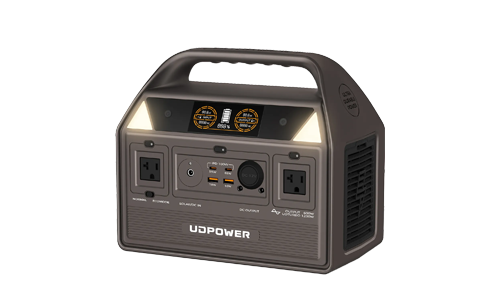
UDPOWER C600
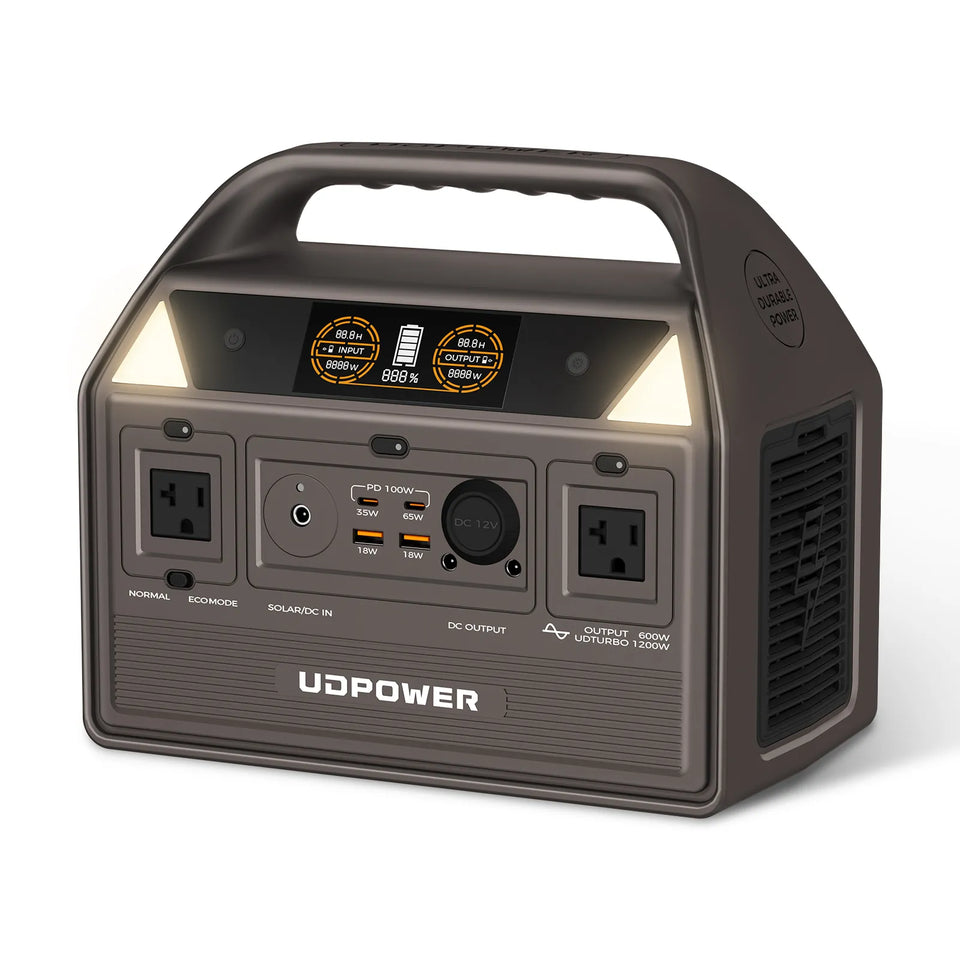
The C600 is the most portable of these three options and suits a campsite centered on phones, lighting, camera batteries, a laptop, fan use and carefully managed small-fridge loads.
- Battery: 596Wh LiFePO4
- Rated AC output: 600W pure sine wave
- Surge: up to 1,200W
- Weight: 12.3 lb
- Solar input: up to 240W
- Best Smokies use: one-night or lighter weekend frontcountry camping
At 12.3 lb, it is easier to move between the vehicle, picnic table and sheltered campsite area than a large basecamp battery.
View UDPOWER C600Best overall for a family frontcountry campsite
UDPOWER S1200
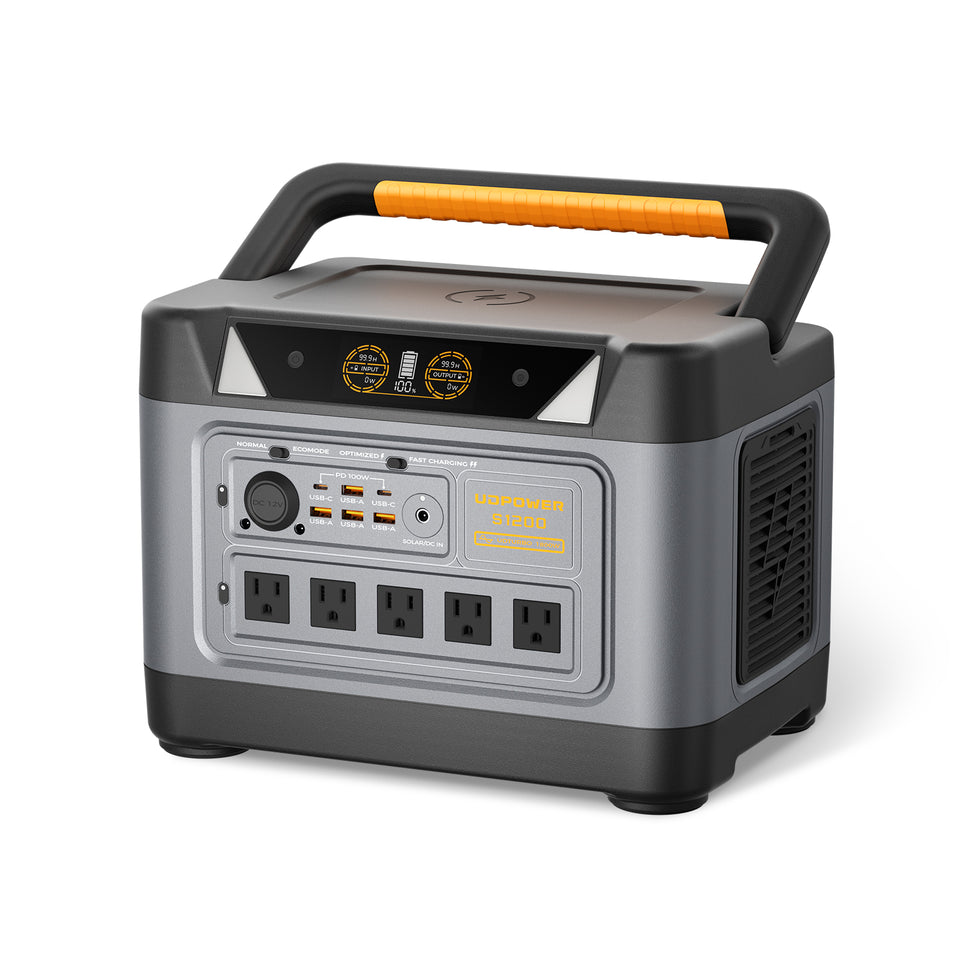
The S1200 is a better fit when several people share one power source or when the setup includes an overnight fan, compatible CPAP, laptop, camera equipment, refrigeration or a larger energy reserve.
- Battery: approximately 1,190Wh LiFePO4
- Rated AC output: 1,200W pure sine wave
- Surge: up to 1,800W
- Weight: approximately 26.0 lb
- Outputs: up to 14 on the current 5-AC version
- Solar input: up to 400W
- Best Smokies use: two-night family camping, CPAP-support setups and comfort camping
Its capacity is large enough to reduce the need to micromanage every phone charge while remaining much easier to handle than a 2,000Wh-class station.
View UDPOWER S1200Best for RV support and larger basecamp loads
UDPOWER S2400
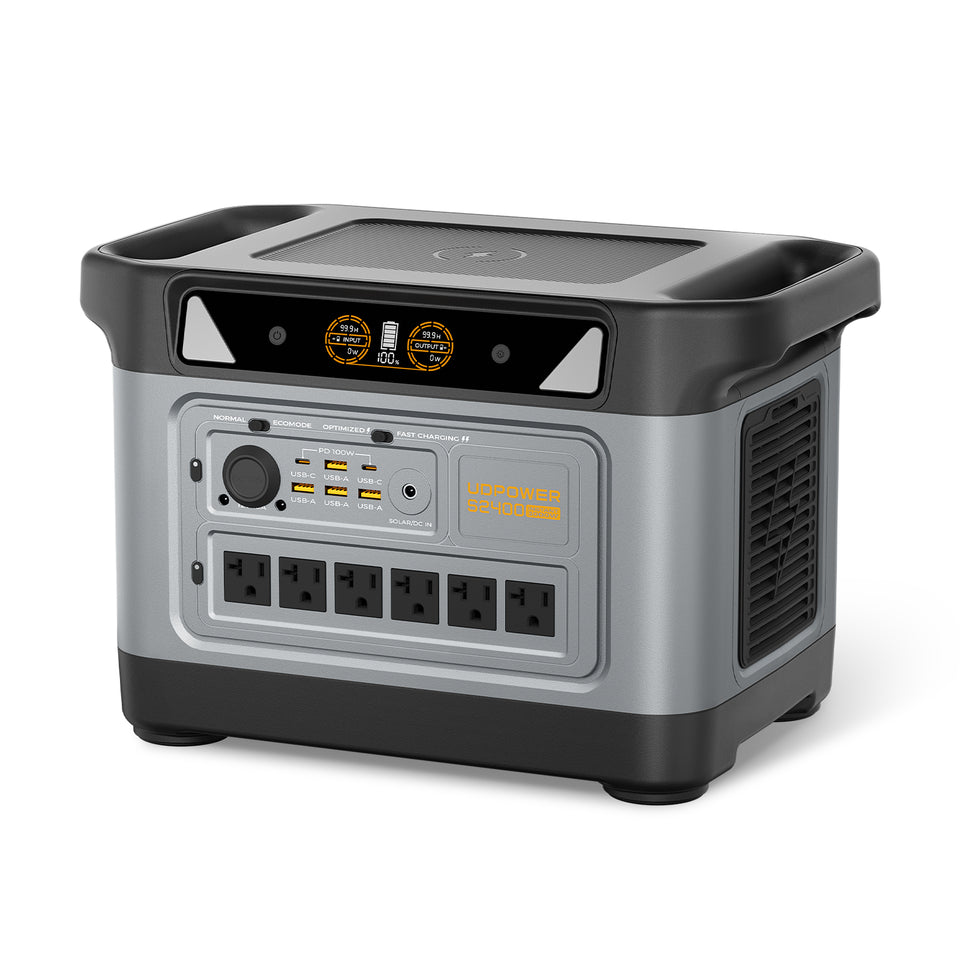
The S2400 is aimed at campers who care more about capacity and output headroom than carrying weight. It is the stronger choice for an RV-support setup, a portable refrigerator plus electronics, multiple overnight loads or short use of higher-wattage appliances.
- Battery: 2,083Wh LiFePO4
- Rated AC output: 2,400W pure sine wave
- Surge: up to 3,000W
- Weight: approximately 40.8 lb
- Outputs: 6 AC outlets plus 9 DC/USB outputs
- Solar input: up to 400W
- Best Smokies use: RV support, powered basecamps, refrigerators and multi-device trips
The tradeoff is obvious: at roughly 40.8 lb, it is a basecamp unit rather than something you will want to carry far from the vehicle.
View UDPOWER S2400If you are still deciding between capacity classes, compare the models in UDPOWER S1200 vs. S2400 or browse the dedicated portable power stations for camping collection.
Solar reality in the Smokies: tree cover matters. A campsite can be bright enough for comfortable camping while still providing poor direct sunlight for a solar panel. Treat solar as a trip extender unless you already know that your reserved site gives you a reliable open-sky charging window.
What to Pack Specifically for Great Smoky Mountains Camping
A generic camping checklist is useful, but the Smokies add a few items that deserve priority because of rain, bears, limited connectivity and mostly non-electric campsites.
- Printed or offline reservation details: cell service can be limited or nonexistent.
- Printed parking tag when required: online daily and weekly tags must be physically displayed.
- Waterproof shell: afternoon showers and rapidly changing mountain weather are common.
- Warm layer: especially if your hikes climb well above campground elevation.
- Bear-safe food-storage plan: do not rely on leaving a cooler or food box outside.
- Certified heat-treated firewood: if bringing firewood from outside the park.
- Headlamp: especially important at Balsam Mountain, where NPS notes that campground restrooms do not have lights.
- Offline park map: save the campground and trail maps before arrival.
- Rain protection for electronics: portable power stations and chargers should remain dry and ventilated.
- Enough battery capacity for nighttime loads: generators cannot normally be run from 8 p.m. to 8 a.m.
- Correct charging cables: test your phone, CPAP, fridge, camera and other essential devices at home.
- Trash bags: food scraps and scented garbage should never sit unattended around camp.
For a broader tent setup, see the UDPOWER Tent Camping Guide. For general campground etiquette and camping rules, see the Camping Rules Guide.
The Best Way to Plan a Smokies Camping Trip: Stay on One Side
A two- or three-night camping trip usually works better when you resist the urge to cover the entire national park.
Tennessee-focused trip
Choose Cades Cove, Elkmont, Cosby, Abrams Creek or Look Rock according to your specific itinerary. Spend your days exploring the attractions on that side instead of repeatedly crossing the mountains.
North Carolina-focused trip
Smokemont is the most versatile year-round North Carolina base. Deep Creek works well for the Bryson City side, while Cataloochee, Big Creek and Balsam Mountain reward travelers deliberately targeting those more remote areas.
When changing campgrounds makes sense
For a longer trip, changing campgrounds once can be worthwhile. A west-to-east or Tennessee-to-North-Carolina move can reduce repeated driving. Moving every night usually creates the opposite result: more time packing tents and gear, less time hiking.
Simple rule: for a two-night trip, pick one campground. For a longer trip covering both sides of the park, consider one deliberate campground move rather than a new site every night.
Backcountry Camping Is Not the Same as Frontcountry Camping
If you intend to backpack to a campsite or shelter, the rules above for developed frontcountry campgrounds are only part of the story.
Backcountry campers need a permit and must stay at designated backcountry campsites or shelters. The standard fee is $8 per person per night. Since April 30, 2026, permits are handled through Recreation.gov and include an additional $6 non-refundable fee per permit.
Standard backcountry party size is limited to eight people, although a small number of locations may accommodate larger parties with special permits. Food, trash, toothpaste, lip balm and other odorous items must be stored using the bear cable system at each campsite or shelter.
Pets are not permitted in the backcountry. Across the park, dogs are permitted on only two hiking trails: Gatlinburg Trail and Oconaluftee River Trail.
Read the current NPS backcountry camping rules before building an itinerary.
Power-planning difference: the C600, S1200 and S2400 recommendations above are for vehicle-supported camping. Backpackers should not carry a 12-40 lb power station into the backcountry simply because it works well at a frontcountry campsite.
Great Smoky Mountains National Park Camping FAQ
Do I need a reservation to camp in Great Smoky Mountains National Park?
Yes. Advance reservations are required year-round at all frontcountry campgrounds. First-come, first-served ordinary campsites are no longer offered. Reservations can be made through Recreation.gov.
Which Great Smoky Mountains campgrounds are open year-round?
Cades Cove Campground and Smokemont Campground are open year-round. The other eight developed frontcountry campgrounds operate seasonally.
How much does camping in Great Smoky Mountains National Park cost?
As of August 2026, standard developed campsites cost $30 per site per night. Look Rock electric campsites cost $36 per night. Backcountry camping costs $8 per person per night plus the current Recreation.gov permit fee.
Do Great Smoky Mountains campsites have electricity?
Most do not. Only 10 sites at Look Rock Campground currently provide electric and water hookups. Cades Cove, Elkmont and Smokemont have 5-amp outlets designated for medical-equipment use, but those are not general campsite hookups.
Are there showers at Great Smoky Mountains campgrounds?
No. Showers are not available inside the national park campgrounds. NPS recommends checking nearby communities for shower facilities.
Do campers need a Great Smoky Mountains parking tag?
Your vehicle does not need a parking tag while it is parked at your designated frontcountry campsite. If you drive elsewhere in the park and park for more than 15 minutes, a parking tag is generally required. Current rates are $5 daily, $15 weekly and $40 annually.
Can I use a generator at a Smokies campground?
Generator use is prohibited between 8 p.m. and 8 a.m. In addition, certain campground loops and sites are designated generator-free at all times. Verify your exact campground loop before depending on a generator.
Can I bring firewood into Great Smoky Mountains National Park?
Yes, but imported firewood must be bundled and certified as heat-treated by the USDA or a state department of agriculture. Campers may also collect dead and down wood inside the park for use in designated fire rings.
Can I camp in my car at an overlook or parking lot?
No. Frontcountry camping is allowed only at designated campgrounds. Pullouts, trailhead parking lots and ordinary parking areas are not legal substitutes for a campsite.
Are dogs allowed at Great Smoky Mountains campgrounds?
Dogs are allowed in campgrounds when confined or on a leash no longer than six feet. Hiking with dogs is much more restricted: pets are permitted on roads and only two park trails, Gatlinburg Trail and Oconaluftee River Trail.
Which campground is best for first-time visitors?
There is no single best campground for every first trip. Choose Cades Cove when the valley is your main attraction, Elkmont for a Gatlinburg/Sugarlands-focused itinerary, and Smokemont for Cherokee and the North Carolina side. Look Rock deserves priority if you specifically need one of the park's limited electric and water sites.
Is a portable power station useful for camping in the Smokies?
It can be especially useful because most frontcountry campsites do not have electrical hookups, generators are prohibited from 8 p.m. to 8 a.m., and some loops are generator-free at all times. Size the battery around the watt-hours used by your actual equipment rather than simply buying the largest unit available.
Related Camping Guides
Final Planning Checklist
A successful Smokies camping trip depends less on bringing more gear and more on removing the few surprises that can disrupt the trip.
- Choose the side of the park you actually plan to explore.
- Reserve a designated campsite before arrival.
- Confirm the campground's seasonal operating dates.
- Check the exact RV/site length if bringing a trailer or motorhome.
- Buy and print a parking tag if your itinerary requires one.
- Download maps and reservation details for offline use.
- Review current road, trail and bear closures immediately before departure.
- Pack for rain and temperatures at both campground and hiking elevations.
- Build a proper bear-safe food-storage plan.
- If bringing campsite power, calculate watt-hours before choosing the battery.
- Test important devices and charging cables at home.
- Keep portable electronics and power equipment sheltered from rain and moisture.
Build Your Smokies Camping Power Setup
If your reserved site has no electric hookup, choose power capacity according to the equipment you will actually use and the number of nights between recharging opportunities.
View Camping Power Stations Compare Portable Power Stations Calculate How Many Wh You NeedRelated Articles