





12 Best Camping Places in California: A Practical Guide for Every Season
Last updated: June 26, 2026
Quick answer: Where are the best places to camp in California?
The best camping places in California depend more on the month and the kind of trip you want than on any single “best” ranking. Choose Yosemite for a first iconic national-park trip, Jedediah Smith and the Redwood parks for towering forests, Pfeiffer Big Sur or Morro Bay for the Central Coast, Joshua Tree for desert stargazing, Death Valley or Anza-Borrego for winter camping, Lassen for volcanic scenery, and Emerald Bay or the Mammoth Lakes area for a summer Sierra escape.
For most first-time campers who want easier access to restrooms, nearby supplies, and several backup campgrounds, Morro Bay State Park is the most forgiving choice. For the most memorable scenery, Yosemite is hard to beat—but its campsites demand much earlier planning.

Image source: nps.gov
California Camping Places at a Glance
This table is designed to help you eliminate places that do not fit your season, vehicle, or preferred camping style before you spend time searching for an available site.
| Camping area | Best for | Best time | Typical camping style | Booking reality | Main limitation | Official information |
|---|---|---|---|---|---|---|
| Yosemite National Park | First national-park trip, granite views, waterfalls | Late spring through fall; winter for experienced cold-weather campers | Tent, van, smaller RV, walk-in Camp 4 | Very competitive; most sites require reservations | Do not arrive expecting an open campsite | Yosemite campgrounds |
| Redwood National and State Parks | Old-growth forest, cool summer weather, photography | May through October | Tent and RV at four developed campgrounds | Reserve early for summer | Historic sites may limit large RVs and trailers | Developed campgrounds |
| Pfeiffer Big Sur State Park | Redwoods, river access, Highway 1 road trip | April through October; winter can be quieter but wetter | Tent, trailer, RV | Often fills six months ahead | Road conditions and closures can affect access | Big Sur camping |
| Morro Bay State Park | Beginners, families, birding, kayaking, coastal weekends | Year-round; fall often brings calmer weather | Tent and RV, including some hookup sites | Popular but has nearby backup options | Coastal wind, fog, and cool nights | Morro Bay State Park |
| Emerald Bay State Park | Lake Tahoe scenery, hiking, paddling | Late May through September | Eagle Point drive-in; separate boat-in camping | Extremely competitive in summer | Small parking pads and strict bear-food storage | Emerald Bay State Park |
| Joshua Tree National Park | Rock formations, climbing, stargazing | October through May | Tent, van, RV; mostly dry camping | Most sites reservable up to six months ahead | Little shade, limited water, weak cell service | Joshua Tree campgrounds |
| Anza-Borrego Desert State Park | Wildflowers, desert drives, quieter winter camping | October through April | Developed and primitive camping | Developed sites reservable in the cooler season | Extreme heat outside the recommended season | Anza-Borrego State Park |
| Death Valley National Park | Winter road trips, desert geology, dark skies | November through March | Developed campgrounds and limited backcountry options | Furnace Creek is reservable October 15–April 15 | Summer heat can be life-threatening | Death Valley camping |
| Lassen Volcanic National Park | Volcanic terrain, alpine lakes, fewer crowds | July through September | Tent, RV, cabins at Manzanita Lake | Seasonal openings depend on snow and road conditions | Short season and limited services in remote areas | Lassen camping |
| Sequoia and Kings Canyon National Parks | Giant sequoias, family hiking, Sierra scenery | Late spring through early fall | Tent, van, RV with site-specific limits | Reservation-only; summer availability is limited | Mountain roads, elevation, and seasonal closures | Sequoia and Kings Canyon camping |
| Mammoth Lakes and Inyo National Forest | Fishing, alpine lakes, flexible public-land camping | June through September | Reserved and first-come forest campgrounds | More backup choices than major national parks | Snow can delay openings; some roads are under repair | Inyo camping and cabins |
| Point Reyes National Seashore | Hike-in coastal camping, backpacking, boat-in trips | Late spring and early fall | Backcountry hike-in or boat-in only | Permit required before starting the trip | No drive-up campground inside the seashore | Point Reyes camping permits |
How to Choose the Right California Camping Destination
California is not one camping climate. On the same weekend, the coast can be foggy, the Sierra can still have snow, and the desert can be dangerously hot. The most reliable way to choose a destination is to start with the month, then match the campground to your vehicle and comfort level.
| Months | Best regions | Good choices | What to watch |
|---|---|---|---|
| January–February | Low desert and mild coast | Death Valley, Anza-Borrego, Joshua Tree, Morro Bay | Cold desert nights, winter storms, short daylight |
| March–April | Desert, Central Coast, lower elevations | Joshua Tree, Anza-Borrego, Big Sur, Point Reyes | Spring-break demand and rapidly warming deserts |
| May–June | Coast, redwoods, lower Sierra openings | Big Sur, Redwood parks, Morro Bay, Yosemite Valley | Snowmelt, mosquitoes, waterfalls, possible road delays |
| July–August | Redwoods, Tahoe, Lassen, higher Sierra | Emerald Bay, Lassen, Mammoth Lakes, Sequoia and Kings Canyon | Wildfire smoke, thunderstorms, peak reservation demand |
| September–October | Coast and Sierra before major snow | Yosemite, Mammoth Lakes, Lassen in early fall, Morro Bay | Fire restrictions, cold nights, early seasonal closures |
| November–December | Desert and lower coast | Death Valley, Joshua Tree, Anza-Borrego, Morro Bay | Holiday crowds and freezing nights at elevation |
12 Best Camping Places in California
1. Yosemite National Park — Best for a First Iconic California Camping Trip
Best sceneryHigh demandTent and RV

Yosemite offers the classic California national-park experience: granite walls, waterfalls, giant trees, high-country meadows, and trail access that begins close to several campgrounds. Upper Pines is the best-known base for Yosemite Valley, while Wawona is a practical option for travelers who want a quieter setting near the Mariposa Grove area. Tuolumne Meadows is the high-country choice when the road and campground are open.
Best trip length: Three to four nights. One night usually turns into a parking and logistics exercise rather than a relaxed camping trip.
What most first-time visitors miss: Yosemite is not a place to enter without an overnight plan. The park states that there are no first-come, first-served campgrounds during the main season. In 2026, Yosemite does not require a timed vehicle-entry reservation, but that does not create campsite availability. A campground reservation is still essential for camping inside the park.
Power note: Tall trees and steep valley walls reduce the hours of direct sunlight that reach a portable solar panel. Arrive with your power station charged and treat solar as a daytime top-up rather than your only plan.
Check current Yosemite campground openings and reservation dates
2. Jedediah Smith and Redwood National and State Parks — Best for Forest Camping
Old-growth forestCool summer optionLimited cell service

Image source: parks.ca.gov
The Redwood parks combine national-park land with Prairie Creek, Del Norte Coast, and Jedediah Smith Redwoods State Parks. The four developed campgrounds put you close to fern-lined trails, rivers, coastal viewpoints, and some of the tallest trees on Earth. Jedediah Smith is a strong choice for swimming and paddling on the Smith River, while Prairie Creek works well for hikers who want access to redwoods and the coast.
Best trip length: Two to four nights. The parks extend across a long north-south corridor, so changing campgrounds every night usually wastes time.
Before booking: Review the length limit for your exact campsite. Many campsites were built before modern large RVs, and the campground roads can be tighter than the highway approach suggests. Download maps before arrival because cell service is unreliable.
Power note: Shade is the main challenge. A 120W panel under redwoods may produce only a fraction of its rated output. Keep your station charged from home or your vehicle and place the panel only in an approved open area where it will not block traffic or damage vegetation.
3. Pfeiffer Big Sur State Park — Best for a Redwoods-and-Coast Road Trip
Central CoastRiver campingBooks early

Pfeiffer Big Sur State Park sits along the Big Sur River beneath redwoods and gives campers a practical base for exploring Highway 1. Unlike the two tiny hike-in sites at Julia Pfeiffer Burns State Park, Pfeiffer Big Sur has a larger campground for tents, trailers, and RVs. It is better suited to families and first-time Big Sur campers.
Best trip length: Two or three nights. That gives you one full day for the coast and another for trails or a slower river day.
Booking reality: The campground can fill six months ahead, including winter weekends. Reserve the campsite before building a nonrefundable coastal itinerary around it. Always check park restrictions and road conditions shortly before departure because storms, slides, construction, or wildfire response can change access.
Power note: Coastal fog and tree cover can reduce solar output. A medium-capacity battery is more dependable than planning to fully recharge from solar each day.
4. Morro Bay State Park — Best for Beginners and Family Camping
Beginner-friendlyCoastalNearby supplies

Morro Bay is one of the easiest places to recommend to someone who wants a scenic California camping trip without being hours from groceries, restaurants, fuel, or medical services. The park is close to a lagoon, marina, museum, hiking, kayaking, and the landmark Morro Rock. Some campground sites offer utility connections, while nearby Morro Strand and Montaña de Oro provide useful backup choices.
Best trip length: Two or three nights. It also works as a one-night stop on a longer Highway 1 trip.
What to pack: A wind-resistant tent, extra stakes, and a warm layer even in summer. Central Coast afternoons may be sunny while evenings turn foggy and cool.
Why it is a good first trip: The campground experience feels outdoorsy without requiring the same level of remote-trip preparation as Death Valley, Lassen, or a Sierra backcountry route.
5. Emerald Bay State Park — Best for Lake Tahoe Views
Lake campingSummerBear country

Emerald Bay has two very different camping experiences. Eagle Point is the drive-in campground at the south end of the bay, while the Boat-In Camp is reached by boat or on foot. The Rubicon Trail links dramatic lake views with access toward Vikingsholm and D. L. Bliss State Park.
Best trip length: Two to four nights. Tahoe traffic can make a short one-night stay feel rushed.
Vehicle warning: Campsites and parking pads are not uniformly large. Check the listed maximum vehicle length before reserving a trailer or motorhome site. Do not assume that a campground labeled “RV” can fit every modern rig.
Food storage: This is active bear country. Food, trash, toiletries, coolers, and other scented items must go into the provided bear-resistant locker when not in immediate use—not into a tent and not simply left inside a vehicle.
6. Joshua Tree National Park — Best for Desert Stargazing and Rock Formations
Dark skiesClimbingDry camping

Image source: nps.gov
Joshua Tree is the most approachable desert national park for many Southern California travelers. Jumbo Rocks places you among massive granite formations, Indian Cove is convenient from Twentynine Palms, and Black Rock offers access from the northwest side. Most campgrounds are dry, meaning you should arrive with all the drinking and cooking water your group needs.
Best trip length: Two nights for a weekend, three nights if you want both hiking and a slower stargazing evening.
Best season: October through May. Summer camping is possible, but the lack of shade and high daytime temperatures make it a poor choice for most casual campers.
Booking reality: Most of the park's roughly 500 campsites are reservable, and weekends commonly fill during the cooler season. Book before entering because cell service is limited. Belle, White Tank, and Hidden Valley are the main first-come alternatives, but they can fill quickly.
Power note: Joshua Tree is one of the better places for solar charging because campsites are open and sunny. Keep the battery station shaded and ventilated while the panel remains in direct sun.
7. Anza-Borrego Desert State Park — Best for a Quieter Winter Desert Trip
Winter campingPrimitive optionsWildflower potential

Anza-Borrego is California's largest state park and offers a wider range of desert camping styles than many first-time visitors expect. Borrego Palm Canyon is the most accessible developed base, while primitive areas appeal to self-sufficient campers with appropriate vehicles and navigation skills.
Best trip length: Two or three nights.
Best season: Reservations for developed campsites are generally offered from October 1 through April 30. Outside that window, heat becomes the deciding factor rather than campground availability.
Do not underestimate: Distance, soft sand, rough roads, and weak phone coverage. Primitive camping should be treated as a remote desert trip, not as an ordinary paved campground with fewer restrooms.
Power note: Solar can work very well here, but panel output does not protect the battery itself from heat. Keep the power station out of a sealed vehicle and away from direct afternoon sun.
8. Death Valley National Park — Best for Winter Desert Camping
Winter only for most campersDark skiesLong driving distances

Image source: nps.gov
Death Valley is a landscape-scale camping destination. Furnace Creek is the most convenient developed base for Badwater Basin, Golden Canyon, Zabriskie Point, and visitor services. Sunset often has more space during the cooler season, while higher-elevation campgrounds may offer different temperatures and road conditions.
Best trip length: Three nights. Major sights are far apart, so a two-night stay provides only one full day.
Reservation window: Furnace Creek accepts reservations for the October 15 through April 15 season. Other campgrounds may operate first-come, first-served or close seasonally.
Critical warning: This is not a casual summer-camping recommendation. Extreme heat changes vehicle reliability, water needs, hiking safety, battery performance, and rescue response. Most readers should choose November through March.
Power note: Use solar in the morning and monitor battery temperature. Do not store a power station in a closed vehicle, and avoid leaving electronics in direct sun.
9. Lassen Volcanic National Park — Best for Volcanic Landscapes Without Yosemite Crowds
Short summer seasonAlpine lakesVolcanic terrain

Lassen combines hydrothermal features, clear lakes, mountain hiking, and volcanic peaks in a park that often feels less congested than Yosemite. Manzanita Lake is the easiest all-around base and includes tent and RV sites plus rustic camping cabins. Summit Lake puts hikers closer to central park trails, while Butte Lake is more remote.
Best trip length: Two to four nights.
Seasonal reality: The camping season is controlled by snow. For 2026, Manzanita Lake's projected full-service season runs from May 21 through October 6, but road and campground dates can change. Confirm conditions before driving from a distant city.
What to bring: Warm sleeping gear even in midsummer, offline navigation, and enough food to avoid relying on limited park services.
10. Sequoia and Kings Canyon National Parks — Best for Giant Trees and Sierra Family Camping
Giant sequoiasMountain roadsReservation-only

Image source: nps.gov
These neighboring parks offer two different experiences: the Giant Forest and foothills of Sequoia, and the deeper canyon and high-country approaches of Kings Canyon. Azalea Campground near Grant Grove is a practical family base, while Lodgepole places campers closer to Giant Forest attractions when open.
Best trip length: Three or four nights. Driving between major areas takes longer than the map suggests because of winding roads and elevation changes.
Booking reality: Park campgrounds are reservation-only, and summer space is limited. Check each campground's opening date and reservation release window rather than assuming one rule applies to every site.
Bear rule: Store every scented item correctly. This includes food, trash, toothpaste, soap, pet food, cookware with residue, and coolers.
11. Mammoth Lakes and Inyo National Forest — Best for Flexible Sierra Camping
More backup optionsFishingHigh elevation

The Mammoth Lakes area is a useful alternative when Yosemite or Sequoia campsites are unavailable. Inyo National Forest includes a mix of reservable and first-come campgrounds near lakes, trailheads, and fishing water. Lake George is a small first-come campground at about 9,000 feet, Twin Lakes accepts reservations, and Glass Creek provides larger dry sites north of Mammoth Lakes.
Best trip length: Three to five nights.
Why it works: You can build a Plan A, B, and C within one region. That flexibility is valuable when snow, road work, smoke, or full campgrounds affect a single location.
Altitude note: Nights can be cold even when lower California cities are hot. Arrive hydrated, pace strenuous activity, and check whether your exact campground has potable water.
12. Point Reyes National Seashore — Best for Hike-In Coastal Camping
Backcountry permitCoastal hikingNo car camping

Point Reyes is for campers who want to carry their gear beyond the parking lot. Coast, Sky, Glen, and Wildcat are hike-in campgrounds, while Tomales Bay has boat-in camping. Wildcat is especially sought after because it provides access toward Alamere Falls, but tide and trail conditions matter.
Best trip length: One or two backcountry nights, with an extra night nearby before or after the hike if you are traveling from far away.
Permit rule: Camping is allowed only with a valid permit in designated locations. Point Reyes does not offer a conventional drive-up campground inside the seashore.
Power note: Backpackers should prioritize weight. A small USB power bank is usually more appropriate than a large portable power station unless traveling by boat.
Camping Power Planning: What Size Portable Power Station Makes Sense?
California campgrounds vary widely. Some have electrical hookups, many have none, and shaded forest campsites may not provide enough direct sun for a reliable daily solar recharge. Start with the energy your devices use, not the number of outlets on the power station.
| Camping setup | Typical daily energy range | Common devices | Practical battery class |
|---|---|---|---|
| Simple overnight trip | 100–250Wh | Phones, camera batteries, LED lights, small fan | 200–400Wh |
| Two-night comfort setup | 250–500Wh per day | Phones, laptop, lights, fan, occasional small appliance | 500–700Wh |
| Weekend with a 12V fridge | 500–900Wh per day | Compressor fridge, devices, lights, camera gear | 1,000–1,200Wh or solar-supported 600Wh |
| CPAP plus fridge for several nights | 700–1,200Wh per day | CPAP, fridge, lights, phones, fan | 1,200–2,100Wh with recharge plan |
| RV or powered family basecamp | 1,000Wh and above per day | Multiple devices, fridge, cooking in short bursts, entertainment | 2,000Wh-class unit |
For a planning estimate, use:
Runtime in hours ≈ battery capacity in Wh × 0.90 ÷ average device watts
The 90% factor accounts for typical conversion loss. Actual runtime changes with temperature, inverter load, battery condition, and cycling appliances such as compressor refrigerators.
| UDPOWER model | Battery capacity | Rated AC output | Estimated runtime at a 45W average fridge load | Best camping fit |
|---|---|---|---|---|
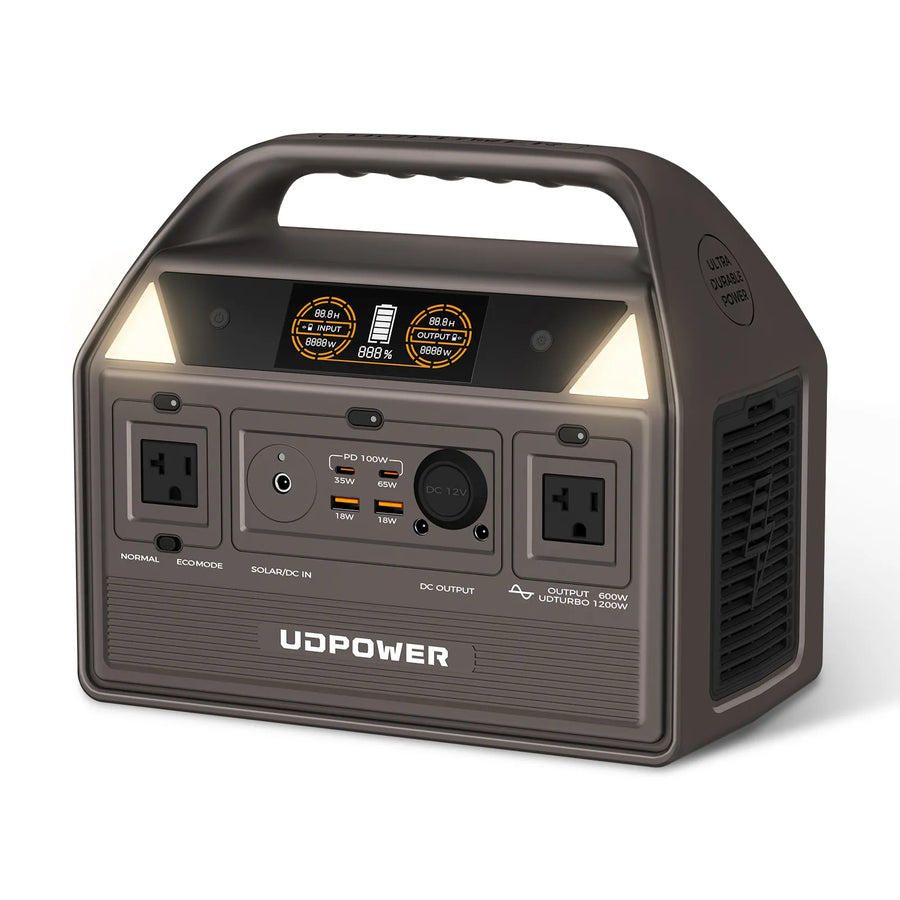
| C600 | 596Wh | 600W | About 11.9 hours | Light weekend setup with daytime recharging |
| S1200 | 1,190Wh | 1,200W | About 23.8 hours | Weekend fridge, CPAP, devices, and lights |
| S2400 | 2,083Wh | 2,400W | About 41.7 hours | Longer basecamp, RV, or multiple-device setup |
These figures assume the fridge averages 45W over time. A compressor fridge does not draw the same wattage continuously, and hot desert weather can increase its duty cycle substantially.
UDPOWER C600 — Best for Light Weekend Camping
The C600 combines a 596Wh LiFePO4 battery with 600W rated output, up to 1,200W peak output, two AC outlets, USB charging, and a 12V car outlet. At about 12.3 pounds, it is easier to move between the vehicle, picnic table, and tent area than a large basecamp unit.
Choose it for: Morro Bay weekends, Big Sur device charging, photography trips, lights, laptops, and a small 12V fridge when you have a daily charging plan.
Do not choose it for: High-wattage electric cooking, space heating, or several days of fridge and CPAP use without recharging.
View UDPOWER C600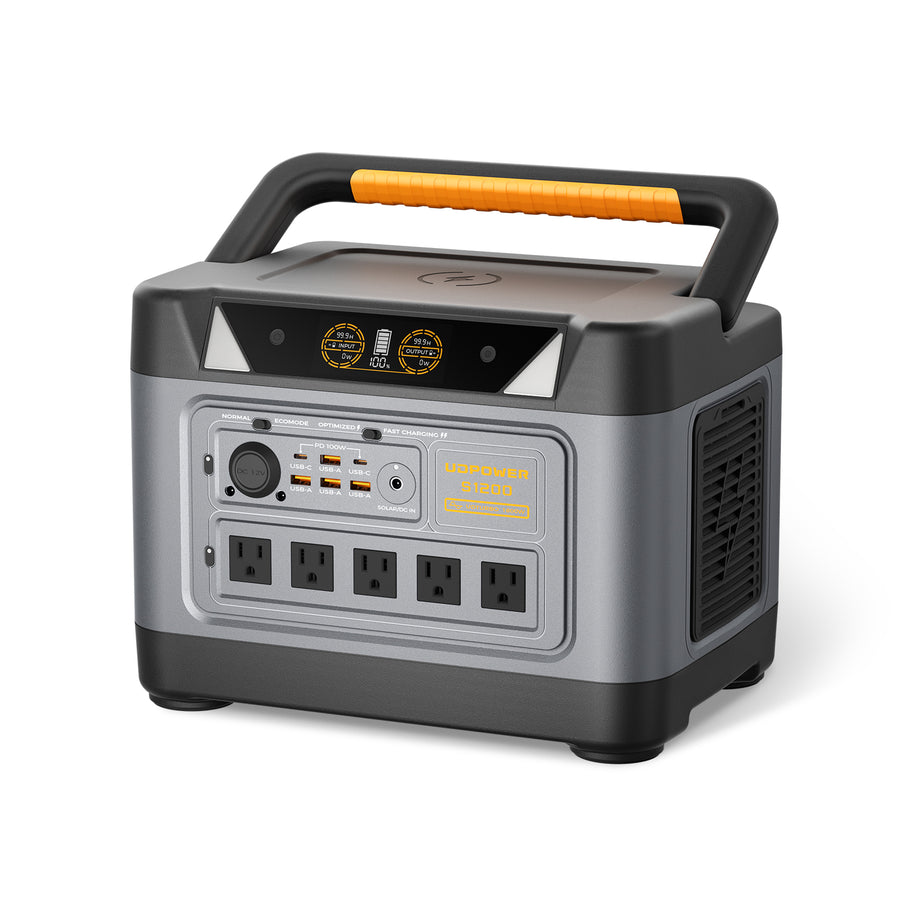
UDPOWER S1200 — Best Overall for Family and Fridge Camping
The S1200 has a 1,190Wh LiFePO4 battery, 1,200W rated pure sine wave output, UDTURBO support up to 1,800W, five AC outlets, approximately 1.5-hour AC fast charging, and a listed weight of 26 pounds. It offers a useful middle ground between portability and enough stored energy for a comfortable weekend.
Choose it for: Joshua Tree, Yosemite, Tahoe, and family car-camping trips with a fridge, CPAP, laptop, lights, cameras, and phones.
Why it fits California: It carries enough capacity to handle a shaded campsite where solar production is disappointing, but it is still manageable for one person to move carefully.
View UDPOWER S1200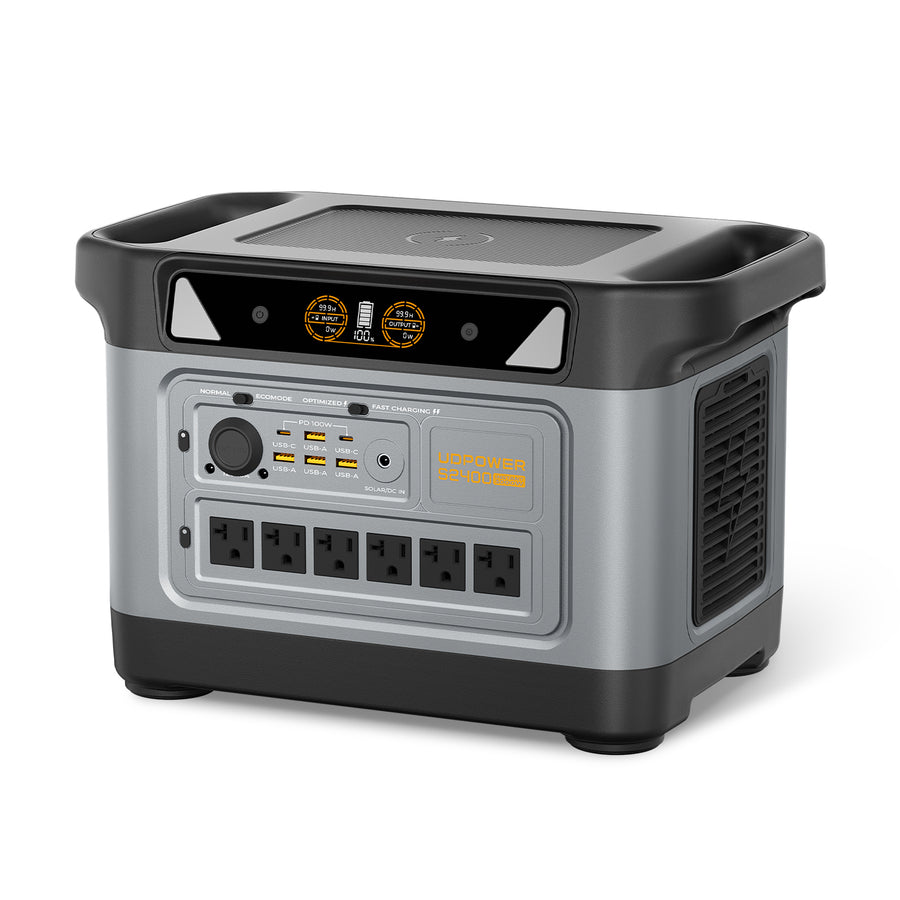
UDPOWER S2400 — Best for RVs and Multi-Day Basecamps
The S2400 provides a 2,083Wh LiFePO4 battery, 2,400W rated pure sine wave output, up to 3,000W surge support, six AC outlets, approximately 1.5-hour AC fast charging, and a listed weight of 40.8 pounds. It is intended for a vehicle-supported setup rather than a walk-in campsite.
Choose it for: RV trips, multi-day basecamps, several users, a fridge plus CPAP, or short use of higher-wattage appliances that remain within the unit's output limits.
Plan the lifting: Keep it low and secured in the vehicle. Do not carry it long distances over uneven trails, and do not place it where campground sprinklers, rain, sand, or blocked ventilation can become a problem.
View UDPOWER S2400How California Campsite Reservations Work in 2026
California State Parks
Most reservable California State Park campsites open on a rolling window up to six months before the arrival date. New inventory generally becomes available at 8:00 a.m. Pacific Time. High-demand places such as Big Sur, Tahoe, redwood parks, and coastal campgrounds may disappear quickly.
Important reservation-policy change beginning July 1, 2026
- Cancel seven or more days before arrival to remain eligible for a refund of site fees, minus nonrefundable fees.
- Cancel two to six days before arrival and the first night's site fee is forfeited.
- Cancel within 48 hours of arrival or fail to show, and all paid fees are forfeited.
- Three no-shows in one calendar year can trigger a one-year restriction on placing new reservations.
National Parks and National Forests
Yosemite, Joshua Tree, Death Valley, Lassen, Sequoia and Kings Canyon, Point Reyes, and many Inyo National Forest sites use Recreation.gov, but their release windows are not identical. Some campgrounds open six months ahead, some release sites one month ahead, and some remain first-come, first-served. Always read the specific campground page rather than relying on a general rule.
A Better Booking Strategy
- Choose one primary campground and two nearby backups before the reservation date opens.
- Create and test your reservation account in advance.
- Know your exact vehicle length, including a tow vehicle where required.
- Filter by tent-only, RV length, hookups, accessibility, pets, and water before selecting a site.
- Check cancellations again one to two weeks before the trip, when plans often change.
- Never assume roadside sleeping is legal when a campground is full.
Simple California Camping Itineraries
Three-Day Southern California Desert Weekend
Base: Joshua Tree National Park. Arrive before sunset on day one, spend day two hiking and exploring rock formations, and reserve the second evening for stargazing. Add Anza-Borrego only if you have more than three days; combining both in a short weekend creates too much driving.
Five-Day Central Coast Camping Trip
Nights 1–2: Morro Bay State Park. Nights 3–4: Pfeiffer Big Sur State Park. This route balances an easier campground with a more competitive destination and gives you a backup night near San Luis Obispo if Highway 1 conditions change.
Seven-Day Northern California Forest and Coast Trip
Nights 1–2: Point Reyes area, using a permitted hike-in trip only if your group is prepared. Nights 3–6: Redwood National and State Parks. Do not underestimate the drive between Marin County and the far North Coast.
Seven-Day Sierra Camping Trip
Nights 1–3: Yosemite. Nights 4–6: Sequoia or Kings Canyon. This looks close on a statewide map, but the actual route is long and mountainous. Avoid changing campgrounds every day.
Winter Desert Road Trip
Nights 1–2: Joshua Tree. Nights 3–5: Death Valley. Carry a full-size spare tire or verified repair equipment, water, offline maps, and enough charging capacity for navigation and emergency communication.
California Camping Safety: What Changes by Region
Wildfire and Smoke
Check park alerts, road closures, and the AirNow Fire and Smoke Map before leaving home and again on the morning of departure. A campground may remain open while smoke makes strenuous outdoor activity unpleasant or unsafe for sensitive travelers. Keep an alternate region in mind rather than forcing the original itinerary.
Check the AirNow Fire and Smoke Map
Campfires and Stoves
A California Campfire Permit may be required when using a campfire, charcoal fire, or portable stove outside a developed campground on qualifying public land. The permit does not override local fire restrictions. A legal fire today can be prohibited tomorrow when wind, fuel moisture, or staffing changes.
Get a free California Campfire Permit
Bears and Food Storage
In Tahoe and the Sierra, store all food, drinks, trash, toiletries, pet food, coolers, and scented cooking equipment in the provided bear-resistant locker whenever they are not actively being used. A locked vehicle is not always an approved substitute.
Review California State Parks bear-safety guidance
Desert Heat
Do not use a campsite reservation as proof that the weather is suitable. Bring more water than you expect to use, avoid long midday hikes, keep electronics and batteries out of closed vehicles, and turn around early when navigation or vehicle conditions are uncertain.
Coastal Conditions
Expect wind, fog, damp gear, rapidly cooling evenings, and dangerous surf. Keep tents above the high-tide line where beach camping is permitted, and never assume a calm-looking cove is safe for swimming.
Snow and Elevation
High Sierra campgrounds can remain closed well into early summer. Carry warmer sleeping gear than the forecast for the nearest low-elevation town suggests, and check whether chains, seasonal roads, or high-country passes affect your route.
Portable Power Station Safety
- Keep the unit dry, shaded, and ventilated.
- Do not cover cooling vents with blankets or place the unit in soft sand.
- Check appliance running and startup wattage before connecting it.
- Use a stable surface away from the fire ring and cooking area.
- Secure the power station during vehicle travel.
- Do not leave the unit inside a closed vehicle in desert heat.
Frequently Asked Questions About Camping Places in California
What is the best place to camp in California for beginners?
Morro Bay State Park is one of the best beginner choices because it combines a scenic coastal setting with nearby supplies, activities, and alternate campgrounds. Yosemite is more iconic but significantly harder to reserve and navigate during peak season.
What is the best month to camp in California?
There is no single best month statewide. September is excellent for many coastal and Sierra destinations, while January and February are better for Death Valley and Anza-Borrego. July and August favor high-elevation and far-northern campgrounds rather than low deserts.
Do I need a reservation to camp in California?
You should reserve popular state and national park campgrounds whenever reservations are offered. Some national forest and desert sites remain first-come, first-served, but they may have no water, no hookups, and limited services.
Can I camp anywhere on public land in California?
No. Dispersed camping is allowed only in designated public-land areas and is subject to local closures, stay limits, fire rules, vehicle restrictions, and waste requirements. National parks generally allow camping only in developed campgrounds or permitted backcountry zones.
Does Yosemite require a vehicle reservation in 2026?
Yosemite announced that it will not use a timed vehicle-entry reservation system in 2026. That does not remove the need for a campground reservation if you plan to sleep inside the park.
Where can I camp near the beach in California?
Morro Bay, Morro Strand, South Carlsbad State Beach, Point Mugu, and several Central Coast state parks provide coastal camping. “Beach camping” may mean a campground near the shore rather than permission to pitch a tent directly on the sand, so check the exact site description.
Where is the best winter camping in California?
Death Valley, Joshua Tree, and Anza-Borrego are the strongest winter choices for dry weather and comfortable daytime temperatures. Nights can still fall near or below freezing, especially in exposed desert campgrounds.
Can I use a portable power station in a California campground?
Battery power stations are generally suitable for campgrounds because they do not produce engine exhaust and are much quieter than gas generators. You must still follow campground rules, protect the unit from weather and heat, and keep cords from creating a trip hazard.
How much battery capacity do I need for a weekend camping trip?
For phones, lights, camera batteries, and a laptop, 500–700Wh is often enough for a weekend. Add a 12V fridge or CPAP and a 1,000–1,200Wh unit becomes more practical. Multi-day use of both may justify a 2,000Wh-class unit or a dependable daily recharge plan.
Will a solar panel work in Yosemite or the redwoods?
It may work, but output can be much lower under trees or beneath steep valley walls. Begin the trip with a fully charged battery, use an open approved area for the panel, and avoid depending on a full solar recharge every day.
Are dogs allowed at California campgrounds?
Many campgrounds allow leashed dogs, but nearby trails, beaches, wilderness areas, and buildings may prohibit them. Check the individual park's pet rules before booking, especially in Big Sur, Point Reyes, redwood parks, and Lake Tahoe.
How early should I reserve a California campsite?
For Big Sur, Tahoe, Yosemite, coastal state parks, and redwood campgrounds, prepare to book as soon as the official reservation window opens. Less famous national forest campgrounds and off-peak weekdays may be available much later.
Official Planning Sources
Campground openings, fire restrictions, reservation windows, fees, road conditions, and available services can change. Confirm the current details directly before departure.
Build a California Camping Power Setup That Matches the Trip
Choose your campground first, list the devices you will actually use, calculate watt-hours, and then select the smallest power station that leaves a reasonable reserve. A sunny Joshua Tree site and a shaded redwood site should not use the same charging assumptions.
View Portable Power Stations View Solar Generator Kits Get the Camping Power GuideRelated Articles


