





13 Best Places to Go Camping in Texas: A Practical Guide for Every Type of Camper
The best places to go camping in Texas depend on what kind of trip you want. Big Bend National Park is the best all-around choice for desert scenery and dark skies. Palo Duro Canyon is ideal for canyon hiking and family road trips. Garner State Park is the classic choice for swimming and tubing, while Caddo Lake offers shaded campsites, paddling and a completely different East Texas landscape.
For beach camping, choose Mustang Island. For fall color, reserve Lost Maples early. Families with younger children should consider Dinosaur Valley, while experienced campers seeking solitude may prefer Big Bend Ranch State Park.

Texas is too large and geographically varied for one campground to suit everyone. A campsite in the Chihuahuan Desert requires a very different plan from a campsite beside the Frio River or directly on the Gulf Coast. This guide compares scenery, campsite facilities, seasonal conditions, reservation pressure and practical limitations so you can choose a destination that fits your actual trip.
How to Choose the Right Place to Camp in Texas
Start with the experience you want rather than choosing the most famous park. Texas camping ranges from developed RV sites with water, electricity and showers to remote desert sites where you must carry every gallon of water.
| Your Priority | Best Texas Camping Choices | Why They Fit |
|---|---|---|
| Best overall outdoor experience | Big Bend National Park | Mountains, desert, canyons, hiking, scenic drives and exceptional night skies |
| Best for families | Dinosaur Valley, Garner, Palo Duro Canyon | Memorable attractions, developed campsites and activities for different ages |
| Best for swimming or river access | Garner, Pedernales Falls, Colorado Bend | Hill Country rivers, swimming areas and waterside activities |
| Best for fall camping | Lost Maples, Garner, Caddo Lake | Fall color, cooler temperatures and scenic hiking |
| Best for beach camping | Mustang Island State Park | Developed campsites and primitive camping close to the Gulf |
| Best for dark skies | Big Bend, Big Bend Ranch, Davis Mountains | Remote West Texas locations with limited surrounding light pollution |
| Best for kayaking or canoeing | Caddo Lake State Park | Bald cypress wetlands, bayous and paddling trails |
| Best for RV hookups | Davis Mountains, Caddo Lake, Garner | Developed sites with electric or full-hookup options |
| Best for remote camping | Big Bend Ranch, Big Bend backcountry | Isolation, primitive campsites and fewer developed facilities |
| Best for a short Austin-area trip | Enchanted Rock, Pedernales Falls, Colorado Bend | Reasonable access from Central Texas with strong hiking and scenery |
Do not choose by scenery alone. Check whether your intended site has electricity, potable water, showers, shade and vehicle access. A park may offer several campsite categories with very different facilities.
Best Places to Go Camping in Texas at a Glance
| Destination | Region | Best For | Camping Options | Best Time | Important Limitation | Official Information |
|---|---|---|---|---|---|---|
| Big Bend National Park | Far West Texas | Dark skies, desert hiking and scenic drives | Developed campgrounds, RV sites and permitted backcountry sites | October–April | Remote services, extreme summer heat and reservations required | NPS camping page |
| Palo Duro Canyon State Park | Texas Panhandle | Canyon scenery, hiking and family trips | Electric sites, tent sites, backpacking, cabins and glamping | March–May and September–November | The canyon floor becomes dangerously hot in summer | TPWD park page |
| Caddo Lake State Park | East Texas | Paddling, shade and wetland scenery | Full hookups, electric sites, water-only sites, cabins and shelters | October–April | Humidity, insects and water conditions affect the experience | TPWD park page |
| Garner State Park | Texas Hill Country | Swimming, tubing and family camping | Full hookups, electric sites, cabins and screened shelters | Late spring and early fall | Summer dates can fill well in advance | TPWD park page |
| Guadalupe Mountains National Park | Far West Texas | Mountain hiking and high-desert scenery | Dry tent and RV camping plus wilderness camping | March–May and September–November | No campground hookups or showers; strong winds are possible | NPS camping page |
| Caprock Canyons State Park | Texas Panhandle | Bison, red-rock scenery and quieter canyon camping | Electric sites, walk-in sites and primitive backpacking | March–May and September–November | Keep a safe distance from free-ranging bison | TPWD park page |
| Enchanted Rock State Natural Area | Central Texas | Rock climbing, stargazing and short hiking trips | Walk-in and primitive camping | October–April | Limited campsite inventory and potentially limited drinking water | TPWD park page |
| Colorado Bend State Park | Central Texas | Waterfalls, caves, hiking and primitive camping | Drive-up primitive and walk-in tent sites | March–May and October–November | No campsite hookups and no RV dump station | TPWD park page |
| Davis Mountains State Park | West Texas | Stargazing, mountain scenery and RV camping | Full hookups, electric, water-only and primitive sites | April–June and September–October | Large temperature swings and limited nearby services | TPWD park page |
| Mustang Island State Park | Texas Gulf Coast | Beach camping, fishing and paddling | Electric campsites and primitive beach camping | October–April | Beach sites may close because of weather or sand conditions | TPWD park page |
| Dinosaur Valley State Park | North-Central Texas | Families, river exploration and dinosaur tracks | Electric, walk-in, hike-in and group camping | March–May and September–November | Track visibility and backcountry access depend on river levels | TPWD park page |
| Lost Maples State Natural Area | Western Hill Country | Fall foliage, hiking and quiet camping | Electric campsites and hike-in primitive areas | Late October–November | Fall reservations sell quickly and cell service is unavailable | TPWD park page |
| Big Bend Ranch State Park | Far West Texas | Overlanding, solitude and primitive desert camping | Drive-in primitive, river district and backcountry camping | October–April | Some roads require high-clearance or four-wheel-drive vehicles | TPWD park page |
Facilities, road access, fire rules and seasonal closures can change. Follow each official planning link before reserving or driving to the park.
1. Big Bend National Park

Image source: nps.gov
Big Bend National Park is the strongest choice for campers who want a complete Texas wilderness experience. The park combines Chihuahuan Desert, the Chisos Mountains, Rio Grande canyons, scenic drives and some of the darkest skies in the continental United States.
The park operates developed campgrounds at Chisos Basin, Rio Grande Village and Cottonwood, although seasonal operations and closures can change. A concession-operated RV park near Rio Grande Village provides full-hookup sites. Primitive roadside and backpacking campsites require the appropriate permit.
Best for: Hiking, photography, stargazing and multi-day road trips
Ideal trip length: Three to five nights
Best season: Late October through April
Main challenge: Long distances between services, fuel and water
Do not treat Big Bend like a normal developed campground. Download maps before arrival, fill the fuel tank early and carry more drinking water than you expect to use. Summer heat can make exposed hiking unsafe by late morning.
All park campgrounds require advance reservations. Dispersed roadside camping outside designated sites is not permitted inside the national park.
Check Big Bend campground status and reservation information
2. Palo Duro Canyon State Park

Image source: tpwd.texas.gov
Palo Duro Canyon is one of the easiest places to experience dramatic Texas canyon scenery without committing to a remote backcountry expedition. Campers can drive into the canyon, hike or bike more than 30 miles of trails and choose from several levels of accommodation.
Options include campsites with water and electricity, tent sites, equestrian areas, backpacking sites, cabins and furnished glamping sites. This variety makes Palo Duro one of the most practical destinations for groups whose members have different comfort levels.
Best for: First-time Texas campers, hikers, cyclists and families
Ideal trip length: Two or three nights
Best season: Spring and fall
Main challenge: Canyon-floor heat and limited shade on some trails
Start longer hikes early. Temperatures on the canyon floor can become much hotter than conditions near the rim. During summer, plan indoor or shaded activities during the afternoon rather than attempting a full day of exposed hiking.
3. Caddo Lake State Park

Image source: tpwd.texas.gov
Caddo Lake feels unlike the dry, open landscapes many travelers associate with Texas. Bald cypress trees, Spanish moss, bayous and wetlands create a shaded East Texas camping experience that is especially well suited to canoeing, kayaking, fishing and birding.
The park offers full-hookup RV sites, electric campsites, water-only tent sites, screened shelters and historic cabins. Campers can rent a canoe, explore short forest trails or use the park as a base for a longer paddling trip.
Best for: Kayakers, photographers, anglers and shaded family camping
Ideal trip length: Two or three nights
Best season: Fall through spring
Main challenge: Humidity, insects and rapidly changing water conditions
Bring insect repellent even outside midsummer, keep food secured and carry a waterproof map or downloaded navigation for paddling. The maze of bayous can look similar after you leave the main route.
4. Garner State Park

Image source: tpwd.texas.gov
Garner State Park is one of the most recognizable summer camping destinations in Texas. The Frio River runs through the park, giving visitors access to swimming, tubing, paddling and waterside relaxation. The surrounding Hill Country also includes miles of hiking trails and elevated overlooks.
Overnight options range from full-hookup RV campsites and water-and-electric sites to screened shelters and cabins. Different camping areas have different levels of shade and river access, so study the campground map rather than choosing only by campsite category.
Best for: Families, river trips and group weekends
Ideal trip length: Two to four nights
Best season: Late spring or early fall for a balance of water and weather
Main challenge: Crowds and high reservation demand during summer
Summer is popular because of the river, but it is not always the easiest time to visit. Midweek stays, shoulder-season dates and campsites away from the busiest river access points can create a more relaxed experience.
5. Guadalupe Mountains National Park

Image source: nps.gov
Guadalupe Mountains National Park is the best Texas camping destination for hikers who want steep mountain trails rather than river or lakeside recreation. The park includes Guadalupe Peak, high-desert canyons and access to more than 80 miles of trails.
Pine Springs is the most practical campground for first-time visitors. It provides basic tent and RV camping, potable water for personal containers and restrooms, but no hookups, showers or dump station. Dog Canyon is more remote and cooler because of its higher, protected location, but current access and water notices should be checked before travel.
Best for: Serious hikers, backpackers and high-desert scenery
Ideal trip length: Two to four nights
Best season: Spring and fall
Main challenge: Wind, limited services and dry camping
Carry all food and essential supplies before reaching the park. There is no gas station, restaurant or grocery store inside the park, and nearby alternatives may be more than 30 miles away.
6. Caprock Canyons State Park and Trailway

Image source: tpwd.texas.gov
Caprock Canyons offers red-rock scenery similar to Palo Duro but usually feels less developed and more wildlife-focused. The park is home to the Texas State Bison Herd, which moves freely through parts of the park and may pass close to roads and campsites.
Camping options include 30-amp and 50-amp electric sites, walk-in sites near Lake Theo, one-mile hike-in campsites and primitive camping along the Trailway. Some primitive areas have no potable water and prohibit ground fires.
Best for: Wildlife viewing, hiking, biking and quieter camping
Ideal trip length: Two or three nights
Best season: Spring and fall
Main challenge: Heat, exposed trails and large free-ranging wildlife
Never approach or walk around a bison to obtain a closer photo. Give the animal a large escape route and return to your vehicle or campsite if it begins moving toward you.
7. Enchanted Rock State Natural Area

Image source: tpwd.texas.gov
Enchanted Rock is best for campers who want a compact trip built around hiking, climbing and stargazing. The massive pink granite formation creates open Hill Country views, while the surrounding natural area includes nearly 11 miles of trails.
Camping is more limited and less vehicle-oriented than at a large developed state park. Expect walk-in or primitive-style camping rather than full-hookup RV facilities. This makes Enchanted Rock better for a one- or two-night trip than a long family vacation.
Best for: Hiking, climbing, stargazing and minimalist camping
Ideal trip length: One or two nights
Best season: October through April
Main challenge: Limited reservations, exposed rock and water availability
Summit trails can close after rain because wet granite becomes dangerous. Bring drinking water rather than assuming the park will always have a full supply available.
8. Colorado Bend State Park

Image source: tpwd.texas.gov
Colorado Bend State Park is a strong choice for campers who value hiking and natural features more than campsite amenities. Gorman Falls is the best-known attraction, but the park also offers river access, caves, fishing and miles of rugged trails.
Campsites are primitive. Drive-up sites may have tables, nearby water and fire rings, but there are no utility hookups. Walk-in tent sites require carrying gear from the parking area, and the park does not provide an RV sewage dump station.
Best for: Hikers, tent campers and low-amenity weekends
Ideal trip length: Two nights
Best season: Spring and late fall
Main challenge: Limited facilities and rough, exposed trails
Carry a headlamp, sufficient water and a complete cooking setup. Campers arriving after dark may have difficulty identifying sites or carrying gear along an unfamiliar trail.
9. Davis Mountains State Park

Image source: tpwd.texas.gov
Davis Mountains State Park provides a useful middle ground between a remote West Texas expedition and a comfortable developed campground. The park has mountain trails, scenic overlooks, birding areas and dark night skies, while still offering several campsite categories.
Campers can choose full-hookup RV sites, electric sites, water-only sites or primitive hike-in camping. This flexibility makes Davis Mountains a practical base for visiting Fort Davis, the McDonald Observatory and other regional attractions.
Best for: RV travelers, stargazers and West Texas road trips
Ideal trip length: Two to four nights
Best season: Spring, early summer and fall
Main challenge: Temperature swings, wind and long travel distances
Pack for warm afternoons and cold nights on the same trip. Elevation and dry air can produce larger temperature changes than visitors expect from the daytime forecast alone.
10. Mustang Island State Park

Image source: tpwd.texas.gov
Mustang Island State Park gives campers direct access to Gulf Coast fishing, paddling, swimming, birding and beach sunrises. Visitors can choose developed sites behind the dunes or primitive camping along a designated section of beach.
Developed campsites provide electricity, water, shade shelters and nearby showers, although they are separated from the ocean by dunes. Primitive beach sites are more exposed and may close when tides, storms or sand conditions make access unsafe.
Best for: Beach camping, fishing and coastal paddling
Ideal trip length: Two or three nights
Best season: Fall through early spring
Main challenge: Wind, salt, humidity, storms and changing beach access
Use sand stakes rather than ordinary tent stakes, protect electronics from salt spray and never place valuable gear where a tide change could reach it. Check tropical weather and beach driving conditions immediately before departure.
11. Dinosaur Valley State Park

Image source: tpwd.texas.gov
Dinosaur Valley State Park combines camping with one of the easiest natural-history experiences for children to understand: real dinosaur tracks preserved in the Paluxy River. The park also offers hiking, biking, swimming and river exploration.
Visitors can reserve campsites with electricity or choose walk-in and hike-in primitive areas. Some hike-in campsites require crossing the river, making them inaccessible when water levels are high.
Best for: Families, educational trips and beginner campers
Ideal trip length: Two nights
Best season: Spring and fall
Main challenge: River level affects tracks and primitive campsite access
Contact the park before driving out specifically to see tracks. High or muddy water can hide them, while unusually low water may provide better viewing.
12. Lost Maples State Natural Area

Image source: tpwd.texas.gov
Lost Maples is the most sought-after Texas camping destination for fall color. The natural area protects stands of Uvalde bigtooth maples, while steep canyon trails and the Sabinal River create a landscape that feels different from the surrounding Hill Country.
The park offers electric campsites as well as multiple hike-in primitive camping areas. It is enjoyable throughout the year, but late October and November attract the greatest demand as foliage conditions improve.
Best for: Fall foliage, hiking, photography and quiet weekends
Ideal trip length: Two nights
Best season: Late October through November
Main challenge: Competitive reservations and no cell service
Do not plan the entire trip around a precise leaf-color date months in advance. Fall color depends on temperature, rainfall and wind. Follow the park's foliage report and prepare offline maps, emergency contacts and meeting plans before entering the area.
13. Big Bend Ranch State Park

Image source: tpwd.texas.gov
Big Bend Ranch State Park is a better match than the national park for experienced campers who want primitive roadside sites, rougher vehicle routes and greater solitude. It is the largest state park in Texas and includes mountains, canyons, desert trails and Rio Grande access.
Campers can choose primitive drive-in sites in the interior, sites along River Road or backcountry zones reached on foot. Vehicle requirements vary. Some campsites can be reached by ordinary vehicles, while others require high clearance or four-wheel drive.
Best for: Experienced campers, overlanders and remote photography
Ideal trip length: Three or more nights
Best season: November through March
Main challenge: Rough roads, no water and extremely limited services
Confirm the access requirement for the exact campsite before reserving. A general statement that a park allows drive-in camping does not mean every road is suitable for a sedan or low-clearance crossover.
What Is the Best Time of Year to Go Camping in Texas?
For most of Texas, October through April provides the most comfortable camping temperatures. However, the ideal season changes by region. A pleasant spring weekend in the Hill Country may already be dangerously hot in the lower elevations of Big Bend.
| Texas Region | Generally Best Months | Conditions to Expect | Planning Risk |
|---|---|---|---|
| Far West Texas desert | October–April | Cool nights, dry air and strong sun | Extreme heat outside the cool season and long distances from services |
| West Texas mountains | April–June and September–October | Cooler nights and large temperature changes | Wind, cold fronts and rapid weather shifts |
| Texas Panhandle | March–May and September–November | Comfortable hiking weather with cool evenings | Thunderstorms, wind and hot canyon floors |
| Hill Country | March–May and October–November | Wildflowers in spring and cooler hiking in fall | Flash flooding near rivers and heavy weekend demand |
| East Texas | October–April | Forested shade, moderate daytime temperatures | Humidity, mosquitoes and heavy rain |
| Gulf Coast | October–April | Cooler beach weather and fewer heat-related problems | Wind, tides, coastal storms and hurricane-season disruptions |
| North-Central Texas | March–May and September–November | Good family and river camping temperatures | Severe storms and weekend crowding |
Three Practical Texas Camping Routes
Four-Day Panhandle Canyon Trip
Spend two nights at Palo Duro Canyon and two nights at Caprock Canyons. This route provides varied canyon scenery, hiking and wildlife without the long distances required for a full West Texas expedition.
Best for: Families, photographers and first-time Texas road trippers.
Five-Day Hill Country Camping Loop
Combine Enchanted Rock with Pedernales Falls, Garner or Lost Maples depending on the season. This itinerary balances hiking with river access and keeps driving distances more manageable than a Far West Texas route.
Best for: Austin or San Antonio departures, short vacations and mixed groups.
Seven- to Nine-Day West Texas Dark-Sky Route
Use Davis Mountains as the first basecamp, continue to Big Bend National Park and finish with a primitive site in Big Bend Ranch State Park. This route offers the strongest mix of mountain views, desert hiking, scenic roads and night-sky viewing.
Best for: Experienced road trippers with reliable vehicles and flexible schedules.
How to Reserve a Texas Campsite Without Wasting the Trip
- Choose the campsite category before choosing the date. Confirm whether you need electricity, full hookups, tent-only space or primitive access.
- Reserve popular weekends as soon as your plans are firm. Garner, Lost Maples, Enchanted Rock, Big Bend and Dinosaur Valley can be difficult during peak periods.
- Check the campsite map. The same facility category may include sunny, shaded, roadside, waterfront or distant sites.
- Confirm vehicle length and access restrictions. This is essential for RVs and Big Bend Ranch interior sites.
- Check alerts again 24 to 48 hours before departure. Flooding, fire bans, road closures, high river levels and beach conditions can change after you reserve.
- Download the confirmation and park map. Do not assume you will have enough cellular service to retrieve them at the gate.
Texas state park reservations can be made through the official reservation system. Payment is normally required to confirm the reservation, and same-day reservations may have more restrictive cancellation terms.
Do You Actually Need a Portable Power Station for Texas Camping?
Not every Texas camping trip needs a large battery. If you reserve an electric campsite and only need to charge two phones, carrying a power station may add unnecessary weight. The need changes quickly, however, when you move to primitive camping, depend on a CPAP, run a portable refrigerator, stay several nights or camp where generator hours are restricted.
Start with the campsite, not the battery. Check whether your exact site provides electricity. Then list the devices that must work even if shore power is unavailable. Size portable power around those loads rather than buying the largest unit you can carry.
Match the Power Setup to the Trip
| Camping Setup | Likely Power Need | Typical Loads | Practical Approach |
|---|---|---|---|
| Electric campsite, one or two nights | Low | Phones, lights, camera | Use campsite power and keep a small backup battery if desired |
| Primitive tent camping | Low to moderate | Phones, lighting, fan, camera | About 250–600Wh may be enough if no high-draw appliance is involved |
| CPAP overnight | Moderate | CPAP plus phone and lighting | Calculate the CPAP's actual overnight consumption and keep reserve capacity |
| Family basecamp | Moderate to high | Fan, devices, lighting, CPAP, occasional laptop use | Around 1,000Wh gives more flexibility for a weekend |
| Portable refrigerator | High | Fridge running throughout the day plus other campsite loads | Plan from measured average fridge consumption, not compressor wattage alone |
| Multi-day vehicle or RV-style camp | High | Fridge, CPAP, fan, coffee maker, electronics | A 2,000Wh-class unit provides more reserve and reduces load juggling |
Estimate Daily Energy Before Choosing a Battery
| Camping Device | Planning Wattage | Daily Use | Estimated Daily Energy | Planning Note |
|---|---|---|---|---|
| Two phones and small electronics | 10–30W while charging | Several charging sessions | 40–100Wh | USB-C or DC charging is generally more efficient than using AC adapters |
| LED campsite lighting | 10W | 5 hours | 50Wh | Use lower brightness when full output is unnecessary |
| Portable fan | 30W | 8 hours | 240Wh | Texas summer nights can make fan use one of the largest campsite loads |
| CPAP without heated humidifier | 40W planning value | 8 hours | 320Wh | Heated tubing and humidification can increase consumption considerably |
| Portable refrigerator | 45W average planning value | 24 hours | 1,080Wh | Actual average depends on temperature, insulation and compressor cycling |
| Laptop | 65W | 2 hours | 130Wh | Gaming, video editing and large workstations may use substantially more |
| Coffee maker | 800–1,000W | 10 minutes | 133–167Wh | Short runtime still requires sufficient AC output |
For planning, UDPOWER runtime estimates in this guide use approximately 90% conversion efficiency. Real results can vary with temperature, inverter use, cable losses, cycling appliances and multiple devices operating at the same time.
Consider the UDPOWER S1200 When Your Load Is Around the 1,000Wh Class
The UDPOWER S1200 makes the most sense when your trip has moved beyond basic phone charging but you still want a unit one person can reasonably move between the vehicle and campsite.
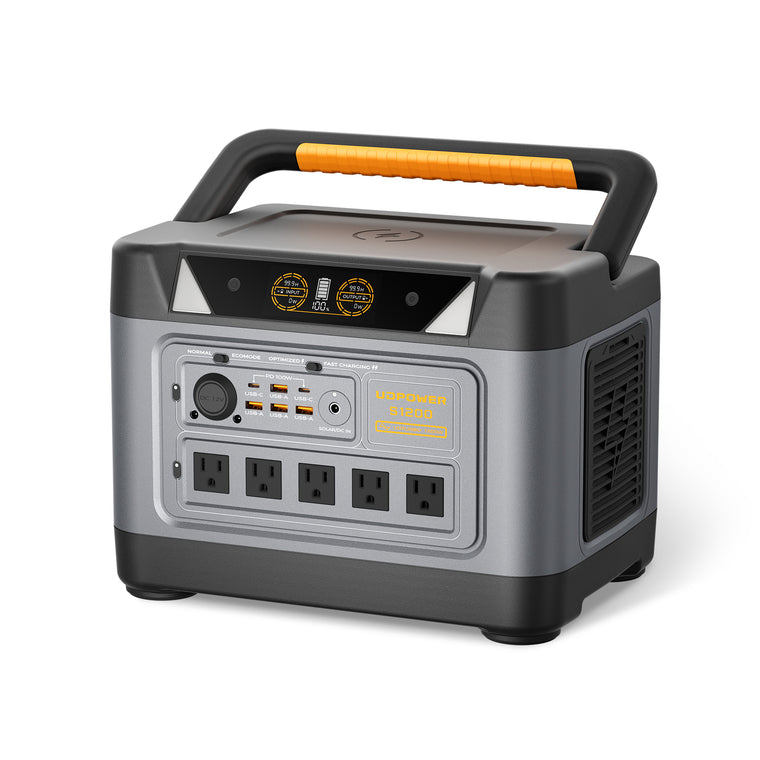
- Battery capacity: 1,190Wh LiFePO4
- Rated AC output: 1,200W pure sine wave
- Peak output: Up to 1,800W
- Solar input: Up to 400W
- Weight: Approximately 26 lb
- Estimated usable energy at 90%: About 1,071Wh
A realistic fit: a two- or three-night vehicle-accessible trip where you need combinations such as CPAP plus lighting and devices, or a fan plus electronics with enough reserve that every watt does not need to be micromanaged.
A 40W CPAP planning load would translate to roughly 26.8 operating hours before accounting for other devices. A refrigerator averaging 45W would theoretically use the available planning energy in about 23.8 hours, which is why fridge users should calculate the entire daily energy budget rather than relying on battery capacity alone.
See S1200 specifications and current configurationConsider the UDPOWER S2400 When Runtime Matters More Than Minimum Weight
The UDPOWER S2400 becomes more practical when the campsite functions like a multi-day basecamp: a refrigerator runs throughout the day, a CPAP is used every night, several people charge devices, or higher-output appliances are part of the setup.
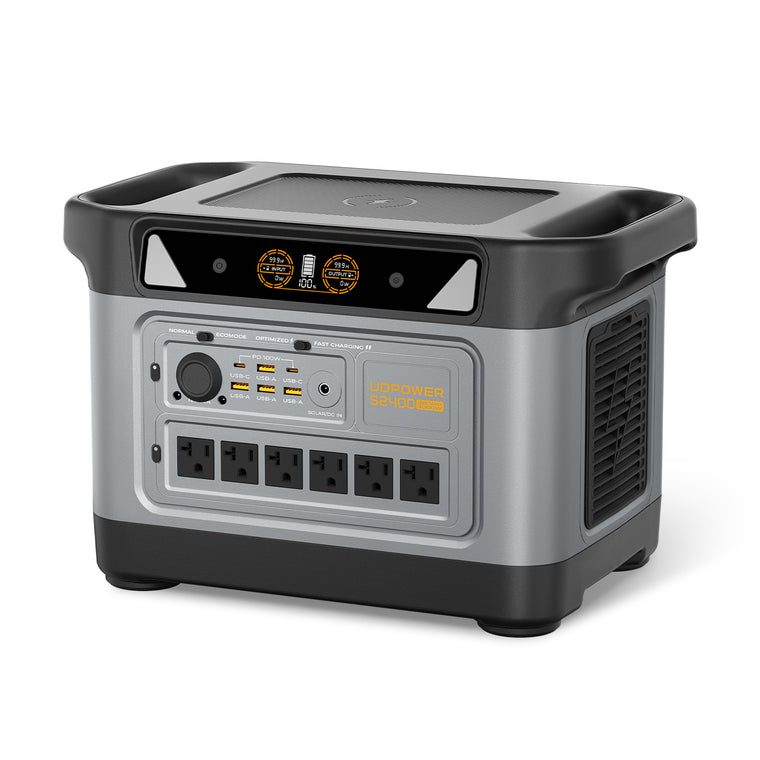
- Battery capacity: 2,083Wh LiFePO4
- Rated AC output: 2,400W pure sine wave
- Peak output: Up to 3,000W
- AC outlets: Six
- Solar input: Up to 400W
- Weight: Approximately 40.8 lb
- Estimated usable energy at 90%: About 1,875Wh
A realistic fit: Big Bend road trips, vehicle camping at Big Bend Ranch, longer beach basecamps or RV-style setups where the additional battery reserve is more useful than shaving weight from the gear list.
At the same 40W CPAP planning load, roughly 1,875Wh of usable planning energy represents about 46.9 operating hours before other loads. At a 45W average refrigerator load, the planning figure is about 41.7 hours. Those estimates are useful for sizing, but actual compressor cycling and Texas heat can change refrigerator consumption significantly.
See S2400 specifications and current configurationYou may not need either model. If your trip only involves phones, lights and a camera, a much smaller battery can be easier to carry. The S1200 and S2400 make more sense after your energy calculation moves into sustained overnight loads, refrigeration or a multi-device basecamp.
For a step-by-step calculation, use How Many Wh Do I Need for Camping? before comparing models.
Texas Camping Packing Checklist
Water and Heat Protection
- More drinking water than the minimum estimate
- Electrolyte mix for strenuous or hot-weather trips
- Wide-brimmed hat, sunscreen and breathable long sleeves
- Shade canopy suitable for the campsite surface
- Insulated water storage that will not remain in direct sun
Weather and Shelter
- Rain fly and groundsheet
- Sand stakes for Gulf Coast camping
- Extra guylines for Panhandle and West Texas wind
- Warm layer for high-desert temperature drops
- Weather radio or downloaded forecast information
Navigation and Communication
- Offline map or printed park map
- Charged phone and backup charging cable
- Headlamp for each camper
- Emergency contact and check-in plan
- Satellite communicator for remote backcountry trips when appropriate
Campsite Power
- Fully charged portable power station if your energy plan requires one
- Correct AC, USB-C, DC, CPAP and refrigerator cables
- Compatible solar charging cable and panel for multi-day trips
- Dry shelter that does not block power-station ventilation
- Home test results for any essential medical or refrigeration device
Do a full equipment test before leaving home. Connect the exact CPAP, refrigerator, fan or other essential device you plan to use and observe real power consumption. A label wattage or online estimate is useful for planning, but measured consumption gives you a much better campsite energy budget.
For more detailed planning, see the Camping Power Station Buying Guide.
Frequently Asked Questions About Camping in Texas
What is the best overall place to go camping in Texas?
Big Bend National Park is the best overall choice for campers who want hiking, mountains, desert scenery, dark skies and a true multi-day outdoor trip. It requires more planning and driving than most Texas state parks.
Where is the best summer camping in Texas?
Garner State Park is popular in summer because of the Frio River, while Davis Mountains offers cooler nights because of its elevation. Summer heat can still be dangerous anywhere in Texas, so schedule strenuous activity early and confirm water access.
What is the best Texas campground for families?
Dinosaur Valley State Park is an excellent family choice because children can explore dinosaur tracks and the river. Garner State Park and Palo Duro Canyon are also strong options because they offer developed campsites and activities for different ages.
Where can I camp on the beach in Texas?
Mustang Island State Park offers both developed electric campsites and primitive beach camping. Beach access can change with tides, storms and sand conditions, so contact the park before driving onto the primitive camping area.
What is the best place for fall camping in Texas?
Lost Maples State Natural Area is the best-known destination for fall foliage. Garner and Caddo Lake also provide attractive fall scenery with slightly different camping experiences.
Can you camp anywhere on public land in Texas?
No. Camp only in designated sites within state parks, national parks and other managed public areas unless the land manager specifically allows dispersed camping. Camping on private land requires the landowner's permission.
Do Texas state parks require camping reservations?
Many state parks accept or strongly recommend reservations, and popular destinations often reach capacity. Big Bend National Park requires reservations for its developed campgrounds. Always check the official park page for the exact rule.
Which Texas campgrounds have RV hookups?
Davis Mountains, Garner and Caddo Lake offer developed RV options, including full-hookup sites in certain camping areas. Palo Duro and several other parks offer water-and-electric sites without sewer connections at every campsite.
Are campfires allowed at Texas campsites?
Campfire rules vary by park, campsite and current fire conditions. Some national parks and primitive areas prohibit wood or ground fires even when there is no statewide burn ban. Check current restrictions and bring a containerized fuel stove as a backup.
Do I need four-wheel drive to camp in Texas?
Most developed state park campgrounds can be reached by ordinary passenger vehicles. However, some Big Bend Ranch State Park interior sites and remote backcountry roads require high-clearance or four-wheel-drive vehicles. Confirm access for the exact campsite.
What size portable power station do I need for camping?
Around 250–600Wh may be enough for phones, lighting, cameras, a fan and short laptop use. Choose about 1,000Wh or more for family camping, CPAP use or a camping refrigerator. A 2,000Wh-class model is more practical for extended basecamps, RV support or multiple appliances.
Can I use a portable power station inside a tent?
A battery-based portable power station does not burn fuel or produce engine exhaust, but it must still remain dry, stable and ventilated. Keep vents clear and protect the unit from rain, condensation, bedding and direct sun.
Is solar charging useful for Texas camping?
Solar charging is useful for multi-day trips with open sunlight, especially in West Texas. It is less predictable in heavily shaded forests or during cloudy weather. Match the panel voltage, connector and output to the power station's input specifications.
Can I run a gas generator during campground quiet hours?
Many campgrounds restrict generator use during overnight quiet hours. Rules vary by park and campground, so check before arrival. A portable battery station is usually more practical for nighttime lights, CPAP machines, fans and electronics.
Related Camping and Off-Grid Power Guides
Related Articles


