

California Beach Camping: Best Coastal Campgrounds, Rules, Reservations, and Power Tips
Last updated: August 5, 2026
Campground details were checked against official state, federal, county, weather, road, and product sources.
Quick Answer: Can You Camp on a California Beach?
Yes, but usually only inside a designated coastal campground. You generally cannot pitch a tent wherever you find open sand, sleep overnight at a beach parking lot, or treat a Highway 1 turnout as a campsite. Legal options are normally managed by California State Parks, federal recreation agencies, counties, or local governments.
For first-time California beach campers, some of the strongest choices are:
- Best overall convenience: Half Moon Bay, Carpinteria, and South Carlsbad
- Best dramatic ocean view: Kirk Creek in Big Sur
- Best redwoods-and-ocean experience: Gold Bluffs Beach
- Closest-to-the-sand camping: Jalama Beach and Thornhill Broome
- Best Southern California surf access: San Elijo and Doheny
- Best quieter dune setting: Sunset State Beach or Bodega Dunes
Popular weekends can sell out months ahead. California State Parks generally releases reservable campsites up to six months in advance, so choose backup dates and backup parks before reservations open.

What California Beach Camping Really Means
“Beach camping” is used loosely in California. A campground may be directly on the sand, behind a dune, on a bluff above the ocean, or across a road from the beach. That difference affects wind exposure, stair access, how far you must carry equipment, and whether an RV site really has an unobstructed ocean view.
| Camp style | What it usually means | Main advantage | What to check |
|---|---|---|---|
| Beachfront | The campsite is on or immediately beside the sand. | Shortest walk to the water and an immersive coastal setting. | Wind, blowing sand, salt spray, tide exposure, and limited shade. |
| Blufftop | The campground sits above the beach on a coastal terrace or cliff. | Wide ocean views and less risk from normal high tides. | Stairs, steep trails, erosion closures, and carrying distance. |
| Beach-adjacent | The campground is behind dunes, vegetation, a highway, or a short trail. | Often better wind protection and more space. | Whether beach access is walkable, seasonal, or mobility-friendly. |
Most California State Park campsites are booked through ReserveCalifornia. Federal campgrounds such as Kirk Creek are commonly booked through Recreation.gov. County beaches such as Jalama use their county reservation systems.
Best California Beach Campgrounds
The following list covers a practical mix of Northern California, the Central Coast, Big Sur, Santa Barbara, Los Angeles-area beaches, Orange County, and San Diego County. “Best” depends on whether your priority is direct sand access, a quiet tent site, RV hookups, surf access, or a dramatic view.
| Campground | Location and style | Sites and services | Best for | Important limitation | Official source |
|---|---|---|---|---|---|
| Wright’s Beach Campground | Sonoma Coast; small campground immediately beside a rugged beach. | 27 campsites, paved parking spurs, restrooms, but no campground showers. | Sunsets, tent camping, and a close-to-the-ocean North Coast experience. | Cold water, strong surf, wind, and limited services. | Sonoma Coast State Park |
| Gold Bluffs Beach Campground | Prairie Creek Redwoods State Park; remote coast below forested bluffs. | Primitive-style camping with restrooms and showers but no utility hookups. | Redwoods, Roosevelt elk country, hiking, and a remote tent-camping atmosphere. | Access is slower and more rugged than a typical state beach campground. Seasonal Fern Canyon and Gold Bluffs access permits may apply to day-use entry. | Gold Bluffs reservations |
| Francis Beach at Half Moon Bay | San Mateo County; blufftop sites with beach access. | 52 campsites, a combination of electric-hookup and dry sites, hot showers, potable water, and a dump station. Published RV and trailer limit is up to 40 feet. | First-time coastal campers, RVs, families, and travelers who want services nearby. | Ocean-facing sites can be windy, and summer fog is common. | Half Moon Bay State Beach |
| New Brighton State Beach | Capitola and Santa Cruz area; wooded bluff above Monterey Bay. | More than 100 developed campsites, including a limited number of RV hookup sites. | Families, Santa Cruz-area sightseeing, and campers who want trees as well as beach access. | Not every site has an ocean view or hookup. Verify the exact site category before booking. | New Brighton State Beach |
| Sunset State Beach | South of Santa Cruz; campground protected by coastal dunes. | Approximately 90 campsites, no utility hookups, and published RV or trailer limits around 31 feet. | Campers who prefer a quieter dune environment and less direct bluff exposure. | The campground is not directly on open sand, so expect a walk to the beach. | Sunset State Beach |
| Kirk Creek Campground | Big Sur; non-electric campground on a bluff above the Pacific. | Tent and RV sites without utility hookups. Individual vehicle-length limits vary by site. | Iconic Big Sur scenery, sunsets, and self-contained dry camping. | Few services, variable Highway 1 access, strong wind, and limited cellular coverage. | Recreation.gov |
| Jalama Beach County Park | Remote Santa Barbara County coast; beachfront and ocean-view setting. | 107 campsites with picnic tables and barbecue facilities, plus restrooms and hot showers. | Campers seeking a true destination campground, beach access, fishing, and a remote coast. | The final road is slow and winding, and the location is far from major stores. | Santa Barbara County |
| El Capitán State Beach | West of Santa Barbara; blufftop campground above a sandy beach and tide pools. | 132 standard campsites, group campsites, and hike-and-bike camping. | Families, coastal hiking, beach days, and Santa Barbara-area road trips. | Beach access involves descending from the bluff. The park reopened on June 23, 2026 after an extended infrastructure closure. | El Capitán State Beach |
| Refugio State Beach | Santa Barbara County; palm-lined cove with a calmer, compact beach setting. | 67 standard campsites, group camping, restrooms, and beach access. | Swimming in suitable conditions, kayaking, fishing, and relaxed family trips. | Reservation and walk-in procedures can vary by season, so check the current park page. | Refugio State Beach |
| Carpinteria State Beach | Walkable Central Coast town; campground beside a broad sandy beach. | Four camping loops, with a mix of standard, water-and-electric, and full-hookup site categories. | Families, RV travelers, beginners, and campers who want restaurants and stores within reach. | Site types differ substantially by loop. Confirm hookups, dimensions, and beach distance for the exact site. | Carpinteria State Beach |
| Leo Carrillo State Park | Malibu coast; sycamore-shaded campground near 1.5 miles of beach. | Developed campground with access to coves, tide pools, coastal caves, reefs, and trails. | Families, tide-pool exploration, surfing, and campers who value shade. | The campground is not a tent-on-the-sand setting, and beach access may involve crossing or walking near the highway. | Leo Carrillo State Park |
| Thornhill Broome at Point Mugu | Ventura County; exposed beachfront camping between the Pacific and the Santa Monica Mountains. | Primitive-style tent and RV camping with limited shelter from wind and salt spray. | Travelers prioritizing immediate ocean access over campground amenities. | Sites are highly exposed. Check current weather, surf, road, fire, and campground alerts before travel. | Point Mugu State Park |
| Doheny State Beach | Dana Point; developed campground steps from the ocean. | Dry camping without individual electric, water, or sewer hookups. Potable water and a dump station are available. Published campsite pricing is generally $50–$65, depending on category. | Beginner surfing, families, short RV stays, and Orange County beach weekends. | The campground is scheduled for a future infrastructure project, but current local project information states that it remains open through at least the end of 2026. | Doheny State Beach |
| South Carlsbad State Beach | San Diego County; long blufftop campground with stairs to the beach. | Standard and hookup site categories, restrooms, showers, and blufftop ocean-view opportunities. | RVs, family trips, surfing, and longer Southern California stays. | Not every campsite has an unobstructed view. Dogs are allowed in the campground but generally not on the beach. | South Carlsbad State Beach |
| San Elijo State Beach | Cardiff-by-the-Sea; blufftop campground above a popular surf beach. | Tent and RV camping, showers, picnic facilities, and direct stair access to the coast. | Surfing, walkable coastal communities, and active beach weekends. | Wi-Fi is not available, and dog access is restricted to designated areas. Check the current park rules before arrival. | San Elijo State Beach |
Campsite counts, prices, hookup availability, vehicle limits, and operating conditions can change. The linked official page and reservation listing take priority over general planning information.
Which California Beach Campground Fits Your Trip?
A campground with the most dramatic photos is not automatically the best campsite for your equipment or group. Match the park to the way you actually travel.
| Your priority | Strong choices | Why they fit | Tradeoff to accept |
|---|---|---|---|
| First California beach-camping trip | Half Moon Bay, Carpinteria, or South Carlsbad | Developed facilities, easier access, and nearby services. | Popular dates book quickly, and the most scenic sites are limited. |
| Remote tent-camping atmosphere | Gold Bluffs Beach or Wright’s Beach | Smaller campgrounds and a stronger sense of being on the coast. | Fewer conveniences, colder weather, and more demanding access. |
| Big Sur scenery | Kirk Creek | Exceptional blufftop views and a classic Highway 1 setting. | No hookups, limited nearby services, and possible road disruptions. |
| Closest possible beach access | Jalama Beach, Thornhill Broome, or Doheny | Camping areas are immediately beside or only steps from the water. | More wind, salt, sand, and less protection from coastal weather. |
| RV hookups | Half Moon Bay, New Brighton, Carpinteria, or South Carlsbad | Each offers at least some hookup-site categories. | Hookups are site-specific and may not be available in every loop. |
| Surf-focused weekend | San Elijo, Doheny, South Carlsbad, or Leo Carrillo | Established surf areas and convenient beach access. | Crowds, parking pressure, and localized beach rules. |
| Better protection from direct wind | Sunset State Beach, Bodega Dunes, or New Brighton | Dunes, vegetation, or trees provide more shelter than exposed bluff sites. | The campsite may be farther from the open beach. |
| Camping with stores and restaurants nearby | Carpinteria, San Elijo, New Brighton, or Half Moon Bay | Easier resupply and less dependence on carrying every item from home. | A less isolated camping experience. |
Important California Beach Camping Updates for 2026
El Capitán State Beach Reopened on June 23, 2026
El Capitán reopened after an approximately 18-month infrastructure project. Because recently reopened facilities can still have site-level restrictions or operational changes, review the park alert and reservation listing before departure.
Seacliff State Beach Campground Remains Closed
Seacliff’s oceanfront campground was severely damaged during the January 2023 storms and remains unavailable for ordinary camping. Do not build a trip around old articles or photos that still describe Seacliff as an active beachfront campground.
Doheny Is Open Through at Least the End of 2026
A future campground infrastructure project is expected to affect Doheny, but current project information states that the campground will remain open through at least the end of 2026. Travelers planning for 2027 or later should verify the construction schedule before booking transportation or nonrefundable lodging.
How to Reserve a California Beach Campsite
1. Begin with the official land manager
Search engines and third-party campsite directories are useful for inspiration, but the official booking platform determines whether a site is reservable, open, suitable for your vehicle, and available on your dates.
- California State Parks: ReserveCalifornia
- Federal recreation sites: Recreation.gov
- Jalama Beach: Santa Barbara County Parks
2. Plan around the six-month reservation window
California State Park campsites can generally be reserved up to six months in advance. For a Friday or Saturday arrival during summer, a holiday, or a school break, identify several acceptable site numbers before your target dates become available.
3. Search site by site, not only park by park
Two sites in the same campground can provide completely different experiences. One may face the ocean while another faces a restroom, road, neighboring RV, retaining wall, or dense vegetation.
| Reservation detail | Why it matters | Common mistake |
|---|---|---|
| Site category | Determines whether the site is standard, tent-only, electric, partial hookup, or full hookup. | Assuming every site in a campground has the same services. |
| Driveway and vehicle length | A site may not accommodate the combined length of a truck, trailer, bike rack, or tow vehicle. | Using only the trailer length instead of the full parked setup. |
| Ocean-view description | “Coastal campground” does not mean every site faces the ocean. | Booking the cheapest available site and expecting an unobstructed view. |
| Beach access route | Blufftop parks may require steep stairs or a longer trail. | Bringing a heavy cooler, wagon, or mobility-limited guest without checking access. |
| Surface and slope | Tent pads, asphalt spurs, dirt, and uneven ground require different equipment. | Arriving with stakes or leveling equipment that do not suit the surface. |
| Generator rules | Operating hours and location restrictions vary by campground. | Assuming a generator can run whenever batteries need charging. |
| Pet rules | Dogs may be permitted in the campground but prohibited on the adjacent beach. | Choosing a park based only on the campground’s pet-friendly label. |
| Extra vehicle policy | A second vehicle may require a fee, separate parking, or advance approval. | Arriving with more vehicles than the site can hold. |
4. Build a backup plan before the campground sells out
Choose one preferred park, two acceptable alternatives, and at least two date combinations. Midweek arrivals, Sunday-through-Thursday stays, and shoulder-season trips are usually easier to arrange than a peak-season Friday arrival.
Avoid booking an unsuitable site merely because it is available. A site that is too short for your RV, inaccessible for a traveler, or too exposed for your tent can turn a difficult reservation into a difficult trip.
How to Choose the Right Individual Beach Campsite
Ocean distance is only one part of site quality. A more useful decision looks at exposure, access, available power, and the amount of gear you must move.
The 10-Point Coastal Campsite Reality Check
Give the potential site zero, one, or two points for each issue below. A higher total means the site requires more preparation.
| Factor | 0 points | 1 point | 2 points |
|---|---|---|---|
| Wind exposure | Protected by dunes or trees | Partly exposed | Open bluff or beachfront |
| Gear-carry distance | Vehicle beside site | Short carry | Long carry or stairs |
| Electrical access | Suitable hookup included | Shared charging option nearby | No hookup or charging access |
| Nighttime electrical load | Lights and phones only | Fan or laptop | CPAP, fridge, or several devices |
| Distance from supplies | Stores nearby | Short drive | Remote road or limited services |
- 0–3 points: An easier trip for beginners or lighter packing.
- 4–6 points: Prepare for at least one meaningful limitation.
- 7–10 points: Treat the trip as a self-contained coastal camp, not a casual beach day.
This scoring method explains why a less photogenic inland site can be the better choice for a family, senior traveler, large RV, CPAP user, or camper carrying a heavy battery.
California Coastal Conditions That Surprise First-Time Campers
A warm inland forecast does not tell you how a coastal campground will feel. Marine air, fog, wind, and dampness can make a summer campsite feel much colder after sunset.
| Condition | How it affects camp | What to do |
|---|---|---|
| Afternoon wind | Can lift awnings, collapse lightweight shelters, scatter food, and cover equipment with sand. | Use every approved guyline, lower awnings before leaving camp, and secure loose objects even when the morning is calm. |
| Marine fog | Reduces visibility, solar output, and nighttime comfort. | Bring warm layers, reflective lights, and enough stored battery capacity to finish the night without relying on late solar charging. |
| Salt spray | Leaves conductive and corrosive residue on connectors, tools, cameras, and electronics. | Keep electronics inside a dry, ventilated shelter and wipe exposed equipment with a clean, dry cloth after the trip. |
| Fine sand | Enters zippers, fan openings, electrical outlets, and charging ports. | Keep power equipment on a table, board, vehicle floor, or stable mat instead of directly on sand. |
| Cold ocean water | Increases the consequences of falls, rip currents, and unexpected immersion. | Follow lifeguard instructions, use appropriate flotation, and never treat a calm-looking surface as proof of safe conditions. |
| High tide and large surf | Can cut off access routes or reach areas that appeared dry at arrival. | Keep chairs, wagons, children, pets, and loose gear above the active wet-sand line and check the official tide forecast. |
| Recent rainfall | Can raise bacteria levels near storm drains, creeks, and river mouths. | Review current beach water-quality advisories before swimming. |
| Wildlife and food-seeking animals | Food, trash, and scented items can attract raccoons, birds, rodents, or larger animals. | Follow the campground’s food-storage rules and never leave trash or pet food outside overnight. |
A Quiet Portable Power Setup for California Beach Camping
Many California coastal sites have no electrical hookups. A portable power station can quietly run lights, phones, cameras, laptops, fans, a CPAP machine, or a compatible portable refrigerator without the fuel storage, exhaust, and generator-hour restrictions associated with combustion generators.
UDPOWER publishes this guide. The recommendations below use the listed capacities, outputs, solar-input limits, and weights from the corresponding official product pages. Always compare the product specifications with the starting and running requirements of your own equipment.

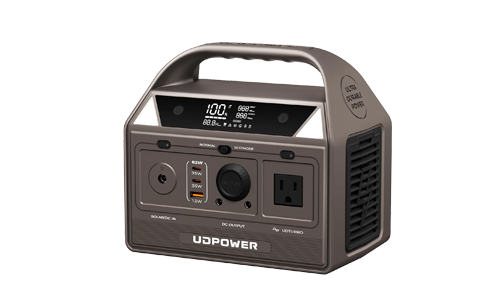
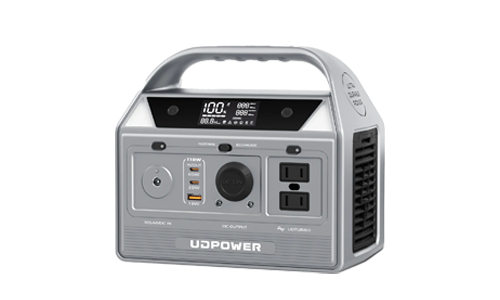
UDPOWER C600 Portable Power Station
- 596Wh battery capacity
- 600W rated AC output
- 1,200W peak output
- Up to 240W solar input
- 12.3 lb portable weight
- LiFePO4 battery chemistry
The C600 is the easiest of these three models to carry from a parking spur to a tent or picnic table. It fits one- or two-night trips focused on phones, lanterns, cameras, a laptop, a small fan, and other moderate loads.
Beach-camping advantage: At 12.3 lb, it is more practical when the campsite involves stairs, a walk from the vehicle, or frequent repositioning away from blowing sand.
Consider a larger model when: You need overnight CPAP support with humidification, continuous refrigerator operation, several days without charging, or appliances that exceed 600W rated output.
View UDPOWER C600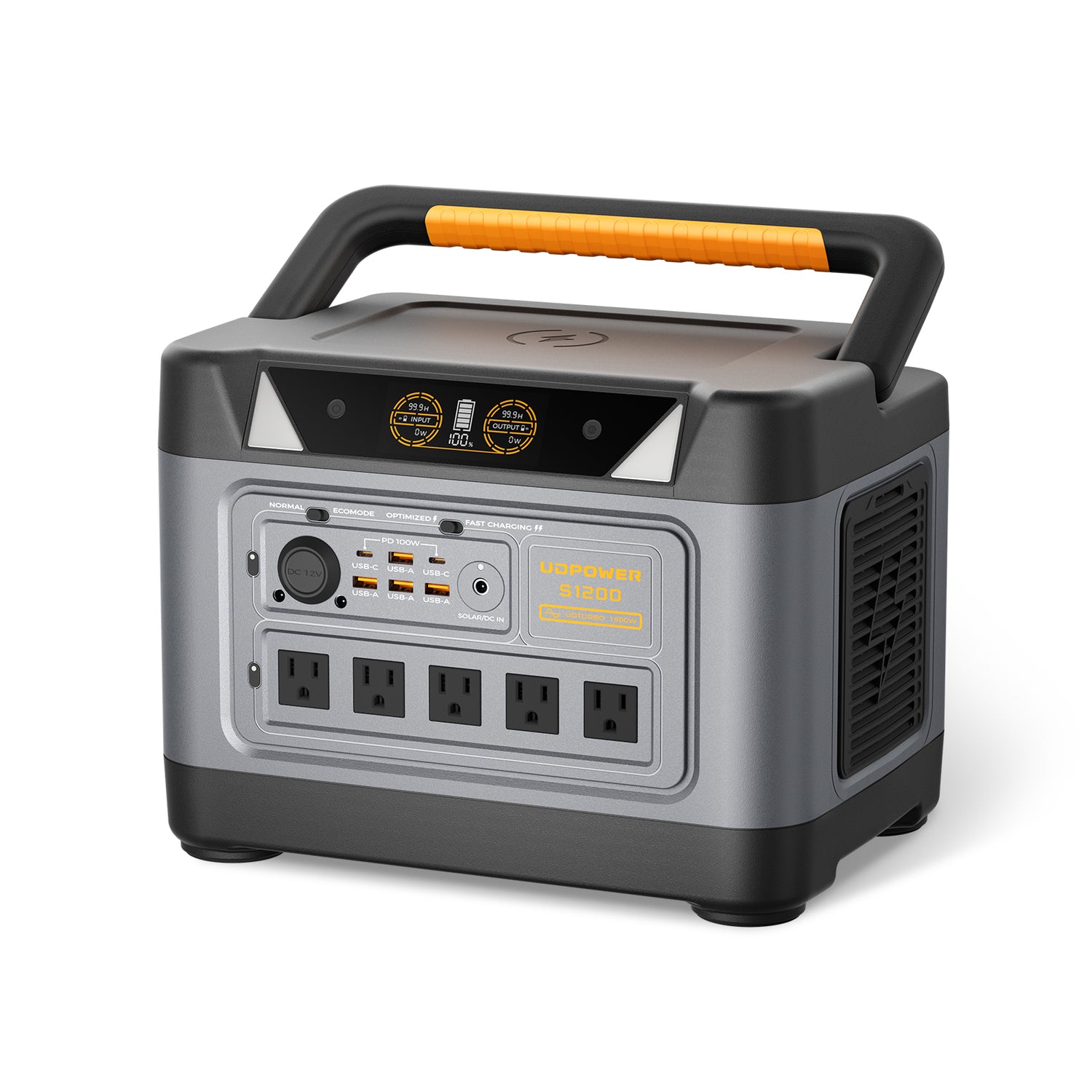
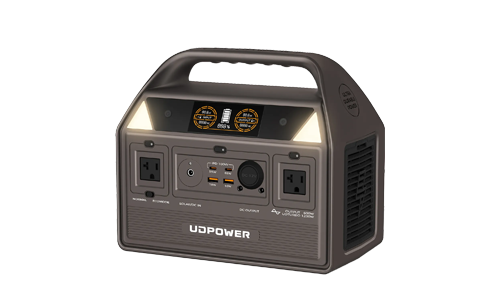
UDPOWER S1200 Portable Power Station
- 1,190Wh battery capacity
- 1,200W rated AC output
- 1,800W peak output
- Up to 400W solar input
- Approximately 26 lb
- Five AC outlets plus multiple USB and DC outputs
- UPS transfer time of 10 milliseconds or less
The S1200 offers a stronger balance of capacity, output, and portability for family weekends. It is better suited to combined loads such as phones, camp lighting, a laptop, a fan, camera batteries, and a compatible refrigerator or CPAP machine.
Beach-camping advantage: It provides substantially more overnight reserve than a small power station without reaching the weight of a large basecamp model.
Plan the carry: A 26 lb power station is manageable beside the vehicle but may feel heavy on a long stairway to the beach. Keep it at the campsite rather than carrying it repeatedly to the shoreline.
View UDPOWER S1200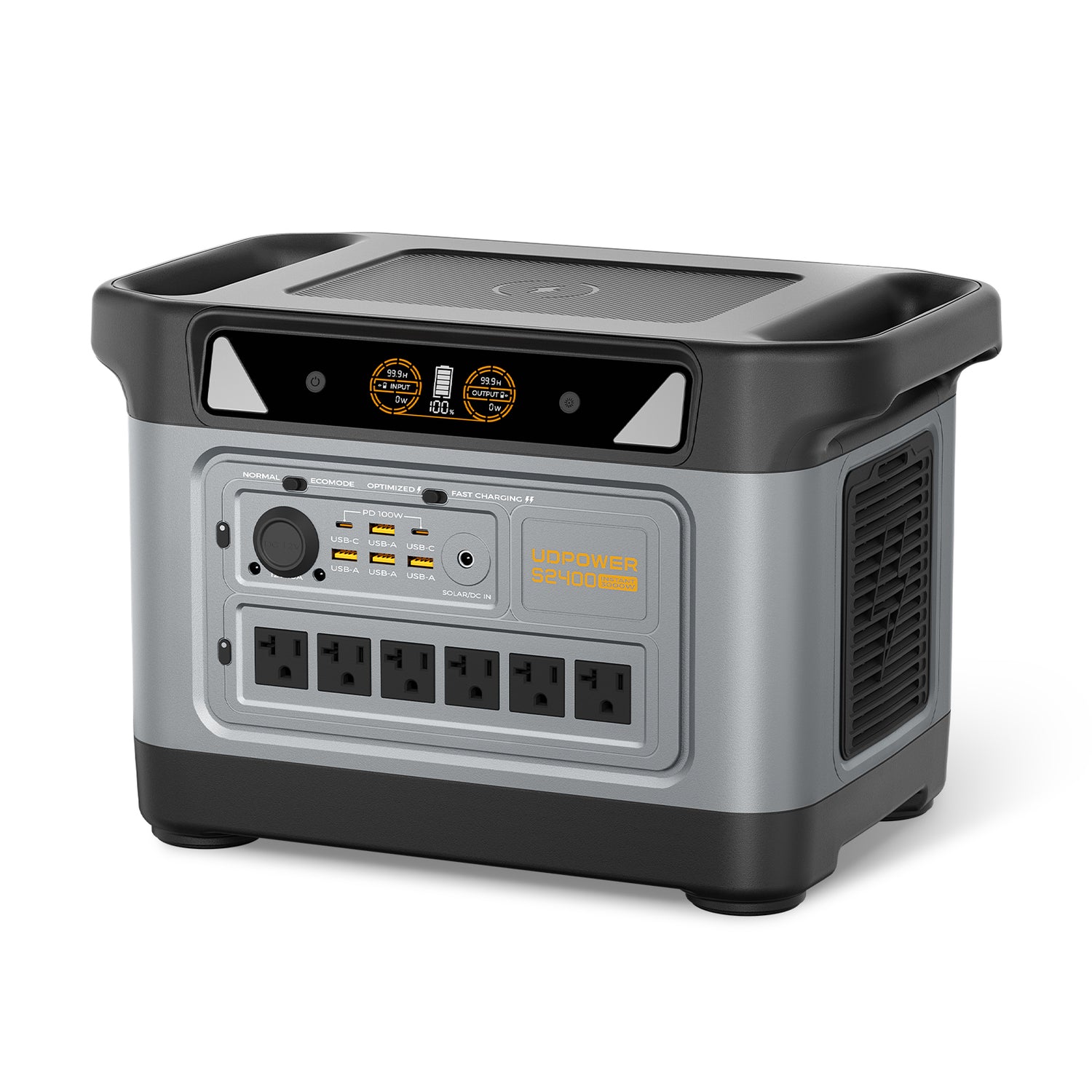
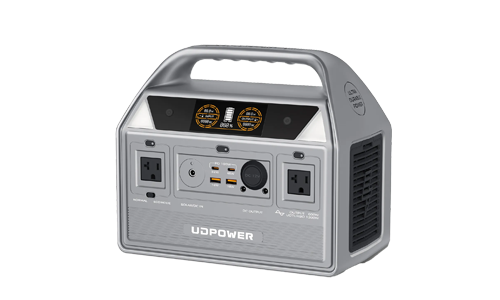
UDPOWER S2400 Portable Power Station
- 2,083Wh battery capacity
- 2,400W rated AC output
- 3,000W peak output
- Up to 400W solar input
- Approximately 40.8 lb
- Six AC outlets plus multiple USB and DC outputs
- UPS transfer time below 10 milliseconds
The S2400 is intended for a more power-intensive coastal setup: a larger refrigerator, several users, higher-output appliances, multiple work devices, or additional reserve during foggy weather.
Beach-camping advantage: The larger battery reduces dependence on perfect solar conditions during multi-day dry camping.
Best placement: Because it weighs approximately 40.8 lb, use it as a vehicle-adjacent or RV basecamp power source. It is not the ideal option for a walk-in tent site or repeated trips down beach stairs.
View UDPOWER S2400| Model | Capacity | Rated output | Peak output | Maximum solar input | Weight | Recommended camping profile | Official product page |
|---|---|---|---|---|---|---|---|
| UDPOWER C600 | 596Wh | 600W | 1,200W | 240W | 12.3 lb | Lightweight tent camping, car camping, basic electronics | Product specifications |
| UDPOWER S1200 | 1,190Wh | 1,200W | 1,800W | 400W | 26 lb | Two-night family trips, CPAP, fan, electronics, compatible fridge | Product specifications |
| UDPOWER S2400 | 2,083Wh | 2,400W | 3,000W | 400W | 40.8 lb | Multi-day basecamp, RV dry camping, multiple or higher-output loads | Product specifications |
A portable power station should remain dry, shaded from intense heat, adequately ventilated, and protected from direct salt spray. Never cover the cooling vents, place the unit directly on loose sand, or operate it where waves or runoff can reach it.
How Much Battery Capacity Do You Need for Beach Camping?
Start with energy consumption, not only appliance wattage. A 40W device used for eight hours consumes far more battery energy than a 500W appliance used for two minutes.
Daily energy use in watt-hours = device watts × hours used per day.
Estimated battery requirement = total watt-hours ÷ 0.90.
This guide uses 90% conversion efficiency for UDPOWER planning calculations. Actual runtime varies with temperature, inverter load, battery condition, appliance cycling, settings, and standby consumption.
| Device | Example consumption | Example daily use | Estimated daily energy | Planning note |
|---|---|---|---|---|
| Two smartphones | Approximately 12–18Wh per full charge each | One charge per phone | 24–36Wh | Older batteries and heavy photo or navigation use may require more than one charge. |
| LED camp lantern | 5–10W | 4 hours | 20–40Wh | Use a low setting after cooking to reduce consumption. |
| Laptop | 45–90W while charging or operating | 1.5 hours | 68–135Wh | Actual draw depends on the charger and workload. |
| Portable fan | 10–40W | 8 hours | 80–320Wh | A small USB or DC fan can use much less energy than a household AC fan. |
| CPAP machine | Approximately 30–60W | 8 hours | 240–480Wh | Heated humidifiers and heated tubing can increase consumption substantially. Test the exact setup before travel. |
| Portable refrigerator | Approximately 15–60W while the compressor runs | Intermittent operation over 24 hours | Often 300–900Wh per day | Ambient temperature, insulation, set temperature, loading, and lid openings strongly affect consumption. |
| Camera batteries | Approximately 10–20Wh each | Two charges | 20–40Wh | Cold, video recording, and frequent screen use can increase demand. |
Example 1: Lightweight One-Night Tent Trip
Two phones, one lantern, and two camera batteries may use approximately 100–160Wh. After applying a reserve for conversion losses, cold weather, and unexpected use, the 596Wh C600 provides substantial margin for this type of trip.
Example 2: Two-Night Family Camp
Phones, lighting, a laptop, camera charging, and several hours of fan use can reach 500–900Wh over a weekend. The 1,190Wh S1200 provides a more comfortable reserve, especially when the forecast includes fog or limited solar conditions.
Example 3: CPAP or Portable Refrigerator
Continuous or overnight equipment should be measured rather than estimated from a generic list. Run the complete device setup at home for one night, note the battery percentage used, and preserve a safety margin. Depending on settings and additional loads, the S1200 may suit a shorter stay, while the S2400 provides more capacity for multi-day use.
For a more detailed sizing method, read How Many Watt-Hours Do I Need for Camping?.
Using Solar Panels at a California Beach Campground
Coastal camping may look ideal for solar charging, but ocean conditions create several limitations. Morning marine layers, cliff shadows, trees, fog, and afternoon wind can reduce the energy collected during the hours when you expected the strongest output.
Plan for the site, not only the panel rating
A 400W solar array does not continuously deliver 400W. Actual input changes with sun angle, cloud cover, panel temperature, shading, cable losses, and the power station’s input limits.
- Keep the entire active panel surface in direct sun whenever possible.
- Move the panel as shadows from trees, vehicles, tents, or cliffs shift.
- Use the power station’s live input display to adjust the angle for the highest stable wattage.
- Secure folding panels against coastal wind without damaging the panel or blocking another campsite.
- Keep connectors away from sand, saltwater, wet grass, and campground runoff.
- Do not exceed the power station’s allowed solar voltage, current, or wattage.
- Do not leave portable panels unattended where wind, theft, traffic, or wildlife could create a hazard.
Use stored energy strategically
Reserve enough battery for essential nighttime loads before charging lower-priority devices. A practical priority order is:
- Medical or safety equipment
- Food refrigeration
- Phones and emergency communication
- Lighting
- Navigation and camera batteries
- Laptops, entertainment devices, and convenience appliances
On a foggy weekend, reducing consumption is often more reliable than expecting an oversized panel to recover the entire battery before sunset.
California Beach Camping Packing Checklist
Shelter and sleep
- Freestanding tent suitable for wind
- All manufacturer-provided guylines and stakes
- Groundsheet or tent footprint
- Insulated sleeping pad
- Sleeping bag appropriate for the nighttime coastal forecast
- Warm layers, wind shell, and dry sleep clothing
- Extra towels or cloths for condensation and damp equipment
Cooking and food storage
- Camp stove approved under current fire restrictions
- Fuel stored and used according to park rules
- Wind protection designed for the stove without enclosing it unsafely
- Food-storage container or vehicle storage that meets campground rules
- Cooler or portable refrigerator
- Trash bags and a plan to secure waste overnight
- Drinking water, including reserve water for delays
Beach and weather equipment
- Sun protection even when fog is present
- Wind-resistant shade rather than an unsecured beach umbrella
- Water shoes or appropriate footwear for rocks and tide pools
- Headlamp and backup light
- Printed or offline maps for low-signal areas
- Binoculars used from a safe distance from wildlife
- First-aid kit
Power and electronics
- Fully charged portable power station
- Device charging cables labeled before departure
- Compatible solar charging cable and panel, when used
- Dry storage bag for small electronics
- Stable platform that keeps the power station off sand
- Power strip only when permitted and within the power station’s output rating
- Battery plan based on measured device consumption
Campground documents
- Reservation confirmation
- Exact campsite number
- Vehicle license plate information required for check-in
- Arrival and checkout times
- Gate-closing time or late-arrival instructions
- Pet vaccination and identification information when traveling with a dog
- Downloaded campground map and emergency information
What to Check 48 Hours Before Your California Beach Camping Trip
| When | What to check | Why it matters | Official resource |
|---|---|---|---|
| 48 hours before | Campground alerts, closures, fire restrictions, and access rules | A reservation does not guarantee that every trail, shower, road, or beach access point is operating normally. | Use the official park page linked in the campground table above. |
| 48 hours before | Highway 1 and local road status | Coastal closures can require long detours or block the expected approach direction. | Caltrans Highway 1 conditions |
| 24 hours before | Hourly weather and beach hazards | Wind, dense fog, thunderstorms, heat, large surf, or sneaker-wave risks may not be clear from a general city forecast. | National Weather Service |
| 24 hours before | High and low tide times | Tide timing affects beach access, tide pools, fishing areas, and where it is safe to leave equipment. | NOAA tide predictions |
| Morning of departure | Beach water-quality advisories | Recent rain, sewage releases, or local bacteria testing can affect swimming conditions. | California Beach Watch |
| Before loading | Battery state of charge and equipment test | Finding a missing adapter or abnormal appliance draw at home is easier than solving it at a no-hookup campsite. | Use the appliance label and the applicable UDPOWER product manual. |
Save screenshots of the reservation, campground map, route, and essential alerts. Coastal cell service can be weak even when a map shows nearby towns.
Three Practical California Beach Camping Trip Plans
Plan 1: Easy Two-Night First Trip
Choose: Half Moon Bay, Carpinteria, or South Carlsbad.
Arrive before late afternoon so you can identify the beach route, restroom, potable water, and campground boundaries in daylight. Use the first evening for a short walk rather than trying to set up after sunset.
A C600 may be enough for phones, lights, cameras, and a laptop. Choose an S1200 when adding a fan, CPAP, refrigerator, or several users.
Plan 2: Big Sur Blufftop Dry Camp
Choose: Kirk Creek.
Fill fuel, drinking water, and food supplies before entering the more remote stretch of Highway 1. Download maps, confirm the open driving route, and expect limited cellular coverage.
Start with a fully charged battery because fog, wind, and limited open space may reduce solar charging opportunities. The S1200 fits a moderate weekend setup, while the S2400 provides more reserve for a vehicle-adjacent multi-day basecamp.
Plan 3: Southern California Surf Weekend
Choose: San Elijo, Doheny, or South Carlsbad.
Confirm board storage, beach access stairs, dog restrictions, and current water quality. Secure wetsuits, towels, and loose equipment against afternoon wind.
A smaller power station is convenient for phones, cameras, lights, and a laptop. Keep it at the campsite, away from saltwater and sand, rather than carrying it onto the active beach.
Frequently Asked Questions About California Beach Camping
Can you camp directly on the beach in California?
Only at locations where the responsible state, federal, county, or local agency specifically permits overnight camping. Most California beaches are day-use areas. Legal beach camping usually requires a reservation or an assigned campsite, and many “beach campgrounds” are actually on bluffs or behind dunes rather than on open sand.
How far in advance should I reserve a California beach campsite?
California State Park campsites are generally reservable up to six months in advance. Popular summer weekends, holidays, ocean-view sites, and RV hookup sites can fill quickly. Prepare several site numbers, backup parks, and alternate dates before the reservation window opens.
Is there free beach camping in California?
Legal free camping directly on developed California beaches is uncommon. Do not assume that a beach parking lot, roadside turnout, or undeveloped shoreline allows overnight camping. Verify the exact rules with the land-management agency before staying overnight.
Are campfires allowed at California beach campgrounds?
Campfire rules vary by park, season, weather, air-quality restrictions, and available fire facilities. Some campgrounds allow fires only in provided rings, while temporary restrictions may prohibit wood or charcoal fires. Check the current park alert shortly before the trip.
Can I bring a dog to a California beach campground?
Many campgrounds allow leashed dogs, but the adjacent beach or trail may have stricter rules. A dog being permitted at the campsite does not automatically mean it can enter the beach. Review both the campground pet policy and the specific beach-access rules.
Can I use a generator at a California beach campground?
Generator rules and operating hours vary by campground. Even where generators are permitted, quiet hours and location restrictions apply. A portable power station is a quieter option for phones, lights, CPAP machines, laptops, fans, and compatible refrigerators, but it must be sized for the actual load.
What size portable power station is best for beach camping?
For phones, lights, and cameras, a 596Wh model such as the UDPOWER C600 may be sufficient. A 1,190Wh S1200 is a stronger choice for a two-night family trip, fan, CPAP, or compatible refrigerator. The 2,083Wh S2400 is better suited to a multi-day vehicle-adjacent basecamp, RV dry camping, or several higher-demand devices. Calculate your watt-hours before selecting a model.
What is the best time of year for California beach camping?
There is no single best month for the entire coastline. Summer offers longer daylight but often brings full campgrounds, fog, and coastal wind. Spring and fall may offer better availability, while winter can bring rain, larger surf, colder nights, and storm-related road closures. Choose the region first, then compare historical conditions with the current forecast.
Is California beach camping safe during high tide?
Designated campsites are normally positioned outside ordinary active beach areas, but beach access, shoreline activities, and loose equipment can still be affected by high tides and large surf. Check NOAA tide predictions and current National Weather Service beach-hazard information, and keep equipment above the active wet-sand line.
Build a Better California Beach Camping Power Setup
Choose a power station based on your measured watt-hours, required output, trip length, campsite access, and available solar conditions.
View Selection: Portable Power Stations View Products: Portable Solar Panels Get the Camping Power Sizing GuideHow This Guide Was Researched
Campground information was checked against official California State Parks pages, ReserveCalifornia, Recreation.gov, Santa Barbara County, Caltrans, NOAA, the National Weather Service, and the California State Water Resources Control Board. UDPOWER specifications and product images were taken from the corresponding official product pages.
Coastal conditions, campsite availability, fees, fire restrictions, pet policies, hookups, road access, and individual site characteristics can change. Review the official campground listing and current alerts immediately before travel.
Related Articles


