

What Size Wire Do You Need for a 30-Amp Breaker?
30-Amp Wire Size Guide

30-Amp Breaker Wire-Size Quick Chart
This chart covers the most common residential and RV-related situations. It is a starting point, not a substitute for the equipment instructions or local electrical requirements.
| Project | Typical minimum conductor | Cable/conductor arrangement | Key point |
|---|---|---|---|
| Standard 30A branch circuit | 10 AWG copper | Depends on voltage and whether a neutral is needed | The normal answer for a general-use 30A circuit |
| 30A circuit using aluminum | 8 AWG aluminum, where permitted | Use cable and terminals listed for aluminum | 10 AWG aluminum is generally limited to 25A protection |
| 120V RV TT-30 receptacle | 10 AWG copper | Hot, neutral, equipment ground | TT-30 is 120V, not 240V |
| 240V load that does not need a neutral | 10 AWG copper | Two hots and equipment ground | Common for some water heaters and fixed equipment |
| 120/240V load that needs a neutral | 10 AWG copper | Two hots, neutral, equipment ground | Common for a modern 4-wire dryer receptacle |
| Long 120V run near full load | Often 8 AWG or 6 AWG copper | Same conductor count as the load requires | Upsizing controls voltage drop; it does not raise breaker size |
| Air conditioner, motor, welder, or listed equipment | Follow the nameplate and equipment-specific rules | Varies | MCA and MOCP can produce a different result from a general circuit |
The underlying small-conductor limits can be checked in the Cerrowire applications chart and the applicable edition of the National Electrical Code adopted in your area.
Why 10 AWG Copper Is the Standard Answer
A breaker protects the branch-circuit conductors from overheating during an overload or fault. For ordinary branch circuits, the conductor must be large enough for the breaker protecting it. Under the small-conductor rules used for common residential wiring, 10 AWG copper is protected at no more than 30A, making it the normal match for a 30A breaker.
That does not mean every conductor with a higher temperature-column ampacity can automatically be placed on a larger breaker. Cable ratings, terminal temperature ratings, conductor material, correction factors, and the special small-conductor protection limits all matter. For a typical homeowner project, the reliable starting rule is simple:
Also remember that the breaker rating does not tell you how many conductors are needed. Voltage and the appliance’s need for a neutral determine whether the circuit uses two insulated conductors plus ground or three insulated conductors plus ground.
How the 80% Continuous-Load Rule Changes Planning
A continuous load is generally one expected to run at maximum current for three hours or more. For a typical circuit using a standard breaker, the overcurrent device and conductors are sized so the continuous portion is calculated at 125%. In practical terms, a normal 30A circuit is commonly planned for no more than 24A of continuous load.
| Circuit | Full 30A mathematical value | Typical 24A continuous planning value | Calculation |
|---|---|---|---|
| 120V, 30A | 3,600W | 2,880W | Volts × amps |
| 240V, 30A | 7,200W | 5,760W | Volts × amps |
The 24A figure is not a claim that a 30A breaker trips at 24A. It is a design limit commonly used for continuous loading on standard equipment. Short-duration loads and listed equipment may be evaluated differently. Schneider Electric provides a useful plain-language reference on continuous and noncontinuous load sizing.
For a refresher on converting voltage and current into watts, see UDPOWER’s volts-to-watts conversion guide.
Do You Need 10/2 or 10/3 Wire?
The first number describes the conductor size. The second number describes how many insulated current-carrying conductors are included, not counting the equipment grounding conductor. Therefore, “10/2 with ground” and “10/3 with ground” are not interchangeable.
| Cable | Insulated conductors | Typical 30A use | Important limitation |
|---|---|---|---|
| 10/2 with ground | Two insulated 10 AWG conductors plus ground | 120V circuit with hot and neutral, or 240V load with two hots and no neutral | Cannot supply a load that needs both 120V and 240V because no separate neutral is available |
| 10/3 with ground | Three insulated 10 AWG conductors plus ground | 120/240V circuit with two hots, neutral, and ground | Use only when the equipment or receptacle requires the neutral |
A typical 120V TT-30 RV receptacle can use 10/2 copper with ground because it needs one hot, one neutral, and one equipment ground. A typical modern four-wire dryer receptacle requires 10/3 copper with ground because it needs two hots, a neutral, and an equipment ground. A 240V-only water heater may use 10/2 with ground if its instructions do not require a neutral. When the white conductor in a cable is used as an ungrounded conductor for a 240V-only load, it must be permanently reidentified at accessible terminations as required by the applicable code.
For a fuller explanation of conductor markings and common applications, read What Is 10/2 Electrical Wire Used For?
Is a 30-Amp Circuit 120V or 240V?
It can be either. “30 amp” describes current capacity, not voltage. Before choosing cable or a receptacle, identify the equipment voltage and whether the load needs a neutral.
| Circuit type | Breaker | Current-carrying conductors | Typical examples |
|---|---|---|---|
| 120V, 30A | Single-pole 30A | One hot and one neutral | TT-30 RV receptacle, some specialty equipment |
| 240V, 30A without neutral | Two-pole 30A | Two hots | Some water heaters, compressors, heaters, and fixed appliances |
| 120/240V, 30A with neutral | Two-pole 30A | Two hots and one neutral | Modern four-wire dryer circuit and equipment that uses both voltages |
The equipment grounding conductor is included in all three examples but is not intended to carry normal operating current. Never use the grounding conductor as a substitute neutral, and do not combine neutral and ground at a new branch-circuit receptacle.
TT-30 and NEMA 14-30 Are Not Interchangeable
This is one of the most important distinctions in any 30A project. The receptacles have different blade patterns because they supply different electrical systems.
| Receptacle | Nominal supply | Conductors used | Typical application | Common danger |
|---|---|---|---|---|
| TT-30R | 120V | Hot, neutral, ground | 30A RV shore-power connection | Miswiring it as 240V can destroy RV equipment and create a shock or fire hazard |
| NEMA 14-30R | 120/240V | Two hots, neutral, ground | Modern electric dryer connection | Assuming it can directly replace an RV outlet because both say 30A |
If your goal is to run an RV air conditioner, the outlet rating is only one part of the calculation. Compressor startup, converter charging, water heating, microwave use, and other simultaneous loads can still overload a 30A RV service. See UDPOWER’s RV air-conditioner wattage guide for a load-planning example.
Choose the Correct Wiring Method: NM-B, UF-B, or Conductors in Conduit
Gauge alone is not enough. The cable or conductor insulation must be suitable for the location. A wire that is acceptable inside a dry wall cavity may not be acceptable outdoors, underground, or in a raceway exposed to moisture.
| Wiring method | Typical location | Why people choose it | Watch for |
|---|---|---|---|
| NM-B cable | Dry, protected indoor spaces where permitted | Convenient cable assembly for residential construction | Not intended for wet locations; ampacity is limited by the rules for the cable assembly |
| UF-B cable | Wet locations or direct burial where permitted | Moisture-resistant cable assembly | Burial depth, physical protection, fill, routing, and local requirements still apply |
| Individual copper conductors in conduit | Garages, exterior raceways, workshops, and other code-compliant raceway systems | Easier pulling and conductor replacement; flexible choice of conductor colors | Use conductors with the correct wet-location listing where the raceway is considered wet |
| Flexible cord | Portable equipment and listed cord-connected uses | Designed to flex and move | Do not substitute flexible cord for permanent building wiring |
Outdoor conduit is generally treated as a wet location even when it appears sealed, so the conductor insulation must be listed accordingly. Exact burial depth and physical-protection requirements depend on the wiring method, location, voltage, and local adoption. That is a permitting question, not a detail to guess from wire gauge alone.
How Far Can 10-Gauge Wire Run on a 30-Amp Circuit?
There is no single distance at which 10 AWG copper suddenly becomes unsafe. Ampacity and voltage drop are separate questions. Ten-gauge copper may still have sufficient ampacity for the breaker, while the voltage delivered to a distant load becomes too low for good performance.
Voltage drop depends on voltage, one-way distance, conductor material, conductor size, and the current the load actually draws. This is why a blanket rule such as “use 8 gauge after 50 feet” can be either too conservative or not conservative enough.
| Copper size | 120V circuit | 240V circuit | Practical interpretation |
|---|---|---|---|
| 10 AWG | About 48 ft | About 97 ft | Standard minimum, but a long 120V run near 30A can need upsizing quickly |
| 8 AWG | About 77 ft | About 154 ft | Useful for moderate-length runs or sensitive loads |
| 6 AWG | About 122 ft | About 244 ft | Often considered for long 120V runs carrying high current |
| 4 AWG | About 194 ft | About 388 ft | Large conductor for unusually long runs; raceway and terminal compatibility become important |
| Copper size | 120V circuit | 240V circuit | What changes compared with the 30A table |
|---|---|---|---|
| 10 AWG | About 60 ft | About 121 ft | Lower actual current allows a longer run for the same percentage drop |
| 8 AWG | About 96 ft | About 192 ft | A 100-ft, 120V run is still slightly above 3% at 24A by this estimate |
| 6 AWG | About 153 ft | About 305 ft | Provides more margin for long 120V circuits |
| 4 AWG | About 243 ft | About 485 ft | Usually relevant only to very long runs or project-specific design constraints |
These are planning estimates using common copper resistance values and a 3% branch-circuit target. Actual conductor temperature, power factor, connections, and equipment behavior can change real-world voltage. Check your proposed run with the Southwire voltage-drop calculator or the Cerrowire voltage-drop calculator, then have the final design verified for the installation.
When should you move up to 8 AWG or 6 AWG copper?
- The one-way run is long and the load will draw close to 30A.
- The circuit is 120V, where the same voltage drop represents twice the percentage seen on a 240V circuit.
- The equipment is sensitive to low voltage or has high starting current.
- Conductors share a raceway or cable with enough other current-carrying conductors to require adjustment.
- The surrounding temperature is high enough to require correction.
- You want margin for future operating conditions without increasing the breaker above 30A.
Upsizing conductors does not authorize a larger breaker. If the equipment and receptacle are rated 30A, the breaker normally remains 30A unless an equipment-specific rule says otherwise.
Can You Use Aluminum Wire on a 30-Amp Breaker?
Aluminum can be used in many code-compliant electrical installations, but it is not a gauge-for-gauge substitute for copper. For ordinary small conductors, 10 AWG aluminum or copper-clad aluminum is generally limited to 25A protection, while 8 AWG aluminum is commonly the next practical size for a 30A circuit. The copper and aluminum small-conductor limits are summarized in this NEC ampacity reference from Priority Wire.
| Material and size | General 30A suitability | Installation considerations |
|---|---|---|
| 10 AWG copper | Standard minimum for a typical 30A circuit | Confirm cable type, terminal temperature rating, environment, and voltage drop |
| 10 AWG aluminum or copper-clad aluminum | Generally not suitable for ordinary 30A protection; normally limited to 25A | Do not assume the copper ampacity applies |
| 8 AWG aluminum | Common practical minimum where aluminum is permitted for a 30A circuit | All terminals and connectors must be listed for the conductor material and size |
Aluminum terminations require compatible equipment and correct workmanship. Use only devices marked for the conductor material, prepare the conductor exactly as the equipment manufacturer directs, and tighten terminals to the specified torque. Do not add compounds or improvise connection methods unless the product instructions call for them.
Why HVAC, Motors, and Welders Can Be Different
The “10 AWG copper on a 30A breaker” answer is for an ordinary branch circuit. Certain listed loads use equipment-specific sizing rules because starting current and operating characteristics differ from general receptacle loads.
Air conditioners and heat pumps
HVAC nameplates commonly show Minimum Circuit Ampacity (MCA) and Maximum Overcurrent Protection (MOCP). The branch-circuit conductor is selected to meet the MCA, while the breaker or fuse cannot exceed the MOCP. That can produce a breaker rating larger than someone would expect from the conductor size alone.
Motors and welders
Motor circuits and welder circuits can also use special rules that account for startup current, duty cycle, overload protection, and equipment design. A breaker may be sized to ride through startup while other protection handles overloads.
Common 30-Amp Project Examples
1. Installing a 30A RV receptacle
A standard TT-30 RV receptacle is a 120V circuit. The usual copper starting point is 10/2 with ground: one hot conductor, one neutral conductor, and one equipment ground on a single-pole 30A breaker. Use a listed TT-30R receptacle and weatherproof enclosure where required. Do not wire the TT-30 as a 240V dryer outlet.
2. Supplying a 240V water heater
A 240V-only water heater that does not use a neutral may use two insulated 10 AWG copper conductors plus an equipment grounding conductor on a two-pole 30A breaker, subject to the heater nameplate and installation instructions. The load must still satisfy continuous-load sizing requirements where applicable.
3. Installing a modern electric dryer circuit
A typical modern dryer connection uses a four-wire 120/240V circuit: two hots, one neutral, and one equipment ground. That normally means 10/3 copper with ground for a 30A circuit. Do not create a new three-wire dryer circuit by combining neutral and ground.
4. Running a workshop compressor
Confirm the compressor’s voltage, full-load current, startup characteristics, recommended breaker, and whether the manufacturer requires a dedicated circuit. A long feeder to a detached shop can make voltage drop more important than the basic 10 AWG minimum.
5. Supplying a mini-split or central air-conditioning unit
Use the nameplate MCA and MOCP rather than choosing wire solely from the breaker handle. Also verify the disconnect, conductor insulation, outdoor wet-location requirements, and any separate indoor-unit circuit.
6. Running power to a detached building
A detached-building project can involve feeder rules, grounding electrodes, disconnect requirements, burial depth, conduit fill, voltage drop, and local permits. It is not simply a matter of buying a long roll of 10/2 cable. Long 120V runs near 30A often benefit from 6 AWG copper, while a 240V design may reduce percentage voltage drop for the same current and distance.
Need Portable Power Instead of a New 30-Amp Circuit?
A portable power station can be useful when the real goal is to run selected appliances during an outage, at a campsite, in a work vehicle, or away from a permanent receptacle. It does not replace a code-compliant 30A branch circuit, and it should never be connected to a building by backfeeding a wall receptacle.
A nominal 120V, 30A service represents up to 3,600W mathematically. Portable stations should therefore be selected by the actual loads you plan to run, not by assuming they duplicate the full capacity of a TT-30 outlet.
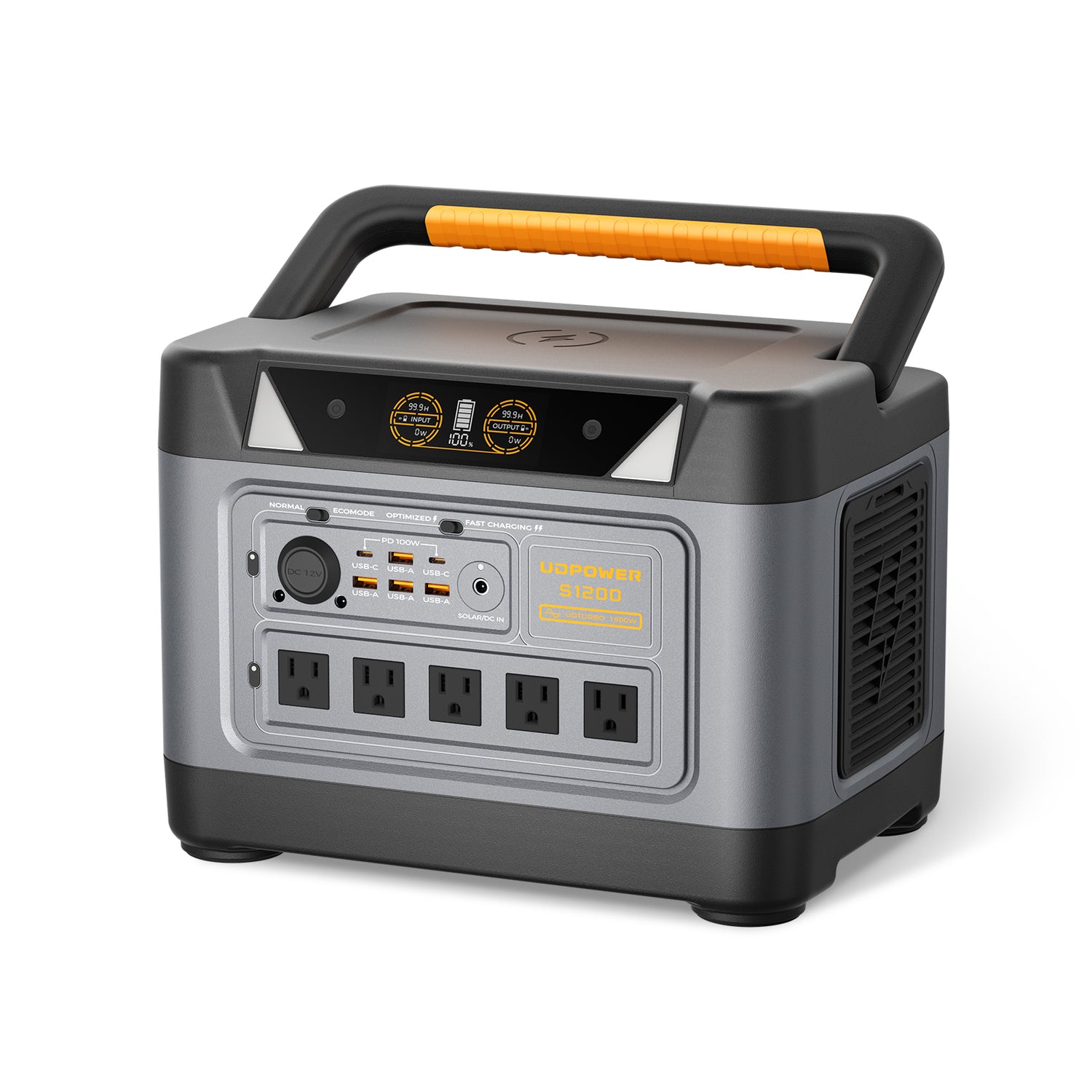
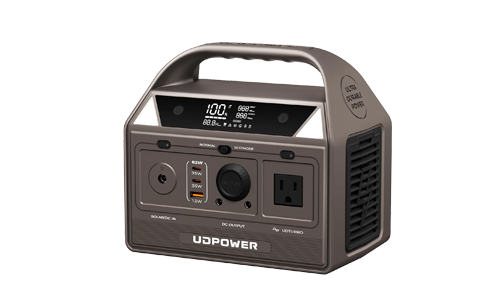
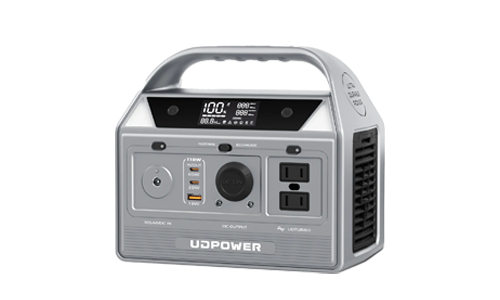
UDPOWER S1200: For Essential Loads and Mobile Use
The S1200 is a practical choice for refrigerators, CPAP machines, electronics, lights, and other selected loads that stay within its output limits. It is easier to move than a larger unit and can serve as a portable backup without adding a permanent 30A circuit.
- 1,190Wh LiFePO4 battery capacity
- 1,200W rated AC output
- Up to 1,800W surge/UDTURBO capability
- Up to 400W solar input
- 15 total outputs
- Approximately 26 lb
- UPS transfer time under 10 ms
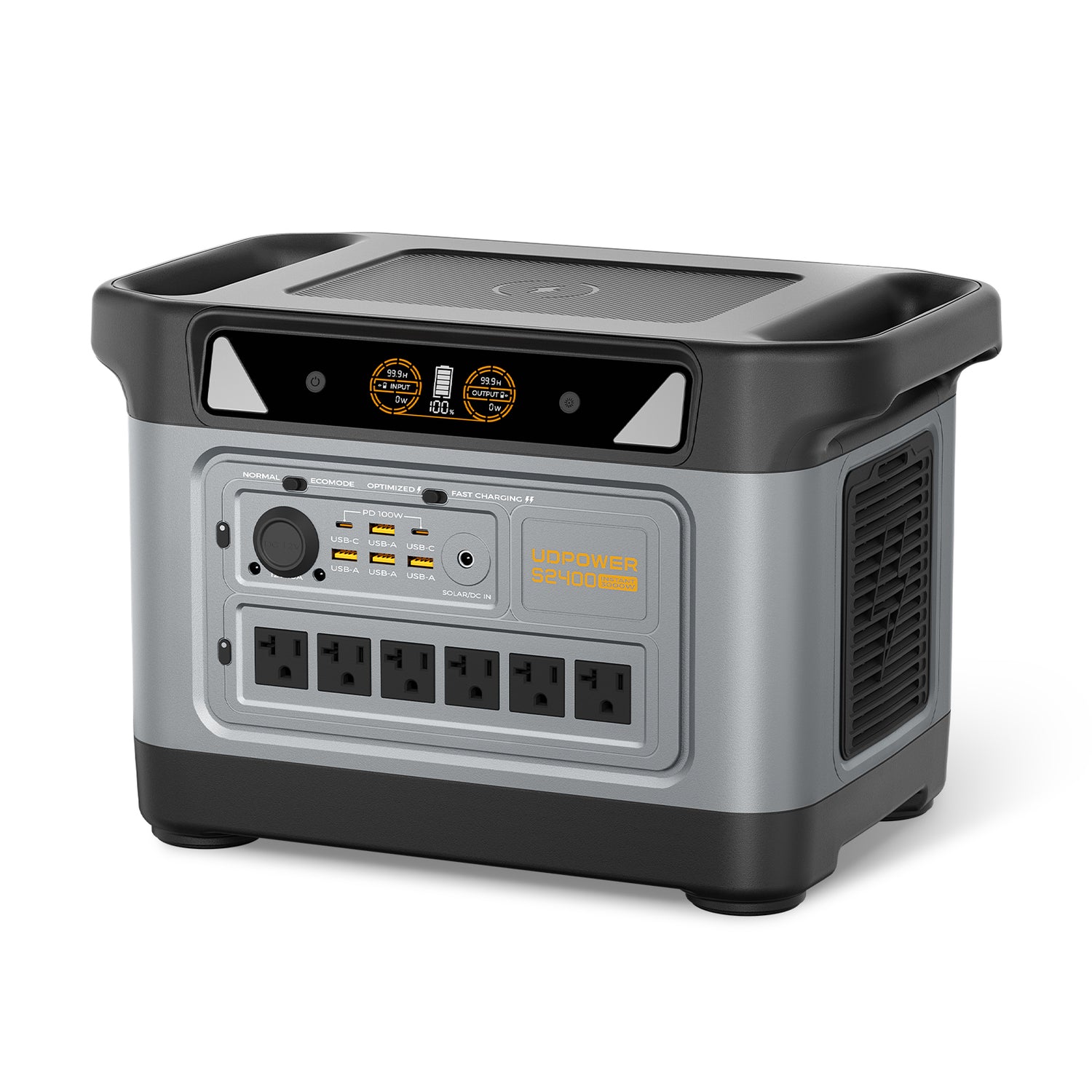
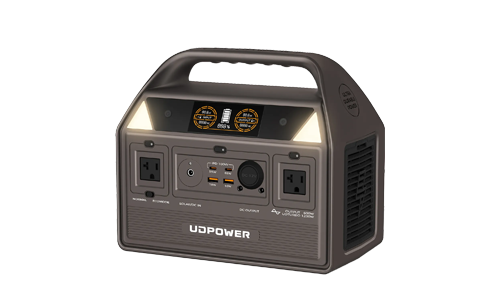
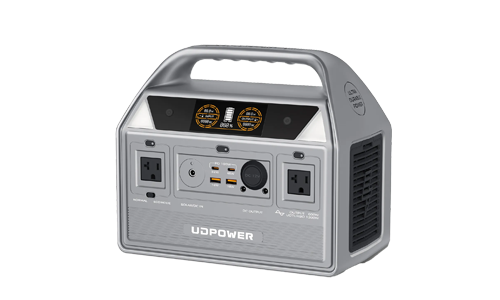
UDPOWER S2400: More Capacity for Higher-Wattage Loads
The S2400 offers more output and stored energy for users who need to run several essential devices or a higher-wattage appliance within the station’s limits. It still does not equal the full theoretical 3,600W available from a 120V 30A shore-power circuit, so total running watts and startup demand must be checked before use.
- 2,083Wh LiFePO4 battery capacity
- 2,400W rated AC output
- 3,000W surge output
- Up to 400W solar input
- 16 total outputs
- Approximately 40.8 lb
- UPS transfer time of 10 ms or less
| Power source | Rated or mathematical output | Best use | Limitation |
|---|---|---|---|
| 120V, 30A branch circuit | 3,600W mathematical maximum | Permanent code-compliant supply for listed equipment or receptacle | Requires correct wiring, breaker, receptacle, permits, and installation |
| UDPOWER S1200 | 1,200W rated output | Essential appliances, electronics, medical-device backup, camping, and mobile use | Not a replacement for full 30A shore power |
| UDPOWER S2400 | 2,400W rated output | Higher-wattage appliances and multiple selected loads | Total load and startup surge must remain within product limits |
Common 30-Amp Wiring Mistakes to Avoid
| Mistake | Why it matters | Better approach |
|---|---|---|
| Using ordinary 12 AWG copper on a 30A receptacle circuit | The breaker may not protect the conductor at the standard small-conductor limit | Use 10 AWG copper unless an equipment-specific rule applies |
| Assuming 10 AWG aluminum equals 10 AWG copper | Ten-gauge aluminum is generally limited to 25A protection | Use the correct aluminum size and compatible terminals |
| Wiring a TT-30 RV receptacle for 240V | RV equipment expects 120V and can be severely damaged | Use one hot, one neutral, one ground, and a single-pole 30A breaker |
| Buying 10/2 when the appliance needs a neutral | A 120/240V load needs a separate neutral in addition to two hots and ground | Check the appliance diagram before purchasing cable |
| Using NM-B in a wet or outdoor location | The cable is not listed for wet conditions | Select a wet-location wiring method approved for the installation |
| Ignoring terminal temperature ratings | The allowable ampacity is limited by the lowest-rated part of the connection | Use conductor and equipment ratings together, not the highest table column alone |
| Ignoring actual load and distance | The circuit may pass an ampacity check but deliver poor voltage to the equipment | Calculate voltage drop with expected current and one-way length |
| Using a flexible extension cord as permanent wiring | Portable cord is not a substitute for an approved branch-circuit wiring method | Install permanent wiring or use a listed temporary cord only as intended |
| Backfeeding from a generator or power station | It can energize exposed prongs or utility wiring and bypass required protection | Use listed transfer equipment installed for the power source |
Before You Buy Wire: A Practical Checklist
- Read the equipment nameplate. Confirm voltage, amperage, watts, MCA, MOCP, and the manufacturer’s required circuit.
- Identify the receptacle or hardwired connection. TT-30, 14-30, and 240V-only equipment are not wired the same way.
- Determine whether a neutral is required. This decides whether 10/2 or 10/3 is the likely cable choice.
- Measure one-way distance. Use the actual panel-to-load route, not a straight-line estimate.
- Estimate the real operating current. Voltage-drop sizing should reflect the expected load, while conductor ampacity must still satisfy the applicable rules.
- Choose copper or aluminum intentionally. Do not transfer copper ampacity assumptions to aluminum.
- Choose a wiring method for the environment. Dry indoor, wet, underground, exterior, and conduit installations have different requirements.
- Count current-carrying conductors and check temperature. Bundling and heat can require adjustment or larger conductors.
- Verify terminal compatibility. Breakers, disconnects, receptacles, and lugs must accept the conductor material and size.
- Check local code adoption and permits. The 2026 NEC is the newest model code, but your state or city may enforce a different edition with local amendments.
- Plan testing and labeling. The finished circuit should be verified for correct voltage, polarity, grounding, and breaker identification before equipment is connected.
- Use a licensed electrician when the project reaches a panel, outdoor feeder, detached building, transfer equipment, or unfamiliar equipment rule.
Frequently Asked Questions
Can 10-gauge wire handle a 30-amp breaker?
Yes. Ten AWG copper is the standard minimum for a general-purpose 30A branch circuit. The exact cable type, conductor count, terminal ratings, temperature, bundling, and voltage drop still need to match the installation.
Can I use 10/2 wire on a 30-amp breaker?
Yes, when the circuit needs two insulated conductors plus ground. That can be a 120V circuit with hot and neutral, such as a TT-30 RV receptacle, or a 240V-only circuit with two hots and no neutral. Use 10/3 with ground when the equipment needs two hots, a neutral, and a ground.
Do I need 8-gauge wire for a 30-amp circuit?
Not for a short, ordinary copper branch circuit; 10 AWG copper is usually sufficient for ampacity. Eight AWG copper may be a smart upgrade for voltage drop, high ambient temperature, conductor bundling, or sensitive equipment. Eight AWG aluminum is commonly the practical minimum when aluminum conductors are permitted.
What wire size should I use for a 100-foot 30-amp run?
It depends on voltage and actual current. At 30A, 10 AWG copper reaches roughly 6.2% drop over a 100-foot one-way 120V run and roughly 3.1% on a 240V run. For a 120V load near 30A, 6 AWG copper is a stronger planning choice for staying near a 3% branch-circuit target. For 240V at the same current and distance, 8 AWG copper provides more margin. Verify the final result with a voltage-drop calculation and local requirements.
Can I use 12/2 wire with a 30-amp breaker?
Not for an ordinary general-purpose branch circuit. Twelve AWG copper is normally protected at no more than 20A. Some listed HVAC, motor, or welder circuits use special rules, so equipment nameplate data must be checked before judging an existing installation.
Is a 30-amp RV outlet 120V or 240V?
A standard TT-30 RV receptacle is 120V. It uses one hot, one neutral, and one equipment grounding conductor. It must not be wired as a 240V dryer outlet.
How many watts can a 30-amp circuit provide?
A 120V, 30A circuit equals 3,600W mathematically, while a 240V, 30A circuit equals 7,200W. For a typical continuous load on standard equipment, planning at 80% gives 2,880W at 120V or 5,760W at 240V.
Can I install a 30-amp receptacle on a 20-amp breaker?
No, not as a normal branch-circuit design. A receptacle and circuit should be selected as a coordinated system for the intended load. Installing a 30A receptacle on a 20A circuit can mislead users into connecting equipment the circuit was not designed to supply.
Is 10 AWG aluminum acceptable on a 30-amp breaker?
Generally no for an ordinary branch circuit. Ten AWG aluminum or copper-clad aluminum is normally limited to 25A protection under the small-conductor rules. Eight AWG aluminum is commonly used as the minimum starting size for 30A where aluminum is permitted and all terminals are compatible.
Should I use a bigger wire if the breaker is still only 30 amps?
Sometimes. A larger conductor can reduce voltage drop and help address temperature or bundling adjustments. The larger wire does not automatically allow a larger breaker; the receptacle, equipment, circuit design, and applicable rules still control breaker size.
Sources and Further Reading
Electrical rules can differ by adopted code edition and local amendments. The 2026 NEC is the latest model code, but the authority having jurisdiction decides what is enforced locally.
- NFPA 70, National Electrical Code
- NFPA NEC enforcement and adoption maps
- Cerrowire conductor applications chart
- Priority Wire NEC conductor ampacity reference
- Southwire voltage-drop calculator
- Legrand TT-30R receptacle specifications
- Eaton appliance and HVAC overcurrent-protection guide
- UDPOWER S1200 official product page
- UDPOWER S2400 official product page
Related UDPOWER Guides
Choose the Right Power Setup
Install a permanent 30A circuit when listed equipment truly needs one. Choose a portable power station when the goal is flexible backup power for selected loads without altering building wiring.
Safety note: This guide explains planning concepts and common configurations; it is not a live-panel installation procedure. Electrical work can cause shock, arc-flash injury, fire, equipment damage, or utility backfeed. Follow the equipment instructions, the code edition adopted by your local authority, permit and inspection requirements, and the direction of a qualified licensed electrician.
Related Articles


