What’s the Benefit of Using a CPAP Machine?
A CPAP machine helps keep the airway open during sleep, reducing breathing pauses caused by obstructive sleep apnea. This guide explains the real-world benefits of CPAP therapy, including better sleep quality, less snoring, improved daytime energy, and long-term health support. It also covers how to get better results from CPAP, why consistent use matters, and how a reliable portable power station can help keep CPAP therapy running during outages, travel, RV trips, or camping.
Latest updated: May 13, 2026
The main benefit of using a CPAP machine is that it keeps your airway open while you sleep, helping reduce breathing pauses caused by obstructive sleep apnea. For many people, that means fewer wake-ups, less snoring, better oxygen levels, less morning grogginess, more daytime energy, and a lower burden on the heart over time.
The benefit is not just “better sleep” in a vague sense. The real value is consistency: when your breathing stays steadier night after night, your body spends less time fighting for air and more time getting restorative sleep.

How a CPAP Machine Helps You Breathe
CPAP stands for continuous positive airway pressure. The machine sends a steady stream of pressurized air through a tube and mask while you sleep. That air pressure works like a gentle support for the upper airway, helping prevent the throat from narrowing or closing during sleep.
That matters because obstructive sleep apnea is not simply “loud snoring.” During an apnea event, airflow can stop or drop repeatedly. Your brain may briefly wake you to restart breathing, even if you do not remember waking up. A properly prescribed and properly fitted CPAP setup helps reduce those interruptions.
Plain-English version: CPAP does not give you extra oxygen like an oxygen tank. It helps keep the airway open so your own breathing can work more normally through the night.
Main Benefits of Using a CPAP Machine
The benefits below are the ones most people care about in daily life: how they sleep, how they feel the next day, how their partner sleeps, and how treatment may support long-term health when used consistently.
| Benefit | What it can feel like in real life | Why it happens | Helpful source |
|---|---|---|---|
| Fewer breathing pauses | Less gasping, fewer sudden wake-ups, steadier sleep | Air pressure helps keep the upper airway open during sleep | NHLBI |
| Less daytime sleepiness | Fewer afternoon crashes, less dozing while reading or watching TV | Sleep is interrupted less often, so the body gets more useful rest | Mayo Clinic |
| Better sleep quality | Waking up feeling more refreshed instead of feeling like you “slept but didn’t recover” | More stable breathing can reduce micro-awakenings during the night | Cleveland Clinic |
| Reduced snoring for many users | A quieter bedroom and better sleep for a partner | The airway is less likely to vibrate or collapse when supported by pressure | Mayo Clinic PAP handbook |
| Better focus and daily function | Clearer mornings, fewer concentration dips, better patience during the day | Improved sleep continuity can support daytime alertness and functioning | Sleep Medicine review |
| Support for heart and blood pressure health | Not something you always “feel,” but important for long-term risk management | Treating sleep apnea reduces repeated oxygen drops and stress responses during sleep | Mayo Clinic research |
| Safer driving for sleepy users | Less risk of nodding off during commutes or long drives | Reduced daytime sleepiness can improve alertness behind the wheel | Sleep Education by AASM |
When Do CPAP Benefits Start?
Some people feel better after the first few nights. Others need several weeks to adjust to the mask, pressure, humidity, and sleep routine. A slow start does not automatically mean CPAP “isn’t working.” Often, the first goal is simply to make the setup comfortable enough to use every time you sleep.
| Timeframe | What may improve | What to watch | Practical next step |
|---|---|---|---|
| First night to first week | Less snoring, fewer gasping episodes, better oxygen stability for some users | Mask leaks, dry mouth, pressure discomfort, feeling “aware” of the mask | Do not judge the whole therapy by one bad night. Adjust mask fit while lying in your normal sleep position. |
| Weeks 2–4 | More consistent sleep, less morning headache or fog for some users | Skipping nights because the setup feels inconvenient | Use CPAP during naps too. Benefits are tied to use, not just ownership of the machine. |
| 1–3 months | Better daytime alertness, mood, focus, and sleep routine | Persistent sleepiness even with good usage | Ask your sleep team to review leak rate, residual AHI, pressure settings, and mask style. |
| Long term | Better symptom control and support for cardiovascular risk management | Using CPAP only on “bad nights” or only at home | Build a travel and power-outage plan so therapy does not stop when your routine changes. |
Who Usually Benefits Most from CPAP?
CPAP is usually prescribed after a sleep study or medical evaluation. The people who often notice the clearest day-to-day improvement are those who had obvious symptoms before treatment: loud snoring, witnessed breathing pauses, morning headaches, dry mouth, daytime sleepiness, poor focus, or frequent nighttime awakenings.
That said, some benefits are quiet. You may not feel your oxygen level improving in the moment, and you may not feel your heart working less hard overnight. That is why CPAP data, follow-up appointments, and symptom tracking are useful.
Simple signs your CPAP therapy may be helping
- You wake up fewer times during the night.
- Your partner notices less snoring or gasping.
- You feel less foggy in the morning.
- You need fewer naps or caffeine rescues during the day.
- Your CPAP app or clinician report shows lower residual events and fewer major leaks.
What CPAP Does Not Do
CPAP is effective for many people with obstructive sleep apnea, but it is not magic and it is not a cure. It works while you use it. If you stop using it, symptoms and breathing interruptions can return.
| Common misunderstanding | More accurate way to think about it |
|---|---|
| “If I feel better, I can stop using it.” | Feeling better usually means the treatment is helping. Do not stop without talking to your sleep clinician. |
| “CPAP cures sleep apnea.” | CPAP manages sleep apnea while in use. Weight change, surgery, oral appliances, or positional therapy may be discussed separately depending on the cause and severity. |
| “A bigger machine gives bigger benefits.” | The right pressure, mask fit, and consistency matter more than machine size. |
| “Using it for a few hours is the same as all night.” | Breathing events can happen later in the night too. Using CPAP every time you sleep gives therapy the best chance to work. |
How to Get More Benefit from Your CPAP Machine
The biggest CPAP mistake is treating comfort problems as a reason to quit instead of a setup problem to solve. Mask leaks, dry mouth, pressure discomfort, noise, and hose pull are common early issues, and most have practical fixes.
| Problem | Why it hurts the benefit | What to try |
|---|---|---|
| Mask leak | Leaks can reduce effective pressure and wake you or your partner | Fit the mask while lying down, replace worn cushions, and ask about a different mask style if leaks persist. |
| Dry mouth or dry nose | Discomfort makes it harder to use CPAP all night | Review humidifier settings, check mouth breathing, and ask whether a chin strap or full-face mask makes sense. |
| Pressure feels too strong | You may remove the mask while half asleep | Ask your provider about ramp, expiratory relief, APAP settings, or pressure review. Do not change prescribed settings blindly. |
| Skipping travel nights | Symptoms can return when therapy stops | Keep a travel checklist: mask, hose, power adapter, distilled water plan, extension cord, and backup power if needed. |
| Power outages | Therapy stops when the machine loses power | Use a properly sized battery backup and test your exact CPAP setup before storm season. |
Why Power Continuity Matters for CPAP Users
If CPAP helps you breathe steadily at night, then keeping the machine powered becomes part of the treatment plan. A short outage may be annoying for most devices, but for a CPAP user it can interrupt therapy, wake you suddenly, or make you choose between sleeping poorly and staying awake.
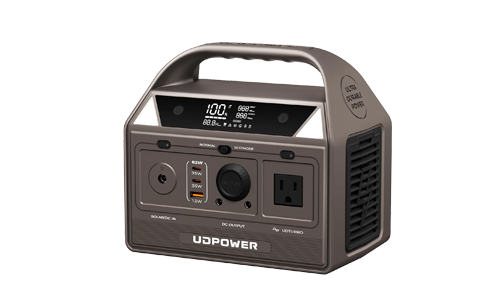
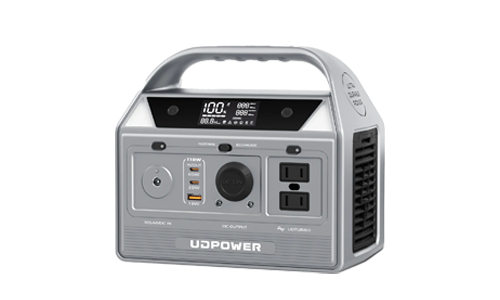
For home outages, camping, RV travel, or storm season, a portable power station gives you a cleaner and quieter option than a gas generator beside the bedroom. UDPOWER’s existing CPAP backup guidance also points out a key runtime detail: heated humidifiers and heated tubing can use far more power than the CPAP blower alone.
| CPAP setup | Typical planning watts | 8-hour energy use | Why it matters | Related guide |
|---|---|---|---|---|
| CPAP without heated humidifier | About 20–40W | 160–320Wh | Best runtime for outages and camping | CPAP power consumption guide |
| CPAP with heated humidifier or heated hose | Often 60–90W, sometimes higher | 480–720Wh | Comfort improves, but runtime drops quickly | CPAP battery backup setup guide |
| CPAP plus phone, router, or lamp | CPAP watts + added devices | Depends on total load | Useful in outages, but every extra device shortens runtime | Portable power station collection |
Runtime tip: If your priority is sleeping through an outage, test one full night at home before you need it. Use your actual mask, hose, humidifier setting, and the same outlet type you plan to use during an outage.
Recommended UDPOWER Options for CPAP Backup
The best CPAP backup is not just the biggest battery. It should be quiet enough for a bedroom, large enough for your real settings, easy to recharge, and strong enough to handle other essentials if the outage lasts longer than expected.
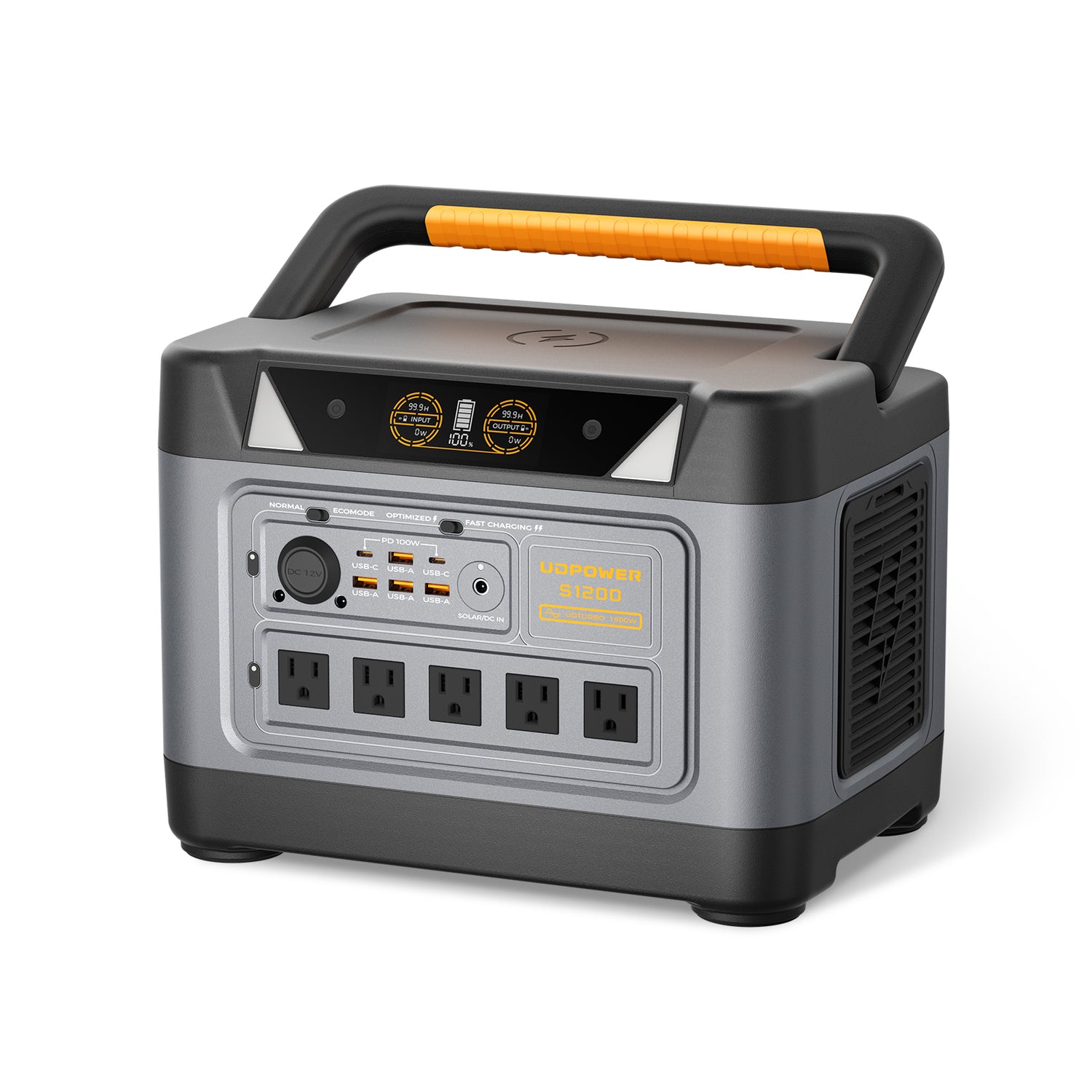
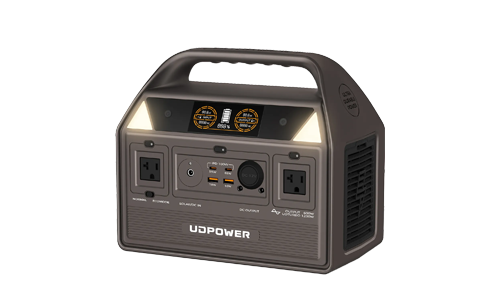
UDPOWER S1200 Portable Power Station — Best Overall CPAP Backup
Best for: CPAP users who want a practical home outage battery, RV sleep setup, or bedside backup with room for phones, lights, or a router.
- Capacity: 1,190Wh class, official product specification lists 1191Wh
- AC output: 1,200W pure sine wave, 1,800W max surge
- Battery: LiFePO4, 80%+ capacity after 3,000 cycles
- UPS mode: response time ≤10ms
- Solar input: 12V–75V, 12A, 400W max
- Weight: approximately 26.0 lb
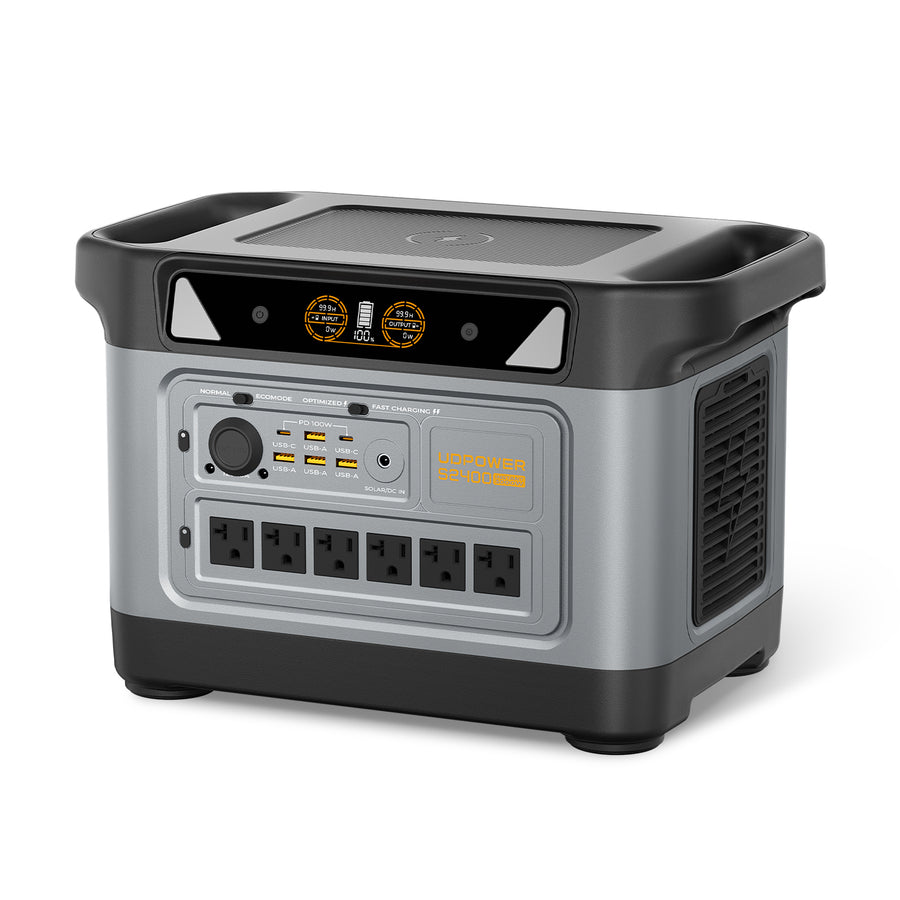
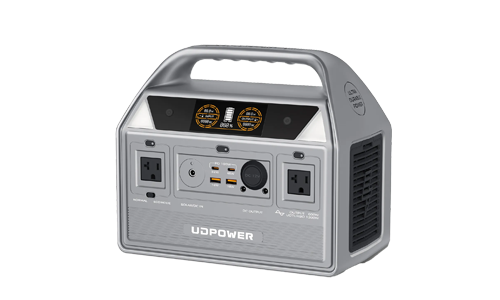
UDPOWER S2400 Portable Power Station — Best for Longer Outages
Best for: users who want CPAP backup plus more household essentials, such as a refrigerator, Wi-Fi router, lights, fan, or medical-adjacent nighttime comfort items.
- Capacity: 2,083Wh
- AC output: 2,400W pure sine wave, up to 3,000W startup surge support
- Battery: LFP battery, 80%+ capacity after 3,000 cycles
- UPS mode: response time ≤10ms
- Ports: 6 AC outlets plus USB-A, USB-C, DC5521, car outlet, and wireless charging
- Weight: approximately 40.8 lb
CPAP Runtime Planning Table
The table below uses a conservative AC-output planning estimate. Real runtime changes with your CPAP model, pressure, mask leak, humidifier setting, hose heating, battery age, room temperature, and whether you power extra devices at the same time.
| Average CPAP load | Example setup | Estimated S1200 runtime | Estimated S2400 runtime | Planning note |
|---|---|---|---|---|
| 25W | Low-power CPAP, humidifier off | About 40 hours | About 70 hours | Best-case style planning. Test your own machine before relying on it. |
| 40W | Typical CPAP without heated humidification | About 25 hours | About 44 hours | Often enough for multiple nights if no heat features are used. |
| 70W | CPAP with moderate humidifier or heated hose use | About 14 hours | About 25 hours | Comfort settings can cut runtime sharply. |
| 90W | Higher humidifier or heated tubing demand | About 11 hours | About 19 hours | Consider lowering heat settings during outages if medically appropriate. |
For a wider backup plan, browse the UDPOWER portable power station collection, compare the S-Series, or add compatible panels from the solar panels collection for daytime recharging.
FAQ: Benefits of Using a CPAP Machine
What is the biggest benefit of using a CPAP machine?
The biggest benefit is steadier breathing during sleep. By helping keep your airway open, CPAP can reduce breathing pauses, improve sleep quality, and reduce daytime sleepiness for many people with obstructive sleep apnea.
Does CPAP help immediately?
Some people notice less snoring or better sleep within days. Others need a few weeks to adjust. If you still feel exhausted after consistent use, ask your sleep clinician to check mask leak, pressure settings, residual events, and sleep time.
Can CPAP improve daytime energy?
Yes, it can. When sleep apnea interrupts breathing all night, the body may not get restorative sleep. CPAP can reduce those interruptions, which may improve morning alertness and daytime energy.
Does CPAP reduce snoring?
For many users, yes. Snoring often comes from airway vibration or narrowing. Because CPAP helps support the airway with steady pressure, many partners notice a quieter bedroom.
Does CPAP help protect the heart?
CPAP may support heart and blood pressure health by treating sleep apnea and reducing repeated oxygen drops and stress responses during sleep. Your personal risk depends on your diagnosis, usage, and other health factors.
Is CPAP a cure for sleep apnea?
No. CPAP manages sleep apnea while you use it. If you stop using it, symptoms can return. Do not stop or change treatment without talking to your healthcare provider.
How many hours per night should I use CPAP?
Use it every time you sleep, including naps. Insurance compliance rules often mention minimum usage thresholds, but your body benefits most when your breathing is supported for the whole sleep period.
Why do I still feel tired after using CPAP?
Common reasons include mask leaks, not enough total sleep time, pressure settings that need review, taking the mask off during sleep, other sleep disorders, medications, or unrelated health issues. Review your CPAP data with your sleep team.
Should I use a battery backup for CPAP?
If you rely on CPAP every night, a battery backup is a smart part of outage planning. Choose a unit sized for your actual CPAP wattage and test it before storm season or travel.
Which UDPOWER model is best for CPAP backup?
For most CPAP backup needs, the UDPOWER S1200 is the strongest practical starting point because it combines large capacity, pure sine wave AC output, LiFePO4 battery chemistry, and UPS mode. For longer outages or more household essentials, the S2400 gives more capacity and output headroom.
Build a CPAP Backup Plan Before the Next Outage
CPAP benefits depend on consistent use. If an outage, storm, RV trip, or campsite power issue could interrupt your therapy, size your backup around your real CPAP wattage and test it for a full night.
Related Articles