

mAh to Wh Conversion: Formula, Chart, Examples, and Real Runtime
Last updated: June 1, 2026 · By Zachary William · Reviewed for battery math, portable power station sizing, and real-world runtime assumptions.
Quick answer
To convert milliamp-hours to watt-hours, multiply mAh by voltage, then divide by 1,000.
Wh = (mAh × V) ÷ 1000Example: a 20,000mAh power bank at 3.7V is 74Wh. The same 20,000mAh at 12V is 240Wh. That is why voltage matters. mAh alone does not tell you the real amount of stored energy.

Why convert mAh to Wh?
Most phone batteries and power banks are advertised in mAh because the number looks familiar. But when you want to compare actual battery energy, Wh is the more useful number.
Wh tells you how much work the battery can do over time. That makes it the better unit for comparing power banks, laptop batteries, camera batteries, solar generators, and portable power stations.
| Unit | What it means | Best used for | What is missing? |
|---|---|---|---|
| mAh | Milliamp-hours. It measures electrical charge. | Phone batteries, small USB power banks, AA-style battery packs. | Voltage. Without voltage, mAh cannot tell you real energy. |
| Wh | Watt-hours. It measures stored energy. | Power bank flight limits, laptop batteries, portable power stations, runtime estimates. | Nothing for basic energy comparison, but runtime still depends on device wattage and conversion loss. |
| Ah | Amp-hours. It is the larger version of mAh. | 12V batteries, LiFePO4 battery packs, RV batteries. | Voltage is still needed to convert to Wh. |
mAh to Wh formula
Use this formula:
Wh = (mAh × V) ÷ 1000Use this formula when converting back from watt-hours to milliamp-hours:
mAh = (Wh × 1000) ÷ VThe same calculation is also shown by battery calculators such as Goal Zero and RapidTables, but the key point is simple: always include voltage.
Source examples: Goal Zero wattage calculator and RapidTables mAh to Wh calculator.
How to convert mAh to Wh step by step
- Find the battery capacity in mAh.
- Find the battery’s nominal voltage. For many single-cell lithium-ion power banks, this is often 3.7V.
- Multiply mAh by voltage.
- Divide the result by 1,000.
Example: 5,000mAh at 3.7V
5,000 × 3.7 ÷ 1000 = 18.5WhA 5,000mAh phone power bank at 3.7V stores about 18.5Wh before USB conversion losses.
Example: 10,000mAh at 3.7V
10,000 × 3.7 ÷ 1000 = 37WhA 10,000mAh power bank at 3.7V stores about 37Wh. If your phone battery is around 12Wh, that does not mean three full charges every time, because USB conversion and phone charging heat reduce delivered energy.
Example: 50,000mAh at 3.7V
50,000 × 3.7 ÷ 1000 = 185WhThis is why large power banks can exceed many airline limits even when the mAh number looks like a normal consumer battery number.
mAh to Wh chart
The table below shows common capacities at 3.7V, 5V, 12V, and 25.6V. Use 3.7V for many power-bank cell ratings, 5V only when the battery label clearly rates capacity at USB output voltage, and pack voltage for larger battery packs.
| Battery capacity | At 3.7V | At 5V | At 12V | At 25.6V | Best reading |
|---|---|---|---|---|---|
| 1,000mAh | 3.7Wh | 5Wh | 12Wh | 25.6Wh | Small sensor or accessory battery |
| 5,000mAh | 18.5Wh | 25Wh | 60Wh | 128Wh | Compact phone power bank at 3.7V |
| 10,000mAh | 37Wh | 50Wh | 120Wh | 256Wh | Common travel power bank at 3.7V |
| 20,000mAh | 74Wh | 100Wh | 240Wh | 512Wh | Large phone/laptop power bank if rated at 3.7V |
| 27,000mAh | 99.9Wh | 135Wh | 324Wh | 691.2Wh | Often near the 100Wh airline threshold when rated at 3.7V |
| 30,000mAh | 111Wh | 150Wh | 360Wh | 768Wh | Check airline approval before flying if it is a spare lithium battery |
| 50,000mAh | 185Wh | 250Wh | 600Wh | 1,280Wh | Usually better compared as Wh, not mAh |
Tip: if two batteries both say 20,000mAh but one is 3.7V and one is 12V, they are not equal. The 12V pack stores more than three times the energy.
Which voltage should you use?
Use the battery’s nominal voltage, not the peak charging voltage and not automatically the USB output voltage. Nominal voltage is the average working voltage used for rating the pack.
| Battery type | Voltage to look for | Why it matters | Example |
|---|---|---|---|
| Phone power bank | Usually 3.7V internal cell rating | Most power-bank mAh labels are based on internal cells, not 5V USB output. | 20,000mAh × 3.7V ÷ 1000 = 74Wh |
| USB output rating | Use 5V only if the label clearly rates capacity at 5V output | Using 5V by default can overstate stored energy. | 20,000mAh at 5V would be 100Wh, but that may not match the internal battery rating. |
| 12V battery pack | 12V, 12.8V, or the voltage shown on the label | LiFePO4 packs often use different nominal voltage than small lithium-ion power banks. | 15Ah × 12.8V = 192Wh |
| Portable power station | Use the published Wh rating for shopping and runtime | Wh already accounts for pack voltage, so it is easier to compare models. | UDPOWER portable power stations are listed by Wh and AC output. |
Why 20,000mAh is usually about 74Wh
A common 20,000mAh power bank is usually rated at the internal lithium-ion cell voltage of 3.7V. That gives:
20,000 × 3.7 ÷ 1000 = 74WhThat does not mean every device receives the full 74Wh. When a power bank boosts voltage from the internal battery to USB output, some energy becomes heat. When a portable power station powers AC devices, the inverter also uses a small amount of energy.
For UDPOWER portable power station runtime estimates in this guide, we use 90% usable energy as a practical planning assumption unless a specific device test says otherwise.
mAh to Wh for airline rules
Airline battery limits are usually based on watt-hours, not mAh. The FAA states that lithium-ion rechargeable batteries are limited to 100Wh per battery, and larger spare lithium-ion batteries from 101Wh to 160Wh generally require airline approval and are limited in quantity.
Always check your airline before flying, especially for larger power banks, camera batteries, drone batteries, and spare laptop batteries.
| Power bank label | Assumed voltage | Wh result | Travel note | Source |
|---|---|---|---|---|
| 10,000mAh | 3.7V | 37Wh | Usually below the common 100Wh threshold. | FAA lithium battery guidance |
| 20,000mAh | 3.7V | 74Wh | Usually below 100Wh if the label is based on 3.7V cells. | TSA 100Wh lithium battery page |
| 27,000mAh | 3.7V | 99.9Wh | Near the 100Wh line. Make sure the Wh rating is printed clearly. | FAA passenger battery chart |
| 30,000mAh | 3.7V | 111Wh | May require airline approval as a spare lithium-ion battery. | TSA more than 100Wh page |
Power stations such as 192Wh, 596Wh, 1191Wh, or 2083Wh models are not typical carry-on power banks. For air travel, check airline and hazardous-material rules before packing large lithium batteries.
How to estimate runtime after converting to Wh
Once you know watt-hours, runtime becomes much easier to estimate.
Runtime hours ≈ usable Wh ÷ device wattsFor practical planning, use this version:
Runtime hours ≈ battery Wh × 0.90 ÷ device wattsThe 0.90 factor is a planning estimate for conversion loss and normal real-world conditions. Actual runtime varies by temperature, device cycling, AC vs DC output, battery age, and the device’s startup surge.
| Battery or station | Rated energy | Usable estimate at 90% | Device example | Estimated runtime | Best interpretation |
|---|---|---|---|---|---|
| 20,000mAh power bank at 3.7V | 74Wh | 66.6Wh | 10W phone/tablet charging load | About 6.7 hours of 10W delivery | Good for small USB devices, not AC appliances. |
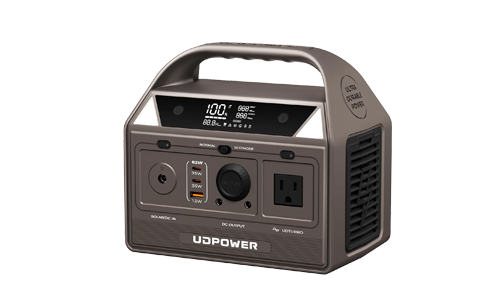
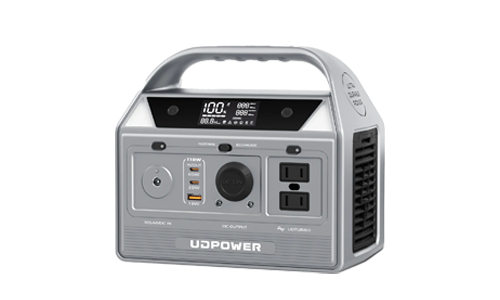
| UDPOWER C200 | 192Wh | 172.8Wh | 10W router or LED light | About 17.3 hours | Best for short trips, phones, cameras, lights, and router backup. |
| UDPOWER C400 | 256Wh | 230.4Wh | 40W CPAP without humidifier | About 5.8 hours | Compact option for light overnight loads and camping essentials. |
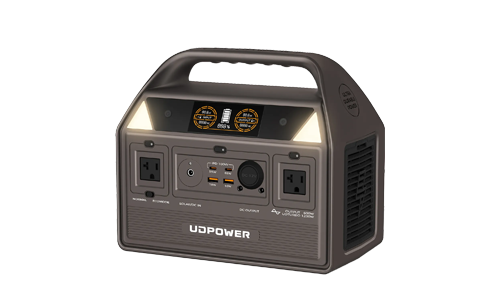
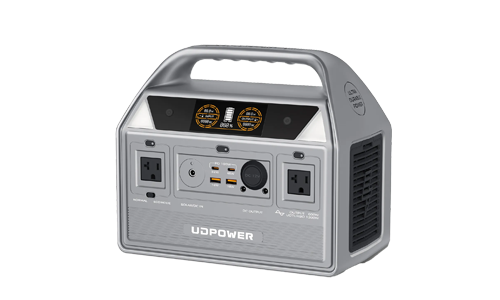
| UDPOWER C600 | 596Wh | 536.4Wh | 60W laptop or small electronics setup | About 8.9 hours | Better for longer road trips, van life, and moderate backup. |
| UDPOWER S1200 | 1191Wh | 1071.9Wh | 80W CPAP with humidifier or small fridge cycling average | About 13.4 hours | Stronger choice for home essentials, CPAP, router, lights, and refrigerator support. |
| UDPOWER S2400 | 2083Wh | 1874.7Wh | 150W refrigerator average load | About 12.5 hours | Best for larger backup loads, multiple devices, and higher-wattage appliances within output limits. |
For a faster estimate, use the UDPOWER portable power station runtime calculator.
Recommended UDPOWER models by usable energy need
If you are converting mAh to Wh because a power bank is no longer enough, choose by Wh first, then check AC output, surge capability, ports, weight, and charging input. Product information below is based on current UDPOWER product pages.

UDPOWER C400 Portable Power Station
Best when a phone power bank feels too small but you still want something easy to carry. Good for camping lights, routers, laptops, small fans, and light CPAP planning when load stays within the output limit.
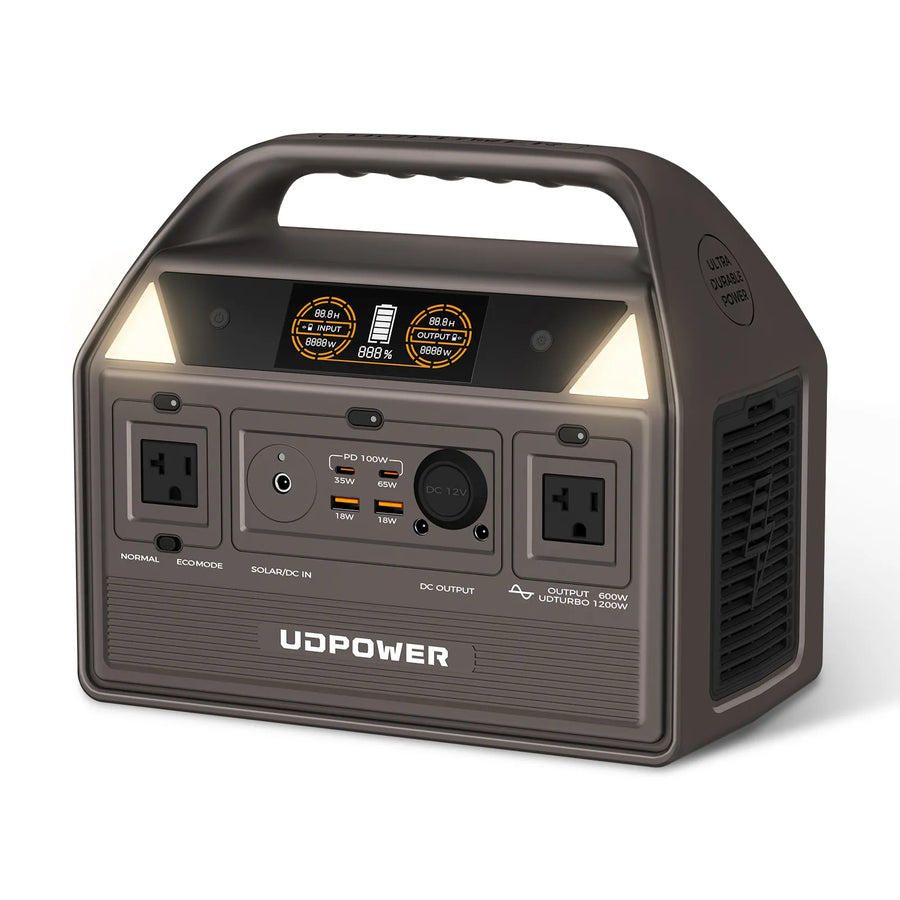
UDPOWER C600 Portable Power Station
Best for longer backup than a compact power bank can provide. It fits road trips, work-from-anywhere setups, fans, laptops, cameras, and moderate off-grid charging.
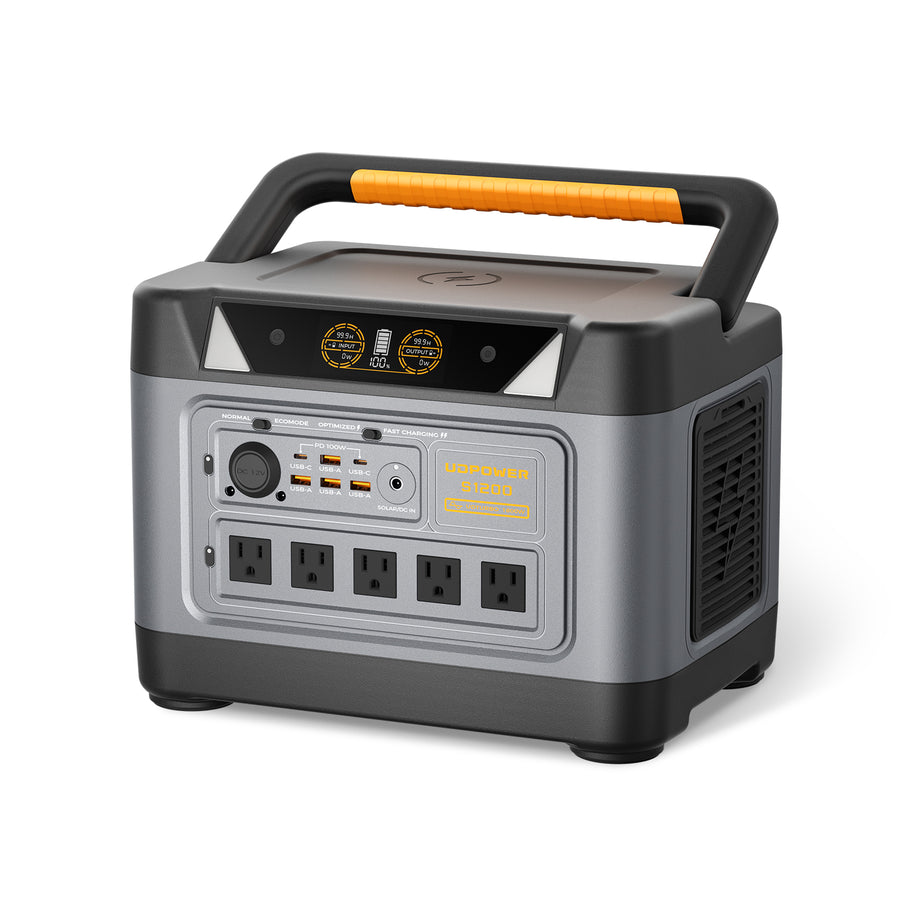
UDPOWER S1200 Portable Power Station
Best for home essentials and overnight backup: CPAP, router, lights, laptops, TV, and refrigerator support when the running load stays within the rated output.
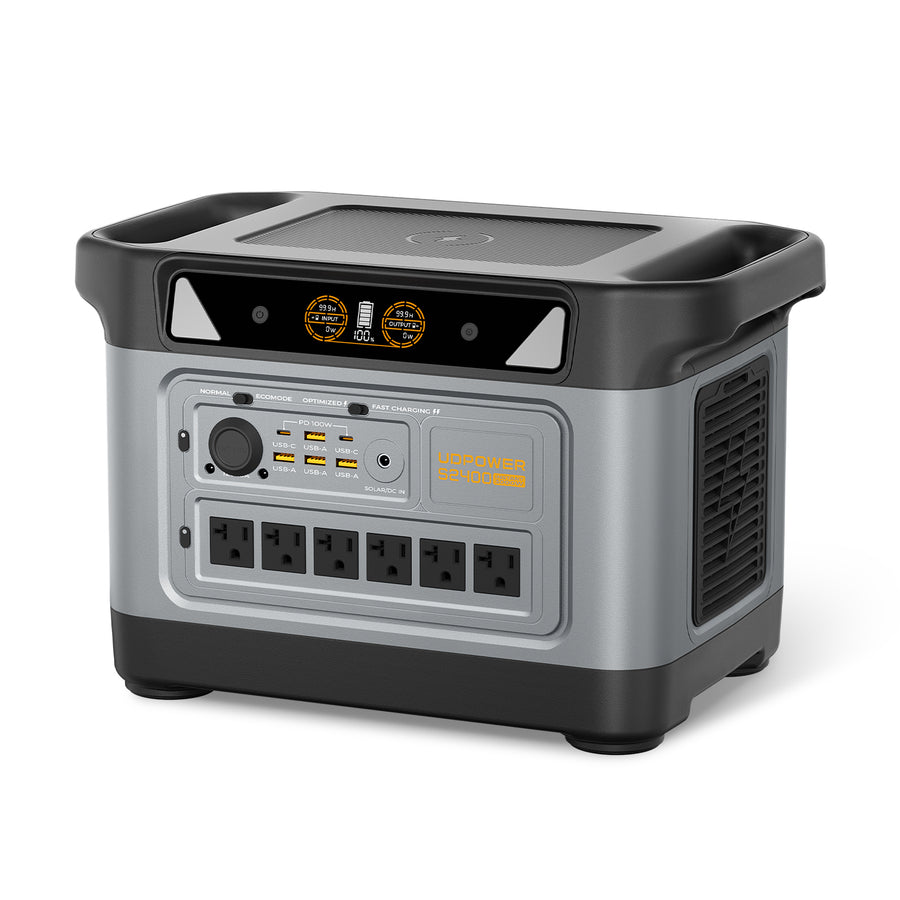
UDPOWER S2400 Portable Power Station
Best when you need more capacity and higher AC output for selected home backup loads, larger appliances, work tools, or multi-device emergency power. It is still a portable station for selected devices, not a whole-home 240V system.
Power bank vs. portable power station: why Wh changes the decision
A 20,000mAh power bank sounds large, but at 3.7V it is about 74Wh. That is useful for phones and small USB devices, but it is not close to the stored energy of a portable power station.
| Option | Energy | How many times more energy than 20,000mAh at 3.7V? | Typical use | Product/source |
|---|---|---|---|---|
| 20,000mAh power bank | 74Wh | 1× | Phone, earbuds, small USB devices | Formula reference |
| UDPOWER C200 | 192Wh | About 2.6× | Short trips, light camping, router backup | C200 specs |
| UDPOWER C400 | 256Wh | About 3.5× | Camping essentials, laptops, small fans | C400 specs |
| UDPOWER C600 | 596Wh | About 8.1× | Road trips, van life, longer electronics backup | C600 specs |
| UDPOWER S1200 | 1191Wh | About 16.1× | Home essentials, fridge support, CPAP, UPS-style backup | S1200 specs |
| UDPOWER S2400 | 2083Wh | About 28.1× | Higher-wattage selected appliances and larger backup plans | S2400 specs |
Common mAh to Wh mistakes
1. Converting mAh to Wh without voltage
You cannot accurately convert mAh to Wh with mAh alone. A 10,000mAh battery at 3.7V is 37Wh. A 10,000mAh battery at 12V is 120Wh.
2. Using 5V for every USB power bank
Many power banks advertise mAh based on internal cell voltage, often around 3.7V. USB output may be 5V, 9V, 12V, or 20V, but that does not automatically mean the battery capacity is rated at those output voltages.
3. Expecting rated Wh to equal delivered Wh
Rated energy is stored energy. Delivered energy is lower after USB conversion, inverter use, heat, and battery reserve. That is why runtime planning should include a practical efficiency factor.
4. Comparing power banks and power stations by mAh
For large batteries, Wh is clearer. A portable power station with a published 1191Wh capacity is easier to compare than trying to express the same pack as mAh at a much higher internal voltage.
5. Ignoring output wattage
Wh tells you capacity. Watts tell you what the battery can power at one time. A battery may have enough energy for a device, but if the device’s running watts or startup surge is above the output limit, it will not work correctly.
How to read a battery label before buying
- Look for Wh first. If Wh is printed, use that number for energy comparison.
- If only mAh is printed, find the nominal voltage.
- For travel, check whether the Wh rating is clearly printed on the power bank.
- For appliance backup, check AC output watts and surge watts, not just capacity.
- For solar charging, check solar input voltage range and maximum input watts.
- For overnight use, leave a safety margin instead of planning to drain the battery to zero.
FAQ
What is the formula for mAh to Wh?
The formula is Wh = (mAh × V) ÷ 1000. You need the battery’s voltage to calculate watt-hours accurately.
How many Wh is 10,000mAh?
At 3.7V, 10,000mAh is 37Wh. At 5V, it would be 50Wh. Use the voltage shown on the battery label.
How many Wh is 20,000mAh?
At 3.7V, 20,000mAh is 74Wh. This is the common calculation for many lithium-ion power banks.
How many Wh is 30,000mAh?
At 3.7V, 30,000mAh is 111Wh. That may be above the common 100Wh airline threshold for spare lithium-ion batteries, so check airline approval rules before flying.
Can I convert mAh to Wh without voltage?
No. mAh measures charge, while Wh measures energy. Voltage is the missing value that connects the two.
Should I use 3.7V or 5V for a power bank?
Use the voltage printed on the power bank label. Many power banks rate mAh at the internal cell voltage, often 3.7V. Do not use 5V unless the label clearly states the capacity is rated at 5V output.
Why do airlines use Wh instead of mAh?
Wh gives a clearer measure of stored energy because it includes voltage. That makes it more useful for safety limits across different battery designs.
Is Wh the same as watts?
No. Wh is energy capacity. Watts are power demand or output at a moment in time. A 100Wh battery could theoretically run a 10W device for about 10 hours before losses, but it does not mean the battery can output any wattage you want.
How do I convert Wh back to mAh?
Use mAh = (Wh × 1000) ÷ V. For example, 74Wh at 3.7V is 20,000mAh.
What is more important for backup power: mAh or Wh?
Wh is more important for backup power because it shows stored energy. You should also check output watts, surge rating, port types, and charging options.
How do I choose between a power bank and a portable power station?
Choose a power bank for phones and small USB devices. Choose a portable power station when you need AC outlets, more Wh, higher output, solar charging, or backup for devices such as routers, CPAP machines, fans, laptops, refrigerators, and selected appliances.
Need more than a phone power bank?
Convert mAh to Wh first, then size your backup around the devices you actually need to run. For home essentials, camping, RV use, CPAP backup, or solar recharging, compare UDPOWER models by capacity, output, and runtime.
Related Articles


