How Long Can a Portable Power Station Run a Heater?
Wondering whether a battery powered heater or portable power station can keep you warm during an outage, camping trip, or RV stay? This guide explains how long a portable power station can run different types of heaters, from electric blankets and low-watt personal heaters to common 1500W space heaters. It includes easy runtime formulas, mobile-friendly comparison tables, safety tips, and UDPOWER model recommendations to help readers choose the right backup power setup for heating, home backup, and winter emergencies.
Direct answer: a portable power station can run a heater, but not for nearly as long as many people expect. A 1,500W space heater may run about 1.2 hours on a 2,083Wh UDPOWER S2400 under a simple 90% usable-energy estimate. A lower 750W setting may run about 2.5 hours on S2400 or about 1.4 hours on S1200. For overnight warmth, a heated blanket, heated pad, lower-watt personal heater, better insulation, or cycling the heater with a thermostat usually works better than leaving a room heater on high.

Table of Contents
- Quick Answer: Heater Runtime by Wattage
- Why Heaters Drain Batteries So Fast
- Battery Powered Heater vs Portable Power Station Setup
- The Runtime Formula
- UDPOWER Heater Runtime Table
- Recommended UDPOWER Products for Heater Use
- Best Setups by Scenario
- How to Make Heat Last Longer
- Safety Rules for Running a Heater from Battery Power
- FAQ
- Related UDPOWER Guides
Quick Answer: Heater Runtime by Wattage
The real answer depends on the heater wattage, the power station capacity, inverter efficiency, room temperature, and whether the heater cycles on and off. A portable power station is excellent for quiet indoor backup power, but electric heat is one of the hardest loads because almost every watt becomes heat and the battery has to supply that energy continuously.
| Heater Load | What It Usually Means | Battery Backup Takeaway | Best UDPOWER Fit |
|---|---|---|---|
| 50–150W | Electric blanket, heating pad, small heated throw | Best choice for overnight personal warmth | C600, S1200, or S2400 |
| 200–400W | Low-watt personal heater or small radiant heater | Useful for targeted warmth, not whole-room heating | S1200 or S2400 |
| 500–750W | Low/medium setting on many plug-in heaters | Good for short warm-up sessions | S1200 or S2400 |
| 1,000–1,200W | Medium-high room heating | Runs, but battery drains quickly | S1200 near its limit; S2400 preferred |
| 1,500W | Common high setting on U.S. space heaters | Possible on S2400, not recommended on S1200 | S2400 only among the models compared here |
Many shoppers look for a battery powered portable heater, battery operated heater, or battery operated space heater because they want heat during outages without a gas generator. The important distinction is this: small battery heating products can warm a person, but a full room heater usually needs a much larger battery system such as a portable power station.
Why Heaters Drain Batteries So Fast
Electric heaters are different from laptops, routers, fridges, and CPAP machines. A fridge may use a high startup surge, then cycle off. A router may use 10–20W. A CPAP machine may use much less power if the humidifier is off. A heater keeps pulling hundreds or thousands of watts while it is actively producing heat.
The simple comparison
A 1,500W heater running for one hour uses 1.5 kWh of energy. Eight hours would use 12 kWh. That is far beyond what most portable power stations are designed to deliver overnight. A portable station is better used for targeted heating, short warm-up sessions, electric blankets, and essential backup loads.
| Device | Typical Power Draw | 8-Hour Energy Use | Battery-Friendliness |
|---|---|---|---|
| Wi-Fi router | 10–20W | 0.08–0.16 kWh | Excellent |
| LED lamp | 5–15W | 0.04–0.12 kWh | Excellent |
| Electric blanket | 50–150W | 0.4–1.2 kWh | Good for personal warmth |
| Small space heater on low | 500–750W | 4–6 kWh | Short sessions only |
| Typical space heater on high | 1,500W | 12 kWh | Very demanding |
Battery Powered Heater vs Portable Power Station Setup
The phrases battery powered heater, battery driven heater, battery operated heater, battery operated space heaters, and battery operated space heater are often used loosely online. They can mean very different things.
| Search Term | What Buyers Usually Expect | What Actually Works Best |
|---|---|---|
| battery powered portable heater | A portable heater with its own internal battery | Usually realistic only for small personal warming products, not whole-room heating |
| battery driven heater | A heater that runs without a wall outlet | A portable power station plus a low-watt electric heater or heated blanket |
| battery operated heater | A heater that can run during a blackout | Check watts first; high-output room heaters need a large power station |
| battery operated space heaters | Room heaters that can run for many hours | Most are not practical for overnight battery use unless wattage is very low or the heater cycles heavily |
| battery operated space heater | One heater to keep a room warm off-grid | Use short heater sessions, insulation, and personal-warmth devices to stretch runtime |
Practical takeaway: if you want to stay comfortable during an outage, do not build the whole plan around running a 1,500W heater all night. Build the plan around warm clothing, blankets, sealing drafts, an electric blanket or heated pad, and a power station sized for essential devices first.
The Runtime Formula
Use this simple estimate before buying or plugging in a heater:
Runtime hours = portable power station capacity in Wh × usable efficiency ÷ heater watts
For UDPOWER planning, a 90% usable-efficiency estimate is a practical starting point. Heavy heater loads, very cold temperatures, fan behavior, and inverter losses can make actual runtime lower, so treat every number as an estimate and test your exact heater before relying on it.
| Example | Calculation | Estimated Runtime | What It Means |
|---|---|---|---|
| S1200 with 750W heater | 1,190Wh × 0.90 ÷ 750W | About 1.4 hours | Good for a warm-up session, not overnight heating |
| S2400 with 750W heater | 2,083Wh × 0.90 ÷ 750W | About 2.5 hours | More comfortable short-session runtime |
| S2400 with 1,500W heater | 2,083Wh × 0.90 ÷ 1,500W | About 1.25 hours | Possible, but drains fast |
UDPOWER Heater Runtime Table
The table below uses official UDPOWER capacity and output ratings, then applies a 90% usable-energy estimate. Runtime can improve if your heater cycles off under thermostat control. Runtime can decrease in very cold conditions or under continuous high load.
| Heater Load | C600 596Wh / 600W | S1200 1,190Wh / 1,200W | S2400 2,083Wh / 2,400W | Source |
|---|---|---|---|---|
| 150W heated blanket / pad | About 3.6 hr | About 7.1 hr | About 12.5 hr | UDPOWER model lineup |
| 300W low personal heat | About 1.8 hr | About 3.6 hr | About 6.2 hr | C600 / S1200 / S2400 |
| 400W small heater | About 1.3 hr | About 2.7 hr | About 4.7 hr | S1200 specs |
| 500W low setting | About 1.1 hr | About 2.1 hr | About 3.7 hr | S2400 specs |
| 750W medium setting | Not recommended | About 1.4 hr | About 2.5 hr | S1200 output rating |
| 1,000W heater | Not supported | About 1.1 hr | About 1.9 hr | S2400 output rating |
| 1,200W heater | Not supported | About 0.9 hr | About 1.6 hr | S1200 max continuous output |
| 1,500W heater on high | Not supported | Not recommended | About 1.25 hr | DOE electric resistance heating |
Note: “Not supported” means the heater exceeds the model’s continuous AC output rating. Do not rely on surge wattage for continuous heating.
Recommended UDPOWER Products for Heater Use
These are not “magic heater batteries.” They are practical portable power stations for winter backup planning, short heater sessions, electric blankets, lights, router backup, CPAP, refrigerators, and outage essentials. Choose based on heater wattage first, then capacity.
Best for Standard 1,500W Space Heater Sessions: UDPOWER S2400
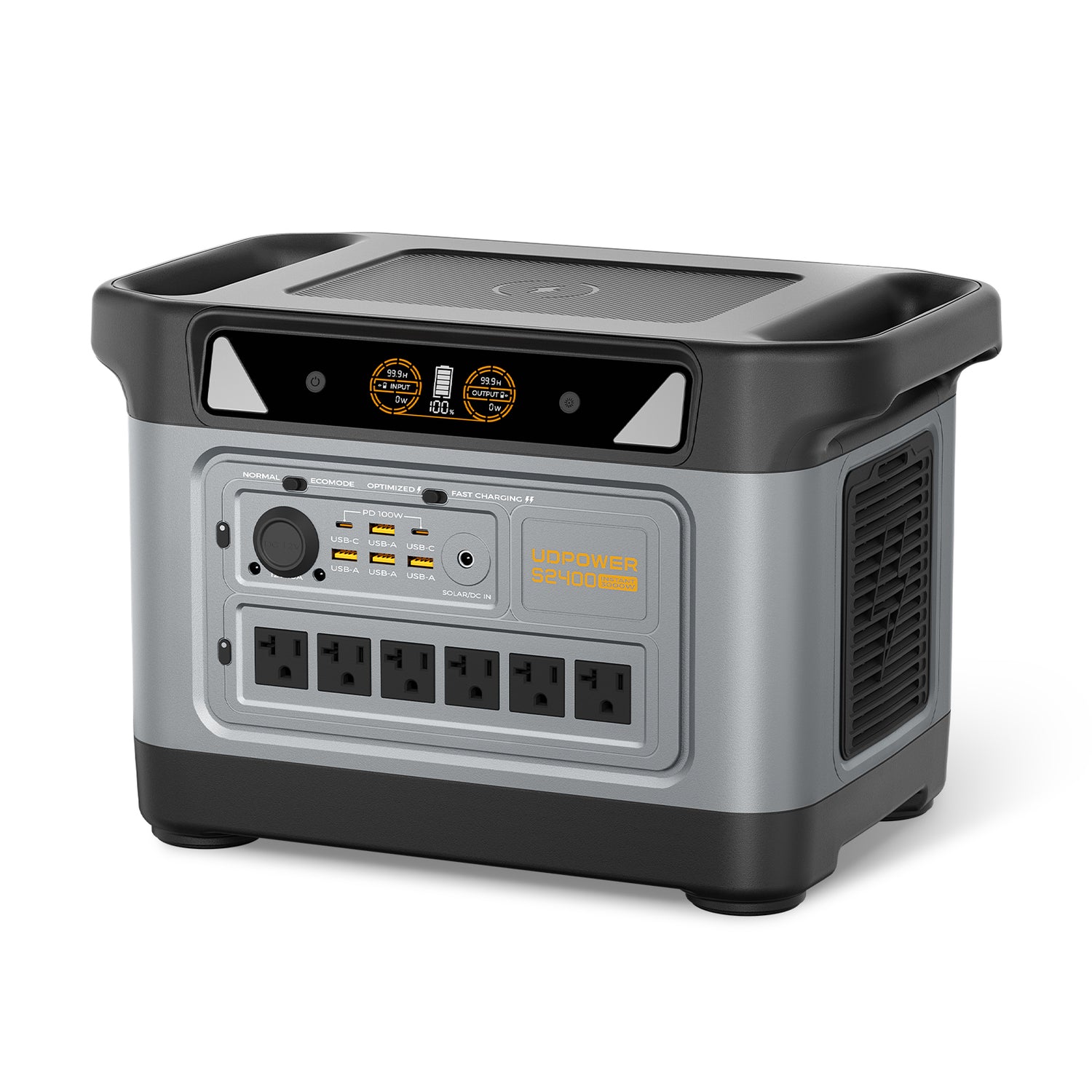
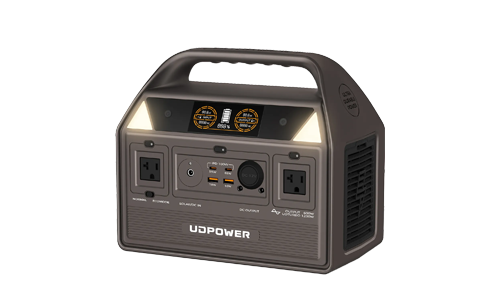
2,083Wh capacity2,400W output3,000W surge6 AC outletsLiFePO4
The S2400 is the strongest fit in this article if your heater is a typical 1,500W plug-in space heater. It has enough continuous output headroom to run the heater, but the runtime is still short because 1,500W is a very heavy battery load. Use it for emergency warm-up sessions, rotating heat between rooms, or short comfort windows during an outage.
- Best match: 750W to 1,500W heater use in short sessions.
- Also useful for fridge, microwave, coffee maker, CPAP, router, lights, and multiple small devices.
- Better choice than S1200 if your heater does not have a low-watt setting under 1,200W.
Best for Low- to Medium-Watt Heater Use: UDPOWER S1200
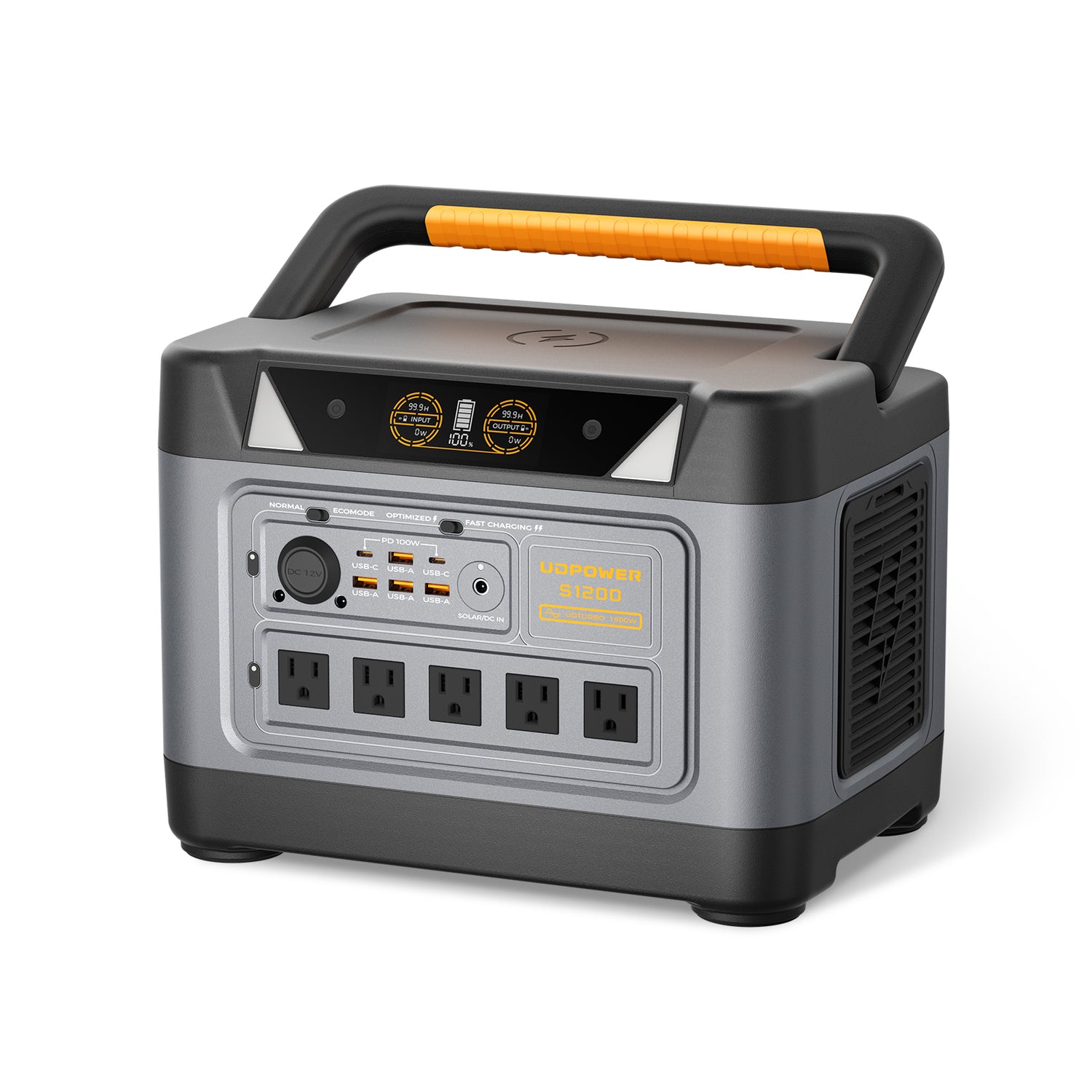
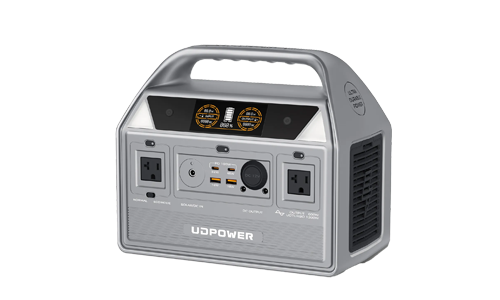
1,190Wh capacity1,200W output1,800W surge5 AC outletsLiFePO4
The S1200 is a practical choice if your heater has a 400W, 500W, 750W, or 1,000W mode and you understand the runtime limits. It is not the right match for a 1,500W heater running on high, but it can work well for short warm-up periods, personal heaters, and winter outage essentials.
- Best match: low-watt personal heaters, electric blankets, short room warm-up sessions.
- Good balance of capacity, portability, UPS-style backup, and solar-ready recharging.
- Good winter backup model when heat is only one part of the plan.
Best for Heated Blankets and Small Essentials: UDPOWER C600
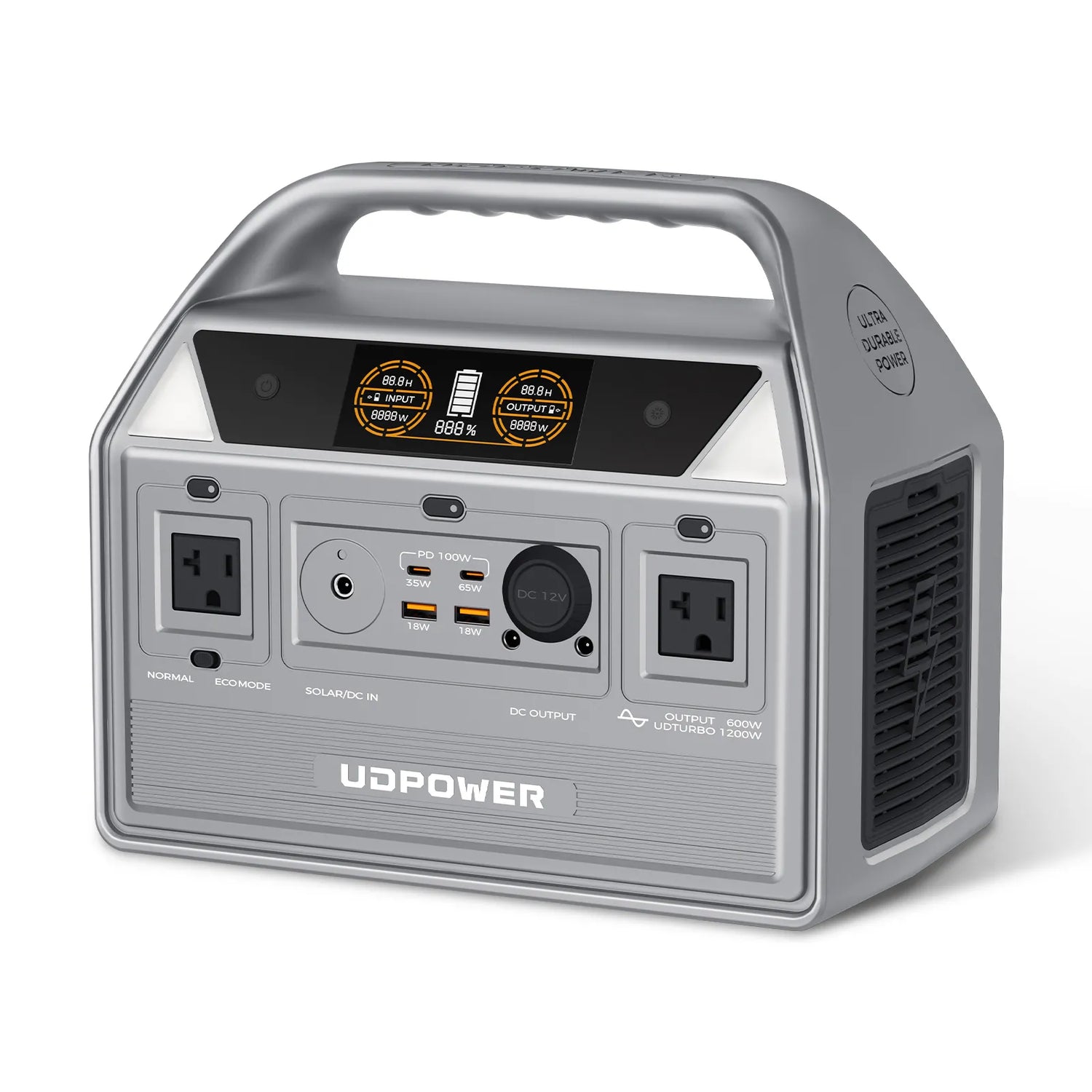
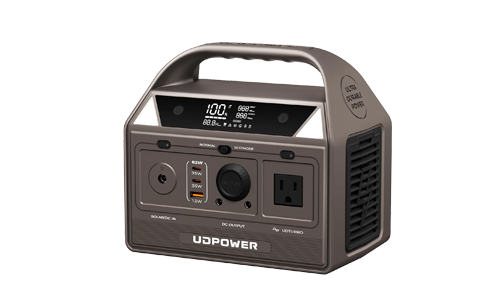
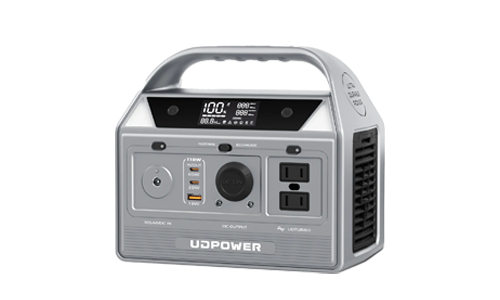
596Wh capacity600W output1,200W peakLiFePO412.3 lbs
The C600 is not a whole-room space heater solution. It is much better for heated blankets, heating pads, phones, lights, small fans, laptops, cameras, and mini-fridges. If your “heater” is actually a low-watt personal warmth device, the C600 can be a compact and affordable option.
- Best match: 50–150W heated blankets or pads, not 750W or 1,500W room heaters.
- Good for camping, road trips, short outages, and personal comfort.
- Light enough to move easily around the home or campsite.
Best Setup by Scenario
The best heater plan is rarely “plug in the biggest heater and hope.” Start with the situation, then choose the load.
| Scenario | Best Heating Strategy | Suggested UDPOWER Model | Why |
|---|---|---|---|
| Short blackout in a bedroom | Electric blanket plus short 400–750W heater bursts | S1200 or S2400 | Better comfort per watt than heating the entire room continuously |
| RV or van in cold weather | Insulation, warm bedding, low-watt heat, recharge during the day | S1200 or S2400 with solar kit | Solar can help recover energy, but heater runtime still depends on watts |
| Tent camping | Heated blanket, sleeping bag, warm layers, avoid high-watt room heaters | C600, S1200, or S2400 | A room heater is inefficient outdoors or in a leaky tent |
| Apartment outage | Personal warmth first, heater only while awake and nearby | S1200 or S2400 | Battery stations are indoor-friendly when used according to the manual |
| Whole-room heating for many hours | Usually not a portable power station job | S2400 for short sessions only | High-watt heating needs too much energy for all-night battery use |
How to Make Heat Last Longer
The easiest way to extend runtime is not buying a bigger heater. It is reducing the wattage you ask the battery to supply.
| Action | Why It Helps | Practical Example |
|---|---|---|
| Use a heated blanket instead of a room heater | Heats your body instead of the entire room | 100W blanket can run many times longer than a 1,500W heater |
| Use the heater’s low setting | Cutting watts nearly doubles or triples runtime | 750W lasts about twice as long as 1,500W |
| Warm one small room only | Less air volume and fewer drafts | Close doors, seal draft gaps, use curtains |
| Cycle the heater manually | The heater is not pulling full power all the time | Run 15 minutes, pause 30 minutes, repeat as needed |
| Preheat while you have grid power | Saves battery for the outage window | Warm the room before a forecasted storm outage |
| Recharge with solar when practical | Extends multi-day backup planning | Pair compatible panels with UDPOWER solar generator kits |
| Turn off unused outputs | Reduces standby drain | Use only the AC output needed for the heater or blanket |
Runtime with thermostat cycling
If a heater only runs half the time, runtime can nearly double. If it runs one-third of the time, runtime can be much longer. This is why room insulation, thermostat settings, and outside temperature matter so much.
| Example Setup | Heater On 100% of the Time | Heater On 50% of the Time | Heater On 30% of the Time |
|---|---|---|---|
| S1200 with 750W heater | About 1.4 hr | About 2.9 hr | About 4.8 hr |
| S2400 with 750W heater | About 2.5 hr | About 5.0 hr | About 8.3 hr |
| S2400 with 1,500W heater | About 1.25 hr | About 2.5 hr | About 4.2 hr |
Safety Rules for Running a Heater from Battery Power
A portable power station can be safer indoors than a fuel generator because it does not burn gasoline or produce exhaust, but the heater itself still needs respect. Electric heaters are high-wattage appliances and can create fire risk if misused.
Do not treat a heater like a phone charger
- Do not run a heater unattended or while sleeping unless the heater manual clearly allows that use and the setup is safe.
- Keep the heater at least 3 feet away from bedding, curtains, paper, clothing, sofas, and other combustibles.
- Do not use damaged heaters, loose plugs, overheated cords, or questionable adapters.
- Do not exceed the power station’s continuous AC output rating.
- Do not rely on surge power for continuous heating.
- Keep the power station dry, ventilated, and away from heater airflow.
- Do not cover the power station vents.
For additional heater safety guidance, see the CPSC portable electric heater safety bulletin.
When a Portable Power Station Is the Right Tool
A portable power station is a strong choice when you need clean, quiet indoor power for essential loads. It is especially useful for:
- Keeping phones, lights, routers, laptops, cameras, and medical devices powered.
- Running a fridge or freezer in planned intervals during an outage.
- Powering a CPAP machine with a properly sized backup setup.
- Running an electric blanket or heating pad for personal warmth.
- Using a space heater briefly while awake and nearby.
- Recharging from wall, car, or compatible solar panels when available.
If your goal is to heat a whole room continuously for an entire night, a portable power station alone is usually not the most efficient solution. Use it as part of a smarter winter plan: reduce heat loss, warm the person first, keep critical devices running, and use the heater in short controlled sessions.
FAQ: Portable Power Station Heater Runtime
Can a portable power station run a space heater?
Yes, if the heater wattage is within the power station’s continuous AC output rating. A 750W heater can run on a properly rated model such as S1200 or S2400. A 1,500W heater needs a higher-output unit such as S2400 and will still drain the battery quickly.
How long will a 2,000Wh power station run a 1,500W heater?
Using a 90% usable-energy estimate, a 2,083Wh power station such as UDPOWER S2400 can run a 1,500W heater for about 1.25 hours. Real runtime depends on the heater, temperature, fan behavior, and whether the heater cycles off.
Can the UDPOWER S1200 run a 1,500W heater?
The S1200 is rated for 1,200W continuous AC output, so a 1,500W heater on high is not recommended. Use a lower heater setting under the rated output, such as 400W, 500W, 750W, or 1,000W, and test the actual wattage on the display.
Is the UDPOWER S2400 better for heaters?
Yes. The S2400 has 2,400W continuous AC output and 2,083Wh capacity, so it is the better fit for higher-watt heaters. It can run a typical 1,500W heater, but runtime is still limited because electric heat uses a lot of energy.
Are battery operated space heaters good for camping?
For tent camping, high-watt room-style battery operated space heaters are usually not efficient. A heated blanket, heated sleeping pad, warm sleeping bag, insulated tent setup, and a portable power station are usually more practical.
What is better for battery backup: a space heater or electric blanket?
An electric blanket is usually much better for battery backup because it often uses 50–150W instead of 750–1,500W. It warms the person directly, so the same battery can last much longer.
Can I sleep with a heater plugged into a portable power station?
Be very cautious. Follow the heater manual and safety instructions. Do not use damaged heaters, do not place heaters near bedding or curtains, and do not leave unsafe setups unattended. For overnight warmth, an electric blanket with proper safety features is usually a more battery-friendly option.
Can solar panels keep a heater running all day?
Usually not by themselves. Solar panels can help recharge the power station during daylight, but a heater may use hundreds or thousands of watts continuously. Solar is more useful for restoring battery capacity between heater sessions and powering lower-watt essentials.
Sources Checked
| Source | Used For |
|---|---|
| UDPOWER S1200 product page | Capacity, output, surge rating, ports, solar input, UPS-style feature, product image |
| UDPOWER S2400 product page | Capacity, output, surge rating, 6 AC outlets, solar input, product image |
| UDPOWER C600 product page | Capacity, output rating, LiFePO4 battery, product image |
| U.S. Department of Energy: Electric Resistance Heating | Electric resistance heating principle and energy-use context |
| U.S. Consumer Product Safety Commission: Portable Electric Heater Safety | Heater safety guidance, clearance, unattended-use cautions, and high-wattage heater risk |
Choose the Right Backup Power Setup
If you only need personal warmth, start with a heated blanket or low-watt heating pad and choose a power station based on runtime. If you need short space-heater sessions, choose S1200 for lower-watt heaters or S2400 for higher-watt heater support. If you also want solar recharge for longer outages, compare UDPOWER solar generator kits.
View Portable Power Stations View Solar Generator Kits Get Home Backup GuideRelated Articles