How to Convert Lumens to Watts (With Quick Tables: e.g., 800 Lumens to Watts)
ZacharyWilliamLast updated: June 5, 2026
Trying to replace an old bulb, compare LED efficiency, or estimate how long lights will run on a portable power station? This guide gives you the quick answer first, then walks through the real-world math with practical tables for home, RV, camping, outage prep, and solar generator use.
Quick answer: how do you convert lumens to watts?
Use this formula: watts ≈ lumens ÷ lumens-per-watt. Lumens tell you brightness. Watts tell you power use. The missing number is efficiency, usually called luminous efficacy.
For a fast LED estimate, use 100 lumens per watt. That means an 800-lumen LED is roughly 8 watts. In the real world, many common household LEDs around 800 lumens land closer to 7–10 watts, while an old incandescent bulb with similar brightness was commonly treated as a 60-watt bulb.
Best quick rule: choose bulbs by lumens for brightness, then use watts to estimate energy cost, battery runtime, and backup power size.

Why there is no single exact lumens-to-watts conversion
People often search “800 lumens to watts” expecting one number. The more honest answer is: it depends on the bulb technology. An LED, CFL, halogen bulb, and old incandescent bulb can all produce similar brightness while using very different wattage.
That is why modern light bulb packaging focuses on lumens for brightness. Watts still matter, but watts are mainly about electricity use, battery drain, and heat—not brightness by themselves.
Plain-English takeaway: If you want the same brightness, match the lumens. If you want lower power use, compare the watts. If you want longer backup runtime, choose the lowest-watt bulb that still gives you enough lumens.
| Term | What it means | Why it matters | Best way to use it |
|---|---|---|---|
| Lumens | Total visible light output | Higher lumens usually means a brighter bulb | Use lumens to choose brightness |
| Watts | Power draw | Higher watts means faster energy use | Use watts to estimate cost and battery runtime |
| Lumens per watt | Efficiency of the bulb | Higher lm/W means more brightness from less power | Use this to convert lumens to watts |
| Color temperature | Warm, neutral, or daylight appearance | Affects comfort and perceived mood | Use 2700–3000K for cozy rooms and 4000–5000K for task areas |
| CRI | Color rendering quality | Higher CRI makes colors look more natural | Look for higher CRI in kitchens, bathrooms, workbenches, and art spaces |
External reference: U.S. Department of Energy: Lumens and the Lighting Facts Label and FTC: Shopping for Light Bulbs.
The lumens to watts formula
The math is simple once you know, or can estimate, the bulb’s efficiency.
Watts ≈ Lumens ÷ Luminous efficacy (lumens per watt)Example: an 800-lumen LED using a simple planning value of 100 lumens per watt:
800 lumens ÷ 100 lm/W ≈ 8 wattsIf the LED is less efficient at 80 lm/W, the estimate becomes 10 watts. If it is more efficient at 120 lm/W, the estimate becomes about 6.7 watts. That is why you will often see 800-lumen LED bulbs sold around 7W, 8W, 9W, or 10W depending on the brand, driver, optics, color temperature, and bulb design.
Useful planning ranges
Use these ranges when the exact bulb label is not available:
- LED: about 80–120 lm/W for many common household bulbs
- CFL: about 50–70 lm/W
- Halogen: about 16–25 lm/W
- Incandescent: about 10–17 lm/W, depending on bulb type and rating
Lumens to watts quick conversion chart
Use this quick chart when you want a direct answer, such as “800 lumens to watts” or “1600 lumens to watts.” The LED wattage range is the most useful number for modern bulbs, while the incandescent column helps you understand older bulb equivalents.
| Lumens | Approx. LED watts | Approx. CFL watts | Approx. halogen watts | Old incandescent equivalent | Common use |
|---|---|---|---|---|---|
| 200 lumens | 2–3W | 3–5W | 8–13W | 15–25W | Night light, small accent light |
| 300 lumens | 3–4W | 5–6W | 12–19W | 25W | Hallway, bedside lamp, soft room light |
| 450 lumens | 4–6W | 7–9W | 18–28W | 40W | Bedroom lamp, small table lamp |
| 600 lumens | 5–8W | 9–12W | 24–38W | 40–60W | Reading lamp, small ceiling light |
| 800 lumens | 7–10W | 11–16W | 32–50W | 60W | Most common household bulb replacement |
| 1000 lumens | 8–13W | 14–20W | 40–63W | 60–75W | Bright room lamp, kitchen light |
| 1100 lumens | 9–14W | 16–22W | 44–69W | 75W | Kitchen, garage, brighter bedroom light |
| 1500 lumens | 13–19W | 21–30W | 60–94W | 100W | Large room, utility room, task lighting |
| 1600 lumens | 13–20W | 23–32W | 64–100W | 100W | Bright ceiling light, work area |
| 2000 lumens | 17–25W | 29–40W | 80–125W | 125W | Garage, workshop, outdoor fixture |
| 2600 lumens | 22–33W | 37–52W | 104–163W | 150W | High-output room or garage lighting |
| 3000 lumens | 25–38W | 43–60W | 120–188W | 150–200W | Shop light, flood light, large area lighting |
| 4000 lumens | 33–50W | 57–80W | 160–250W | 250W class | Garage bay, workbench, utility space |
| 5000 lumens | 42–63W | 71–100W | 200–313W | 300W class | Large garage, shop, outdoor security light |
Quick rule: for modern LED bulbs, divide lumens by about 100 to get a rough wattage estimate. For example, 800 lumens ÷ 100 ≈ 8 watts. Actual wattage varies by bulb efficiency, brand, color temperature, and fixture design.
Most searched example: 800 lumens to watts
800 lumens is usually about 7–10 watts for an LED bulb. It is commonly used as the replacement brightness for an old 60-watt incandescent bulb. For backup power planning, use 9 watts as a practical estimate unless your bulb label shows a different number.
Lumens to watts conversion chart by bulb type
Use this chart as a practical estimate when replacing bulbs or planning power usage. Always check the actual product label before buying, because LED efficiency varies by model.
| Lumens | Approx. LED watts | Approx. CFL watts | Approx. halogen watts | Common old incandescent equivalent | Practical use |
|---|---|---|---|---|---|
| 300 lm | 3–4W | 5–6W | 12–19W | About 25W class | Nightstand, hallway, small accent lamp |
| 450 lm | 4–6W | 7–9W | 18–28W | About 40W class | Bedroom lamp, small table lamp, camper light |
| 600 lm | 5–8W | 9–12W | 24–38W | Between 40W and 60W class | Reading lamp, small ceiling fixture |
| 800 lm | 7–10W | 11–16W | 32–50W | About 60W class | Most common home replacement bulb |
| 1100 lm | 9–14W | 16–22W | 44–69W | About 75W class | Brighter room lamp, kitchen fixture, garage task light |
| 1600 lm | 13–20W | 23–32W | 64–100W | About 100W class | Bright ceiling light, work area, utility room |
| 2600 lm | 22–33W | 37–52W | 104–163W | About 150W class | High-output lamp, garage, workshop, large room |
External reference: DOE light bulb brightness guidance and FTC light bulb shopping guidance.
Common conversions: 450, 800, 1100, 1600 and 2600 lumens
How many watts is 450 lumens?
A 450-lumen LED is usually around 4–6 watts. This is a common replacement range for old 40-watt incandescent bulbs. It works well for bedside lamps, hallway lamps, and softer room lighting.
How many watts is 800 lumens?
An 800-lumen LED is usually around 7–10 watts. This is the most common “60-watt equivalent” replacement range. For simple planning, use 8 or 9 watts unless the bulb label says otherwise.
How many watts is 1000 lumens?
A 1000-lumen LED is usually around 8–13 watts. It is a good step above a standard 800-lumen bulb when a room feels slightly too dim but you do not want a very harsh, high-output light.
How many watts is 1100 lumens?
An 1100-lumen LED is often around 9–14 watts. This is useful when a standard 800-lumen bulb feels too dim for a kitchen, larger bedroom, garage shelf, or reading area.
How many watts is 1600 lumens?
A 1600-lumen LED is often around 13–20 watts. This is a bright bulb, roughly in the old 100-watt incandescent replacement class. It is better for task areas than for soft ambient lighting.
How many watts is 2600 lumens?
A 2600-lumen LED is often around 22–33 watts. This is high-output lighting and may be too bright for a small bedroom lamp, but it can make sense for garages, workshops, utility rooms, or outdoor fixtures designed for higher brightness.
Buying tip: Do not choose a bulb only by “equivalent watts.” Look for the actual lumens and actual watts on the Lighting Facts label. The same “60W equivalent” claim can still vary in actual wattage and light quality.
How many lumens do you need by room or use case?
Converting lumens to watts is useful, but the better question is often: how many lumens do I need in the first place? A single bulb may be enough for a small lamp, but a full room usually feels better with several lower-glare light sources rather than one harsh bulb.
| Use case | Practical lumen target | Approx. LED watts | Better setup | Why it matters |
|---|---|---|---|---|
| Nightstand or soft bedside lamp | 250–450 lm | 3–6W | Warm LED bulb, shaded lamp | Enough for winding down without making the room feel harsh |
| Reading lamp or desk lamp | 450–800 lm | 5–10W | Directed task lamp | More useful than over-lighting the entire room |
| Small bedroom | 1,000–2,000 lm total | 10–25W total LED load | Ceiling fixture plus bedside lamps | Layered light feels more comfortable than one very bright bulb |
| Living room | 1,500–3,000 lm total | 15–38W total LED load | Floor lamp, table lamps, accent lights | Multiple lamps reduce glare and give better control |
| Kitchen | 3,000–6,000 lm total | 30–75W total LED load | Ceiling lights plus under-cabinet task lights | Food prep needs brighter, cleaner task lighting |
| Garage or workbench | 2,000–8,000 lm depending on area | 20–100W total LED load | Wide LED shop lights or multiple fixtures | Higher visibility helps with tools, repairs, and storage |
| Tent, RV, or campsite lighting | 100–1,000 lm depending on task | 1–12W LED load | Lantern, LED strip, or low-watt bulbs | Lower wattage dramatically improves battery runtime |
For more practical power-use context, pair this article with UDPOWER’s guide on how many watts a light bulb uses and the companion guide on how much it costs to run a light.
How lumens-to-watts affects portable power station runtime
For normal home electricity, a 9W LED versus a 60W incandescent may feel like a small detail. On a portable power station, it becomes a big runtime difference. The battery does not care how bright the bulb feels; it only sees watts.
Estimated runtime ≈ Battery capacity (Wh) × 0.90 ÷ total lighting load (W)The table below uses a 90% planning efficiency for UDPOWER portable power stations. Actual runtime can change with temperature, inverter overhead, ECO settings, battery age, and whether you use AC outlets or DC/USB outputs.
| Lighting setup | Total load | UDPOWER C400 256Wh | UDPOWER C600 596Wh | UDPOWER S1200 1,190Wh | UDPOWER S2400 2,083Wh |
|---|---|---|---|---|---|
| One small LED lamp | 5W | About 46 hours | About 107 hours | About 214 hours | About 375 hours |
| One 800-lumen LED bulb | 9W | About 26 hours | About 60 hours | About 119 hours | About 208 hours |
| Two 800-lumen LED bulbs | 18W | About 13 hours | About 30 hours | About 60 hours | About 104 hours |
| Small room LED setup | 25W | About 9 hours | About 21 hours | About 43 hours | About 75 hours |
| Family outage lighting plan | 50W | About 5 hours | About 11 hours | About 21 hours | About 38 hours |
| Old incandescent-style load | 100W | About 2 hours | About 5 hours | About 11 hours | About 19 hours |
UDPOWER product references: C400 product page, C600 product page, S1200 product page, and S2400 product page.
A real example: six bulbs during an outage
Suppose you want to light several rooms for 4 hours at night.
- Six 9W LED bulbs: 6 × 9W × 4 hours = 216Wh before conversion losses.
- Six old 60W incandescent bulbs: 6 × 60W × 4 hours = 1,440Wh before conversion losses.
That is the difference between a realistic evening lighting plan and draining a large battery too quickly. For backup power, switching from old bulbs to LEDs can matter as much as buying a bigger power station.
Low-load note: Some portable power stations may enter ECO or low-load shutoff mode when the load is extremely small. If you are running only a tiny LED string or one very low-watt lamp, check the model’s ECO behavior and test your setup before relying on it overnight.
Recommended UDPOWER models for lighting backup
Lighting does not usually need a huge inverter. The right model depends on what else you want to run with the lights: phones, router, laptop, fan, CPAP, mini fridge, or refrigerator. The recommendations below use current UDPOWER product data and are arranged from compact backup to longer-runtime home backup.
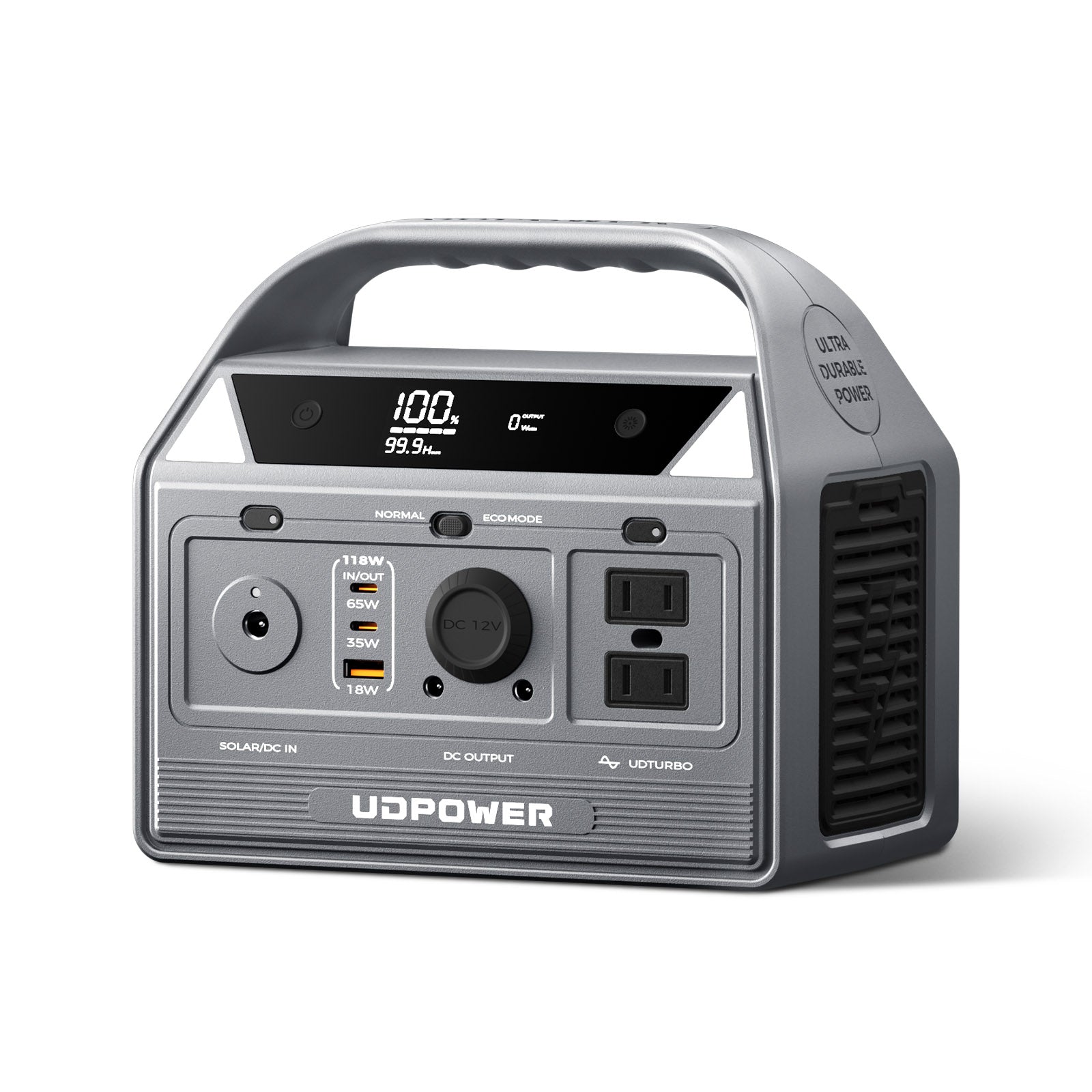
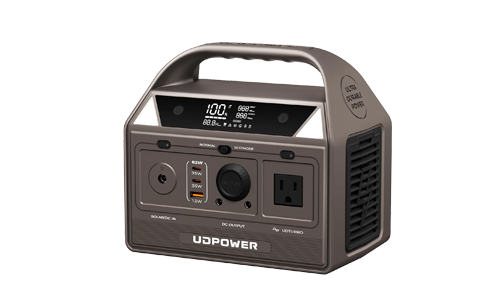
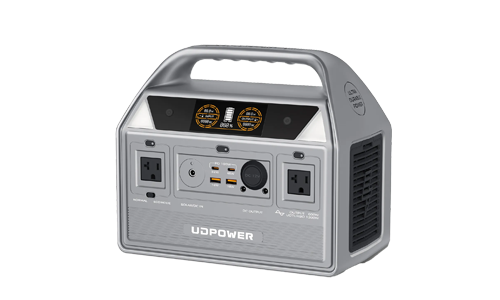
UDPOWER C400 Portable Power Station
Best for: LED lamps, phone charging, router backup, short camping lighting, car emergency use, and light overnight setups.
- Capacity: 256Wh
- AC output: 400W total, 800W surge
- Battery: LFP / LiFePO4
- Weight: approximately 6.88 lbs
- Solar input: 150W max
- Good lighting match: one to three LED lamps plus small electronics

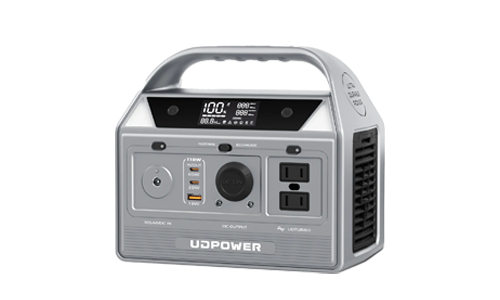
UDPOWER C600 Portable Power Station
Best for: RV lighting, campsite lighting, projector nights, small fans, laptops, cameras, CPAP setups, and longer lighting runtime without moving into a heavy unit.
- Capacity: 596Wh
- AC output: 600W, 1200W max
- Battery: LiFePO4
- Weight: 12.3 lbs
- Solar input: 240W max
- Good lighting match: several LED lights plus router, phone charging, and laptop use
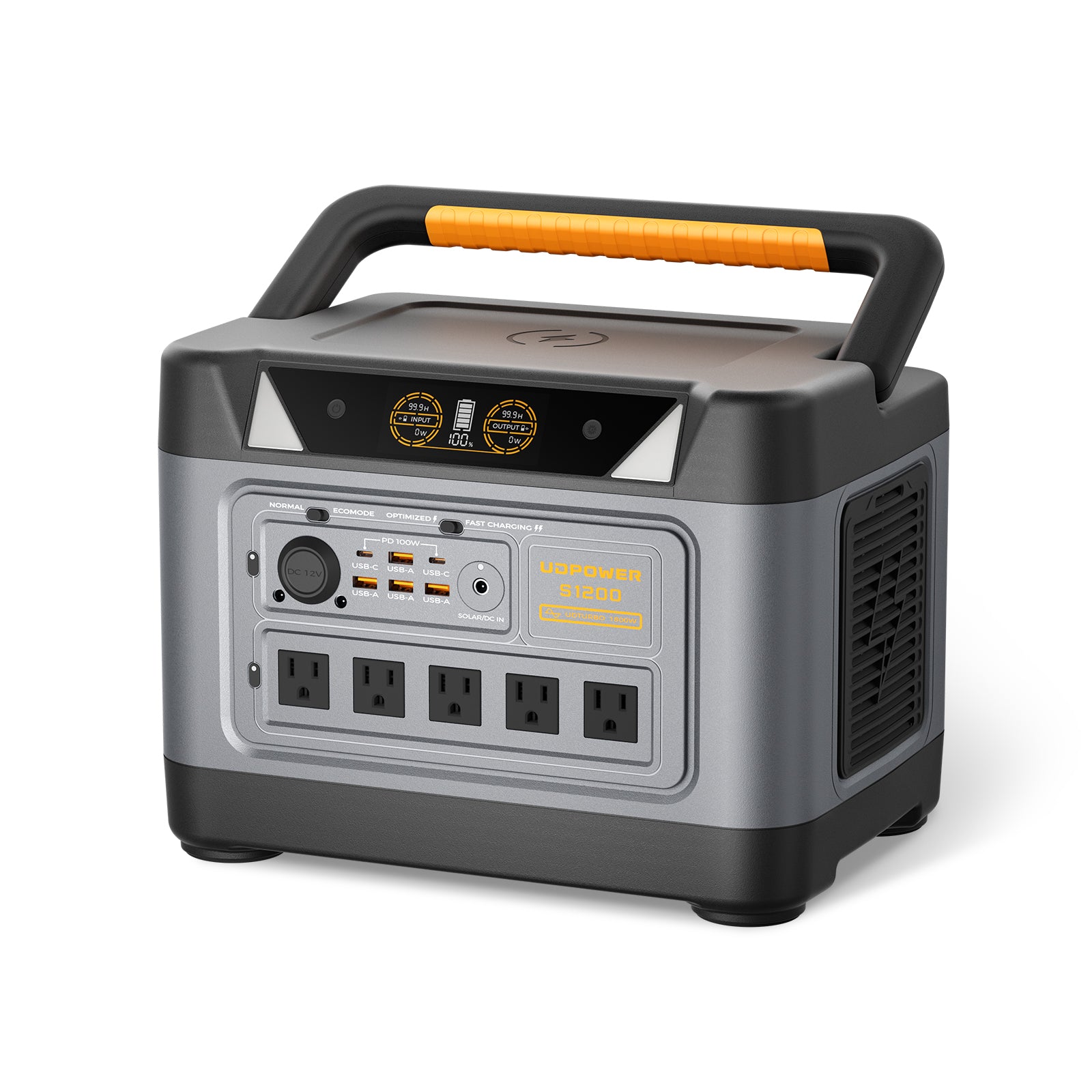
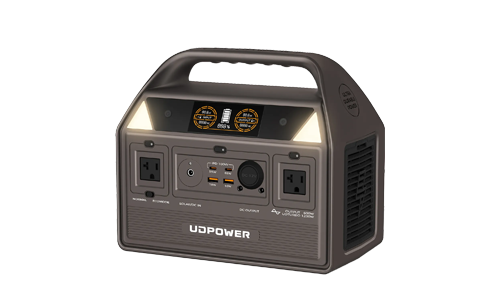
UDPOWER S1200 Portable Power Station
Best for: home outage lighting plus essentials such as Wi-Fi, laptop, fan, CPAP, and refrigerator cycling. This is the most practical step-up if lighting is only one part of the backup plan.
- Capacity: 1,190Wh class
- AC output: 1,200W pure sine wave, 1,800W max
- Battery: LiFePO4
- Weight: about 26.0 lbs
- Solar charging input: 12V–75V, 12A, 400W max
- UPS Prime: response time ≤10ms
- Good lighting match: multi-room LED lighting plus daily essentials
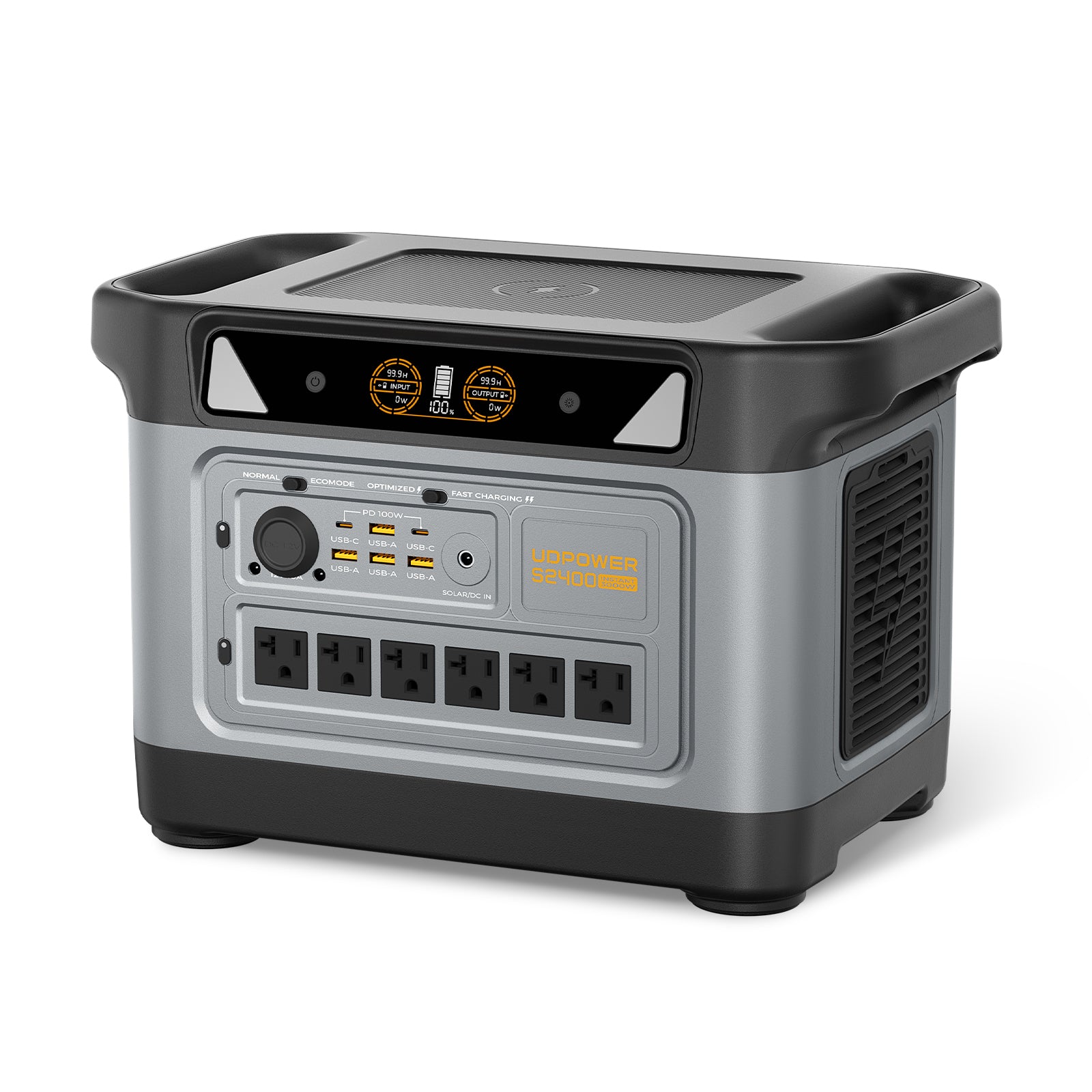
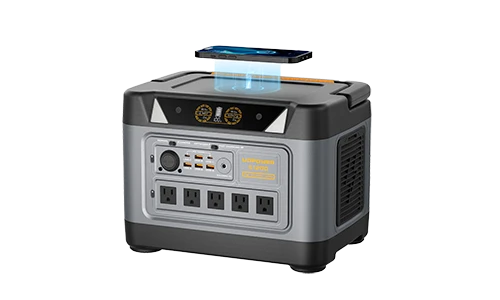
UDPOWER S2400 Portable Power Station
Best for: longer outage backup, RV comfort loads, refrigerator planning, CPAP plus lighting, or a household setup where lights are running alongside other essentials.
- Capacity: 2,083Wh
- AC output: 2,400W pure sine wave
- Surge support: up to 3,000W for startup surges
- Battery: LiFePO4 / LFP
- Weight: approximately 40.8 lbs
- Solar input: 12V–50V, 10A max, up to 400W
- Good lighting match: multi-room lights plus higher-demand backup loads
Which one should you choose?
| Need | Recommended model | Reason | Best next step |
|---|---|---|---|
| One room, several LED lights, phones | C400 | Small, light, enough for low-watt lighting and basic charging | Check C400 |
| Camping, RV lights, laptop, small fan | C600 | More comfortable runtime without the weight of a large station | Check C600 |
| Home outage lighting plus Wi-Fi, fan, CPAP, or fridge cycling | S1200 | Good balance of capacity, output, UPS support, and portability | Check S1200 |
| Longer home backup or RV comfort setup | S2400 | Much larger capacity and higher AC output for mixed essential loads | Check S2400 |
Common mistakes when replacing bulbs
- Mistake 1: Buying by watts instead of lumens. A 9W LED and a 60W incandescent can be similar in brightness. The lumen number is what you should match.
- Mistake 2: Assuming every “60W equivalent” LED is identical. Two bulbs can both claim 60W equivalent but differ in actual watts, color temperature, CRI, beam spread, and dimmer compatibility.
- Mistake 3: Using one bright bulb instead of layered lighting. A room often feels better with multiple softer lights than with one harsh high-lumen bulb.
- Mistake 4: Forgetting fixture limits. Never exceed the fixture’s rated wattage. LEDs run cooler than incandescent bulbs, but enclosed fixtures still need bulbs rated for that environment.
- Mistake 5: Ignoring dimmer compatibility. If the bulb flickers, buzzes, or will not dim smoothly, the bulb and dimmer may not be compatible.
- Mistake 6: Planning battery backup from brightness only. A power station runtime estimate must use watts, not lumens. Convert the brightness target into actual LED wattage first.
Sources and related reading
The following links help readers verify the lighting basics, compare UDPOWER models, and continue into runtime planning.
FAQ
How many watts is 800 lumens?
For a common LED bulb, 800 lumens is usually about 7–10 watts. For a simple estimate, use 8 or 9 watts. An old incandescent bulb with similar brightness was commonly treated as a 60-watt bulb.
How many lumens is a 60-watt bulb?
A traditional 60-watt incandescent bulb is commonly associated with about 800 lumens. A modern LED can deliver similar brightness using far fewer watts, often around 7–10 watts.
Is lumen the same as watt?
No. Lumens measure brightness. Watts measure power consumption. A more efficient bulb can produce more lumens using fewer watts.
What is the easiest way to convert lumens to LED watts?
For quick LED planning, divide lumens by 100. For example, 1000 lumens ÷ 100 equals about 10 watts. Check the bulb label for the exact number because LED efficiency varies.
Why are LED bulbs labeled as “60W equivalent” if they only use 9W?
The “60W equivalent” phrase compares brightness to an old incandescent bulb, not actual power use. The actual LED wattage is the smaller number printed on the label, such as 8W, 9W, or 10W.
Does color temperature change the wattage?
Color temperature can slightly affect a bulb’s design and perceived brightness, but it is not the main conversion factor. The actual lumens and watts on the label are more important.
Can I use lumens to estimate power station runtime?
Not directly. First convert lumens to actual watts, then estimate runtime with battery capacity. For UDPOWER planning, a useful estimate is battery Wh × 0.90 ÷ total load watts.
How long can a portable power station run LED lights?
It depends on total wattage. A single 9W LED bulb is a very light load. Using a 90% planning factor, a 596Wh UDPOWER C600 can run a 9W LED for about 60 hours, while a 1,190Wh S1200 can run it for about 119 hours. Real results vary by output mode and settings.
Should I replace incandescent bulbs before buying a backup power station?
Yes, if you still rely on old bulbs. Switching to LED can reduce lighting wattage dramatically, which means longer battery runtime, lower energy cost, and less heat.
What UDPOWER model is best for home lighting backup?
For basic lighting and charging, the C400 or C600 can work well. For home outage lighting plus Wi-Fi, laptop, CPAP, fan, or refrigerator cycling, the S1200 is a stronger fit. For longer backup or mixed higher-demand loads, the S2400 gives more capacity and output headroom.
Need lighting backup that lasts through the night?
Start with your total LED wattage, then choose a power station by capacity and output. Lighting alone is easy to run; the real sizing decision is what you want to run with the lights.
View Portable Power Stations Use the Runtime Calculator Explore Home Backup Options