

What Should You Not Plug Into a Generator?
Last updated: November 26, 2026
Direct answer: Never plug a generator into a household wall outlet (backfeeding), never connect 240V high-wattage appliances (central air conditioners, electric dryers, water heaters, or ovens drawing 3,000W–6,000W+) to an undersized 120V unit, and avoid plugging sensitive microprocessor electronics (computers, TVs, CPAP machines, and modern inverter refrigerators) directly into a conventional open-frame gas generator whose total harmonic distortion (THD) exceeds 5%. Always keep combined running loads under your generator's rated continuous watts and verify starting surge separately.
What you can safely plug in comes down to three measurable limits: power quality (THD), voltage (120V vs. 240V), and simultaneous wattage (running and starting surge). A device that ruins a conventional gas generator's circuit or fries a motherboard may run safely on an inverter generator or a pure sine wave portable power station.
1. Connections You Should Never Make (Any Generator)
Before checking appliance wattage, eliminate the physical wiring mistakes that cause electrocution, fires, and equipment failure regardless of generator size.
Never backfeed a wall outlet: Plugging a generator into a standard 120V or 240V wall receptacle using a double-ended male cord ("suicide cord") is illegal under the National Electrical Code (NEC) and potentially fatal. It sends live voltage back onto utility lines—endangering line workers—and bypasses your main panel's safety breakers. Use heavy-duty outdoor extension cords or a licensed electrician's transfer switch or interlock kit.
- Undersized or indoor-only extension cords: A thin 16-gauge indoor cord (typically rated for 13A / 1,560W max over 50 feet) overheats and melts when powering a 1,500W space heater or refrigerator startup surge. Use a UL-listed outdoor 12-gauge or 10-gauge cord matched to the load and distance.
- Daisy-chained power strips and multi-outlet splitters: Plugging one power strip into another concentrates heat at a single receptacle and masks total wattage until the breaker trips or the strip melts.
- Damaged cords or wet connections: Never plug frayed cords, missing ground pins, or wet plugs into a generator. Operate fuel generators outdoors at least 20 feet from doors, windows, and vents per U.S. Consumer Product Safety Commission (CPSC) carbon monoxide guidance. For indoor-safe options, see our indoor safe backup power guide.
2. Sensitive Electronics on Conventional Gas Generators
Conventional open-frame gas generators produce AC electricity directly from an engine-driven alternator whose speed fluctuates as loads turn on and off. That produces "dirty power"—voltage spikes, frequency drift, and high Total Harmonic Distortion (THD), often ranging from 12% to 25% THD compared to under 3% to 5% on utility grid power.
Avoid plugging the following devices directly into a conventional (non-inverter) gas generator:
- Desktop PCs, laptops, and gaming consoles: Sensitive switching power supplies and motherboards can suffer premature wear, random shutdowns, or permanent board failure from voltage spikes.
- Smart TVs, audio receivers, and Wi-Fi routers: Unstable frequency and harmonic noise cause power-supply overheating and signal interference.
- Medical devices (CPAP, BiPAP, oxygen concentrators): Many medical manufacturers explicitly require pure sine wave AC power; dirty power can trigger fault codes or shut the unit down overnight.
- Modern inverter-driven appliances: Newer smart refrigerators, high-efficiency furnaces, and variable-speed washing machines rely on digital control boards that can lock out or fail on high-THD power.
The fix: Run sensitive electronics on an inverter gas generator (typically under 3% THD) or a pure sine wave portable power station. Compare both approaches in our breakdown of portable power stations vs. gas generators.
3. High-Wattage & 240V Appliances That Cause Overloads
Standard portable generators (2,000W–3,500W) and 120V portable power stations (600W–2,400W) cannot run whole-house 240V appliances or multiple resistive heating loads at the same time. Attempting to start them trips overload protection immediately or stalls the engine.
- Central air conditioners (3,000W–5,000W running; 6,000W–12,000W+ startup): Requires 240V split-phase power and massive locked-rotor startup current. Only a properly sized whole-home standby generator or large 240V portable unit (often with a soft-start kit) can handle central AC.
- Electric clothes dryers and electric ovens/ranges (3,000W–5,500W): Hardwired or 240V-receptacle resistive loads that exceed 120V portable capacity.
- Electric tank or tankless water heaters (4,500W–18,000W+): Continuous heavy 240V loads that rapidly overwhelm portable generators.
- Multiple 1,500W heating appliances at once: A single space heater, hair dryer, microwave, or electric kettle draws 1,200W to 1,800W. Plugging two into a 2,400W generator instantly exceeds rated output (3,000W > 2,400W).
- EV Level 2 chargers (7,000W–11,500W): Even Level 1 charging (1,200W–1,440W continuous for 10+ hours) requires a grounded neutral-ground bond and sustained rated capacity; many EV chargers refuse to charge on unbonded floating-neutral generators.
4. Appliance Compatibility by Generator Type
Use this matrix to match common household loads against the three main backup power categories before an outage hits.
| Appliance / Load | Typical Running / Surge | Conventional Gas (High THD) | Inverter Gas (Low THD) | 120V Power Station (Up to 2,400W) |
|---|---|---|---|---|
| Central AC / Electric Dryer (240V) | 3,000W–5,500W / 10,000W+ | No (unless 240V & 10kW+) | No (unless 240V & 10kW+) | No (120V limit) |
| Laptop, Desktop PC, Smart TV | 50W–400W | Avoid (dirty power risk) | Yes | Yes (pure sine wave) |
| CPAP / Medical Device | 30W–90W | Avoid (dirty power risk) | Yes (outdoors only) | Yes (silent indoor use) |
| Full-Size Refrigerator | 150W–400W / 1,200W–1,800W | Caution on inverter fridges | Yes | Yes (on 1,200W–2,400W+ units) |
| 1,500W Space Heater / Microwave | 1,200W–1,500W | Yes (within rated watts) | Yes (within rated watts) | Short use on 2,000W–2,400W+ |
| Sump Pump (1/2 HP) | 800W / 2,000W | Yes (3,000W+ unit) | Yes (3,000W+ unit) | Only if surge ≤ unit rating |
| Wall Outlet Backfeed Cord | N/A | Never (fatal hazard) | Never (fatal hazard) | Never (fatal hazard) |
Wattage figures reflect common U.S. residential appliance ranges. Always verify the exact nameplate rating on your specific unit before connecting.
5. How to Check Whether an Appliance Is Safe to Plug In
Run this four-step check before plugging any device into a generator:
- Check the voltage: Confirm the appliance uses standard 120V AC (standard three-prong plug), not 240V.
- Calculate total running watts: Add the continuous wattage of every device that will run at the same time. If a label lists only amps, multiply Amps × 120V = Watts. Keep the total below your generator's rated continuous AC output (for fuel generators, staying under 75%–80% of rated load reduces wear and fuel consumption).
- Check the highest starting surge: Add the largest single motor's startup surge (refrigerator, freezer, or sump pump) to your running total. Start the heaviest motor first, then plug in smaller loads one at a time.
- Match power quality to the load: Keep computers, routers, TVs, and CPAP machines off high-THD open-frame gas generators.
Safe Load Check Formula
Total Running Watts + Largest Starting Surge ≤ Generator Surge Rating, AND Total Running Watts ≤ Generator Rated Continuous Output. Example: 400W (fridge running) + 100W (router/laptop) + 1,200W (fridge startup surge) = 1,700W peak and 500W continuous—safe for a 2,400W unit, unsafe for a 600W unit.
6. Safer Pure Sine Wave Backup for Sensitive Electronics
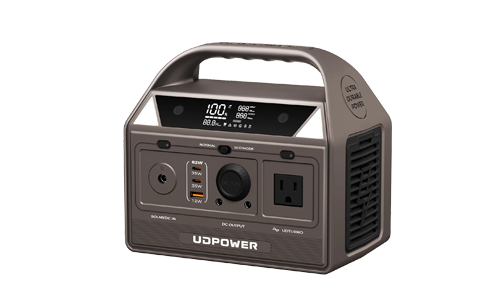
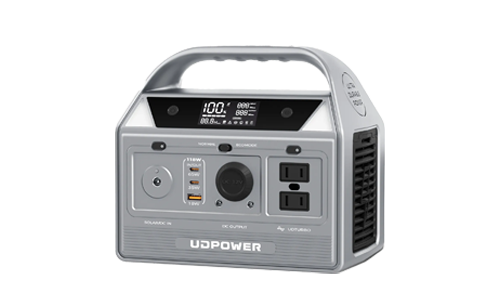
If your primary concern is protecting laptops, CPAP machines, routers, TVs, and modern refrigerators from dirty gas-generator power—or running backup power safely indoors without exhaust fumes—a LiFePO4 portable power station solves both problems. Both UDPOWER models below use bonded neutral ground, LiFePO4 cells rated for 80% capacity remaining after 3,000 cycles (70% after 4,000 cycles), and pure sine wave AC output. For solar recharge options during extended outages, see our guide on whether solar generators are worth it.
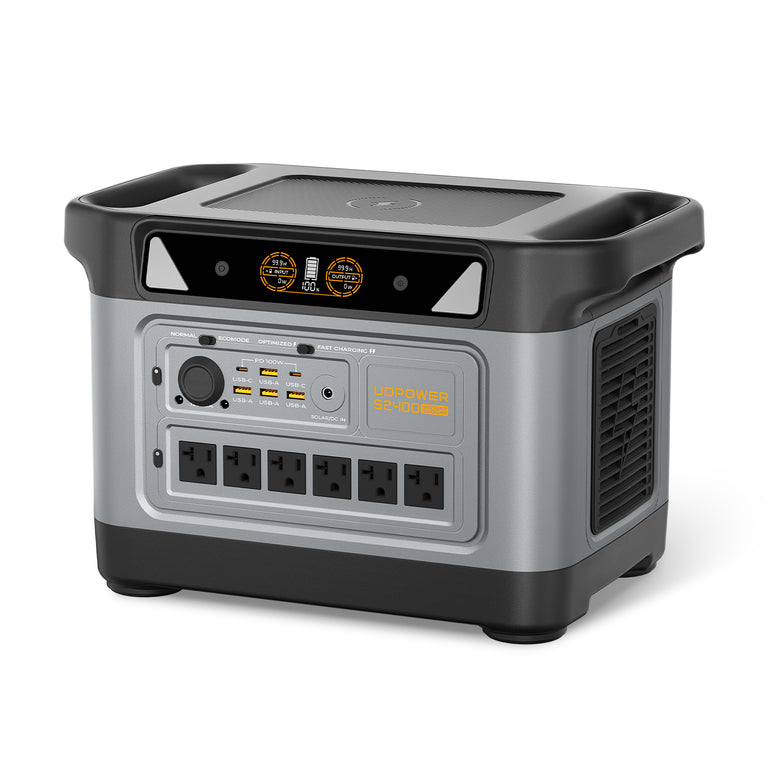
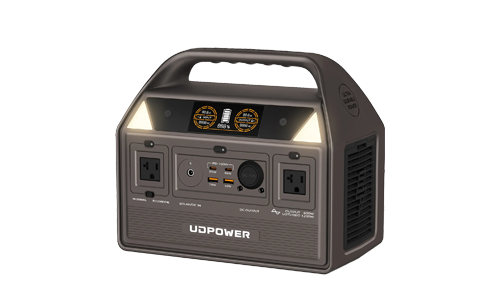
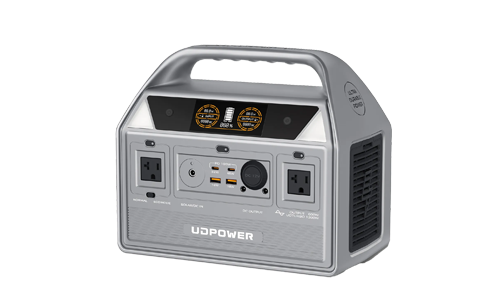
UDPOWER S2400 Portable Power Station
- Capacity
- 2,083Wh (LiFePO4)
- Rated AC Output
- 2,400W
Handles modern inverter refrigerators, microwaves, and sensitive home electronics without high-THD voltage spikes or outdoor exhaust. At 90% conversion efficiency, its 2,083Wh battery delivers 1,875Wh of usable AC energy—about 18.7 hours at a constant 100W electronics load or 37.5 hours for a refrigerator averaging 50W (1.2kWh/day), excluding additional inverter idle draw. Supports up to 420W maximum recommended solar input.
Choose another option if: You need to power 240V central air conditioning, an electric clothes dryer, or simultaneous resistive heaters exceeding 2,400W.
View S2400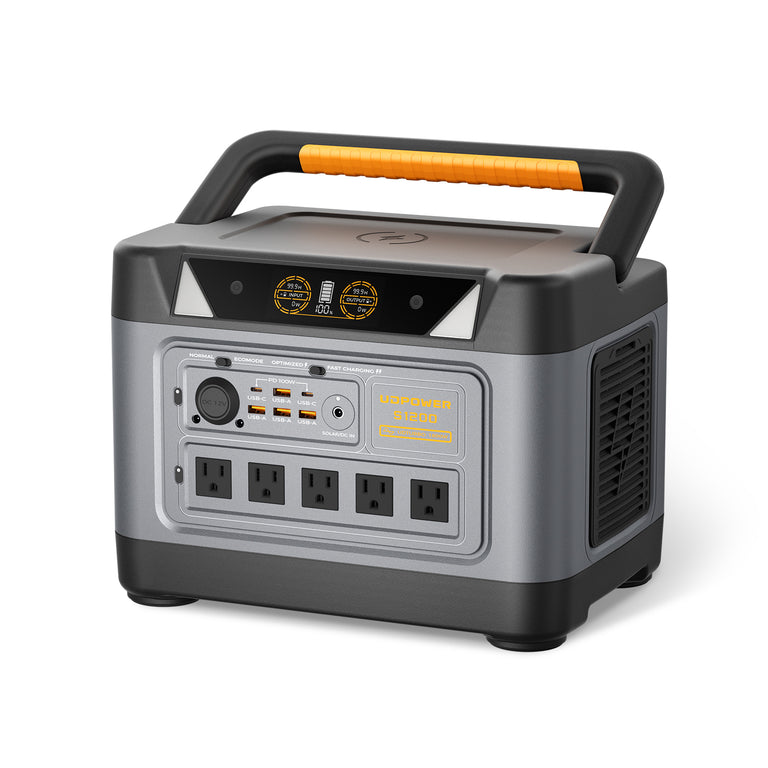
UDPOWER S1200 Portable Power Station (5-AC)
- Capacity
- 1,190Wh (LiFePO4)
- Rated AC Output
- 1,200W
Ideal for keeping sensitive electronics off a noisy gas generator. At 90% conversion efficiency, the S1200 provides 1,071Wh of usable AC energy—supporting a 60W CPAP or router setup for about 17.9 hours, or a 100W laptop and monitor workstation for 10.7 hours, excluding additional inverter idle draw. Five AC outlets eliminate risky daisy-chained power strips.
Choose another option if: You need to run 1,500W–1,800W space heaters, full-size microwaves, or high-surge sump pumps above 1,200W rated AC output.
View S1200Frequently Asked Questions
Can I plug a surge protector into a generator?
Avoid plugging standard metal-oxide varistor (MOV) surge protectors into a conventional gas generator without a bonded ground, as voltage fluctuations can trip or overheat the surge protector without fixing dirty power. A surge protector does not clean high THD; use an inverter generator or pure sine wave power station for sensitive electronics.
Can I plug a space heater into a portable generator?
Yes, if the generator's rated continuous output exceeds the heater's draw (typically 1,500W on high) and you use a heavy-duty 12-gauge or 10-gauge outdoor extension cord. Do not run a 1,500W heater on a 1,200W power station or alongside another high-wattage kitchen appliance on a 2,000W–2,400W unit.
Will a gas generator ruin my refrigerator?
Older mechanical-thermostat refrigerators usually tolerate conventional gas generators, but modern inverter-compressor and smart refrigerators contain sensitive control boards that can be damaged by high-THD power (>5%). Use an inverter generator or pure sine wave power station rated above the fridge's startup surge (typically 1,200W–1,800W).
Can I plug a generator into my dryer outlet to power my house?
Never. Backfeeding through a dryer outlet or any wall receptacle with a double-ended male cord is illegal and lethal to utility line workers. To power household circuits, have a licensed electrician install a dedicated manual transfer switch or main-panel interlock kit with an outdoor power inlet box.
Can I plug a portable power station into a gas generator to recharge it?
Yes, provided the gas generator outputs clean, stable 120V AC power (an inverter generator is strongly preferred over a high-THD open-frame unit) and its rated wattage exceeds the power station's AC charging input. Many homeowners run a gas generator outdoors for a few hours to recharge a battery station, then use the silent battery indoors overnight.
Build a Safer Indoor-Ready Backup Plan
Keep fuel generators outdoors for heavy loads and use a silent, pure sine wave LiFePO4 power station indoors for computers, CPAP machines, and kitchen essentials.
Read Our Indoor Backup Power GuideRelated Articles


