

Extreme Cold Warning: Meaning, Risks & Power Outage Prep
Updated November 19, 2026
An Extreme Cold Warning appears on your phone, and the forecast calls for dangerously low temperatures overnight. Your furnace is running, the roads are still clear, and the electricity hasn't gone out. Should you change your plans immediately, or wait to see how cold it gets?
The warning itself is your signal to act. Even without heavy snowfall, severe cold can cause frostbite, hypothermia, frozen plumbing, and dangerous indoor conditions if your heating system fails.
The next decisions are practical: how long people can safely remain outdoors, whether your home can maintain heat, and what happens if the electricity supporting that heat disappears.
What Does an Extreme Cold Warning Mean?
An Extreme Cold Warning means dangerously cold air temperatures or wind chills are expected or already occurring in your area. The National Weather Service (NWS) issues this warning when conditions pose a serious threat to health and safety.
Stay indoors when possible, protect exposed skin if you must leave, check on vulnerable people, and make sure you have a safe way to stay warm if your heating or electricity fails. There is no single nationwide temperature threshold; your local NWS office determines the criteria.
Source: National Weather Service — Understanding Cold Weather Alerts.

Extreme Cold Warning vs. Watch vs. Cold Weather Advisory
The National Weather Service uses three levels of cold-weather alerts to communicate how serious the conditions are and how urgently people should respond.

| NWS Alert | What It Means | What You Should Do |
|---|---|---|
| Extreme Cold Watch | Extremely dangerous cold is possible, but its timing, location, or occurrence remains uncertain. | Review your heating and emergency plans, prepare supplies, and monitor forecast updates. |
| Extreme Cold Warning | Extremely dangerous cold conditions are expected or happening. | Take immediate precautions, avoid unnecessary outdoor exposure, and protect people who may not have adequate heat. |
| Cold Weather Advisory | Dangerous cold is expected but is not forecast to meet the local Extreme Cold Warning criteria. | Limit outdoor exposure, dress appropriately, and monitor changing conditions. |
The NWS introduced consolidated cold-weather alert terminology beginning in October 2024. Older products such as Wind Chill Warnings were incorporated into Extreme Cold Warnings, which can account for dangerous air temperatures and wind chills.
See the NWS Houston alert criteria and terminology changes.
Is an Extreme Cold Warning the Same as a Winter Storm Warning?
No. An Extreme Cold Warning addresses dangerous cold temperatures or wind chills. A Winter Storm Warning concerns significant winter precipitation and related hazards, such as snow, sleet, or freezing rain.
You can receive an Extreme Cold Warning on a dry, clear day. You can also receive an Extreme Cold Warning and a Winter Storm Warning at the same time.
This distinction affects preparation. Severe snow can block roads and damage electrical infrastructure, while extreme cold creates serious exposure and heating risks even when roads remain passable.
How Cold Does It Have to Be for an Extreme Cold Warning?
There is no nationwide rule that an Extreme Cold Warning begins at 0°F, -10°F, or -25°F.
Warning criteria depend on the climate, expected impacts, and the local National Weather Service forecast office. Temperatures considered routine in parts of the Upper Midwest can be unusually hazardous in regions where homes, vehicles, and residents are less prepared for severe cold.
Real NWS Temperature Threshold Examples
| Forecast Office | Published Warning Criteria | What This Shows |
|---|---|---|
| Wilmington, NC | Air temperatures or wind chills at or below 5°F, with exceptional-impact cases also possible. | A warning can occur at temperatures above zero in a warmer-climate region. |
| Boston/Norton, MA | Wind chill at or below -20°F or -25°F, depending on location, for at least three hours. | Warning thresholds can differ within one forecast office's coverage area. |
Sources: NWS Wilmington criteria and NWS Boston/Norton criteria.
Check the exact warning text for your county or forecast zone rather than relying on a temperature threshold reported for another city.
Air Temperature vs. Wind Chill: Why the Difference Matters
Wind chill describes how cold exposed skin feels when wind accelerates heat loss. It is not a second measurement of the actual air temperature.
For example, if the air temperature is -5°F and the wind chill is -31°F, exposed skin experiences substantially greater heat loss, but a parked vehicle or exposed water pipe will not become colder than the actual -5°F air temperature solely because of wind chill.
Wind can make objects reach the surrounding air temperature faster. That still matters for exposed plumbing, unheated buildings, and equipment left outdoors.
Source: NWS Wind Chill Questions.
What to Do When an Extreme Cold Warning Is Issued
Start with the alert's location, start time, expiration time, and expected coldest period. A warning issued during the afternoon may describe conditions that become most dangerous overnight.
1. Confirm the Warning Covers Your Location
Open your local forecast at weather.gov. Check whether the warning covers your county or forecast zone, when it becomes effective, and when conditions should improve.
Avoid assuming that nearby cities share identical conditions or warning periods.
2. Change Outdoor Plans Before Temperatures Fall
Postpone unnecessary travel, long walks, outdoor work, and activities that could leave you stranded. If travel cannot be avoided, tell someone your route and expected arrival time.
Carry insulated clothing, a charged phone, drinking water, and winter emergency supplies. Keep adequate fuel in your vehicle and check road conditions before leaving.
3. Check Heating Equipment While Electricity Is Available
Confirm that your heating system operates normally and that its thermostat responds. If the system has an air filter, inspect it according to the manufacturer's maintenance instructions.
Find out whether your heating system requires grid electricity for ignition, controls, pumps, or fans. A natural gas supply does not automatically mean a furnace can operate during a blackout.
4. Contact People Who May Need Assistance
Check on older neighbors, people with limited mobility, and households with infants or electricity-dependent medical equipment. Ask whether they have working heat, transportation, and a safe backup destination.
Don't wait for someone to report being cold. A person who cannot easily leave home may need transportation before roads or conditions deteriorate.
5. Prepare for Heating and Communication Failures
Charge phones and emergency batteries. Keep flashlights, medications, warm clothing, water, and a battery-powered weather radio accessible.
If internet access is essential, identify whether your modem, router, and any separate fiber terminal require electricity. A powered router alone will not restore service if the provider's network is down.
For a complete supply list, see UDPOWER's What to Buy Before a Winter Storm.
Health Risks During an Extreme Cold Warning
Two of the most urgent health concerns are frostbite and hypothermia. They are different conditions and may require emergency medical treatment.
| Condition | Warning Signs | Immediate Response |
|---|---|---|
| Frostbite | Numbness; unusually firm or waxy skin; white or grayish-yellow skin; redness or pain during early exposure. | Move indoors, protect the affected area, avoid rubbing or direct heat, and seek medical care promptly. |
| Hypothermia | Shivering, exhaustion, confusion, fumbling hands, slurred speech, memory loss, or drowsiness. | Get the person to a warm location, remove wet clothing, and seek emergency medical help. |
According to the CDC, a body temperature below 95°F is a medical emergency. Hypothermia can also occur above freezing when someone is wet and becomes chilled.
If a person appears confused, unusually drowsy, or unresponsive after cold exposure, seek emergency help immediately rather than waiting for the person to warm up on their own.
Sources: CDC Hypothermia Prevention and CDC Frostbite Prevention.
Who Needs Extra Protection?
Infants, older adults, people without adequate shelter, and anyone who cannot maintain safe indoor temperatures deserve particular attention.
Outdoor workers and people traveling on foot also face additional risk because wind, wet clothing, and prolonged exposure increase heat loss.
If you must go outside, wear loose-fitting insulating layers, a wind-resistant outer layer, a hat, mittens, and insulated boots. Keep exposed skin covered and replace wet clothing as soon as possible.
How to Prepare Your Home for Extreme Cold
A home's heating system and plumbing can become vulnerable even when nobody goes outside. The preparation plan should address the equipment that maintains heat, the areas where water can freeze, and the place your household can go if the home becomes unsafe.
Protect the Heating System
- Confirm the furnace or heat pump starts and maintains the thermostat setting.
- Keep heating vents, combustion air intakes, and exhaust outlets unobstructed as required by the equipment manufacturer.
- Check that smoke alarms and carbon monoxide alarms are operational.
- Identify an alternative heated location before your heating system fails.
- If you depend on electrically powered medical or heating equipment, prepare an outage plan specific to that equipment.
Reduce the Risk of Frozen Pipes
Focus first on plumbing near exterior walls, unheated garages, crawl spaces, and other areas exposed to freezing air.
- Insulate vulnerable accessible water pipes before cold weather arrives.
- Disconnect outdoor hoses and protect exterior water connections according to local plumbing guidance.
- Keep cabinet doors open where appropriate so indoor heat can reach pipes located behind them.
- Know where the main water shutoff valve is and how to operate it.
- Follow local utility or plumbing recommendations on maintaining heat and allowing faucets to drip during severe freezing conditions.
If a pipe freezes, do not use an open flame to thaw it. Follow safe plumbing procedures or contact a qualified professional.
The CDC winter storm safety guide covers frozen pipes and home heating hazards.
Prepare a Warm Room, Not Just a Warm House
Identify an occupied room where doors can be closed to limit drafts and conserve existing warmth if heating fails. Keep blankets, layered clothing, flashlights, and a thermometer there.
Closing off unused spaces can help manage drafts, but never block required ventilation, heating returns, combustion air openings, or emergency exits.
A warm room is a temporary protective measure, not a substitute for safe heating. Monitor the actual indoor temperature and arrange relocation if the home cannot remain safe for its occupants.
What to Do If the Power Goes Out During an Extreme Cold Warning
During mild weather, a blackout may primarily interrupt lights and internet access. In extreme cold, the most serious problem can be the loss of the equipment that keeps the building warm.
Start by determining whether the heating system is operating. Then check the indoor temperature, the expected outage duration if the utility provides one, and whether anyone depends on electricity for medical equipment.
| Situation | What to Check | Priority Action |
|---|---|---|
| Power fails, but indoor conditions remain stable | Thermometer, heating status, utility notifications | Conserve battery energy, monitor temperature, and prepare to relocate if heating cannot be maintained. |
| Furnace stops working | Whether controls and blower require electricity | Use only a compatible, approved backup arrangement or move to a heated location. |
| Indoor temperature continues falling | Actual room temperature and occupants' vulnerability | Arrange safe heated shelter before conditions become dangerous. |
| Electricity-dependent medical equipment loses power | Remaining battery capacity and equipment requirements | Follow the medical emergency power plan and seek assistance if operation cannot be maintained. |
| Carbon monoxide alarm activates | Possible combustion-related exposure | Get everyone to fresh air immediately and call emergency services. |
Never Improvise an Indoor Heat Source
Do not use a gas oven, charcoal grill, camp stove, or outdoor fuel-powered generator to heat your home. These can produce deadly carbon monoxide.
Gasoline-powered generators must operate outdoors, at least 20 feet from windows, doors, and vents, following CDC guidance and manufacturer instructions. Do not operate them in garages or enclosed porches.
Battery-powered portable power stations do not produce engine exhaust while supplying electricity, but they still require adequate ventilation and must be used within their electrical and temperature limits.
Source: CDC Power Outage Safety.
Can a Battery Backup Keep a Gas Furnace Running?
Possibly, but the electricity requirements and connection method must be checked before an outage.
A gas furnace can require electricity for its blower motor, control board, and ignition system. If the furnace is permanently connected to household wiring, a portable power station cannot simply be plugged into a household outlet to energize that circuit.
A suitable transfer arrangement must be evaluated by a qualified electrician, including grounding, neutral configuration, equipment requirements, and applicable electrical codes.
For furnace-specific load calculations and connection considerations, see Gas Furnace Battery Backup: Power Station Sizing & Runtime.
How Much Backup Power Do You Need During Extreme Cold?
The first decision is not which battery is largest. It is which devices must remain powered and how much electricity each will consume before grid service returns.
Battery capacity is measured in watt-hours (Wh). Appliance demand is measured in watts (W). A battery must have enough usable energy for the planned duration and enough output power to operate the connected equipment.
Calculate Energy for the Equipment You Want to Protect
Energy needed (Wh) = Average power (W) × Operating time (hours)
Estimated AC runtime (hours) = Battery capacity (Wh) × 0.90 ÷ Average load (W)
Suppose an internet terminal and router draw a combined 16W, and an LED lamp draws 10W. That creates a 26W continuous load.
Over 24 hours, the devices consume 26W × 24 hours = 624Wh. At an assumed 90% conversion efficiency, the minimum nominal battery capacity would be approximately 693Wh before inverter standby consumption and additional losses.
The 16W and 10W values are example equipment loads. Actual routers, terminals, lamps, and medical devices may draw different amounts.
Extreme Cold Backup Power Runtime Examples
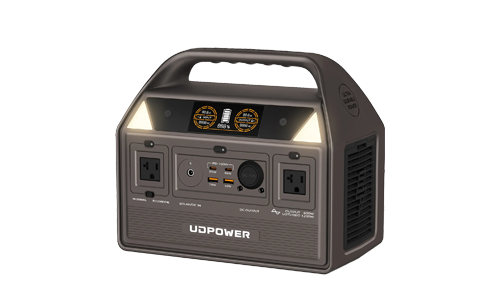
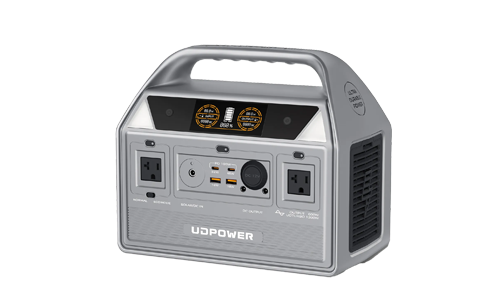
UDPOWER's S1200 has a 1,190Wh battery and 1,200W rated AC output. The S2400 has a 2,083Wh battery and 2,400W rated AC output.
| Continuous AC Load | Example | S1200 Estimated Runtime | S2400 Estimated Runtime |
|---|---|---|---|
| 26W | 16W communications equipment + 10W LED light | 41.2 hours | 72.1 hours |
| 53W | 45W essential device + 8W LED light | 20.2 hours | 35.4 hours |
| 100W | Combined essential equipment averaging 100W | 10.7 hours | 18.7 hours |
| 1,500W | High-power electric resistance heater | Exceeds 1,200W rated output | About 1.25 hours |
Calculation assumptions: Fully charged battery, constant AC load, 90% assumed conversion efficiency, and no additional inverter standby consumption. Actual runtime will be shorter when standby power, low temperatures, battery aging, or changing appliance demand increase losses. The difference is especially significant for very small loads.
Why Electric Space Heating Consumes Battery Power So Quickly
A 1,500W electric heater consumes 1,500Wh for each hour of continuous operation.
The 2,083Wh S2400 has approximately 1,875Wh of modeled AC energy at 90% conversion efficiency. Dividing that energy by 1,500W gives about 1.25 hours, before additional losses.
That is nowhere close to a full night of heating. Even if a heater is electrically compatible and its manufacturer permits the proposed connection, it should not be treated as a dependable multi-day heating solution.
For an eight-hour heating period, a continuously operating 1,500W heater would consume 12,000Wh of AC energy, requiring approximately 13,333Wh of nominal battery capacity at the same 90% assumption.
That is more than six times the S2400's battery capacity.
Prioritize Equipment That Uses Less Electricity
For a battery-limited winter outage, a sensible order is:
- Electricity-dependent medical equipment and other immediate safety needs.
- Communication devices, including phones and any operational modem, router, or network terminal.
- Essential low-wattage lighting.
- Selected refrigeration or other equipment as energy reserves permit.
Heating safety takes priority over conserving electricity. If indoor temperatures cannot be kept safe, relocation to a heated shelter is more appropriate than stretching a small battery indefinitely.
UDPOWER Backup Power Options
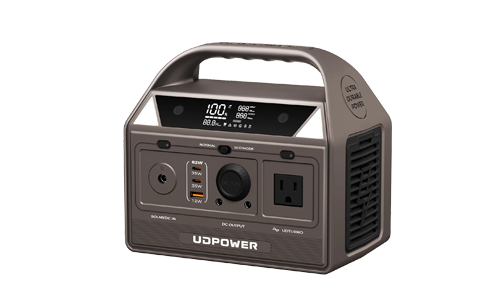
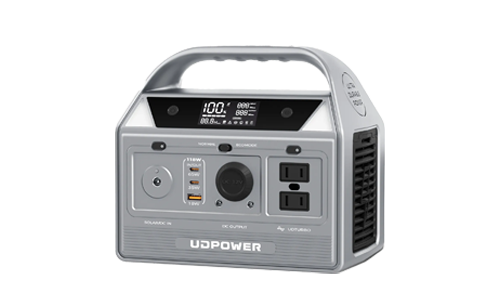
The UDPOWER S1200 offers 1,190Wh capacity and 1,200W rated output. It can support multiple compatible low-power essentials, though its usable runtime drops as combined demand increases.

UDPOWER S2400: Longer Runtime for Essential Loads
- Battery capacity: 2,083Wh
- Rated AC output: 2,400W
- Battery chemistry: LiFePO4
- Maximum recommended solar input: 420W
At a continuous 100W AC load, the S2400 provides an estimated 18.7 hours using the calculation assumptions above. It can be useful for refrigeration, communication, and other compatible emergency electronics.
Its capacity is still limited, and it cannot replace an appropriately designed whole-home heating system during a prolonged extreme cold event.
Can You Use a Portable Power Station in Extreme Cold?
Cold temperatures affect battery performance, available capacity, and charging behavior. The manufacturer's charging temperature range may differ from the permitted discharging range.
A station that can supply electricity below freezing may still be unable to accept a charge at the same battery temperature.
Keep the Battery Protected From Freezing Conditions
When preparing a battery for an emergency, keep it in a dry indoor location within the model's specified operating and storage temperature ranges.
Do not leave it unattended in an unheated vehicle and assume it will be ready to recharge immediately after being brought indoors. Give the unit time to reach an acceptable charging temperature and follow its manual.
Maintain unobstructed cooling vents and keep the unit away from direct heat sources, water, and combustible materials.
For temperature-specific guidance, read How Cold Is Too Cold for a Solar Generator?.
Will Solar Panels Help During an Extreme Cold Warning?
Solar panels can recharge a compatible battery when sunlight is available, but a warning can coincide with short winter daylight, heavy clouds, snow cover, or storm-related shading.
Do not build an emergency plan around receiving the panel's full nameplate wattage every hour. The actual charging power depends on sunlight, panel orientation, snow accumulation, wiring, the station's input limits, and battery charging conditions.
Charge emergency batteries before the warning when grid electricity is available. Treat solar generation as a potential replenishment source rather than a guarantee that electricity will be available overnight.
Frequently Asked Questions
Can there be an Extreme Cold Warning without snow?
Yes. An Extreme Cold Warning concerns dangerously cold air temperatures or wind chills, not snowfall. The NWS can issue it during clear, dry weather when the cold itself poses a serious risk.
How long does an Extreme Cold Warning last?
There is no fixed duration. The warning's start and expiration times depend on the forecast event and any subsequent updates. Check the current alert from your local National Weather Service office.
Does an Extreme Cold Warning mean the power will go out?
No. A warning identifies dangerous cold conditions; it does not predict a guaranteed electricity outage. However, a household that depends on electrically powered heating equipment should prepare for service interruptions, particularly when severe cold occurs alongside storms or other grid hazards.
Can water pipes freeze because the wind chill is below zero?
Wind chill does not lower a pipe's temperature below the actual surrounding air temperature. Wind can make exposed pipes cool to that temperature more quickly. Freezing risk depends on actual temperature, exposure, insulation, heat availability, and time.
Can a portable power station keep a house warm overnight?
A portable power station may support compatible heating-system controls or blower equipment through an approved connection, but powering an electric resistance heater consumes battery energy rapidly. A 1,500W heater would exhaust the S2400's modeled usable AC energy in approximately 1.25 hours of continuous operation. A separate safe-heating and relocation plan is necessary.
Prepare Before the Temperature Drops
When an Extreme Cold Warning is issued, confirm the local alert, protect vulnerable people, check your heating system, and identify where your household can stay warm if electricity fails.
For backup power, begin with your essential equipment's wattage and required runtime. Choose a station that fits those loads without relying on it to provide unlimited heating.
Compare UDPOWER Power StationsRelated Articles


