

What Is a Diesel Generator? A Practical Home Backup Guide
Latest updated: June 5, 2026
A diesel generator is a fuel-powered backup power system that burns diesel to spin an engine, drives an alternator, and produces electricity for tools, buildings, job sites, farms, RV setups, emergency systems, or selected home circuits during a power outage.
For homeowners, the real question is not only “what is a diesel generator?” It is also whether diesel is the right backup choice compared with gasoline generators, natural gas standby systems, propane units, or indoor-safe battery power stations.
Quick Answer
A diesel generator is a generator powered by a diesel engine. The engine converts diesel fuel into mechanical motion, and the alternator converts that motion into usable AC electricity.
Diesel generators are strong for long outdoor outages, heavy loads, farms, construction, and standby systems. Their main disadvantages are exhaust, carbon monoxide risk, noise, diesel fuel storage, maintenance, cold-weather starting issues, and emissions. For indoor essentials such as refrigerators, CPAP machines, WiFi routers, laptops, lights, and small appliances, a battery power station is often simpler and safer because it produces no exhaust while in use.

What Is a Diesel Generator?
A diesel generator, sometimes called a diesel genset, is a packaged power system that combines a diesel engine, an alternator, a fuel system, a control panel, cooling parts, exhaust parts, and electrical protection. When utility power is not available, the generator can supply electricity as long as it has enough fuel, airflow, and load capacity.
Diesel generators are common in hospitals, data centers, farms, construction sites, telecom towers, water treatment facilities, commercial buildings, and remote properties. Smaller diesel units are also used for home backup, but they require careful outdoor placement, proper wiring, fuel planning, and regular maintenance.
How Does a Diesel Generator Work?
The process is straightforward: diesel fuel enters the engine, the engine compresses air until it gets hot enough for diesel combustion, the engine shaft turns, and the alternator creates AC electricity. A voltage regulator helps keep the output stable, while circuit breakers protect the system from overloads.

| Step | What Happens | Why It Matters for Homeowners |
|---|---|---|
| 1. Start | The battery and starter crank the diesel engine. | A weak starting battery is one of the most common reasons a generator will not start. |
| 2. Combustion | Diesel burns inside the engine cylinders through compression ignition. | This creates heat, exhaust, vibration, and carbon monoxide, so the unit must run outdoors. |
| 3. Rotation | The engine turns a shaft connected to the alternator. | The engine must run at the correct speed to maintain stable frequency. |
| 4. Electricity | The alternator converts mechanical motion into AC electricity. | Power quality matters for electronics, appliances, furnace boards, and battery chargers. |
| 5. Load support | The generator supplies selected appliances or circuits. | The total running watts and starting surge must stay within the generator rating. |
Main Parts of a Diesel Generator
A diesel generator is more than just an engine. Understanding the parts helps you compare models and avoid buying based on kW rating alone.
| Part | What It Does | Buying Tip |
|---|---|---|
| Diesel engine | Burns diesel fuel and creates mechanical power. | Look for reliable service access, cold-start support, and available parts. |
| Alternator | Creates electricity from engine rotation. | For sensitive electronics, check voltage regulation and power quality. |
| Fuel tank | Stores diesel for runtime. | Tank size affects runtime, but fuel age and storage safety matter too. |
| Voltage regulator | Helps stabilize output voltage. | Poor regulation can cause flickering lights or device issues. |
| Cooling system | Prevents overheating. | Check coolant, airflow clearance, and maintenance intervals. |
| Exhaust system | Moves exhaust away from the engine. | Exhaust must point away from doors, windows, vents, and people. |
| Control panel | Shows status, alarms, voltage, frequency, and operating hours. | Clear alarms make troubleshooting easier during outages. |
| Transfer switch | Safely connects generator power to selected home circuits. | For home wiring, use a properly installed transfer switch instead of backfeeding. |
What Are the Disadvantages of Diesel Generators?
Diesel generators are powerful, but they are not effortless. Most problems come from exhaust safety, fuel management, noise, maintenance, and using the wrong size generator for the actual load.
| Disadvantage | What It Means | How to Reduce the Risk | Source |
|---|---|---|---|
| Carbon monoxide | Diesel exhaust contains carbon monoxide, an odorless gas that can kill without warning. | Run outdoors only, away from openings, with working CO alarms. | CPSC generator safety |
| Emissions | Diesel exhaust can include particulate matter and nitrogen oxides. | Choose compliant equipment, avoid unnecessary runtime, and maintain the engine. | EPA diesel exhaust |
| Noise and vibration | Diesel engines are usually louder than battery systems and many inverter generators. | Use a sound-attenuated enclosure where allowed and keep distance from living areas. | Check manufacturer sound rating |
| Fuel storage | Diesel must be stored safely and can degrade or collect water over time. | Use approved containers, rotate fuel, and follow local storage rules. | Fuel supplier and local code |
| Maintenance | Oil, filters, coolant, belts, batteries, and test runs require attention. | Follow the service schedule and run load tests when recommended. | Owner’s manual |
| Low-load operation | Running a diesel generator too lightly loaded can cause poor combustion and buildup. | Size the generator to real loads and avoid long no-load operation. | Generator service guidance |
| Higher upfront cost | Diesel units can cost more than small gasoline generators. | Compare total cost: purchase price, installation, fuel, maintenance, and expected use. | Dealer quote |
| Not indoor-safe | Fuel generators cannot be used inside homes, garages, basements, apartments, or covered balconies. | Use a battery power station indoors for quiet essentials. | CDC generator warning |
Will a 10kW Diesel Generator Run a House?
Yes, a 10kW diesel generator can run many essential home circuits, but it usually will not run everything in a modern house at the same time. It may handle a refrigerator, freezer, lights, WiFi, laptop charging, a gas furnace blower, a sump pump, a microwave used briefly, and some small electronics. It may struggle if you add central air conditioning, electric heat, an electric water heater, a dryer, an oven, a large well pump, or multiple high-surge motors at once.
| Home Load | Typical Running Watts | Startup Surge Concern? | 10kW Diesel Generator Fit |
|---|---|---|---|
| Refrigerator or freezer | 100–800W depending on size and cycle | Yes | Usually yes |
| LED lights | 50–300W for several rooms | No | Yes |
| WiFi router, phones, laptop | 50–250W combined | No | Yes |
| Gas furnace blower | 300–900W | Sometimes | Usually yes |
| Sump pump | 800–1,500W | Yes | Usually yes, but avoid stacking too many motor loads |
| Microwave | 1,000–1,500W | No major surge | Yes, but use one high-load appliance at a time |
| Window air conditioner | 600–1,500W | Yes | Often yes, depending on BTU rating |
| Central air conditioner | 2,000–5,000W or more | High surge | Maybe, but many homes need careful sizing or a larger system |
| Electric water heater | 3,000–4,500W | No major surge | Possible, but it consumes a large share of 10kW |
| Electric dryer or electric range | 4,000–8,000W+ | No major surge | Usually not recommended with other loads |
For estimating appliance use, the U.S. Department of Energy recommends checking the appliance label and using watts, daily use time, and electricity cost to understand energy consumption. For generator sizing, the same habit helps: add the running watts, then leave room for startup surge and safety margin. See the DOE guide here: Estimating Appliance and Home Electronic Energy Use.
Estimated Diesel Use for a 10kW Generator
Fuel use varies by engine design, load, age, maintenance, altitude, and temperature. A practical 10kW diesel unit may burn roughly half a gallon per hour at moderate load and around one gallon per hour near full load. Always use the exact fuel chart from your generator manufacturer.
| Generator Load | Power Being Used | Approx. Diesel Use | 10-Gallon Fuel Runtime Estimate |
|---|---|---|---|
| 25% | About 2.5kW | About 0.25–0.35 gal/hr | About 28–40 hours |
| 50% | About 5kW | About 0.5–0.6 gal/hr | About 16–20 hours |
| 75% | About 7.5kW | About 0.75–0.85 gal/hr | About 11–13 hours |
| 100% | About 10kW | About 0.9–1.1 gal/hr | About 9–11 hours |
Example fuel data varies by generator class. One published diesel consumption reference lists a 10kW / 12kVA generator at approximately 2 liters per hour at half load and 4 liters per hour at full load: diesel generator fuel consumption chart.
Is a Diesel Generator Better Than Gas?
Diesel can be better than gasoline for heavy-duty backup, long runtimes, and commercial use. Gasoline can be better for low-cost portable emergency use. Natural gas can be better for installed home standby systems when a reliable gas line is available. A battery power station can be better for indoor backup, quiet use, and smaller essential loads.
| Option | Best For | Main Strength | Main Weakness |
|---|---|---|---|
| Diesel generator | Long outdoor outages, commercial backup, farms, job sites, heavy loads | Efficient under load, durable, strong torque | Noise, exhaust, diesel storage, maintenance, emissions |
| Gasoline generator | Occasional portable backup and budget emergency use | Lower upfront cost and easy retail availability | Gasoline storage, fumes, carburetor maintenance, not indoor-safe |
| Natural gas standby generator | Automatic home standby where gas service is available | No manual fuel cans and automatic startup | Installed cost, fixed location, gas line dependence |
| Propane generator | Homes that already store propane | Cleaner storage than gasoline and good shelf stability | Fuel use can be high under large loads |
| Portable power station | Indoor essentials, apartments, CPAP, fridge backup, WiFi, laptops, quiet camping | No exhaust during use, quiet, simple, rechargeable by wall, car, or solar | Runtime limited by battery capacity and load size |
Diesel engines can be efficient and powerful. The U.S. Department of Energy notes that diesel engines can be 30%–35% more efficient than similar-sized gasoline engines in vehicle applications: DOE efficient vehicle guide. But for home backup, efficiency is only one part of the decision. Safety, noise, installation, fuel storage, local code, and how often you actually use the system matter just as much.
When a Battery Power Station Makes More Sense Than a Diesel Generator
A diesel generator is useful when you need outdoor, fuel-based power for long outages or heavy loads. But many homeowners only need to keep essentials running: refrigerator, WiFi, CPAP, phones, laptop, modem, lights, a fan, or small kitchen appliances. For these loads, an indoor-safe portable power station is often easier to live with.
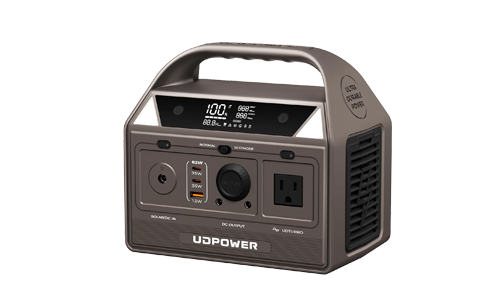
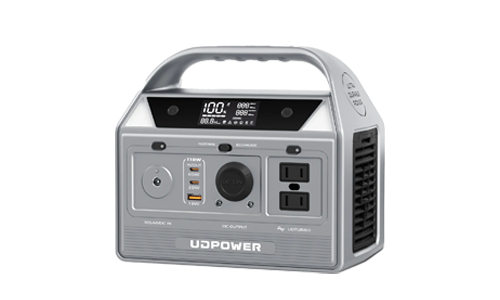
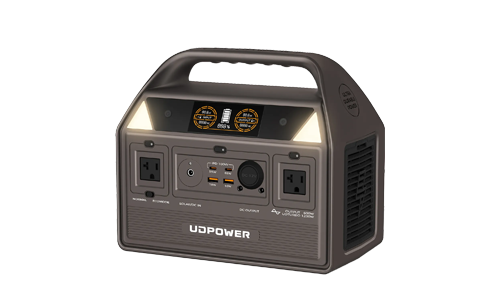
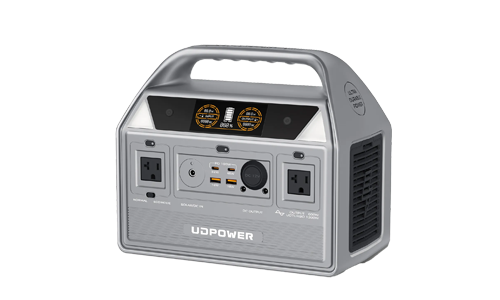
UDPOWER portable power stations use LiFePO4 battery chemistry, pure sine wave AC output, and quiet operation. They can be recharged from a wall outlet, car charging, or compatible solar panels. For more model options, see the UDPOWER portable power station collection, home backup collection, and solar generator kits.

UDPOWER C600 Portable Power Station
Best for: WiFi router, laptop, phones, small fan, camera gear, mini fridge, camping, and light emergency backup.
- 596Wh LiFePO4 battery
- 600W rated output, 1200W peak surge
- 2 AC outlets, USB-C, USB-A, DC output, and car outlet
- Quiet operation below 30dB according to the product page
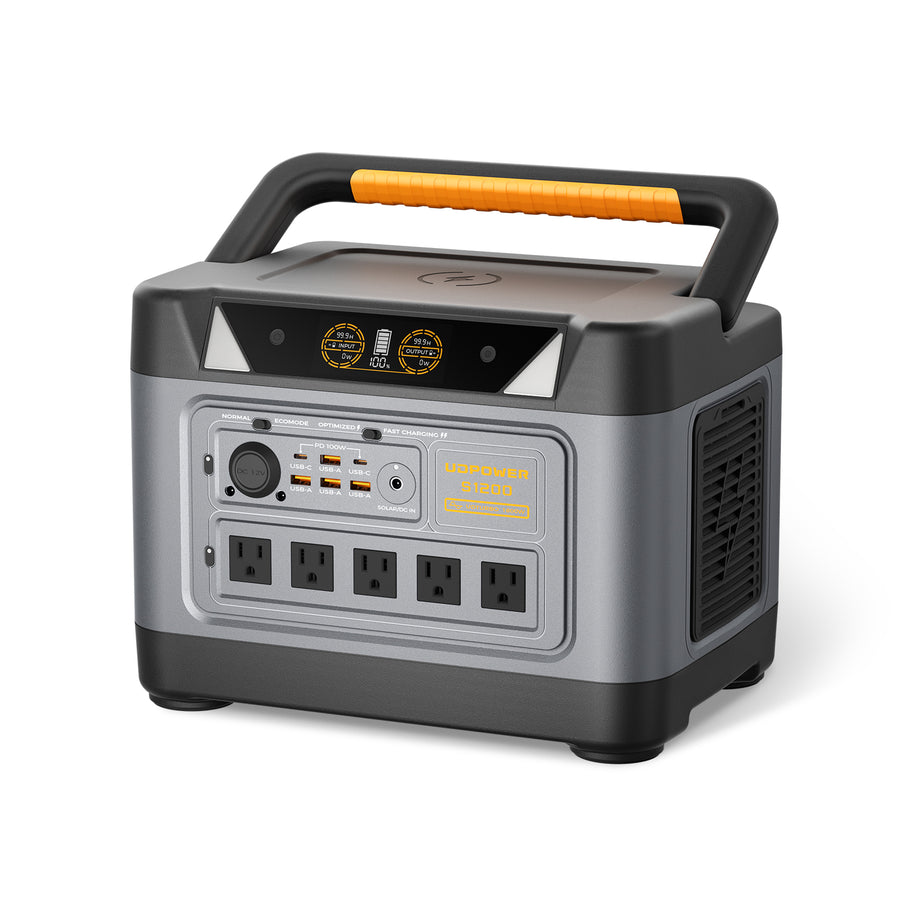
UDPOWER S1200 Portable Power Station
Best for: refrigerator backup, CPAP, work-from-home essentials, lights, modem, laptops, and medium emergency loads.
- 1,190Wh capacity
- 1,200W rated pure sine wave output
- UDTURBO surge support up to 1,800W
- 5 AC outlets plus multiple DC outputs
- <10ms UPSPRIME backup and quiet operation listed on the product page
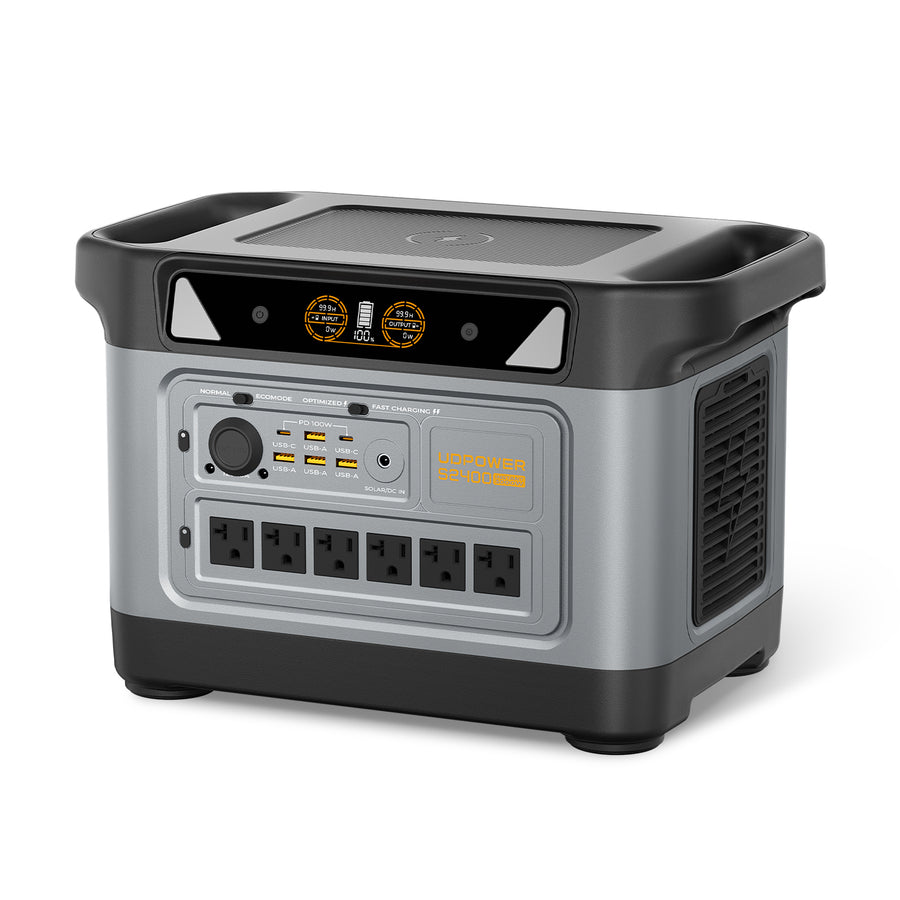
UDPOWER S2400 Portable Power Station
Best for: larger appliances, longer refrigerator backup, RV use, high-output camping, and heavier emergency power needs.
- 2,083Wh capacity
- 2,400W pure sine wave AC output
- UDTURBO surge support up to 3,000W
- 6 AC outlets plus 10 DC outputs
- Solar input 12–50V, 10A max, up to 400W solar charging
Helpful related reading: Is a Portable Power Station Better Than a Generator?, Can You Use a Generator in an Apartment?, and How Much Does It Cost to Rent a Generator for a Day?.
What Are the Common Problems of Diesel Generators?
Most diesel generator problems are preventable. They usually come from old fuel, weak batteries, neglected maintenance, overload, poor airflow, low coolant, or running the generator too lightly loaded for too long.
| Problem | Common Cause | What to Check First |
|---|---|---|
| Generator will not start | Weak battery, bad starter, old fuel, air in fuel line, low oil shutdown | Battery voltage, fuel level, oil level, emergency stop switch, control panel alarm |
| Starts then shuts down | Low oil, low coolant, clogged fuel filter, sensor fault, overload | Fluids, filters, error code, connected load |
| Black smoke | Overload, dirty air filter, injector issue, poor combustion | Reduce load, inspect air filter, schedule service |
| White smoke | Cold engine, unburned fuel, injector issue, low compression | Warm-up time, fuel quality, service history |
| Voltage fluctuation | Bad AVR, unstable RPM, sudden load changes, poor connection | Load balance, voltage regulator, cords, transfer switch |
| Overheating | Blocked airflow, low coolant, dirty radiator, overloaded unit | Air clearance, coolant level, radiator, total watts |
| Wet stacking | Long low-load operation and incomplete combustion | Operate under proper load and follow load-test recommendations |
| Fuel contamination | Water, algae, dirt, or old stored diesel | Fuel filter, tank condition, fuel age, stabilizer plan |
| Breaker trips | Too much load, short circuit, wrong cord, motor surge | Disconnect loads, restart safely, add loads one at a time |
Why Don't the USA Use Diesel More?
The U.S. does use diesel heavily in freight trucks, buses, construction equipment, farm equipment, ships, rail, backup generators, and industrial machines. The better question is why diesel is less common in U.S. passenger cars and small residential backup setups than it is in some other markets.
| Reason | Plain-English Explanation |
|---|---|
| Emissions concerns | Diesel exhaust can include fine particles and nitrogen oxides, so modern diesel equipment needs stricter controls and proper maintenance. |
| Gasoline habit and infrastructure | U.S. passenger car culture developed around gasoline, and gasoline vehicles remain familiar, widely available, and cheaper upfront in many categories. |
| Higher equipment cost | Diesel engines and emissions systems can cost more than comparable gasoline options, especially for smaller consumer products. |
| Noise and odor | Even improved diesel engines can be louder and smellier than battery systems or some inverter generators. |
| Fuel price swings | Diesel prices change by region and season, and homeowners may not want to store fuel. |
| Better alternatives for some uses | For indoor backup, apartments, short outages, medical-device support, and quiet camping, battery power stations can be more practical. |
For current gasoline and diesel price context, the U.S. Energy Information Administration publishes weekly fuel updates here: EIA gasoline and diesel fuel update.
Diesel Generator Safety Checklist
A diesel generator can be useful during an outage, but it should be treated like fuel-burning equipment, not like a household appliance.
- Never run a diesel generator indoors, in a garage, in a basement, on a covered balcony, or near open windows.
- Place the generator outdoors with exhaust directed away from doors, windows, vents, and people.
- Install working carbon monoxide alarms on every level of the home and near sleeping areas.
- Use a transfer switch installed according to local code if connecting to home circuits.
- Do not backfeed through a wall outlet.
- Keep the generator dry and follow the manufacturer’s wet-weather instructions.
- Let the engine cool before refueling.
- Store diesel in approved containers and follow local fuel storage rules.
- Do not overload the generator. Add loads gradually and watch the breaker, voltage, and sound.
- Maintain oil, coolant, filters, battery, belts, and fuel according to the manual.
CPSC and CDC both warn that generators should be used outside only and away from home openings: CPSC carbon monoxide safety and CDC generator safety PDF.
FAQ About Diesel Generators
What is a diesel generator?
A diesel generator is a backup power system that uses a diesel engine to spin an alternator and produce electricity. It is commonly used for standby power, job sites, farms, commercial buildings, and selected home circuits during outages.
What are the disadvantages of diesel generators?
The main disadvantages are carbon monoxide risk, exhaust emissions, noise, fuel storage, maintenance, cold-weather starting issues, higher upfront cost, and the need for safe outdoor placement and proper electrical connection.
Will a 10kW diesel generator run a house?
A 10kW diesel generator can run many essential home loads, but usually not every appliance at once. It can often support refrigeration, lights, WiFi, device charging, a furnace blower, a sump pump, and some small appliances. Large central AC, electric heat, dryers, ovens, and water heaters require careful sizing.
Is a diesel generator better than gas?
Diesel is often better for long runtime, heavy loads, and commercial use. Gasoline is often cheaper upfront for occasional portable backup. Natural gas can be convenient for installed standby systems. Battery power stations are better for quiet indoor essentials.
What are the common problems of diesel generators?
Common problems include weak starting batteries, old or contaminated fuel, clogged filters, low oil, low coolant, overheating, overload, voltage fluctuation, wet stacking, injector issues, and poor maintenance.
Why don't the USA use diesel more?
The U.S. does use diesel heavily in trucks, construction, agriculture, rail, and backup power. Diesel is less common in passenger cars and small home backup because of emissions controls, cost, noise, fuel storage, gasoline market habits, and the rise of natural gas, hybrid, EV, and battery backup options.
Can I use a diesel generator inside a garage if the door is open?
No. A diesel generator should not be used inside a garage, even with the door open. Carbon monoxide can build up and enter the home.
Can a portable power station replace a diesel generator?
For small to medium indoor essentials, yes, a portable power station can often replace the need to run a diesel generator. For long outages, whole-home loads, central AC, electric heating, or continuous high-wattage appliances, a fuel generator may still be needed.
Need Quiet Backup Power Without Fuel or Exhaust?
If your goal is to keep essentials running indoors without diesel fumes, noise, or fuel storage, compare UDPOWER portable power stations by capacity, output, and real appliance runtime.
Related Articles


