What Can a 200W Portable Power Station Run?
ZacharyWilliamA 200W portable power station is one of the most practical compact sizes for people who care more about portability, charging, internet backup, lighting, camera gear, and short off-grid trips than about running kitchen appliances. It is small, quiet, easy to carry, and usually enough for the low-watt devices people actually rely on first.
The important thing is to know where 200W feels useful and where it stops being realistic. This class is excellent for phones, tablets, routers, laptops, lights, cameras, and many DC devices. It is not built for heat-heavy appliances or anything that needs a lot of startup power.

Table of Contents
Quick Answer: What a 200W Portable Power Station Can Run
A 200W power station is a strong fit for low-watt electronics and small DC-friendly devices. In real life, it is often a great match for:
Usually not a good fit: microwaves, kettles, coffee makers, hair dryers, space heaters, toaster ovens, and most household appliances that use heat or have strong startup surge.
If your main goal is staying charged, staying connected, and keeping a few essentials alive for hours, 200W can be much more useful than its small size suggests.
What 200W Really Means
When a power station is labeled “200W,” that usually refers to continuous AC output. It means the inverter can steadily supply up to 200 watts. It does not mean the battery will last one hour, and it does not guarantee that every device under 200W will start cleanly.
Estimated runtime (hours) ≈ (Battery Wh × 0.85) ÷ Device wattsFor many AC loads, using 0.85 as a quick planning factor is a realistic shortcut. USB-C and 12V DC often stretch runtime further because they avoid some inverter loss.
Devices a 200W Station Can Usually Run
The table below assumes a roughly 192Wh–200Wh battery and about 85% usable capacity on AC. Actual runtime varies with device efficiency, connection type, and ambient temperature.
| Device | Typical power (W) | Compatible? | What to watch |
|---|---|---|---|
| Smartphone charging | 5–10W | Yes | Best through USB output. |
| Tablet charging | 10–15W | Yes | Very easy load for this class. |
| Laptop | 40–60W | Yes | USB-C PD often stretches runtime more than AC charging. |
| LED light / lantern | 5–10W | Yes | Excellent runtime per watt. |
| Mini USB fan | 5–10W | Yes | Great for camping and summer outages. |
| Portable Wi-Fi router | 5–10W | Yes | One of the best emergency uses. |
| Bluetooth speaker | 10–20W | Yes | Usually best charged by USB. |
| Camera battery charger | 10–20W | Yes | Great for field work and travel. |
| GoPro / action camera charging | 5–10W | Yes | Very easy load. |
| Drone battery charger | 30–60W | Usually yes | Runtime depends more on battery size than inverter size here. |
| Portable monitor | 10–20W | Yes | Useful with laptops on the go. |
| Handheld game console | 10–20W | Yes | Great travel use case. |
| Electric shaver | 5–10W | Yes | Extremely light load. |
| CPAP (DC mode, basic settings) | 30–50W | Sometimes | Heat and humidity settings can change runtime fast. |
| Portable projector | 50–70W | Usually yes | Expect only a short session on a small battery. |
| Small car fridge / 12V cooler | 40–60W average | Sometimes | DC use is often better; compressor startup is still the catch. |
| Small LED TV | 60–120W | Sometimes | Possible if the TV stays under 200W and runtime expectations are modest. |
| Mini projector + speaker | 70–90W | Usually yes | Short sessions are realistic, all-night use is not. |
| Coffee maker | 800–1200W | No | Usually far beyond the inverter limit. |
| Microwave | 900–1500W+ input | No | Wall input is much higher than most shoppers expect. |
| Hair dryer | 1200–1800W | No | Classic overload example. |
| Space heater | 1000–1500W | No | Too much draw and poor battery value. |
Runtime Basics and Examples
Using a 200Wh class battery and the simple runtime formula above, here is what practical runtime often looks like on AC:
| Load | ~200Wh battery estimate | UDPOWER C200 (192Wh) estimate | Best use style |
|---|---|---|---|
| Phone / router load (10W) | ~17 hours | ~16.3 hours | Internet and charging backup |
| LED light (5W) | ~34 hours | ~32.6 hours | Emergency or campsite lighting |
| Laptop (60W) | ~2.8 hours | ~2.7 hours | Travel or outage work |
| CPAP (40W) | ~4.25 hours | ~4.1 hours | Best with optimized settings |
| Portable fan (10W) | ~17 hours | ~16.3 hours | Overnight airflow |
| Projector (60W) | ~2.8 hours | ~2.7 hours | Short movie or presentation use |
| Small TV (100W) | ~1.7 hours | ~1.6 hours | Possible, but not a long session |
| Near-max 200W draw | ~0.85 hours | ~0.82 hours | Brief high-load task only |
Simple takeaway: A 200W station is about making small loads last surprisingly well. The moment you ask it to power a heavy AC device, runtime drops quickly and the whole class stops feeling comfortable.
Real-Life Use Scenarios
What It Usually Cannot Run
These are the loads most likely to disappoint buyers who expect too much from a 200W station:
This class is intentionally small. That is the reason it is so portable—and also the reason it needs realistic expectations.
UDPOWER Picks
If you are shopping around the 200W class, the most direct fit is the UDPOWER C200. If you already know your real load list is growing beyond charging and lighting, the C400 is the cleaner step-up.
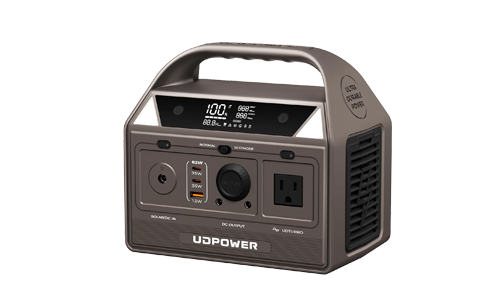
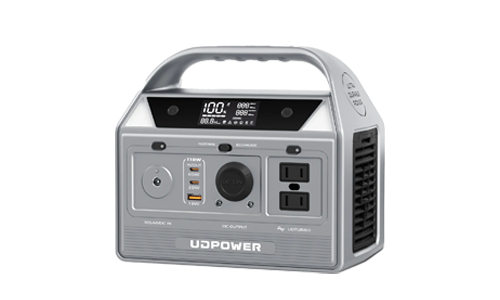
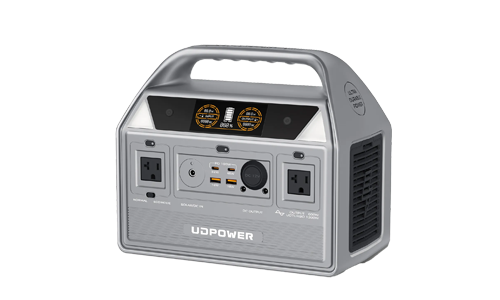
UDPOWER C200
192Wh battery, 200W pure sine wave output, fast charging around 2.5 hours, and a lightweight 5.4 lb body. This is the clearest answer if your real use is charging, router backup, lighting, cameras, and compact travel power.
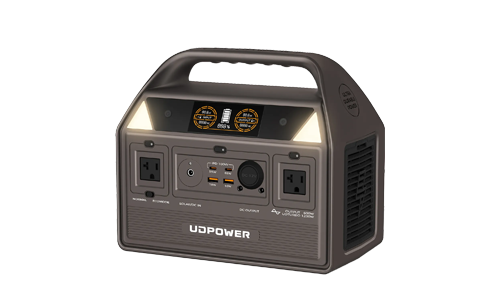
View UDPOWER C200UDPOWER C400

256Wh battery and 400W rated output. This is the better move if your plans keep drifting toward laptops, CPAP, projectors, or a little more runtime and headroom than 200W comfortably allows.
View UDPOWER C400Simple recommendation: buy 200W if your real needs are compact and efficient. Buy up one class if you already know you will keep asking it to do more than a charger-and-router backup should do.
FAQ
Can a 200W power station run a TV?
Sometimes. Many small LED TVs fall under 200W, so they may run fine, but runtime is usually short on a small battery. The safest move is to check the actual wattage label on the TV rather than guessing from screen size.
Can it charge multiple devices at the same time?
Yes, as long as the combined draw stays below the station’s continuous output limit. In practice, charging phones, tablets, a router, and even one laptop together is often well within range.
Can a 200W power station run a laptop and a router together?
Yes, in many cases. A 60W laptop plus a 10W router is still comfortably below the limit. This is one of the most practical real-world use cases for the class.
Can it run a CPAP machine?
Sometimes. It depends on the CPAP model, the connection type, and whether heat features like humidification or heated tubing are enabled. A DC connection and lower-heat settings improve the odds significantly.
How long does it take to recharge a 200W power station?
Wall charging is usually fairly quick for a small battery, often a few hours depending on the specific model and charging input. Solar charging depends heavily on panel wattage and sunlight conditions.
Will a 200W station run a refrigerator?
Usually not a household refrigerator. Some very small coolers or car fridges may work depending on their startup behavior and whether you are using an efficient DC connection.
Should I buy 200W, 300W, 500W, or 600W?
Choose 200W if your loads are mostly phones, routers, lights, cameras, and small electronics. Choose 300W if you want a little more flexibility around laptops, CPAP, and creator gear. Choose 500W or 600W if you want more appliance margin and less stress around mini fridges, coffee gear, or overlapping AC loads.
Does higher wattage always mean longer runtime?
No. Runtime depends on battery capacity in watt-hours, not only on inverter size. A bigger inverter handles bigger loads, but it does not automatically mean the battery lasts longer unless the battery is larger too.