Portable Power Station vs Generator for Camping: Which Is Better?
ZacharyWilliamCamping power is not just about “how many watts.” The better question is: what do you need to run, where are you camping, and can your power source work safely and quietly through the night?
Quick Answer
For most camping trips, a portable power station is the better choice than a gas generator. It is quieter, cleaner, easier to use near tents and RVs, and better for common campsite loads like phones, lights, fans, laptops, cameras, CPAP machines, small coolers, and portable fridges.
A generator still makes sense if you need to run heavy loads for long periods, such as a large RV air conditioner, power tools, or multiple high-watt appliances, and you are camping somewhere that allows generator use.
Best practical setup: bring a portable power station for nighttime and quiet-hours use, add solar panels for daytime recharging, and only consider a generator for high-watt backup or long off-grid stays where fuel storage and noise rules are not a problem.

Portable Power Station vs Generator: Simple Comparison
A portable power station stores electricity in a rechargeable battery. A generator burns fuel to create electricity. That one difference changes almost everything at a campsite: noise, fumes, maintenance, placement, refueling, and whether you can keep power running overnight.
| Camping Factor | Portable Power Station | Gas Generator | Better Choice for Most Campers |
|---|---|---|---|
| Noise at night | Very quiet, mostly fan noise under load | Engine noise, even with quieter inverter models | Portable power station |
| Use near a tent or inside an RV | No fuel exhaust during use; still keep it dry and ventilated | Never use indoors, in a tent, in a garage, or in an enclosed RV space | Portable power station |
| Campground restrictions | Usually easier to use during quiet hours | Often limited to specific generator hours; rules vary by campground | Portable power station |
| Fuel planning | Recharge from wall outlet, vehicle, or solar panels | Requires gasoline, propane, or dual-fuel planning | Portable power station for short trips; generator for long heavy-load use |
| High-watt appliances | Works if inverter output is high enough and battery capacity is large enough | Often better for long high-watt loads if fuel is available | Generator for sustained heavy loads |
| Maintenance | Charge, store properly, keep dry, avoid overheating | Fuel, oil, spark plug, carburetor care, storage prep | Portable power station |
| Best campsite use | Lights, phones, camera gear, fan, laptop, CPAP, fridge, Wi-Fi, small appliances | RV A/C, large tools, long high-watt appliance use | Depends on load, but power station fits more normal camping trips |
For generator placement, follow the safety guidance from the U.S. Consumer Product Safety Commission: portable generators should be used outside only, at least 20 feet away from homes or openings, with exhaust directed away from occupied spaces. Source: CPSC carbon monoxide safety guidance
Why Camping Changes the Decision
At home, a generator can sit far from the house. At a campsite, everyone is closer together. Your tent, your neighbor’s tent, your picnic table, your RV windows, and your sleeping area may all be within a small footprint. That makes noise and exhaust much more important than they look on a product spec sheet.
The campsite test
Before choosing between a power station and generator, ask these five questions:
- Will I need power after quiet hours begin?
- Am I sleeping in a tent, SUV, camper van, or RV?
- Do I need to run medical or sleep-related gear overnight, such as a CPAP?
- Am I powering low-watt essentials or heavy appliances?
- Will I have sun exposure, vehicle charging time, or shore power to recharge?
If your answers involve nighttime use, tents, small electronics, food storage, or quiet campgrounds, a portable power station usually fits better.
| Camping Style | Common Power Needs | Best Fit | Why |
|---|---|---|---|
| Tent camping | Phone, lights, fan, camera, small speaker | Portable power station | Quiet, clean, easy to place near your sleep area |
| Car camping | Cooler, laptop, lights, fans, drone batteries | Portable power station + solar | Good balance of comfort, portability, and recharging |
| Family weekend campsite | Multiple phones, lanterns, fan, fridge, projector, coffee | Mid-to-large power station | Handles mixed small loads without generator noise |
| RV camping with A/C | Air conditioner, microwave, fridge, lights, outlets | Campground hookup or generator; power station for quiet loads | RV A/C can drain batteries quickly and may need high surge output |
| Boondocking basecamp | Fridge, Starlink Mini, tools, lighting, appliance bursts | Hybrid setup | Power station covers quiet hours; generator or solar handles recharge |
What Each Option Can Realistically Run
A common mistake is comparing a “2,000W generator” with a “2,000Wh power station” as if they are the same type of number. They are not. Watts tell you how much power a device needs at one moment. Watt-hours tell you how much stored energy you have over time.
Plain-English rule
Watts = what it can run right now. A 1,200W power station can run devices that stay within its output rating.
Watt-hours = how long it can run. A 1,190Wh power station has much more stored energy than a 256Wh unit, even if both can power small devices.
| Camping Device | Typical Running Power | Portable Power Station Fit | Generator Fit | Practical Note |
|---|---|---|---|---|
| Phone charging | 10–20Wh per full charge | Excellent | Overkill | A power station or even a power bank is enough. |
| LED lantern | 5–10W | Excellent | Overkill | Use low mode to stretch runtime. |
| Camping fan | 10–40W | Excellent | Usually unnecessary | Overnight fan use is one of the best reasons to choose battery power. |
| Laptop | 45–100W | Excellent | Usually unnecessary | USB-C charging is often more efficient than AC adapter charging. |
| Portable fridge / camping fridge | 15–60W average, higher while compressor starts | Very good with enough Wh | Works, but noisy and inefficient for low draw | Battery capacity matters more than peak output for 24-hour fridge use. |
| CPAP | 30–65W+, higher with humidifier | Very good if sized correctly | Not ideal overnight near sleeping area | Use DC adapter if available and test before the trip. |
| Projector | 80–250W | Good with mid-size station | Works, but adds noise during movie night | A power station keeps the campsite quieter. |
| Coffee maker | 600–1,000W | Works only with enough AC output | Works | Short use, high power. Check output rating, not just Wh. |
| Electric kettle | 1,000–1,500W | Needs high-output station | Works | Often easier to use a camping stove for water heating. |
| RV air conditioner | High running watts and high startup surge | Possible only with large systems and careful sizing | Often better for long runtime | For A/C-heavy camping, shore power or generator is usually more realistic. |
Need help estimating campsite battery size? Read: How Many Wh Do I Need for Camping?
The Runtime Math Campers Should Use
For a portable power station, use this planning formula:
Estimated runtime = battery capacity × usable efficiency ÷ device watts
For AC-powered camping devices, a practical planning estimate is about 85–90% usable energy after inverter losses. For USB-C or DC loads, results may be better. For fridges, CPAP machines, and fans, always test your real device before relying on it overnight.
| Example Load | Daily Use | Estimated Energy Need | What It Means |
|---|---|---|---|
| Two phones | 2 full charges each | 40–80Wh | Almost any power station can handle this. |
| LED lantern | 10W × 5 hours | 50Wh | Small but useful to include in your energy budget. |
| Camping fan | 30W × 8 hours | 240Wh | Overnight comfort can use more energy than phone charging. |
| Laptop | 65W × 3 hours | 195Wh | Work, gaming, and editing can raise power draw. |
| Portable fridge | 35W average × 24 hours | 840Wh | Fridge runtime depends heavily on ambient temperature and lid openings. |
| CPAP | 40W × 8 hours | 320Wh | Humidifier and heated tube can significantly increase usage. |
| Starlink Mini | 20–40W × 6 hours | 120–240Wh | Plan extra if using Wi-Fi for work or streaming. |
For more detailed watt-hour planning, use this related guide: Battery Runtime Basics: Watts to Watt-hours.
Recommended UDPOWER Camping Setups
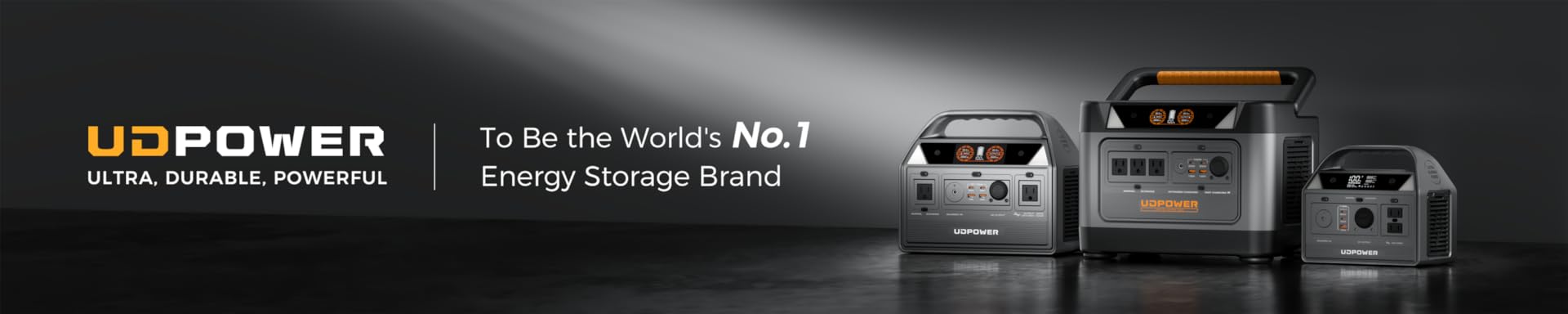
Choose by the kind of camping you actually do. A compact power station is better for light weekends. A larger LiFePO4 unit makes more sense for fridges, CPAP machines, basecamp comfort, and longer trips.
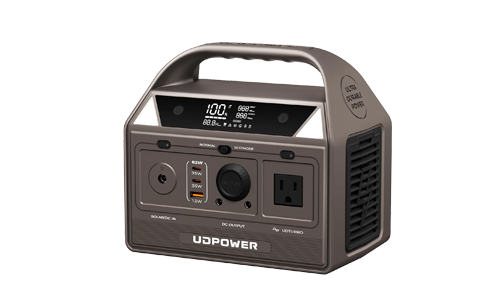
UDPOWER C400 — Best for Light Tent Camping and Day Trips
Capacity: 256Wh · Output: 400W · Battery: LiFePO4 · Weight: 6.88 lbs
Best for phones, lights, camera batteries, small fans, Bluetooth speakers, and short laptop sessions. It is the easiest choice when you want simple campsite power without hauling a large unit.
Choose this if: you camp light, take short trips, and do not need to run a fridge or CPAP all night.

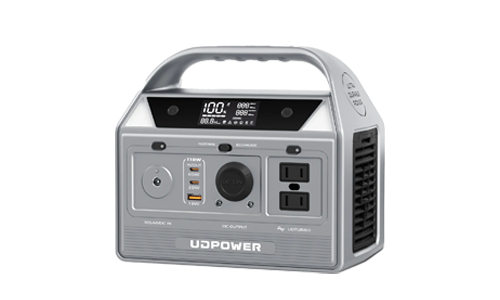
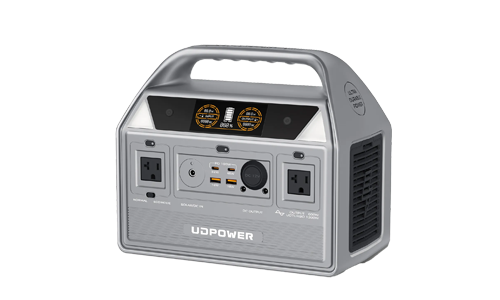
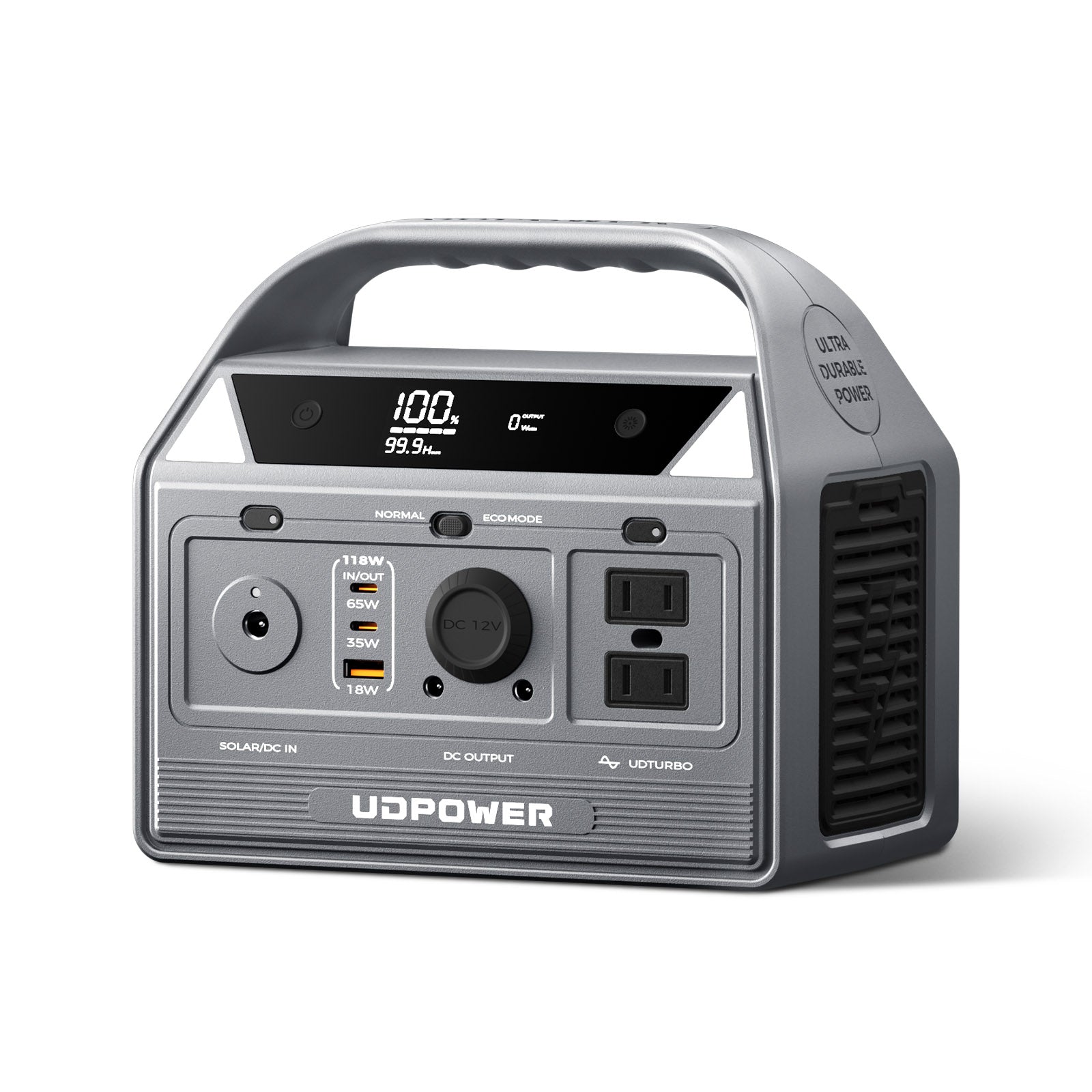
UDPOWER C600 — Best for Weekend Camping Basics
Capacity: 596Wh · Output: 600W · Battery: LiFePO4 · Weight: 12.3 lbs
Best for a weekend campsite with phones, lighting, camera gear, fan use, laptop charging, and a small cooler or compact fridge with careful planning.
Choose this if: you want a practical middle ground for two-person or family weekend camping without stepping into a heavier system.
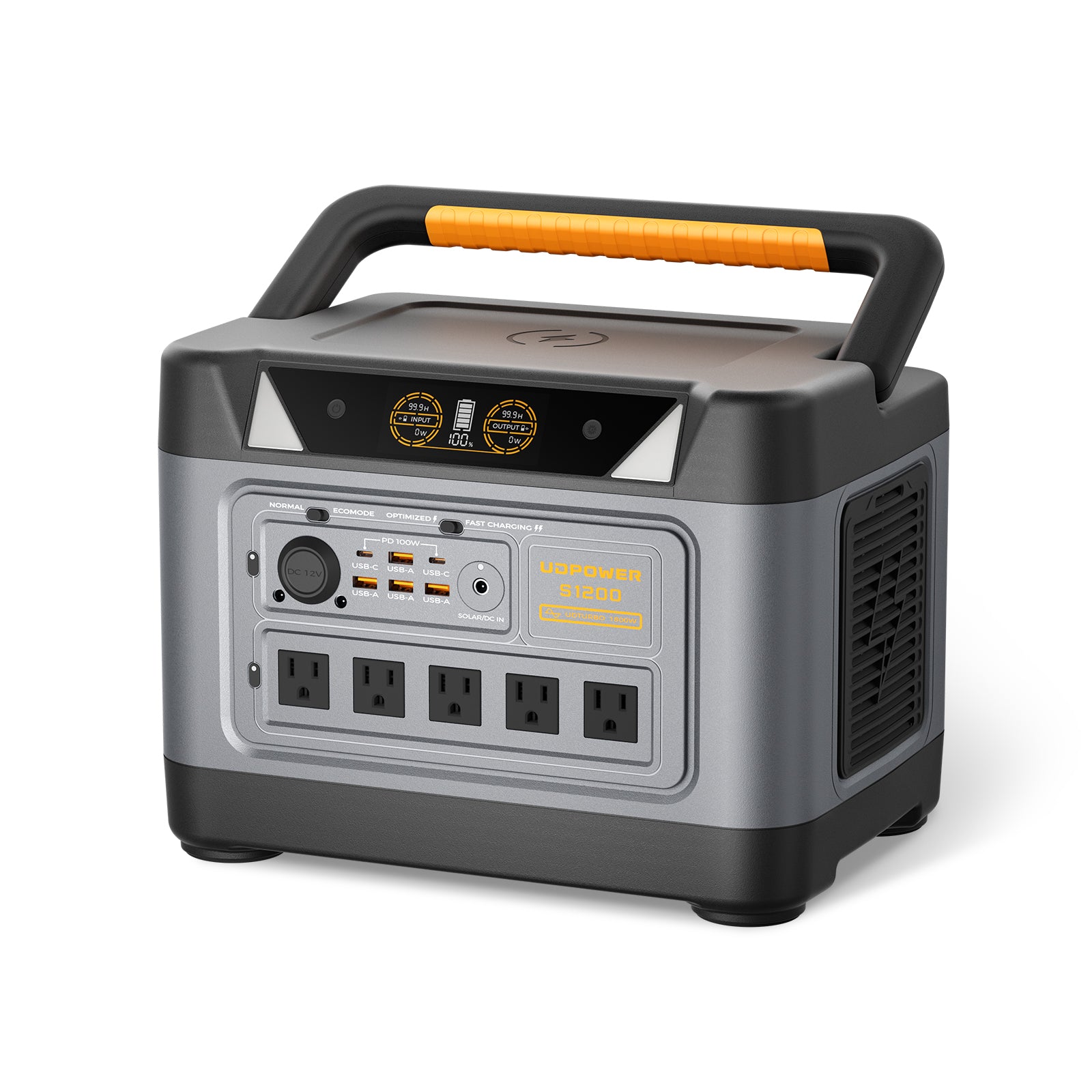
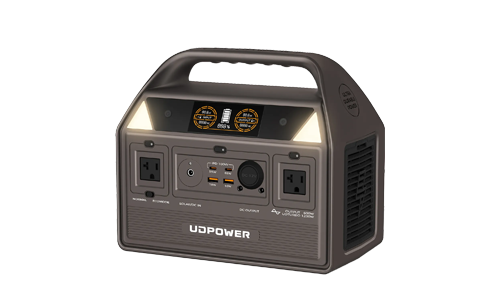
UDPOWER S1200 — Best for Comfort Camping, CPAP, Fridge, and Family Use
Capacity: 1,190Wh · Output: 1,200W rated, 1,800W surge · Battery: LiFePO4 · Weight: 26.0 lbs
This is the stronger pick for a real comfort campsite: overnight fan, laptop, camera charging, CPAP, portable fridge, and short high-watt appliance use within output limits. It also supports fast charging and solar panel bundles.
Choose this if: you want one station that can cover most common camping loads without bringing a gas generator.
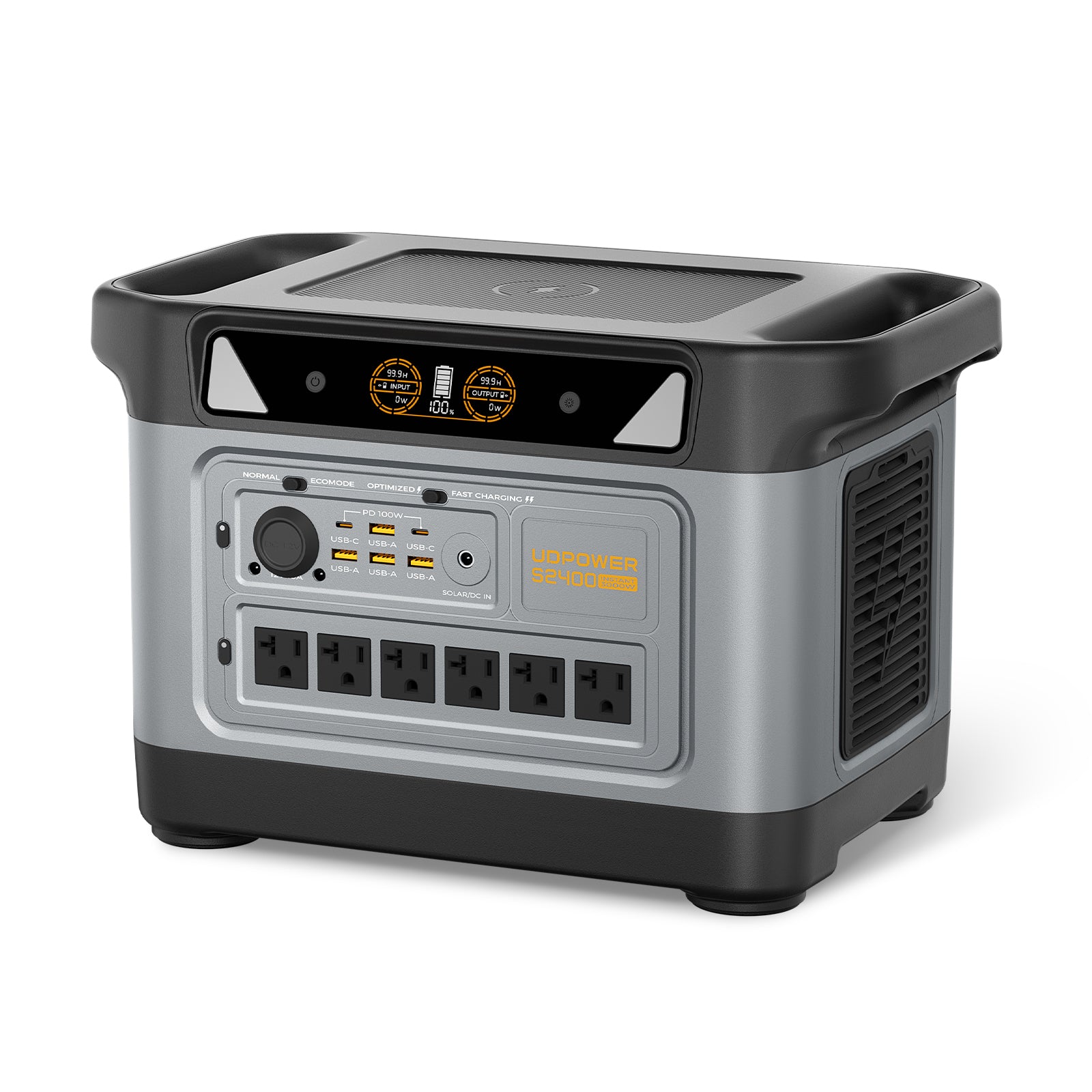
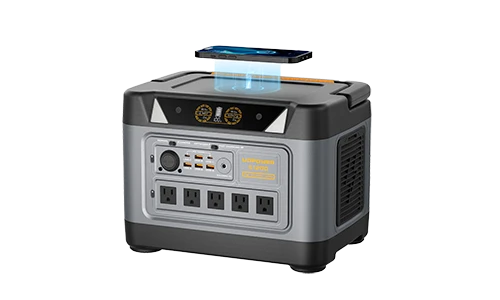
UDPOWER S2400 — Best for RV Camping, Basecamp Loads, and More Headroom
Capacity: 2,083Wh · Output: 2,400W rated, 3,000W surge · Battery: LiFePO4 · Weight: 40.8 lbs
The S2400 gives you more stored energy and higher AC output for demanding camp setups: portable fridge, CPAP, fan, laptop, projector, coffee maker, small kitchen appliances, and multi-person basecamp charging.
Choose this if: you want to avoid generator noise for most campsite loads and still have enough headroom for larger appliances.
| UDPOWER Model | Best Camping Fit | Battery Capacity | AC Output | Example Use |
|---|---|---|---|---|
| C400 | Light camping and day trips | 256Wh | 400W | Phones, lanterns, small fan, camera batteries, short laptop use |
| C600 | Weekend basics | 596Wh | 600W | Lighting, fan, laptop, cameras, small cooler with careful planning |
| S1200 | Comfort camping | 1,190Wh | 1,200W rated / 1,800W surge | CPAP, fridge, fan, laptop, projector, short appliance bursts |
| S2400 | RV camping and basecamp | 2,083Wh | 2,400W rated / 3,000W surge | Fridge, CPAP, fan, coffee maker, projector, multi-device camp setup |
Estimated Runtime Examples by Power Station Size
The table below uses simple planning math and assumes about 90% usable energy for AC-powered loads. Real results vary by device efficiency, temperature, battery age, power mode, and whether the load cycles on and off.
| Load | C400 256Wh | C600 596Wh | S1200 1,190Wh | S2400 2,083Wh |
|---|---|---|---|---|
| 10W LED light | About 23 hours | About 54 hours | About 107 hours | About 187 hours |
| 30W camping fan | About 7.6 hours | About 17.8 hours | About 35.7 hours | About 62.5 hours |
| 40W CPAP setting | About 5.7 hours | About 13.4 hours | About 26.8 hours | About 46.9 hours |
| 65W laptop | About 3.5 hours | About 8.2 hours | About 16.4 hours | About 28.8 hours |
| 100W projector | About 2.3 hours | About 5.4 hours | About 10.7 hours | About 18.7 hours |
| 35W average camping fridge | About 6.5 hours | About 15.3 hours | About 30.6 hours | About 53.6 hours |
For fridge planning, average watts matter more than the short compressor startup moment. Hot weather, poor ventilation, frequent lid openings, and warm food loaded into the fridge can shorten runtime.
Generator Safety and Campground Rules
A generator can be useful, but it has rules that do not apply to a battery power station. The two big ones are carbon monoxide safety and campground noise restrictions.
Generator safety checklist
- Never run a generator inside a tent, RV, camper, garage, cabin, carport, or enclosed space.
- Place it outside and far from people, doors, windows, vents, and sleeping areas.
- Point exhaust away from tents, RV windows, vehicles, and neighboring campsites.
- Use a battery-powered carbon monoxide alarm where people sleep.
- Keep the generator dry and follow the owner’s manual for extension cords and load limits.
- Let the engine cool before refueling.
- Check campground generator hours before you book.
| Rule Area | What Campers Should Know | Source |
|---|---|---|
| Carbon monoxide | Portable generators should be used outside only, at least 20 feet away from occupied spaces or openings, with exhaust facing away. | CPSC |
| Campground generator hours | Many parks restrict generator use to specific windows. Yosemite, for example, lists generator use only during certain morning, midday, and evening hours. | National Park Service |
| Soundscape etiquette | Leave No Trace recommends reducing noise in developed campgrounds, following quiet hours, and keeping electronics volume down. | Leave No Trace |
| Emissions | Fuel-burning engines are regulated because they emit pollutants. Battery power stations do not create exhaust while powering devices. | EPA |
These rules are why many campers now use a power station for overnight loads even if they still own a generator. The generator can recharge batteries during allowed hours; the power station handles quiet use at night.
When a Hybrid Setup Makes Sense
You do not always have to choose one forever. For longer boondocking trips, a hybrid setup can be the most practical answer.
Hybrid camping power plan
Daytime: recharge the power station from solar panels, vehicle charging, shore power, or a generator during allowed hours.
Evening: run lights, fridge, fan, laptop, projector, and cooking prep from the power station.
Overnight: keep only essential quiet loads running, such as CPAP, fridge, phone, or fan.
Morning: check battery level and decide whether solar alone is enough or whether you need another recharge window.
| Trip Situation | Best Power Plan | Why It Works |
|---|---|---|
| One-night tent trip | Power station only | No fuel, no noise, easy setup |
| Two-night family campsite | Power station + solar panel | Solar helps refill daily use without generator noise |
| CPAP camping | Power station sized for at least one full night, preferably two | Quiet and safer near sleeping areas |
| Portable fridge for several days | Large power station + solar | Fridge is a 24-hour load, so daily recharge matters |
| RV A/C in hot weather | Campground hookup or generator, plus power station for quiet loads | A/C needs high output and long energy supply |
| Remote basecamp with tools | Hybrid system | Generator covers heavy charging; power station covers quiet essentials |
Solar Panels Can Change the Answer
A portable power station is a stored-energy device. Solar panels turn it into a daily energy system. This matters for camping because your goal is not always to carry the biggest battery. Your goal is to finish each day with enough energy for the night.
Practical solar planning
A 120W panel will not produce 120W all day. Real output changes with sun angle, clouds, shade, heat, panel placement, and charging limits. For camping, plan solar as a way to extend runtime, not as a guaranteed full-speed refill every hour.
Best habits: place the panel in direct sun, avoid partial shade, adjust angle during the day, keep the power station shaded and ventilated, and check the real-time input reading instead of guessing.
Shop compatible solar options here: UDPOWER solar panels and UDPOWER solar generator kits.
Common Buying Mistakes
Mistake 1: Buying by watts only
A high watt rating does not guarantee long runtime. A 1,500W appliance can drain a battery quickly. For camping, match both output watts and watt-hours.
Mistake 2: Ignoring quiet hours
A generator may look perfect until you realize the campground only allows generator use during limited daytime windows. If you need overnight power, plan around a battery system.
Mistake 3: Treating a fridge like a light bulb
A fridge cycles on and off. Its average draw depends on weather, insulation, how often you open it, and how full it is. Use a larger battery than the simplest formula suggests if food storage matters.
Mistake 4: Bringing high-heat appliances without checking output
Coffee makers, kettles, hair dryers, heaters, and induction cooktops can use huge wattage. Even if they run for only a few minutes, the power station must support the live AC load.
Mistake 5: Forgetting recharge time
If you use 700Wh per day and only add 200Wh back from solar, your battery will still go down. Build a full energy loop: daily use, daily recharge, and reserve for the last night.
Related Camping Power Guides
FAQ: Portable Power Station vs Generator for Camping
Is a portable power station better than a generator for camping?
For most campers, yes. A portable power station is quieter, easier to use, cleaner at the campsite, and better suited for phones, lights, fans, laptops, camera gear, CPAP machines, and portable fridges. A generator is better for long high-watt loads where fuel, noise, and campground rules are not a problem.
Can I use a portable power station inside a tent?
You can use a battery power station near your tent setup because it does not produce fuel exhaust while discharging. Keep it dry, ventilated, off wet ground, and away from direct rain or standing water. Do not use a gas generator inside or near a tent.
Can a portable power station run a camping fridge?
Yes, if the battery capacity is large enough. A camping fridge often uses 15–60W on average, but runtime depends on outdoor temperature, fridge insulation, food load, and how often the lid is opened. For full weekend fridge use, a 1,000Wh-class or larger power station is usually more comfortable.
Can a generator run overnight at a campground?
Often no. Many campgrounds restrict generator use during quiet hours or only allow it during specific daytime windows. Check the campground rules before you book. If you need overnight power for a fan, fridge, or CPAP, a portable power station is usually the better option.
What size portable power station do I need for camping?
Light campers may only need 150–300Wh. Weekend campers with lights, phones, fans, cameras, and laptops often fit better in the 500–1,000Wh range. If you run a CPAP, portable fridge, Starlink Mini, or multi-person basecamp, plan around 1,000–2,000Wh or more.
Is a solar generator the same as a portable power station?
A solar generator usually means a portable power station paired with solar panels. The power station stores energy, and the solar panel helps recharge it during the day.
Should I bring a generator or a power station for RV camping?
For RV lights, devices, fridge support, CPAP, Wi-Fi, and quiet-hour use, bring a power station. For sustained RV air conditioning or heavy appliances, a campground hookup or generator may be more realistic. Many RV campers use both: generator or shore power for heavy loads, power station for quiet essentials.
Can a portable power station replace a gas generator?
It can replace a generator for many normal camping loads, especially quiet overnight use and low-to-medium watt devices. It may not replace a generator for long-running air conditioners, heaters, heavy tools, or continuous high-watt appliances.
How do I make a power station last longer while camping?
Use DC or USB-C charging when possible, reduce screen brightness, run fans on lower settings, pre-chill your fridge before leaving, keep the fridge shaded, avoid high-heat appliances, recharge during the day, and keep a 20% reserve for the last night.
What is the best UDPOWER model for camping?
For light trips, choose C400. For weekend basics, choose C600. For comfort camping with CPAP, fridge, fan, and laptop use, choose S1200. For RV camping, basecamp setups, and higher-output appliances, choose S2400.
Choose Your Camping Power Setup
If your campsite needs quiet overnight power, start with a portable power station. If your trip includes a fridge, CPAP, fan, laptop, or several people charging devices, move up in watt-hours instead of relying on a noisy generator.