

Pellet Stove Battery Backup: How Much Power Do You Need and How Long Will It Run?
Last updated: August 12, 2026
Many pellet stoves draw substantially more power during ignition than during steady operation, and manufacturer requirements vary enough that you should not size a backup from a generic “100-watt pellet stove” assumption.
For many homeowners, a 1,000Wh-class pure sine wave power station with at least about 1,000W of rated AC output is a practical starting point for several hours of backup. For longer overnight outages, a roughly 2,000Wh-class battery provides much more reserve. Always verify your stove manual first because some manufacturers specify minimum inverter capacity or warn that certain backup systems may not be compatible with the stove's electronics.
- Why a pellet stove needs electricity
- How many watts does a pellet stove use?
- What actual stove manuals tell us
- The three numbers to check before buying backup power
- How long will a battery run a pellet stove?
- Why startup changes the runtime calculation
- How much battery capacity do you need?
- Recommended UDPOWER pellet stove backup options
- Pellet stove UPS vs. portable power station
- How to test your backup before winter
- Do not forget the shutdown cycle
- Winter outage planning
- Common pellet stove backup mistakes
- Frequently asked questions

Pellet heat can feel almost independent of the grid because the heat itself comes from burning wood pellets. The catch is that a modern pellet stove is not a passive wood stove. Its fuel delivery, airflow and controls depend on electricity.
The U.S. Environmental Protection Agency specifically notes that the automatic pellet-feed system in a pellet stove requires electrical power. You can read the EPA's wood-burning appliance guidance.
That makes a battery backup for a pellet stove useful for more than comfort. A properly matched backup can keep the auger, combustion blower, controls and other required components powered instead of allowing the stove to lose electricity abruptly when the utility fails.
Why Does a Pellet Stove Need Electricity?
A pellet stove burns fuel, but several parts of the system are electrically powered. Depending on the model, these may include:
- Igniter: heats up during automatic startup to light the pellets.
- Auger motor: moves pellets from the hopper into the burn pot.
- Combustion or exhaust blower: maintains the airflow needed for combustion and venting.
- Convection blower: moves heated air into the room.
- Control board: manages temperature, feed rate, sensors and safety logic.
- Thermostat and sensors: communicate with the stove's control system.
That is why the stove may go completely out when utility power fails even though the hopper is full of pellets.
How Many Watts Does a Pellet Stove Use?
There is no single correct pellet stove wattage.
Online estimates often give one number for startup and another for normal operation, but actual electrical demand depends on the stove, heat setting, blower speed, igniter design and control strategy.
A better way to think about pellet stove power is to separate the operating cycle into stages.
| Operating Stage | What Is Running | Power Behavior | Why It Matters for Backup |
|---|---|---|---|
| Cold startup | Igniter, combustion blower, auger and controls | Often the highest electrical demand | Your inverter must handle this stage without overloading |
| Steady burn | Auger, combustion blower, convection blower and controls | Usually lower than ignition demand | This load has the biggest effect on multi-hour runtime |
| High heat | Higher feed rate and often higher blower speed | May consume more than low or medium heat | Cold weather can shorten backup runtime |
| Shutdown | Fans and controls may continue operating after fuel feed stops | Power is still required for a period after the fire begins winding down | Do not plan to exhaust the battery exactly when you want to stop heating |
Pellet Stove Startup Watts: What Actual Stove Manuals Tell Us
Manufacturer documentation shows why a generic wattage estimate should never replace your stove's manual.
| Example | Published Electrical Information | What It Means for Backup Sizing | Source |
|---|---|---|---|
| Harman Absolute63 | 115 VAC, 60 Hz; start rating 3.5A; run rating 2.5A | The manual's electrical rating is significantly more useful for compatibility than assuming every stove is a 100W load. | Harman owner's manual |
| Harman Advance | 120 VAC, 60 Hz; start 4.2A; run 2.8A | The manual also warns that some generator or battery-backup systems may not be compatible with the appliance's microprocessor electronics. | Harman Advance manual |
| Quadra-Fire Castile | Manufacturer calls for at least 600W from a generator or at least 800W from an inverter during the start cycle. | A small power source may appear adequate based on average running watts but still fail the manufacturer's startup requirement. | Quadra-Fire Castile manual |
There is another subtle point here: volts multiplied by amps gives volt-amps (VA), which is not always identical to true watts for motors and electronic loads. That is one reason a plug-in watt meter is valuable when you are trying to estimate runtime.
Three Numbers Matter When Choosing a Pellet Stove Battery Backup
1. Startup and Maximum Output Requirement
The power station must provide enough AC output for the most demanding part of the stove's cycle. If your stove manufacturer specifies an 800W minimum inverter, choosing a 600W inverter simply because the stove appears to use only 120W after ignition is not a good sizing strategy.
2. Battery Capacity in Watt-Hours
Watt-hours determine how long the stove can operate after the grid goes down.
A 1,200W inverter does not mean the battery contains 1,200Wh. Output watts and battery watt-hours describe different things.
For more on that distinction, see the UDPOWER UPS runtime guide .
3. Waveform and Transfer Compatibility
Pellet stoves contain motors and electronic controls, so power quality matters. A pure sine wave AC output is the safer default choice unless your stove manufacturer explicitly approves something else.
You can learn more in How to Tell if a Generator Is Pure Sine Wave .
If you also want automatic continuity during a grid failure, check the transfer time of the backup system and verify it with your actual stove.
How Long Will a Battery Run a Pellet Stove?
The simplest planning formula is:
Estimated runtime = battery capacity × usable efficiency ÷ average stove watts
For UDPOWER examples in this guide, we use a 90% usable-energy planning factor.
That means:
- UDPOWER S1200: 1,190Wh × 0.90 = about 1,071Wh usable for planning
- UDPOWER S2400: 2,083Wh × 0.90 = about 1,875Wh usable for planning
The table below intentionally uses several possible average stove loads rather than pretending every pellet stove uses the same amount of electricity.
| Measured Average Stove Load | S1200 1,190Wh |
S2400 2,083Wh |
Planning Interpretation |
|---|---|---|---|
| 100W | About 10.7 hours | About 18.7 hours | Low electrical demand after ignition |
| 150W | About 7.1 hours | About 12.5 hours | Useful middle-of-the-road planning example |
| 200W | About 5.4 hours | About 9.4 hours | Higher blower or overall electrical demand |
| 250W | About 4.3 hours | About 7.5 hours | Higher sustained electrical load |
| 300W | About 3.6 hours | About 6.2 hours | Conservative high-load planning example |
These are estimates, not guaranteed runtimes. Actual battery life changes with stove behavior, blower settings, ignition cycles, ambient temperature, battery condition, inverter overhead and other connected devices.
Why Startup Changes the Runtime Calculation
A common runtime mistake is to measure the stove after it is already burning and then assume that wattage applies for the entire outage.
Consider an example stove that:
- uses 450W during a 10-minute ignition cycle, then
- averages 150W during steady operation.
The ignition cycle alone consumes:
450W × 10/60 hour = 75Wh
After that startup event, the remaining energy is available for steady operation.
| Power Station | 90% Planning Energy | Startup Energy Used | Approx. Steady Runtime at 150W | Approx. Total Time Including Startup |
|---|---|---|---|---|
| UDPOWER S1200 | 1,071Wh | 75Wh | About 6.6 hours | About 6.8 hours |
| UDPOWER S2400 | 1,875Wh | 75Wh | About 12.0 hours | About 12.2 hours |
How Much Battery Capacity Do You Need for a Pellet Stove?
A good emergency plan should not aim to drain the battery to zero. You may still need electricity for the stove's shutdown cycle, and winter conditions rarely follow the exact runtime you calculated at home.
The table below assumes:
- 150W average stove load
- 90% usable-energy factor
- 20% additional emergency reserve
| Desired Heating Time | Stove Energy Needed | Approx. Rated Battery Capacity to Target | Practical Class |
|---|---|---|---|
| 2 hours | 300Wh | About 420Wh+ | Short-outage backup |
| 4 hours | 600Wh | About 835Wh+ | Roughly 1,000Wh class |
| 8 hours | 1,200Wh | About 1,670Wh+ | Roughly 2,000Wh class |
| 12 hours | 1,800Wh | About 2,500Wh+ | Larger or rechargeable backup system |
If your stove actually averages 250W instead of 150W, the battery requirement changes dramatically. Eight hours at 250W is 2,000Wh of appliance energy before conversion losses and reserve are added.
That is why buying a backup before measuring your stove can lead to disappointment.
Recommended UDPOWER Battery Backup Options for Pellet Stoves
For pellet-stove use, output compatibility should come before portability. Because some stove manuals call for more inverter headroom during startup, UDPOWER's higher-output S-Series models are the more practical place to start than selecting a small station solely from average running watts.
UDPOWER S1200 — 1,190Wh, 1,200W Pure Sine Wave
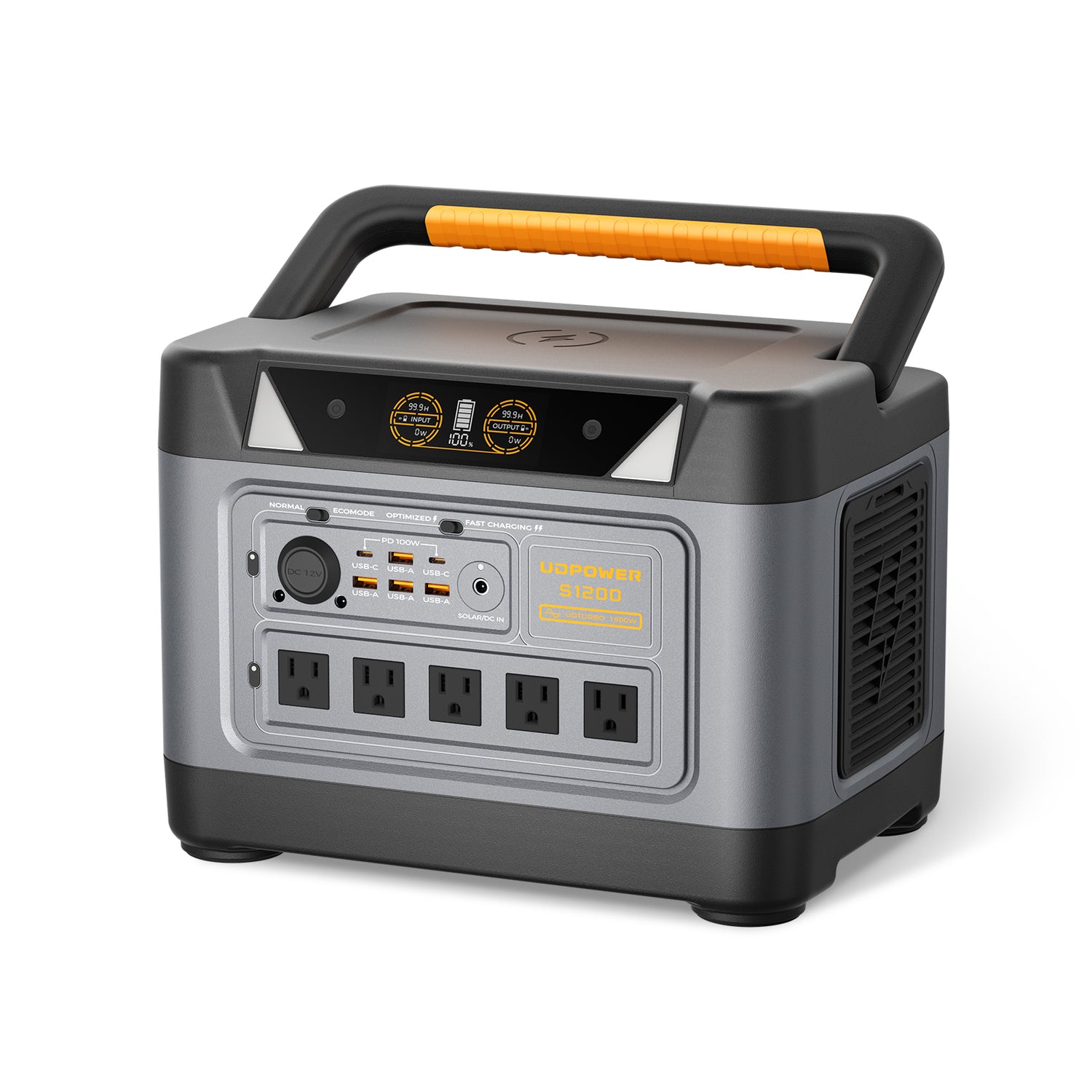
- Capacity: 1,190Wh
- Rated AC output: 1,200W pure sine wave
- Higher-power capability: up to 1,800W through UDTURBO for compatible loads
- UPS mode: response time ≤10ms
- Battery: LiFePO4
- Cycle life: 4,000+ cycles listed by UDPOWER
- AC outlets: 5
- Total outputs: 14
- Weight: approximately 26 lb
- Solar input: up to 400W
For a measured 150W average pellet-stove load, the S1200 provides a planning estimate of about 7.1 hours before adding an extra emergency reserve or detailed startup-cycle adjustment.
Its 1,200W rated pure sine wave AC output also provides more startup headroom than a small 500–600W inverter, which matters when a stove manufacturer specifies a higher minimum inverter rating.
Important: ≤10ms UPS switching does not guarantee compatibility with every pellet stove. Test your specific appliance before relying on the setup during a winter outage.
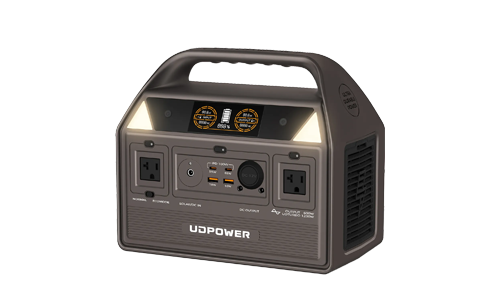
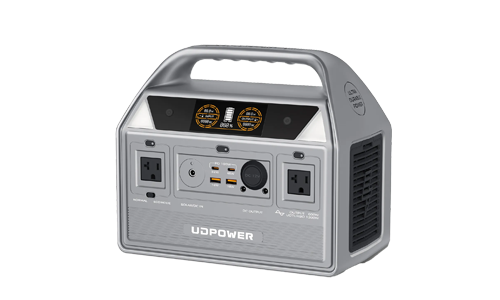
UDPOWER S2400 — 2,083Wh, 2,400W Pure Sine Wave
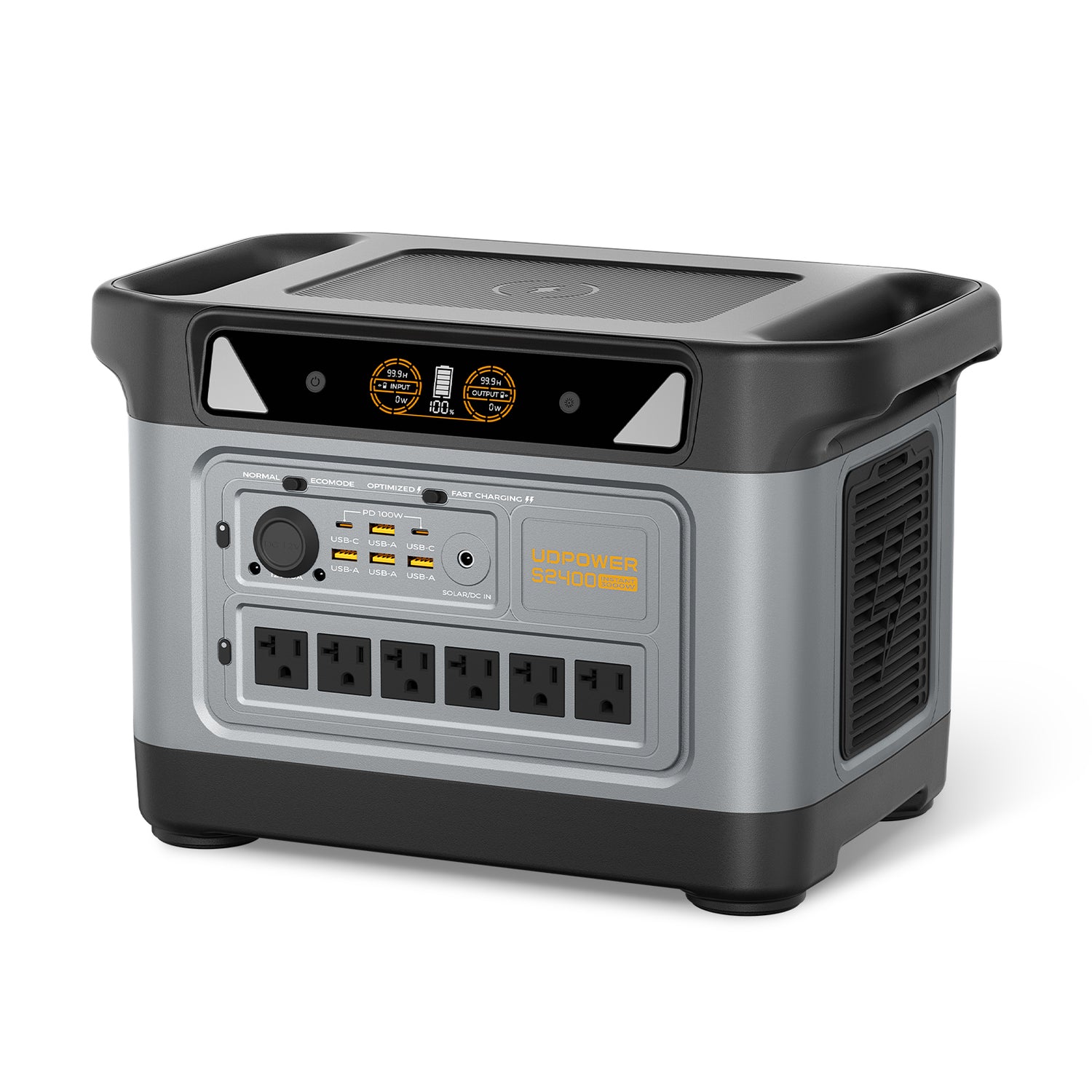
- Capacity: 2,083Wh
- Rated AC output: 2,400W pure sine wave
- Startup capability: up to 3,000W surge
- UPS mode: response time ≤10ms
- Battery: LiFePO4
- AC outlets: 6
- Total outputs: 15
- Weight: approximately 40.8 lb
- Solar input: up to 400W
At a measured 150W average pellet-stove load, the S2400 works out to approximately 12.5 hours using the same 90% planning factor.
The larger battery is the main advantage for pellet-stove use. A stove may not need 2,400W continuously, but winter outages are one of the situations where extra stored energy can be much more valuable than simply having more AC outlets.
To compare the two units directly, see UDPOWER S1200 vs. S2400 , or browse the complete UDPOWER portable power station collection .
Pellet Stove UPS vs. Portable Power Station: Which Is Better?
The phrase pellet stove UPS can describe several different products, and they do not all solve the same problem.
| Backup Type | Main Strength | Main Limitation | Best Use |
|---|---|---|---|
| Small computer-style UPS | Fast automatic transfer | Often limited battery capacity; output waveform and startup capacity vary | Brief outages or safe shutdown when verified compatible |
| Dedicated pellet-stove battery backup | Designed specifically around heating-appliance backup | Compatibility, battery type and runtime still vary by product | Owners wanting a stove-focused permanent solution |
| Portable power station with UPS mode | Larger Wh capacity, pure sine wave output, portable, can power other essentials | Must still be tested with the specific stove; not every appliance tolerates every transfer system | Multi-hour outages and broader emergency backup |
| Fuel generator | Can continue operating as long as fuel is available | Noise, fuel storage, maintenance and carbon monoxide hazard | Long outages where outdoor generator use is practical |
UDPOWER has a more detailed comparison of these two electrical backup categories in Portable Power Station vs. UPS for Home Backup .
How to Test a Pellet Stove Battery Backup Before Winter
Do not wait for an ice storm to discover that your backup will not restart the stove.
- Read the stove manual. Find its voltage, current, inverter, generator and backup-power requirements.
- Confirm pure sine wave output. Use a backup type approved or recommended for your stove.
- Fully charge the battery. Do the test when the station is at 100%.
- Start the pellet stove from cold. Verify that the backup can handle ignition without overload alarms or abnormal stove behavior.
- Measure steady-state watts. Record power at low, normal and higher heat settings if possible.
- Test a simulated outage. If you intend to use UPS mode, disconnect utility input according to the power-station instructions and confirm that the stove continues normally.
- Restore utility power. Confirm normal transfer back to grid power and normal stove operation.
Watch for unusual fan noise, control-board errors, resets or failed ignition. If the stove manufacturer says the appliance is not compatible with your backup system, follow the manufacturer's guidance.
Do Not Forget the Pellet Stove Shutdown Cycle
Runtime calculations often assume the battery can be used all the way to its final watt-hour. For a pellet stove, that is poor emergency planning.
After you turn the stove off, the appliance may continue operating fans and controls while the remaining fuel finishes burning and the stove cools down.
The exact shutdown sequence is model-specific, so follow your stove manual. The practical lesson is simple:
That is one reason this guide recommends keeping an emergency reserve instead of treating the calculated maximum runtime as a target.
A Better Winter Outage Plan
Keep the Backup Charged Before the Storm
A 2,000Wh battery at 55% state of charge is not a 2,000Wh emergency backup. If severe winter weather is forecast, charge the station in advance.
Measure Your Stove Before You Need the Data
A plug-in power meter can tell you more about your actual stove than a generic internet wattage chart. Measure startup, steady operation and shutdown.
Store the Power Station Away From Stove Heat
Keep the backup in a dry, ventilated location within the operating and storage limits listed by the power-station manufacturer. Do not place it against the pellet stove, directly beside the hot exhaust path or where falling ash can reach it.
Keep Smoke and Carbon Monoxide Alarms Working
Pellet appliances burn fuel, so normal combustion and venting safety still applies during an outage. The U.S. Fire Administration recommends carbon monoxide alarms when using fuel-burning appliances. See USFA heating safety guidance.
Do Not Count on Full Solar Output During a Winter Storm
Both the S1200 and S2400 support up to 400W of solar input, which can help during an extended outage. But “400W solar input” is an equipment limit, not a promise that winter panels will produce 400W all day.
Snow, clouds, low winter sun angle, partial shading and short daylight hours can all reduce daily solar energy. Treat solar as a useful recharge option rather than assuming it will completely replace the battery energy your stove uses overnight.
Prioritize Heat Before Convenience Loads
During a cold-weather outage, avoid draining your pellet-stove backup with nonessential high-power devices. A 1,000W kitchen appliance used for 30 minutes consumes roughly 500Wh—enough energy to run a 150W pellet stove for more than three additional hours before conversion losses.
Common Pellet Stove Battery Backup Mistakes
Mistake 1: Buying From Running Watts Alone
Your stove may use relatively little power once the fire is established but require substantially more inverter capacity during ignition.
Mistake 2: Assuming Amps × Volts Is Always the Actual Watt Draw
That calculation gives VA. A plug-in watt meter is better for estimating the appliance's real energy consumption.
Mistake 3: Buying a Modified Sine Wave Inverter Without Checking the Stove Manual
Motors and electronic control boards can be sensitive to waveform quality. Pure sine wave is the safer starting point unless your stove manufacturer says otherwise.
Mistake 4: Assuming a Fast UPS Transfer Guarantees Compatibility
A ≤10ms transfer specification is useful, but stove electronics vary. Test the actual stove and backup combination before relying on it.
Mistake 5: Planning to Use 100% of the Battery
Leave energy for shutdown and unexpected outage duration.
Mistake 6: Plugging the Power Station Into House Wiring
Portable power stations are normally intended to power appliances directly from their AC outlets. Do not backfeed a wall receptacle or electrical panel. Any permanent home electrical integration should be reviewed and installed by a qualified electrician.
Mistake 7: Running a Fuel Generator Indoors
If you use a gasoline, propane or other combustion generator instead of a battery station, it must be operated outdoors according to manufacturer and government safety guidance. EPA emergency guidance says portable fuel generators should be used outdoors and at least 20 feet from buildings.
See EPA power-outage and indoor-air guidance.
Pellet Stove Backup Buying Checklist
- Check the exact pellet stove model number.
- Read its backup, inverter or generator requirements.
- Confirm required AC voltage and frequency.
- Choose pure sine wave output unless the stove manufacturer specifies otherwise.
- Make sure rated inverter output covers startup requirements.
- Measure actual steady running watts.
- Calculate required Wh for your expected outage length.
- Add an emergency reserve instead of sizing to 0% battery.
- Verify UPS or transfer behavior with the actual stove.
- Test cold startup, normal operation and shutdown.
- Keep the backup charged before winter storms.
- Keep working smoke and carbon monoxide alarms in the home.
Frequently Asked Questions
Can you run a pellet stove on a battery backup?
Yes, many pellet stoves can run from a properly sized battery backup or portable power station. The backup must meet the stove manufacturer's AC voltage, inverter output, waveform and startup requirements. Confirm compatibility in the stove manual before relying on it during an outage.
How many watts does a pellet stove need to start?
Startup requirements vary by stove. The igniter usually makes startup more demanding than steady operation. For example, some manufacturer manuals specify several hundred VA of electrical load, while a Quadra-Fire Castile manual calls for at least an 800W inverter during the start cycle. Use the requirement for your exact stove rather than a generic average.
How many watts does a pellet stove use while running?
There is no universal number. Electrical use changes with stove design, blower speed, feed rate and operating mode. Measure your stove with a plug-in watt meter after it reaches steady operation if you want the most useful runtime estimate.
How long will a 1,000Wh battery run a pellet stove?
With a 90% usable-energy planning factor, a 1,000Wh battery provides roughly 900Wh of usable energy. At a 150W average stove load that is about 6 hours before adding an additional shutdown or emergency reserve. A 250W average load would reduce the estimate to about 3.6 hours.
How long will the UDPOWER S1200 run a pellet stove?
Using its 1,190Wh capacity and a 90% planning factor, the S1200 works out to about 10.7 hours at 100W, 7.1 hours at 150W, 5.4 hours at 200W, 4.3 hours at 250W or 3.6 hours at 300W. Actual runtime depends on startup cycles, stove settings, temperature and other factors.
How long will the UDPOWER S2400 run a pellet stove?
Using its 2,083Wh capacity and a 90% planning factor, the S2400 works out to about 18.7 hours at 100W, 12.5 hours at 150W, 9.4 hours at 200W, 7.5 hours at 250W or 6.2 hours at 300W. These are planning estimates rather than guaranteed runtimes.
Do I need a pure sine wave inverter for a pellet stove?
Pure sine wave is the safer default for pellet stoves because they contain motors and electronic controls. Some stove manufacturers also provide specific generator or battery-backup compatibility requirements. Follow the manual for your exact stove.
Can I use a computer UPS for a pellet stove?
Sometimes, but only if its AC output, waveform, startup capability and battery capacity meet the stove manufacturer's requirements. Many computer UPS units are designed primarily for short-duration electronics backup rather than hours of heating.
Is a portable power station better than a UPS for a pellet stove?
A portable power station usually offers much more battery capacity for multi-hour outages, while a dedicated UPS may be optimized for automatic transfer during brief interruptions. A power station with UPS mode can offer both features, but the actual stove should still be tested for compatibility.
Will a pellet stove automatically keep running when the power goes out?
Not unless it has a compatible backup system already supplying power. Pellet stoves rely on electrically powered components such as the auger, fans and controls. A compatible UPS or power station with backup mode can reduce interruption, but test the setup with your stove before an emergency.
Can solar panels keep a pellet stove running during a long outage?
Solar panels can recharge a compatible power station and extend outage runtime, but winter solar production is highly variable. Snow, clouds, shading, low sun angles and shorter daylight hours can reduce energy production, so solar should not be treated as guaranteed continuous power.
Should I shut the pellet stove down before the backup battery reaches 0%?
Yes. Leave enough energy for the normal shutdown cycle specified by the stove manufacturer. Many pellet stoves continue operating fans or controls while the remaining fuel burns down and the appliance cools.
Can I connect a portable power station directly to my home electrical panel for the pellet stove?
Do not backfeed a wall outlet or home electrical panel. Portable stations are generally designed to power compatible appliances directly from their AC outlets. Permanent wiring or transfer-switch integration should be evaluated and installed by a qualified electrician.
Final Takeaway
The best pellet stove battery backup is not simply the battery with the biggest watt-hour number. It has to satisfy three separate requirements:
- Enough inverter output to start and operate your exact stove.
- Enough battery capacity to cover the outage duration you actually care about.
- Power quality and transfer behavior that your stove's controls can tolerate.
For many households, the 1,190Wh UDPOWER S1200 is a practical short-to-medium outage option, while the 2,083Wh S2400 gives substantially more reserve for longer winter outages. Neither recommendation replaces the electrical requirements in your pellet stove manual.
Before the first winter storm, measure your stove, perform a cold-start test on backup power, simulate a utility failure and verify a normal shutdown. That test is worth far more than discovering during an outage that an on-paper runtime estimate did not match the appliance.
Sources & Related Reading
- U.S. EPA — Frequent Questions About Wood-Burning Appliances
- Harman Absolute63 Owner's Manual
- Harman Advance Owner's Manual
- Quadra-Fire Castile Pellet Stove Owner's Manual
- U.S. Fire Administration — Heating Fire Safety
- U.S. EPA — Power Outages and Indoor Air Quality
- UDPOWER — UPS Runtime Calculator & Real Examples
- UDPOWER — Portable Power Station vs. UPS for Home Backup
- UDPOWER — How to Tell if a Generator Is Pure Sine Wave
- UDPOWER — S1200 vs. S2400 Comparison
Choose a Backup Before the Next Winter Outage
Compare UDPOWER LiFePO4 portable power stations by battery capacity, pure sine wave AC output and expected runtime for your pellet stove.
View Portable Power StationsRelated Articles


