

How Many Watts Does a Toaster Use?
A toaster can draw more power than a television, laptop, and Wi-Fi router combined—but only for a few minutes. If you're checking your electric bill, deciding between a 2-slice and a 4-slice model, or planning breakfast during an outage, two numbers matter: how many watts the toaster draws while heating and how many minutes each batch takes.

Quick answer: A household pop-up toaster can draw roughly 850–1,800 watts, based on the U.S. models compared below. A BLACK+DECKER 2-slice model is rated at 850W; a Breville 4-slice model is rated at 1,800W. A 1,200W toaster running for three minutes uses approximately 60Wh (0.06kWh)—about 1.2 cents at an assumed electricity price of $0.20/kWh. Check your exact model's label: slice count alone does not establish its wattage.
Actual Toaster Wattages: 2-Slice vs. 4-Slice Models
These specific U.S. product ratings are more useful than treating all 2-slice toasters as 1,000W or all 4-slice toasters as 1,500W. Even two appliances with the same slice capacity can have very different electrical requirements.
| Brand and model | Type | Rated power | Current at 120V | Manufacturer source |
|---|---|---|---|---|
| BLACK+DECKER TR1256W | 2-slice pop-up | 850W | 7.1A | Product page |
| Breville BTA820XL | 2-slice pop-up | 900W | 7.5A | Product page |
| BLACK+DECKER T2707S | 2-slice pop-up | 1,400W | 11.7A | Product page |
| Oster 4-Slice Long-Slot | 4-slice pop-up | Approx. 1,500W | 12.5A | Oster Support answer |
| Breville BTA830XL | 4-slice long-slot | 1,600W | 13.3A | Product page |
| Breville BTA840XL | 4-slice pop-up | 1,800W | 15.0A | Product page |
| Breville BOV450XL | Toaster oven, not a pop-up toaster | 1,800W | 15.0A | Product page |
Current is calculated as rated watts ÷ 120V; the amp figures are not separate meter readings. The Oster wattage comes from an official support response and is approximate. Product ratings are for the listed models, not a universal range for every toaster.
The 850W BLACK+DECKER and 1,400W BLACK+DECKER models are both 2-slice toasters. That's a 550W difference before you consider browning time, bread thickness, or the number of batches. For an inverter or generator, use the appliance's own rating rather than choosing an assumed average from its slot count.
What Changes a Toaster's Power Use?
Number of slots and active heating elements
A 4-slice toaster has more room for bread, but that does not mean every model draws twice the power of every 2-slice toaster. Some 4-slot models have independent left- and right-side controls; others use one shared heating arrangement. If you regularly toast just two slices, check whether your 4-slot model can activate only one pair of slots.
Browning setting and cycle duration
A darker setting often keeps the heating elements energized longer rather than increasing the toaster's maximum wattage. At a steady 1,200W draw, three minutes uses 60Wh while five minutes uses 100Wh. Frozen-bread and bagel functions can change the cycle duration or which elements heat, depending on the model.
Pop-up toaster versus toaster oven
A pop-up toaster heats bread in slots and stops after a short cycle. A toaster oven can bake, broil, and reheat food for much longer; the Breville BOV450XL is rated at 1,800W. If that oven averaged its full rated power for 20 minutes, it would use 600Wh (0.6kWh); actual baking consumption depends on how often its thermostat cycles the elements on and off. Don't apply a pop-up toaster's three-minute estimate to a 20-minute toaster-oven recipe.
How Much Electricity Does a Toaster Use per Batch?
Electricity cost = (Wh ÷ 1,000) × your rate per kWh
For a 1,200W toaster running three minutes: 1,200 × 3 ÷ 60 = 60Wh, or 0.06kWh. At an example electricity price of $0.20/kWh, one batch costs $0.012 (1.2¢).
| Assumed constant draw | 3-minute batch | 5-minute batch | Cost per 3-minute batch at $0.20/kWh |
|---|---|---|---|
| 850W | 42.5Wh | 70.8Wh | 0.85¢ |
| 900W | 45Wh | 75Wh | 0.90¢ |
| 1,200W | 60Wh | 100Wh | 1.20¢ |
| 1,500W | 75Wh | 125Wh | 1.50¢ |
| 1,800W | 90Wh | 150Wh | 1.80¢ |
Table assumptions: one continuous heating period at the stated wattage, with no interruptions. Real cycles can differ in length and active-element power. The $0.20/kWh rate is an example, not a claimed U.S. average.
If you use a 1,200W toaster for three minutes every day, that is 1.8kWh over 30 days, costing approximately $0.36 at the same example rate. Its low monthly energy use does not make it a low-wattage appliance: it still asks the outlet or inverter for 1,200W during the toast cycle.
Measured Example: Is Toasting Four Slices More Efficient?
The UK's National Energy Action appliance monitoring report (page 102) recorded a Smeg TSF03WHUK four-slot toaster using a Tinytag View 2 logger. With a 2-minute, 10-second toast cycle, the energy readings were:
| Configuration | Measured average power | Energy for batch | Energy per slice |
|---|---|---|---|
| 2 slots in use | 969W | 35.3Wh | 17.7Wh |
| 4 slots in use | 1,693W | 61.6Wh | 15.4Wh |
Using all four slots consumed about 75% more energy per batch than using two slots, but produced twice as many slices. That worked out to about 13% less energy per slice in this particular test. For a family making four slices at once, a four-slot setting can therefore be more economical per slice than its higher wattage suggests.
This was a UK-market toaster tested on UK mains power, not a U.S. 120V appliance. Use the findings to understand batch efficiency—not as the electrical specification for an American Smeg model or a power-station compatibility guarantee.
How Many Amps Does a Toaster Draw at 120V?
At the U.S. nominal 120V supply, current is approximately watts ÷ 120. A 900W toaster draws about 7.5 amps; a 1,500W toaster draws about 12.5 amps; and an 1,800W model reaches about 15 amps at its rating. The table above lists calculated current for each named toaster.
For a shared 120V kitchen circuit, two heating appliances can quickly exceed available capacity. A 1,200W toaster and a 1,000W coffee maker total 2,200W, or roughly 18.3A if both heat at once. That's above a 15A circuit's nominal rating before adding other devices. The National Fire Protection Association advises using only one heat-producing appliance at a receptacle outlet at a time.
Use the toaster as directed in its manual, with adequate clearance around hot surfaces. Avoid undersized extension cords and overloaded power strips. For an outlet that becomes hot, smells burnt, or trips repeatedly, stop using it and have the circuit checked.
Can a Portable Power Station Run a Toaster?
Yes, if its continuous AC output and the individual outlet's limits cover the toaster's input wattage. Battery capacity, measured in Wh, answers a different question: how many batches you can make before recharging.
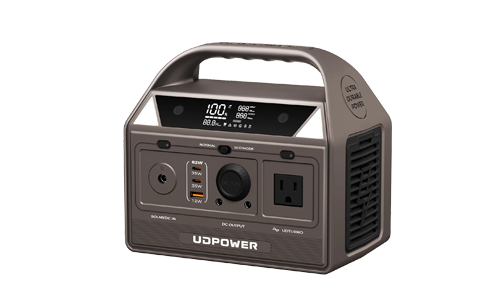
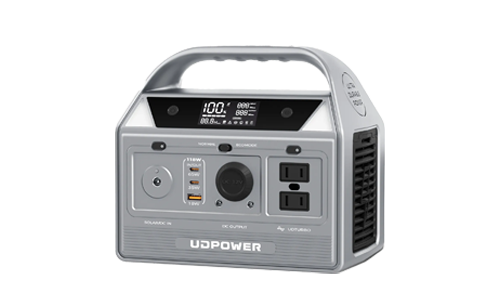
The UDPOWER S1200 has a 1,190Wh battery and 1,200W rated AC output. It fits a 900W 2-slice toaster within the nominal rated output, provided other connected loads leave enough headroom. A toaster rated at 1,400W or 1,800W exceeds the S1200's standard continuous output; do not assume an enhanced-output mode makes every high-wattage toaster a suitable match.
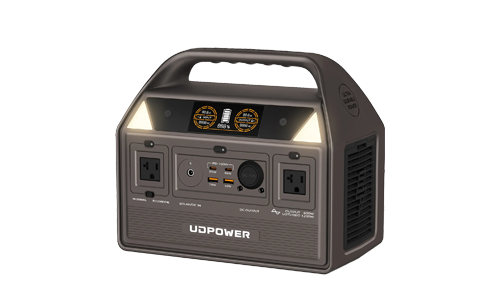
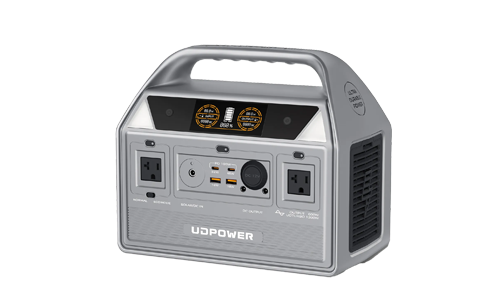
The UDPOWER S2400 has a 2,083Wh battery and 2,400W rated AC output, providing more output headroom for 1,500W to 1,800W models. Check the toaster's rating, other connected devices, and the current limit of the particular AC receptacle before using a high-current appliance.
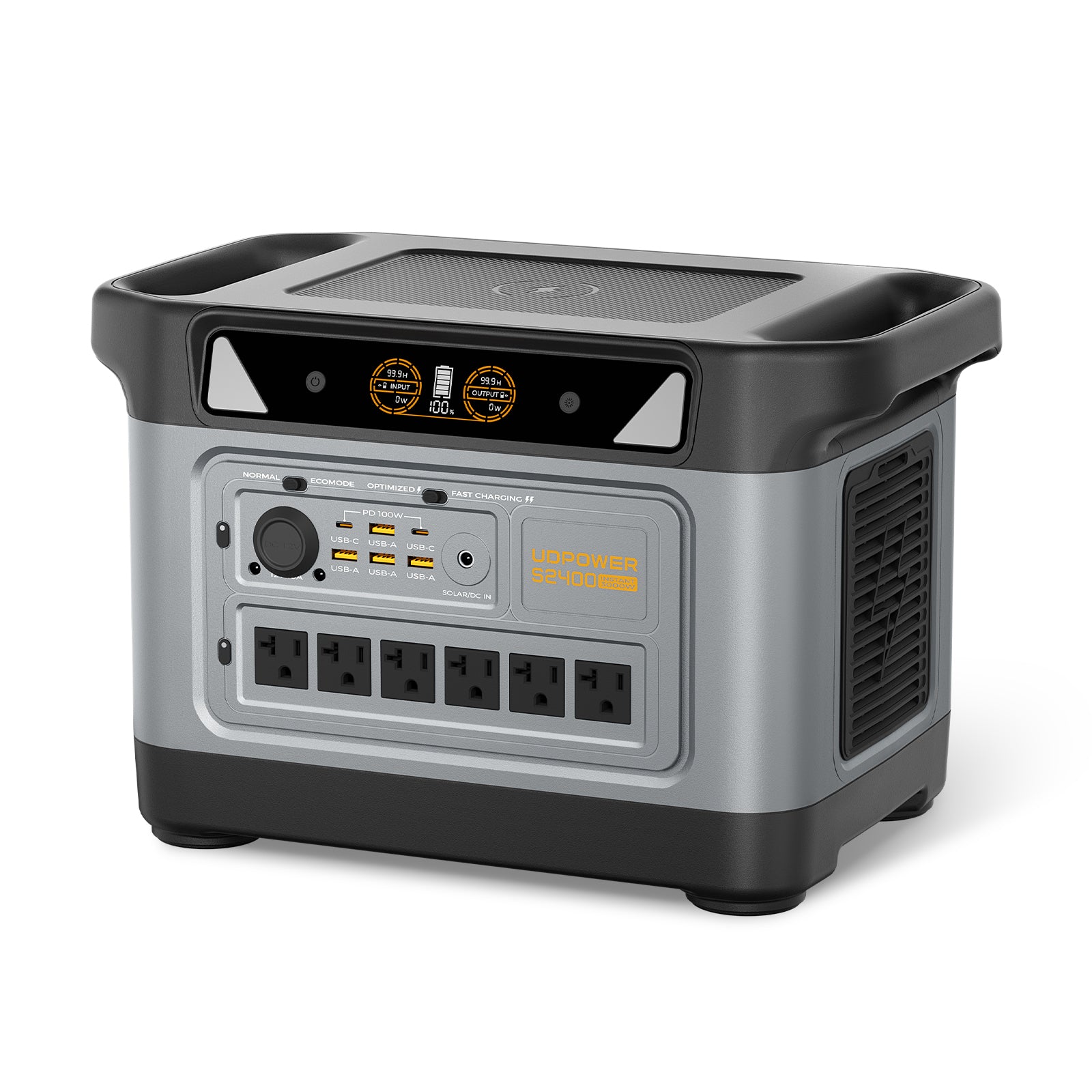
Estimated Three-Minute Toast Cycles on One Charge
| Toaster load | Energy per batch | S1200: 1,190Wh / 1,200W | S2400: 2,083Wh / 2,400W |
|---|---|---|---|
| 900W | 45Wh | About 23 batches | About 41 batches |
| 1,500W | 75Wh | Above rated output | About 25 batches |
| 1,800W | 90Wh | Above rated output | About 20 batches |
Estimated batches = battery capacity × 0.90 ÷ (toaster watts × 3/60). These are rounded energy-budget examples assuming a full battery and no other connected devices; inverter standby draw and load-dependent conversion losses reduce the actual number. Output rating and each AC receptacle's limit must also be respected.
For an outage, prioritize the refrigerator, medical devices, and communications equipment before spending backup energy on cooking. If you have enough inverter output but limited stored energy, one three-minute breakfast cycle is a small energy expense. If the inverter cannot supply the toaster's full watts, extra battery capacity will not solve the overload.
For a broader list of compatible loads, see what a 1,200W portable power station can run. For battery budgeting beyond breakfast, read how long a 2,000Wh power station lasts.
How to Find Your Toaster's Actual Wattage
- Locate the rating label. Unplug the toaster and allow it to cool. Check the bottom or back for a number followed by W. Record the exact model number if wattage is not shown.
- Check the manufacturer manual. Match the model number and U.S. electrical version. If the label gives amps rather than watts, multiply amps by 120V for an approximate input wattage.
- Measure a full toast cycle when needed. Use a plug-in watt/energy meter rated for the appliance's current. Record the peak or stabilized watts, elapsed minutes, and final Wh or kWh reading. Measure with the toaster on a safe, clear counter, following the manufacturer's operating instructions.
- Repeat at the setting you actually use. A frozen-bread mode, a darker setting, or one side of a four-slot toaster may produce a different energy reading from your first batch.
For deciding whether a power station can run the appliance, compare its input watts against rated AC output. For estimating a month's electricity cost, the meter's total kWh over a completed cycle is the more useful number.
Frequently Asked Questions
Does a toaster use more watts on a darker setting?
Many models use a longer heating cycle rather than a higher maximum wattage. A 1,200W toaster consumes 60Wh in three minutes and 100Wh in five minutes if its elements draw 1,200W throughout. Check your particular model if it varies heating-element operation by setting.
Can a 1,000W power station run a toaster?
It may run an 850W or 900W toaster if the power station can continuously deliver that load and no other devices push the total above its limit. It cannot reliably support a 1,400W toaster at standard 1,000W rated output merely because the battery has a large Wh capacity.
Does a 4-slice toaster use twice as much electricity as a 2-slice toaster?
Not necessarily. Model ratings and active-slot controls vary. In one published two-slot versus four-slot test on the same UK toaster, the full four-slot batch consumed 61.6Wh versus 35.3Wh with two slots—about 75% more energy for twice the slices.
Does a toaster oven use the same electricity as a pop-up toaster?
No single comparison fits every recipe. A 1,800W toaster oven running at full draw for 20 minutes would consume 600Wh, while a 900W pop-up toaster running three minutes would use 45Wh. Thermostat cycling and cooking duration change the actual oven reading.
Does a toaster use power when it is plugged in but not toasting?
A basic mechanical toaster may draw effectively no power when idle. A model with electronic controls or indicator lights can have a small standby draw. A suitable energy meter can establish whether your particular toaster uses measurable electricity between cycles.
Planning breakfast during an outage? Check your toaster's wattage first, then compare UDPOWER portable power stations by rated output and battery capacity. Size the power source for the whole backup plan—not only the toaster.
Related Articles


