What Is a Dispersed Campsite? A Practical Beginner Guide for Off-Grid Camping
ZacharyWilliamCamping Guide
Quick Answer
A dispersed campsite is a legal place to camp outside a developed campground, usually on public land such as a National Forest or Bureau of Land Management area. It normally has no campsite number, no reservation, no water hookup, no electrical hookup, no restroom, no picnic table, and no trash service. You bring everything in, sleep in a tent, van, truck camper, or RV where camping is allowed, and pack everything out when you leave.
The simple way to remember it: a campground gives you a managed site; a dispersed campsite gives you a legal patch of land and full responsibility.

What a Dispersed Campsite Really Means
A dispersed campsite is not usually a built campsite. It may be an existing flat spot near a Forest Service road, a pull-off on BLM land, a previously used clearing, or a designated dispersed site in a high-use area. The word “dispersed” means campers are spread out instead of packed into numbered campground loops.
The U.S. Forest Service describes dispersed camping as camping outside a designated campground in a National Forest, with no services such as piped water, toilets, or trash removal. You can read the Forest Service overview here: Forest Service dispersed camping guidance.
BLM uses similar language for public lands: camping away from developed recreation facilities is called dispersed camping, and most BLM lands allow it unless the area is closed or restricted. See the official BLM page here: BLM camping on public lands.
Plain-English definition: a dispersed campsite is a place where camping is allowed, but the land manager has not built a full campground around it.
Dispersed Campsite vs. Campground vs. Boondocking
These terms overlap, but they are not exactly the same. The difference matters because the rules, expectations, and gear needs can change.
| Term | What it means | Typical amenities | Best for | Source / reference |
|---|---|---|---|---|
| Developed campground | A managed campground with marked sites, often reservable or first-come, first-served. | May include toilets, water, picnic tables, fire rings, trash bins, hosts, or hookups. | Families, beginners, RVs needing services, trips where convenience matters. | National Park Service camping guide |
| Dispersed campsite | A legal camping spot outside a developed campground, usually with no assigned site number. | Usually none: no water, no toilet, no trash service, no electricity. | Campers who want quiet, space, lower cost, and a more self-reliant trip. | Forest Service Intermountain Region |
| Designated dispersed site | A specific marked dispersed site required in some high-use areas. | Usually still primitive, but the exact camping spots may be marked. | Popular forests, sensitive areas, places where camping is limited to existing sites. | Forest Service MVUM information |
| Boondocking | Usually means RV or van camping without hookups. It may happen on public land, in a driveway, or in another legal overnight location. | No hookups; amenities depend on the location. | RV, van, truck camper, and overlanding travelers. | BLM camping guidance |
| Backcountry camping | Camping away from roads or developed areas, often reached by hiking, paddling, or riding. | Usually none; permits may be required in parks and wilderness areas. | Hikers, backpackers, and wilderness travelers. | NPS backcountry camping |
The important takeaway: all dispersed camping is self-reliant, but not all no-hookup camping is dispersed camping. A campground can have no hookups and still be a developed campground. A parking lot can be dry camping but not a dispersed campsite.
Where Dispersed Campsites Are Usually Allowed
In the United States, dispersed campsites are most commonly found on National Forest and BLM lands. Some state forests, state trust lands, wildlife areas, and national recreation areas may allow similar camping, but the rules vary a lot. National Parks are more restrictive and often require specific backcountry permits or designated areas.
| Land type | Is dispersed camping commonly allowed? | What to check before you go | Useful official link |
|---|---|---|---|
| National Forests | Often yes, but not everywhere. | Local forest page, ranger district rules, seasonal road closures, fire restrictions, Motor Vehicle Use Map. | Forest Service maps |
| BLM public lands | Often yes unless posted closed or restricted. | Field office rules, stay limits, closed areas, permits, fire restrictions. | BLM camping rules |
| National Parks | Sometimes, but usually permit-based and more controlled. | Backcountry permit, campsite zones, distance rules, food storage, seasonal access. | NPS backcountry camping |
| State parks | Usually no unless specifically stated. | Reservations, campsite rules, day-use vs. overnight rules, park-specific permits. | NPS overview of camping options |
| Private land | Only with permission. | Written permission, road access, local ordinances, fire rules. | Use county parcel maps or contact the landowner. |
Do not assume an empty dirt road means camping is allowed. Public land can include wilderness, conservation areas, mining claims, seasonal closures, private inholdings, grazing areas, and roads where motorized access is limited.
How to Know If a Spot Is Legal
The safest approach is to check legality in layers. Do this before leaving home, then confirm again when you arrive.
The 5-step legal check
- Identify who manages the land. Look for National Forest, BLM, National Park, state, county, or private ownership.
- Find the local rule page. A national overview is helpful, but the local ranger district or BLM field office is what matters most.
- Check the map. For National Forest travel by vehicle, the Motor Vehicle Use Map shows which roads and areas are open to motorized use. Forest Service MVUMs also include travel rules and seasonal details.
- Check fire restrictions. Fire bans can change quickly. A legal campsite can become a no-campfire campsite during dry conditions.
- Look for signs on-site. Signs such as “No Camping,” “Day Use Only,” “Closed Area,” “Private Property,” or “No Motor Vehicles” override assumptions.
Practical tip: call the local ranger district or BLM field office if you are unsure. Ask: “Is dispersed camping currently allowed on this road, and are there any fire restrictions or distance rules I should know?”
| Question to ask | Why it matters | Where to verify |
|---|---|---|
| Is this land public, and who manages it? | Rules differ between Forest Service, BLM, parks, state land, and private parcels. | BLM maps and local agency maps |
| Is overnight camping allowed here? | Some roads allow driving but not camping. | Local ranger district, field office, posted signs |
| Is vehicle access allowed? | Driving off route can damage land and may be illegal. | Forest Service MVUM FAQ |
| How long can I stay? | BLM dispersed camping is generally limited to 14 days within a 28-day period, but local limits can vary. | BLM camping on public lands |
| Are campfires, charcoal, or stoves allowed? | Fire restrictions may ban wood fires and sometimes limit flame use. | Local agency alert page, ranger office, fire restriction signs |
What a Good Dispersed Campsite Looks Like
A good dispersed campsite is not just pretty. It should be legal, already impacted, safe to access, away from water, and easy to leave cleaner than you found it.
Use the “legal, durable, level, quiet, exit-ready” test
| Site test | What to look for | Why it matters |
|---|---|---|
| Legal | No closure signs, no private property signs, no restricted zone, and camping allowed by the managing agency. | A great-looking pull-off is not useful if overnight camping is prohibited. |
| Durable | Previously used flat area, gravel, rock, sand, bare dirt, or other durable surface. | Camping on fragile vegetation causes long-term damage. |
| Level | Flat enough for sleeping, cooking, parking, and safe stove use. | A tilted tent or RV is uncomfortable and can be unsafe. |
| Quiet | A reasonable distance from other campers, roads, trailheads, and wildlife movement areas. | Dispersed camping works best when people give each other space. |
| Exit-ready | You can turn around, drive out after rain, and leave without backing down a rough road in the dark. | Many bad dispersed camping stories start with “the road looked fine yesterday.” |
Leave No Trace guidance recommends camping on durable surfaces and keeping camps away from water where rules require it. Many outdoor agencies and Leave No Trace materials use 200 feet as a good rule of thumb for camping, washing, or disposing of human waste away from water, camps, and trails. Review the principles here: Leave No Trace durable surfaces guidance.
Common Rules and Etiquette
Rules change by location, but the same pattern appears across many public lands: stay within the allowed area, avoid creating new roads, manage waste, follow fire restrictions, respect stay limits, and leave no trace.
| Rule or habit | Practical meaning | Why it matters | Reference |
|---|---|---|---|
| Use existing sites when possible | Choose a previously used spot instead of making a new clearing. | Concentrates impact and protects plants. | BLM California dispersed camping guidance |
| Pack out trash | Take out food waste, cans, wipes, broken gear, and small scraps. | There is usually no trash service at a dispersed campsite. | Forest Service dispersed camping guidance |
| Handle human waste correctly | Use a toilet system where required; otherwise follow local cathole or pack-out rules. | Protects water, wildlife, and other campers. | NPS Leave No Trace principles |
| Respect stay limits | BLM commonly uses a 14-day limit within a 28-day period, though field offices can set different rules. | Prevents people from turning public land into long-term residence. | BLM camping on public lands |
| Follow fire rules | Check current restrictions before using campfires, charcoal, gas stoves, or open flame. | Fire danger changes with season, wind, drought, and local conditions. | Forest Service fire and camping guidance |
| Keep noise low | Avoid loud music, late-night generator noise, and bright lights aimed at neighboring camps. | Most people choose dispersed camping for quiet and space. | Good camp etiquette and Leave No Trace practice |
Power, Water, and Comfort: What You Need to Bring
Because a dispersed campsite usually has no services, your setup should cover four basics: drinking water, food storage, waste management, and quiet power. This is where many first-timers underestimate the difference between a campground and a dispersed campsite.
Basic dispersed campsite packing table
| Need | What to bring | Beginner note |
|---|---|---|
| Water | Drinking water, cooking water, dish water, and extra emergency water. | Do not count on a creek or campground spigot nearby. Bring more than you think you need. |
| Food storage | Cooler, portable fridge, bear-resistant storage where required, sealed bins. | Check local food storage rules, especially in bear country. |
| Waste | Trash bags, toilet kit, hand sanitizer, sealable bags, portable toilet for RV/van setups. | “Pack it out” includes small trash, wipes, food scraps, and toilet paper where required. |
| Power | Portable power station, solar panel, charging cables, headlamps, backup batteries. | Quiet battery power is better for campsite etiquette than running a loud generator at night. |
| Navigation | Downloaded maps, paper map, compass, GPS, local road information. | Cell service can disappear quickly on forest roads and BLM land. |
| Safety | First-aid kit, weather plan, tire repair kit, shovel, traction boards for rough roads, emergency contact plan. | Your campsite may be far from quick help. |
How much power do you need at a dispersed campsite?
Start with the devices you actually use, not the biggest battery you can buy. The table below uses common camping loads. Actual runtime depends on device wattage, temperature, inverter loss, and how often a fridge compressor cycles.
| Device | Typical use case | Common wattage range | Power planning note |
|---|---|---|---|
| Phone / camera / drone batteries | Navigation, photos, communication, content creation. | Small to moderate charging loads | A compact power station is usually enough for short trips. |
| LED camp lights | Cooking, tent light, table light. | Low load | Use lower brightness to stretch battery life. |
| Laptop | Remote work, photo backup, route planning. | Moderate load | USB-C charging is more efficient when supported. |
| CPAP | Overnight sleep support. | Varies by pressure, humidifier, and heated tube use | Turn off heated humidification when safe and approved by your own therapy needs to extend runtime. For more detail, see UDPOWER’s guide: How Long Will a CPAP Run on a Battery Backup? |
| Portable fridge | Food storage for van, truck, or family campsite. | Cycles on and off | Pre-cool food before leaving home and keep the fridge shaded. |
| Electric kettle, coffee maker, induction cooktop | Short bursts of high power. | High load | Check rated watts before plugging in. High-heat appliances drain batteries quickly. |
For a deeper off-grid planning angle, UDPOWER’s related guide How to Live Off the Grid explains why power planning should come after you know your real loads, water needs, weather, and daily habits.
Recommended UDPOWER Setups for Dispersed Camping
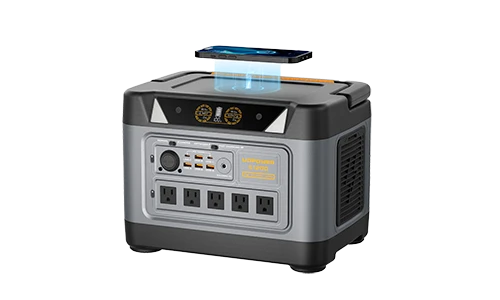
Dispersed camping usually rewards quiet, clean, battery-based power. A portable power station can keep essentials running without the noise, fuel, and fumes of a gas generator. For a campsite, choose by trip length and load type.

UDPOWER C400 — Best for short dispersed camping trips and compact setups
The C400 is a good fit for simple tent camping, day-to-night trips, camera gear, phones, LED lights, and small electronics. It is easy to carry and makes sense when you want a quiet power source without bringing a large battery.
- Capacity: 256Wh
- Output: 400W AC, 800W surge with UD-TURBO tech
- Battery: LFP / LiFePO4, 4,000+ cycles
- Charging: 1.5-hour fast charging, 165W Hyper Charging when combining the DC adapter and USB-C input
- Best match: phones, laptops, camp lights, cameras, small fans, and short overnight use

UDPOWER C600 — Best balanced choice for weekend camp comfort
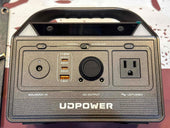
The C600 is the practical middle ground for a dispersed campsite where you want more comfort than a phone-charging battery but still want a manageable size. It is suitable for weekend camping, road trips, small fridges, laptops, cameras, and multiple devices.
- Capacity: 596Wh
- Output: 600W rated output, 1200W peak
- Battery: LiFePO4, 4,000+ cycles
- Ports: 2 AC outlets, USB-C, USB-A, DC outputs, and 12V car outlet
- Best match: weekend tent camping, van camping, small fridge use, lights, laptop work, and charging multiple devices
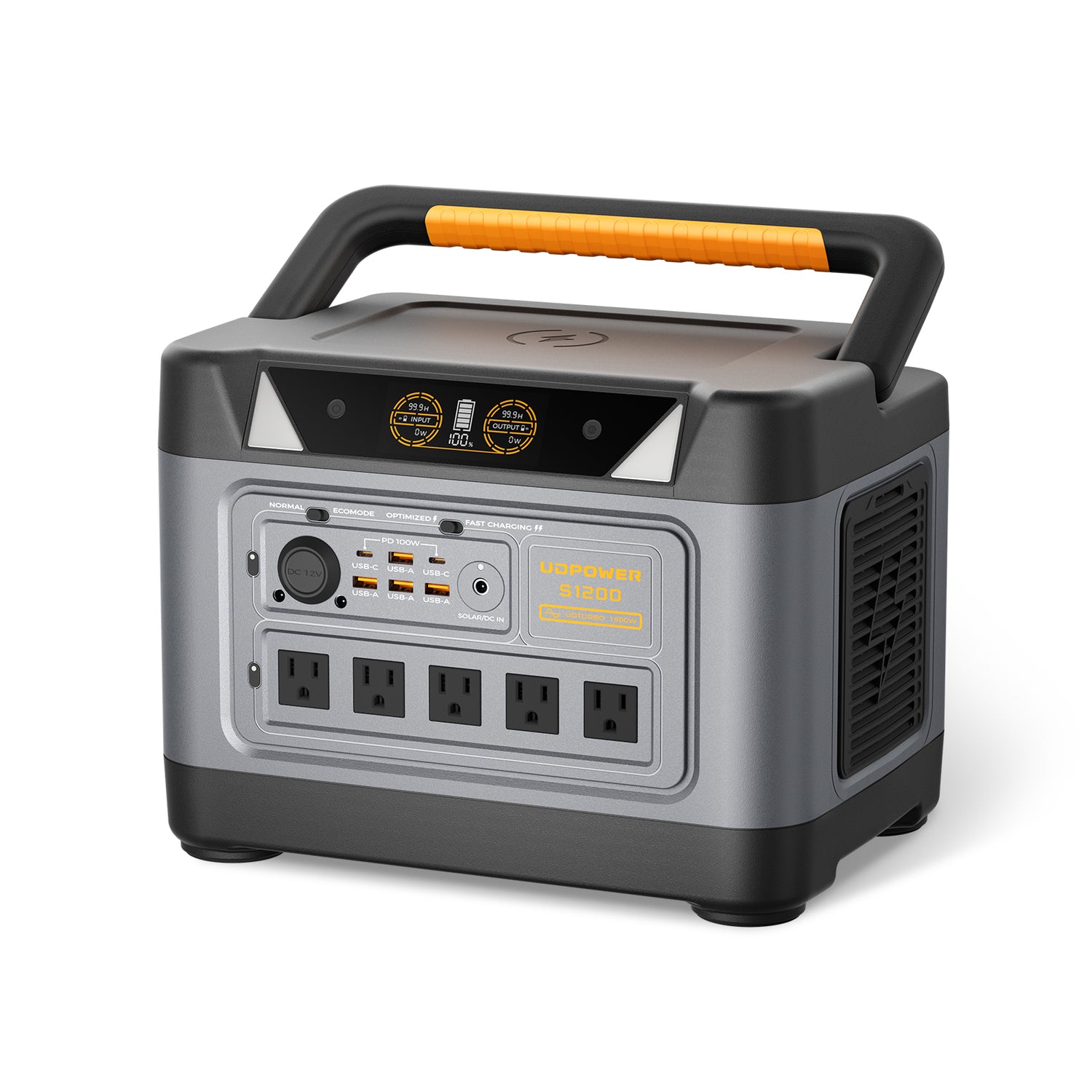
UDPOWER S1200 — Best for longer off-grid weekends and larger campsite loads
The S1200 is a strong choice when your dispersed campsite includes a portable fridge, CPAP, router, laptops, camera gear, fans, or several people charging devices. It gives you more battery reserve while staying portable enough for vehicle-based camping.
- Capacity: 1,190Wh
- Output: 1,200W rated pure sine wave output, UDTURBO up to 1,800W surge
- Battery: LiFePO4, 4,000+ cycles
- Weight: 26.0 lbs
- Ports: 5 AC outlets + 10 DC outputs on the 5-AC version
- UPSPrime: <10 ms backup switching for essentials
- Best match: longer weekends, CPAP, portable fridge, family camping, van camping, and off-grid work setups
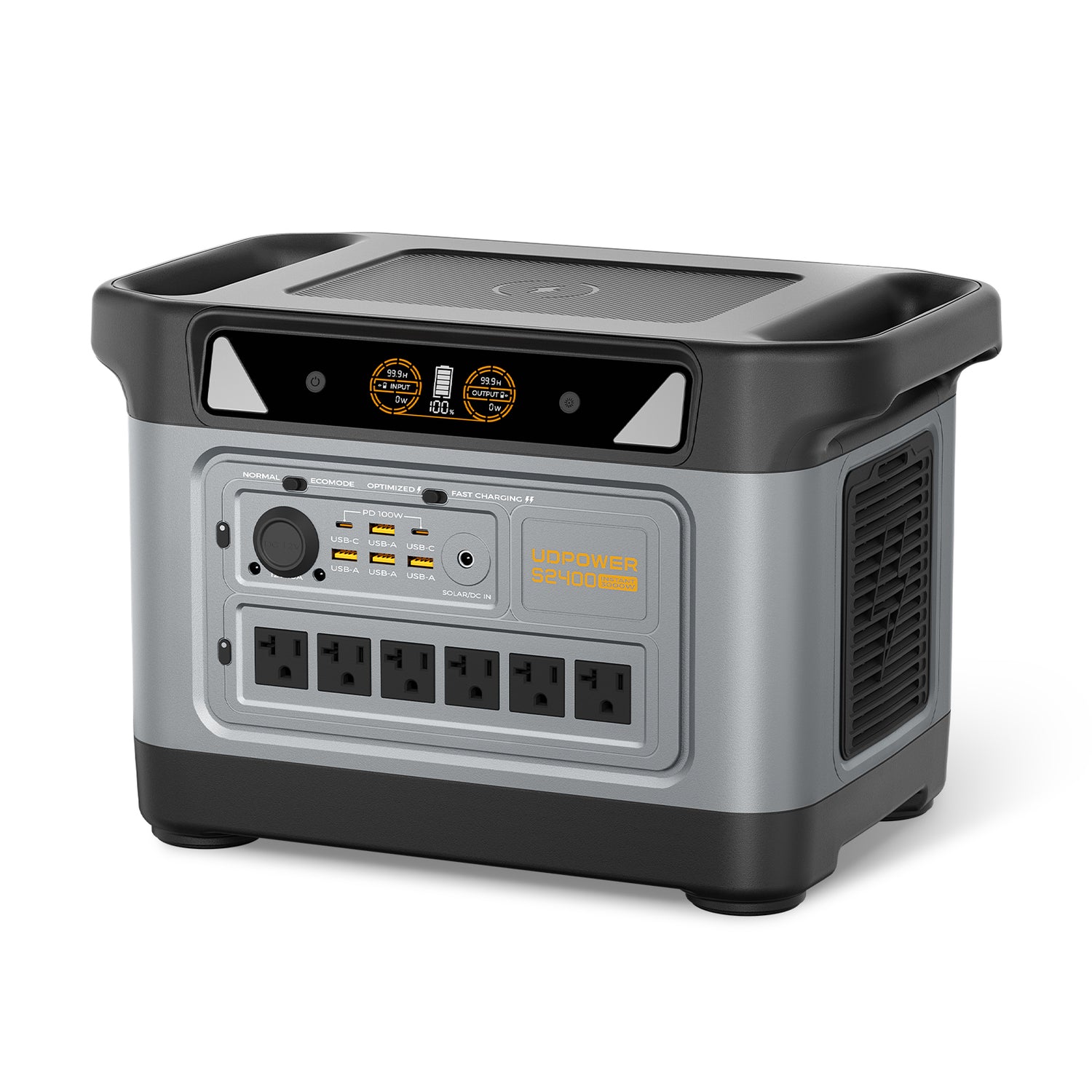
UDPOWER S2400 — Best for extended dispersed camping, RVs, and higher-power appliances
The S2400 is for campers who want a bigger power buffer, especially for RV camping, van life, heavy device charging, portable fridges, and longer stays where solar charging is part of the plan.
- Capacity: 2,083Wh
- Output: 2,400W pure sine wave AC output, UDTURBO surge support up to 3,000W
- Battery: LiFePO4, 4,000+ cycles
- Ports: 6 AC outlets + 10 DC outputs
- Solar input: supports up to 400W solar charging according to the product page
- Best match: RVs, van life, extended off-grid stays, larger fridges, multiple laptops, and higher-power campsite appliances
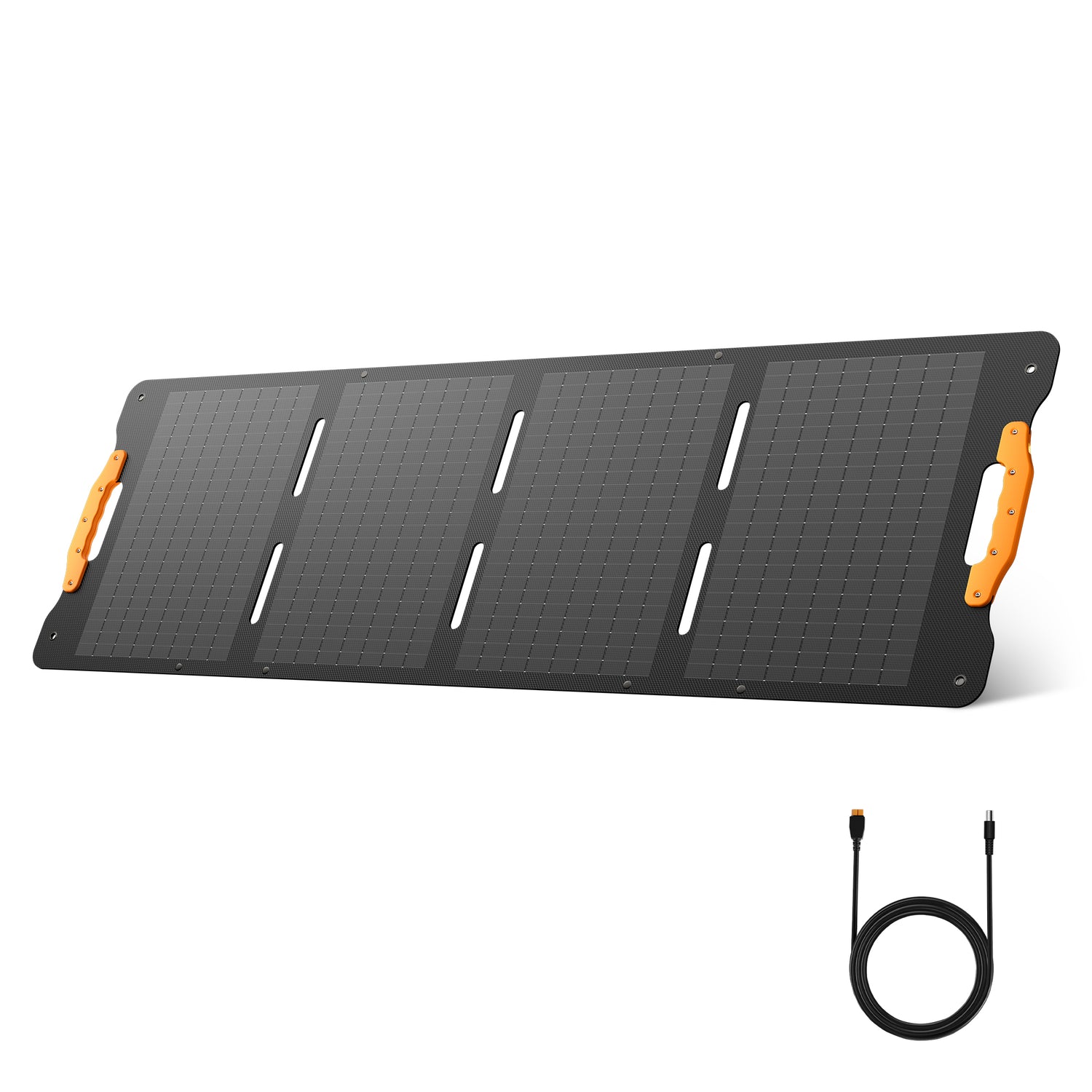
UDPOWER 120W Portable Solar Panel — Best add-on for daytime charging
For a dispersed campsite, solar helps reduce how much battery you use during the day. The UDPOWER 120W portable solar panel is designed for UDPOWER C200, C400, C600, S1200, and S2400 power stations and works well for keeping essentials topped up during sunny camping days.
- Rated output: 120W
- Open-circuit voltage: 21.5V
- Maximum power voltage: 17.92V
- Efficiency: ≥22% with A-class monocrystalline silicon cells
- Weather resistance: IP65
- Best match: solar top-up for phones, lights, small electronics, laptops, and power station recharge during daylight
Quick product selection table
| Camping style | Suggested UDPOWER setup | Why it fits | Product link |
|---|---|---|---|
| One-night tent camping | C400 | Compact battery for phones, lights, cameras, and laptop charging. | C400 product page |
| Weekend campsite with small fridge | C600 + 120W solar panel | More battery reserve than compact models and practical solar top-up. | C600 product page |
| CPAP, fridge, laptops, family devices | S1200 | 1,190Wh capacity and 1,200W rated AC output provide more room for overnight loads. | S1200 product page |
| RV or extended off-grid stay | S2400 + solar panel setup | 2,083Wh capacity and 2,400W output support larger campsite needs. | S2400 product page |
For more product options, see the full UDPOWER portable power station collection and the UDPOWER solar panels collection.
A Simple First-Trip Plan
Your first dispersed camping trip should be boring in the best way: easy road, good weather, short stay, daylight arrival, enough water, enough power, and a clear exit plan.
| Step | What to do | Why it helps |
|---|---|---|
| 7 days before | Choose a National Forest or BLM area, read the local rule page, and download maps. | You avoid guessing at the trailhead. |
| 3 days before | Check weather, fire restrictions, road conditions, and backup campground options. | Weather can make dirt roads unsafe. |
| 1 day before | Charge your power station, pre-cool food, fill water containers, and pack trash bags. | You arrive with full reserves instead of solving problems at camp. |
| Arrival day | Arrive before sunset, inspect the road, choose an existing site, and note your exit route. | Most campsite mistakes are worse in the dark. |
| At camp | Keep the footprint small, set up on durable ground, store food safely, and keep noise low. | You protect the place and respect nearby campers. |
| Before leaving | Walk the site slowly, pick up micro-trash, scatter unused natural materials, and leave no new fire scars. | The next camper should barely know you were there. |
Beginner Mistakes to Avoid
1. Treating a dispersed campsite like a free campground
There is no staff member cleaning the site, no trash service, and often no toilet. If you bring it in, bring it out.
2. Arriving after dark
It is much harder to read road conditions, avoid private land, inspect trees overhead, and find a level site after sunset.
3. Driving too far down an unknown road
If you are in a low-clearance car or heavy RV, stop early and walk ahead before committing to a narrow, muddy, steep, or washed-out road.
4. Counting on cell service
Download maps, save local office numbers, and tell someone where you plan to camp. A campsite can be close to town on the map and still have no signal.
5. Bringing loud power
One reason people choose dispersed camping is quiet. A portable power station and solar panel are better neighbors than a generator running late at night.
6. Ignoring local fire rules
A rock ring does not mean a fire is currently allowed. Check restrictions before you light anything.
Related UDPOWER Reading
If you are planning a longer off-grid trip, these UDPOWER guides fit naturally with dispersed campsite planning:
- How to Live Off the Grid — useful for planning water, power, internet, and backup systems.
- Can a Solar Generator Power a House? — helpful if you are comparing portable backup power with larger home or cabin needs.
- How Long Will a CPAP Run on a Battery Backup? — useful for campers who need overnight CPAP support away from outlets.
- Portable Power Stations — browse UDPOWER models by capacity and output.
FAQ: Dispersed Campsites
What is a dispersed campsite?
A dispersed campsite is a legal place to camp outside a developed campground, usually on public land. It typically has no water, restroom, trash service, electrical hookup, picnic table, or reservation system.
Is dispersed camping free?
It is often free on National Forest and BLM land, but not always. Some areas require permits, passes, or have restrictions. Always check the local land manager’s current rules before you go.
Can I camp anywhere in a National Forest?
No. Many National Forest areas allow dispersed camping, but closures, wilderness rules, road restrictions, fire restrictions, private land boundaries, and local district rules still apply.
How long can you stay at a dispersed campsite?
BLM generally limits dispersed camping to 14 days within a 28-day period, though local offices can set different rules. National Forest limits also vary by forest and district, so check the local page before your trip.
Do dispersed campsites have toilets?
Usually no. You need to bring a proper toilet plan and follow local waste rules. In many backcountry settings, guidance calls for catholes or pack-out systems, but some sensitive areas require packing out all human waste.
Can I have a campfire at a dispersed campsite?
Only if fires are allowed at that location and time. Fire restrictions change quickly, especially during dry or windy seasons. A previous fire ring does not guarantee that a fire is legal today.
Do I need a portable power station for dispersed camping?
You do not need one for every trip, but it is very helpful if you use phones, lights, cameras, laptops, a portable fridge, a CPAP machine, or other electronics. A battery-based power station is also quiet, which makes it better for dispersed camping etiquette.
What is the best UDPOWER model for dispersed camping?
For light overnight trips, the C400 is compact and easy to carry. For weekend comfort, the C600 is a balanced choice. For CPAP, portable fridge use, or family camping, the S1200 gives more reserve. For RVs and longer off-grid stays, the S2400 is the strongest option.
Build a Quieter, Cleaner Dispersed Campsite
A good dispersed campsite is simple: legal land, low impact, enough water, a clean waste plan, and quiet power. Start with a short trip, choose an existing site, and bring a power setup that matches your real devices.
View UDPOWER Portable Power Stations View Solar Panels for Off-Grid CampingExternal source links are included for rule verification. Camping rules can change by district, season, road, fire condition, and permit area, so always confirm with the local land manager before departure.