

What Is the Average Electric Bill in New Jersey in 2025?
New Jersey has some of the highest electricity costs in the country. As of late 2025, the typical residential electric bill in New Jersey is around $180 per month, slightly above the U.S. average of roughly $170 per month. How much you actually pay depends on your home size, how much electricity you use, your rate plan, and how efficient your home is.
This guide breaks down the latest numbers, explains why bills are so high, and shares practical ways New Jersey households can lower their monthly costs — including how portable power stations from UDPOWER can help during outages and peak-rate hours.

Average Electric Bill in New Jersey (Quick Answer)

Looking for the short version? Based on late 2025 state-by-state bill data, the average residential electric bill in New Jersey is about $180.60 per month. That assumes typical household usage of around 650–700 kWh per month on standard residential rates.
For an official benchmark, the U.S. Energy Information Administration (EIA) reports that in 2024 the average New Jersey household:
- Used about 662 kWh of electricity per month.
- Paid an average residential price of 19.34 cents per kWh.
- Had an average monthly bill of $128.13.
Since then, New Jersey electricity prices have climbed sharply. By August 2025, EIA data shows the average residential rate in New Jersey at roughly 24.96 cents per kWh, compared with a U.S. average of about 17.62 cents per kWh. That helps explain why current bills are meaningfully higher than the 2024 average.
| Metric | New Jersey | U.S. Average |
|---|---|---|
| Typical monthly bill (late 2025 estimate) | $180.60 | ~$169.80 |
| Official average monthly bill (2024, EIA) | $128.13 | $142.26 |
| Average monthly usage (2024) | 662 kWh | 863 kWh |
| Average price (2024) | 19.34 ¢/kWh | 16.48 ¢/kWh |
| Average price (Aug 2025) | 24.96 ¢/kWh | 17.62 ¢/kWh |
Numbers above are rounded and represent statewide averages. Your own bill can be higher or lower depending on your exact usage, rate structure, and utility (PSE&G, JCP&L, ACE, RECO, etc.).
How New Jersey Electricity Costs Compare to Other States
New Jersey sits in a high-cost region for electricity. Compared with both neighboring states and the U.S. as a whole, average bills and per-kWh prices are on the expensive side.
| Location | Avg. Monthly Bill (2024) | Avg. Monthly Usage | Avg. Price (2024) |
|---|---|---|---|
| New Jersey | $128.13 | 662 kWh | 19.34 ¢/kWh |
| New York | $139.53 | 571 kWh | 24.43 ¢/kWh |
| Pennsylvania | $145.17 | 817 kWh | 17.77 ¢/kWh |
| California | $160.86 | 503 kWh | 31.97 ¢/kWh |
| U.S. Total | $142.26 | 863 kWh | 16.48 ¢/kWh |
By mid-2025, residential prices in New Jersey were about 40% higher per kWh than the U.S. average. That means a New Jersey household using the same electricity as a household elsewhere will usually pay more.
| Monthly Usage | Approx. NJ Bill (24.96 ¢/kWh) |
Approx. U.S. Bill (17.62 ¢/kWh) |
|---|---|---|
| 400 kWh | ~$99.84 | ~$70.48 |
| 650 kWh | ~$162.24 | ~$114.53 |
| 900 kWh | ~$224.64 | ~$158.58 |
| 1,200 kWh | ~$299.52 | ~$211.44 |
These are simple bill estimates based only on energy charges (price per kWh). Actual bills include delivery charges, basic service fees, and taxes, which can push totals higher.
What Drives Your Electric Bill in New Jersey?

Two households in the same town can have very different electric bills. In New Jersey, these factors matter most:
1. Electricity price per kWh
The single biggest factor is the rate your utility charges for each kilowatt-hour of electricity. New Jersey’s regulated utilities and third-party suppliers set their own supply rates, while the distribution portion is regulated by the New Jersey Board of Public Utilities (NJBPU).
2. Home size and insulation
Larger, older, or poorly insulated homes require more energy for heating and cooling. Upgraded windows, proper air sealing, and attic insulation can significantly reduce yearly usage.
3. Heating and cooling systems
Many New Jersey homes use natural gas or oil for primary heat, but central air conditioning, heat pumps, window units, and electric space heaters all add to your electric bill. High-efficiency HVAC systems and smart thermostats help flatten summer and winter spikes.
4. Appliances and lifestyle
Electric dryers, dishwashers, well pumps, pool pumps, EV chargers, gaming PCs, and home offices can all move you from a 500 kWh bill to 900 kWh or more. Working from home, large families, and always-on electronics all increase monthly usage.
5. Time-of-use and demand-based rates
Some New Jersey utilities offer time-of-use (TOU) plans, where power is more expensive during peak hours and cheaper overnight or on weekends. Shifting major loads (EV charging, laundry, dishwashers) to off-peak hours can save money if you’re on one of these plans.
6. Fees, surcharges, and taxes
Delivery charges, system benefits charges, renewable program riders, and local taxes appear as line items on your bill. You can’t eliminate most of these, but reducing your total kWh use helps reduce the portion that is usage-based.
Average Electric Bill in New Jersey by Home Size and Usage

The table below uses New Jersey’s recent average residential rate (about 24.96 cents/kWh) to show how bills scale with typical household sizes. Treat these as ballpark estimates, not quotes from your utility.
| Home Type (Example) | Typical Household | Estimated Monthly Usage | Estimated NJ Bill |
|---|---|---|---|
| Small apartment | 1–2 people, efficient lighting, no EV | ~450 kWh | ~$112 |
| Average single-family home | 3–4 people, central AC, typical appliances | ~800 kWh | ~$200 |
| Large home + EV | 4+ people, central AC, EV charging at home | ~1,200 kWh | ~$300 |
| Efficient home with some solar | Smaller family, upgraded HVAC, rooftop solar offset | ~500 kWh from grid | ~$125 |
Your actual usage will vary based on thermostat settings, appliance age, how often you’re home, and whether you heat with electricity, gas, or oil.
Seasonal Electric Bill Patterns in New Jersey

New Jersey’s electric bills are highly seasonal. Air conditioning and, in some homes, electric heating can push summer and winter bills well above spring and fall.
| Season | Typical Usage Pattern | Estimated Monthly Usage Range | Estimated NJ Bill Range |
|---|---|---|---|
| Spring / Fall | Limited heating/cooling, moderate appliance use | ~450–650 kWh | ~$110–$165 |
| Summer | Central or window AC running regularly | ~650–900 kWh | ~$160–$225 |
| Winter (with electric heating or many space heaters) | Heavy heating load + normal household usage | ~800–1,100 kWh | ~$200–$275 |
If your bill spikes during extreme cold or heat, targeting your HVAC system (maintenance, thermostat settings, insulation, and air sealing) almost always gives the biggest payoff.
How to Lower Your Electric Bill in New Jersey

You can’t control statewide electric rates, but you can control how much energy your home uses and which programs you take advantage of. Here are practical ways to cut your monthly bill:
1. Take advantage of New Jersey energy efficiency programs
- Check out New Jersey’s Clean Energy Program and utility-run efficiency programs for rebates on HVAC, insulation, smart thermostats, and more.
- Income-eligible households may qualify for assistance programs that lower bills or fund free efficiency upgrades.
2. Schedule a home energy audit
- A professional audit or utility-provided assessment can pinpoint air leaks, poor insulation, and inefficient equipment that are quietly driving up your bill.
- Many audits come bundled with rebates and low- or zero-interest financing for recommended upgrades.
3. Upgrade major energy hogs
- Replace old refrigerators, AC units, and electric dryers with high-efficiency ENERGY STAR models.
- Install variable-speed pool pumps and LED lighting throughout the home.
- Consider a heat pump for efficient heating and cooling.
4. Use smart controls and smarter habits
- Use smart thermostats to trim heating and cooling when you’re asleep or away. Even a few degrees’ difference can save 5–10% on seasonal bills.
- Run dishwashers, clothes dryers, and EV charging during off-peak hours if you’re on a time-of-use rate.
- Eliminate “vampire loads” by unplugging or using smart power strips for TVs, game consoles, and office equipment.
5. Consider rooftop solar & storage
- New Jersey is historically one of the better states for rooftop solar economics thanks to relatively high electric rates and supportive policies.
- Pairing solar with battery storage or a high-capacity portable power station can help you ride through outages and reduce peak grid usage.
Using Portable Power Stations for Backup and Budget Control

Portable power stations won’t replace your utility bill, but they can:
- Keep essentials running during outages or winter storms.
- Let you shift some usage to off-peak hours (charge when rates are lower, use later).
- Provide quiet, emissions-free power compared with gasoline generators.
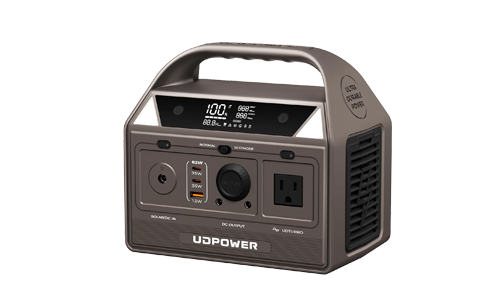
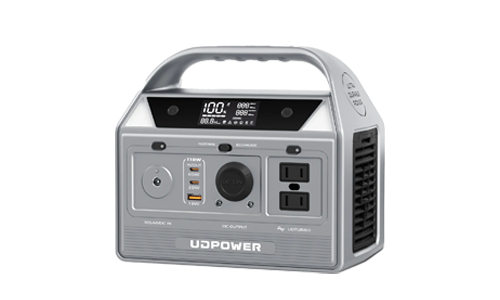
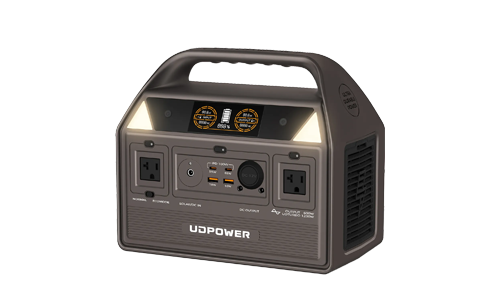
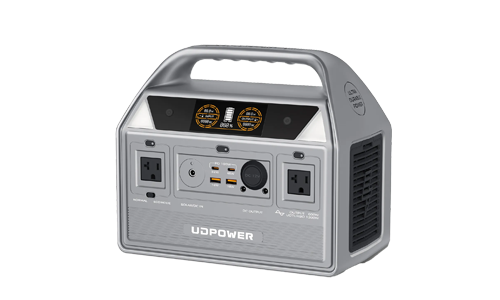
UDPOWER focuses on LiFePO4 portable power stations with long cycle life and fast charging. Here are a few examples that fit common New Jersey use cases:
| Model | Capacity | AC Output | Battery & Weight | Typical Use in NJ Homes |
|---|---|---|---|---|
| UDPOWER C200 | 192Wh | 200W inverter | LiFePO4, ~5.4 lb | Powering routers, phones, tablets, and a few LED lights during brief outages or camping trips. |
| UDPOWER C400 | 256Wh | 400W inverter | LiFePO4, ~6.88 lb | Short-term backup for laptops, Wi-Fi, small TVs, and lighting; compact option for apartments. |
| UDPOWER C600 | 596Wh | 600W rated (up to 1,200W max) | LiFePO4, ~12.3 lb | Weekend camping or backup for mini-fridges, network gear, fans, and small appliances during outages. |
| UDPOWER S1200 | ~1,190Wh | 1,200W rated (up to 1,800W surge) | LiFePO4, ~26.0 lb | Home and RV backup for refrigerators, CPAP machines, routers, lights, and work-from-home setups, with fast AC charging (up to 800W) and solar input (up to 400W). |
If your New Jersey home experiences frequent outages or you want a quieter, low-maintenance backup option, a LiFePO4 station such as the UDPOWER S1200 can be a practical alternative to a gasoline generator for essential loads. For smaller apartments, the C400 or C600 often provide a good balance between capacity and weight.
Always compare your critical appliances’ wattage to the rated and surge output of any portable power station you’re considering, and follow the manufacturer’s safety guidelines.
FAQ: New Jersey Electric Bills
Is $200 a high electric bill in New Jersey?
A $200 monthly bill is slightly above the current statewide average (around $180). It’s common for larger homes, all-electric houses, or households with heavy summer AC use or electric vehicle charging. If you’re in a smaller home and consistently see $200+ bills, it may be worth checking for air leaks, inefficient appliances, or time-of-use rate options.
Why is my New Jersey electric bill so much higher than it used to be?
The main reasons are higher per-kWh rates and rising overall usage. Between 2024 and 2025, average residential prices climbed significantly, and many households are using more electricity for air conditioning, electronics, and EV charging. Even if your habits haven’t changed much, higher rates alone can noticeably increase your bill.
Which utility companies serve New Jersey homes?
Most New Jersey residents receive service from investor-owned utilities such as PSE&G, Jersey Central Power & Light, Atlantic City Electric, or Rockland Electric. Some customers also buy supply from third-party energy suppliers, while the local utility handles delivery and billing.
Can I shop around for cheaper electricity in New Jersey?
In many parts of New Jersey, you can choose a third-party supplier for the supply portion of your bill. However, delivery charges and many fees remain the same because they are set by your local utility and regulated by the NJBPU. Always read contract terms, rates, and any early termination fees before switching suppliers.
What help is available if I can’t afford my electric bill?
New Jersey offers multiple assistance options for income-eligible households, including bill credits, payment plans, and weatherization or efficiency upgrades. Check with your utility and the New Jersey Board of Public Utilities for the latest program details and application windows.
Key Data Sources (For Further Reading)
If you want to dig deeper into the numbers behind New Jersey’s average electric bill, these public resources are helpful:
- U.S. EIA – 2024 state average monthly residential bills and prices.
- U.S. EIA – New Jersey State Energy Profile, including current residential price per kWh.
- State-by-state electric bill estimates (late 2025) from a national retail electricity comparison site.
- New Jersey’s Clean Energy Program and NJBPU residential customer resources.
- UDPOWER official portable power station product and comparison pages for capacity and output specs.
Related Articles


1 comment
HI, I’m would like to know if you have any plan for people with disabilities and stage 4 cancer / no matter what I always appreciate your service and kindness when talking to customers service/thank you 🙏🏻