How Many Watts Does A Vacuum Use?
ZacharyWilliamQuick answer
Most full-size corded vacuums use about 600 to 1,440 watts while running. Smaller plug-in handheld vacuums may sit closer to 200–600W, many cordless vacuums draw far less while charging, and robot vacuum docks are usually much lower than a full-size corded motor.
If your vacuum label only lists amps, use this simple U.S. household estimate: watts = volts × amps. On a 120V outlet, a 10A vacuum is about 1,200W, and a 12A vacuum is about 1,440W.
For a portable power station, the important number is not only runtime. First check whether the station’s continuous AC output is higher than the vacuum’s running watts, then leave headroom for motor startup. For a 12A corded vacuum or wet/dry shop vacuum, a higher-output model such as the UDPOWER S2400 is the safer fit than a smaller station.

Vacuum wattage by type
The label on your own vacuum is always the best source, because two machines that look similar can draw very different power. Still, the table below gives a practical planning range for U.S. 120V household use.
Mobile tip: swipe the table sideways to see all columns.
| Vacuum type | Common power range | What the label may show | Portable power station fit | Source / note |
|---|---|---|---|---|
| Robot vacuum dock / charger | Often tens of watts while charging; lower once idle | Adapter output or dock input rating | Easy load for most power stations; runtime is usually long | Robot vacuum wattage varies by model and dock behavior; see general robot vacuum ranges from ECOVACS. |
| Cordless stick vacuum charging | Often about 30–150W for the charger, depending on adapter size | Input: 100–240V; output: V × A on the charger brick | Good match for compact stations such as C400 or C600 | Use the charger label. Multiply charger output volts × amps when watts are not listed. |
| Plug-in handheld / small corded vacuum | About 200–600W | 2–5A is common on smaller plug-in units | C600 may work if the running watts stay within its AC output; C400 is better for lighter loads only | Use amps × volts = watts for label conversion. |
| Corded stick / compact canister | About 480–960W | 4–8A on many 120V models | S1200 is a practical match for many models; C600 may be too small above 600W | Compare total appliance input, not suction marketing terms. |
| Full-size upright or canister | About 840–1,440W | 7–12A is common on U.S. corded models | S1200 can fit many vacuums up to 1,200W; choose S2400 for 12A / 1,440W models | Vacuum labels may use amps instead of watts; BestVacuum explains why comparing amps and watts can be tricky. |
| Wet/dry shop vacuum | Often about 900–1,440W for many household-size corded models | 8–12A, sometimes with “peak HP” and “air watts” listed separately | S2400 is the safer recommendation because shop vacs are motor loads and may start hard | One Shop-Vac example lists 120V, 60Hz, 9.9A, which is about 1,188W by label math; see Shop-Vac specifications. |
How to find your vacuum’s watts
Look for a small label near the cord entry, underside, rear housing, battery charger, or dust-bin area. On corded vacuums, the label often shows volts and amps instead of watts. On cordless vacuums, check the charger brick, not only the vacuum body.
The simple formula
Watts = Volts × Amps
For most U.S. plug-in vacuums, use 120V unless the product label states otherwise.
Mobile tip: swipe the table sideways to see all columns.
| Vacuum label | 120V watt estimate | Practical meaning | Portable power station note |
|---|---|---|---|
| 2A | 240W | Small plug-in handheld or low-power cleaning tool | Usually easy for compact power stations |
| 5A | 600W | Upper range for many small corded vacuums | At the top edge of a 600W station; leave startup headroom when possible |
| 7.5A | 900W | Common mid-to-high household vacuum load | Better fit for a 1,200W-class station or higher |
| 10A | 1,200W | High-draw corded vacuum or smaller shop vac territory | Use a station with at least 1,200W continuous AC output; more headroom is better |
| 12A | 1,440W | Near the high end for many U.S. household vacuums | Choose a higher-output station such as S2400 instead of pushing a 1,200W station past its continuous rating |
Do not use “peak horsepower” to size a power station
Some shop vacs advertise peak horsepower, but the electrical label is what you should use for power station sizing. A 9.9A shop vacuum on 120V is roughly 1,188W, even if the box also shows peak HP or air watts.
Watts vs suction power: why a higher-watt vacuum is not always better
Watts tell you how much electrical power the vacuum consumes. They do not guarantee how well it cleans. A vacuum with a better brush roll, sealed airflow path, clean filter, and efficient motor can clean better than a wasteful high-watt machine.
Mobile tip: swipe the table sideways to see all columns.
| Metric | What it means | Use it for | Common mistake |
|---|---|---|---|
| Watts (W) | Electrical input power from the outlet or power station | Runtime estimates, electricity cost, inverter sizing | Assuming more watts always means better cleaning |
| Amps (A) | Electrical current draw | Converting to watts when the label does not list W | Forgetting to multiply by volts |
| Air watts (AW) | A suction performance metric combining airflow and pressure | Comparing cleaning performance when brands publish it consistently | Using air watts as if it were outlet power consumption |
| CFM | Airflow volume | Shop vacs, debris pickup, filter restriction clues | Ignoring hose size, attachments, and filter condition |
| Pa / kPa | Suction pressure, often used for robot vacuums | Robot vacuum marketing comparisons | Comparing Pa directly with watts |
| Peak HP | A lab-style motor output claim often used on wet/dry vacs | General product category comparison only | Using peak HP to estimate power station runtime |
Can a portable power station run a vacuum?
Yes, but only if the vacuum fits the station’s AC output. A vacuum is a motor load, so it may briefly pull more power at startup than it uses after the motor is already running. That is why a power station that looks “just enough” on paper can still struggle with some vacuums.
Use this 3-check rule before plugging in
- Check running watts. Use the label watts, or calculate volts × amps.
- Check continuous AC output. The power station’s rated AC output should be higher than the vacuum’s running watts.
- Leave motor headroom. If the vacuum is close to the station’s limit, choose the next size up, use a lower suction mode, or select a smaller vacuum.
For example, a 600W compact vacuum is very different from a 12A upright vacuum. The 600W model may be reasonable on a mid-size station. The 12A model is about 1,440W on a 120V outlet, so it needs a higher-output station than a 1,200W continuous unit.
Best UDPOWER options by vacuum load
The recommendations below are based on official UDPOWER product specifications and a realistic vacuum-use mindset: first fit the AC output, then estimate runtime. Product prices and bundles can change, so always confirm the latest details on the product page before ordering.
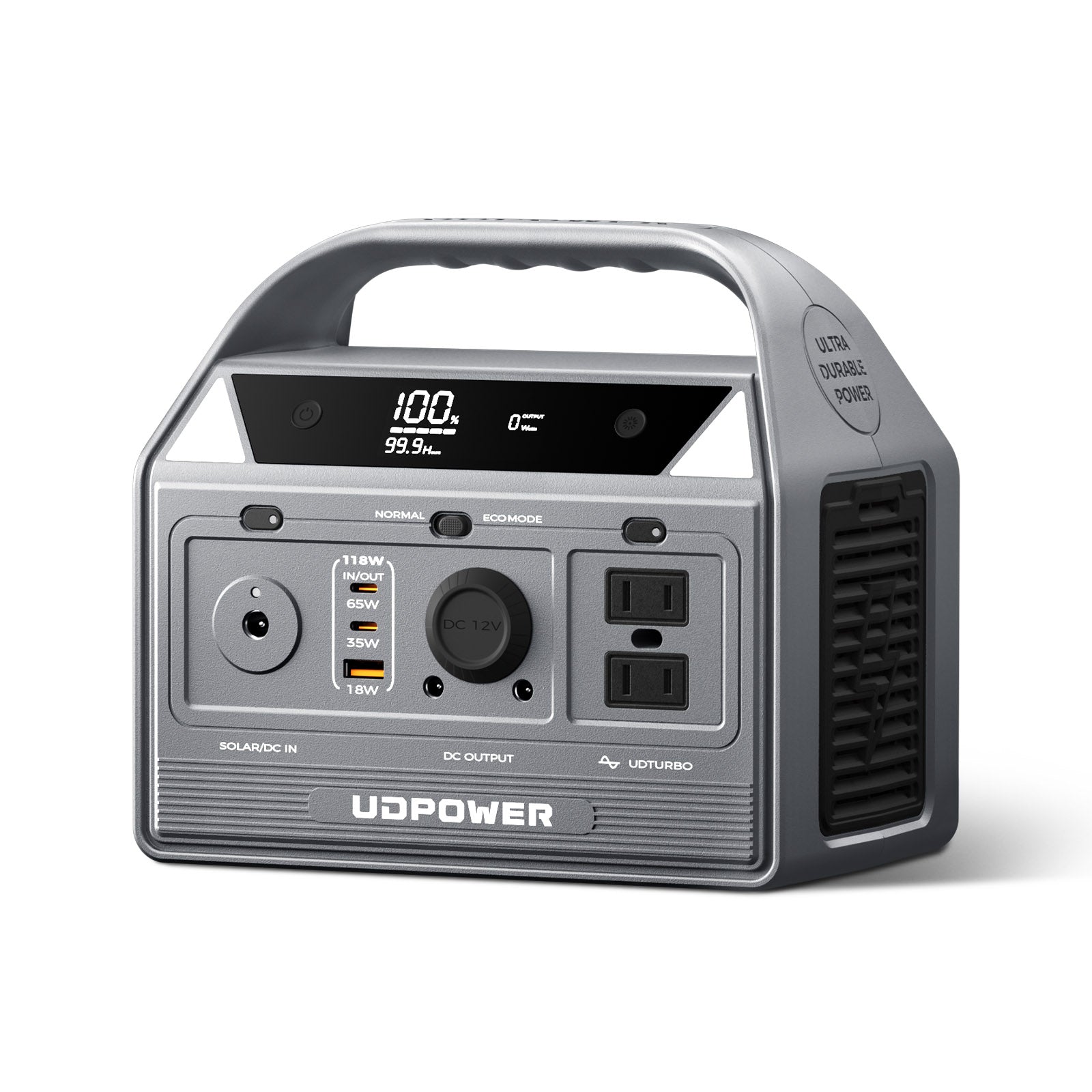
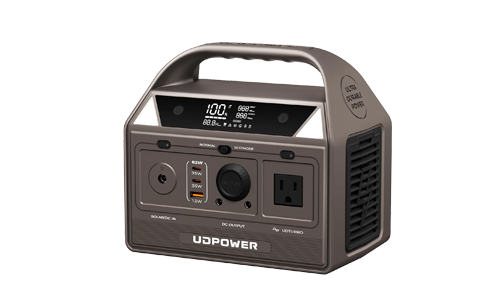
UDPOWER C400 Portable Power Station
Official specs: 256Wh capacity, 400W AC output, 800W surge support, LiFePO4 battery, 4,000+ cycles, 150W max solar input, and multiple outputs.
Good fit for: charging cordless vacuums, robot vacuum docks, handheld cleaning tools, laptops, phones, and car/RV cleanup accessories.
Not ideal for: full-size corded vacuums, 10A/12A upright vacuums, and shop vacs.

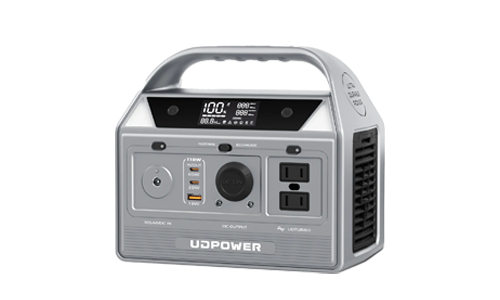
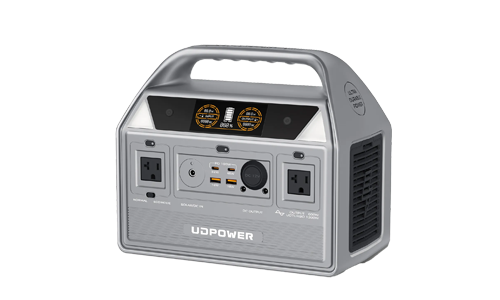
UDPOWER C600 Portable Power Station
Official specs: 596Wh capacity, 600W rated pure sine wave AC output, 1,200W max output, 2 AC outlets, LiFePO4 battery, and 240W max solar input.
Good fit for: low-power corded vacuums under 600W, cordless vacuum charging, robot vacuum docks, and compact emergency cleanup setups.
Not ideal for: most full-size upright vacuums and shop vacs that draw 900W, 1,200W, or 1,440W.
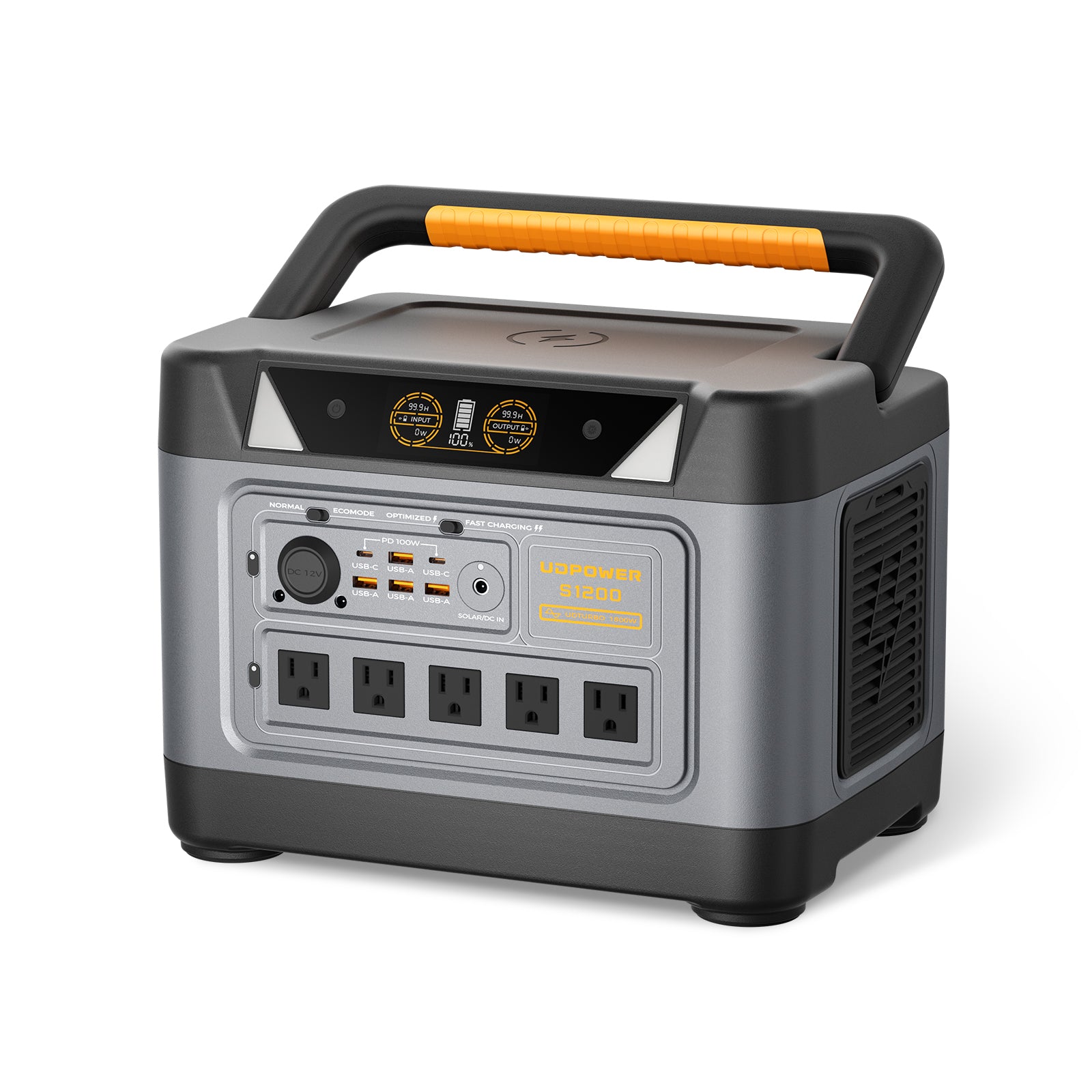
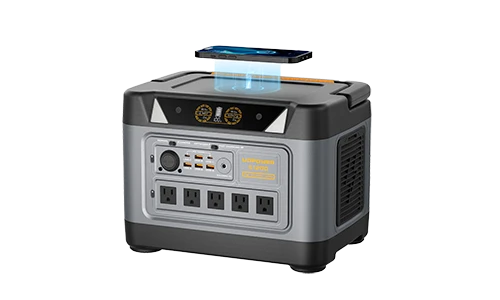
UDPOWER S1200 Portable Power Station
Official specs: 1,190Wh capacity, 1,200W rated pure sine wave output, UDTURBO up to 1,800W, 5 AC outlets, LiFePO4 battery, 4,000+ cycles, 1.5-hour fast charging, and UPSPRIME switchover under 10ms.
Good fit for: many corded vacuums up to about 1,200W, RV cleanup, outage cleanup, garage cleaning, and short high-power sessions.
Important limit: a 12A vacuum is about 1,440W on 120V, which is above the S1200’s 1,200W continuous output. For those vacuums, step up to S2400.
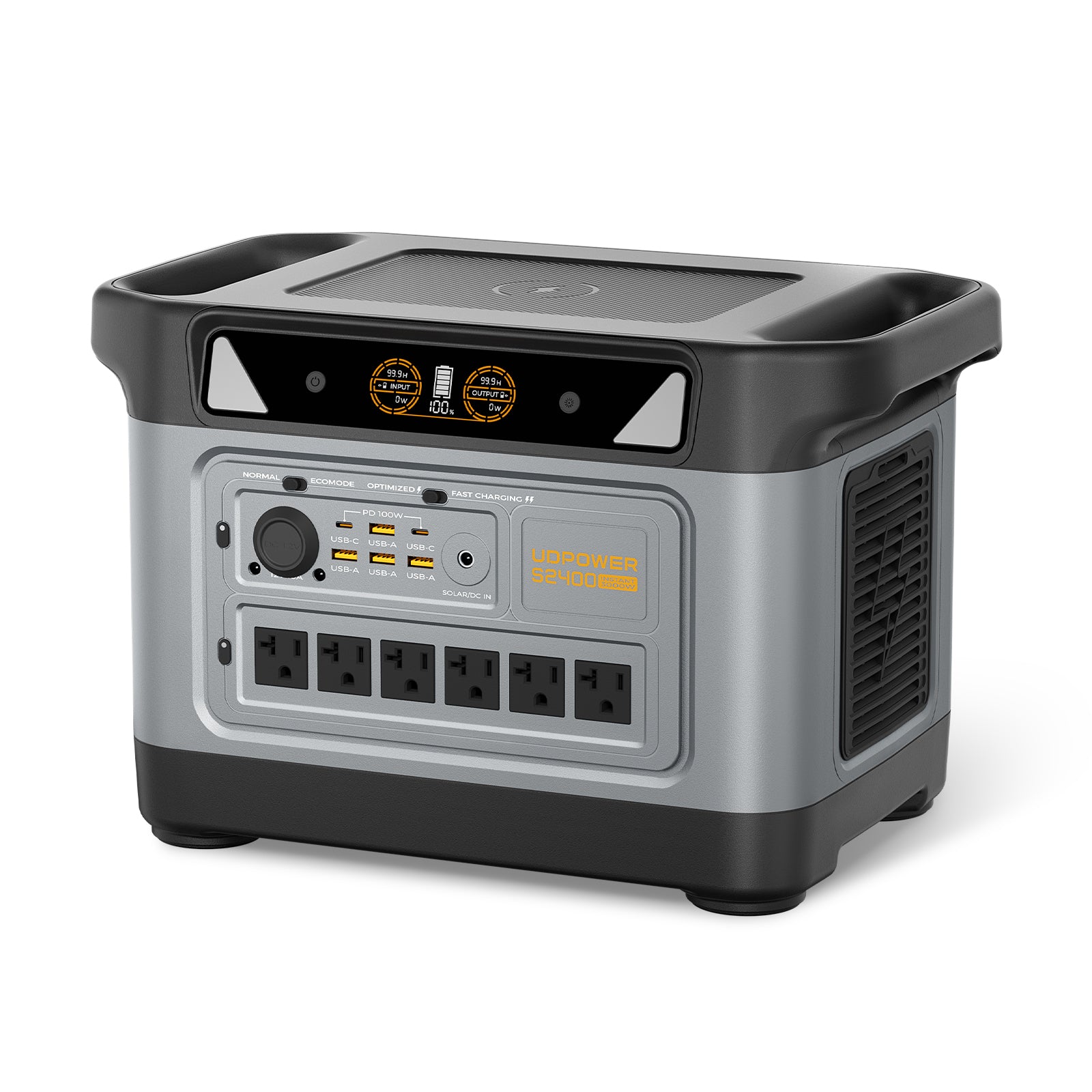
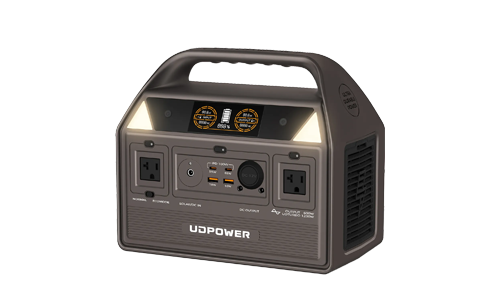
UDPOWER S2400 Portable Power Station
Official specs: 2,083Wh capacity, 2,400W pure sine wave AC output, UDTURBO surge support up to 3,000W for motor start-ups, 6 AC outlets, 10 DC outputs, LiFePO4 battery, 4,000+ cycles, and UPSPRIME switchover under 10ms.
Good fit for: 12A upright vacuums, many wet/dry shop vacs, high-draw cleanup tools, longer runtime, and households that want more inverter headroom.
Best choice when unsure: if your label says 10A to 12A, or the vacuum sometimes trips smaller inverters, S2400 gives the cleanest headroom.
Vacuum runtime estimates on UDPOWER power stations
Runtime depends on the vacuum’s actual draw, suction mode, filter restriction, surface type, and inverter losses. For UDPOWER planning estimates, use 90% conversion efficiency:
Estimated runtime = battery capacity × 0.90 ÷ vacuum watts
This is continuous motor runtime. A real cleaning session often lasts longer on the clock because you stop to move furniture, change attachments, empty the bin, or reposition the cord.
Mobile tip: swipe the table sideways to see all columns.
| Vacuum load | Typical scenario | C400 256Wh / 400W |
C600 596Wh / 600W |
S1200 1,190Wh / 1,200W |
S2400 2,083Wh / 2,400W |
|---|---|---|---|---|---|
| 60W | Robot dock or small charger | About 3 hr 50 min | About 8 hr 56 min | About 17 hr 51 min | About 31 hr 15 min |
| 150W | Large cordless charger or wet/dry floor washer charger | About 1 hr 32 min | About 3 hr 35 min | About 7 hr 8 min | About 12 hr 30 min |
| 300W | Small plug-in cleaner or low-power mode | About 46 min | About 1 hr 47 min | About 3 hr 34 min | About 6 hr 15 min |
| 600W | Small corded vacuum, compact canister, or high-power tool charger | Not recommended | About 54 min | About 1 hr 47 min | About 3 hr 7 min |
| 900W | Mid-to-high household corded vacuum | Not recommended | Not recommended | About 1 hr 11 min | About 2 hr 5 min |
| 1,200W | 10A vacuum on a 120V outlet | Not recommended | Not recommended | About 54 min at the continuous-output limit | About 1 hr 34 min |
| 1,440W | 12A vacuum on a 120V outlet | Not recommended | Not recommended | Not recommended for continuous use | About 1 hr 18 min |
For your own vacuum, you can also use the UDPOWER Runtime Calculator. Enter your vacuum’s watts and the power station’s watt-hour capacity to get a quick estimate, then apply common sense for motor startup and real-world conditions.
How much electricity does vacuuming cost?
Vacuums can draw a lot of watts while running, but most people use them for short sessions. That means the monthly cost is usually modest compared with heating, cooling, water heating, or appliances that run all day.
The table below uses the March 2026 U.S. residential average electricity price from the U.S. Energy Information Administration: 18.83 cents per kWh.
Mobile tip: swipe the table sideways to see all columns.
| Vacuum watts | 10-minute session | 20-minute session | 30-minute session | 30 min/week for a year | Best takeaway |
|---|---|---|---|---|---|
| 600W | 0.10 kWh / about $0.02 | 0.20 kWh / about $0.04 | 0.30 kWh / about $0.06 | 15.6 kWh / about $2.94 | Low cost; output fit matters more than energy cost |
| 900W | 0.15 kWh / about $0.03 | 0.30 kWh / about $0.06 | 0.45 kWh / about $0.08 | 23.4 kWh / about $4.41 | Common household range; use a station with headroom |
| 1,200W | 0.20 kWh / about $0.04 | 0.40 kWh / about $0.08 | 0.60 kWh / about $0.11 | 31.2 kWh / about $5.87 | High power draw, but short use keeps cost reasonable |
| 1,440W | 0.24 kWh / about $0.05 | 0.48 kWh / about $0.09 | 0.72 kWh / about $0.14 | 37.4 kWh / about $7.05 | Needs strong AC output even though annual cost is still modest |
Real-world tips before running a vacuum on backup power
- Start with the vacuum off. Turn on the power station’s AC output first, then start the vacuum. This avoids confusing the inverter with a sudden plugged-in motor load.
- Avoid sharing the station with other big loads. Do not run a vacuum at the same time as a microwave, heater, kettle, air fryer, or hair dryer unless you have carefully added the watts.
- Clean the filter first. A clogged filter can reduce airflow and make the motor work harder. You will also clean faster, which saves battery.
- Use lower suction when possible. Rugs, curtains, car interiors, and small messes often do not need maximum mode.
- Watch the live watt reading. If your power station display shows watts jumping near the limit, step down the vacuum mode or use a bigger station.
- Skip long extension cords when you can. Thin or very long extension cords can add voltage drop. For high-watt vacuums, plug directly into the power station when practical.
- Think in minutes, not hours. Vacuuming is usually a short-burst task. A 1,200W vacuum can drain a battery quickly if left running, but a 10–20 minute cleanup is realistic on the right station.
Best setup by use case
RV or car cleanup: use a cordless vacuum charger with C400/C600, or a compact low-watt plug-in vacuum if you need stronger suction.
Power outage cleanup: S1200 is practical for many household vacuums up to about 1,200W; choose S2400 for 12A vacuums.
Garage or workshop cleanup: shop vacs usually deserve S2400 because motor startup and dust-heavy filters can raise demand.
FAQ
How many watts does a vacuum use?
Most full-size corded household vacuums use about 600 to 1,440 watts while running. Smaller plug-in handheld vacuums can be lower, while wet/dry shop vacs and full-size uprights often sit near the higher end.
How many watts is a 12 amp vacuum?
On a standard 120V U.S. outlet, a 12A vacuum is about 1,440W because 120V × 12A = 1,440W. That is above the continuous output of many mid-size portable power stations.
Does a higher-watt vacuum clean better?
Not automatically. Watts measure electrical input, not cleaning performance. Brush design, airflow path, seals, filter condition, suction pressure, and airflow can matter more than raw wattage.
Can a portable power station run a vacuum?
Yes, if the station’s continuous AC output is higher than the vacuum’s running watts and the station can handle brief motor startup demand. For a 10A to 12A vacuum, choose a higher-output station instead of pushing a small inverter at its limit.
Can the UDPOWER S1200 run a vacuum?
The UDPOWER S1200 has 1,200W rated AC output and up to 1,800W UDTURBO surge support, so it can run many corded vacuums up to about 1,200W. A 12A vacuum is about 1,440W, so it is better matched with the UDPOWER S2400.
Can the UDPOWER C600 run a vacuum?
The UDPOWER C600 is best for cordless vacuum charging, robot vacuum docks, and low-power plug-in vacuums under 600W. It is not the right size for most full-size upright vacuums or shop vacs.
How long will a 1,200Wh power station run a vacuum?
Using a 90% efficiency estimate, a 1,190Wh station provides about 1,071Wh of usable AC energy. That means about 1 hour 11 minutes at 900W, or about 54 minutes at 1,200W, before real-world variables are considered.
Why does my vacuum trip a breaker or overload a power station?
The vacuum may be drawing near the circuit or inverter limit, especially at startup. A clogged filter, high suction mode, carpet resistance, or another appliance on the same circuit can make the problem worse.
How many watts does a robot vacuum use?
Robot vacuums usually use much less power than full-size corded vacuums. The dock often draws tens of watts while charging and less once idle, but exact numbers depend on the model, battery size, suction mode, and dock features.
What is the easiest way to know my vacuum’s real wattage?
Use a plug-in watt meter. Test the vacuum on hard floor, carpet, low mode, high mode, and with the filter clean. The highest steady reading is the best planning number for a portable power station.
Choose the right power station for your vacuum load
If you are only charging a cordless vacuum or robot vacuum, start with a compact station. If you want to run a corded vacuum, size by the label watts. If your vacuum says 10A to 12A, choose more AC output headroom instead of buying the smallest station that barely matches the math.
Sources used
The numbers in this guide were checked against appliance label math, official UDPOWER product pages, and public electricity price data. Always confirm your own vacuum label before sizing a power station.
- UDPOWER C400 official product page
- UDPOWER C600 official product page
- UDPOWER S1200 official product page
- UDPOWER S2400 official product page
- Electrical Safety First: amps to watts formula
- BestVacuum: vacuum cleaner specifications explained
- Shop-Vac product specification example
- U.S. Energy Information Administration: average electricity price data
- ECOVACS: vacuum wattage ranges by type