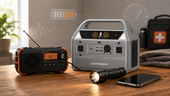
Sleep Apnea Equipment Backup Power: How to Keep CPAP, APAP, and BiPAP Running During an Outage
ZacharyWilliamLatest updated: May 14, 2026
Power outages are stressful for anyone, but they feel different when your sleep therapy depends on electricity. Most CPAP, APAP, and BiPAP machines are built to plug into a wall outlet. When the grid goes down, the machine usually stops unless you already have a charged backup battery or portable power station ready.
Quick Answer
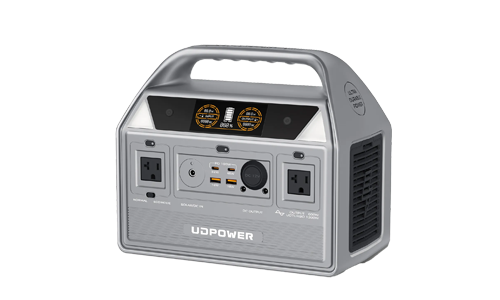
For most sleep apnea equipment, a 600Wh to 1200Wh portable power station is the practical sweet spot for overnight backup. A CPAP used without heated humidification may only need 300–500Wh for one night, while a CPAP with heated humidifier or heated tubing often needs closer to 700–1000Wh per night. If you want a safer buffer for a full night, storm season, or more than one night of use, choose a 1000Wh+ unit such as the UDPOWER S1200.
The most important sizing rule is simple: runtime depends on your machine’s real average wattage, not just the battery size printed on the box.

Why Backup Power Matters for Sleep Apnea Equipment
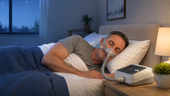
Sleep apnea therapy works best when it is consistent. If a storm, wildfire shutoff, grid failure, or campground power issue cuts electricity in the middle of the night, your CPAP or BiPAP may stop immediately. That does not mean you cannot breathe at all, but it can interrupt therapy, wake you up, dry your airway, and leave you poorly rested the next day.
The American Lung Association recommends that medical device users prepare backup power in advance and notes that small devices such as CPAP machines can run from battery packs or portable power stations during outages. Source: American Lung Association
For ordinary home users, the goal is not to build a hospital power system. The goal is more practical: keep your therapy running through the night, keep the battery charged before bad weather, and know which comfort features to turn down when every watt-hour matters.
What Sleep Apnea Equipment Needs Backup Power?
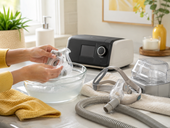
When people search for sleep apnea equipment backup power, they are usually asking about more than just the CPAP machine. The full setup may include the blower, heated humidifier, heated tubing, a mask vent system, a phone app, and sometimes a separate oxygen device. Each part changes the power plan.
| Equipment | Typical backup power concern | What to check before buying a battery | Reader-friendly takeaway |
|---|---|---|---|
| CPAP / APAP machine | Usually moderate power draw, but varies by pressure, mask leak, and comfort settings. | Power supply label, user manual, actual watt reading if available. | Most are realistic for portable power stations. |
| BiPAP machine | Often uses more power than basic CPAP because pressure support can be higher. | Exact model and prescribed pressure range. | Choose a larger battery buffer than you would for a simple CPAP. |
| Heated humidifier | One of the biggest reasons runtime drops. | Whether it can be turned off, lowered, or used as passive humidification. | Turning it down can add hours of runtime. |
| Heated tubing | Adds heating load through the night. | Climate control setting and tube temperature. | Disable or lower during emergencies if comfortable and approved for your needs. |
| Oxygen concentrator | Can use far more power than a CPAP and may be medically critical. | Rated watts, continuous vs pulse flow, medical backup plan. | Do not size this casually; contact your clinician or equipment provider. |
How Much Power Does a CPAP Use?
There is no single wattage that covers every CPAP setup. A travel CPAP with humidification off can be very efficient. A full-size machine with heated humidifier and heated tubing can use much more. ResMed lists the AirSense 11 system with a 65W power supply unit, which is a useful reference point for sizing backup power because it reflects a common home CPAP platform. Source: ResMed AirSense 11
| Setup | Planning wattage | When this estimate makes sense | Backup power advice |
|---|---|---|---|
| Travel CPAP or low-pressure setup, humidifier off | 15–25W | Lightweight travel machine, no heated tube, low leak. | A smaller battery may cover one night, but test it before relying on it. |
| Common CPAP/APAP, humidifier off or very low | 30–45W | Good planning range for many users who disable heat during outages. | 500–600Wh can often cover a full night with reserve. |
| Full-size CPAP with standard power supply | 65W | Useful conservative planning figure for devices such as AirSense 11. | 1000Wh+ gives a much safer overnight buffer. |
| CPAP with heated humidifier and heated tubing | 75–100W+ | Cold or dry rooms, higher humidity setting, heated tube enabled. | Plan around 1000Wh per night or reduce climate settings. |
Simple runtime formula
Estimated runtime = battery capacity (Wh) × 0.85 ÷ average device watts
The 0.85 factor leaves room for inverter loss, temperature, battery reserve, and real-world variation. If you connect through a DC adapter approved for your CPAP model, runtime can be better because less energy is lost converting battery DC to AC and back to DC.
CPAP Backup Power Runtime Chart
The table below uses the conservative formula above. Your real runtime may be longer or shorter depending on pressure, mask leak, heated humidity, tube temperature, and whether you use AC or a compatible DC cable.
| Battery capacity | 20W CPAP | 40W CPAP | 65W CPAP | 90W CPAP with heat | Best fit |
|---|---|---|---|---|---|
| 192Wh | About 8.2 hrs | About 4.1 hrs | About 2.5 hrs | About 1.8 hrs | Short naps, travel backup, router/phone support; not ideal for full-night CPAP use with heat. |
| 256Wh | About 10.9 hrs | About 5.4 hrs | About 3.3 hrs | About 2.4 hrs | Emergency short backup or efficient CPAP with heat off. |
| 596Wh | About 25.3 hrs | About 12.7 hrs | About 7.8 hrs | About 5.6 hrs | One-night CPAP backup for many no-humidifier setups. |
| 1,190Wh | About 50.6 hrs | About 25.3 hrs | About 15.6 hrs | About 11.2 hrs | Full-night backup with stronger reserve; best balance for home CPAP outage planning. |
| 2,083Wh | About 88.5 hrs | About 44.3 hrs | About 27.2 hrs | About 19.7 hrs | Multi-night CPAP backup or CPAP plus other essentials. |
UDPOWER’s existing CPAP backup guide gives a similar real-world direction: smaller 192–256Wh units are better for short backup, the 596Wh class is a practical one-night no-humidifier option, and the 1190Wh class is stronger for longer runtime or humidifier use. See UDPOWER CPAP Battery Backup options
What Size Backup Battery Do You Need?
Instead of starting with product size, start with the night you need to protect.
| Your situation | Recommended capacity range | Why | Good UDPOWER match |
|---|---|---|---|
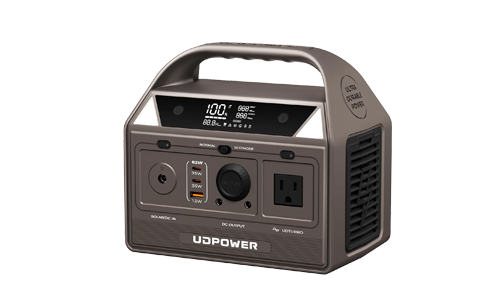
| You only need emergency short backup after a brief outage. | 200–300Wh | Lightweight and easy to store, but limited for full-night CPAP use. | UDPOWER C400 |
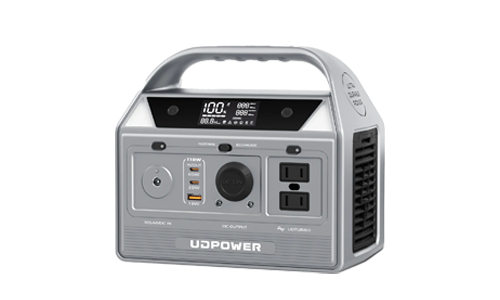
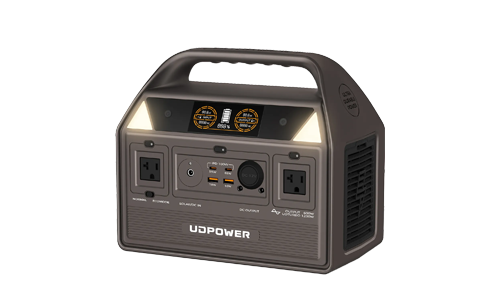
| You use CPAP without heated humidifier and want one-night coverage. | 500–700Wh | Enough reserve for many efficient CPAP setups, especially with climate features off. | UDPOWER C600 |
| You want a more dependable home backup for CPAP, router, phone, and a small lamp. | 1000–1200Wh | Gives a stronger margin for humidifier use, higher pressure, or a longer outage. | UDPOWER S1200 |
| You want multi-night CPAP backup or want to support additional essentials. | 2000Wh+ | Better for storm season, rural areas, extended outages, or CPAP plus refrigerator/router devices. | UDPOWER S2400 |
Do not size oxygen equipment casually
If your sleep apnea setup includes an oxygen concentrator or any device your clinician considers medically critical, ask your equipment provider for the exact wattage and backup requirements. Portable power stations can be useful, but they are not a replacement for a medical emergency plan.
Recommended UDPOWER Backup Power Options for Sleep Apnea Equipment
These recommendations use product specifications from UDPOWER’s official product pages and CPAP backup collection. Product prices and availability can change, so use the product page as the final source before purchase.
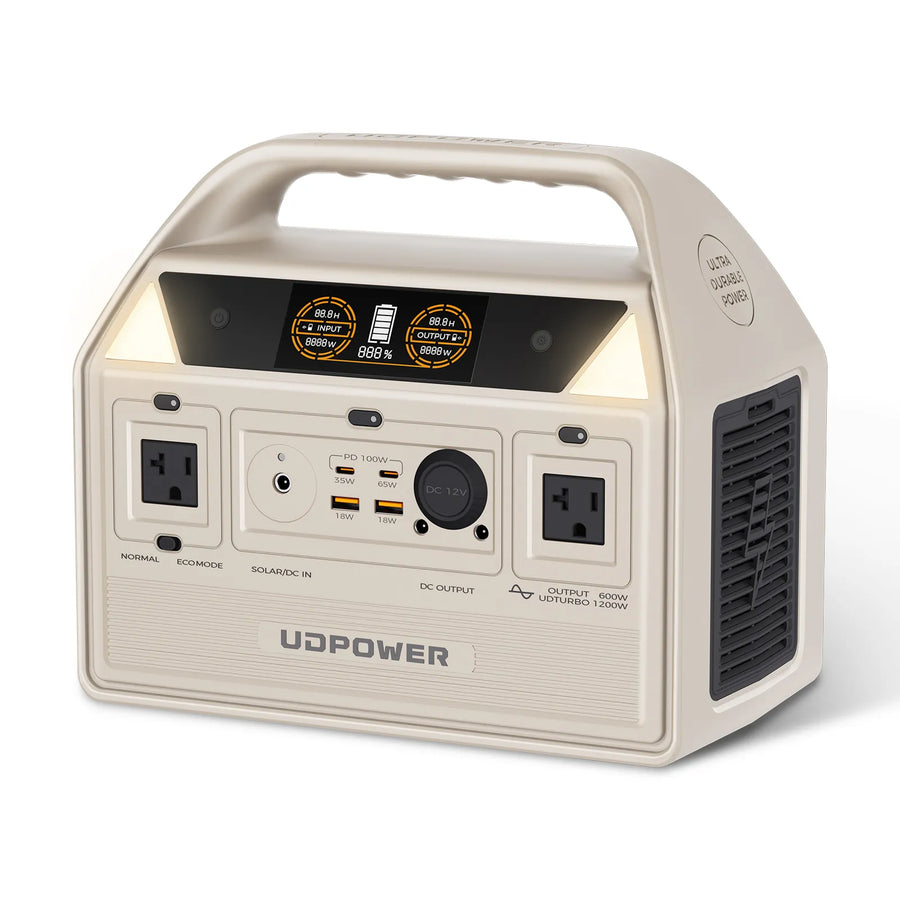
UDPOWER C600 — Best for one-night CPAP backup with humidifier off
The C600 is a practical choice when budget, size, and overnight coverage all matter. It is best for CPAP users who can turn heated humidification off or keep it low during an outage. UDPOWER’s CPAP backup page estimates roughly 11–12 hours without humidifier and 5–6 hours with humidifier for the 596Wh class.
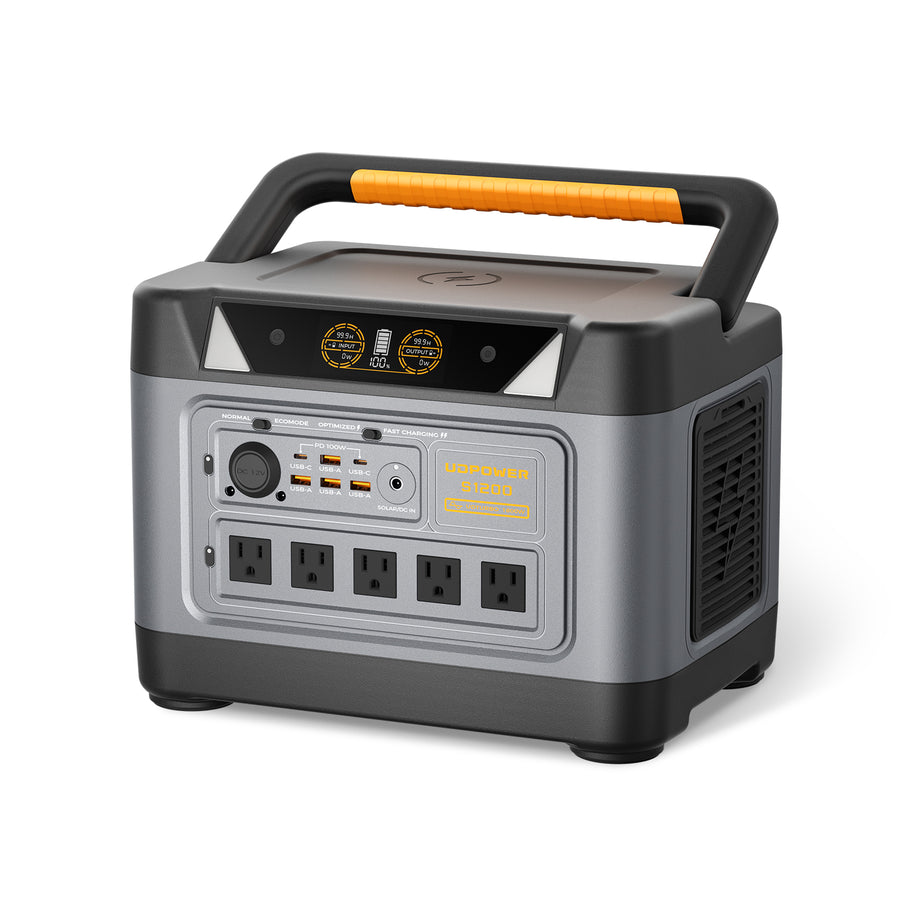
UDPOWER S1200 — Best overall home CPAP backup
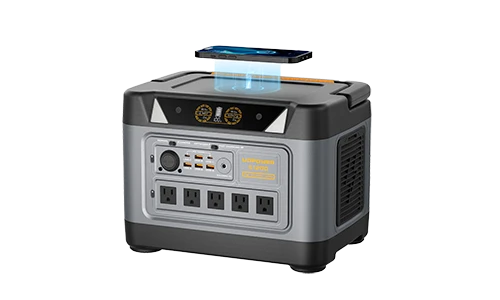
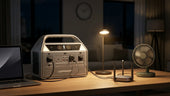
The S1200 is the strongest fit for most home users searching for sleep apnea equipment backup power. It offers much more reserve than a small CPAP-only battery, supports AC output for standard CPAP power supplies, and can also keep a phone, router, or bedside light running. UDPOWER lists 1,190Wh capacity, 1,200W pure sine wave output, up to 1,800W surge, LiFePO4 chemistry with 4,000+ cycles, and UPSPRIME switchover under 10ms.
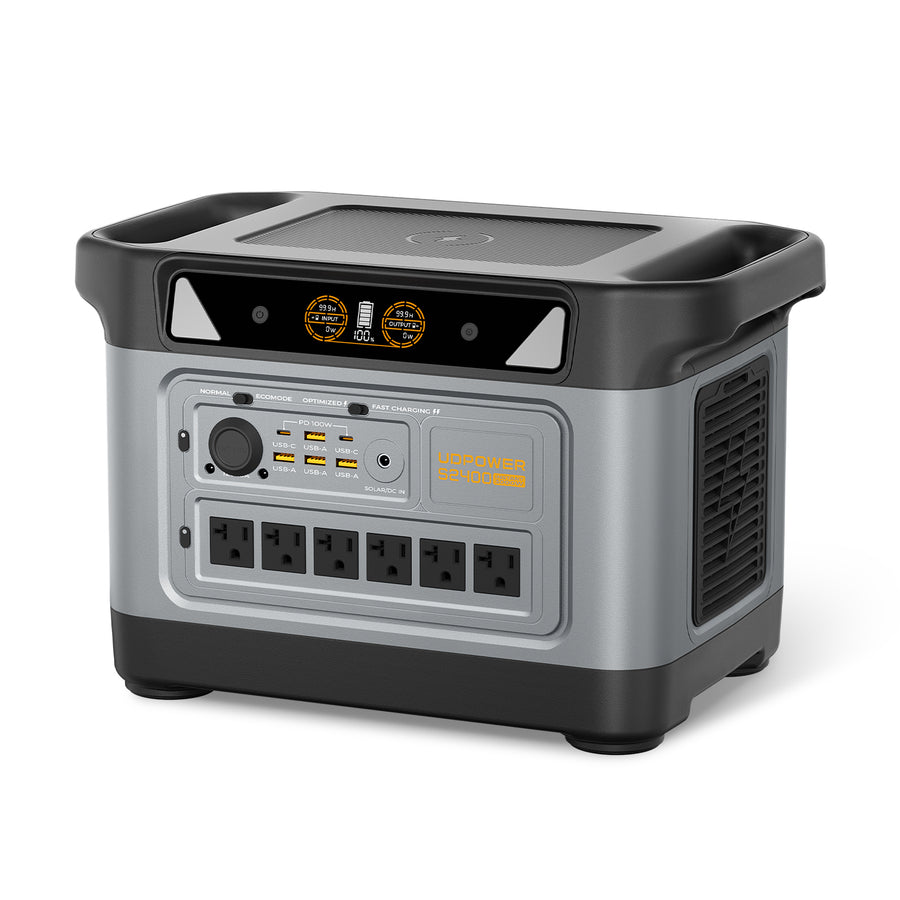
UDPOWER S2400 — Best for multi-night backup and more home essentials
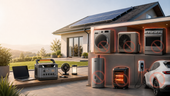
The S2400 is for households that want more than just one CPAP night. It is better suited for extended outages, CPAP plus router and refrigerator management, or users who want to recharge from compatible solar panels. UDPOWER lists 2,083Wh capacity, 2,400W pure sine wave output, surge support up to 3,000W, 6 AC outlets, 10 DC outputs, LiFePO4 battery, and solar input up to 400W.

UDPOWER C400 — Best for compact emergency support, not the safest full-night choice
The C400 is useful for short backup, travel, phones, lights, and efficient CPAP setups with heat off. For a full night of therapy, especially with heated humidity, move up to C600 or S1200.
| Model | Capacity | AC output | CPAP fit | Official source |
|---|---|---|---|---|
| UDPOWER C400 | 256Wh | 400W | Short backup, efficient CPAP with heat off, travel support. | C400 product page |
| UDPOWER C600 | 596Wh | 600W | One-night backup for many no-humidifier CPAP setups. | C600 product page |
| UDPOWER S1200 | 1,190Wh | 1,200W | Best overall home CPAP backup with reserve. | S1200 product page |
| UDPOWER S2400 | 2,083Wh | 2,400W | Multi-night CPAP backup and additional home essentials. | S2400 product page |
How to Set Up CPAP Backup Power Before an Outage
Do not wait until the lights are already out. A backup power setup only feels simple when it has already been tested on a normal night.
Pre-outage checklist
- Find the power label: Check your CPAP power supply for voltage, amps, and watts. If it says 65W, use 65W as a conservative planning number.
- Fully charge the power station: Recharge it before storm season, wildfire season, or a forecasted outage.
- Test for one real night: Run your CPAP from the battery on a normal night and check remaining battery in the morning.
- Decide your outage settings: Know how to turn heated humidifier and heated tubing down or off.
- Keep the setup nearby: Store the power station, CPAP power supply, extension cord if needed, and flashlight in one easy-to-reach place.
- Plan recharging: For longer outages, pair a larger power station with compatible solar panels or another safe charging plan.
How to Extend CPAP Runtime During a Blackout
The fastest way to make a CPAP battery last longer is to reduce heat. Heating water and tubing takes much more energy than simply running the blower. ResMed also notes that external CPAP batteries are useful for power outages and should be charged before use. Source: ResMed CPAP batteries and adaptors
| Action | Runtime impact | Comfort tradeoff | Best use |
|---|---|---|---|
| Turn heated humidifier off | Often the biggest runtime gain | Air may feel drier | Emergency nights, camping, limited battery reserve |
| Use water chamber without heat | Low power draw | Less moisture than active heat | Users who still want some passive humidification |
| Turn heated tubing off or lower | Moderate to high gain | Possible condensation in cold rooms | Outages where every hour matters |
| Fix mask leaks before bedtime | Can reduce blower workload | No real downside | Every night, especially on battery power |
| Use an approved DC adapter when available | Can improve efficiency | Requires correct model-specific accessory | Travel, van life, longer off-grid use |
Safety Notes for Medical Equipment Users
Backup power for CPAP is usually straightforward, but it still involves medical equipment. Keep these rules simple:
- Use pure sine wave AC output when plugging in a normal CPAP power supply.
- Do not use unknown adapters just because the plug fits. CPAP voltage and connector type matter.
- Keep the power station ventilated and away from bedding, blankets, water, and direct heat.
- Test your setup before relying on it during a storm or overnight outage.
- Talk to your clinician if you use oxygen, have severe sleep apnea, or cannot safely miss therapy.
SleepApnea.org also notes that CPAP batteries are useful when electricity is unavailable, including camping, power outages, and travel. Source: SleepApnea.org
Build a Backup Power Plan Before the Next Outage
For most CPAP users, the safest starting point is to choose enough capacity for the whole night, test the setup before bad weather, and know how to reduce humidifier power when needed.
FAQ: Sleep Apnea Equipment Backup Power
What is the best backup power for a CPAP machine?
For most home users, a 600Wh to 1200Wh portable power station is the most practical choice. A 600Wh class unit can often cover one night with humidifier off, while a 1000Wh+ unit gives a safer buffer for humidifier use, higher pressure, or additional essentials.
Can a portable power station run a CPAP all night?
Yes, if the battery capacity matches your CPAP’s average wattage. A 596Wh unit may cover many no-humidifier setups for one night. For heated humidifier or heated tubing use, a 1000Wh+ unit is a safer plan.
How many watts does a CPAP use?
Many CPAP setups fall somewhere around 30–65W for planning, but heated humidifiers and heated tubing can push power use higher. Check your power supply label and test your actual setup whenever possible.
Does a CPAP humidifier drain the battery faster?
Yes. Heated humidification is often the biggest reason runtime drops. During an outage, turning the humidifier off or lowering the heat setting can greatly extend runtime.
Is a UPS necessary for CPAP backup?
A UPS-style switchover is helpful if you want the CPAP to continue running during a sudden outage without manually moving plugs. However, you should still test your CPAP and power station together before relying on overnight backup.
Can I use a car battery for CPAP backup?
Some CPAP machines can be powered from compatible DC battery setups, but you must use the correct manufacturer-approved adapter and voltage. For many home users, a portable power station is simpler because it provides standard AC outlets and built-in battery management.
Can I use solar panels to recharge CPAP backup power?
Yes. Solar can help during multi-day outages, camping, or RV trips. Make sure the solar panel voltage, current, and connector are compatible with the power station. UDPOWER S1200 and S2400 support solar charging, and the S2400 supports up to 400W solar input according to its official product page.
Can I take a large CPAP backup battery on an airplane?
Large portable power stations are generally too large for passenger air travel battery limits. Smaller CPAP travel batteries may be allowed depending on watt-hour rating and airline rules. Always check the airline and TSA guidance before flying.
Should I buy the smallest battery that can run my CPAP?
No. A backup power plan should include a buffer. Battery runtime changes with pressure, leaks, temperature, inverter loss, humidifier use, and battery age. If therapy matters every night, choose more capacity than the bare minimum.
Sources and Related Reading
- UDPOWER CPAP Battery Backup
- UDPOWER: CPAP Power Consumption
- UDPOWER S1200 Portable Power Station
- UDPOWER S2400 Portable Power Station
- UDPOWER C600 Portable Power Station
- UDPOWER C400 Portable Power Station
- American Lung Association: Preparing for a Power Outage as a Medical Device User
- ResMed: AirSense 11 CPAP Device
- ResMed: CPAP Batteries and Adaptors
- SleepApnea.org: CPAP Battery Guide