How Much Does It Cost to Run a Ceiling Fan, Electric Fan, & Box Fan?
ZacharyWilliamDirect answer: running a fan is usually cheap. At the current U.S. residential average electricity price of 17.65¢/kWh, a 35W ceiling fan costs about $0.05 for 8 hours, a 55W pedestal or tower fan costs about $0.08 for 8 hours, and a 75W box fan costs about $0.11 for 8 hours. Over a 30-day month at 8 hours per day, that works out to about $1.48 to $3.18 for many common fans.
The real variable is not “fan vs. fan.” It is wattage × hours used × your local utility rate. That is why two people can own similar fans and still see noticeably different running costs.

How much does it cost to run a ceiling fan, electric fan, or box fan?
For most U.S. homes, fan operating cost is low enough that the bigger question is not “Can I afford to run it?” but rather “Am I using the right fan in the right way?” A fan that runs longer than needed, stays on in an empty room, or works against your AC strategy can still waste money, even if its hourly cost is small.
As a rule of thumb, many common household fans land in these ranges:
- Ceiling fan: often about 25W to 75W in real household use, with some efficient ENERGY STAR models much lower.
- Pedestal or tower fan: often about 29W to 60W for efficient consumer models, with higher-power units going beyond that.
- 20-inch box fan: often about 75W on high speed.
Typical wattage by fan type
This table uses realistic numbers for household buying decisions. It combines official ceiling-fan efficiency examples with common consumer fan figures and utility guidance, so you can estimate cost without getting lost in edge cases.
| Fan type | Typical wattage to use for cost math | Good “working estimate” for most readers | Where that number is useful |
|---|---|---|---|
| Efficient ceiling fan | 16W to 35W | 35W | Bedroom, living room, everyday comfort with a newer fan |
| Standard ceiling fan | 35W to 75W | 55W | General whole-room airflow in typical homes |
| Pedestal or tower fan | 29W to 60W | 55W | Sleeping, desk use, targeted airflow, apartment cooling |
| 20-inch box fan | 60W to 75W | 75W | Window airflow, garage, workshop, stronger direct breeze |
What that means on your electric bill
The table below uses the current U.S. residential average electricity price of 17.65¢/kWh. It shows why fans are popular: even steady daily use usually stays in the low single digits per month.
| Fan type | Watts used | Cost per hour | Cost for 8 hours | Cost for 30 days at 8 hours/day | Cost for 365 days at 8 hours/day |
|---|---|---|---|---|---|
| Efficient ceiling fan | 35W | $0.01 | $0.05 | $1.48 | $18.04 |
| Typical pedestal or tower fan | 55W | $0.01 | $0.08 | $2.33 | $28.34 |
| Typical box fan | 75W | $0.01 | $0.11 | $3.18 | $38.65 |
How much does it cost to run a fan 24/7?
This is one of the most common search-intent questions, especially during summer or during a heat wave. Using the same U.S. average rate of 17.65¢/kWh, here is the rough monthly cost for nonstop use over a 30-day month:
| Fan type | Watts used | Monthly cost at 24/7 use | What that usually means in real life |
|---|---|---|---|
| Efficient ceiling fan | 35W | $4.45/month | Cheap enough for regular use, but still worth turning off in empty rooms |
| Typical pedestal or tower fan | 55W | $6.99/month | Very manageable for bedrooms, offices, and apartments |
| Typical box fan | 75W | $9.53/month | Still inexpensive compared with AC, but no longer “basically free” |
That is why fans are best treated as targeted comfort tools, not something to leave running everywhere all the time. If nobody is in the room, you are paying for airflow you are not using.
Your state rate can change the answer more than your fan type
Two homes can use the same 75W box fan for the same 8 hours and still get very different cost results. The reason is the local electricity rate. A fan is cheap almost everywhere, but it is not equally cheap everywhere.
| Location example | Residential rate | 35W fan for 8 hours | 55W fan for 8 hours | 75W fan for 8 hours | 75W fan for 30 days at 8 hours/day |
|---|---|---|---|---|---|
| Louisiana | 12.87¢/kWh | $0.04 | $0.06 | $0.08 | $2.32 |
| U.S. average | 17.65¢/kWh | $0.05 | $0.08 | $0.11 | $3.18 |
| California | 33.22¢/kWh | $0.09 | $0.15 | $0.20 | $5.98 |
| Hawaii | 43.00¢/kWh | $0.12 | $0.19 | $0.26 | $7.74 |
One detail most articles skip: ceiling fan only vs. ceiling fan with the light on
This is one of the easiest ways to underestimate running cost. Many people think they are “only running the fan,” but the light kit is on too.
An ENERGY STAR-certified 52-inch ceiling fan example shows 16.3W on high speed for the fan itself and 18.0W for the light kit input. At the current U.S. average rate, running the fan only for 8 hours/day works out to about $0.69/month. Running the fan plus light for the same 8 hours/day works out to about $1.45/month.
That is still cheap, but it is roughly double the cost. If you use the fan for comfort but do not need the light, switch the light off and keep the airflow.
How to calculate your own exact fan cost
Use this formula:
Example for a 75W box fan used 10 hours/day at 20¢/kWh:
- 75W ÷ 1000 = 0.075 kW
- 0.075 × 10 hours = 0.75 kWh/day
- 0.75 × $0.20 = $0.15/day
- $0.15 × 30 days = $4.50/month
If you want the most accurate number, use the wattage printed on your actual fan and the rate shown on your power bill, not a generic national average.
How to lower your fan-related cooling cost without feeling hotter
Fans are already efficient, so the best savings usually come from using them smarter with your AC, not from obsessing over pennies per hour.
- Raise your thermostat when using a ceiling fan. The U.S. Department of Energy says a ceiling fan can let you raise the thermostat by about 4°F without reducing comfort.
- Turn fans off in empty rooms. Fans help people feel cooler. They are not doing much for an empty bedroom or office.
- Use the lowest comfortable speed. Small wattage changes matter over long daily use.
- Choose the right fan for the job. Ceiling fans are better for larger rooms. Box and pedestal fans are better for direct airflow where you actually sit or sleep.
- Replace old ceiling fans with efficient models when it makes sense. ENERGY STAR says certified ceiling fans can be much more efficient than conventional models.
During an outage, fans are easy backup loads for a portable power station
Fans are one of the most backup-friendly household loads because their wattage is low. That makes them a practical fit for camping, heat-related outages, RV use, bedrooms, home offices, and keeping air moving overnight.
Below are conservative runtime estimates using 85% usable AC energy. Real runtime changes with fan speed, inverter losses, battery condition, room temperature, and whether the fan cycles or runs continuously.
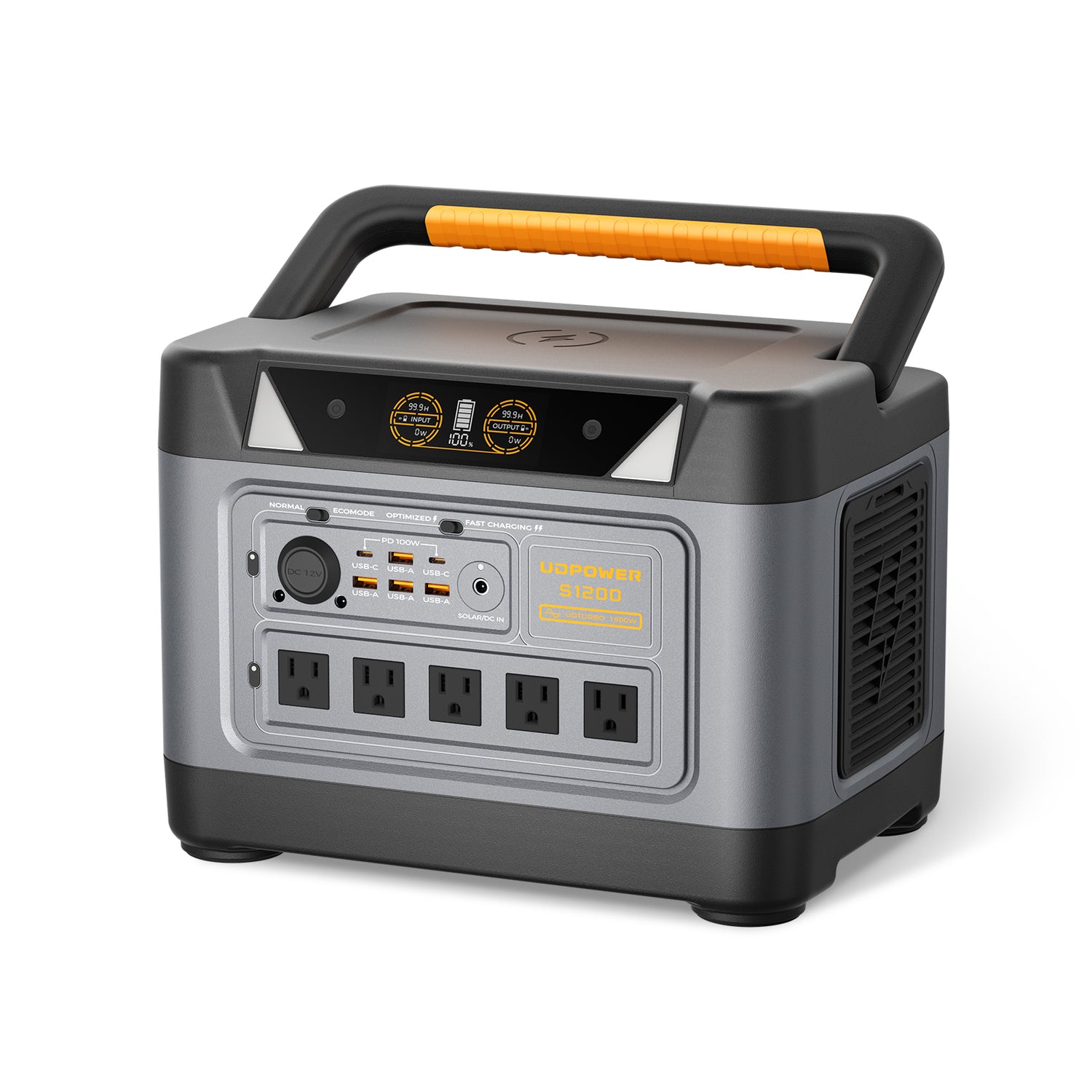
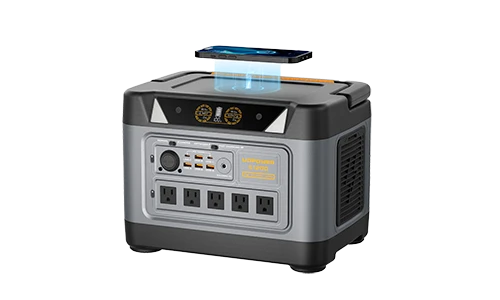
UDPOWER S1200
A strong match if your goal is to keep one or more fans running during a blackout while also covering small essentials like a router, phone chargers, lights, or a CPAP.
- Battery: 1,190Wh
- Rated output: 1,200W
- Battery chemistry: LiFePO4
- Cycle life: 4,000+ cycles
- UPS: <10ms
- Solar input: 400W max
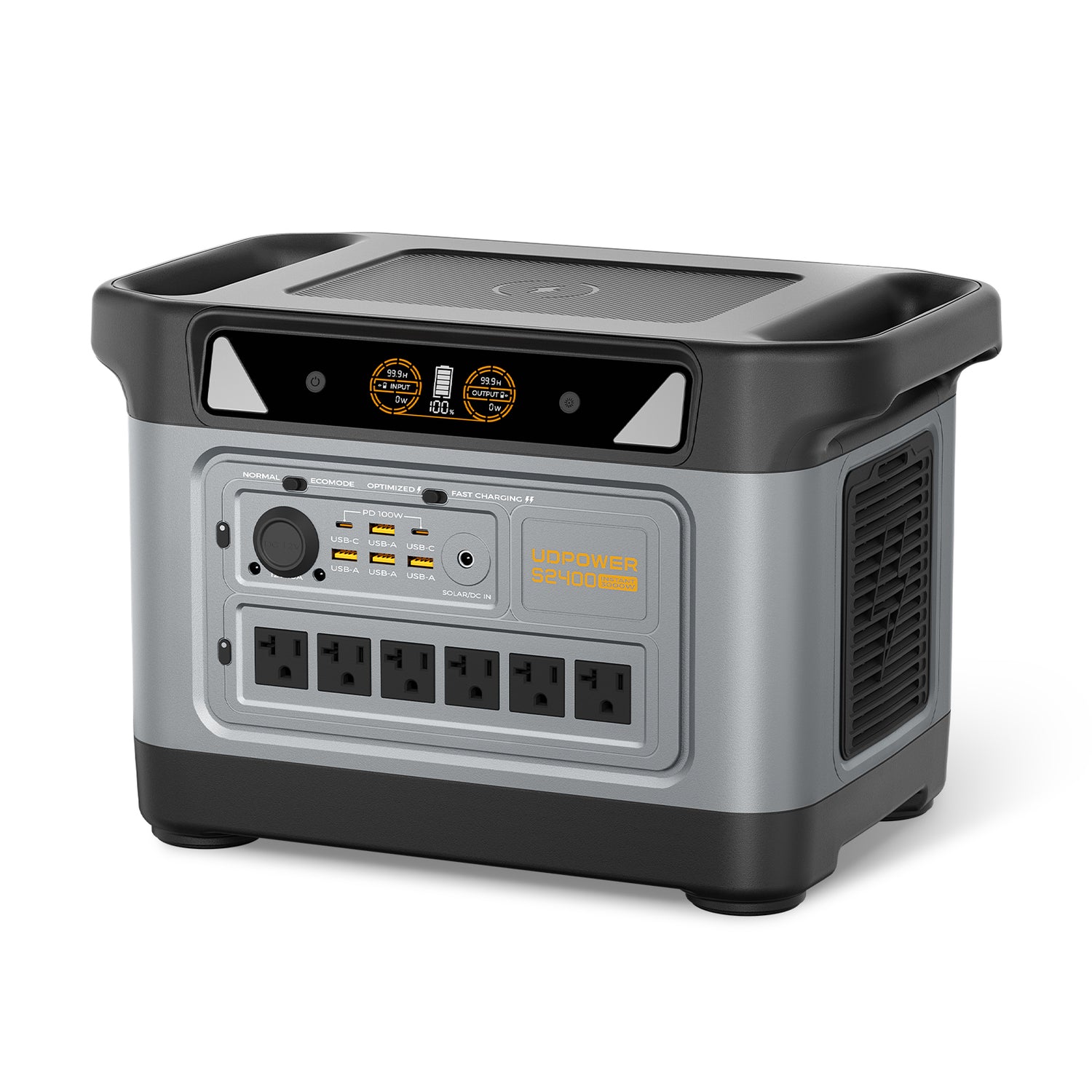
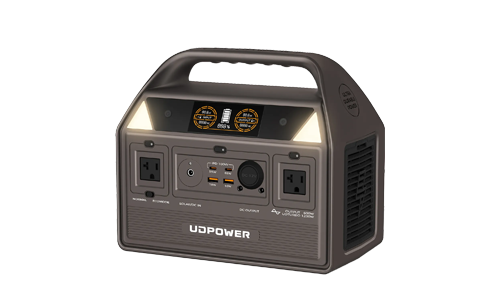
UDPOWER S2400
A better choice if you want fan runtime measured in days instead of just overnight, or if you also want enough headroom for heavier home essentials.
- Battery: 2,083Wh
- Rated output: 2,400W
- Surge: up to 3,000W
- Battery chemistry: LiFePO4
- UPS: ≤10ms
- Solar input: up to 400W
| Power station | 35W ceiling fan | 55W pedestal/tower fan | 75W box fan | Best use case |
|---|---|---|---|---|
| UDPOWER S1200 | About 28.9 hours | About 18.4 hours | About 13.5 hours | Bedroom cooling, outages overnight, one-room comfort plus electronics |
| UDPOWER S2400 | About 50.6 hours | About 32.2 hours | About 23.6 hours | Longer outages, multi-room comfort, fan + router + lights + more |
If your goal is more than just cooling, these two internal guides fit naturally with this topic: refrigerator backup sizing and keeping Wi-Fi running during a power outage.
Which UDPOWER model makes sense for fan backup?
| Your goal | Better choice | Why |
|---|---|---|
| Run one fan overnight during an outage | S1200 | More than enough battery for most bedroom fan scenarios, plus extra capacity for phones, lights, or internet gear |
| Run multiple fans and other home essentials | S2400 | Much longer runtime and more output headroom for larger outage planning |
| Use solar to keep cooling going during daytime outages | S1200 or S2400 + solar panels | Both support solar charging, while S2400 is better for longer and heavier use |
FAQ
Does a ceiling fan use a lot of electricity?
No. Most ceiling fans are low-cost loads compared with air conditioning. In many homes, the monthly cost is only a few dollars unless the fan is left on around the clock.
How much does it cost to run a box fan all night?
Using a 75W box fan and the current U.S. average electricity rate, an 8-hour night costs about $0.11. That is about $3.18 for 30 nights.
Is a box fan more expensive to run than a ceiling fan?
Usually yes, but not by a huge amount. A typical box fan often draws more power than an efficient ceiling fan, especially if the ceiling fan is a newer ENERGY STAR model.
Do tower fans use less electricity than box fans?
Often yes. Many tower fans use less power than a typical 75W box fan, although the exact number depends on the model and speed setting.
Is it cheaper to run a fan or air conditioning?
A fan is dramatically cheaper to run. The catch is that a fan does not lower room temperature the way an AC does. The best strategy in many homes is to use fans to stay comfortable while setting the thermostat a little higher.
Can a portable power station run a fan overnight?
Yes. Fans are one of the easiest household loads for a portable power station. A unit like the UDPOWER S1200 can run many common fans through the night with room to spare for small essentials.
Should I leave my fan on when I leave the room?
Usually no. Fans are most useful when people are there to feel the airflow. Turning them off when a room is empty is one of the easiest ways to avoid wasted energy.
Need a simple backup setup for summer outages?
Use this article to estimate your fan cost, then size your backup power around what actually matters in real life: fan + Wi-Fi + lights + phone charging + overnight runtime.