How Many Solar Panels Do I Need to Run a Refrigerator?
Running a refrigerator on solar power is not only possible but highly practical with the right setup. A typical fridge consumes 1–2 kWh per day, requiring about 3–6 × 100W solar panels depending on size and efficiency. To ensure smooth operation, pairing the panels with a solar generator is essential—ideally one with at least 1,000–2,000Wh of battery capacity and an inverter capable of handling surge power. For mini fridges, 1–2 panels with a 500Wh generator may be enough, while full-size refrigerators demand larger systems. The UDPOWER S1200, with its 1,190Wh capacity and 1,200W output, provides a well-balanced solution for home backup and off-grid use.
How Many Solar Panels Do I Need to Run a Refrigerator?
Can I Run a Refrigerator with Solar Power?
Yes—refrigerators can run on solar power reliably. The key is matching your fridge’s daily energy needs with appropriate solar panel capacity and a solar generator (battery + inverter) that can handle startup surges.
How Many Solar Panels Do I Need to Run a Refrigerator?
It depends on three things:
- Daily energy use of your fridge: most modern units consume 1–2 kWh/day (1,000–2,000 Wh).
- Real-world solar yield: a quality 100 W panel ≈ 400–500 Wh/day in good sun.
- Sun hours & location: fewer sun hours = more panels to meet the same daily energy.
Quick Estimate
Rule of Thumb 3–6 × 100 W panels for a typical full-size refrigerator.
Assumes ~1.5 kWh/day fridge and ~450 Wh/day per 100 W panel.
Worked Example
Fridge: 1,500 Wh/day. Panel output: 450 Wh/day (100 W).
1,500 ÷ 450 ≈ 3.3 → Use 4 panels.
Add a safety margin for cloudy days and seasonal variation.
At-a-Glance Panel Counts
| Fridge Type | Typical Running Watts | Daily Use (Wh) | Suggested Panels |
|---|---|---|---|
| Mini fridge | 100–200 W | 400–900 | 1–2 × 100 W |
| Apartment/compact | 300–400 W | 1,000–1,500 | 3–4 × 100 W |
| Full-size home | 500–800 W | 1,500–2,000 | 4–6 × 100 W or 2–3 × 200 W |
What Size of Solar Panels Do I Need to Run a Refrigerator?
The “size” of a panel is its wattage. Higher-watt panels reduce the total count and simplify wiring.
- Space-limited: choose 200–400 W panels to keep panel count low.
- Budget-limited: 100 W panels are flexible; you can add more later.
- Portability need: consider foldable 100–200 W panels for camping/temporary setups.
What Size of Solar Generator Do I Need to Run a Refrigerator?
You’ll need a solar generator (portable power station) that combines battery capacity (Wh) and an inverter (W) with adequate surge for compressor startup.
Battery Capacity (runtime)
- Mini fridge → ≥ 500 Wh (several hours)
- Standard fridge → 1,000–1,500 Wh
- Full-size fridge → 2,000+ Wh for longer runtime
Rough runtime ≈ Battery Wh ÷ Fridge W × 0.85 (inverter & cycling efficiency).
Inverter Power (surge)
Choose an inverter whose surge is 2–3× your fridge’s running watts. Example: 600 W fridge → 1,200–1,500 W surge recommended.
Good Fit ~1,200 W inverter / ~1,200 Wh battery for many households.
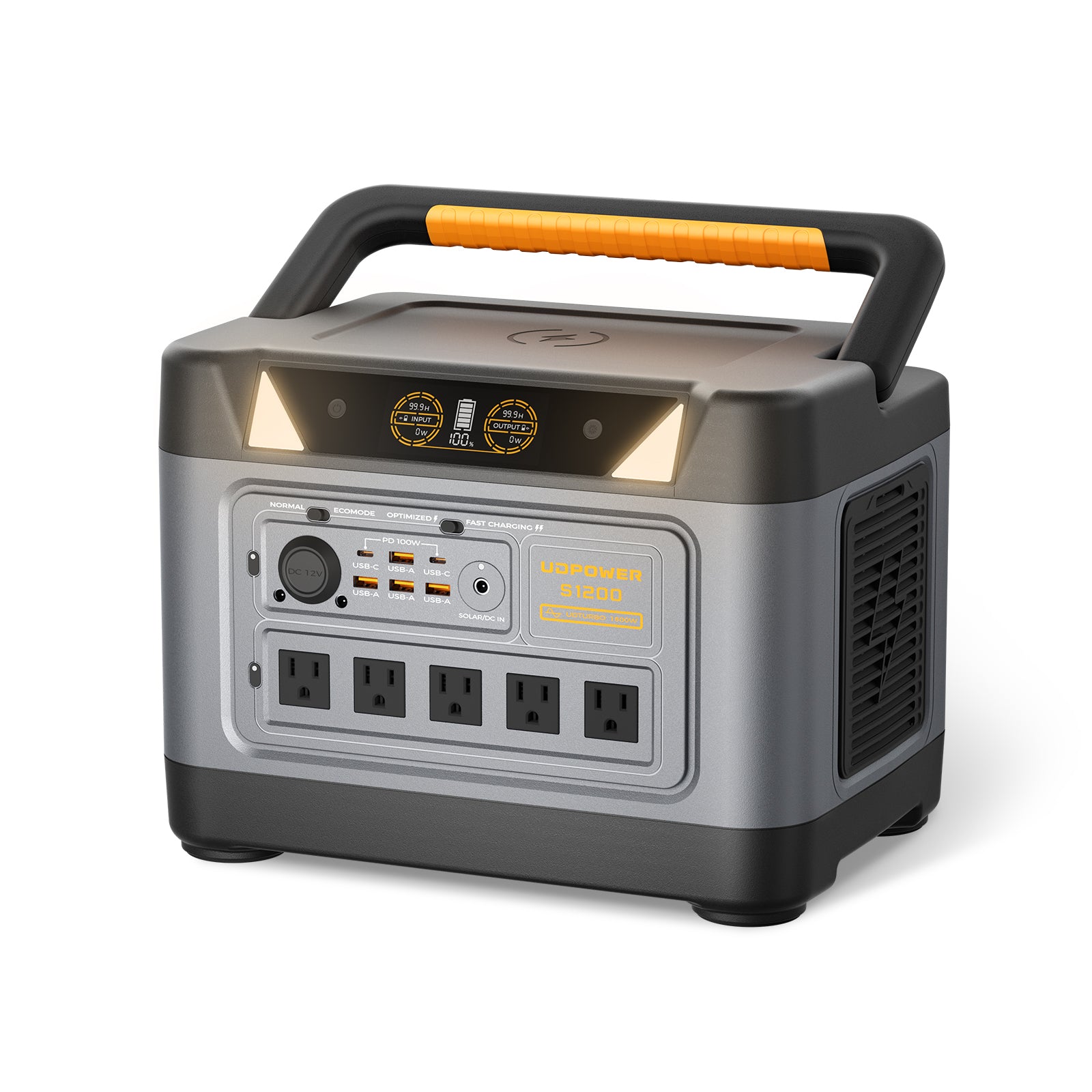
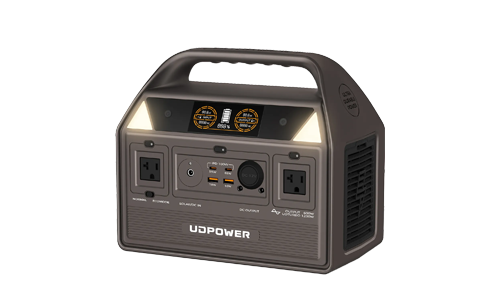
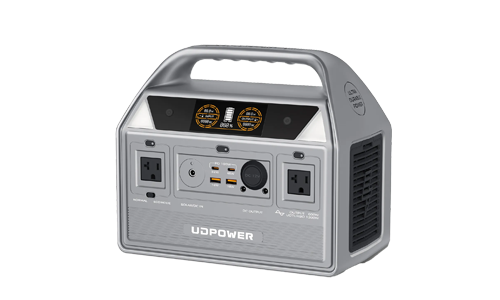
UDPOWER S1200 Portable Power Station
1,190 Wh capacity and 1,200 W output with fast solar charging—balanced for refrigerators, Wi-Fi, lights, and essentials during outages or off-grid trips.
*Actual runtime varies by model, temperature, duty cycle, and inverter losses.
Shop S1200Solar Panel for Refrigerator FAQs
Can solar panels run a refrigerator directly?
No. Panels feed a charge controller → battery → inverter (or an all-in-one solar generator). The inverter provides stable AC for the fridge.
How many solar panels for a full-size fridge?
Commonly 4–6 × 100 W panels (or 2–3 × 200 W), assuming ~1.5–2.0 kWh/day and good sun. Add buffer for cloudy seasons.
What panel wattage works best?
200–400 W panels minimize piece count and wiring. Use 100 W panels if you need modular expansion or portability.
What size solar generator for a refrigerator?
Look for around 1,000–1,500 Wh battery and a 1,000–1,200 W inverter (with adequate surge) for many home fridges. For longer runtimes, aim higher (2,000+ Wh).
What about cloudy days?
Keep extra battery headroom, consider more panel capacity, and use dual charging (solar + wall) when available.
Final Thoughts
Running a refrigerator on solar is practical with the right balance of daily panel yield, battery capacity, and inverter surge. As a starting point:
- Mini fridge: 1–2 × 100 W panels + ≥ 500 Wh generator
- Apartment fridge: 3–4 × 100 W panels + 1,000–1,500 Wh generator
- Full-size fridge: 4–6 × 100 W (or 2–3 × 200 W) + 2,000+ Wh for extended runtime
For a portable yet capable setup, the UDPOWER S1200 strikes a strong balance for everyday fridges and emergency backup.
Related Articles