

AC Versus DC Voltage: How Much Do You Know About Electricity Current?
If you plug in a phone charger, flip on a light, or connect a portable power station, you are already using both AC and DC power every day. But what is the real difference between AC versus DC voltage, and why does it matter for your home, your gadgets, and modern solar/backup systems?
This guide walks through AC and DC in plain language, shows where each is used, and explains how hybrid solutions like UDPOWER portable power stations bridge the gap by storing DC energy in batteries and delivering pure-sine AC power for your everyday devices.

Voltage, Current, and Power: Quick Refresher

Before diving into AC versus DC, it helps to review three key terms that show up on every appliance label and power station screen: volts, amps, and watts.
| Quantity | Symbol | Unit | Simple Explanation | Example in Daily Life |
|---|---|---|---|---|
| Voltage | V | Volt (V) | “Electrical pressure” that pushes current through a circuit. | 120V from a U.S. wall outlet; 12V car battery; 5V USB. |
| Current | I | Ampere (A) | Rate of flow of electric charge through a wire or device. | Phone charger drawing 1–2A from a USB port. |
| Power | P | Watt (W) | How fast energy is used or delivered: P = V × I. | 60W laptop charger, 1000W microwave, 200W portable power station. |
| Energy | E | Watt-hour (Wh) | Power multiplied by time. 1Wh = 1W for 1 hour. | 192Wh battery in a small power station; 1190Wh in a larger unit. |
In the U.S., typical home outlets deliver around 120V AC at 60Hz, while many batteries, solar panels, and electronics operate on lower-voltage DC power internally.
What Is AC Voltage?

AC (alternating current) is a type of electrical current where the direction of flow reverses periodically. Instead of moving steadily in one direction, the electrons wiggle back and forth. The voltage also changes in a smooth wave, swinging from positive to negative.
In North America, standard household electricity is approximately 120V AC at 60Hz. That “60Hz” means the current changes direction 60 times per second.
| AC Property | What It Means | Example |
|---|---|---|
| Alternating direction | Current reverses direction many times per second. | 60Hz AC in U.S. homes; 50Hz AC in many other countries. |
| Variable voltage over time | Voltage follows a sine wave, oscillating between positive and negative. | 120V AC outlet oscillating around zero volts. |
| Easy to transform | Voltage can be stepped up/down using transformers. | High-voltage transmission lines stepped down to 120V at your house. |
| Ideal for long-distance transmission | High voltages reduce losses in long power lines. | Electric grid carrying power from power plants to neighborhoods. |
Because AC voltage can be changed easily with transformers, it became the global standard for power grids and building wiring. Utility companies move electricity at very high AC voltages for efficiency, then step it down to safer levels for homes and businesses.
For a deeper dive into how AC power is distributed, you can explore educational resources from the U.S. Department of Energy and electrical engineering sites such as Electricity 101 and AC vs. DC power guides.
What Is DC Voltage?

DC (direct current) is electricity where the current flows in one constant direction. The voltage is steady (or changes slowly) rather than oscillating back and forth like AC.
Most modern electronics, batteries, and solar systems rely on DC because it is easy to store, regulate, and use inside devices.
| Common DC Source | Typical Voltage | Where You See It | Notes |
|---|---|---|---|
| AA / AAA / 9V batteries | 1.5V (AA/AAA), 9V | Remote controls, flashlights, smoke alarms. | Simple, single-use batteries for low-power devices. |
| USB ports | 5V (USB-A), 5–20V (USB-C PD) | Phones, tablets, headphones, power banks. | Most small gadgets charge on 5–20V DC. |
| Car electrical system | 12V DC nominal | Vehicle electronics, 12V sockets, car fridges. | Alternator and battery supply DC power. |
| Solar panels | Often 12–48V DC (per panel / string) | Off-grid systems, solar generators, RV setups. | Panels generate DC that must be stored or inverted. |
| Lithium/LiFePO₄ battery packs | Varies by pack design (e.g., 12V, 24V, 48V) | Portable power stations, home batteries, EVs. | Provide DC storage for inverters and devices. |
Nearly every “smart” device you own—from your smartphone to your laptop—ultimately runs on DC inside. AC from the wall is converted to DC by an internal or external power supply before it reaches sensitive electronics.
AC vs DC: Side-by-Side Comparison

AC and DC are not competitors in everyday life; they work together. AC is best for distributing power over distance, while DC shines inside devices, batteries, and solar systems.
| Feature | AC (Alternating Current) | DC (Direct Current) |
|---|---|---|
| Direction of current | Changes direction periodically (e.g., 60 times per second). | Flows in one constant direction. |
| Voltage behavior | Varies as a sine wave, positive and negative around zero. | Stays at or near a constant level. |
| Best use case | Grid transmission, building wiring, large motors. | Batteries, electronics, EVs, LED lighting, solar systems. |
| Typical household example | 120V AC wall outlet in a U.S. home. | 5V USB charger output, 12V car battery, power station battery pack. |
| Conversion | Transformer makes it easy to change voltage levels. | Requires electronic converters (DC-DC or inverter/rectifier). |
| Transmission efficiency | High-voltage AC is efficient over long distances. | Used for shorter runs or inside devices; long-distance DC needs specialized equipment. |
| Safety considerations | High-voltage AC can cause serious shocks; frequency affects how it interacts with the body. | High-current DC arcs can be persistent; low-voltage DC is generally safer for electronics. |
| Primary location in your life | Coming from the grid into your breaker panel and wall outlets. | Inside your gadgets, power banks, solar systems, and portable power stations. |
If you want a deeper technical breakdown, practical explanations from manufacturers and engineering resources—such as AC/DC power supply basics or AC vs DC application guides—provide additional context beyond everyday consumer use.
Where You See AC and DC at Home
Almost every plug-in appliance and gadget in your home uses both AC and DC at different points.
| Device | What It Plugs Into | Internal Power Type | Typical Power Range | AC/DC Conversion Point |
|---|---|---|---|---|
| LED light bulb | 120V AC wall socket | DC for the LED chips | 5–15W | Small driver converts AC to DC in the bulb base. |
| Laptop computer | 120V AC wall socket or AC outlet on a power station | DC inside the laptop battery and motherboard | 45–100W while charging | External “brick” converts AC to low-voltage DC. |
| Phone charger | 120V AC wall socket or USB port | DC for the phone battery | 5–30W (depending on fast charge) | USB charger converts AC to 5–20V DC. |
| Refrigerator | 120V AC wall socket | AC or DC motors plus electronic controls | 100–800W (varies) | Internal power supply feeds control electronics and compressor. |
| Smart TV | 120V AC wall socket | Multiple DC rails inside | 50–200W+ | Internal power board converts AC to DC voltages. |
| Portable power station | Charged from AC, solar DC, or car DC | DC LiFePO₄ battery pack inside | Depends on model; e.g., 192–1190Wh for UDPOWER units | Internal inverter outputs AC; regulators output USB/12V DC. |
The big takeaway is that AC and DC are not rivals. AC is the “delivery system” that brings power into your home, while DC is the “language” your electronics speak internally.
AC and DC in Solar and Portable Power Stations
Solar panels, batteries, and portable power stations are perfect real-world examples of AC and DC working together:
- Solar panels generate DC power.
- Battery packs store DC energy at relatively low voltages.
- Inverters convert DC to AC for standard outlets.
- AC chargers and adapters convert AC back to DC for batteries and devices.
Think of a portable power station as a DC “battery core” with AC and DC “faces” on the outside. The DC side handles charging (from solar, car, or DC adapters) and low-voltage outputs, while the AC side gives you standard wall-style outlets through a pure sine wave inverter.
How UDPOWER Uses AC and DC Together

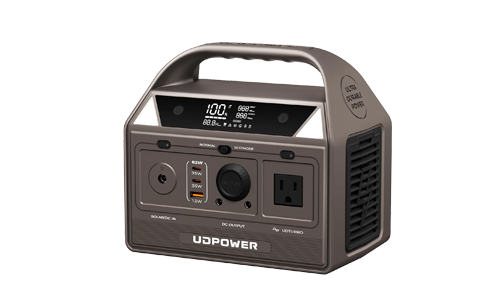
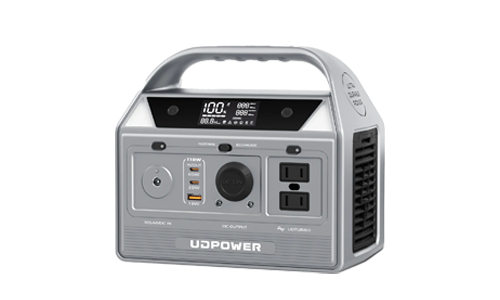
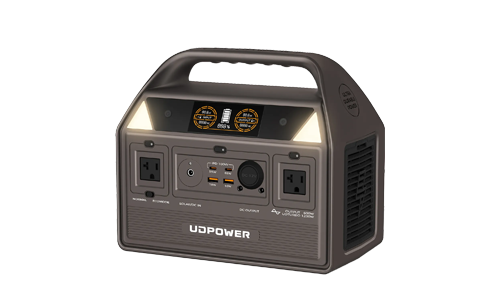
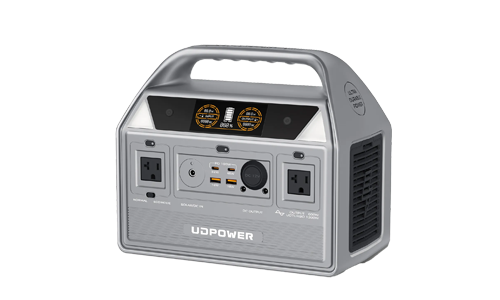
UDPOWER portable power stations are a practical example of AC/DC hybrid design. Inside, they use long-life LiFePO₄ DC battery packs, but they provide both AC outlets and DC outputs on the outside so you can power almost anything from phones to small appliances.
| Model | Picture | Battery Capacity | AC Output (Pure Sine) | Battery Chemistry | Typical Use Cases | Learn More |
|---|---|---|---|---|---|---|
| UDPOWER C200 |  |
192Wh | 200W rated, 400W peak | LiFePO₄, 4,000+ cycles | Phones, tablets, small laptops, LED lights, Wi-Fi routers. | Product page |
| UDPOWER C400 |  |
256Wh | 400W rated, 800W max (UD-TURBO) | LiFePO₄, long cycle life | Heavier laptops, mini-fridges, CPAP, and tools under ~400W. | Product page |
| UDPOWER C600 |  |
596Wh | 600W rated, up to 1,200W max output | LiFePO₄, 4,000+ cycles | Family camping, small appliances, fans, entertainment systems. | Product page |
| UDPOWER S1200 |  |
1,190Wh | 1,200W continuous, up to 1,800W surge (UDTURBO) | LiFePO₄, 4,000+ cycles, UPS function | Home backup for fridges, coffee makers, routers, and critical loads. | Product page |
In each case, the battery is DC, but the inverter provides AC power that behaves like a standard household outlet. Additional USB and 12V ports let you power DC devices directly—avoiding some conversion losses and making your off-grid system more efficient.
For homeowners and campers, the real benefit is flexibility: you can charge UDPOWER stations from the AC grid, from a 12V car outlet, or from DC solar panels, then run both AC and DC loads from one box.
Safety Basics for AC and DC Power

Regardless of whether you are dealing with AC or DC, basic electrical safety always applies:
- Respect voltage and current ratings. Never exceed the voltage or power limits of cords, adapters, or power stations.
- Use grounded outlets and quality extension cords. Especially for high-power AC loads.
- Keep equipment dry. Water and electricity are a dangerous mix, indoors or outdoors.
- Follow manufacturer instructions. For appliances, power supplies, and portable power stations.
- Use GFCI protection where required. Particularly in bathrooms, kitchens, garages, and outdoor circuits.
If you are unsure about wiring, connections, or breaker panel work, it is always wise to consult a licensed electrician. Consumer-grade portable power stations (including UDPOWER units) are designed to be plug-and-play, so you do not have to modify your home wiring to use them safely.
Frequently Asked Questions
Is AC more dangerous than DC?
Both AC and DC can be dangerous at high voltages or currents. Household 120V AC can cause serious shocks if mishandled, especially in wet environments. Low-voltage DC (like 5V USB or 12V car outlets) is generally safer to touch but can still create heat or sparks if short-circuited. The safest approach is to treat all electrical systems with care and follow basic safety guidelines.
Why does the power grid use AC instead of DC?
AC won the “long-distance” battle because it can be easily transformed to very high voltages for efficient transmission, then stepped down near homes and businesses. DC is gaining ground in specialized high-voltage transmission and in battery/solar systems, but AC remains the standard for neighborhood distribution and household outlets.
Do portable power stations output AC or DC?
Both. Inside, they store energy as DC in a battery pack. Externally, they offer AC outlets (via an internal inverter) plus DC outputs such as USB ports, 12V car sockets, and barrel connectors. UDPOWER power stations, for example, provide pure-sine AC for sensitive devices as well as multiple DC ports for efficient charging of electronics.
Can I run my home entirely on DC?
In theory, you could design a DC-only system with batteries, DC lighting, and DC appliances, but most commercially available devices and home wiring are built around AC. For most people, the practical solution is a hybrid approach: AC from the grid plus DC-based solar and battery systems that can supply AC through an inverter when needed.
How do I choose an inverter or power station size?
List the devices you want to run, check their wattage labels, and make sure the inverter or power station’s continuous AC rating is at least 20–30% higher than the total running watts. Also, consider battery capacity (Wh) to estimate how long you want to run those loads. UDPOWER’s C200, C400, C600, and S1200 cover a wide range of use cases, from light camping and electronics to serious home backup.
Related Articles


