40–80 Rule for Lithium-Ion Batteries: Best Charging Range for Longer Battery Life
ZacharyWilliamWhy keeping most charges between ~40% and ~80% can slow degradation—plus peer-reviewed data, vendor guidance, lab results, and practical advice for portable power stations.
In This Guide
What the “40–80 Rule” means
The rule is a practical guideline: on days you don’t need maximum runtime, charge to ~80% and try not to dip much below ~40%. It’s not a strict law—just a way to avoid the two high-stress extremes of very high voltage and deep discharge. Calendar-aging studies consistently show faster degradation at higher SOC and temperature.[1][2]
Does the 40–80 rule apply to portable power stations?
Yes—but with an important caveat. A portable power station is not used like a phone. People buy one for blackout backup, RV travel, camping, emergency readiness, worksite power, and sometimes for devices that really matter. That changes how you should think about charging habits.
If your power station is sitting in storage for weeks or months, mid-range charge usually makes more sense than leaving it at 100% the whole time. But if you keep it for outage readiness, charging to 100% can still be the right decision because runtime matters more than perfectly minimizing calendar aging.
That is why the best rule is not “never charge to full.” The better rule is: match the charge level to the job.
For daily or occasional use
Try to avoid leaving the unit parked at full charge for long stretches when you do not need the extra runtime.
For emergency backup
Keeping a unit ready at 100% can be reasonable if your top priority is outage preparedness.
Data A — Cycle life vs. depth-of-discharge (DoD)
Aggregated lab data show shallower cycles dramatically extend life.
| Depth of Discharge | Approx. cycles (NMC) | Approx. cycles (LFP) |
|---|---|---|
| 100% DoD | ~300 | ~600 |
| 80% DoD | ~400 | ~900 |
| 60% DoD | ~600 | ~1,500 |
| 40% DoD | ~1,000 | ~3,000 |
| 20% DoD | ~2,000 | ~9,000 |
| 10% DoD | ~6,000 | ~15,000 |
Source: Battery University, BU-808, Table 2.
Data C — Lower charge ceiling, longer life
Reducing the per-cell charge limit sharply increases cycle life (with less per-cycle energy). Example estimates:
| Charge ceiling (V/cell) | Typical cycles to ~80% | Approx. stored energy |
|---|---|---|
| 4.20 | ~300–500 | 100% |
| 4.10 | ~600–1,000 | ~90% |
| 4.00 | ~850–1,500 | ~73% |
| 3.92 | ~1,200–2,000 | ~65% |
| 3.85 | ~2,400–4,000 | ~60% |
Data D — Vendors now ship 80–85% limits
- Apple iPhone 15: designed to retain ~80% after 1,000 full cycles; supports “Charge Limit” & “Optimized Battery Charging.”[3][4]
- Google Pixel: “Limit to 80%” and Adaptive Charging in Battery → Battery health → Charging optimization.[5]
- Samsung Galaxy: “Protect Battery / Maximum” stops at 80% (or 85% on some models); Galaxy Book also offers an 85% protection mode.[6][7][8]
Edge case — LFP vs. NMC/NCA
LFP (LiFePO₄) is generally more tolerant to high SOC than cobalt-rich chemistries, with long cycle life and strong safety—yet minimizing dwell time at 100% and temperature is still beneficial.[9][10]
That nuance matters because many portable power stations now use LFP. In practice, that means LFP gives you more durability margin, but it still does not turn bad storage habits into good ones. Heat, long-term full-charge parking, and repeated deep discharge can still add wear over time.
Daily use vs. long-term storage: the part many people mix up
One reason this topic gets confusing is that people often use the same charging advice for two completely different situations: active use and storage. Those are not the same thing.
| Scenario | Practical target | Why it helps |
|---|---|---|
| Daily use | Roughly 40–80% when convenient | Reduces time at the highest-stress extremes without becoming hard to live with |
| Travel / outage prep | 100% | Maximum runtime matters more than ideal long-term storage behavior |
| Long-term storage | About 40–60% | Usually a better balance than parking the unit full or nearly empty |
| Always plugged in | Depends on the device and use case | Safe operation and ideal aging conditions are not always the same thing |
Best habit for daily use
Do not obsess over exact numbers. The bigger win is simply reducing how long the battery sits at 100% in warm conditions.
Best habit for storage
Store it around half charge in a cool room, then check it periodically instead of forgetting it for months.
Lab & field snapshots
Practical playbook
- Phones: enable 80–85% limits / optimized charging so it pauses around 80–85% or finishes near unplug time.[4][5][6][7]
- Laptops: use battery-conservation modes (60–80%) if plugged in often; avoid leaving it hot at 100%.
- Storage: park around 40–60% SOC in a cool room; heat + high SOC is the worst combo.[12]
When charging to 100% still makes sense
The 40–80 rule is useful, but it should not be turned into a rigid rule that ignores real life. There are plenty of normal situations where charging to 100% is the smarter choice:
- Before a storm, outage risk, or emergency backup period
- Before a camping trip, RV trip, or jobsite day when recharging may be limited
- When maximum runtime matters more than long-term storage optimization
- When a manufacturer recommends occasional full charging for calibration or balancing behavior
The real issue is not touching 100%. The bigger issue is charging to 100% and then letting the battery sit there for a long time in heat.
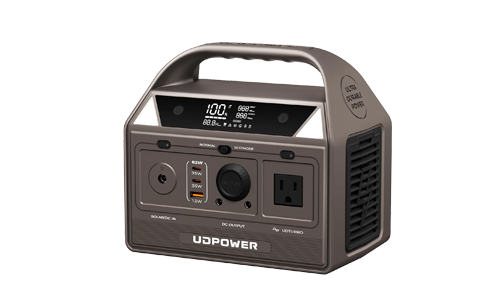
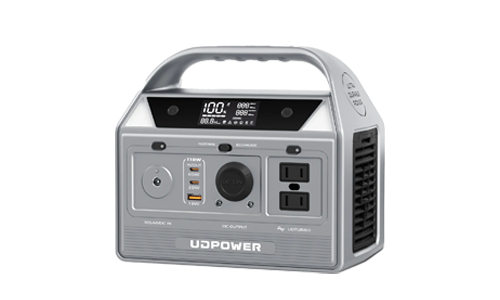
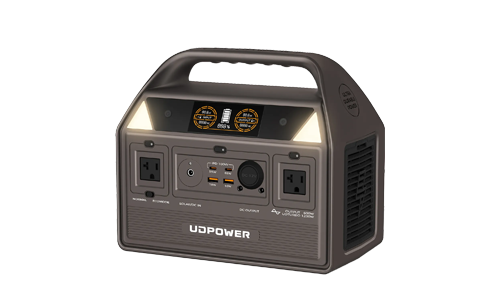
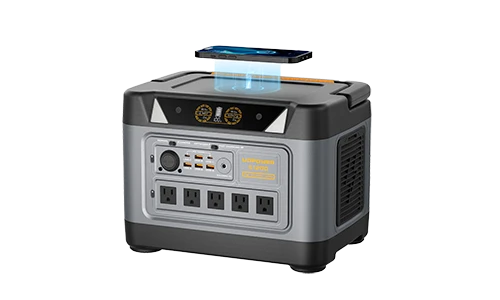
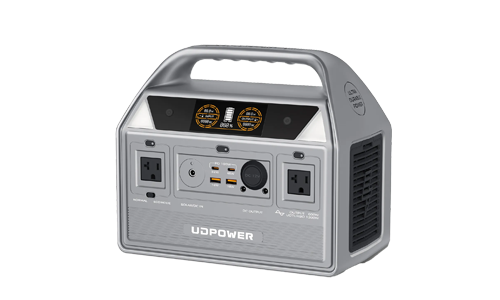
Recommended UDPOWER picks for real-world use
If you are reading this because you care about battery longevity, it also helps to choose a power station that fits your actual use pattern instead of overbuying or underbuying.

UDPOWER S1200
A practical fit for everyday backup, shorter trips, routers, lights, laptops, and moderate home essentials.
View S1200
UDPOWER S2400
A stronger option if your priority is longer runtime, higher-wattage loads, or more serious home backup planning.
View S2400Common misunderstandings about the 40–80 rule
“I should never charge to 100%.”
Not true. Charging to full is normal when you need the runtime. The goal is to reduce unnecessary time spent parked at full charge.
“This rule is identical for every lithium battery.”
Also not true. Chemistry, temperature, BMS design, and use case all matter.
“LiFePO₄ means I can ignore storage habits.”
LFP is more forgiving, but heat and long full-charge storage can still add wear.
“The exact percentage matters more than anything else.”
Usually not. In real life, heat and how long the battery sits at 100% often matter more.
FAQ
Is the 40–80 rule good for all lithium batteries?
Not exactly. It is a useful general habit, but the ideal charging routine depends on the battery chemistry, the device type, the charger behavior, and the manufacturer’s recommendations.
Should I charge my portable power station to 100% before storage?
Usually no. For long-term storage, a mid-range charge level is generally better. Full charge makes more sense right before a trip, outage, or other situation where maximum runtime matters.
Can I leave a lithium battery plugged in overnight?
In most modern devices, yes. Overnight charging is usually fine. The bigger question is whether you are leaving the battery at full charge for days or weeks on end.
Is 50% the best charge level for storage?
About 50% is a strong general rule of thumb for long-term storage because it avoids both deep discharge and extended high-charge storage.
Does LiFePO4 follow the same charging rule?
Broadly yes, but with important differences. LiFePO4 batteries are often more cycle-stable and more tolerant than many other lithium chemistries, yet they still benefit from sensible charging, moderate storage levels, and manufacturer-specific guidance.
References
- Werner, D. et al., Calendar Aging of Li-Ion Cells—Experimental Investigation and Empirical Correlation, MDPI Batteries (2021).
- Krupp, A. et al., Calendar aging model for lithium-ion batteries considering the influence of cell characterization, Journal of Energy Storage (2021/2022).
- Apple Support — iPhone battery and performance(iPhone 15: 80% after 1,000 cycles),link.
- Apple Support — About Charge Limit and Optimized Battery Charging on iPhone,link.
- Google Support — Get the most life from your Pixel phone battery(“Limit to 80%”),link.
- Samsung Support — ‘Protect battery’ feature in Galaxy phones(Limit to 85%),link.
- Samsung Support — Galaxy battery protection in One UI 6.1(Maximum=80%),link.
- Samsung Support — Galaxy Book Battery(Protect battery 85%),link.
- Battery University — BU-205: Types of Lithium-ion(LFP characteristics),link.
- Battery University — BU-216: Summary Table of Lithium-based Batteries,link.
- NASA Technical Memorandum — Performance and Comparison of Lithium-Ion Batteries Under Low-Earth-Orbit Mission Profiles(>12,000 cycles @ ~40% DoD),PDF.
- Battery University — BU-808: How to Prolong Lithium-based Batteries(DoD, temperature & SOC tables; voltage thresholds),link.
Note: Exact lifetimes vary by cell design, BMS, thermal management, and usage. Treat 40–80 as a useful default and adapt to your device chemistry and the manufacturer’s guidance.