

Cost of Living in Alabama: What It Actually Costs in 2026
Last updated: September 23, 2026
Quick Answer: How Much Does It Cost to Live in Alabama?
Alabama remains one of the lowest-cost states in the country, but "cheap" does not mean every household can live on the same budget. MERIC's second-quarter 2026 Cost of Living Index puts Alabama at 86.0, compared with a U.S. benchmark of 100. Alabama ranked second-lowest among states in that dataset.
For a more useful monthly budget, MIT's 2026 Living Wage Calculator estimates that a household needs approximately:
- $3,651 per month in gross income for one adult with no children
- $5,014 per month for two adults with no children
- $6,599 per month for two adults and two children when only one adult works and the other provides childcare
- $8,288 per month for two working adults and two children when paid childcare is required
Those are basic-needs budgets rather than luxury or "comfortable lifestyle" budgets. They cover housing, food, transportation, healthcare, basic household needs, internet and mobile service, limited community participation, childcare when applicable, and estimated income and payroll taxes. They do not include restaurant dining, vacations, retirement contributions, long-term savings, or other discretionary spending.
Housing is one reason Alabama remains relatively affordable. U.S. Census Bureau data for 2020–2024 reports a statewide median gross rent of $1,007 and a median owner-occupied home value of $209,900. Electricity deserves more attention: the latest complete EIA annual data shows Alabama residential customers averaged $173.50 per month in 2024, despite an average electricity rate below the national average.

Cost of Living in Alabama Per Month by Household Size
The most useful answer to "how much does it cost to live in Alabama?" depends on who lives in the household. A single adult, a couple with no children, and two working parents with two children face very different expense structures.
The table below converts the MIT Living Wage Calculator's 2026 Alabama annual estimates into monthly figures. Values are rounded to the nearest dollar.
| Monthly Expense | 1 Adult, No Children | 2 Adults, No Children | Family of 4, 1 Working Adult | Family of 4, 2 Working Adults |
|---|---|---|---|---|
| Housing + major utilities | $853 | $930 | $1,087 | $1,087 |
| Food | $363 | $665 | $1,061 | $1,061 |
| Transportation | $806 | $933 | $1,352 | $1,352 |
| Healthcare | $298 | $590 | $955 | $955 |
| Childcare | $0 | $0 | $0 | $1,289 |
| Internet + mobile | $133 | $181 | $181 | $181 |
| Civic and community expenses | $215 | $363 | $546 | $546 |
| Other basic necessities | $339 | $616 | $733 | $733 |
| Basic living expenses after taxes | $3,007 | $4,279 | $5,916 | $7,204 |
| Estimated income and payroll taxes | $644 | $735 | $683 | $1,084 |
| Required gross monthly household income | $3,651 | $5,014 | $6,599 | $8,288 |
| Required gross annual household income | $43,814 | $60,164 | $79,188 | $99,458 |
Source: MIT Living Wage Calculator — Alabama, updated February 15, 2026. Monthly amounts are annual estimates divided by 12 and rounded.
Why Do Alabama Cost-of-Living Estimates Online Differ So Much?
Search for the average cost of living in Alabama and you may see one website say a single person needs a little over $2,000 a month while another puts the figure well above $3,000. The difference is usually methodology, not necessarily an error.
A cost-of-living index answers a different question from a household budget. MERIC measures how prices in participating Alabama cities compare with a national benchmark. Census data reports observed housing statistics. MIT estimates the income needed to cover a specific set of basic needs. Other websites may use consumer spending, asking rents, crowdsourced prices, or proprietary formulas.
| Data Type | What It Tells You | What It Does Not Tell You | Best Use |
|---|---|---|---|
| MERIC Cost of Living Index | How Alabama's tracked prices compare with the U.S. benchmark | Your exact monthly spending | Comparing Alabama with other states |
| MIT Living Wage Calculator | Basic-needs budget by household structure | A luxury or high-discretionary-spending lifestyle | Estimating required household income |
| U.S. Census Bureau | Observed housing and demographic medians | Today's exact asking rent for a specific apartment | Housing benchmarks |
| EIA | Actual residential electricity consumption, rates and bills | Your home's exact future bill | Utility planning |
For someone planning a move, the safest approach is to choose one consistent basic-needs model and then replace its estimates with your actual housing quote, commute, insurance, childcare and utility information. Mixing the lowest number from one source with the lowest number from another can create an unrealistically low budget.
Is Alabama Really a Low-Cost State?
Yes, relative to the national benchmark used by MERIC. In the MERIC Cost of Living Data Series for Q2 2026, Alabama had an overall index of 86.0, with the United States benchmark set at 100.
| Category | Alabama Index | U.S. Benchmark | What It Suggests |
|---|---|---|---|
| Overall | 86.0 | 100 | Lower overall tracked living costs |
| Housing | 68.6 | 100 | Alabama's biggest relative cost advantage |
| Healthcare | 85.2 | 100 | Below benchmark in the index |
| Transportation | 90.9 | 100 | Below benchmark |
| Miscellaneous | 93.8 | 100 | Moderately below benchmark |
| Utilities | 94.1 | 100 | Closer to the national benchmark |
| Groceries | 95.2 | 100 | Only modestly below benchmark |
The important takeaway is that Alabama's affordability is driven heavily by housing. Groceries and utilities are much closer to the national benchmark. Someone moving from an expensive housing market may notice a large difference in rent or home prices while seeing a much smaller difference at the grocery store or on utility bills.
MERIC's number is also a statewide index constructed from participating cities and metropolitan areas. An index of 86 does not mean every Alabama household will automatically spend exactly 14% less than an otherwise identical household elsewhere.
Alabama Housing Costs: Rent, Mortgages and Home Values
Housing is usually the strongest part of Alabama's affordability story. According to the U.S. Census Bureau QuickFacts for Alabama, housing statistics for 2020–2024 include the following:
| Alabama Housing Measure | 2020–2024 Census Estimate |
|---|---|
| Median gross rent | $1,007/month |
| Median value of owner-occupied housing units | $209,900 |
| Median monthly owner cost with a mortgage | $1,433 |
| Median monthly owner cost without a mortgage | $447 |
| Owner-occupied housing rate | 70.2% |
These numbers are useful benchmarks, but they are not the same thing as a current apartment listing or a 2026 home purchase quote. Census medians pool several years of data. A person moving today should use the Census figure to understand the market, then build the actual budget around the lease or mortgage available to them.
Rent Is Only the Starting Number
When comparing apartments, look beyond the advertised rent. Ask which utilities are included, whether the property charges separately for water or trash, what internet service is available, how much renters insurance costs, and whether the unit's heating and cooling system is electric.
This is especially relevant when comparing an older inexpensive rental with a newer but more efficient unit. A lower rent does not always produce the lowest total monthly housing cost.
Utilities and the Average Electric Bill in Alabama
Electricity is one of the most useful Alabama living expenses to examine separately because the state has an interesting combination: the price per kilowatt-hour is not exceptionally high, but households use a lot of electricity.
The U.S. Energy Information Administration's 2024 residential data shows:
| Residential Electricity Measure | Alabama | U.S. Average | Difference |
|---|---|---|---|
| Average monthly electricity use | 1,143 kWh | 863 kWh | Alabama used about 32% more |
| Average residential electricity price | 15.18¢/kWh | 16.48¢/kWh | Alabama rate was lower |
| Average monthly residential electric bill | $173.50 | $142.26 | Alabama bill was about $31 higher |
This is an important distinction: a lower electricity rate does not guarantee a lower electric bill. Alabama's 2024 residential customers paid a lower average price per kWh than the U.S. average, but higher electricity consumption pushed the average monthly bill above the national figure.
As of September 23, 2026, the latest monthly EIA release covers June 2026. Alabama's residential electricity price was 16.40¢/kWh, compared with 16.06¢/kWh in June 2025. The EIA's next monthly release was scheduled for September 24, so June remained the latest official monthly price available when this article was updated.
If you want to judge whether your usage is unusually high rather than only comparing dollar amounts, see our guide to how many kWh per day is normal in the U.S.. Alabama's 1,143 kWh monthly average works out to roughly 37.6 kWh per day across the year.
How Much Should You Budget for Food in Alabama?
MIT's 2026 Alabama model estimates basic monthly food costs of about $363 for one adult, $665 for two adults, and $1,061 for a two-adult, two-child household.
Those figures are intentionally conservative. MIT's food component uses the USDA Low-Cost Food Plan and assumes food is prepared at home. Restaurant meals are not included. If takeout, delivery, coffee shops or regular restaurant meals are part of your normal routine, your real food budget will be higher.
Alabama also taxes groceries at the state level. According to the Alabama Department of Revenue, the state food and grocery sales tax rate is 2% as of September 1, 2025. Local sales taxes may also apply and vary by city and county.
That distinction matters when comparing grocery budgets from different states. Looking at shelf prices alone does not always capture the final checkout cost.
Transportation Can Rival Housing in an Alabama Budget
For a single adult, MIT estimates approximately $806 per month for transportation in Alabama. A two-adult household without children is estimated at roughly $933 per month, while a family of four reaches about $1,352 per month.
MIT's transportation model is broader than gasoline. It incorporates costs associated with used vehicles, gasoline and motor oil, financing, insurance, maintenance and public transportation. That makes the number more useful than simply taking a monthly fuel bill and calling it "transportation."
This is also why a cheap house farther from work may not always produce the cheapest household budget. Housing should be compared with the transportation cost that comes with that location.
Instead of comparing rent alone, compare housing + utilities + transportation. A $100 monthly rent saving can disappear if the move adds significantly more driving, insurance exposure, fuel use or vehicle wear.
Healthcare Costs in Alabama
MIT's basic-needs estimate puts healthcare at roughly $298 per month for one adult, $590 for two adults, and $955 for a four-person household.
The model combines employee contributions toward employer-sponsored health insurance with typical out-of-pocket costs for medical services, drugs and medical supplies. Your actual result may differ substantially depending on employer coverage, deductible, family plan structure, prescriptions and ongoing medical needs.
For someone comparing job offers, salary alone therefore gives an incomplete picture. A job with stronger employer health coverage may leave a household with more usable income than a slightly higher-paying job with substantially higher employee premiums or deductibles.
The Cost That Changes a Family-of-Four Budget the Most: Childcare
This is one of the biggest reasons published estimates for the cost of living in Alabama for a family can appear inconsistent.
MIT estimates the same Alabama household of two adults and two children very differently depending on whether both adults work:
| Family of Four | 1 Working Adult | 2 Working Adults |
|---|---|---|
| Estimated monthly childcare | $0 | $1,289 |
| Basic expenses after taxes | $5,916/month | $7,204/month |
| Required gross household income | $6,599/month | $8,288/month |
| Required gross household income | $79,188/year | $99,458/year |
MIT assumes that when only one adult works, the non-working adult handles childcare without a separate childcare payment. When both adults work, paid childcare enters the household budget.
That single modeling choice increases estimated childcare expenses by roughly $15,463 per year. Taxes also change with household earnings, so the difference in required gross household income grows to roughly $20,270 per year.
This is why a useful family budget should never start with a generic "family of four average." The number of working adults and whether paid childcare is required can change the result dramatically.
What Taxes Should You Expect in Alabama?
Alabama's individual income tax uses graduated rates. The Alabama Department of Revenue lists the following state income tax brackets.
| Filing Status | 2% Rate | 4% Rate | 5% Rate |
|---|---|---|---|
| Single, head of family or married filing separately | First $500 of taxable income | Next $2,500 | Taxable income over $3,000 |
| Married filing jointly | First $1,000 of taxable income | Next $5,000 | Taxable income over $6,000 |
The state general sales tax rate is 4%, while the state food and grocery rate is 2%. Local city and county rates are additional and vary by location. Alabama's Department of Revenue maintains a current local tax database, which was updated for September 2026 at the time this article was prepared.
When using the MIT budget above, do not add a separate blanket sales-tax estimate on top of every category. MIT's methodology says applicable sales and property taxes are already reflected in its basic-needs expense estimates, while the separate tax line primarily accounts for income and payroll taxes.
Birmingham vs. Huntsville vs. Montgomery vs. Mobile vs. Tuscaloosa
State averages are useful, but your city can change the answer considerably. To keep the comparison consistent, the table below combines Census 2020–2024 housing medians with MIT's February 2026 metro-level basic-needs estimates.
| City / Metro | Median Gross Rent | Median Owner Home Value | Owner Cost With Mortgage | Single Adult Gross Monthly Need | Family of 4 Gross Monthly Need, 2 Workers |
|---|---|---|---|---|---|
| Birmingham | $1,107 | $158,800 | $1,377/month | $3,847 | $8,719 |
| Huntsville | $1,171 | $293,600 | $1,573/month | $3,923 | $8,705 |
| Montgomery | $1,089 | $161,900 | $1,307/month | $3,622 | $8,130 |
| Mobile | $1,068 | $193,300 | $1,409/month | $3,600 | $8,128 |
| Tuscaloosa | $1,055 | $255,500 | $1,702/month | $3,790 | $8,447 |
Housing sources: Birmingham Census, Huntsville Census, Montgomery Census, Mobile Census, Tuscaloosa Census.
Basic-needs sources: Birmingham MIT, Huntsville MIT, Montgomery MIT, Mobile MIT, Tuscaloosa MIT.
Birmingham
Birmingham's Census median gross rent is $1,107, while the median value of an owner-occupied housing unit is $158,800. MIT estimates a single adult needs about $46,168 in annual gross income to meet basic needs in the Birmingham metro, or approximately $3,847 per month.
Huntsville
Huntsville stands out for higher housing figures in this five-city comparison. Its Census median gross rent is $1,171 and median owner-occupied home value is $293,600. MIT estimates roughly $47,073 in annual gross income for one adult, the highest single-adult requirement among these five metros.
Montgomery
Montgomery's Census median gross rent is $1,089, with a median owner-occupied home value of $161,900. MIT's basic-needs estimate is about $43,460 in gross annual income for one adult, or roughly $3,622 per month.
Mobile
Mobile has a Census median gross rent of $1,068 and median owner-occupied home value of $193,300. Among these five metros, MIT gives Mobile the lowest single-adult gross basic-needs requirement at approximately $43,199 per year, although it is only slightly below Montgomery.
Tuscaloosa
Tuscaloosa illustrates why one housing number never tells the whole story. Its Census median gross rent of $1,055 is the lowest among these five cities, while its median monthly owner cost with a mortgage, $1,702, is the highest of the group. MIT estimates one adult needs about $45,479 in annual gross income.
So Which Alabama City Is Cheapest?
There is no single city that is cheapest for every household and every type of housing. Under MIT's consistent 2026 basic-needs model, Mobile and Montgomery have the lowest required gross household income among the five metros examined here. Birmingham and Huntsville require more for the household types shown.
Housing alone gives a different picture. Birmingham has the lowest Census median owner-occupied home value of the five, while Tuscaloosa has the lowest Census median gross rent. Huntsville has the highest median owner-occupied home value.
This is why a relocation decision based only on a generic "cost of living" ranking can be misleading. Renters, buyers, single adults and families with paid childcare may reach different conclusions using the same cities.
How to Build a Real Alabama Monthly Budget for Your Household
A statewide average is a starting point. Before moving, replace each broad estimate with a number tied to the life you will actually live.
- Start with your real housing quote. Use the apartment lease, mortgage estimate or specific neighborhood you are considering rather than a statewide rent average.
- Check exactly which utilities are included. Electricity, water, sewer, trash and internet can be billed differently from one property to another.
- Use an annual view of electricity. Compare summer, winter and mild-weather use instead of budgeting from a single month.
- Calculate transportation from your actual commute. Include car payments or replacement costs, insurance, fuel and maintenance rather than fuel alone.
- Get childcare quotes before accepting a family budget estimate. For a two-working-parent household, childcare can change the monthly requirement by well over $1,000.
- Use your employer's healthcare numbers. Monthly payroll deductions, deductible and expected out-of-pocket costs are more useful than a generic statewide average.
- Account for taxes using your filing situation and locality. Local sales taxes vary throughout Alabama.
- Add goals that a basic-needs calculator does not include. Debt payments, emergency savings, retirement contributions, travel, restaurant meals and larger discretionary purchases all sit above the basic-needs figures in this guide.
A household that can technically cover basic necessities but has no room for savings, repairs or unexpected expenses is in a very different position from a household earning the same amount with no debt and a substantial emergency fund. That is why the MIT number is best treated as a basic-needs floor, not a personal definition of comfortable living.
Where Backup Power Fits Into the Cost of Living in Alabama
Electricity is a recurring Alabama living expense, but a portable power station should not be presented as a way to automatically lower your utility rate. Its primary role is backup power and energy resilience: keeping selected devices available during an outage or providing stored power when a normal outlet is unavailable.
If you are budgeting for home preparedness, the right size depends on the appliances you actually want to run. You generally do not need to reproduce an entire household's roughly 37.6 kWh daily Alabama average. During an outage, many households prioritize a refrigerator, Wi-Fi router, phones, lights, laptops, fans, CPAP equipment and other essential electronics.
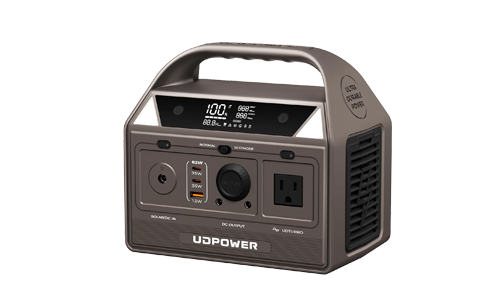
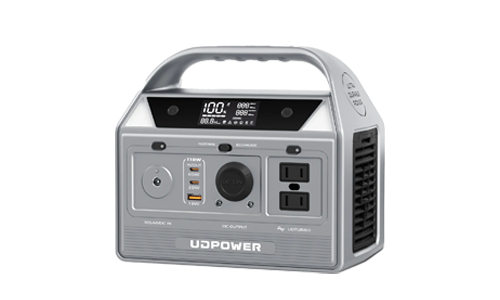
You can compare the complete range on the UDPOWER Portable Power Stations page or browse solutions specifically organized for home backup power.
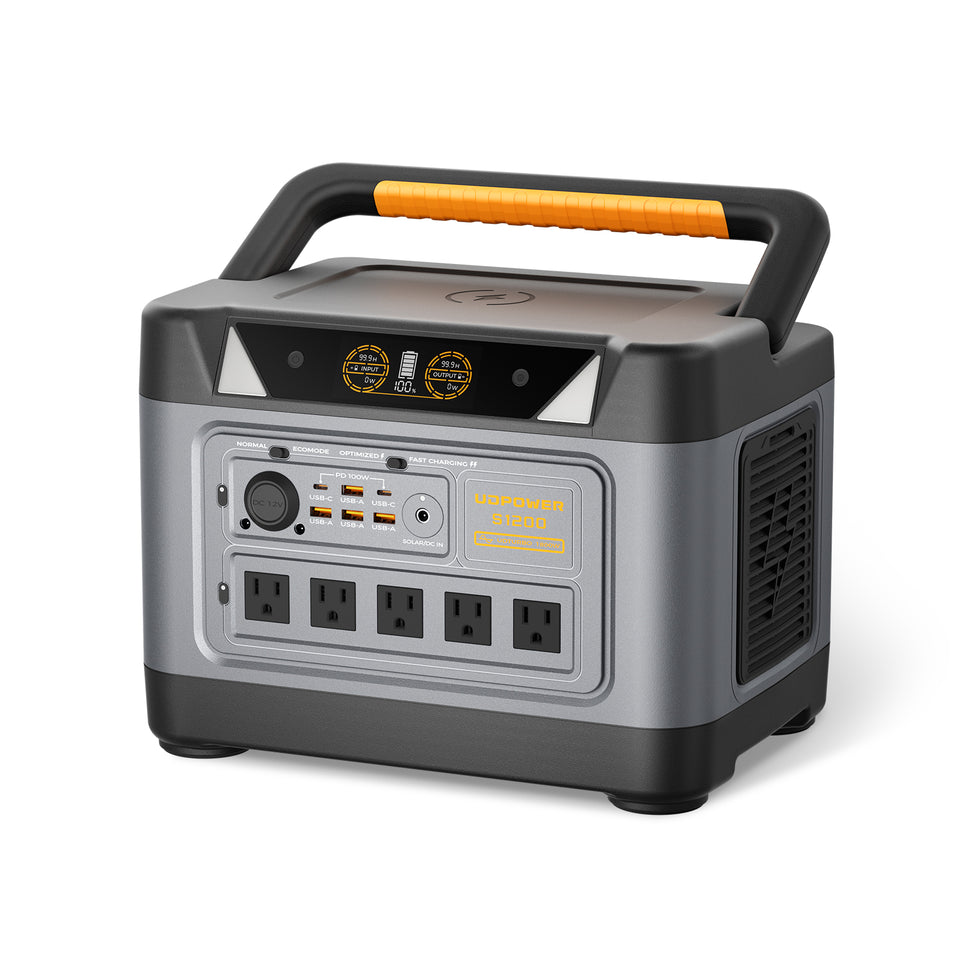
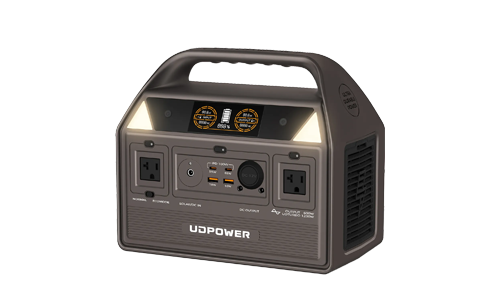
UDPOWER S1200: For Essential Home Backup
The S1200 is a practical option when the goal is to keep a smaller set of essential household devices available rather than trying to reproduce normal whole-home electricity use.
Battery capacity: 1,190Wh LiFePO4
Rated AC output: 1,200W pure sine wave
Weight: 26.0 lb
UPS response: less than 10 ms
Warranty: 5 years
Before choosing it, total the rated wattage of the devices you expect to run together and estimate how many watt-hours those devices will consume during the outage period.
View UDPOWER S1200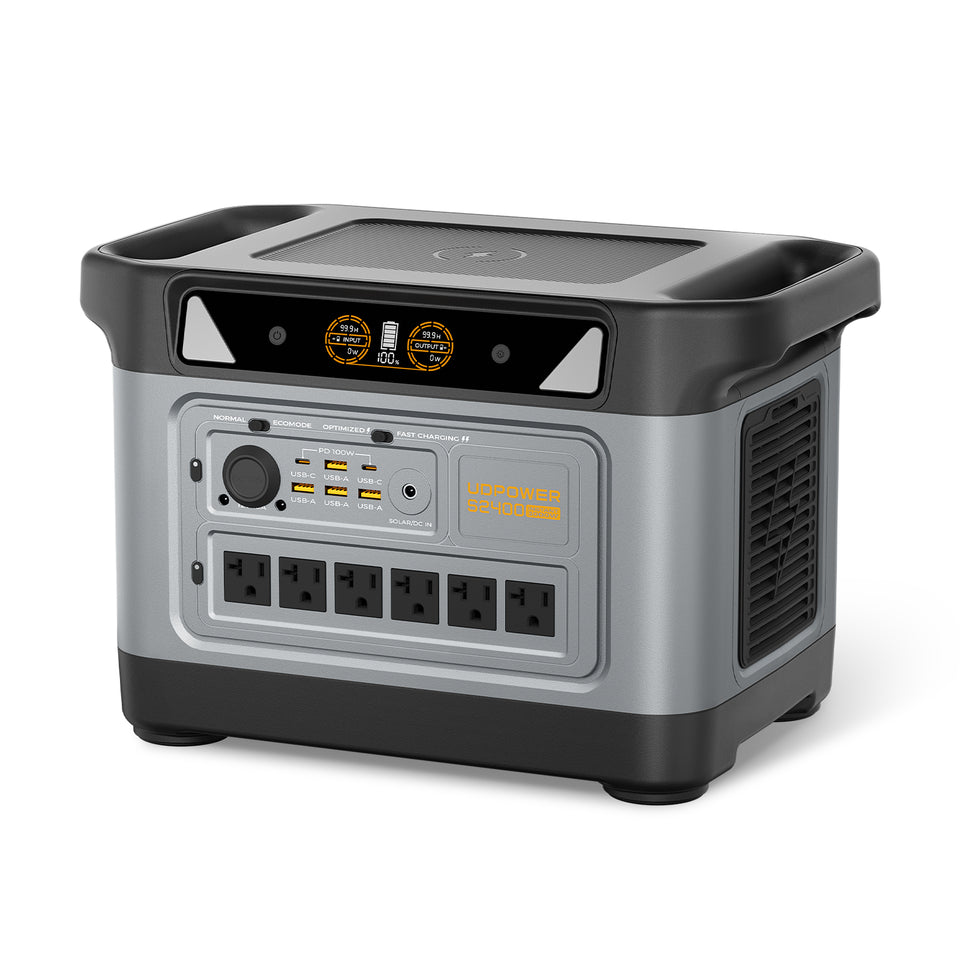
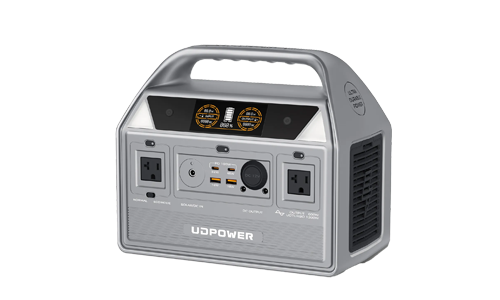
UDPOWER S2400: More Capacity for Larger Backup Loads
For households that want more stored energy and a higher rated AC output, the S2400 provides substantially more capacity for outage planning and can support a wider mix of compatible household appliances.
Battery capacity: 2,083Wh LiFePO4
Rated AC output: 2,400W pure sine wave
AC outlets: 6
Weight: approximately 40.8 lb
UPS response: less than 10 ms
Warranty: 5 years
Capacity determines how much energy is stored, while rated output determines how much connected AC load the unit is designed to supply. Both numbers matter when sizing backup power.
View UDPOWER S2400For more context before choosing a battery size, see How Many kWh Per Day Is Normal in the U.S.?. It explains why outage backup should normally be sized around essential loads instead of the household's total everyday electricity consumption.
Frequently Asked Questions About the Cost of Living in Alabama
Is Alabama expensive to live in?
Alabama is relatively inexpensive compared with the national benchmark. MERIC's Q2 2026 Cost of Living Index gives Alabama an overall score of 86.0 with the U.S. benchmark at 100. Housing is the largest source of the state's relative cost advantage, with a housing index of 68.6.
How much does it cost to live in Alabama per month for one person?
MIT's 2026 basic-needs model estimates that one adult with no children needs about $3,007 per month after taxes to cover basic expenses, corresponding to about $3,651 per month in required gross income. This is a basic-needs estimate and does not include savings, retirement, vacations or regular restaurant spending.
How much does a two-person household need in Alabama?
For two adults with no children, MIT estimates about $4,279 per month in basic expenses after taxes and approximately $5,014 per month in required gross household income, or $60,164 per year.
How much does it cost for a family of four to live in Alabama?
It depends heavily on childcare. MIT estimates a two-adult, two-child household needs about $79,188 in annual gross income when one adult works and the other provides childcare. When both adults work and paid childcare is needed, the estimated required gross household income rises to about $99,458 per year.
What is the average rent in Alabama?
The U.S. Census Bureau reports a statewide median gross rent of $1,007 for 2020–2024. This is a historical multi-year median rather than the current asking rent for a particular apartment, so current local listings should be checked before moving.
What is the average electric bill in Alabama?
The latest complete annual EIA residential data shows an Alabama average monthly electric bill of $173.50 in 2024. Average monthly consumption was 1,143 kWh at an average residential rate of 15.18 cents per kWh.
Why can Alabama electric bills be high if electricity is relatively inexpensive?
Consumption matters as much as the rate. In 2024 Alabama residential customers paid an average rate below the U.S. average but consumed 1,143 kWh per month versus 863 kWh nationally. The greater electricity use resulted in a higher average monthly bill.
Is Birmingham or Huntsville more expensive?
It depends on the household and the expense being compared. MIT's 2026 model estimates a slightly higher basic-needs gross income for a single adult in Huntsville than Birmingham, while its two-working-adult, two-child household estimate is slightly higher in Birmingham. Census housing data also shows Huntsville with a higher median gross rent and median owner-occupied home value.
Which is cheaper to live in: Mobile or Montgomery?
The two are close under MIT's 2026 model. A single adult needs an estimated $43,199 in annual gross income in Mobile versus $43,460 in Montgomery. For a two-working-adult household with two children, the estimates are $97,541 in Mobile and $97,562 in Montgomery. Your actual housing, commute and childcare costs can easily outweigh that small modeled difference.
Does the Alabama living-cost estimate include savings and retirement?
No. The MIT basic-needs model does not budget for retirement savings, long-term investments, vacations, unpaid time off or restaurant meals. Personal debt payments and discretionary lifestyle spending can also increase the amount a household needs beyond the basic figures shown here.
What salary do you need to live in Alabama?
There is no single salary that applies to everyone. MIT's 2026 model estimates about $43,814 in gross annual income for one adult with no children, $60,164 for two adults with no children, $79,188 for two adults and two children with one working adult, and $99,458 for a two-working-adult household with two children and paid childcare.
Bottom Line
Alabama remains a relatively low-cost place to live by national standards, and housing is the biggest reason. MERIC's Q2 2026 index places the state at 86.0 overall and 68.6 for housing. But that statewide affordability does not mean every recurring expense is unusually low.
A single adult should think in terms of roughly $3,651 in monthly gross income for MIT's basic-needs standard, while a two-adult household without children is closer to $5,014. For a family of four, whether paid childcare is required can shift the gross monthly requirement from roughly $6,599 to $8,288.
The bigger lesson is that housing alone should not decide whether Alabama—or a particular Alabama city—fits your budget. Transportation, childcare, healthcare and electricity can materially change the result. Start with statewide benchmarks, but make the final decision using the apartment or home, commute, utility history and family structure that actually apply to you.
Data Sources and Methodology
Cost of living index: Missouri Economic Research and Information Center, Cost of Living Data Series, Q2 2026.
Household budget: MIT Living Wage Calculator — Alabama, updated February 15, 2026. Method definitions are available in the MIT Living Wage methodology.
Housing: U.S. Census Bureau QuickFacts — Alabama, 2020–2024 estimates.
Electricity: U.S. Energy Information Administration 2024 Average Monthly Bill — Residential and EIA Electric Power Monthly Table 5.6.A, June 2026.
Taxes: Alabama Department of Revenue — Individual Income Tax and State Sales and Use Tax Rates.
Planning for Home Backup Power?
Start with the devices you actually need during an outage, calculate their wattage and runtime, then choose a power station based on both battery capacity and rated output.
Compare Portable Power Stations View Home Backup Options View All UDPOWER ProductsRelated Articles


