What Are Renewable Energy Sources? A Practical Guide for Real-World Use
This guide explains what renewable energy sources are, the main types of renewable energy, and how they work in real life. It also shows why solar is the most practical option for many homeowners and how portable power stations and solar panels can make renewable energy more useful for backup power, travel, and daily resilience.
Updated: March 9, 2026
Renewable energy sounds like a big, policy-heavy topic, but for most people the question is much simpler: where does electricity come from, which sources can keep replenishing themselves, and what does that actually mean for your home, your bills, your backup plan, or your weekend off-grid setup?
Renewable energy comes from sources that nature replaces on a human timescale. Sunlight keeps arriving. Wind keeps moving. Rivers keep flowing. The earth keeps giving off heat. Plants and organic waste can be regrown or replenished. That does not mean renewable energy is available in the same amount every hour of every day. It means the source itself is not used up the way coal, oil, and natural gas are.
This guide explains the main renewable energy sources, where each one works best, what they can and cannot do, and why everyday buyers now care about one more piece of the puzzle: storage. Solar panels generate electricity. A battery or portable power station stores electricity so you can use it later.

- What renewable energy really means
- The main types of renewable energy sources
- Why renewable energy matters more now
- Which renewable options are realistic for regular people
- What renewable energy does not magically solve
- How UDPOWER products fit into a renewable setup
- How to start without overspending
- FAQ
What Renewable Energy Really Means
A lot of articles stop at the textbook definition. That is only half useful. The better way to think about renewable energy is this: it is power from natural systems that keep renewing themselves, but the timing and availability may still change by season, weather, geography, and infrastructure.
Renewable
Sunlight, wind, flowing water, geothermal heat, and biomass can keep supplying energy without being permanently depleted by normal human use.
Not the same as “always on”
Solar output changes through the day. Wind output rises and falls. Even hydropower can be affected by drought. Renewable does not automatically mean constant.
Storage changes the experience
Once you add batteries or a portable power station, renewable energy becomes more useful in real life because you can shift some of that power into the evening, overnight, or outage hours.
The Main Types of Renewable Energy Sources
Most beginner articles mention five core renewable sources: solar, wind, hydropower, biomass, and geothermal. That is accurate, but it helps to go one step further and connect each source to real-world use.

| Energy source | How it becomes usable power | Where people see it in real life | Main advantage | Main limitation | Source |
|---|---|---|---|---|---|
| Solar | Solar panels turn sunlight into electricity. Solar thermal systems can also use heat from the sun. | Rooftop solar, solar farms, portable foldable panels for RVs, camping, and outage charging. | Widely available, modular, and practical for homes and portable setups. | Production depends on sun, roof conditions, season, and weather. | EIA solar overview |
| Wind | Turbines convert moving air into electricity. | Utility-scale wind farms, some rural or remote systems. | Strong large-scale electricity source in windy regions. | Less practical for most suburban homeowners than solar. | EIA wind overview |
| Hydropower | Moving water spins turbines to generate electricity. | Dams, river systems, regional utility grids. | Reliable large-scale electricity where geography allows. | Not something most households can directly install; water availability matters. | EIA hydropower overview |
| Biomass | Organic material such as wood, crop waste, landfill gas, or biofuels is burned or processed for energy. | Industrial heat, electricity generation, biofuels, some rural heating applications. | Can use waste streams and stored fuel. | Not all biomass is equally clean; supply and emissions vary by feedstock and process. | EIA biomass overview |
| Geothermal | Heat from the earth is used for electricity generation or direct heating and cooling. | Geothermal power plants, geothermal heat pumps, district heating in some regions. | Stable and less weather-dependent than solar or wind. | Location matters a lot, especially for power generation. | EIA geothermal overview |
| Marine and tidal | Wave motion or tides are converted into electricity. | Small pilot projects and specialized coastal installations. | Predictable in some coastal environments. | Still niche compared with solar, wind, hydro, biomass, and geothermal. | National Geographic overview |
For most households in the U.S., the renewable source they are most likely to use directly is solar. That is one reason solar dominates so much consumer conversation.
Why Renewable Energy Matters More Now
The “why now” part is where this topic gets real. Renewable energy is not just a future-looking concept anymore. It is already shaping how utilities add capacity, how homeowners think about outage planning, and how people buy backup products for day-to-day resilience.
| Recent trend | What it means in plain English | Why a regular buyer should care | Source |
|---|---|---|---|
| Renewables supplied 32% of global electricity in 2024, and the IEA projects 43% by 2030 | Renewables are no longer a side story. They are becoming a larger part of the grid itself. | Products and planning built around solar charging, storage, and flexible backup are becoming more practical, not more fringe. | IEA Renewables 2025 |
| 2024 added 585 GW of renewable capacity worldwide | That was a record annual jump, and renewables made up 92.5% of total global power capacity expansion. | The market is moving fast, especially around solar, batteries, and supporting equipment. | IRENA 2025 capacity update |
| Solar was the biggest contributor to 2024 renewable growth | IRENA says solar added 452 GW in 2024, far more than any other renewable source. | That is a big reason solar panels are the most accessible renewable entry point for homes and portable setups. | IRENA capacity highlights |
| In the U.S., solar and wind together made up about 18% of generation in 2025, with EIA forecasting about 21% by 2027 | Even in a huge and mixed energy market like the U.S., variable renewables keep gaining ground. | Grid power is changing, and consumers are more interested in pairing clean charging with backup storage. | EIA Today in Energy |
| EIA expects U.S. solar generation to rise 17% in 2026 and another 23% in 2027 | Solar is still on a steep growth path. | If you are comparing ways to lower fuel dependence or add daytime charging, solar is the most active consumer-facing renewable category right now. | EIA STEO electricity outlook |
Which Renewable Options Are Realistic for Regular People?
This is where many “renewable energy sources” articles fall short. They list the sources correctly, but they do not help readers decide which ones are actually usable in everyday life.

| Your goal | Most realistic renewable path | Why it makes sense | Reality check |
|---|---|---|---|
| Cut part of your electric bill | Rooftop solar or a community solar subscription | Solar is the easiest renewable source for consumers to access directly. | Payback depends on location, utility rates, roof condition, incentives, and shading. |
| Keep essentials running during an outage | Solar plus storage, or storage charged from the grid and topped up by solar | Panels help produce power in daylight; storage lets you use power later. | A small panel alone does not equal whole-home backup. |
| Power phones, lights, laptops, routers, or small appliances away from outlets | Portable solar panel plus portable power station | It is quiet, fume-free, and much more approachable than a fixed home system. | You still need to size battery capacity and inverter output to your devices. |
| Make an apartment or rental setup more resilient | Community solar, green utility plans, and portable storage | You may not control the roof, but you can still choose cleaner power and add backup for essentials. | Portable gear helps with resilience, but it does not replace a building-scale backup system. |
| Run a whole home for long outages | Large fixed solar-plus-battery system, or a hybrid plan that mixes storage with generator support | Whole-home energy needs are much larger than most people estimate. | Portable systems are great for essential circuits and devices, not unlimited household loads. |
What Renewable Energy Does Not Magically Solve
Renewable energy is useful, but it is not magic. If you want a guide that helps real buyers make better decisions, this part matters.

| Common assumption | What is actually true | Why it matters before you buy |
|---|---|---|
| “Renewable” means power is always available | Solar and wind are renewable, but they are variable. Availability changes with conditions. | You may need storage, load planning, or grid connection to make the system dependable. |
| A solar panel by itself is a backup system | A panel generates electricity. It does not store electricity for later use unless paired with a battery or storage device. | If your goal is outage backup, storage is the missing piece. |
| Any battery setup counts as renewable energy | A battery is storage. It becomes part of a renewable setup when it is charged from renewable generation such as solar. | This helps you choose the right tool: generation, storage, or both. |
| Any solar panel can be paired with any power station | Input voltage and wattage limits still matter. | Compatibility is one of the most common places buyers make mistakes. |
| Portable renewable gear should power everything in the house | Portable systems are best when you prioritize the right loads instead of trying to run every appliance at once. | Runtime planning usually matters more than chasing the biggest number on the box. |
How UDPOWER Products Fit Into a Renewable Setup
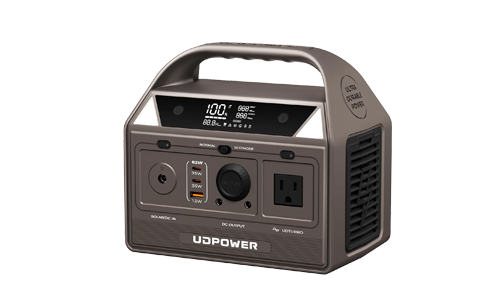
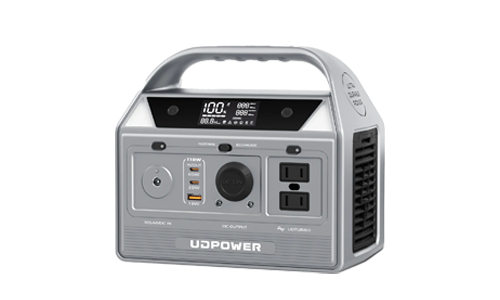
If you want to turn renewable energy into something practical, storage is where the conversation gets useful. A portable power station will not replace a utility-scale solar farm or a fixed whole-home battery system. What it can do is store power for the devices that matter most, accept solar input on compatible models, and make a renewable setup more usable during travel, off-grid time, and outages.
| Product | Picture | Verified specs | Best fit | Why it works in a renewable workflow | Link |
|---|---|---|---|---|---|
| UDPOWER 120W Portable Solar Panel |  |
120W rated power, ≥22% efficiency, IP65, foldable design, compatible with C200, C400, C600, S1200, and S2400 | Daytime charging support for travel, camping, lighter outage use, and solar top-ups | It gives you a direct way to harvest renewable energy in a portable format instead of depending only on wall charging. | View product |
| UDPOWER C600 |  |
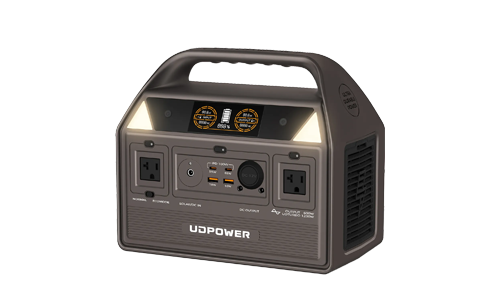
596Wh capacity, 600W pure sine wave AC output, 12.3 lb, 2 AC outlets, up to 100W USB-C | Phones, laptops, routers, cameras, work gear, and smaller essentials | Good entry point when you want portable storage without jumping straight to a larger home-backup class unit. | View product |
| UDPOWER S1200 |  |
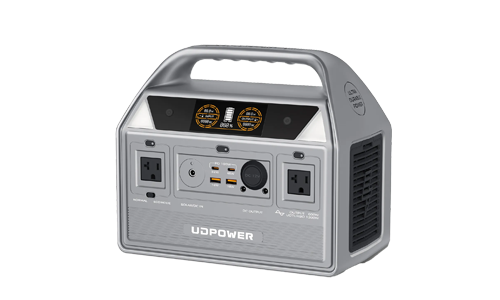
1191Wh capacity, 1200W output, 1800W surge, 5 AC outlets, UPS response ≤10ms, solar input up to 400W, about 26.0 lb | Emergency backup for a more serious load mix, including lights, routers, charging, small kitchen loads, CPAP, and selective appliance use | It sits in the sweet spot where solar input, usable battery size, and home-outage practicality start to come together. | View product |
| UDPOWER S2400 |  |
2083Wh capacity, 2400W output, 3000W startup surge, 6 AC outlets, UPS response ≤10ms, solar input 12V–50V 10A max, about 40.8 lb | Longer outage planning, larger appliance flexibility, and higher-demand backup needs | For buyers who want renewable charging support plus enough headroom to manage more of the “real house” category. | View product |
If you want the planning side instead of just the hardware side, UDPOWER also has useful practical reads on solar recharging during a power outage, runtime planning for outages, and portable power station vs. generator backup. Those pieces help bridge the gap between “renewable energy sounds good” and “here is how I would actually use it at home.”
How to Start with Renewable Energy Without Overspending
You do not need to jump straight into a giant system. The smartest renewable setups usually start with a clear use case, not a huge shopping cart.

- Start with the loads you actually care about. Make a short list of what needs to stay on: phone charging, Wi-Fi, lights, laptop, medical devices, or a fridge.
- Decide whether your main goal is savings, backup, or mobility. Rooftop solar helps with daytime energy use. Portable solar plus storage helps with flexibility and outages.
- Match generation to storage. A bigger panel without enough storage can leave energy unused. A bigger battery without a recharge plan can leave you waiting.
- Check compatibility before buying. Solar input limits, battery capacity, and inverter output all need to match your plan.
- Practice before an emergency. The best time to learn your runtime, recharge pace, and priority loads is before the lights go out.
Best for a first solar-backed portable setup
A foldable solar panel plus a mid-size power station is usually the easiest hands-on entry point because it teaches you the basics of generation, storage, and load planning without requiring roof work.
Best mindset for outage prep
Think in “must-run essentials,” not “everything in the house.” That one shift usually leads to better sizing decisions and much better results.
FAQ
1. What are the main renewable energy sources?
The main renewable energy sources are solar, wind, hydropower, biomass, and geothermal. Some guides also include tidal and wave energy, but those are much less common in everyday use.
2. Is renewable energy the same as clean energy?
Not exactly. The terms overlap, but they are not always identical. Renewable energy refers to the source being naturally replenished. “Clean energy” usually focuses more on lower emissions or lower pollution.
3. Which renewable energy source is most practical for homeowners?
For most homeowners, solar is the most practical direct-use renewable source because it is widely available, scalable, and easier to install or use than household wind, hydro, or geothermal power generation.
4. Why do people pair solar with batteries or portable power stations?
Because solar panels generate electricity when the sun is available, while batteries and portable power stations let you keep and use that electricity later. That makes renewable power much more useful during evenings, cloudy periods, and outages.
5. Can renewable energy power a whole house?
Yes, but only if the full system is sized for the home’s actual demand. A small portable setup can run essentials. A whole-house setup requires much more generation capacity, much more storage, or another backup source.
6. Does renewable energy work during a blackout?
Not automatically. It depends on how the system is built. Grid-tied solar alone often will not keep running during an outage unless there is approved backup equipment or storage designed for that use.
7. Is a portable power station itself a renewable energy source?
No. A portable power station is a storage device, not a generation source. It becomes part of a renewable setup when you charge it with renewable energy, such as solar.
8. What is the easiest way to try renewable energy without installing rooftop solar?
One of the easiest ways is to use a portable solar panel with a compatible power station for charging small electronics, lights, work gear, or outage essentials. It is a practical way to learn how solar generation and stored power work together.
Bottom Line
Renewable energy sources are the natural power sources we can keep using without permanently running them down: sunlight, wind, water, heat from the earth, and replenishable organic material. But the smartest way to understand renewable energy in 2026 is not just to memorize the list. It is to ask a more useful question: Which renewable source can I actually use, and what do I need to make it dependable?
For most consumers, the answer starts with solar and gets better with storage. That is why portable solar panels, batteries, and power stations keep showing up in conversations about emergency prep, RV life, mobile work, and practical home resilience.
Related Articles