

How to Charge a Canon Camera [Ultimate Guide 2025]
Whether you shoot on a Canon EOS R mirrorless body, a classic DSLR, or a compact PowerShot, knowing how to charge your camera safely is essential. In 2025, Canon cameras can be charged in several ways: with the standard wall charger, via in-camera USB-C on supported models, from a car outlet, or using portable power solutions when you are off the grid.
This guide walks you through each method step by step, explains how to identify your battery type, and shows how to charge your Canon on the road or during long shoots. We’ll also look at how high-capacity LiFePO4 portable power stations from UDPOWER can keep your gear running without pushing brand recommendations too hard.

Quick Start: Safest Way to Charge a Canon Camera
If you just unboxed your Canon and want the safest, manufacturer-approved way to charge it, here’s the short version:
- Turn the camera off.
- Open the battery door and remove the battery pack (for example, LP-E6NH, LP-E17, or NB-13L).
- Insert the battery into the official Canon charger that came with your camera (LC-E6, LC-E17, CB-2LH, etc.), aligning the marks and contacts.
- Plug the charger into a wall outlet (100–240 V AC).
- Wait for the indicator lamp: typically orange while charging and green when fully charged, according to Canon manuals.
- Unplug the charger, reinstall the battery, and close the battery door.
Always refer to your specific camera and battery manual. Indicator light patterns and exact charging times vary slightly between Canon models.
Identify Your Canon Battery & Charger

Canon uses different battery packs and chargers across EOS DSLR, EOS R mirrorless, and PowerShot lines. Knowing which one you have tells you:
- Which charger model to use.
- Whether in-camera USB charging is supported.
- About how long a full charge should take.
Where to find your battery type
- Remove the battery and look at the label: names like LP-E6NH, LP-E17, NB-13L.
- Check inside the battery compartment door for a printed battery type on some cameras.
- Look in your camera’s manual or on the official Canon product page.
Common Canon battery packs and charging times
| Battery Pack | Typical Camera Types (Examples) | Canon Charger | Approx. Full Charge Time* | In-Camera USB Charging? | Official Info |
|---|---|---|---|---|---|
| LP-E6 / LP-E6N / LP-E6NH | Mid/high-end EOS DSLR & EOS R (e.g., EOS 5D series, EOS 6D, EOS R5/R6 family) | LC-E6 / LC-E6E | ~2–2.5 hours from fully depleted | On select EOS R bodies with compatible battery + USB-PD adapter | Canon camera manuals |
| LP-E17 | Entry/mid EOS DSLR & EOS R APS-C (e.g., Rebel series, EOS R8/R10) | LC-E17 | ~2 hours at room temperature | Supported on some newer EOS R bodies (check manual) | EOS R10 charging guide |
| NB-13L | PowerShot G-series compacts (e.g., G7 X Mark II/III) | CB-2LH / CB-2LHE | ~2 hr 10 min at room temperature | Usually charged in separate charger, not via USB in camera | Canon NB-13L charging time |
*Charging times above are approximate values from Canon manuals at room temperature (around 23 °C / 73 °F). Cold conditions or very depleted batteries can take longer. Always rely on your specific manual for exact figures.
Charging with the Canon Wall Charger (Most Reliable Method)

For nearly all Canon cameras, using the original wall charger is the safest and most reliable charging method. It is designed for your battery’s voltage and has built-in protections.
Step-by-step: Using the Canon wall charger
- Turn off the camera. This prevents any accidental power draw or errors while you remove the battery.
- Remove the battery. Open the battery compartment, flip the lock, and slide the pack out carefully.
- Insert the battery into the charger. Align the arrows or marks on the pack and charger, then slide the battery in until it clicks or feels secure.
- Plug the charger into a wall outlet. For most Canon chargers, you can plug the charger directly into the wall or connect a power cord first, depending on the model.
- Check the indicator lamp. On many Canon chargers, the lamp turns orange while the battery is charging and green when fully charged. Blinking patterns may indicate calibration or an error, as described in Canon’s support documents.
- Unplug and reinstall. Once the lamp goes solid green, unplug the charger, remove the battery, and reinstall it in the camera.
Do & Don’t with Canon wall chargers
| Do | Why It Matters |
|---|---|
| Use Canon-branded chargers and batteries when possible. | Canon’s own gear follows factory specs and safety standards. |
| Charge on a hard, non-flammable surface. | Helps manage heat and minimizes fire risk. |
| Unplug the charger once the light goes green. | Modern chargers stop actively charging, but it’s good practice. |
| Don’t | Potential Problem |
|---|---|
| Don’t use damaged or swollen batteries. | Increases risk of failure or overheating. |
| Don’t mix random third-party chargers with no safety ratings. | Output voltage/current may be unstable or out of spec. |
| Don’t force a battery into the wrong charger. | Different packs have different voltages and pin layouts. |
Charging in the Camera via USB (USB-C & USB Power Delivery)

Many of Canon’s newer cameras (especially EOS R-series bodies) allow you to charge the battery inside the camera over USB-C when the camera is powered off. Some can even be powered over USB while shooting, which is useful for long events, live streaming, or timelapse work.
In most cases this requires:
- A compatible camera body (for example, certain EOS R, R5, R6, R7, R8, R10 models).
- A compatible battery type (such as LP-E6NH or LP-E17, depending on the model).
- A USB Power Delivery (PD) charger, often 30 W or higher, or Canon’s dedicated USB power adapter (such as PD-E2) on supported bodies.
Basic steps for in-camera USB charging
- Turn the camera power switch to OFF.
- Insert a compatible battery pack and close the battery door.
- Connect a USB-C cable between the camera’s digital/USB-C terminal and a PD-capable wall adapter or power source recommended by Canon.
- Plug the USB adapter into a wall outlet. On many models, a charge/access lamp will light up to indicate charging.
- When the battery is fully charged, the lamp turns green or off, depending on the model. Unplug the adapter.
USB charging vs. external charger: comparison
| Method | What You Need | Best Use Case | Things to Watch |
|---|---|---|---|
| External Canon charger | Battery removed, LC-E6 / LC-E17 / CB-2LH, wall outlet | Everyday charging at home or studio | You can’t shoot with that battery while it’s charging. |
| In-camera USB-C from wall PD adapter | Compatible camera, Canon PD-E2 or 30 W+ PD USB-C adapter | Travel, hotel rooms, light kits where you want fewer chargers | Camera must usually be off to charge; check camera and battery compatibility. |
| In-camera USB-C from power bank | Compatible camera, high-quality USB-C PD power bank | Field work, timelapse, long location shoots | Not all power banks work; many cameras require PD power and battery type like LP-E6NH. Test before important shoots. |
How to Charge Your Canon Camera on the Go
If you shoot weddings, road trips, wildlife, or travel content, you’ll often need to charge batteries away from a standard wall outlet. Here are the most common mobile charging setups and what to consider.
1. Charging from a car outlet
- Use a 12 V car inverter with at least 50–100 W capacity and plug your Canon wall charger into it, just like at home.
- Alternatively, use a car-specific battery charger designed for your Canon battery pack (for example, third-party chargers that accept 12 V input). Make sure voltage and polarity match your battery.
- Avoid charging while the car is off for long periods to prevent draining the car battery.

2. Charging from a USB power bank
- For cameras that support USB-C PD in-camera charging, you can connect a PD power bank (often 30 W+ output is recommended) and charge the battery while the camera is off.
- For cameras that do not support USB charging, you can use a USB-powered dual-slot charger for your battery type (LP-E6, LP-E17, NB-13L, etc.) that accepts 5 V input from a power bank.
- Stick to reputable brands with clear specs, short-circuit protection, and over-charge protection.

3. Charging from a portable power station (off-grid or multi-day)
For camping, van life, extended road trips, or all-day commercial shoots, a portable power station gives you AC outlets plus high-output USB ports in a single box.
- Plug your original Canon charger into a pure sine wave AC outlet on the power station, just like you would at home.
- Use the power station’s USB-C PD ports to power or charge compatible cameras and USB chargers directly.
- For solar-ready models, connect foldable solar panels during the day to recharge the power station between shoots.

Mobile charging setups: quick comparison
| Setup | Power Source | Pros | Cons |
|---|---|---|---|
| Car inverter + Canon charger | 12 V car outlet → AC | Simple, uses original charger, safe for most batteries | Depends on car battery; not ideal for long stationary sessions |
| USB power bank + USB charger | 5 V or USB-C PD | Very portable, great for short trips and urban shooting | Limited capacity, less ideal for multi-day events |
| Portable power station | AC + high-power USB + often solar input | Runs chargers, laptops, lights, and camera gear for days | More expensive and heavier than a simple power bank |
Troubleshooting Common Charging Problems

The charger light never turns on
- Confirm the outlet works by plugging in another device.
- Check that the battery is fully seated in the charger.
- Inspect the charger contacts and battery terminals for dirt or corrosion.
- If you have another battery, test it to rule out a bad pack.
The charger light blinks or charging stops early
- Some Canon chargers use blinking patterns to indicate deep-discharged batteries or error conditions. Consult the manual for your charger model.
- If the lamp keeps blinking after reseating the battery and trying a different outlet, Canon recommends contacting their support for inspection.
The battery drains very quickly after charging
- Try a full charge-and-run cycle to re-calibrate the battery indicator (charge fully, then use until near empty, and recharge).
- If the battery is old or has many cycles, it may be nearing the end of its life and hold less charge.
- Check for power-hungry features like continuous autofocus, Wi-Fi, or image stabilization that may be running constantly.
Is overnight charging safe?
Canon’s official chargers are designed to stop actively charging once the battery is full. Leaving a battery on the Canon charger overnight is generally considered safe, provided the charger and battery are in good condition and placed in a well-ventilated area. If you are using third-party chargers, make sure they come from reputable brands and include over-charge protection.
Using UDPOWER Portable Power Stations for Canon Gear

If you regularly shoot on location, camp, or cover events where wall power is limited, a portable power station can become your “mobile wall outlet.” UDPOWER focuses on LiFePO4-based power stations, which are known for their long cycle life (4,000+ cycles) and stable output.
The table below uses real specifications from the official UDPOWER website to show how different models fit common photography scenarios, including recharging Canon batteries many times over.
| Model | Capacity | AC Output | Key Ports for Camera Users | Weight | Example Use with Canon |
|---|---|---|---|---|---|
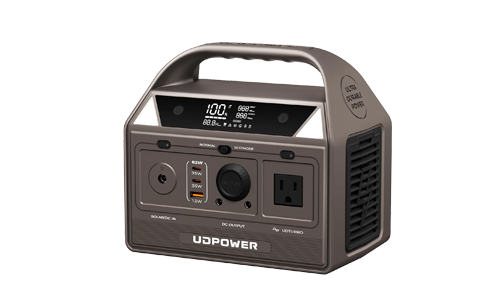
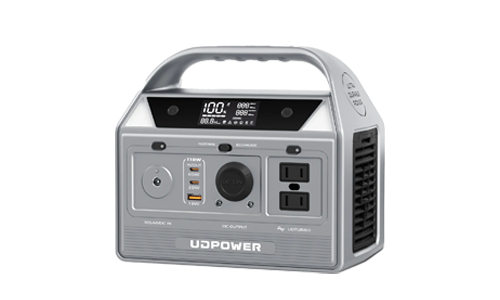
| UDPOWER C200 | 192 Wh LiFePO4 | 200 W inverter | AC outlet, USB-A, USB-C, 12 V car port | ~5.4 lb | Small travel kit; recharge a few camera batteries and a phone on a day trip. |
| UDPOWER C400 | 256 Wh LiFePO4 | 400 W rated, 800 W surge | AC outlet, fast USB-C, multiple USB-A | ~6.88 lb | Day-long photo or video shoots; powers chargers, laptops, and LED panels. |
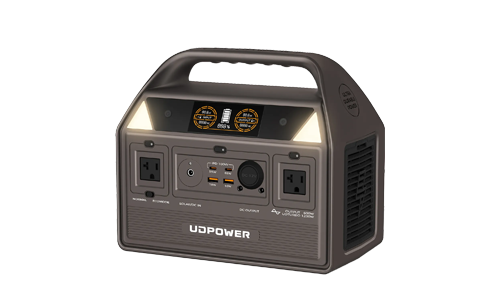
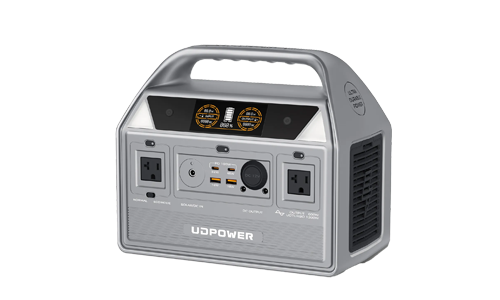
| UDPOWER C600 | 596 Wh LiFePO4 | 600 W rated, 1,200 W peak | 2× AC outlets, USB-C, USB-A, 12 V car outlet | ~12.3 lb | Weekend camping or multi-camera events; runs chargers, laptops, and small lights. |
| UDPOWER S1200 | 1,190 Wh LiFePO4 | 1,200 W rated, 1,800 W peak | 5× AC, 2× 100 W USB-C, 4× USB-A, 12 V car port | 26.0 lb | Base camp or studio-on-wheels; powers multiple chargers, laptops, monitors, and lights. |
How many times can a power station recharge a Canon battery?
A typical Canon LP-E6NH battery is roughly 16 Wh in capacity. In ideal conditions, ignoring conversion losses, a power station’s theoretical maximum number of full recharges looks like this:
| Power Station | Battery Capacity | Theoretical Max LP-E6NH-Equivalent Recharges* | Realistic Expectation in the Field |
|---|---|---|---|
| UDPOWER C200 | 192 Wh | Up to ~11–12 | About 8–10 full recharges after losses and other device use. |
| UDPOWER C400 | 256 Wh | Up to ~15–16 | Roughly 12–14 recharges, depending on how efficiently you use it. |
| UDPOWER C600 | 596 Wh | Up to ~36–37 | Commonly 28–32 recharges plus room for phones and tablets. |
| UDPOWER S1200 | 1,190 Wh | Up to ~73–74 | Dozens of recharges while also powering laptops, lights, and Wi-Fi. |
*These are theoretical maximums assuming 100% efficiency and no other loads. Real-world results are lower due to inverter and charger losses, but they give you a ballpark sense of scale.
A compact unit like the C400 fits easily in a car or carry-on bag and is ideal for single-day shoots. Larger stations like the C600 or S1200 can keep an entire small crew’s cameras, laptops, and lighting powered for several days with careful management, especially when paired with compatible solar panels.
FAQ: Canon Camera Charging
Can I use a third-party charger for my Canon camera battery?
Many third-party chargers work fine, but quality varies. Look for models from reputable brands with over-charge, short-circuit, and temperature protection, and make sure they are specifically designed for your Canon battery type (LP-E6NH, LP-E17, NB-13L, etc.). When in doubt, the original Canon charger remains the safest option.
Can I charge my Canon camera from a laptop USB port?
Only if your camera supports USB charging and your laptop’s USB-C port can supply enough power. Many cameras that support USB-C charging expect a USB Power Delivery (PD) source with a certain wattage, which some laptops provide and others do not. Check your camera manual and test at home before relying on this for important shoots.
Is it bad to leave batteries in the charger after they are full?
Genuine Canon chargers are designed to stop actively charging once the battery is full, and they can be left plugged in for a while without constantly topping off. However, it’s still a good habit to remove batteries once they are fully charged and store them in a cool, dry place if you are not using them immediately.
How often should I charge my Canon battery if I don’t use the camera much?
Lithium-ion batteries slowly self-discharge over time. If you rarely shoot, try to top up your battery every few months and avoid storing it completely empty. For long-term storage, Canon generally recommends storing batteries around 40–60% charge and in a moderate-temperature environment.
Will a portable power station damage my Canon camera?
A high-quality portable power station with regulated, pure sine wave AC output and properly regulated USB outputs is safe to use with Canon’s own chargers and compatible USB-C charging setups. The key is to use the correct charger and cables, avoid cheap unregulated inverters, and follow both Canon’s and the power station manufacturer’s safety instructions.
Key Official Resources & References
For detailed information about your specific camera and battery, always refer to Canon’s official documentation. Helpful starting points include:
- Canon camera manuals (EOS and PowerShot): https://cam.start.canon/
- Canon support article on charging NB-13L batteries: NB-13L charging time
- EOS R-series manuals for USB charging and PD-E2 adapter usage (R5, R6, R8, R10, etc.) via Canon’s online manual portal.
- UDPOWER official portable power station collection and product pages: UDPOWER Portable Power Stations
Related Articles


