What Kind of Portable Power Station Is Best for Seniors?
ZacharyWilliam
A practical buying guide for older adults, caregivers, and families who want quieter, safer, easier backup power at home.
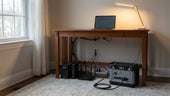
For most older adults, the best portable power station is not the biggest one on the market. It is the one that is easy to carry, simple to recharge, quiet enough for indoor use, and powerful enough for the things that actually matter during an outage: a phone, a lamp, a CPAP, a Wi-Fi router, a small fan, a tablet, or sometimes a refrigerator.
That is the mistake many buyers make. They shop by the largest watt number they can afford, then end up with a unit that is too heavy to move, too complicated to use, or far more than they really need. Older adults usually do better with a portable power station that matches real routines, not marketing hype.
Another thing that matters more than many brands admit: a lot of seniors do not want to depend on an app. Some do not feel comfortable pairing devices, updating firmware, or learning app menus. Others simply do not trust a backup power product that feels “locked behind a phone.” That concern is reasonable. In a real outage, a power station should still be easy to turn on, check, and use directly on the unit itself, without needing a phone signal, app login, or software troubleshooting.
Why seniors need a different buying checklist
For a younger camper, a power station is often a convenience product. For an older adult, it can be a comfort tool, a communications tool, or part of an emergency plan. U.S. preparedness guidance for older adults repeatedly stresses having a backup plan for medical devices, refrigerated medicines, communication, and emergency supplies. That is why the right purchase starts with reliability and ease of use, not just output bragging rights.

| What older adults usually care about | Why it matters | What to look for | Source |
|---|---|---|---|
| Backup power for medical needs | Older adults may need a plan for powered medical equipment or refrigerated medication during outages. | Stable AC output, enough battery for actual hours needed, and a simple recharging plan. | Ready.gov · American Red Cross |
| Simple indoor backup | Battery power is easier to use inside than a gas generator, which must stay outside because of carbon monoxide risk. | Quiet battery station for indoor essentials; avoid relying on gas equipment indoors. | CDC |
| Comfort during outages | Phones, lights, fans, and internet access can matter as much as “big appliance” backup. | Easy-to-reach ports, visible screen, quiet fan noise, and enough capacity for overnight use. | National Institute on Aging · Ready.gov Older Adults |
| Food and medicine planning | Outages affect food storage and medications that need cooling. | Know whether you only need a few personal devices, or also need to cover refrigeration. | CDC Power Outage Guidance |
The features that matter most
If you are shopping for a senior, or shopping as a senior yourself, these are the features worth paying for.
- Manageable weight: A 40-pound power station with great specs is still the wrong choice if the owner cannot lift it safely. For many older adults, the sweet spot is in the compact-to-midweight range.
- Clear controls: Big buttons, a readable display, and obvious AC/DC switches matter more than a fancy app.
- App-free usability: Seniors are often better served by a model that can be fully operated from the unit itself. The app can be a bonus, but it should never be the only practical way to control core functions.
- Quiet indoor operation: Many seniors want backup power for bedrooms, apartments, and living rooms. Loud fan noise gets old fast.
- Pure sine wave AC: This is the safer standard for electronics and many sensitive devices.
- Fast recharge: A station that tops back up quickly is easier to live with during repeated outages.
- Long-life battery chemistry: LiFePO4 is a strong fit for frequent use and longer service life.
- Right-size output: The continuous output rating is usually more important than the flashy surge number.
- Useful port mix: AC outlets, USB-C, USB-A, and a car-style 12V output cover most real household needs.
| Feature | Why it matters for seniors | Good target | Practical note |
|---|---|---|---|
| Weight | Too-heavy units often stay in a closet instead of being used confidently. | Under 15 lbs for easy grab-and-go; under 30 lbs if it needs to move around the house. | Once you get near 40 lbs, many solo users will want help lifting. |
| Battery size | Capacity determines how long the station lasts, not just what it can start. | 200–600Wh for small essentials; 500–1200Wh for overnight backup; 2000Wh+ for bigger home needs. | Bigger is not always better if portability drops too much. |
| Continuous output | Prevents overload on the devices you use most. | 200–600W for basics; 1000W+ for broader home backup; 2000W+ for heavier kitchen loads. | Always plan by continuous watts first. |
| Recharge speed | Shorter recharge time means less planning stress during back-to-back outages. | About 1.5–2 hours is excellent for mid-size home use. | Fast recharge is especially helpful in storm season. |
| UPS-style switchover | Helpful for routers, basic home office gear, and some must-stay-on electronics. | Available on home-backup-focused models. | Do not assume every model has it; verify before buying. |
Why many seniors prefer a power station that does not rely on an app

For younger buyers, app control may feel convenient. For many older adults, it feels like one more thing that can go wrong. A dead phone, a forgotten password, a Bluetooth pairing issue, a software bug, or an app crash should not get between a person and basic backup power.
That does not mean app-enabled models are bad. It means the core experience should still work smoothly from the front panel. Seniors usually do best with a power station that lets them do the important things without touching a phone:
- Turn the unit on or off
- Enable AC or DC output
- Read battery percentage clearly
- Check input and output wattage at a glance
- Recharge the unit without going through app setup
Best size by real-life senior scenarios
The easiest way to choose is to match the station to the outage you are actually trying to get through.

| Scenario | Typical needs | Suggested size class | Who this fits best |
|---|---|---|---|
| Phone + lamp + hearing-aid charger + tablet | Basic communication and comfort for a few hours | 200–300Wh | Apartment dwellers, light emergency kits, backup kept near a chair or bedside table |
| Phone + lamp + Wi-Fi + fan + small electronics | Staying comfortable through an evening outage | 500–600Wh | Older adults who want a realistic home backup without a lot of weight |
| Overnight CPAP + phone + lamp | Health-related overnight backup | Usually 500–1200Wh | Users who need more than a “charge my phone” emergency box |
| CPAP + router + lights + several device recharges | Comfort plus connectivity through a longer outage | 1000Wh+ | Households that want stronger overnight and next-day coverage |
| Refrigerator + comfort devices + family backup | A bigger home outage plan, not just personal electronics | 2000Wh+ or broader backup strategy | Homes where the station will mostly stay in place and be moved only occasionally |
Notice the pattern: the best unit for many seniors is often a mid-size station, not the heaviest model. It gives you enough runtime to matter, but stays simple to move and recharge.
Published device examples that help with planning
Published device examples are helpful because they show how fast “small essentials” add up. The numbers below come from official UDPOWER product pages and can help frame realistic expectations.
| Example device/load | Published figure | What that tells you | Source |
|---|---|---|---|
| Phone | 11Wh example | Small personal electronics barely dent a mid-size power station. | UDPOWER C400 |
| LED bulb | 10W example | Lighting is a small load, which is why even compact stations work well for outage lighting. | UDPOWER C400 |
| CPAP | 40W example | Medical-adjacent overnight use is where capacity starts mattering a lot more. | UDPOWER C400 |
| Laptop | 65W example | Work-from-home or telehealth backup needs more than a pocket battery pack. | UDPOWER C400 |
| Refrigerator | 60–100W average example | Fridge backup usually pushes buyers into the 1000Wh+ category very quickly. | UDPOWER S2400 |
A real CPAP planning example: why setup matters more than people think
Portable power station shoppers often underestimate how much the CPAP setup itself changes runtime. The ResMed battery guide makes this very clear. An AirSense 10 without a heated humidifier needs far less battery than the same machine with heated humidity turned on.

| ResMed AirSense 10 setup | Example pressure | Battery size listed for 8 hours | Current draw at 12V DC | Source |
|---|---|---|---|---|
| SlimLine tubing, no humidifier | 10 cm H₂O | 12AH | 0.93A | ResMed Battery Guide |
| SlimLine tubing + humidifier (@4) | 10 cm H₂O | 28AH | 2.30A | ResMed Battery Guide |
| SlimLine tubing + humidifier (@8) | 10 cm H₂O | 44AH | 3.66A | ResMed Battery Guide |
| ClimateLineAir tubing + humidifier (@Auto) | 10 cm H₂O | 46AH | 3.77A | ResMed Battery Guide |
That is why blanket claims like “this will power any CPAP all night” are not good enough. Runtime changes based on pressure, humidifier use, tubing type, conversion losses, and what else is plugged in. For seniors who rely on overnight breathing support, buy with headroom.
Recommended UDPOWER models for seniors
Below is the honest version. Every model has a place, but they are not all equally senior-friendly.

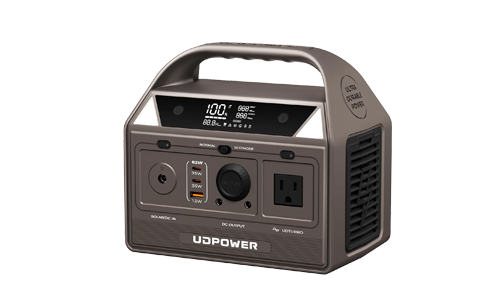
UDPOWER C400
Best for: a lightweight backup kit for one person.
Official specs: 256Wh, 400W rated output, about 6.88 lbs, LiFePO4 battery, 4,000+ cycles, dual-input fast charging up to 165W and about 0–80% in 1.5 hours.
Why it suits seniors: easy one-hand carry, small footprint, enough for phones, lighting, chargers, and some small nighttime essentials.
Watch-out: excellent as a personal backup box, but too small if your real goal is long overnight medical use or refrigerator backup.
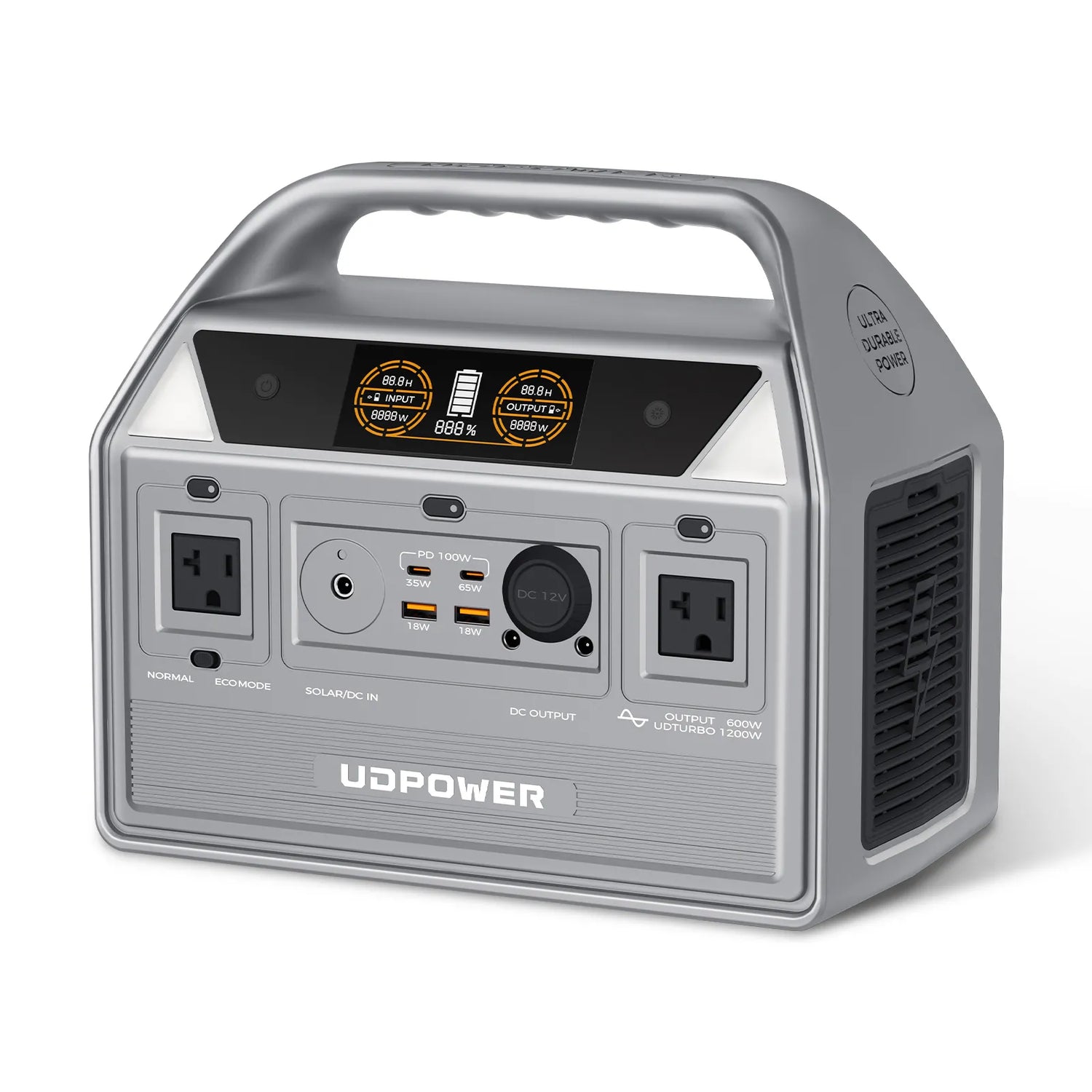
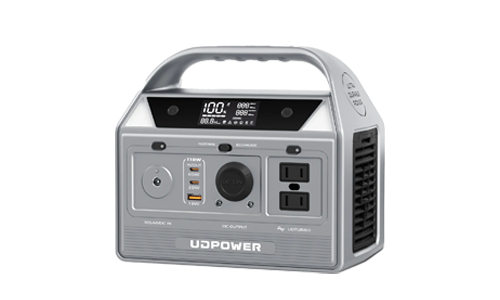
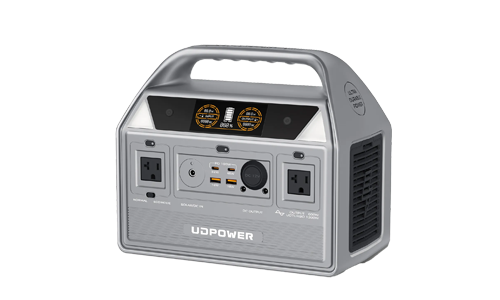
UDPOWER C600
Best for: most older adults who want the best balance of portability and useful runtime.
Official specs: 596Wh, 600W rated output, 1200W surge, about 12.3 lbs, LiFePO4 battery, 4,000+ cycles, two AC outlets, dual USB-C, USB-A, and 12V car outlet.
Why it suits seniors: still easy to move, but much more capable than an ultra-compact station. Good fit for communication devices, lighting, fans, tablets, and a more comfortable outage plan.
Watch-out: still a modest-capacity unit if you are planning around CPAP plus longer outage coverage.
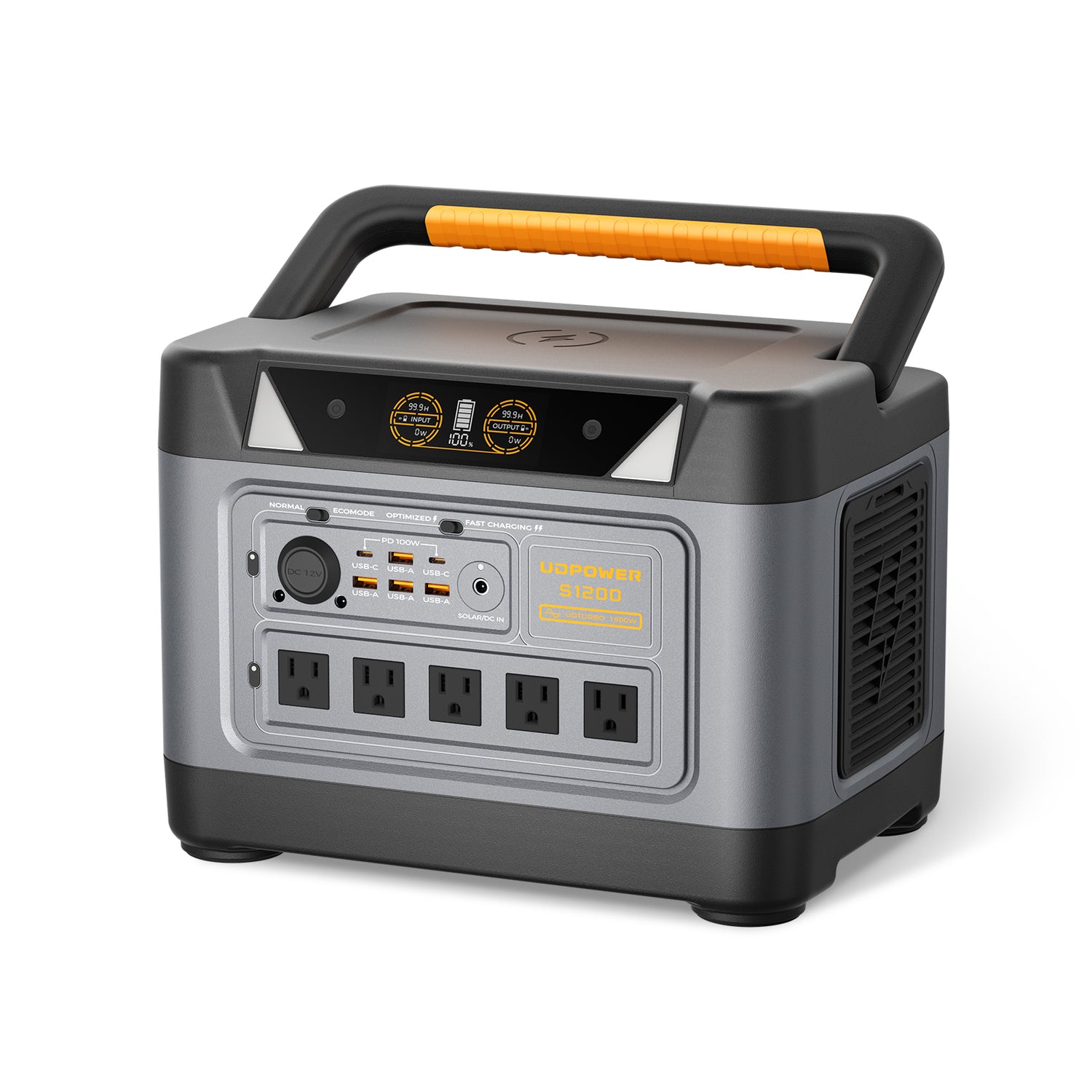
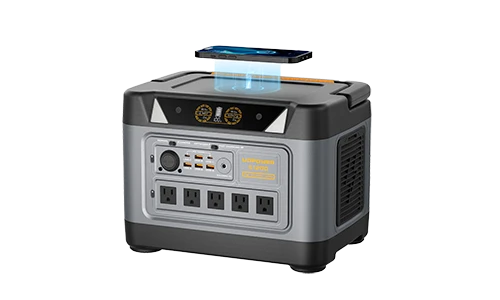
UDPOWER S1200
Best for: older adults who want a serious home backup without stepping into very heavy equipment.
Official specs: 1,190Wh capacity, 1,200W output, 1,800W surge, about 26.0 lbs, 5 AC outlets plus 10 DC outputs, LiFePO4 battery, 4,000+ cycles, and fast AC charging in about 2 hours.
Why it suits seniors: this is the model where overnight backup starts to feel practical, not theoretical. It is strong for CPAP planning, router backup, lighting, phones, and broader blackout comfort. UDPOWER also markets UPS-style switchover below 10ms on this model.
Watch-out: 26 pounds is still manageable for many adults, but it is no longer “grab with two fingers” light.
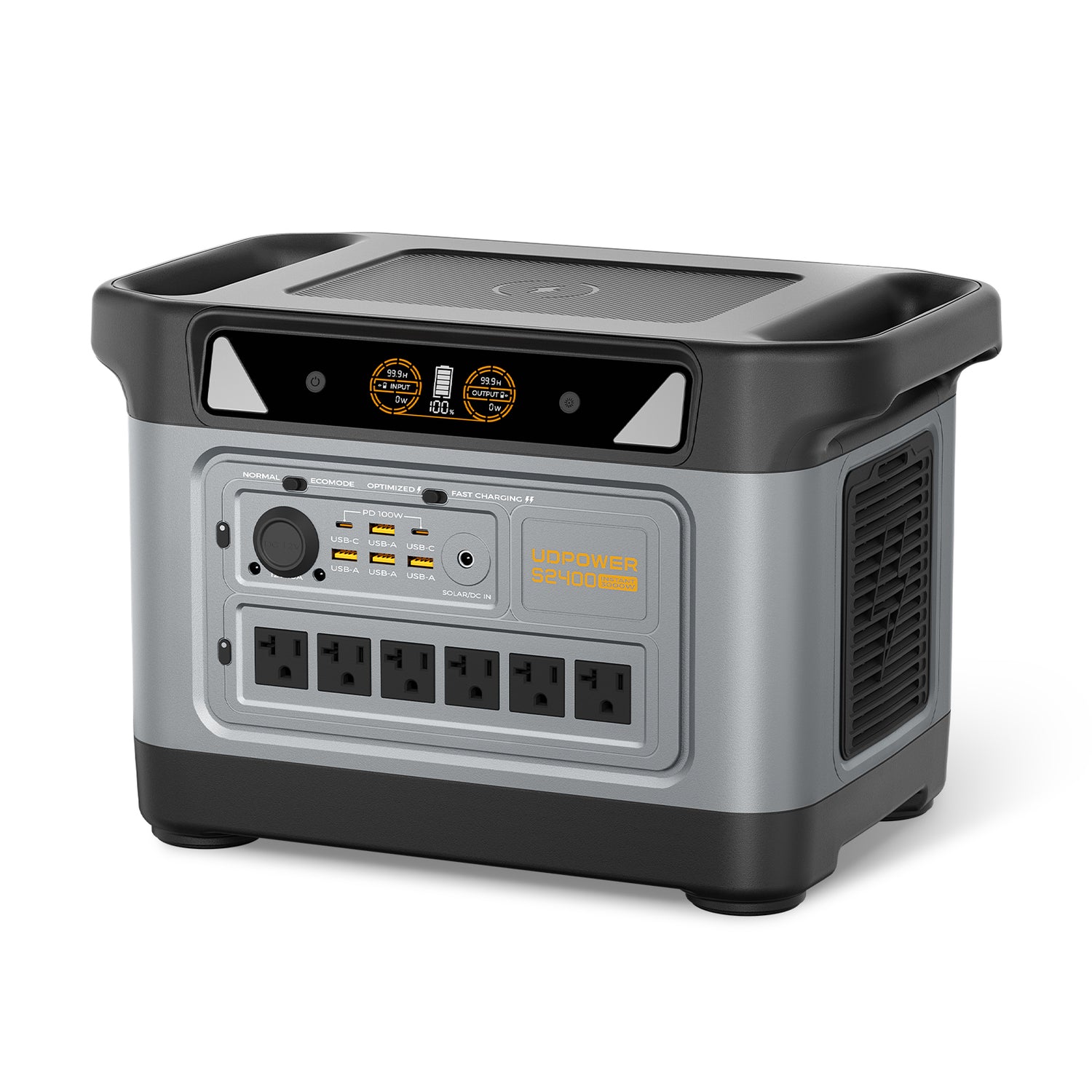
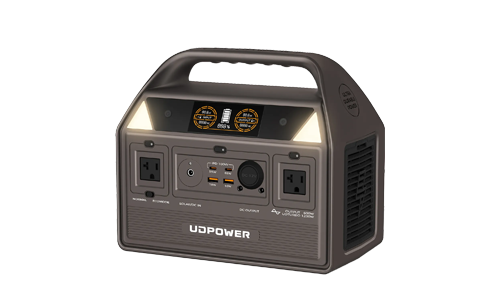
UDPOWER S2400
Best for: households that want refrigerator support, multi-device backup, or a stronger home outage setup.
Official specs: 2,083Wh, 2,400W output, 3,000W surge, about 40.8 lbs, 16 output ports, LiFePO4 battery, and UPS-style switchover below 10ms.
Why it suits seniors: strong capacity for longer outages, especially if a caregiver or family member can set it in place once and leave it ready.
Watch-out: this is powerful, but for many seniors it is too heavy to be the first-choice “portable” model unless it will stay in one place or someone else will move it.
| UDPOWER model | Capacity | Output | Weight | Best fit for seniors | Source |
|---|---|---|---|---|---|
| C400 | 256Wh | 400W | 6.88 lbs | Lightest emergency kit, simple personal backup, travel-friendly | Official page |
| C600 | 596Wh | 600W | 12.3 lbs | Best balance for most older adults | Official page |
| S1200 | 1,190Wh | 1,200W | 26.0 lbs | Best for stronger overnight home backup without going extra-heavy | Official page |
| S2400 | 2,083Wh | 2,400W | 40.8 lbs | Best for larger home loads if portability is less important | Official page |
What seniors should avoid buying
- A unit chosen only by peak wattage: Continuous output and battery size matter more in daily use.
- A unit that is too heavy to move safely: Bigger numbers do not help if the owner avoids touching the station.
- A station with app-first controls: Physical usability matters more in an outage. If the owner feels they must rely on a phone to operate basic functions, that is a poor senior-friendly design.
- An undersized “deal” for a medical backup job: A bargain station can become an expensive mistake if it runs out halfway through the night.
- A gas generator for indoor backup: CDC guidance is clear that generators must stay outside because of carbon monoxide danger.
A 5-question checklist before you order
- What absolutely has to stay on? Make a short list: CPAP, phone, lamp, fan, router, refrigerator, medication cooler, or just device charging.
- How many hours do you really need? Two hours, overnight, or a full day changes the answer completely.
- Who will move the unit? If the owner must carry it alone, weight should move near the top of the buying checklist.
- Do you need a true home backup role or just a comfort backup? Those are different purchases.
- Do you know the real wattage of the critical device? Never guess with medical or motor-driven equipment.
Sources
- Ready.gov — Older Adults
- Ready.gov — Power Outages
- American Red Cross — Older Adults Emergency Preparedness
- CDC — What to Do to Protect Yourself During a Power Outage
- CDC — Avoiding Carbon Monoxide Poisoning
- National Institute on Aging — Disaster Preparedness and Recovery for Older Adults
- ResMed — Battery Guide
- UDPOWER C400 Official Product Page
- UDPOWER C600 Official Product Page
- UDPOWER S1200 Official Product Page
- UDPOWER S2400 Official Product Page