What Can a 600W Portable Power Station Run?
ZacharyWilliamA 600W portable power station is one of the most practical sizes for people who need more than just phone charging but do not want to jump into large, heavy backup systems. It can handle laptops, routers, LED lights, TVs, fans, CPAP machines, camera gear, and many low-watt appliances, but it still has clear limits around heating devices and compressor-heavy loads.
The real question is not only whether a 600W station can run a device. It is whether it can start it cleanly, run it long enough to be useful, and still leave enough battery for the rest of your setup.

Table of Contents
Quick Answer: What a 600W Portable Power Station Can Run
A 600W portable power station is best for electronics plus low-watt appliances. It is usually a strong fit for:
Usually not a good fit: space heaters, hair dryers, most microwaves, electric kettles, toaster ovens, hot plates, and most air conditioners. Those are the devices that push this class beyond its comfort zone fast.
The simplest way to think about 600W is this: it is strong enough for a realistic bundle of essentials, but not for trying to recreate a full kitchen or heating setup on battery power.
What 600W Really Means
A 600W portable power station can continuously deliver up to 600 watts of AC output. That tells you how much load the inverter can handle at one moment. It does not tell you how long the battery will last, and it does not guarantee that every appliance below 600W will start successfully.
Easy rule: watts answer “can it run it?” Watt-hours answer “for how long?”
Common Devices a 600W Portable Power Station Can Run
This table assumes a mid-size battery in the ~500Wh–600Wh range and roughly 85% usable capacity on AC. Actual results vary with inverter efficiency, device behavior, and ambient temperature.
| Device | Typical power (W) | Estimated runtime | Compatible? | Notes |
|---|---|---|---|---|
| Phone charger | 10–20 | ~25–50 hours | Yes | Best through USB output when available. |
| Tablet | 20–30 | ~17–25 hours | Yes | Very easy load for this class. |
| Laptop | 45–90 | ~6–11 hours | Yes | USB-C PD often improves efficiency. |
| Wi-Fi router + modem | 10–25 | ~20–50 hours | Yes | One of the best outage basics. |
| LED lighting | 5–40 | ~12–100 hours | Yes | Excellent camping and outage use. |
| CPAP without heated humidifier | 30–60 | ~8–17 hours | Usually yes | Heated humidifier can cut runtime fast. |
| TV + streaming box | 70–140 | ~3.5–7 hours | Yes | Great for downtime comfort or travel setups. |
| Small fan / box fan | 30–80 | ~6–17 hours | Usually yes | Very practical summer backup load. |
| Mini fridge / compressor cooler | 60–120 running | ~4–8 hours continuous | Sometimes | Startup surge is the real deciding factor. |
| Camera / drone charger | 20–60 | ~8–25 hours | Yes | Excellent fit for off-grid trips. |
| Game console | 120–220 | ~2.3–4.2 hours | Usually yes | Actual draw depends heavily on the game. |
| Portable monitor | 10–20 | ~25–50 hours | Yes | Very battery-friendly for mobile work. |
| Desktop PC + monitor | 150–300 | ~1.7–3.4 hours | Sometimes | Gaming and workstation towers may exceed comfort quickly. |
| Small blender | 300–500 | ~1–1.7 hours continuous | Sometimes | Fine for short bursts if startup stays under control. |
| Rice cooker (small) | 300–500 | ~1–1.7 hours continuous | Sometimes | Better fit than toaster ovens or kettles. |
| Coffee maker | 600–900 | Very limited | Depends | Some compact models fit, many do not. |
| Toaster oven | 1000W+ | Not practical | No | Usually too high for this class. |
| Hair dryer | 1200–1875 | Not practical | No | Classic overload example. |
| Space heater | 1000–1500 | Not practical | No | Even low settings are poor battery use. |
| Most microwaves | 900–1500+ input | Not practical | No | The wall input is often far above the front-panel cooking number. |
Runtime Basics and Examples
Once you know the watt draw, the quick planning formula is straightforward:
Estimated runtime (hours) ≈ (Battery Wh × 0.85) ÷ Load wattsSo if your 600Wh-class station has roughly 85% usable energy on AC, you have around 510Wh of practical runtime to work with. A 60W laptop load would last roughly 8.5 hours. A 300W device would last around 1.7 hours. A 600W load would be less than an hour.
Fridge note: compressor coolers and mini fridges rarely run at their steady wattage every minute. They cycle on and off, so real runtime can be longer than simple continuous-watt math suggests.
| Device & load | ~510Wh usable example | Best use style | Reality check |
|---|---|---|---|
| Laptop (60W) | ~8.5 hours | Work / travel | Heavy editing or gaming shortens runtime. |
| Router + modem (20W) | ~25.5 hours | Outage essentials | Excellent choice for long backup. |
| LED lamp (10W) | ~51 hours | Emergency or campsite light | One of the most battery-friendly loads. |
| Fan (75W) | ~6.8 hours | Overnight comfort | High settings reduce runtime quickly. |
| CPAP (40W) | ~12.7 hours | Medical backup | Heated humidity changes the math a lot. |
| TV (100W) | ~5.1 hours | Downtime comfort | Brightness and speaker volume matter. |
| Mini fridge (100W average) | ~5.1 hours continuous | Food backup | Real cycling often stretches this further. |
| Blender (400W) | ~1.3 hours continuous | Short bursts only | In real life you use it for minutes, not hours. |
| Full 600W draw | ~0.85 hours | Short high-watt task | Plan for under 1 hour at max output. |
Real-Life Bundles a 600W Station Handles Well
Related reading: If 600W feels close but maybe a little small, the next useful comparisons are the 800W guide and the 1000W guide. If you think your use may actually be lighter than 600W, compare the 500W guide, 300W guide, and 200W guide. If you already know you want more kitchen freedom or longer outage comfort, the 1200W guide, 2000W guide, and 3000W guide are the most useful step-up comparisons.
What It Usually Cannot Run Well
A 600W portable power station is not built for the big high-heat appliances that dominate kitchens and climate control. The most common poor fits are:
This does not mean a 600W station is weak. It means it belongs in the “essentials and efficiency” category, not the “run everything like the wall outlet” category.
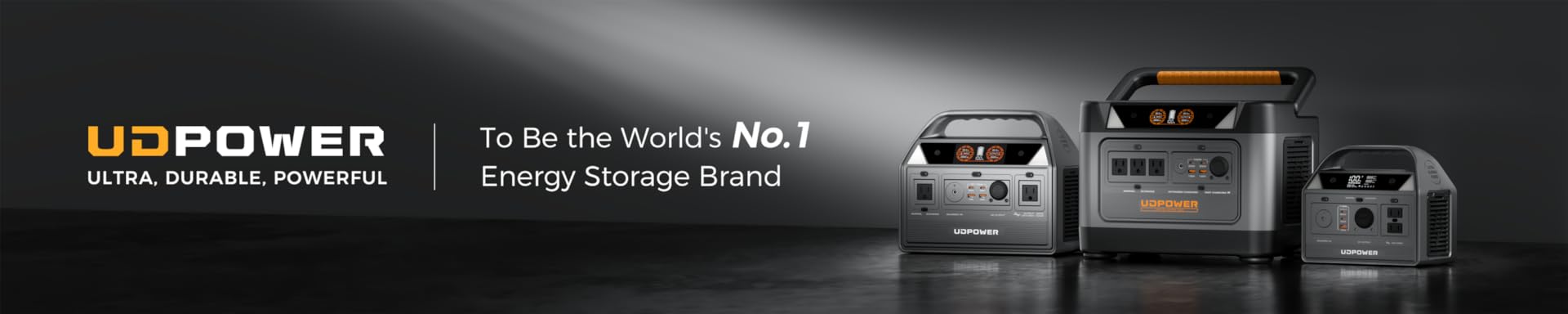
UDPOWER Options Around the 600W Class
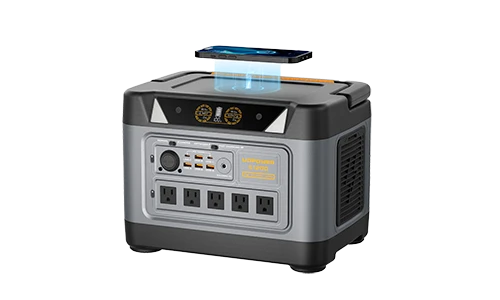
If you are shopping this category on UDPOWER, the C600 is the most direct match. The C400 is the lighter alternative, and the S1200 is the natural upgrade if your load list keeps creeping upward.
UDPOWER C400

256Wh capacity, 400W output, up to 800W peak in UD-TURBO mode. Best for phones, laptops, lights, and compact travel use.
View UDPOWER C400UDPOWER C600

596Wh capacity, 600W output, up to 1200W max. This is the clearest real-world fit for buyers asking what a 600W portable power station can actually run.
View UDPOWER C600UDPOWER S1200

1190Wh capacity, 1200W output. Better if you want more refrigerator margin, longer runtime, and less stress around borderline appliance loads.
View UDPOWER S1200In plain terms: C400 is for lighter grab-and-go use, C600 is the natural answer to the 600W question, and S1200 is the better choice if your real load list keeps drifting upward.
Tips to Get More from a 600W Station
- Use USB and DC ports first for phones, tablets, cameras, routers, and small electronics.
- Start motor loads alone before adding lights or chargers.
- Keep heat-heavy appliances off the plan unless you have verified they fit and only need very short use.
- Measure once instead of guessing if a fridge, pump, or tool matters to your setup.
- Think in bundles, not just single devices so you do not accidentally add up to more than 600W.
FAQ
Will a 600W power station run a refrigerator?
Sometimes. Many small fridges and compressor coolers can run under 600W once they are already on, but startup surge is the common problem. The fridge may look safe by running watts and still trip the inverter during startup.
Can a 600W power station run a microwave?
Usually no. Many microwaves draw 900W to 1500W or more from the wall, which is well beyond a 600W inverter. The front-panel cooking number is often lower than the actual wall input.
Is a 600W power station enough for home backup?
For essentials, often yes. It is a strong size for routers, lights, laptops, phone charging, TV, CPAP, and some fan or mini-fridge duty. It is not the right size for whole-home backup or for major heat-heavy appliances.
Can it run a CPAP overnight?
In many cases, yes—especially without heated humidity. A CPAP is one of the most realistic and useful loads for this size class. The battery capacity matters more than the inverter size here.
Can a 600W power station run a coffee maker?
Some compact coffee makers fit, but many do not. The safest approach is to check the actual wattage label and treat coffee brewing as the only major load while it is running.
What can I realistically run at the same time on a 600W unit?
A router, a few LED lights, phone charging, a laptop, and even a TV can often run together comfortably. The trouble starts when you mix in heating loads or appliances with strong motor startup.
Should I buy 500W, 600W, 800W, or 1000W?
Choose 500W if your use is lighter and mostly electronics-focused. Choose 600W if you want a very practical middle ground for camping, outages, and compact appliance use. Choose 800W or 1000W if you want more margin around mini fridges, coffee makers, and heavier mixed-use setups.
Does a higher watt rating always mean longer runtime?
No. Runtime depends on battery capacity in watt-hours, not only on inverter size. A larger inverter can handle bigger loads, but it does not automatically mean the battery lasts longer unless the Wh capacity is larger too.