How Much Does Solar Panel Cleaning Cost? A Quick Guide
ZacharyWilliamReal U.S. price ranges, DIY vs. professional cleaning, when cleaning actually pays off, and how to keep rooftop, ground-mount, RV, and off-grid solar setups performing well.
Last updated: June 1, 2026
Quick answer: what should you expect to pay?
Most U.S. homeowners pay about $150 to $500 per professional solar panel cleaning visit, or roughly $5 to $20 per panel depending on system size, roof access, local labor rates, and how dirty the panels are. A typical single-story home with an easy-to-reach 18 to 25 panel system often lands near $200 to $350. Annual maintenance plans that include cleaning and inspection commonly run $390 to $720 per year.
DIY cleaning can cost much less if the panels are safely reachable from the ground, but rooftop work is different. If you need a ladder, a steep roof, harness equipment, or a two-story reach, the safer choice is usually a professional cleaner with insurance and the right tools.

Average solar panel cleaning cost in 2026
Solar panel cleaning prices are usually quoted in one of three ways: a flat price for the visit, a per-panel price, or a yearly maintenance package. The numbers below combine current public cost guides with the pricing pattern most homeowners see when they request local quotes.
| Pricing model | Typical U.S. price range | Best fit | What to confirm before booking | Reference |
|---|---|---|---|---|
| Flat fee per cleaning visit | $150–$500 total | Standard residential rooftop systems | Whether inspection, photos, and bird dropping spot treatment are included | HomeGuide |
| Per-panel pricing | $5–$20 per panel; some quotes run higher for steep or complex roofs | Systems where panel count is the easiest pricing unit | Minimum trip charge, roof surcharge, and whether difficult access changes the rate | SolarReviews |
| Cleaning as part of maintenance | $390–$720 per year for professional maintenance plans | Homeowners who want cleaning plus inspection or annual checkups | Whether the plan includes inverter checks, wiring inspection, and issue photos | Angi |
| Basic DIY supplies | $20–$100 for a soft brush, squeegee, hose attachments, and mild soap if allowed | Ground-mount, carport, RV, or reachable panels only | Panel warranty rules, water hardness, and whether you can clean without climbing | Energy.gov |
The biggest mistake is treating the average as a fixed price. A 16-panel single-story roof in a competitive suburb may be far cheaper than a 36-panel system spread across a steep, two-story roof with limited ladder access. Always compare at least two quotes if the price is above the local average.
Cost by panel count, roof type, and access
Panel count matters, but the cleaner is really pricing time, risk, travel, water setup, and access. This table gives a more practical way to estimate the quote before you call.
| System type | Typical panel count | Expected cleaning cost | Why the price changes | Best next step |
|---|---|---|---|---|
| Small single-story roof | 10–16 panels | $150–$275 | Minimum trip charge often matters more than panel count | Ask for a flat price and confirm before-and-after photos |
| Average residential system | 18–25 panels | $200–$350 | Easy roof access keeps labor time predictable | Compare flat-rate quotes against per-panel quotes |
| Large home system | 26–40 panels | $300–$600+ | More rows, more setup time, and often more roof faces | Ask whether the cleaner charges less per panel after a certain count |
| Two-story or steep roof | Any size | $250–$700+ | Height, pitch, and fall protection increase time and insurance risk | Do not choose the cheapest quote unless insurance and methods are clear |
| Ground-mount or carport array | Varies | $100–$300 for many residential systems | No roof work usually lowers risk and setup time | DIY may be reasonable if the panels are safely reachable |
| RV, van, shed, or cabin panels | 1–8 panels | Often DIY; paid service varies widely | Small systems are easy to clean but may not justify a service call | Use gentle cleaning and check wiring, connectors, and tilt hardware |
What drives the price up or down?
Two homes with the same number of panels can receive very different cleaning quotes. Here are the factors that matter most.
- Roof height and pitch: a low single-story roof is cheaper than a steep two-story roof because setup and safety risk are lower.
- Panel layout: one clean roof face is faster than panels spread across several roof sections.
- Dirt type: light dust rinses faster than bird droppings, sap, hard-water spotting, pollen film, ash, or construction dust.
- Water access: some homes require extra hose runs, purified water systems, or additional setup time.
- Local labor market: high-cost metro areas and places with fewer solar cleaning companies can sit above the national average.
- What is included: a basic wash costs less than a cleaning plus inspection, thermal scan, gutter cleaning, critter guard check, or performance report.
Money-saving tip: send clear photos of your roof, panel layout, ladder access, and visible dirt before asking for a quote. Better photos often lead to fewer surprise fees on the day of service.
DIY vs. professional cleaning
DIY is mainly a safety decision, not a money decision. If you can clean from the ground with a soft brush and gentle water, DIY may be enough. If the job requires walking on a roof, leaning over panels, or working near electrical components, the professional price is often worth it.
| Option | Typical cost | Good for | Avoid when | Important safety note |
|---|---|---|---|---|
| DIY rinse only | Usually near $0 if you already have a hose | Light dust on reachable panels | There is sap, oily residue, bird droppings, hard-water spotting, or roof risk | Use gentle water only; never use a pressure washer |
| DIY soft brush and squeegee | $20–$100 supplies | Ground-mount arrays, RV panels, sheds, carports | You must climb or stretch beyond stable footing | Follow the panel manufacturer’s cleaning instructions |
| Professional basic cleaning | $150–$500 per visit | Rooftop systems, two-story homes, steep roof sections | The company cannot explain its methods or insurance | Ask for soft brushes, low-pressure water, and no harsh chemicals |
| Professional cleaning plus inspection | $200–$700+ depending on scope | Older systems, storm-prone areas, wildlife issues, output drops | You only need a quick rinse on a small reachable system | Ask what inspection items are documented in writing |
Do not use abrasive pads, strong detergents, high-pressure washers, or hot water on cold glass. These can damage coatings, seals, frames, or wiring and may create warranty problems.
How often should solar panels be cleaned?
For many homes, cleaning once a year is enough. Some systems need less. Others need more frequent spot cleaning because of dust, pollen, wildfire ash, bird activity, trees, road grime, or long dry seasons.
| Environment | Suggested inspection rhythm | Suggested cleaning rhythm | Watch for |
|---|---|---|---|
| Rainy or mild climate | Once or twice a year | Every 1–2 years if output looks normal | Leaves, moss, shaded corners, bird droppings |
| Dry, dusty, desert, or agricultural area | Two or more times a year | Once or twice a year, sometimes more after dust storms | Fine dust film, soil, fertilizer dust, low rainfall |
| High-pollen region | During and after pollen season | After heavy seasonal buildup if production drops | Yellow-green film that rain may not fully remove |
| Near trees or birds | Every few months visually | Spot clean as needed | Sap, leaves, droppings, nesting material |
| RV, van, cabin, or portable panels | Before and after trips | Light cleaning whenever dust or road grime is visible | Bugs, road film, mud, cable wear, connector damage |
One useful rule: check your monitoring app before you pay. If production is normal for the season, weather, and shading, cleaning may not be urgent. If output is down and the panels visibly look dirty, cleaning becomes easier to justify.
Is solar panel cleaning worth the money?
Solar panel cleaning is worth it when the value of recovered energy, safety, and early problem detection is greater than the cost. It is not automatically worth it for every home every year.
Simple payback check: annual solar value × estimated production loss = possible annual loss from dirty panels. If a system saves $1,200 per year and dirt is costing 5%, the lost value is about $60. If dirt is costing 15%, the lost value is about $180.
| Annual solar savings | Estimated soiling loss | Lost value per year | What that means for a $250 cleaning |
|---|---|---|---|
| $800 | 2% | $16 | Cleaning is probably not about payback unless there is visible buildup or inspection value |
| $1,200 | 5% | $60 | Payback is weak if cleaning is only for energy recovery |
| $1,500 | 10% | $150 | Cleaning may be reasonable if the quote is low or inspection is included |
| $2,000 | 15% | $300 | Cleaning can pay for itself in dusty, high-output, or visibly soiled systems |
NREL’s PVWatts guidance uses an average soiling assumption around 2%, but real-world losses vary widely by weather, dust, pollen, angle, and local conditions. NREL has also reported that rain may not fully remove pollen from solar panels, so “it rained last week” does not always mean the system is clean.
In plain English: pay for cleaning when you can see buildup, your production data suggests a drop, your climate is dusty, or the cleaning includes a useful inspection. Skip unnecessary cleanings when the panels look clean and your output is normal.
How to compare solar cleaning quotes
A cheap quote is not always a good quote. Before hiring someone to work on your roof, ask these questions.
- Are you insured for roof work and solar panel cleaning?
- Do you use soft brushes, low-pressure water, or purified water systems?
- Do you avoid pressure washers, abrasive pads, and harsh chemicals?
- Is the price flat, per panel, or dependent on roof access?
- Does the quote include before-and-after photos?
- Does the quote include a visual inspection of cracks, loose wiring, animal damage, or mounting issues?
- Will you follow the panel manufacturer’s cleaning instructions?
- What happens if the cleaner finds damage during the visit?
| Quote item | Green flag | Red flag |
|---|---|---|
| Cleaning method | Soft brush, gentle water, manufacturer-safe process | Pressure washer or harsh chemical promise |
| Insurance | Clear proof of coverage for roof work | Vague answer or “we’ve never had a problem” |
| Price breakdown | Panel count, roof access, inspection, and add-ons are separated | One vague number with unclear scope |
| Documentation | Photos, notes, and issue report included | No record of what was cleaned or found |
UDPOWER solar and backup power options for off-grid maintenance
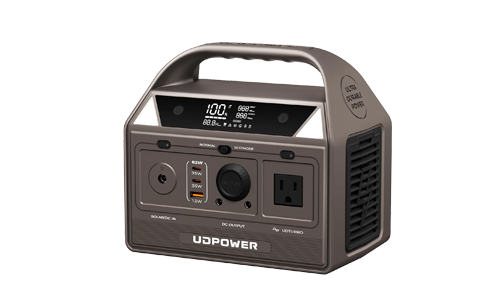
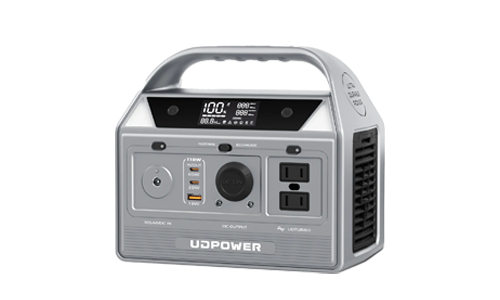
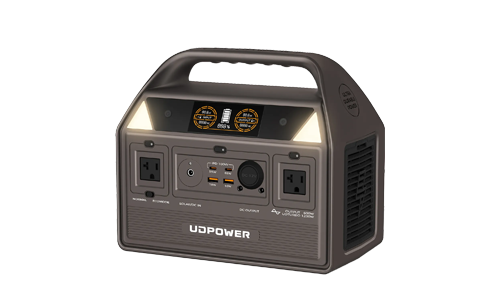
UDPOWER does not sell solar panel cleaning services. The products below are most relevant for people maintaining RV, cabin, ground-mount, shed, or portable solar setups where a wall outlet may not be nearby. They can also help keep essential devices powered while you inspect, clean, or recharge off-grid gear.
Never use a portable power station to improvise unsafe wiring, backfeed a home panel, or run a pressure washer on solar panels. If you power a small pump or sprayer, use low pressure and stay within the power station’s continuous and surge limits.

UDPOWER 120W Portable Solar Panel
A practical match for small off-grid charging, RV trips, camping, and backup setups. It is listed at 120W rated output, ≥22% efficiency, IP65 weather resistance, A-class monocrystalline cells, and adjustable 60°–90° angle support.

UDPOWER 210W Portable Foldable Solar Panel
Better for faster solar recharging when paired with compatible higher-capacity power stations. Official specs list 210W output, ≥22% conversion efficiency, IP65 water resistance, ETFE + PET laminated surface, 15.32 lb weight, and 23.66 × 23.15 × 0.79 in folded size.
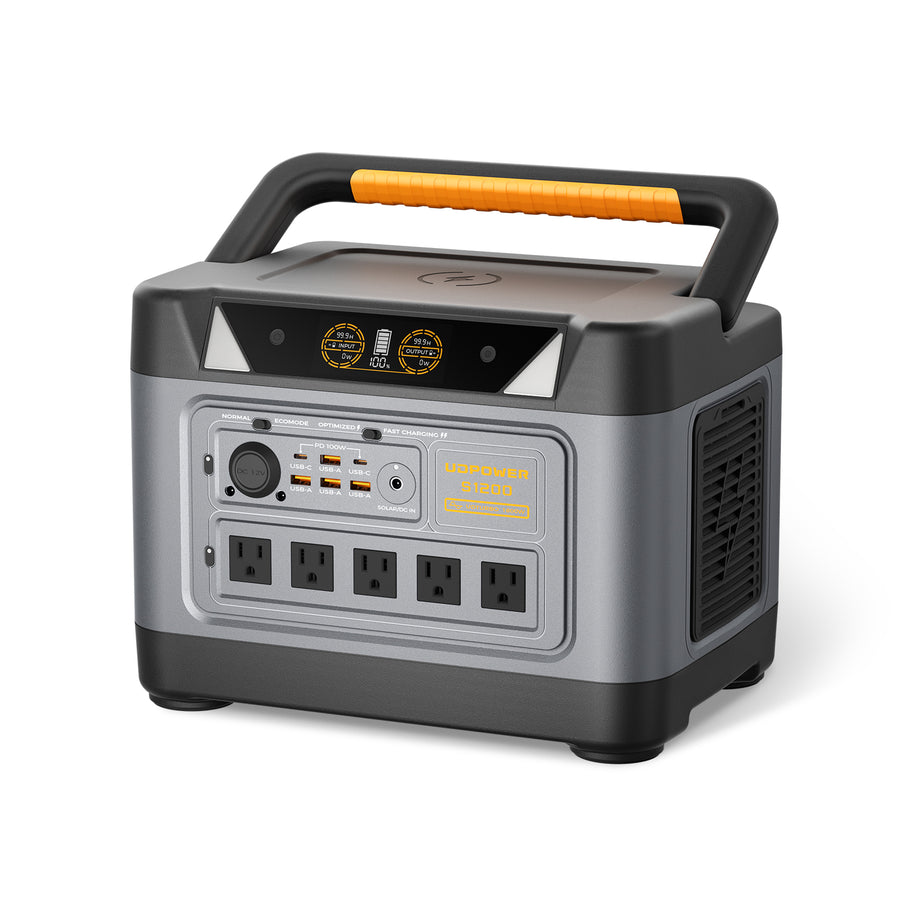
UDPOWER S1200 Portable Power Station
A strong middle option for off-grid work lights, small pumps, fans, communication gear, and home essentials within its limits. Official specs list 1191Wh capacity, 1200W pure sine wave AC output, 1800W max surge, 26.0 lb weight, 400W max solar input, and UPS mode with response time ≤10ms.
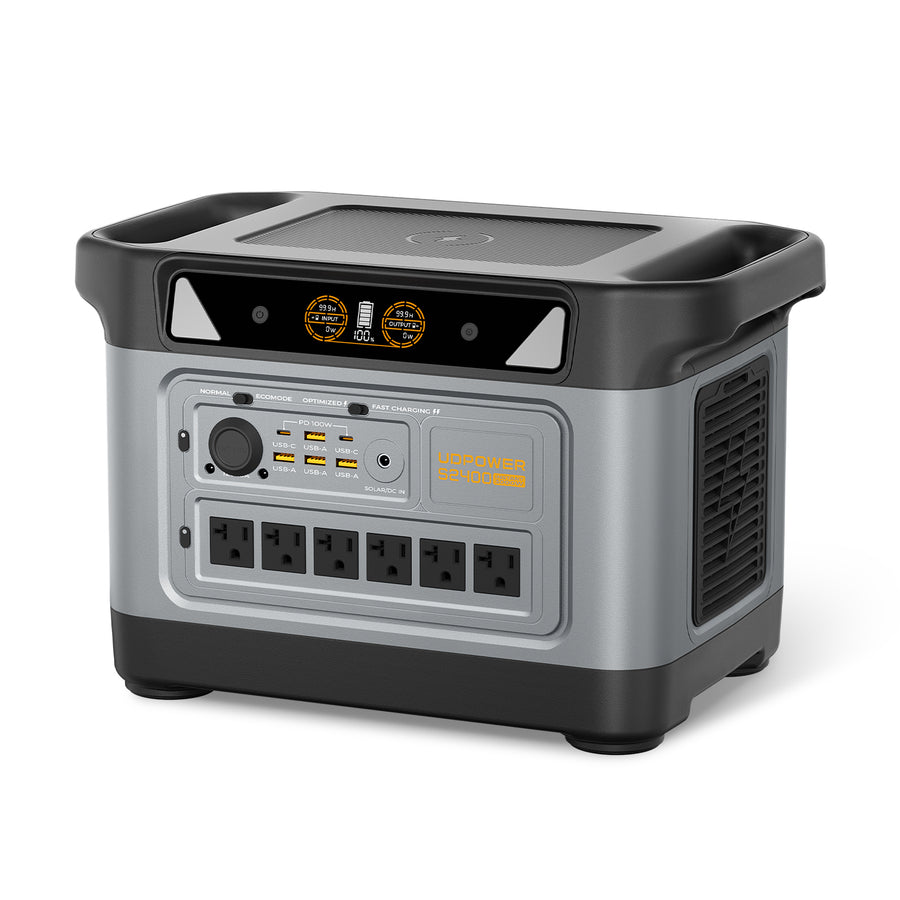
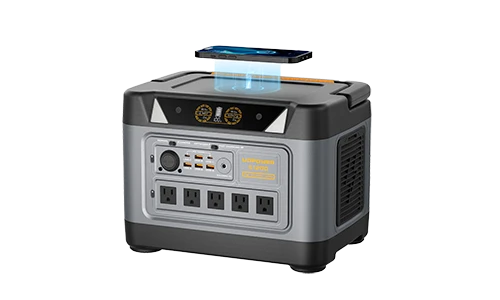
UDPOWER S2400 Portable Power Station
Best suited for higher-demand home, RV, and worksite backup needs. Official specs list 2083Wh capacity, 2400W pure sine wave AC output, up to 3000W surge, 40.8 lb weight, six AC outlets, UPSPRIME ≤10ms, and solar charging input up to 400W.
Safe cleaning method for reachable panels
Use this only for panels you can clean safely from the ground or another stable surface. For rooftop systems, hire a professional if there is any fall risk.
- Check the manual first. Follow the solar panel manufacturer’s maintenance instructions.
- Clean early or late. Avoid hot midday glass, which can dry water too quickly and leave spots.
- Turn off or isolate equipment if your system instructions require it. Do not touch exposed wiring or connectors with wet hands.
- Rinse gently. Use low-pressure water to remove loose dust and grit.
- Use a soft brush or sponge. Avoid abrasive pads, metal tools, and harsh cleaners.
- Spot clean bird droppings or sap. Let water soften the debris instead of scraping aggressively.
- Rinse again and let dry. If you have hard water, use a squeegee or purified water to reduce spots.
- Check performance later. Compare production on a clear day before and after cleaning, not during different weather conditions.
Do not walk on solar panels. Walking on panels can crack glass, damage cells, or create hidden microcracks that reduce long-term output.
Where the cost ranges come from
The ranges in this guide are based on current public cost guides, solar maintenance references, and official UDPOWER product specifications. Use them as a starting point, then confirm local pricing because labor rates and roof conditions vary by region.
| Topic | Useful source | How it helps |
|---|---|---|
| Professional cleaning price range | HomeGuide solar panel cleaning cost | Gives common flat-rate and per-panel cleaning ranges |
| Annual maintenance cost | Angi solar panel maintenance cost | Helps separate simple cleaning from annual maintenance plans |
| Cleaning frequency and DIY context | SolarReviews cleaning guide | Provides consumer-facing cleaning and cost guidance |
| Soiling assumptions | Energy.gov solar guide | Notes the PVWatts average soiling assumption and local variation |
| Pollen and rain limits | NREL pollen research | Explains why rain may not remove every type of buildup |
FAQ: solar panel cleaning cost
How much does it cost to clean solar panels?
Most homeowners pay about $150 to $500 per professional cleaning visit, or about $5 to $20 per panel. A simple, easy-access single-story system often costs less than a steep two-story roof or a large multi-roof system.
Is solar panel cleaning worth it?
It is worth it when panels are visibly dirty, production has dropped, you live in a dusty or high-pollen area, or the service includes a useful inspection. If your panels look clean and output is normal, cleaning may not pay for itself every year.
How often should I clean my solar panels?
Many residential systems only need cleaning once a year or every 1–2 years. Dry, dusty, agricultural, wildfire-prone, high-pollen, or bird-heavy areas may need cleaning more often. RV and portable panels should be checked before and after trips.
Can I clean solar panels myself?
Yes, if the panels are safely reachable from the ground or a stable surface and you follow the manufacturer’s instructions. Do not climb onto a steep roof or use unsafe ladder positions just to save the cleaning fee.
Can I use a pressure washer on solar panels?
No. Pressure washers can damage glass, seals, frames, or wiring. Use gentle water, a soft brush, and manufacturer-approved cleaning methods.
Does rain clean solar panels enough?
Rain helps remove loose dust, but it may not remove pollen film, bird droppings, sap, road grime, or hard-water spots. If panels still look dirty after rain or output remains low, cleaning may help.
What is usually included in a professional cleaning?
A basic cleaning usually includes gentle washing of the panel glass. Better quotes may also include before-and-after photos, a visual inspection, debris removal, and notes on cracks, wiring, mounting, or animal damage.
Why did one cleaner quote much more than another?
Higher quotes may reflect roof height, steep pitch, multiple roof faces, heavy buildup, travel time, insurance, purified water equipment, or an included inspection. Ask for an itemized quote before choosing.
Do portable solar panels need cleaning?
Yes. Portable and RV solar panels collect dust, road grime, pollen, mud, and fingerprints. Wipe them with a soft cloth or gently rinse them according to the manufacturer’s instructions before storage and before important trips.
Can a portable power station help with solar maintenance?
It can help in off-grid situations by powering lights, small low-pressure pumps, communication gear, or tools within the station’s wattage limits. It does not replace safe electrical work and should never be used for unsafe wiring or pressure washing panels.
Need solar-ready backup power for home, RV, or off-grid use?
Compare UDPOWER solar panels and portable power stations, estimate your runtime, and choose a setup that fits your real devices instead of guessing.