How Many Watts Does a Coffee Maker Use?
ZacharyWilliamLast updated: May 8, 2026
Most people only think about coffee maker wattage after a breaker trips, an RV inverter shuts down, or a portable power station refuses to run the machine. The short answer is simple, but the useful answer depends on the type of coffee maker, how long it heats, and whether you are trying to run it at home, in an RV, at a campsite, or during a power outage.
Quick Answer
Most home coffee makers use about 600 to 1,500 watts while heating. Compact 4- to 5-cup drip brewers may be around 550 to 700 watts. Many standard drip coffee makers land around 800 to 1,200 watts. Single-serve pod machines and espresso machines are often closer to 900 to 1,500 watts, with some models slightly higher.
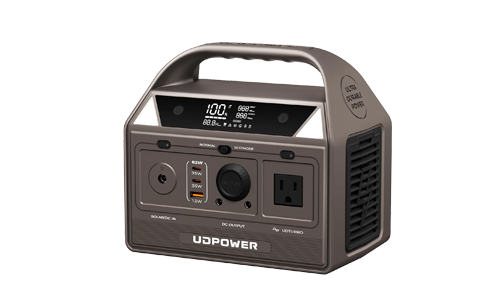
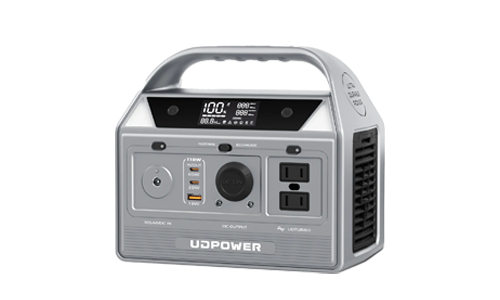
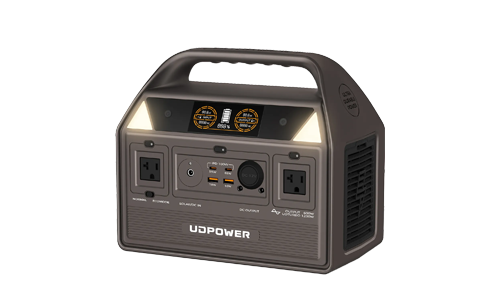
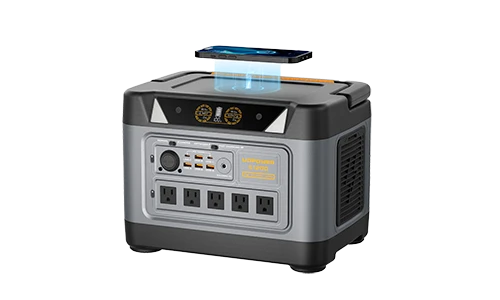
If you want to run a coffee maker from a portable power station, check the wattage label first. A UDPOWER S1200 is a practical match for many 600W to 1,200W coffee makers. Choose the UDPOWER S2400 if your machine is 1,300W to 1,500W, if you want more headroom, or if you may run other appliances at the same time.

Coffee Maker Wattage by Type
A coffee maker’s wattage is highest when it is heating water or running a hot plate. That is why a small machine can draw more power than a laptop, TV, fan, or Wi-Fi router. The table below gives realistic planning ranges for U.S. household use, but your own machine’s label is always the final answer.
| Coffee setup | Typical watts while heating | What this means in real life | Portable power fit | Source / how to verify |
|---|---|---|---|---|
| Manual coffee method: French press, AeroPress, pour-over dripper | 0W for the brewer itself | The brewer does not use electricity. The power draw comes from how you heat the water. | Best low-power emergency option if you heat water separately. | Check the kettle, hot plate, or other water-heating device label. |
| Small 4- to 5-cup drip coffee maker | About 550W to 700W | Often workable in RVs and backup setups, but only if the label stays within your power station’s continuous AC output. | C600 only if the label is at or below 600W; S1200 gives more comfort. | ElectricityPlans coffee maker wattage guide |
| Standard drip coffee maker, 8 to 12 cups | About 800W to 1,200W | This is the most common range for full-size home drip machines. Brew time matters more than all-day runtime. | S1200 is usually the right minimum class; S2400 if you want extra headroom. | Renogy wattage overview |
| Single-serve pod coffee maker | About 900W to 1,500W | Many pod machines heat fast and pull a strong short load. Some are too high for a 1,200W power station. | S1200 for lower-label pod machines; S2400 for 1,300W to 1,500W machines. | Keurig K-1500 lists 1,400W |
| Keurig-style latte or milk-frothing brewer | Can be around 1,500W+ | Heating plus milk functions can push the machine near the top of a normal 120V outlet load. | S2400 is the safer choice when the label is above 1,200W. | Keurig support lists 1,520W for K-Café Essentials |
| Home espresso machine | About 1,000W to 1,600W | Espresso machines may heat water, maintain a boiler or thermoblock, and steam milk. Wattage varies a lot by model. | S2400 recommended unless your label clearly fits under 1,200W. | Check the rating plate on the machine or the manufacturer’s specification page. |
| Coffee urn or commercial brewer | Often 1,400W to 1,800W+ | Large water tanks and keep-hot cycles make these harder to run from small backup batteries. | Usually S2400 class or larger; avoid stacking other loads. | Check the product nameplate before sizing a battery or inverter. |
Tip: wattage ranges are useful for planning, but never buy a power station based only on an average range. Read the watts or amps on your exact coffee maker.
Why Coffee Makers Use So Many Watts
A coffee maker is basically a controlled water heater. It does not need a huge battery because it runs for a short time, but it does need a strong inverter because heating water takes a lot of instant power.
That is the reason a coffee maker can be harder to run than many devices that seem “bigger.” A TV may use 80 to 150 watts. A laptop may use 45 to 100 watts. A coffee maker can pull 1,000 watts or more for several minutes.
The useful difference: watts vs. watt-hours
Watts tell you whether the coffee maker can turn on and brew. Watt-hours tell you how many brews you may get from a battery.
Example: a 1,000W coffee maker running for 10 minutes uses about 167Wh before inverter loss. That is why one brew cycle is usually manageable, but the instant wattage still needs enough AC output.
How to Find Your Coffee Maker’s Exact Watts
The best number is not in a general blog chart. It is on your own machine. Look for a label on the bottom, back, or side of the coffee maker. You may see watts directly, or you may see volts and amps.
| What the label shows | What to do | Example | Result |
|---|---|---|---|
| Watts shown directly | Use that number for sizing. | 120V · 1,200W | Needs an AC output rating of at least 1,200W continuous. |
| Volts and amps shown | Multiply volts by amps. | 120V × 10A | 1,200W |
| Only model number shown | Search the official manual or manufacturer page. | Model name + “watts” | Use the manufacturer rating, not a seller guess. |
| You want real-world draw | Use a plug-in watt meter. | Watch the reading during initial heating and brewing. | Use the highest stable draw for power station sizing. |
If the label says 1,500W, do not assume a 1,200W station will run it just because the brew only takes a few minutes. Heating load is not the same as a short startup surge. The station still has to support the real running watts while the heater is on.
How Much Electricity Does a Coffee Maker Use?
Coffee makers use high watts for a short time, so the daily cost is usually smaller than people expect. The bigger issue is backup power sizing, not utility bill shock. To estimate energy use, multiply watts by hours.
Simple formula
kWh used = watts ÷ 1,000 × hours used
For a 1,000W coffee maker brewing for 10 minutes: 1,000 ÷ 1,000 × 0.167 hours = about 0.167 kWh.
| Coffee maker use | Energy per use | Annual energy if used once daily | Approx. annual cost at 17.65¢/kWh | Source / note |
|---|---|---|---|---|
| 600W compact brewer for 8 minutes | 0.08 kWh | 29.2 kWh | About $5.15 | Uses the kWh formula; electricity price based on a current U.S. residential average reported from EIA-based rate tracking. |
| 1,000W drip brewer for 10 minutes | 0.167 kWh | 60.8 kWh | About $10.74 | EIA Electric Power Monthly rate data |
| 1,500W pod or espresso machine for 12 minutes | 0.30 kWh | 109.5 kWh | About $19.32 | Your local rate may be much higher or lower. Use your own utility bill for a precise number. |
| 60W warming plate for 1 extra hour | 0.06 kWh | 21.9 kWh | About $3.86 | Warming plates vary. Auto-off helps reduce wasted energy. |
The easy way to save electricity is not to avoid coffee. It is to avoid unnecessary keep-warm time. Brew what you need, use an insulated carafe when possible, and turn off the warming plate after the coffee is made.
Can a Portable Power Station Run a Coffee Maker?
Yes, a portable power station can run a coffee maker if two things are true: the station’s AC output is high enough for the coffee maker’s wattage, and the battery has enough usable watt-hours for the number of brew cycles you want.
Do not size by surge alone
Some power stations advertise a large surge number. That helps with brief startup loads, but a coffee maker’s heater may draw high power for several minutes. Use the station’s continuous AC output rating first.
For quick planning, the runtime estimate below assumes about 85% usable AC energy after inverter loss. Real results vary with the coffee maker, ambient temperature, brew size, battery condition, and whether the station is powering anything else.
| Power station example | Official capacity / output | Coffee maker scenario | Estimated brew cycles | Best takeaway | Product spec source |
|---|---|---|---|---|---|
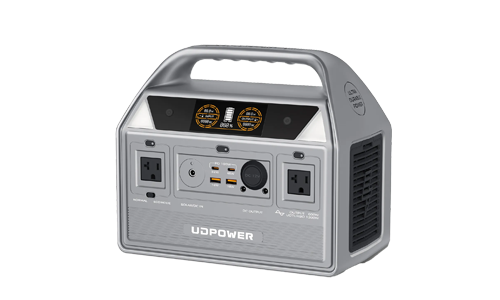
| UDPOWER C600 | 596Wh · 600W AC output | 600W compact drip brewer for 8 minutes | About 6 cycles | Only choose this for a confirmed low-watt coffee maker. Not recommended for most pod, espresso, or full-size drip machines. | C600 product page |
| UDPOWER S1200 | 1,190Wh · 1,200W AC output · 1,800W surge | 1,000W drip brewer for 10 minutes | About 6 cycles | Best everyday match for many standard drip coffee makers and lower-watt pod machines. | S1200 product page |
| UDPOWER S1200 | 1,190Wh · 1,200W AC output · 1,800W surge | 1,200W coffee maker for 10 minutes | About 5 cycles | Works when the label fits within 1,200W, but avoid running other AC appliances at the same time. | S1200 product page |
| UDPOWER S2400 | 2,083Wh · 2,400W AC output · 3,000W surge | 1,500W pod or espresso machine for 12 minutes | About 5 to 6 cycles | Better choice for higher-watt coffee makers, espresso machines, and backup plans where you want more headroom. | S2400 product page |
In a real outage, coffee is usually a short load. The smarter plan is to brew first, then turn the coffee maker off and save the remaining battery for the fridge, Wi-Fi, phones, lights, CPAP, or other essentials.
Best UDPOWER Picks for Running a Coffee Maker
Here is the practical way to choose. Do not start with the battery size. Start with the wattage printed on your coffee maker, then choose the model that gives enough continuous AC output.
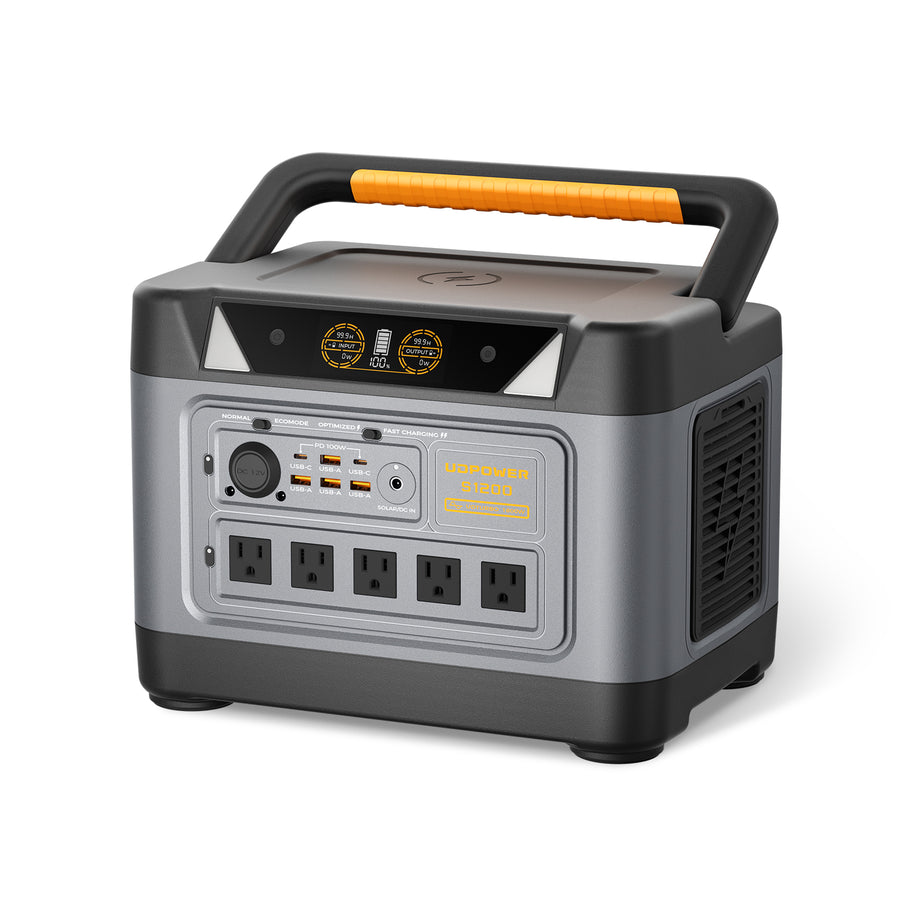
Best for most standard coffee makers: UDPOWER S1200
The S1200 is the best fit if your coffee maker label is between about 600W and 1,200W. That covers many standard drip coffee makers and some lower-watt pod brewers. It also gives enough capacity for multiple short brew cycles while still leaving battery for outage essentials.
- Capacity: 1,190Wh
- AC output: 1,200W pure sine wave
- Surge support: up to 1,800W
- Battery chemistry: LiFePO4
- Cycle life: 4,000+ cycles listed on the product page
- Useful for: standard drip coffee makers, RV mornings, camping kitchens, outage coffee plus essentials
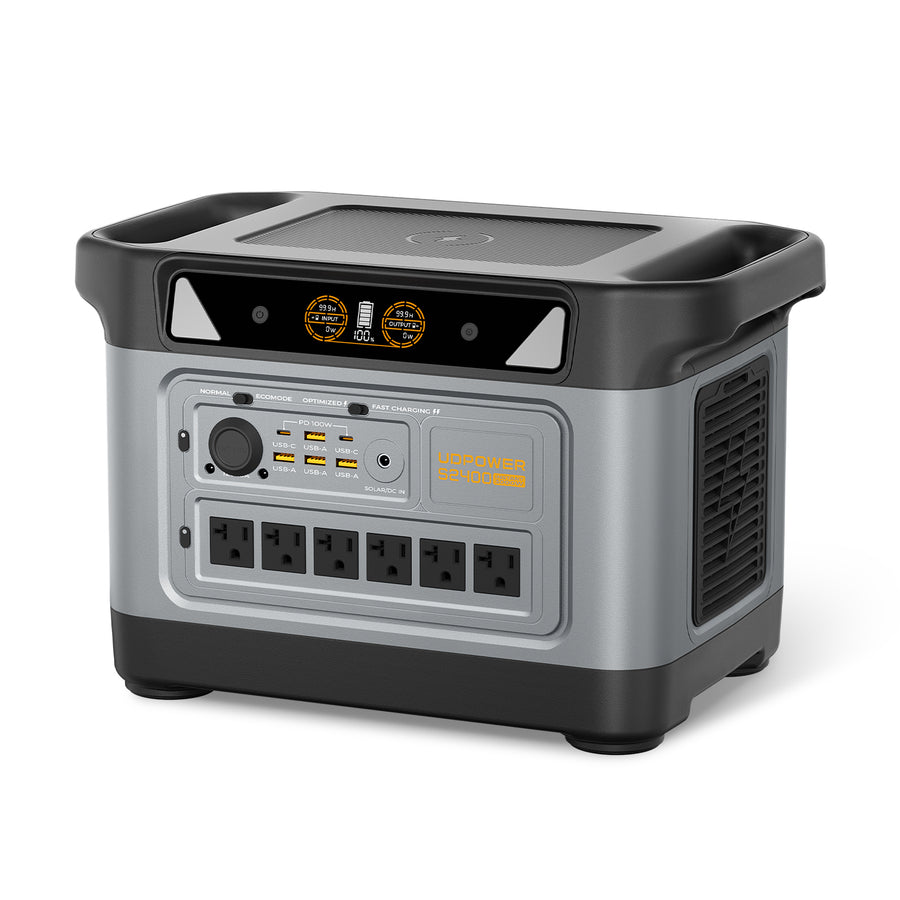
Best for high-watt pod and espresso machines: UDPOWER S2400
Choose the S2400 if your coffee maker is rated above 1,200W, if you use a 1,400W to 1,500W pod machine, or if you want to power coffee without micromanaging every other load. It is also the better pick when the same backup setup may handle a refrigerator, router, lights, laptops, and kitchen loads during an outage.
- Capacity: 2,083Wh
- AC output: 2,400W
- Surge support: up to 3,000W
- AC outlets: 6
- Solar input: 12–50V, 10A max, up to 400W via DC7909 input
- Useful for: espresso machines, larger pod brewers, coffee plus other home backup appliances
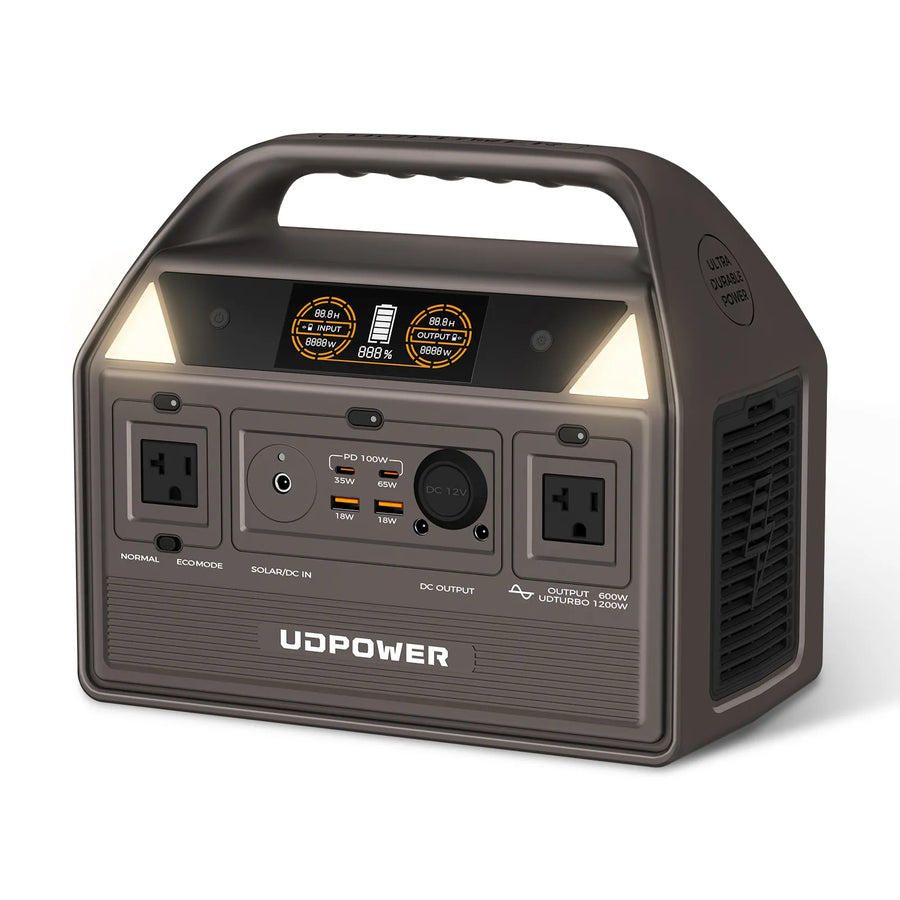
Only for confirmed low-watt coffee makers: UDPOWER C600
The C600 is not the right match for most full-size coffee makers. It makes sense only if your machine’s label is at or below 600W and you want a compact station for camping or short backup use. If the label says 800W, 1,000W, 1,200W, or more, step up instead of forcing the setup.
- Capacity: 596Wh
- AC output: 600W
- Peak rating: 1,200W max listed on the product page
- Battery chemistry: LiFePO4
- Useful for: low-watt compact brewers, lights, laptop, router, fan, small camping electronics
Coffee Maker Power Checklist Before You Buy a Power Station
Use this simple checklist before choosing a battery backup for coffee, camping, RV mornings, or outage use.
- Read the coffee maker label. Find the watts, or multiply volts by amps.
- Match continuous output, not just surge. A 1,500W coffee maker needs a station that can support that draw while heating.
- Leave headroom. If your machine is exactly 1,200W, do not also run a toaster, microwave, kettle, or large appliance from the same station.
- Count brew cycles, not continuous hours. A coffee maker usually heats for minutes, not all day.
- Turn off the warming plate. A warming plate can quietly waste battery after the brew is done.
- For outages, brew early. Make coffee while the station is full, then reserve battery for essentials.
- For camping, consider manual brew. A French press or pour-over dripper has no electrical draw; only water heating matters.
Common Mistakes to Avoid
Mistake 1: Assuming every coffee maker is “small appliance” wattage
Coffee makers look harmless on a countertop, but many draw 1,000W to 1,500W while heating. That is higher than many TVs, laptops, fans, routers, and CPAP setups combined.
Mistake 2: Buying a 600W power station for a 1,000W coffee maker
A 600W station can be useful, but it is not a shortcut for a full-size coffee maker. If your coffee maker label says 1,000W, choose a higher-output station such as the S1200.
Mistake 3: Treating surge rating as normal running power
Surge is for brief spikes. Coffee maker heating is a sustained load. For coffee makers, the continuous AC rating is the number to trust.
Mistake 4: Running coffee and other kitchen heat loads at the same time
Coffee makers, microwaves, toasters, kettles, hot plates, and air fryers are all heat-heavy loads. Run them one at a time unless your power source and circuit are clearly sized for the combined draw.
Mistake 5: Using a weak power strip or extension cord
High-wattage kitchen appliances should not be treated like phone chargers. If you use an extension cord temporarily, it must be properly rated for the load, in good condition, and used safely. The National Fire Protection Association advises checking that extension cords and temporary power strips are rated for the products plugged into them, and ESFI warns against overloading extension cords or using them as permanent wiring.
NFPA extension cord safety guidance · ESFI extension cord safety tips
FAQ: Coffee Maker Watts
How many watts does a regular coffee maker use?
Most regular home coffee makers use about 600 to 1,500 watts while heating. Standard 8- to 12-cup drip coffee makers often fall around 800 to 1,200 watts, but you should check the label on your exact machine.
How many watts does a Keurig use?
Many Keurig-style pod brewers use roughly 900 to 1,500 watts while heating. Some specific models are listed around 1,400W to 1,520W, so a 1,200W power station may not be enough for every pod machine.
Can a 1000W inverter run a coffee maker?
Only if the coffee maker’s actual wattage is under the inverter’s continuous output rating. A 600W or 700W compact coffee maker may work. A 1,200W drip brewer or 1,500W pod machine will likely overload a 1,000W inverter.
Can a 1200W power station run a coffee maker?
Yes, if the coffee maker is rated at 1,200W or less. The UDPOWER S1200 is a strong match for many standard drip coffee makers, but it is not the right choice for machines labeled 1,300W, 1,400W, or 1,500W.
Can a 600W power station run a coffee maker?
Only a confirmed low-watt coffee maker. Many full-size drip, pod, and espresso machines exceed 600W. If your coffee maker label is above 600W, choose a higher-output station instead.
How many watt-hours does one pot of coffee use?
A 1,000W coffee maker running for 10 minutes uses about 167Wh before inverter loss. A 1,500W machine running for 12 minutes uses about 300Wh. Brew time, water volume, and keep-warm time all affect the final number.
Does a coffee maker use power when it is not brewing?
Some machines use a small amount for clocks, displays, standby functions, or warming plates. The warming plate is usually the bigger concern because it can keep using energy after the coffee is already brewed.
What size portable power station do I need for an espresso machine?
Check the label first. Many home espresso machines are around 1,000W to 1,600W. If the machine is over 1,200W, a higher-output station such as the UDPOWER S2400 is the better fit.
Is a coffee maker expensive to run?
Usually no. Even a 1,000W coffee maker used for 10 minutes a day may cost only around $10 to $15 per year in many U.S. homes, depending on local electricity rates. The more important issue is whether your circuit, inverter, or power station can handle the instant wattage.
What is the best way to make coffee during a power outage?
If you want the normal countertop experience, use a properly sized portable power station and brew one load at a time. If you want to conserve battery, use a manual coffee method such as French press or pour-over and avoid long keep-warm cycles.
Bottom Line: Match the Coffee Maker Label First
A coffee maker is usually not a huge energy cost, but it is a high-watt appliance. For backup power, the label on your machine decides the right station. Choose C600 only for confirmed low-watt compact brewers, S1200 for many standard 600W to 1,200W coffee makers, and S2400 for 1,300W to 1,500W machines or more relaxed home backup use.