How Many Amps Does a Refrigerator Use?
ZacharyWilliamRefrigerator amps · running watts · startup surge · backup runtime
Most refrigerator amp guides stop at a rough number like “3 to 6 amps.” That is not wrong for some older or heavier units, but it is not enough when you are sizing a circuit, generator, inverter, or portable power station. A fridge has three different power behaviors: normal running draw, brief startup surge, and much lower average draw over a full day because the compressor cycles on and off.
Last updated: May 20, 2026
Quick answer: how many amps does a refrigerator use?
A typical U.S. household refrigerator runs on 120V AC. Many modern full-size refrigerators use roughly 1 to 3 amps while the compressor is running, but startup can briefly jump much higher. Larger, older, garage-kept, or feature-heavy refrigerators may draw more.
For backup power planning, use this rule: check running watts, check startup surge watts, then calculate runtime from average watts or kWh per day. The average draw over 24 hours is often far lower than the compressor-on draw because the fridge cycles instead of running continuously.

The 4 amp numbers people confuse
When someone asks “how many amps does a refrigerator use,” they may be talking about four different things. This is why online answers often feel inconsistent.
| Number | What it means | Why it matters | Where to find it |
|---|---|---|---|
| Running amps | The current used while the compressor is already running. | Helps you understand normal appliance load. | Nameplate, manual, or plug-in power meter. |
| Startup amps | The brief inrush current when the compressor starts. | Determines whether an inverter or generator can start the fridge without overload. | Manual, compressor label, clamp meter, or real-world testing. |
| Average amps | The 24-hour average after compressor cycling is included. | Best number for battery runtime estimates. | EnergyGuide kWh/year or a power meter reading over 24–72 hours. |
| Circuit amps | The branch circuit rating, commonly 15A or 20A in U.S. homes. | Helps avoid overloading outlets or extension cords. | Breaker panel and electrician review. |
Practical takeaway: for portable power, running amps tell you what the fridge uses after it starts. Startup amps tell you whether the power source can handle the compressor kicking on. Average amps tell you how long your battery may last.
How to convert refrigerator watts to amps
For standard U.S. refrigerators, use 120V as the normal household voltage reference unless your appliance label says otherwise.
Examples:
- 120W running load ÷ 120V = 1 amp
- 300W running load ÷ 120V = 2.5 amps
- 1,200W startup surge ÷ 120V = 10 amps
The U.S. Department of Energy also recommends checking the EnergyGuide label, using an electricity usage monitor, and calculating kWh from watts and hours when estimating appliance energy use. Energy.gov explains the appliance energy-use method here.
| Power at 120V | Approx. amps | What it may represent |
|---|---|---|
| 60W | 0.5A | Light average draw for an efficient fridge over time. |
| 120W | 1A | Common compressor-on draw for many efficient units. |
| 240W | 2A | Heavier running load or less efficient refrigerator. |
| 600W | 5A | Possible startup or defrost-related temporary load. |
| 1,200W | 10A | High startup surge territory for some full-size fridges. |
| 1,800W | 15A | Upper surge range where inverter headroom becomes important. |
Typical refrigerator amps by type
Use this table as a starting point only. Your actual refrigerator may be lower or higher depending on age, compressor type, insulation, room temperature, door openings, defrost cycle, and whether it has an ice maker or extra fans.
| Refrigerator type | Typical running watts | Running amps @ 120V | Possible startup surge | Startup amps @ 120V | Planning note |
|---|---|---|---|---|---|
| Mini fridge / compact fridge | 50–200W | 0.4–1.7A | 200–600W | 1.7–5A | Good fit for compact power stations if startup surge is modest. |
| Modern top-freezer refrigerator | 100–250W | 0.8–2.1A | 400–1,200W | 3.3–10A | Often one of the easier full-size fridge styles to back up. |
| Bottom-freezer refrigerator | 120–300W | 1–2.5A | 600–1,500W | 5–12.5A | Measure before buying if the unit is large or older. |
| Side-by-side refrigerator | 150–350W | 1.25–2.9A | 800–1,800W | 6.7–15A | Extra fans, ice maker, and door openings can raise real use. |
| French door / feature-heavy refrigerator | 150–400W | 1.25–3.3A | 900–2,000W | 7.5–16.7A | Needs more inverter surge headroom than a small fridge. |
| Older garage refrigerator | 150–450W+ | 1.25–3.75A+ | 900–2,000W+ | 7.5–16.7A+ | Hot garages and worn seals can make runtime much worse. |
For model-level annual energy data, use the ENERGY STAR certified refrigerator product finder. ENERGY STAR also notes that larger refrigerators generally consume more energy and that top-freezer models tend to use the least energy compared with bottom-freezer or side-by-side designs.
How to use the EnergyGuide label to estimate average amps
The yellow EnergyGuide label is useful because it gives annual energy use in kWh/year. That is not the same as startup amps, but it is very useful for runtime planning.
| EnergyGuide value | Estimated average watts | Estimated average amps @ 120V | Daily energy use | What it tells you |
|---|---|---|---|---|
| 300 kWh/year | 34W | 0.28A | 0.82 kWh/day | Efficient full-size or smaller modern unit. |
| 450 kWh/year | 51W | 0.43A | 1.23 kWh/day | Common planning range for many home refrigerators. |
| 600 kWh/year | 69W | 0.57A | 1.64 kWh/day | Large, feature-heavy, or less efficient unit. |
| 800 kWh/year | 91W | 0.76A | 2.19 kWh/day | High consumption; backup runtime drops quickly. |
Why the average amp number looks small: a refrigerator is plugged in all day, but the compressor is not pulling full running power every minute. Average amps are for battery runtime. Running and startup amps are for inverter/generator sizing.
Why startup amps are higher than running amps
A refrigerator compressor is a motor. When that motor first starts, it can need a short burst of extra current before it settles into normal running power. This is why a fridge that runs at 150W may still need an inverter that can handle 800W, 1,200W, or more for a moment.
There are three common reasons you may see temporary spikes:
- Compressor startup: the biggest reason. This brief surge is normal.
- Defrost cycle: many refrigerators use a heater for automatic defrost, which can increase draw temporarily.
- Ice maker, fans, and warm-door events: opening doors often or loading warm food makes the compressor work longer.
Do not size backup power by running amps only. A power station or inverter must handle the startup surge, not just the steady running load. When in doubt, measure your specific fridge or leave more surge headroom.
How to measure your refrigerator amps at home
The most reliable answer is your own refrigerator, in your own kitchen or garage, over a real day.
Best method for most people: plug-in power meter
- Plug the meter into the wall outlet.
- Plug the refrigerator into the meter.
- Let it run for 24–72 hours so normal cycling and defrost are included.
- Record kWh/day, watts while running, and the highest watts you see.
Energy.gov notes that electricity usage monitors are especially useful for devices that do not run constantly, including refrigerators. See Energy.gov’s explanation of electricity usage monitors.
When to use a clamp meter
A clamp meter can help capture current more directly, but it must be used correctly and safely. If you are not familiar with electrical measurement, ask a qualified electrician instead of opening panels or modifying cords.
Sizing a portable power station for a refrigerator
For refrigerator backup, a portable power station needs to pass two tests:
- Power test: continuous AC output must exceed running watts, and surge output must cover compressor startup.
- Runtime test: usable battery capacity must cover your target backup window.
This article uses 90% as a practical planning efficiency factor for AC inverter use. Real results vary with refrigerator cycling, ambient temperature, battery condition, load size, and power station settings.
| What you are checking | Good planning target | Why it matters |
|---|---|---|
| Running watts | Keep below the station’s rated AC output. | Prevents overload during normal operation. |
| Startup surge | Keep below the station’s surge rating with headroom. | Allows the compressor to start reliably. |
| Average watts or kWh/day | Use a meter reading whenever possible. | Gives the most realistic runtime estimate. |
| Door-open behavior | Keep doors closed and use a fridge thermometer. | Extends runtime and protects food safety. |
| Solar recharge | Match the panel to the station’s input limits. | Can extend backup time during multi-day outages. |
Recommended UDPOWER models for refrigerator backup
These recommendations are based on official UDPOWER product specifications and typical refrigerator backup scenarios. Always check your refrigerator’s running watts and startup surge before choosing a model.
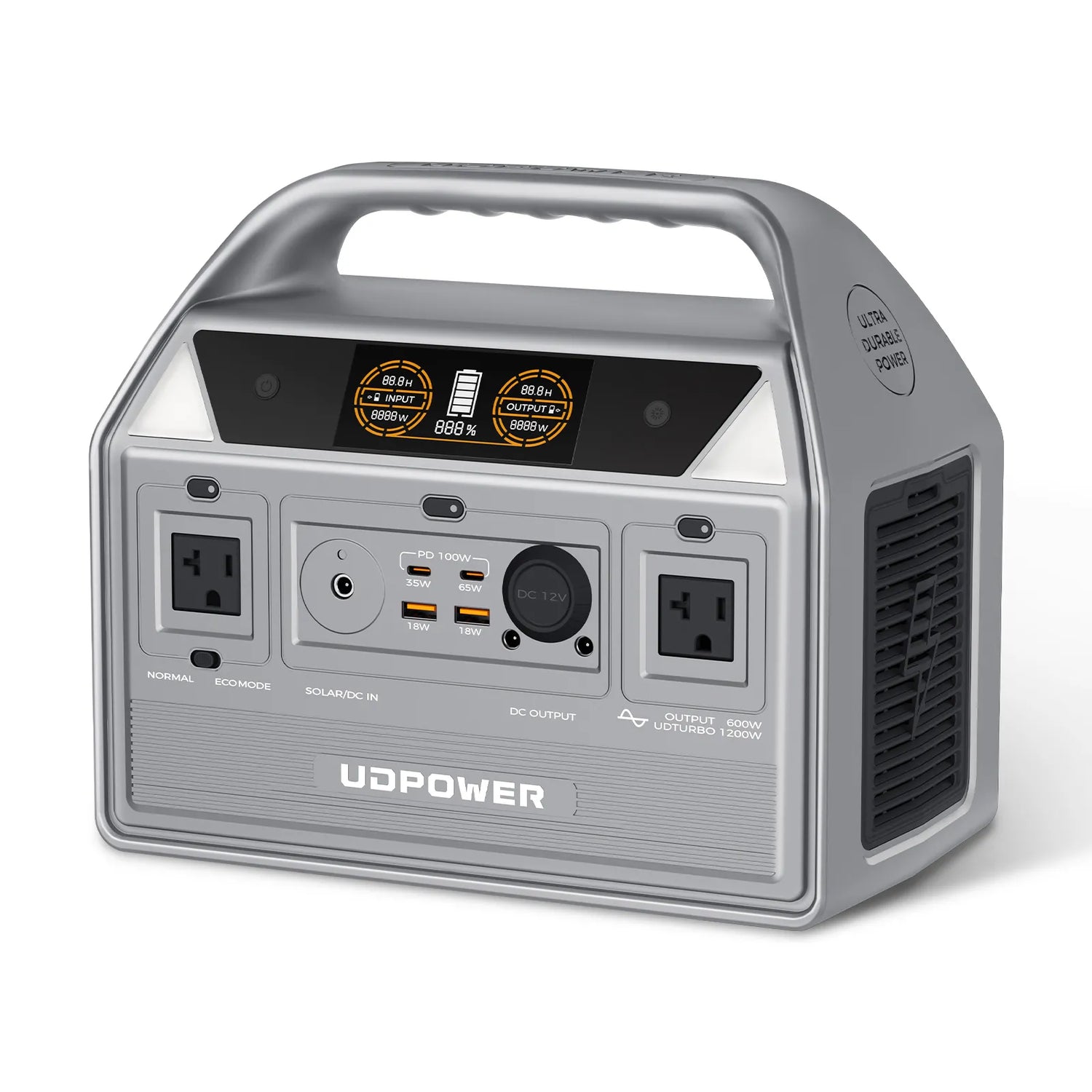
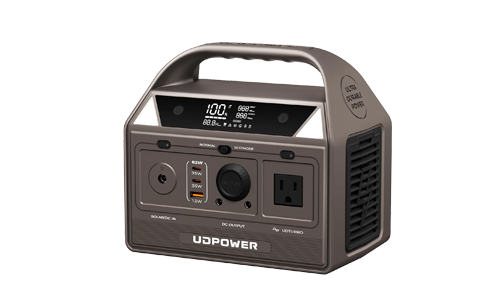
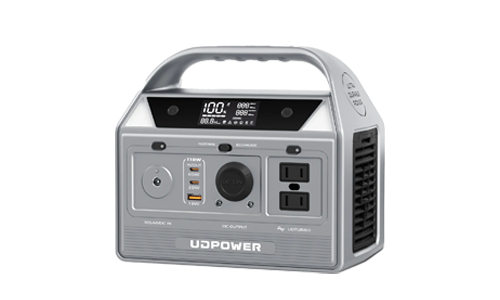
UDPOWER C600 Portable Power Station
The C600 is the practical step up when a compact fridge, car fridge, camera gear, laptop, router, lights, and small essentials matter more than running a large household refrigerator for long periods.
- Capacity: 596Wh LiFePO4 battery
- AC output: 600W rated, 1200W peak
- Weight: 12.3 lbs
- Best fit: portable fridge, compact fridge, camping, road trips, shorter outages
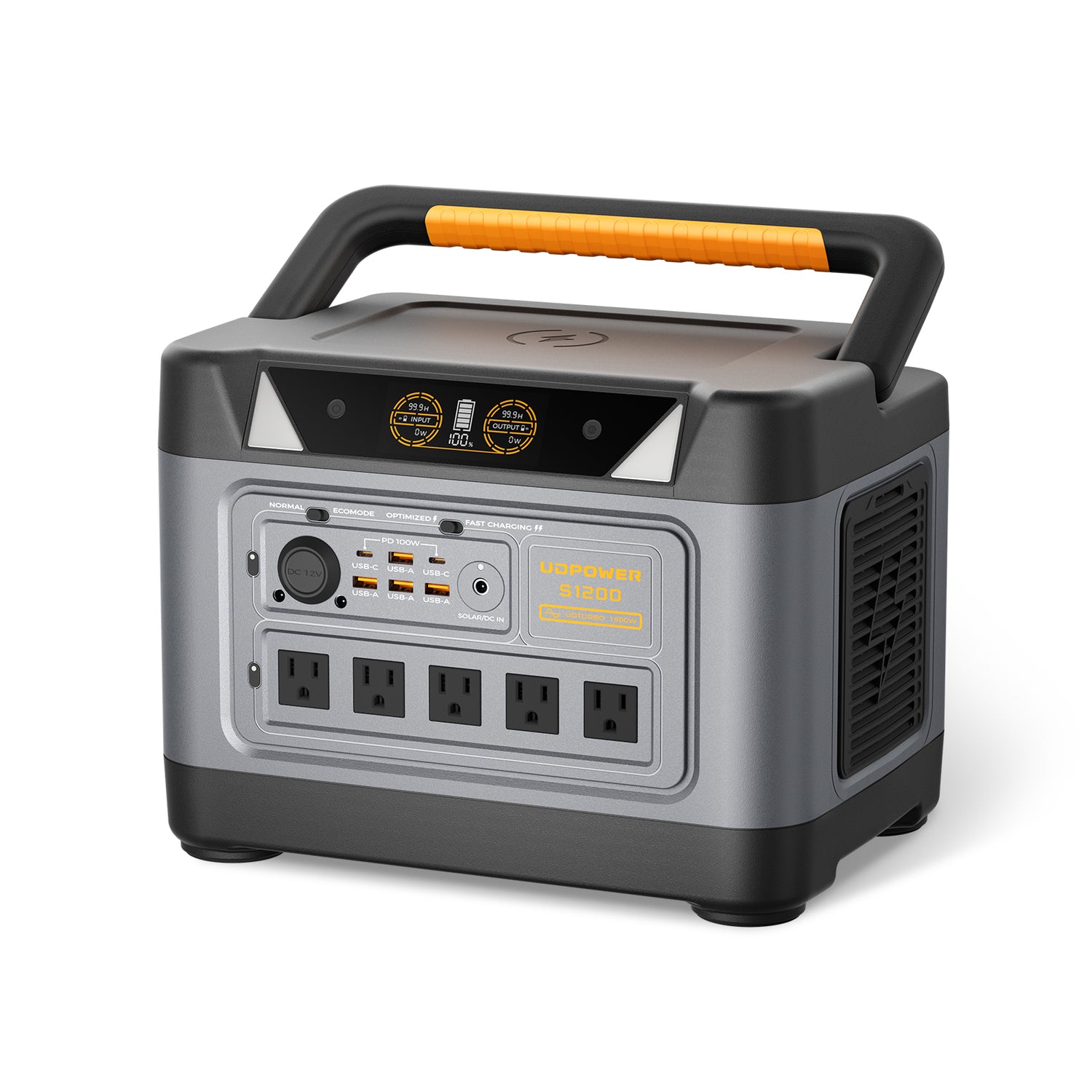
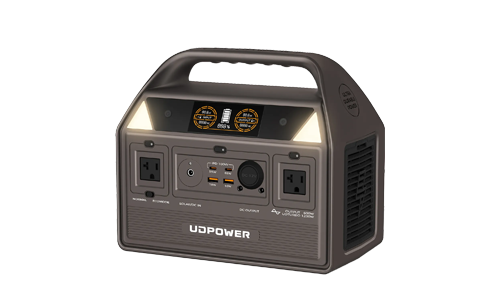
UDPOWER S1200 Portable Power Station
The S1200 is the more realistic match for a standard home refrigerator because it combines 1,190Wh capacity with 1,200W rated AC output and 1,800W surge support. UDPOWER’s product page also lists an estimated standard refrigerator runtime of about 10–15 hours for a 60–100W average fridge, depending on real usage.
- Capacity: 1,190Wh
- AC output: 1,200W rated, 1,800W surge
- Battery: LiFePO4, 4,000+ cycles
- UPS: UPSPRIME switchover listed as less than 10ms
- Best fit: standard refrigerator, router, lights, phones, short appliance backup
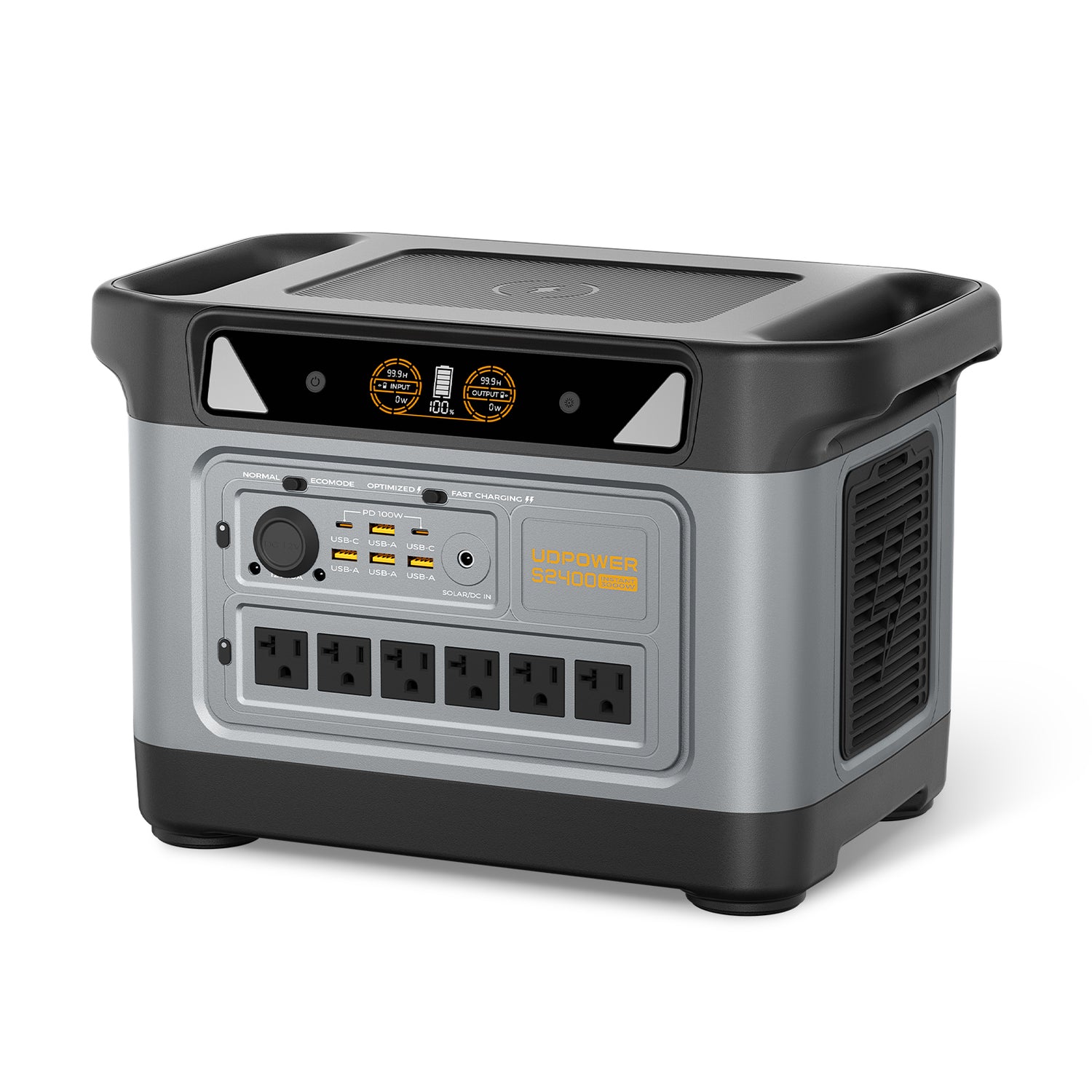
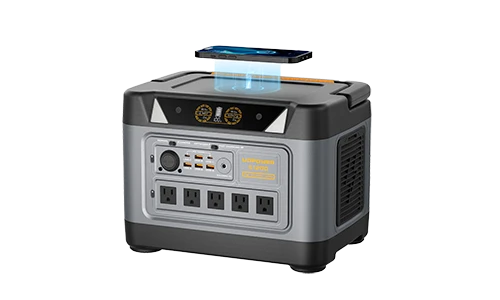
UDPOWER S2400 Portable Power Station
The S2400 is the stronger choice when you want longer refrigerator backup, more AC outlets, and more headroom for compressor startup. It is also a better fit if you plan to run a refrigerator along with Wi-Fi, lights, fans, device charging, or occasional short appliance use.
- Capacity: 2,083Wh
- AC output: 2,400W rated, 3,000W surge
- Ports: 6 AC outlets + 10 DC outputs
- Solar input: 12–50V, 10A max, up to 400W solar charging
- Best fit: longer outages, standard fridge plus essentials, higher-startup appliances
Simple recommendation: choose C600 for compact refrigeration and outdoor use, S1200 for many standard household refrigerator backup plans, and S2400 when you want longer runtime or more surge headroom.
Runtime planning table: refrigerator average watts vs UDPOWER capacity
The table below uses the same planning formula throughout: capacity × 90% ÷ average watts. Use your measured kWh/day whenever possible. If you only know running watts, your real average may be lower because the compressor cycles.
| Average refrigerator load | What it may represent | C400 256Wh | C600 596Wh | S1200 1,190Wh | S2400 2,083Wh |
|---|---|---|---|---|---|
| 50W | Efficient fridge cycling lightly | ~4.6 hrs | ~10.7 hrs | ~21.4 hrs | ~37.5 hrs |
| 80W | Common modern fridge planning load | ~2.9 hrs | ~6.7 hrs | ~13.4 hrs | ~23.4 hrs |
| 100W | Conservative standard fridge average | ~2.3 hrs | ~5.4 hrs | ~10.7 hrs | ~18.7 hrs |
| 120W | Warmer room, more door openings, larger unit | ~1.9 hrs | ~4.5 hrs | ~8.9 hrs | ~15.6 hrs |
| 150W | Heavy cycling or less efficient refrigerator | ~1.5 hrs | ~3.6 hrs | ~7.1 hrs | ~12.5 hrs |
| 200W | Large/older/garage fridge under tougher conditions | ~1.2 hrs | ~2.7 hrs | ~5.4 hrs | ~9.4 hrs |
UDPOWER product capacity and output specs come from the official product pages: C400, C600, S1200, and S2400.
Refrigerator amp and runtime calculator
Use this quick calculator for planning. For best results, enter your refrigerator’s average watts from a plug-in power meter or EnergyGuide estimate.
Food safety and refrigerator backup during a power outage
Power planning is not only about amps. It is also about keeping food at a safe temperature. FoodSafety.gov says a refrigerator will keep food safe for up to 4 hours during a power outage if the door stays closed, and refrigerated perishables should be discarded after 4 hours without power. Read the FoodSafety.gov power outage guidance.
| Situation | Food safety guideline | Backup power takeaway | Source |
|---|---|---|---|
| Refrigerator, door kept closed | Food can stay safe up to about 4 hours. | If the outage is short, opening the door may do more harm than waiting. | FoodSafety.gov |
| Full freezer, door kept closed | Can hold safe temperature for about 48 hours. | Do not open frequently; a thermometer is better than guessing. | CDC |
| Half-full freezer, door kept closed | Can hold safe temperature for about 24 hours. | Group frozen items together before storm season to improve thermal mass. | CDC |
| Refrigerated perishables above 40°F too long | Discard perishable foods if safety guidance thresholds are exceeded. | Use a fridge thermometer. Do not rely only on a timer. | FDA |
A practical refrigerator backup plan
- Before storm season: measure your fridge for 24–72 hours and write down kWh/day, running watts, and observed peak watts.
- Before an expected outage: pre-cool the fridge, freeze water bottles, and keep a refrigerator thermometer inside.
- During the outage: keep doors closed as much as possible. Use backup power to maintain safe temperature, not to browse the fridge repeatedly.
- For longer outages: prioritize fridge, communication, LED lights, phones, and medical comfort devices before non-essential appliances.
- After power returns: check food temperature and follow food safety guidance. When in doubt, throw it out.
How to make refrigerator backup last longer
- Keep the doors closed. Every opening lets cold air out and forces the compressor to run longer.
- Add thermal mass. Cold water bottles help stabilize temperature and reduce short cycling.
- Clean condenser coils. Dirty coils make the fridge work harder.
- Move garage fridges carefully. A hot garage can sharply increase compressor runtime.
- Use a thermometer. Temperature tells you more than guessing by time.
- Use solar when practical. A compatible solar panel setup can extend backup time during daylight. Browse UDPOWER solar panels if you want to build a solar-ready backup kit.
FAQ
How many amps does a normal refrigerator use?
Many modern household refrigerators use roughly 1 to 3 amps while the compressor is running on 120V AC. Some larger, older, or garage-kept models can use more. Startup amps can be several times higher for a brief moment.
Does a refrigerator really use 3 to 6 amps?
Some do, especially older or heavier models, but many efficient modern refrigerators run lower during normal compressor operation. The more important point is that startup surge can be much higher than the running number.
How many amps does a mini fridge use?
A mini fridge often runs around 0.4 to 1.7 amps at 120V, depending on size and compressor behavior. Startup may briefly rise to several amps.
How do I calculate refrigerator amps from watts?
Use amps = watts ÷ volts. For a U.S. 120V refrigerator, 240W is about 2 amps, 600W is about 5 amps, and 1,200W is about 10 amps.
How do I estimate refrigerator average amps from kWh/year?
Convert kWh/year to average watts: kWh/year × 1000 ÷ 8760. Then divide the result by 120V. For example, 450 kWh/year is about 51W average, or about 0.43A average at 120V.
What size portable power station do I need for a refrigerator?
For a compact or portable fridge, a mid-size model like UDPOWER C600 may work if startup surge is within limits. For many standard household refrigerators, S1200 is a more practical starting point. For longer runtime and more surge headroom, S2400 is the stronger option.
Can the UDPOWER S1200 run a refrigerator?
Yes, for many standard refrigerators, as long as the fridge’s running watts and startup surge are within the S1200’s output limits. The S1200 is listed with 1,190Wh capacity, 1,200W rated output, and 1,800W surge support.
Can the UDPOWER S2400 run a refrigerator?
Yes, the S2400 is a stronger refrigerator backup option with 2,083Wh capacity, 2,400W rated AC output, and 3,000W surge support. It is better suited for longer outages or fridge-plus-essentials backup.
Should I run a refrigerator continuously on battery during an outage?
If you have enough capacity, continuous backup is simpler. If capacity is limited, use a refrigerator thermometer and focus on keeping food at safe temperatures. Keep doors closed and follow FoodSafety.gov, CDC, and FDA guidance.
Can solar panels keep a refrigerator running during a long outage?
Solar can extend runtime if the panels match the power station’s input limits and there is enough sun. It may not fully offset refrigerator use every day, especially in cloudy weather, shade, winter, or poor panel angle.
Bottom line: size for surge first, runtime second
A refrigerator may only use a few running amps, but the compressor startup surge is what decides whether your backup power source can start it reliably. Once surge is covered, runtime comes down to average watts and battery capacity.
View UDPOWER Portable Power Stations Get the Runtime Planning Guide