Can a Solar Generator Power a House? A Practical Home Backup Guide
ZacharyWilliamPortable Power Station Knowledge
Quick answer
Yes, a solar generator can power part of a house, and a large enough installed system can power an entire house. The important detail is what you mean by “power a house.” A portable solar generator can keep critical loads running—refrigerator, Wi-Fi, phones, lights, CPAP, fans, laptop, TV, and short microwave use. It will not usually run a full home exactly like the grid, especially central air conditioning, electric heat, electric dryers, electric ranges, large well pumps, or 240V hardwired appliances.
For most homeowners, the smartest plan is not “run everything.” It is choose the loads that matter, calculate watt-hours, leave surge headroom, and recharge with solar during the day. A 2,000Wh-class power station is realistic for short critical-load outages. A 5,000Wh to 15,000Wh+ system is more realistic for whole-home circuits or longer outages. A true full-home, multi-day setup usually needs a professionally installed battery system, transfer switch or smart panel, and enough solar input to refill what you use.

What “power a house” actually means
When people ask whether a solar generator can power a house, they usually mean one of four very different things:
| What the homeowner means | Real-world example | Can a portable solar generator do it? | Best setup |
|---|---|---|---|
| Keep essential devices alive | Router, phones, LED lights, laptop, medical device, fan | Yes, even mid-size units can work if total watts are low | Portable power station used directly from its outlets |
| Protect food and communication during an outage | Refrigerator, Wi-Fi, lights, phone charging, short appliance bursts | Yes, with enough battery capacity and inverter output | 1,000Wh to 3,000Wh+ battery with solar recharge |
| Power selected home circuits | Fridge circuit, lighting circuit, internet gear, sump pump, one bedroom circuit | Sometimes, but it requires compatible equipment and professional installation | Power station or home battery connected through an approved transfer switch or smart panel |
| Run the whole house like normal | HVAC, kitchen, laundry, water heating, outlets, pumps, appliances | Usually not with one portable unit | Large installed battery system, large solar array, transfer equipment, and load management |
A portable solar generator is best viewed as a clean, quiet backup battery for the loads you choose. It is not a magic replacement for the entire utility grid. The difference matters because a U.S. household can use far more electricity in a day than a portable battery can store. The U.S. Energy Information Administration listed average residential monthly consumption at 863 kWh in 2024, which is about 28.8 kWh per day. That does not mean every home uses that much every day, but it explains why a 2 kWh portable unit is an essentials backup, not a full-grid replacement.
The three numbers that decide whether a solar generator can run your home
Do not shop by the word “generator” alone. For home backup, three numbers matter more than the label on the box.
| Number to check | What it means | Why it matters at home | Example |
|---|---|---|---|
| Battery capacity, measured in Wh or kWh | How much energy the unit stores | Decides how long your devices can run | 2,083Wh means about 2.083kWh before real-world efficiency losses |
| AC output, measured in watts | How much power it can deliver at one time | Decides whether it can start and run high-demand appliances | A 2,400W inverter can handle many kitchen and household loads, but not all 240V or hardwired loads |
| Solar input, measured in watts and voltage range | How quickly solar panels can refill the battery | Decides whether your backup can recover during a daytime outage | Higher solar input shortens recharge time, but shade and weather reduce real output |
Simple runtime formula: Battery Wh × 0.85 ÷ device watts = estimated runtime. The 0.85 factor allows for inverter loss and real-world use. For DC-only devices, results may be slightly better; for heavy AC loads, results may be lower.
The U.S. Department of Energy uses the same basic energy-use relationship for appliance estimates: wattage × hours used per day ÷ 1,000 = daily kWh consumption. For power stations, you can reverse that idea to estimate how long a stored battery can run a device.
Source: U.S. Department of Energy appliance energy-use formula.
Whole-house backup vs essential-load backup
Most homeowners do not need every breaker powered during an outage. They need food to stay cold, phones to stay charged, internet to stay online, medical devices to run, and enough light and airflow to stay comfortable. That is why “essential-load backup” is often the better goal.
| Backup style | Typical loads | Battery size that often makes sense | What to watch |
|---|---|---|---|
| Emergency desk setup | Router, phone, laptop, LED lamp | 300Wh to 1,000Wh | Low watts, easy to run for many hours |
| Food and communication backup | Fridge, router, phones, lights | 1,000Wh to 3,000Wh | Refrigerator surge and compressor cycling |
| Comfort essentials | Fridge, CPAP, router, lights, fan, TV, short microwave use | 2,000Wh to 5,000Wh+ | Do not run all high-watt appliances at once |
| Selected circuits | Fridge circuit, lights, internet, sump pump, one or two room circuits | 5,000Wh to 15,000Wh+ | Requires proper transfer equipment and load planning |
| True whole-house backup | Multiple circuits, pumps, HVAC, kitchen, laundry, possible 240V loads | 15,000Wh to 30,000Wh+ for many homes | Usually needs a professionally installed home battery system |
The practical takeaway: a portable solar generator can absolutely make a blackout easier to handle. It becomes much less realistic if the goal is to run central AC, electric heat, a dryer, a water heater, and kitchen appliances at the same time.
Solar generator size chart for home use
Use this chart as a starting point, then adjust with your own appliance labels or a plug-in watt meter. Refrigerators, freezers, sump pumps, CPAP machines, and window AC units vary widely.
| Home backup goal | Recommended battery capacity | Recommended AC output | Recommended solar input | Best fit |
|---|---|---|---|---|
| Phone, laptop, router, lights | 300Wh to 1,000Wh | 300W to 1,000W | 100W to 200W | Short outages, renters, apartment backup |
| Fridge + router + lights | 1,000Wh to 2,500Wh | 1,000W to 2,500W | 200W to 500W | Food protection and basic family communication |
| Fridge + CPAP + fan + lights + laptop + short microwave use | 2,000Wh to 5,000Wh | 1,500W to 3,000W | 400W to 1,000W | Most practical portable home-backup range |
| Selected circuits through transfer equipment | 5,000Wh to 15,000Wh+ | 3,000W to 7,000W+ | 1,000W to 3,000W+ | Panel-connected backup with an electrician |
| Full-home comfort with HVAC and 240V loads | 15,000Wh to 30,000Wh+ | 7,000W to 12,000W+ | Large rooftop or ground solar array | Installed home battery system, not a small portable unit |
For a deeper sizing walk-through, use UDPOWER’s related guide: What Size Solar Generator Do You Need to Power a House?
Realistic runtime table for common home devices
The table below uses a 2,083Wh battery example and an estimated 85% usable AC energy. That gives about 1,770Wh for typical AC loads. Real runtime changes with device efficiency, temperature, startup surge, battery age, and whether the device cycles on and off.
| Device | Typical running watts | Estimated runtime from 2,083Wh battery | Home-backup note |
|---|---|---|---|
| Wi-Fi router | 10W | About 177 hours | One of the easiest high-value loads to keep running |
| LED lights | 60W total | About 29 hours | Use fewer bulbs to stretch backup time |
| CPAP | 40W | About 44 hours | Heated humidifier settings can increase power use |
| Modern refrigerator, average cycling load | 60W to 100W average | About 18 to 30 hours | Startup surge matters; do not judge only by the door label |
| Box fan | 60W | About 29 hours | Much easier than trying to run central AC |
| TV | 100W | About 17 hours | Use sparingly during long outages |
| Laptop | 65W | About 27 hours | USB-C DC charging may reduce conversion loss when supported |
| Microwave | 1,000W | About 1.7 hours continuous | Best used in short bursts, not as a continuous load |
| Coffee maker | 800W to 1,200W | About 1.5 to 2.2 hours continuous | High wattage, but usually used for a short time |
For refrigerator planning specifically, read Can a Portable Power Station Run Your Refrigerator?. If you are comparing what a 2,000W-class unit can run, see What Can a 2000W Power Station Run?.
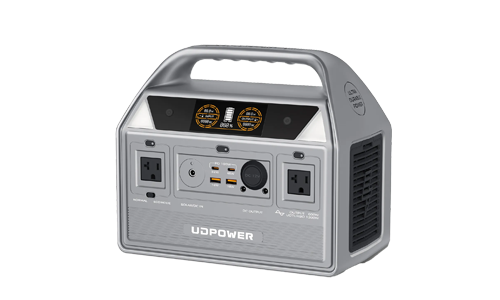
Best UDPOWER solar generator setups for home backup
For home use, start with the devices you need to protect, not the biggest number on the page. The setups below use official UDPOWER product specifications and product images from UDPOWER product pages.

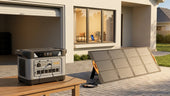
UDPOWER S2400 + 420W Solar Panel Kit
Best for: critical-load home backup, refrigerator support, Wi-Fi, CPAP, lights, fans, laptops, TV, short kitchen appliance use, RV backup, and outages where solar recharge matters.
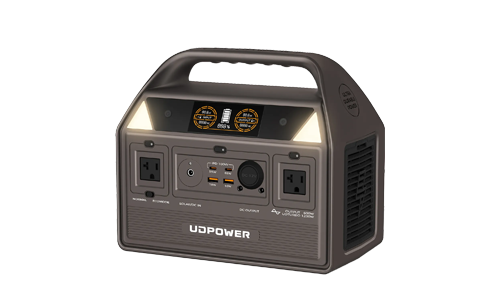
- 2,083Wh LiFePO4 battery
- 2,400W pure sine wave AC output
- 3,000W surge support for startup loads
- 6 AC outlets + 10 DC outputs
- Solar input: 12V–50V, 10A max, up to 400W via DC7909
- UPSPrime backup mode with ≤10ms response time
- Official best-condition solar recharge with 2×210W panels: about 5 hours

UDPOWER S1200 + 420W Solar Panel Kit
Best for: lighter home backup, fridge planning, CPAP, Wi-Fi, phones, lights, laptops, fan use, and buyers who want a more portable unit than a 2kWh-class station.
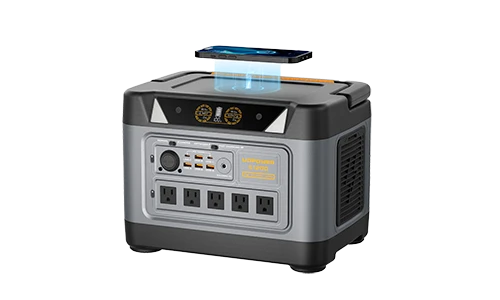
- 1,190Wh LiFePO4 battery
- 1,200W pure sine wave AC output
- 1,800W surge support
- 5 AC outlets + 10 DC outputs on the 5-AC version
- <10ms UPSPrime backup behavior
- 26.0 lb listed weight
- Official product page notes a standard refrigerator can run about 10–15 hours on a full charge, with results varying by fridge and cycling

UDPOWER C600 + 240W Solar Panel Kit
Best for: small-home backup needs, apartment use, laptops, lights, router backup, cameras, phones, fans, mini fridges, camping fridges, and short outages where portability matters most.
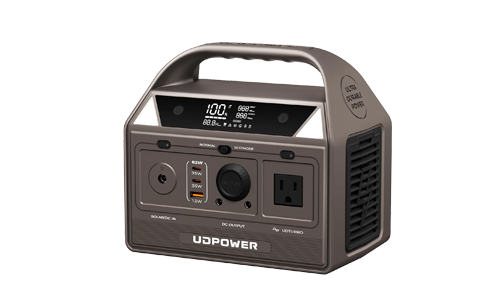
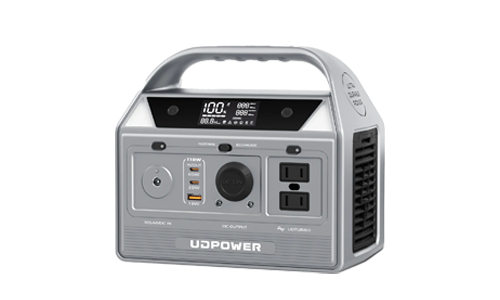
- 596Wh LiFePO4 battery
- 600W rated output
- 1,200W peak output
- 2 AC outlets, USB-C, USB-A, and 12V car outlet
- 12.3 lb listed weight
- Solar support up to 240W, according to the official product page
Need to compare all kits? Visit the UDPOWER Solar Generators collection or browse all portable power stations.
How fast can solar recharge a home backup battery?
Solar recharge time depends on panel wattage, sunlight strength, temperature, panel angle, cable setup, and the power station’s solar input limit. A 420W panel setup does not produce 420W every minute of the day. Cloud cover, shade, morning/evening sun angle, and partial obstruction can cut input sharply.
| S2400 solar setup | Official best-condition recharge estimate | What it means during an outage |
|---|---|---|
| 2×210W panels, 420W total | About 5 hours | Best choice if you want meaningful daytime recovery for a 2,083Wh battery |
| 2×120W panels, 240W total | About 8.7 hours | Useful, but recovery may take most of a sunny day |
| 1×210W panel | About 10 hours | Good for stretching runtime, not ideal for fast full recovery |
| 1×120W panel | About 17.4 hours | Better for small loads and maintenance charging than heavy home backup |
| Source: UDPOWER S2400 official product FAQ and solar charging chart | ||
Solar recovery example
Suppose your overnight critical loads used 1,200Wh: refrigerator cycling, router, phone charging, two lights, and a fan. A strong 420W solar setup may recover that energy in one clear morning or afternoon. A 120W setup may not. That is why solar input matters as much as battery size when you expect outages to last more than one day.
Practical solar tip: keep panels fully unfolded, pointed toward direct sun, and away from shade. Even one shaded section can reduce total input. Watch the input wattage on the power station screen and adjust the panel angle until the number improves.
For panel options, see the UDPOWER Solar Panels collection.
Can you connect a solar generator to your house panel?
Yes, selected systems can be connected to selected home circuits, but only with the right equipment. The safe approach is an approved transfer switch, interlock, inlet, or smart panel installed according to local code by a qualified electrician. Do not plug a power station or generator into a wall outlet to “feed” your home. That unsafe practice can cause backfeed and create shock or fire hazards.
| Connection method | Good for | Safety note |
|---|---|---|
| Direct plug-in from the power station | Fridge, router, CPAP, lights, phone chargers, laptop, TV | Simplest method. Use properly rated cords and avoid overloading the power station. |
| Transfer switch or approved inlet setup | Selected home circuits | Requires compatible equipment and professional installation. |
| Smart panel or installed home battery system | Larger backup plans and circuit prioritization | Best for whole-home planning, but higher cost and more installation work. |
| Backfeeding through a wall outlet | None | Do not do this. It can energize circuits unexpectedly and create serious hazards. |
Safety references: CPSC generator safety guidance, Ready.gov power outage guidance, and EIA residential electricity data.
Important: A battery power station does not produce carbon monoxide like a gas generator, but electrical connection still matters. For gas generators, CPSC and Ready.gov advise outdoor use only and at least 20 feet away from homes, doors, windows, and garages. Never use a fuel generator indoors.
What a portable solar generator is not good for
A portable solar generator is excellent for clean backup power, but it has limits. The hardest loads are usually high-watt, long-running, 240V, or hardwired appliances.
| Load | Why it is difficult | Better approach |
|---|---|---|
| Central air conditioner | High running watts, large startup surge, often 240V and hardwired | Installed home battery system, load management, or generator-grade backup |
| Electric range or oven | Usually high-watt 240V load | Use smaller cooking devices briefly, such as microwave or rice cooker within output limit |
| Electric dryer | Very high wattage and long run time | Avoid during outages unless you have a large installed system |
| Electric water heater | High wattage and large daily energy use | Use stored hot water wisely; consider a larger home backup system if hot water is critical |
| EV charging | EV batteries are huge compared with portable power stations | Emergency top-up only if the charger draw stays within the unit limit |
| Large well pump or sump pump | Startup surge may be high, and some pumps are hardwired or 240V | Measure actual load and consult an electrician before relying on any portable unit |
Homeowner buying checklist
Before you buy a solar generator for house backup, write down your real emergency plan. This prevents overspending on specs you do not need and undersizing the battery you do need.
Checklist before choosing a solar generator
- List your must-run devices: refrigerator, router, lights, CPAP, fan, phone, laptop, TV, sump pump, or other essentials.
- Check running watts and startup surge for each appliance.
- Decide how many hours each device must run per day.
- Calculate daily watt-hours, then add 15% to 25% for real-world losses.
- Choose enough AC output so high-watt devices are not running at the limit.
- Choose enough solar input to recover daily energy use during daylight.
- Confirm connector type, solar voltage range, and max input current before using third-party panels.
- Plan your connection method: direct plug-in, transfer switch, or installed system.
- Test the setup before storm season, not during the outage.
Example: one-day critical-load plan
| Device | Estimated watts | Daily use | Daily energy |
|---|---|---|---|
| Refrigerator, average cycling load | 80W | 24 hours | 1,920Wh |
| Router | 10W | 24 hours | 240Wh |
| LED lights | 60W | 5 hours | 300Wh |
| CPAP | 40W | 8 hours | 320Wh |
| Fan | 60W | 8 hours | 480Wh |
| Laptop | 65W | 4 hours | 260Wh |
| Microwave, short use | 1,000W | 10 minutes | 167Wh |
| Total before efficiency loss | — | — | 3,687Wh |
| Suggested battery after losses | — | — | About 4,300Wh+ |
This is why a 2,083Wh unit can be excellent for a shorter essential-load window, but one full day of several household essentials may require either a larger battery, more solar recharge, fewer loads, or both.
Do you need rooftop solar, or are portable panels enough?
Portable solar panels are flexible and easy to store, which makes them useful for outages, RVs, renters, camping, and seasonal backup. Rooftop solar is better when you want daily household energy production, utility bill reduction, and a larger installed battery system.
| Option | Best for | Limit |
|---|---|---|
| Portable solar panels + portable power station | Emergency backup, renters, RVs, camping, flexible use | Smaller solar input and weather-dependent recharge |
| Rooftop solar + home battery | Daily energy generation, larger outage backup, home value planning | Higher cost, installation, roof suitability, permitting |
| Hybrid approach | Homeowners who want a portable backup unit plus optional panels | Does not replace a whole-home battery unless the system is scaled properly |
The Department of Energy notes that solar panels generally perform best on south-facing roofs with a slope between 15 and 40 degrees, though other roofs may still work. For portable panels, the equivalent idea is simple: keep them in direct, unobstructed sun and adjust angle as the sun moves.
Source: U.S. Department of Energy Homeowner’s Guide to Solar.
FAQ: Can a solar generator power a house?
Can a solar generator power an entire house?
Yes, but only if the system is large enough. A portable solar generator can power selected household essentials. A true entire-house setup usually needs a much larger battery system, a large solar array, transfer equipment, and professional installation.
What size solar generator do I need for home backup?
For basic essentials, many homes start around 1,000Wh to 3,000Wh. For refrigerator, CPAP, lights, router, fan, and short appliance use, 2,000Wh to 5,000Wh is more realistic. For selected circuits or whole-home backup, look at 5,000Wh to 15,000Wh+ or a professionally installed home battery system.
Can a solar generator run a refrigerator?
Yes, if the power station has enough output for the refrigerator’s startup surge and enough battery capacity for the runtime you need. A refrigerator’s real energy use depends on age, size, room temperature, door opening, and compressor cycling.
Can a solar generator run air conditioning?
Sometimes it can run a small 120V window AC or portable AC if the running watts and startup surge stay within the power station’s limits. Central AC is usually not practical for a portable solar generator because it often requires high wattage, 240V power, and hardwired equipment.
Can I plug a solar generator into a wall outlet to power my house?
No. Do not backfeed a home through a wall outlet. Use the power station’s outlets directly, or work with a qualified electrician to install approved transfer equipment for selected circuits.
Do I need a transfer switch for a solar generator?
You do not need a transfer switch if you plug appliances directly into the power station. You do need approved transfer equipment if you want to power home circuits through the electrical panel.
How many solar panels do I need for a house backup generator?
It depends on how much energy you use each day and how fast you need to recharge. A 120W panel may keep small loads going, while a 400W-class setup is much more useful for recharging a 2,000Wh-class battery during an outage. Larger home battery systems need much larger solar arrays.
Can I use a solar generator in an apartment?
Yes. A battery power station is often easier for apartments than fuel generators because it does not burn gas and does not produce exhaust. Use it as a direct plug-in backup for phones, router, laptop, lights, small fan, CPAP, and other low-to-medium loads. Follow the manufacturer’s instructions and avoid overloading outlets.
Is a solar generator better than a gas generator?
For indoor-safe battery backup, low noise, low maintenance, and solar recharge, a solar generator is often better. For very high loads and long outages without enough sunlight, a fuel generator may still provide more continuous power. Many households use a battery unit for quiet essentials and reserve fuel backup for extreme situations.
Can a solar generator run 240V appliances?
Most portable power stations are designed around 120V AC outlets. Many 240V appliances, such as central AC, electric dryers, electric ranges, and some pumps, need a larger installed system with compatible output and transfer equipment.
How long will a solar generator last during a blackout?
Runtime depends on battery capacity and total load. A 2,083Wh battery may run a 10W router for days, but a 1,000W microwave drains energy quickly. Add up the watts of everything you plan to run, multiply by hours, and compare that watt-hour total with the usable battery capacity.
Can I use a solar generator while it is charging?
Many modern power stations support pass-through use, including UDPOWER models. For best results, avoid pushing the unit near maximum output while charging, keep ventilation clear, and follow the product manual.
Build a realistic home-backup plan
Start with your essential devices, choose the battery size that matches your runtime goal, then add enough solar input to recover during the day.
View UDPOWER Solar Generator Kits Compare Portable Power Stations Get the Sizing Guide