All Types of Chargers Explained: Wall, USB-C, Wireless, Car, Solar, and Backup Power
ZacharyWilliamLast updated: May 12, 2026
Chargers look simple until you need the right one. A phone charger may not run a laptop. A USB-C cable may look powerful but still limit charging speed. A power bank may be fine for a flight, while a portable power station is the better answer for a blackout, CPAP, router, laptop, camera kit, or campsite.
This guide explains the main charger types in plain English, shows what each one is best for, and gives you practical tables you can use before buying a wall charger, car charger, solar charger, power bank, or portable power station.
Quick Answer: What Type of Charger Do You Need?
For most everyday devices, a USB-C Power Delivery charger is the best starting point. A 30W charger is enough for many phones and tablets, 65W works for most lightweight laptops, and 100W or higher is better for larger laptops or multi-device charging. For wireless convenience, choose a Qi or Qi2 charger only if your phone supports it. For road trips, use a 12V car charger. For outages, camping, RV trips, or charging several devices away from the wall, use a portable power station with AC outlets, USB-C, USB-A, DC output, and solar input.
The safest way to choose is simple: check your device label, match the voltage/charging standard, give yourself enough watts, and avoid no-name chargers for lithium-ion devices.

Charging Basics: Volts, Amps, Watts, and Ports
Before comparing charger types, learn the three numbers that matter most on the label.
- Volts (V) are the electrical pressure. The charger and device must be compatible. A mismatched voltage on a non-smart charger can damage equipment.
- Amps (A) are the available current. A device only draws what it is designed to use when the charger and device negotiate properly.
- Watts (W) are the actual charging power. For DC charging, watts are roughly volts × amps. If you want a deeper walkthrough, see UDPOWER’s volts to watts conversion guide.
- Ports and cables matter. USB-C does not automatically mean fast. The charger, cable, and device all need to support the same power level.
The everyday rule
A higher-watt charger is usually safe for a USB-C PD phone or laptop because the device negotiates what it needs. But that does not apply to every barrel-plug, e-bike, power-tool, or proprietary charger. For those, match the manufacturer’s required voltage, connector, and battery chemistry.
All Major Charger Types at a Glance
Use this table as a fast starting point. The “typical wattage” column is a practical shopping range, not a promise for every product.

| Charger Type | Common Power Range | Best For | What to Check Before Buying | Source / Related Reading |
|---|---|---|---|---|
| USB-A wall charger | 5W–18W | Older phones, lights, small accessories, basic gadgets | Port output, cable quality, whether your device needs faster USB-C charging | USB-A vs USB-C guide |
| USB-C PD wall charger | 20W–240W depending on charger, cable, and device | Phones, tablets, laptops, handheld gaming devices, multi-device charging | PD/PPS support, rated wattage, cable rating, laptop requirement | USB-IF USB Power Delivery |
| GaN charger | 30W–200W+ in many consumer models | Compact travel chargers and multi-port desk charging | Total output vs per-port output when multiple devices are connected | See laptop charger section |
| Wireless charger | 5W–15W common; Qi2 25W is emerging | Nightstands, desks, phones, earbuds, low-stress daily top-ups | Qi/Qi2 certification, phone compatibility, case thickness, heat | Wireless Power Consortium |
| 12V car charger | 18W–100W+ depending on model | Charging phones, tablets, laptops, cameras, and small devices while driving | USB-C PD output, vehicle socket condition, charger fit, heat inside the car | See 12V charger section |
| Power bank | 10W–140W in many portable models | Phones, tablets, small laptops, travel days, commuting | Wh rating, airline rules, USB-C output, whether it can charge while charging | FAA battery guidance |
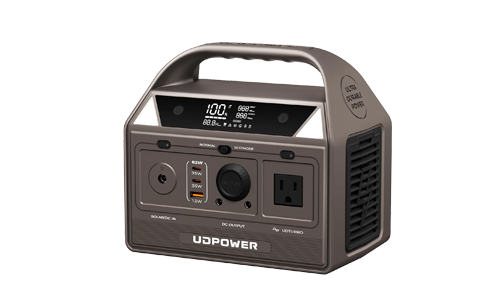
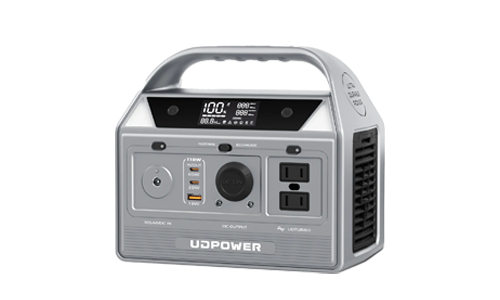
| Portable power station | Hundreds to thousands of watts depending on model | Outages, camping, RVs, CPAP, laptops, routers, mini fridges, camera gear | Wh capacity, AC output, surge output, USB-C ports, solar input, UPS need | UDPOWER portable power stations |
| Solar charger / solar panel setup | Small USB panels to 100W–400W+ power station input setups | Off-grid charging, camping, RV trips, backup recharge during outages | Panel wattage, voltage range, connector type, sunlight, cable compatibility | UDPOWER solar panels |
| EV charger | Level 1, Level 2, and DC fast charging vary widely | Electric vehicles, not ordinary electronics | Vehicle connector, home circuit, installation needs, charging speed | DOE Alternative Fuels Data Center |
Phone and Tablet Chargers
For phones and tablets, the best charger is usually a certified USB-C wall charger with enough wattage for your device. Many phones charge well on 20W–30W. Tablets often benefit from 30W–45W. A larger charger can still be useful if you want to charge a phone, tablet, earbuds, and watch from one brick.
Common phone charger types
- USB-A charger: useful for older cables and small accessories, but usually slower.
- USB-C charger: the better choice for most new phones and tablets.
- USB-C PD/PPS charger: better for fast charging when your phone supports it.
- Wireless charger: convenient, but usually slower and warmer than a good wired charger.
- Portable charger / power bank: best for pocket carry and flights, as long as it follows airline battery limits.
Do not choose by connector shape alone
A USB-C plug only tells you the shape. It does not guarantee fast charging. Look for the wattage, the supported charging standard, and the cable rating. This is especially important when buying multi-port chargers, because the advertised wattage may be the total shared power instead of what one port can deliver.
Laptop Chargers and USB-C PD Chargers
Laptops need more power than phones. A small 30W charger may slowly charge an efficient laptop while it sleeps, but it may not keep up during work. For most everyday laptops, 45W–65W is a practical minimum. For larger laptops, 100W or higher may be required. Gaming laptops often still use proprietary adapters because they can pull far more than ordinary USB-C chargers can provide.
| Device | Typical Charger Range | Good Charger Choice | Common Mistake | Related UDPOWER Reading |
|---|---|---|---|---|
| Phone | 20W–30W | 30W USB-C PD wall charger | Buying a cheap USB-C charger that only delivers basic power | USB-A vs USB-C |
| Tablet | 30W–45W+ | 45W USB-C PD charger | Using an old 5W phone cube and waiting all day | Volts to watts |
| Thin laptop | 45W–65W | 65W USB-C PD charger | Using a low-watt phone charger during active work | Laptop wattage guide |
| Workstation laptop | 100W–140W+ | 100W+ USB-C PD charger if supported, or the original adapter | Forgetting that the cable also needs to support high wattage | Computer wattage guide |
| Gaming laptop | 150W–330W+ in many cases | Original AC adapter or a compatible high-output power source | Assuming every USB-C port can replace the factory adapter | What is an AC adapter? |
USB Power Delivery now supports much higher power than older USB charging. USB-IF lists USB PD 3.1 as enabling up to 240W over full-featured USB-C cable and connector setups, but that does not mean every charger, cable, or laptop supports 240W. Always check all three parts: charger, cable, and device.
Wireless Chargers: Qi, Qi2, and MagSafe-Style Pads
Wireless charging is best for convenience, not maximum speed. It works well on a desk or nightstand when you want easy top-ups. It is less ideal when you need the fastest charge before leaving the house.
- Qi chargers are common and work with many wireless charging phones and earbuds.
- Qi2 chargers add magnetic alignment and faster certified charging for compatible devices. The Wireless Power Consortium says Qi2 brought 15W charging, and Qi2 25W is now emerging.
- Magnetic wireless chargers are convenient, but case thickness, magnet alignment, and phone support can affect results.
When wireless charging makes sense
Use wireless charging when your phone spends time sitting in one place. Use a wired USB-C charger when you need speed, cooler charging, or more reliable power while using the device.
Car, RV, and 12V Chargers
A 12V car charger is useful for road trips, RV travel, commuting, and camera work. The key is choosing one that fits your device’s power needs. A basic 12V USB-A plug may be fine for a phone. A laptop or USB-C tablet usually needs a 12V charger with USB-C PD output.
Practical car charging tips
- Do not leave phones, chargers, or power banks in a hot parked car.
- Check whether your vehicle’s 12V socket stays powered after the engine is off. If it does, charging overnight could drain the vehicle battery.
- For RVs, think in systems: phone charging, laptop charging, fridge power, lights, fans, and backup power may need more than a small plug-in car charger.
- For heavier off-grid use, a portable power station is easier to manage because it gives you AC outlets, USB ports, DC output, and solar charging in one unit.
Power Banks vs Portable Power Stations
Power banks and portable power stations both store energy, but they serve different jobs.
| Feature | Power Bank | Portable Power Station | Best Choice |
|---|---|---|---|
| Portability | Pocket or backpack friendly | Larger, but still movable | Power bank for flights and daily carry |
| Battery size | Often under airline limits | Hundreds to thousands of watt-hours | Power station for outages and camping |
| Outputs | Mostly USB-A and USB-C | AC outlets, USB-C, USB-A, DC ports, car port, wireless charging on some models | Power station for mixed devices |
| Appliance support | Usually no AC appliances | Can run many AC devices within rated output | Power station for CPAP, routers, mini fridges, and laptops |
| Solar recharge | Limited or slow on many models | Designed for larger solar input on compatible models | Power station for off-grid use |
| Air travel | Often possible if within Wh limits | Most are too large for passenger flights | Check FAA battery rules before flying |
For daily carry, a power bank is the cleaner choice. For home backup, RV trips, CPAP support, remote work, or a charging station for the whole family, a portable power station makes more sense.
Solar Chargers and Solar Generator Charging
Solar charging can mean two very different things. A small USB solar charger may slowly top up a phone. A solar panel connected to a portable power station can recharge a much larger battery and support real off-grid use.
What to check before using solar panels
- Voltage range: the panel output must fit the power station’s solar input range.
- Connector type: a physically similar plug is not enough. Confirm the actual connector and polarity.
- Maximum input wattage: exceeding voltage limits can damage equipment. More panel wattage does not always mean the station can accept all of it.
- Real sunlight: shade, glass, poor angle, clouds, and heat can reduce output.
- Cable setup: use the official or compatible cable for the station’s input. For UDPOWER S-Series users, the front DC7909 input is the recommended solar input path.
Solar charging is a system, not one part
A solar panel, cable, connector, and power station all need to match. If you are building a camping or outage setup, start with the power station’s solar input limit, then choose the panel setup around that limit. For realistic runtime planning, see UDPOWER’s guide on how long a solar generator can run essentials.
EV Chargers vs Portable Power Station Chargers
EV chargers are a different category from phone, laptop, and portable power station chargers. The U.S. Department of Energy’s Alternative Fuels Data Center explains common EV charging levels such as Level 1, Level 2, and DC fast charging. Those systems are designed around electric vehicles, not ordinary consumer electronics.
| Charging Category | Typical Use | What It Is Not | Practical Takeaway |
|---|---|---|---|
| EV Level 1 | Charging an EV from a standard 120V outlet | Not a general laptop/phone charger category | Slow but simple for some EV owners |
| EV Level 2 | Faster home or public charging, commonly 240V | Not supported by standard 120V portable power stations | Usually needs proper installation and circuit planning |
| DC fast charging | Public high-speed EV charging | Not comparable to USB-C or portable power station charging | Connector and vehicle support matter |
| Portable power station charging | Charging phones, laptops, CPAP, routers, small appliances, and station battery packs | Not intended as a regular EV charging solution | Use it for electronics and backup power, not as your primary EV charger |
Recommended UDPOWER Charging Setups
If you only need to charge a phone, a small USB-C charger is enough. But once you need several devices, off-grid charging, outage backup, CPAP runtime, Wi-Fi backup, or solar charging, a portable power station becomes the more practical “master charger.” Here are three UDPOWER options based on real use cases.

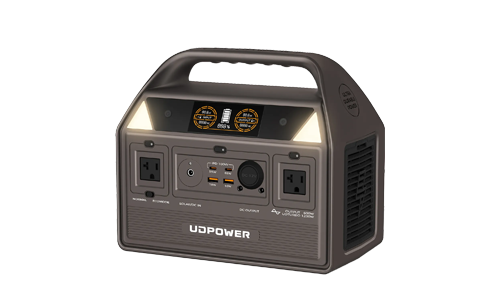
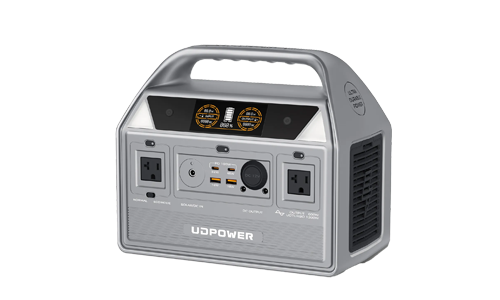
UDPOWER C400 Portable Power Station — Compact Charging Hub
256Wh400W Output165W Hyper Charging150W Solar Input
Best for phones, tablets, cameras, drones, small lights, laptops, and light outdoor charging. It is a strong step up from a power bank when you want AC outlets, USB-C, DC output, and a 12V car port in one compact unit.
- Official page lists 256Wh capacity and 400W output.
- Supports 400W AC output with 800W surge support.
- Includes 2 AC outlets, USB-C ports, USB-A, 12V car port, DC5521 ports, and jump-starter port.
- Supports 165W combined charging using the DC adapter plus USB-C input.
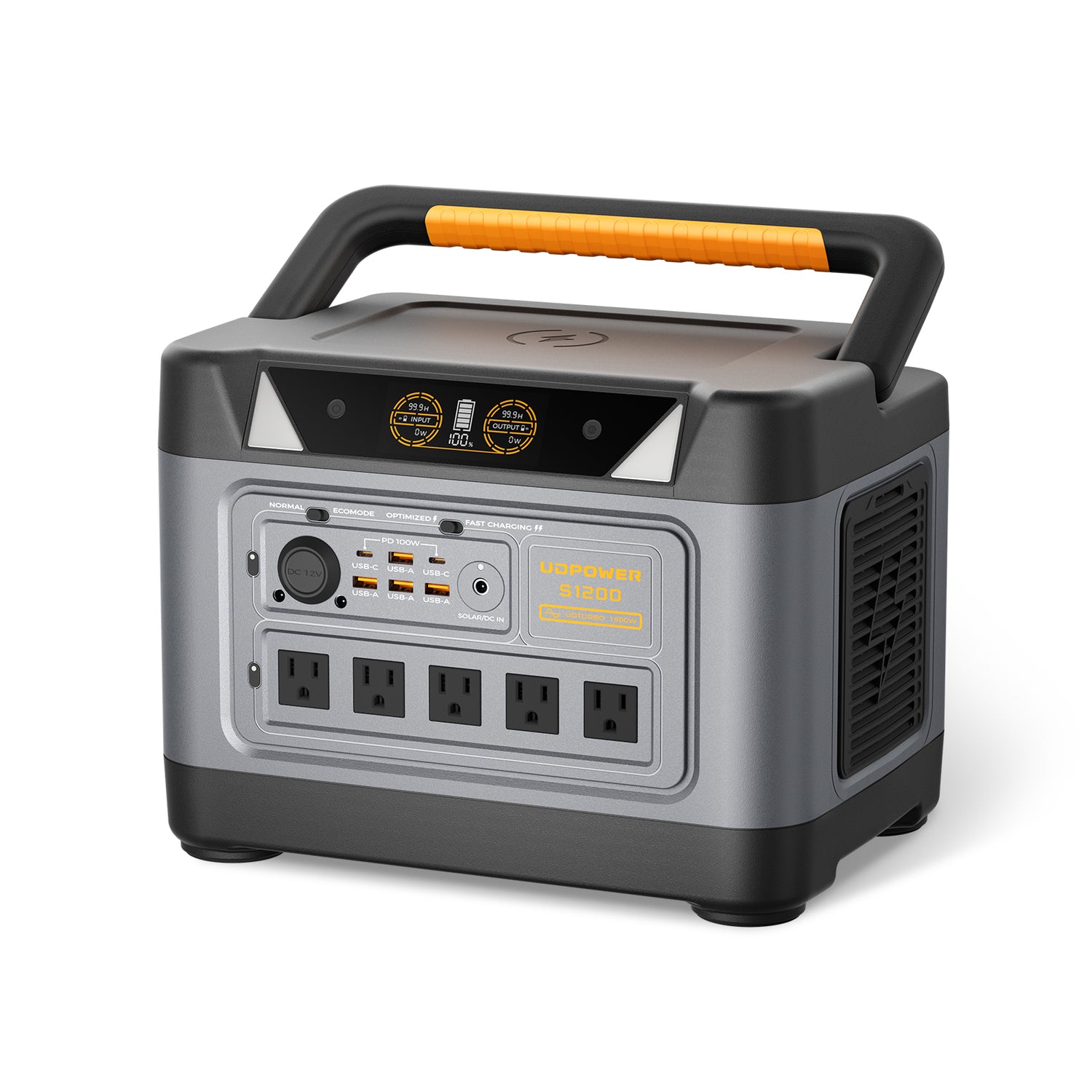
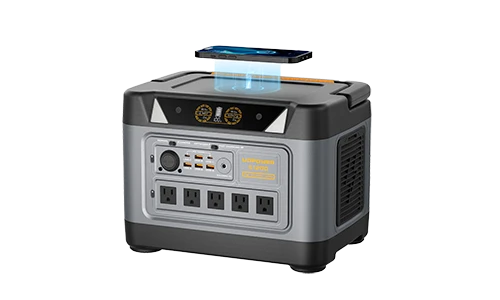
UDPOWER S1200 Portable Power Station — Best Balance for Home and Travel
1,190Wh1,200W Output1,800W Surge<10ms UPS
Best for charging multiple phones and laptops, running a router during an outage, supporting CPAP users, powering lights, and backing up a standard refrigerator for limited periods. It is the best middle ground for many households that want more than a small power bank but do not need the largest unit.
- Official page lists 1,190Wh capacity and 1,200W rated output.
- UDTURBO surge support up to 1,800W.
- 5 AC outlets plus 10 DC outputs on the 5-AC version.
- Includes USB-A, USB-C, DC5521, car port, and wireless charging output.
- UPSPrime switchover listed at under 10 ms.
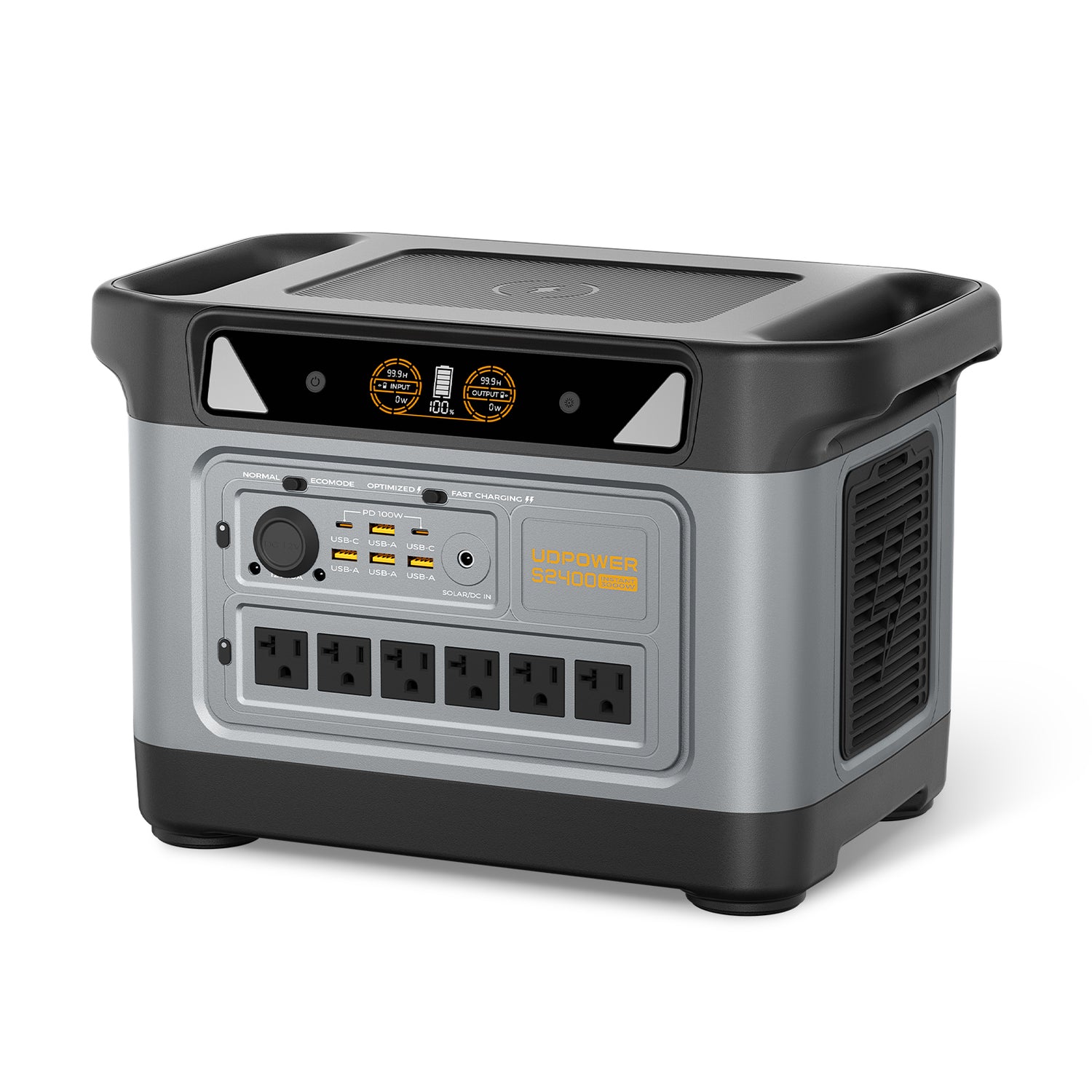
UDPOWER S2400 Portable Power Station — Larger Backup and Multi-Device Charging
2,083Wh2,400W Output3,000W SurgeUp to 400W Solar Input
Best for larger home backup loads, RV use, several chargers at once, high-output AC adapters, routers, laptops, CPAP machines, lights, and longer runtime needs. This is the stronger choice when you want one station to serve as a central backup charger for the house or campsite.
- Official page lists 2,083Wh capacity and 2,400W pure sine wave AC output.
- UDTURBO surge support up to 3,000W.
- 6 AC outlets plus 10 DC outputs.
- USB-C ports support up to 100W with PPS.
- Solar input listed as 12–50V, 10A max, with up to 400W solar charging.
Need solar charging too?
Pair the power station with compatible solar panels from the UDPOWER solar panel collection. For best results, confirm the station’s solar input range, panel wattage, cable type, and whether you are using one panel or a supported parallel setup.
How to Pick the Right Charger by Device
Here is a simple buyer-friendly chart for common devices. For anything expensive or battery-powered, check the device label or manual before using a replacement charger.
| Device / Situation | Best Charger Type | What to Look For | Avoid This |
|---|---|---|---|
| Phone | 20W–30W USB-C charger or certified wireless charger | USB-C PD/PPS support; Qi/Qi2 for wireless | Old 5W cubes if you need quick charging |
| Tablet | 30W–45W USB-C charger | Enough wattage for active use | Low-power USB-A chargers |
| Lightweight laptop | 45W–65W USB-C PD charger | USB-C PD support and proper cable rating | Using a phone charger during work |
| Work laptop | 65W–100W+ USB-C PD charger or original adapter | Device watt requirement and cable watt rating | Assuming any USB-C cable supports 100W+ |
| Camera batteries / drones | Original charger, USB-C charger, or portable power station | Battery chemistry and manufacturer charging dock requirements | Unbranded battery chargers |
| CPAP during outage | Portable power station sized by Wh and CPAP settings | Nightly Wh use, humidifier setting, AC/DC efficiency | Choosing only by output watts and ignoring battery capacity |
| Router + modem backup | Portable power station or small UPS-style setup | Total watts and desired runtime | Using a tiny phone power bank without proper output |
| Camping family charging station | Portable power station with USB-C, USB-A, AC, and solar input | Wh capacity, number of ports, solar recharge plan | Relying on one wall brick and a small power bank |
| RV off-grid charging | Portable power station plus compatible solar panel setup | Panel wattage, DC input range, cable length, daily energy use | Mixing incompatible solar panels or connectors |
Charger Safety Checklist
Most charger problems come from mismatched specs, poor-quality chargers, damaged cables, overheating, or charging lithium-ion batteries in unsafe places. Keep this checklist simple.
| Safety Check | Why It Matters | What to Do | Source |
|---|---|---|---|
| Use the right charger for lithium-ion devices | Battery packs need correct communication, voltage, and protection | Use the original charger or a reputable replacement designed for the device | UL Research Institutes |
| Do not use damaged cables | Frayed or bent cables can heat up or fail | Replace cables with visible damage, loose plugs, or inconsistent charging | U.S. Fire Administration |
| Keep charging areas cool and open | Heat is bad for batteries and electronics | Do not charge under pillows, blankets, direct sun, or in a hot parked car | U.S. Fire Administration |
| Check airline limits for power banks | Large lithium batteries have carry-on and approval rules | Check Wh rating before flying; many spare lithium-ion batteries are carry-on only | FAA PackSafe |
| Unplug idle chargers when practical | Many electronics use some electricity even when idle | Use switched power strips or unplug rarely used chargers | DOE Energy Saver |
| Do not overload outlets or cheap power strips | Too many chargers and adapters can create heat and trip hazards | Use properly rated equipment and avoid daisy-chaining | U.S. Fire Administration |
Common Charger Buying Mistakes
- Buying by “USB-C” only: USB-C is a connector shape, not a guaranteed speed.
- Ignoring the cable: high-watt charging requires a cable rated for that power level.
- Confusing capacity and output: Wh tells you how long a battery may last; W tells you what it can power at one time.
- Using random chargers for e-bikes or power tools: these often need battery-specific charging and protection.
- Buying a power bank for a job that needs a power station: a power bank is good for travel; a power station is better for outage backup and multiple device charging.
- Overlooking solar compatibility: solar panel voltage, connector type, and input limits must match the power station.
FAQ: Types of Chargers
What are the main types of chargers?
The main charger types are USB-A wall chargers, USB-C wall chargers, fast chargers, GaN chargers, wireless chargers, car chargers, laptop adapters, power banks, portable power stations, solar chargers, and EV chargers. The right choice depends on your device, wattage requirement, charging location, and whether you need stored backup power.
Is USB-C the best charger type?
USB-C is the best everyday charger type for many modern phones, tablets, and laptops because it can support higher power and reversible plugs. But USB-C alone does not guarantee fast charging. The charger, cable, and device must all support the right charging standard and wattage.
What charger wattage do I need for a phone?
Many modern phones work well with a 20W to 30W USB-C charger. Some phones may charge faster or slower depending on the model, battery level, temperature, and charging protocol. A higher-watt USB-C PD charger is usually safe when the phone supports proper power negotiation.
What charger wattage do I need for a laptop?
Many lightweight laptops need 45W to 65W. Larger work laptops may need 100W or more. Gaming laptops often require the original high-output adapter. Check the laptop’s label or manual before replacing the charger.
Are wireless chargers slower than wired chargers?
Usually, yes. Wireless chargers are convenient but often slower and warmer than wired USB-C charging. Qi2 improves alignment and speed for compatible devices, but wired charging is still the better choice when speed matters.
Can one charger charge every device?
A good multi-port USB-C PD charger can handle many phones, tablets, and laptops, but it will not cover everything. E-bikes, power tools, some cameras, some laptops, and battery packs may need their original charger. For mixed home backup and outdoor use, a portable power station can serve as a central charging hub.
What is the difference between a power bank and a portable power station?
A power bank is small and usually designed for USB charging. A portable power station has a larger battery and more output options, often including AC outlets, USB-C, USB-A, DC ports, a 12V car port, and solar input. Use a power bank for daily carry and a power station for outages, camping, RVs, CPAP, laptops, and multiple devices.
Can I use any solar panel with a portable power station?
Not always. The solar panel must match the station’s input voltage range, current limit, connector type, and polarity. Third-party panels can work when the electrical specs and connector are compatible, but official or recommended panels reduce guesswork.
Can a portable power station charge while powering devices?
Many modern portable power stations can power devices while recharging, but behavior depends on the model and the charging method. For outage backup, also check whether the unit has UPS-style switching if you need smoother power transfer.
Are cheap chargers dangerous?
Some cheap chargers may lack reliable protection, accurate ratings, or safe battery communication. For phones, laptops, power tools, e-bikes, and lithium battery packs, use reputable chargers that match the device requirements and replace damaged cables immediately.
Build a Charging Setup That Works Beyond the Wall Outlet
For everyday phone charging, a quality USB-C charger is enough. For outages, camping, RV travel, CPAP backup, routers, laptops, camera gear, and solar charging, choose a portable power station sized by watt-hours, output watts, and input options.
Need solar recharge? Explore UDPOWER solar panels or compare device runtime with the solar generator essentials guide.